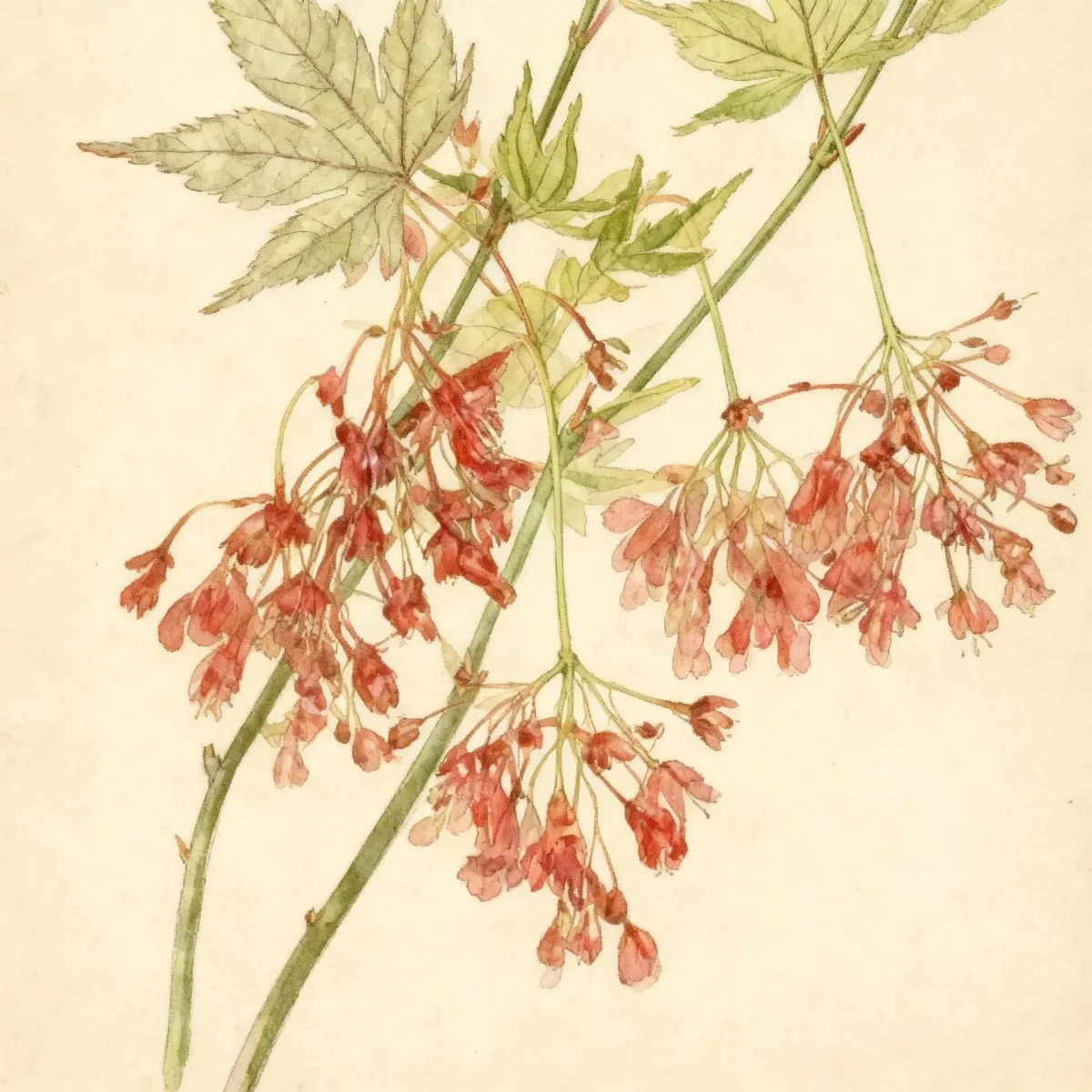
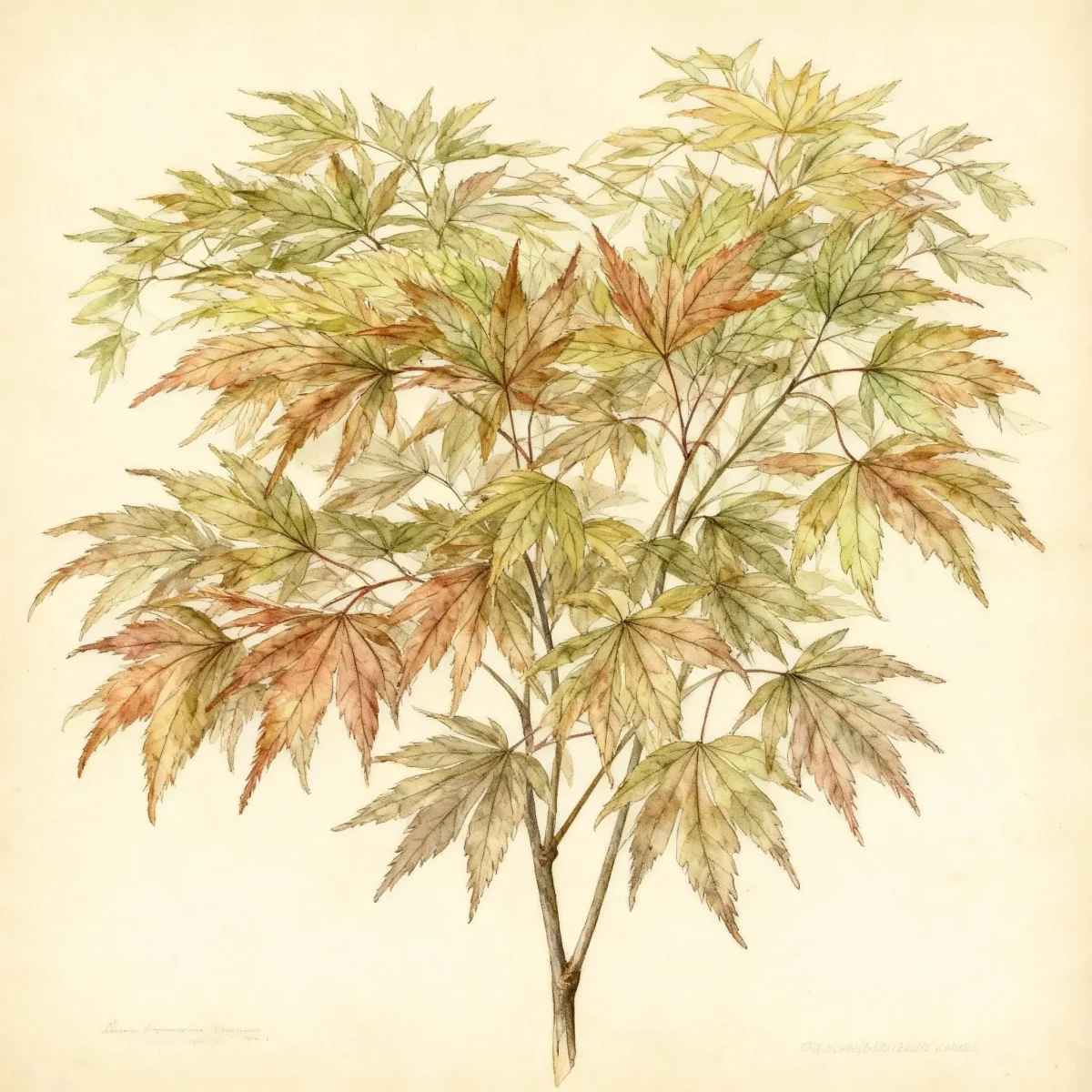
Japanese maple (Acer palmatum 'Sango-kaku')
Acer palmatum 'Sango-kaku' offers stunning winter interest with its brilliant coral-red bark on this beautiful Japanese maple.

Bloom Boldly, No Matter the Season - Sweatshirt
Cozy organic cotton sweatshirt featuring our exclusive Purple Coneflower design. Perfect for gardeners who bloom year-round.
Inspired by the beautiful Japanese maple
Limited first batch (50) — join the waitlist for early access
Waitlist closes Feb 15, 2026.
Complete Plant Information
Field Guide Continues
Ready for care notes, companion picks, and planting tips?
The map is just the start. The full guide below covers growth habits, seasonal performance, and landscape uses.
Overview
Acer palmatum ‘Sango-kaku’, commonly known as Japanese maple, is highly valued in landscapes for its striking year-round visual appeal, particularly the vibrant, coral-pink bark that gives it the nickname ‘coral bark maple.’ This cultivar provides exceptional winter contrast when deciduous branches are bare. While foliage offers light green color turning golden in autumn, the focus remains on its distinctive upright, vase-shaped form over time.
This slow-growing Japanese maple typically reaches a mature height between 20 and 25 feet, making it an excellent specimen tree without overwhelming smaller gardens. It requires medium water needs and is considered low maintenance once established, though siting it correctly is crucial for optimal bark color development and health.
For gardeners seeking a reliable focal point that delivers interest across all four seasons, Acer palmatum ‘Sango-kaku’ is an outstanding choice. Its ornamental value lies in its unique texture, seasonal color shifts, and famously bright bark, ensuring the Japanese maple remains a garden highlight even after summer growth subsides.
Fast Facts
- Plant Family: Sapindaceae
- Plant Type: Tree
- Hardiness Zones: USDA Zones 5-8
- Size at Maturity:
- Height: 20-25 ft
- Spread: 15-20 ft
- Bloom Time: April
- Bloom Description: Reddish purple
- Sun Exposure: Full sun to part shade
- Water Needs: Medium
- Maintenance Level: Low
How to Grow
Planting your Acer palmatum ‘Sango-kaku’ should occur in spring or fall, ideally into moist, organically rich, and well-drained soils that are slightly acidic. This Japanese maple grows well in sandy loams. While it tolerates full sun in the northern reaches of its zone range (5-8), positioning it to receive some part afternoon shade is recommended in hotter southern areas to prevent new foliage from scorching during hot summers.
Maintain consistent soil moisture, which is vital not only for hydration but also for keeping the roots cool, aided significantly by a layer of mulch applied around the base. Site locations carefully, ensuring protection from strong winds and avoiding excessively hot and dry exposures. Fertilize lightly in the spring just before the leaves begin to emerge.
Pruning should be minimized, as this cultivar benefits from its natural form. If pruning is absolutely necessary, conduct the work in late fall through mid-winter. Avoid pruning in spring or summer, as this can cause significant, unsightly sap bleeding from the cuts.
Landscape Uses
The primary delight of Acer palmatum ‘Sango-kaku’ is its use as a specimen or accent plant, allowing its unique branch structure and bark to be fully appreciated against contrasting evergreen backgrounds. Grouping these Japanese maples near the periphery of borders or utilizing them as a natural screen can add depth and focal points to the landscape design.
Because it develops a beautiful structure and offers filtered light, this cultivar excels as a sun-dappled understory tree, perfect for woodland garden margins where its delicate spring foliage can be admired. When planning, specifically site the coral bark maple where its spectacular pink bark in winter can be easily viewed from patios or windows, maximizing its seasonal impact. While primarily an upright landscape specimen, this particular Japanese maple is also amenable to the art of bonsai.
Standout Features
Flower Qualities
- Insignificant
Noteworthy Characteristics
Acer palmatum, commonly called Japanese maple, is a deciduous shrub or small tree that typically grows to 10-25’ (infrequently to 40’) tall. It is native to Japan, Korea and China. General plant form is rounded to broad-rounded, often with low branching. Each palmate green leaf (2-5” long) has 5 or 7 but less frequently 9 pointed toothed lobes. Small reddish-purple flowers in umbels bloom in mid spring (April). The flowers are rather attractive close up, but are not particularly showy from a distance. Flowers are followed by samaras (to 3/4” long) in pairs. Samaras ripen in September-October. Fall color includes shades of yellow, red-purple and bronze. Cultivars (often grafted) are quite variable. The cultivar ‘Sango-kaku’ is an upright, slow-growing, vase-shaped form that typically grows over time to as much as 20-25’ tall and is sometimes commonly called coral bark maple due to its distinctive and showy pink bark which provides excellent color and contrast in winter.
Tolerances
- Rabbit
- Black Walnut
Potential Problems
Be aware that the foliage of this Japanese maple tends to leaf out early in spring, making it vulnerable to damage from late spring frosts. Monitor for potential insect pests such as aphids, scale, borers, bagworms, and root weevils; mites can also become troublesome. In high pH soils, chlorosis (yellowing of leaves) may manifest, indicating an iron deficiency.
Disease management focuses mainly on prevention through proper cultural care. Potential diseases include stem canker, leaf spots, anthracnose, and root rots. Verticillium wilt is a serious concern for maples; ensure sharp, clean tools are used during any required pruning to minimize disease entry points.
Frequently Asked Questions
What hardiness zones is Japanese maple (Acer palmatum ‘Sango-kaku’) suitable for?
This Acer palmatum ‘Sango-kaku’ is ideally suited for USDA Hardiness Zones 5 through 8.
How large does Japanese maple (Acer palmatum ‘Sango-kaku’) grow?
At maturity, this tree typically reaches a height of 20 to 25 feet, with a spread ranging between 15 and 20 feet wide.
What sun exposure does Acer palmatum ‘Sango-kaku’ need?
Best results, especially vibrant bark color, are achieved when this Japanese maple receives full sun to part shade conditions.
When does Japanese maple (Acer palmatum ‘Sango-kaku’) bloom?
Bloom time for Acer palmatum ‘Sango-kaku’ is typically in April, producing small, rather attractive reddish purple flowers.
Conclusion
The Acer palmatum ‘Sango-kaku’ offers unmatched ornamental value, transforming from its bright summer green foliage to its incomparable coral-red bark display in the cold months. This Japanese maple is a low-maintenance fixture when sited correctly to avoid high winds and excessive summer heat. Before planting, confirm that your landscape falls within USDA Zones 5-8 and ensure you can provide the consistently moist conditions needed to showcase the brilliant bark of this superior cultivar.
Companion Planting
When selecting companions for your bright-barked Acer palmatum ‘Sango-kaku’, consider plants that thrive under similar conditions—moist, slightly acidic, and well-drained soil, with protection from the harshest afternoon sun. Darker green, fine-textured evergreens provide the perfect backdrop to emphasize the coral color of the bark during winter. Consider planting low-growing spreading evergreens like creeping juniper or rich green groundcovers underneath, ensuring the mulch layer remains undisturbed around the trunk base.
Deeper colored, acid-loving shrubs such as rhododendrons or azaleas can create lush layers beneath the canopy in spring and summer. Since maples prefer protection from wind, selecting denser, shorter shrubs on the windward side can help shelter the delicate foliage of the Japanese maple during unpredictable spring weather.
Seasonal Care Calendar
For peak vibrancy, focus your care efforts around the emergence of new growth and the dormant season. In early spring, apply a slow-release fertilizer just before bud break to support new leaf and twig development crucial for next winter’s color. Always keep soils consistently moist through the summer, especially when the plant is young, by ensuring deep, regular watering.
Late fall to mid-winter is the designated time for any corrective pruning of Acer palmatum ‘Sango-kaku’. Removing any crossing, damaged, or crowded branches during this time minimizes bleeding compared to pruning in warmer seasons. Inspect the bark annually in deep winter to enjoy the best color display and confirm overall specimen health.