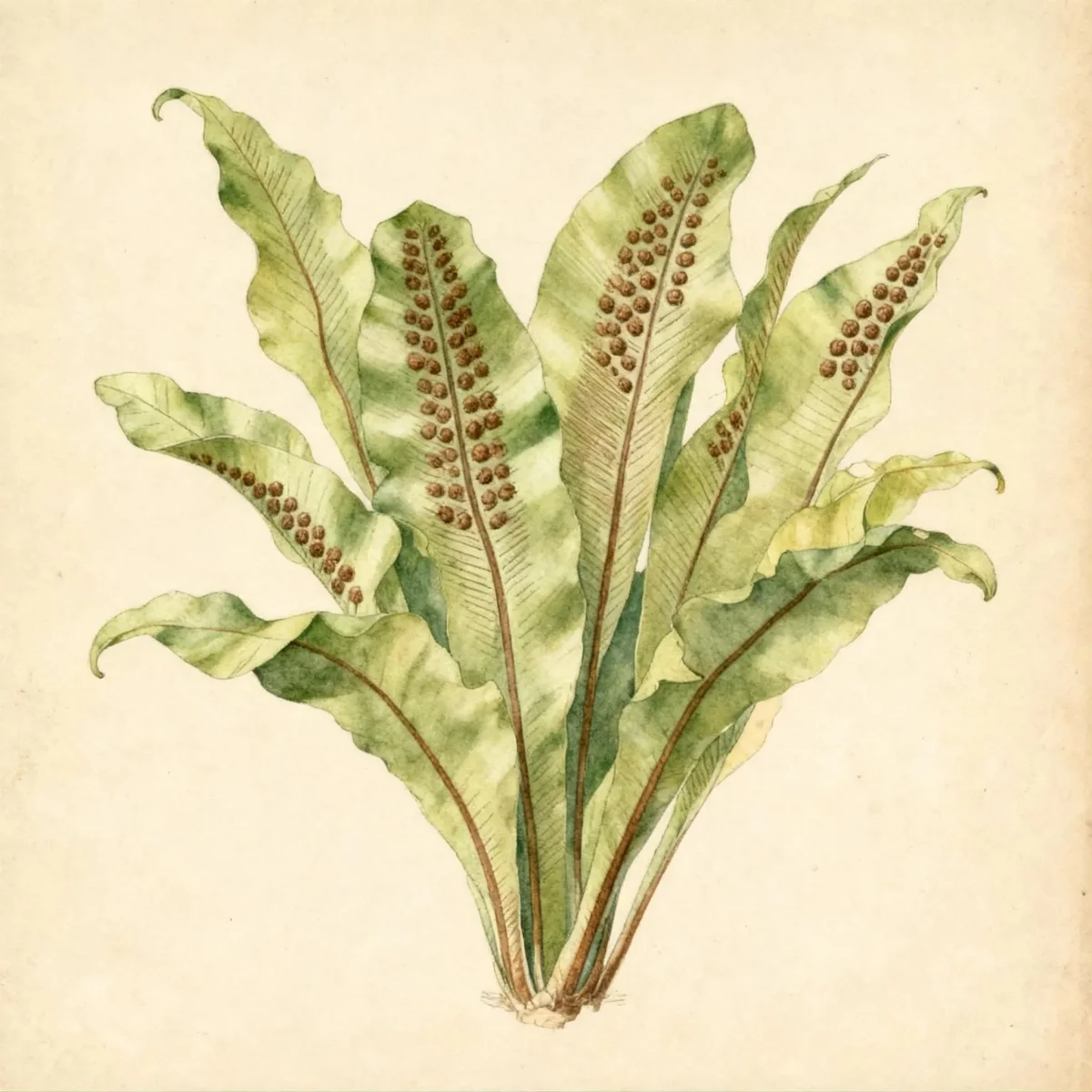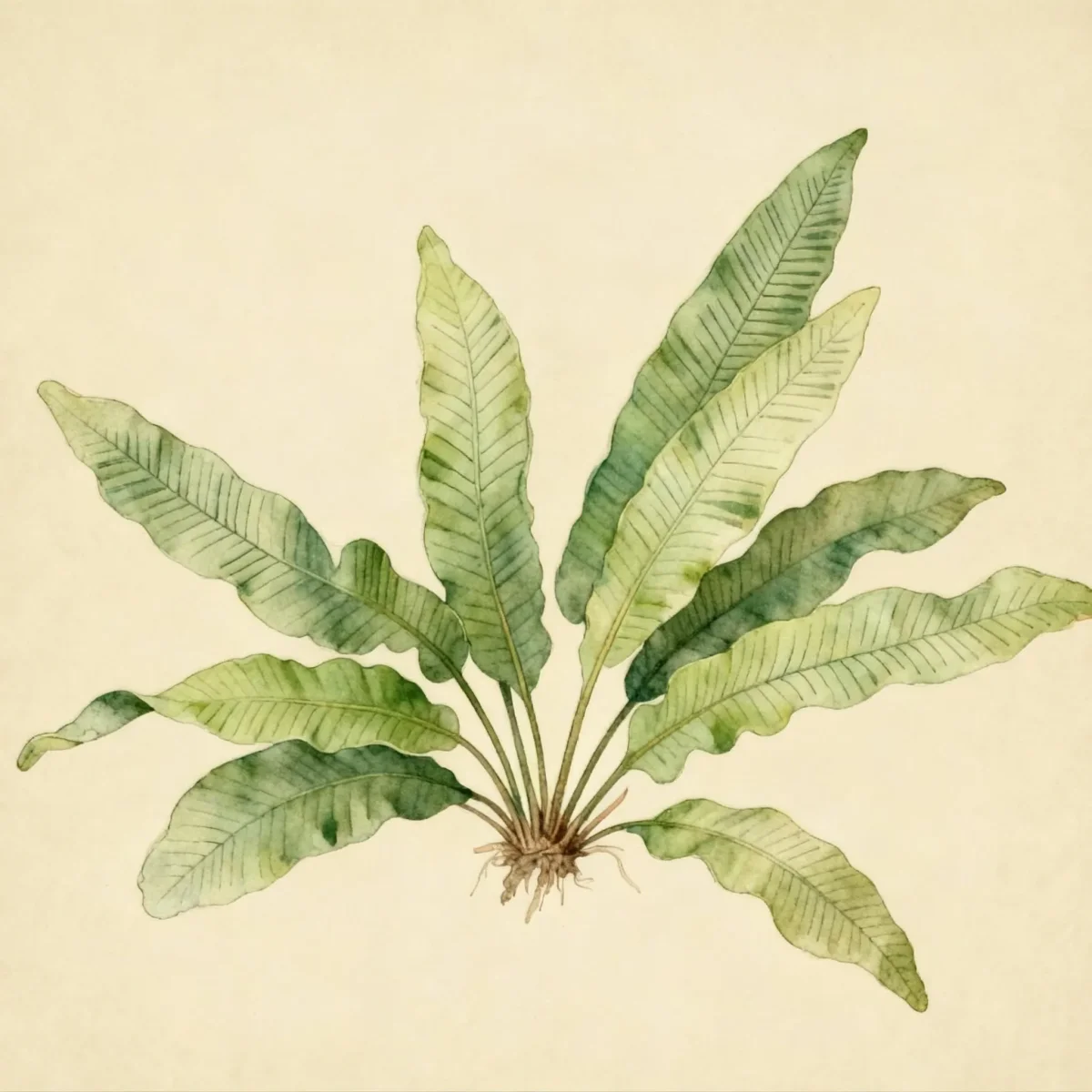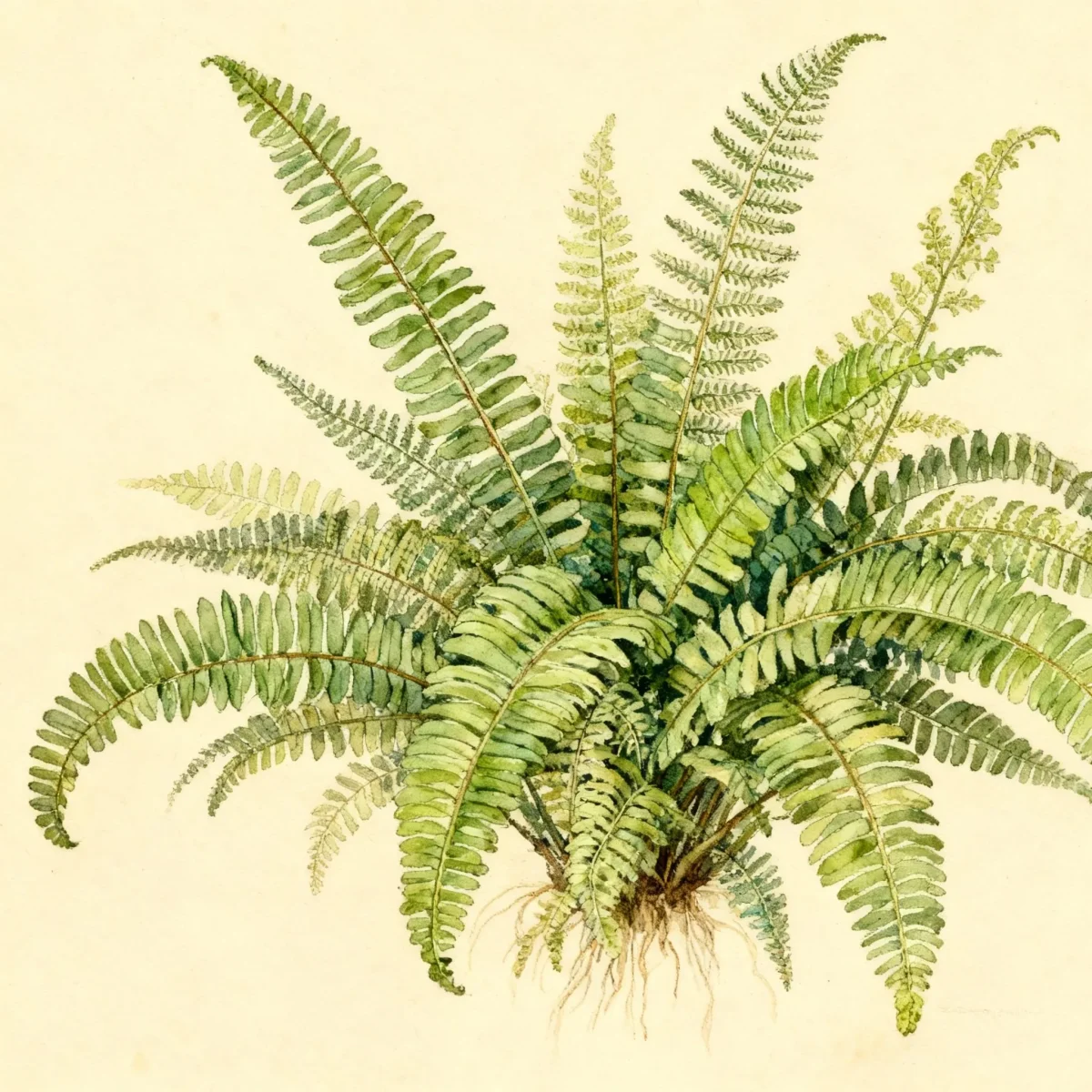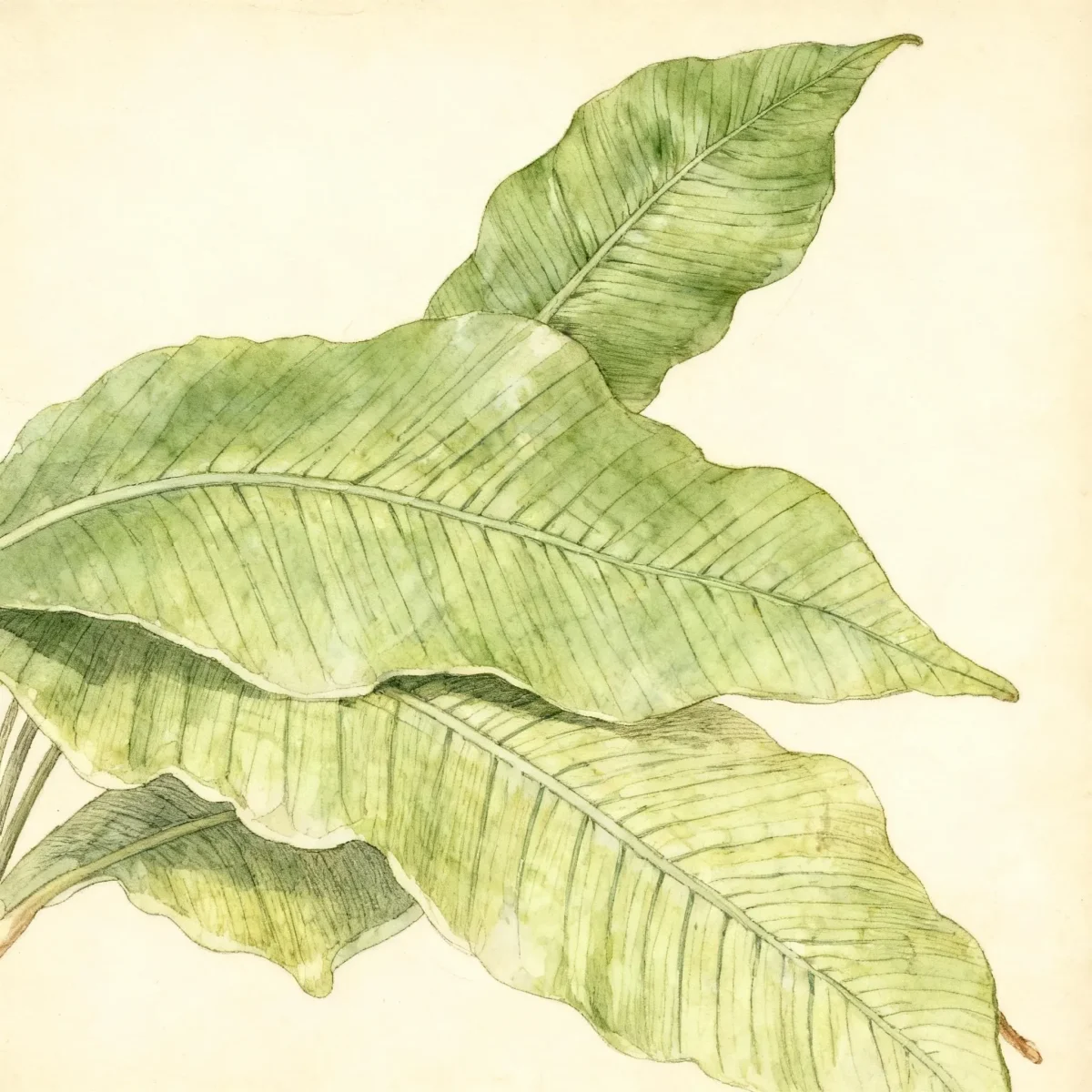

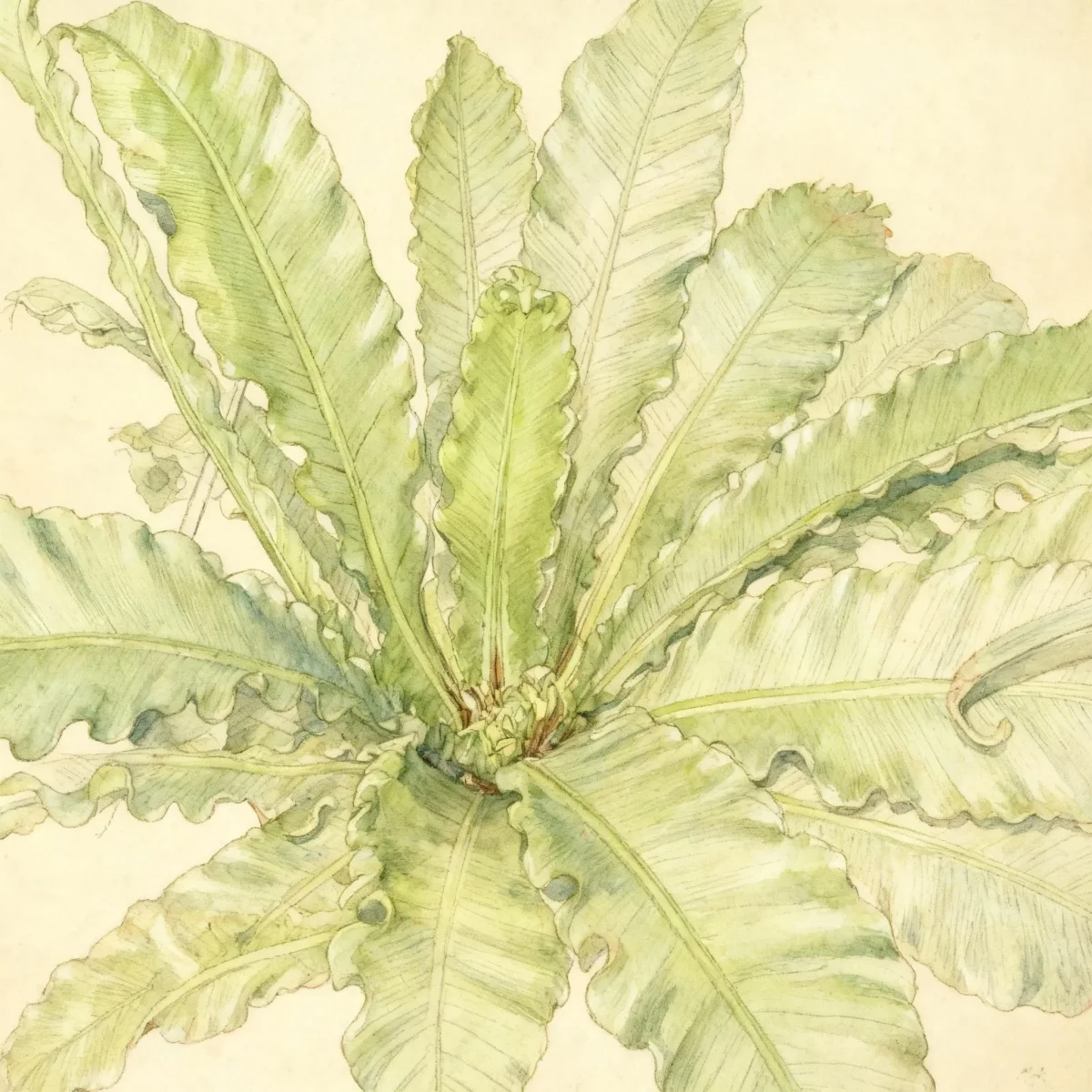
Bird's nest fern (Asplenium nidus 'Antiquum')
The Asplenium nidus 'Antiquum', or Bird's nest fern, offers glossy, wavy fronds forming a striking rosette perfect for shade or indoor areas.
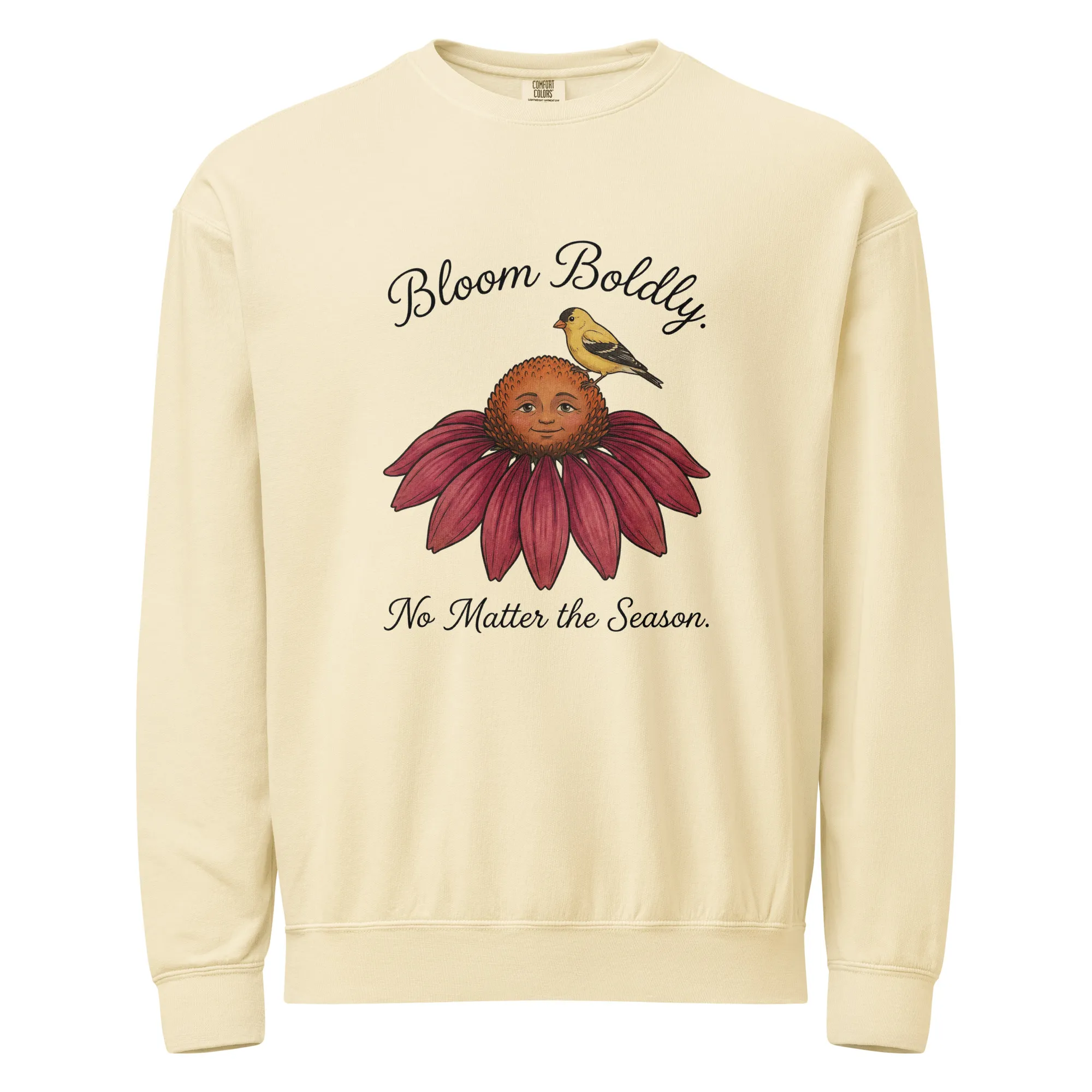
Bloom Boldly, No Matter the Season - Sweatshirt
Cozy organic cotton sweatshirt featuring our exclusive Purple Coneflower design. Perfect for gardeners who bloom year-round.
Inspired by the beautiful Bird's nest fern
Limited first batch (50) — join the waitlist for early access
Waitlist closes Feb 15, 2026.
Complete Plant Information
Field Guide Continues
Ready for care notes, companion picks, and planting tips?
The map is just the start. The full guide below covers growth habits, seasonal performance, and landscape uses.
Overview
The Asplenium nidus ‘Antiquum’, widely known as the Bird’s nest fern, is prized for its architectural shape and deeply glossy, bright apple-green foliage. Its distinctive fronds emerge from a central, nest-like rosette, making it an excellent focal point even when mature fronds are contained to just 1.5 to 2 feet indoors. It provides rich, tropical texture wherever it is grown.
This epiphyte’s natural habitat suggests its cultural needs, preferring warm, humid environments shielded from harsh light. While outdoor cultivation is restricted to USDA Zones 10 and 11, the Bird’s nest fern thrives as a spectacular houseplant globally. Gardeners value the unique, undulating margins of the ‘Antiquum’ cultivar, distinguishing it from the straight-edged types.
As a slow-growing specimen, the Asplenium nidus ‘Antiquum’ offers long-term visual appeal, particularly in shaded garden corners or as a substantial element in an interior landscape scheme. Its lack of significant flowers or fruit means its impact is entirely derived from its superior foliage structure.
Fast Facts
- Plant Family: Aspleniaceae
- Plant Type: Fern
- Hardiness Zones: USDA Zones 10-11
- Size at Maturity:
- Height: 1.5-2 ft
- Spread: 3-4 ft
- Bloom Time: Non-flowering
How to Grow
For outdoor planting in Zones 10-11, locate your Bird’s nest fern in warm, shady areas. The soil must be rich in humus but remain consistently moist and well-drained, incorporating materials like leaf mold, sand, and grit to ensure proper aeration. Avoid all direct sun exposure, as this scorches the delicate fronds rapidly. Outdoor plants prefer temperatures above 50°F, although they can briefly handle dips near 38°F.
When growing Asplenium nidus ‘Antiquum’ indoors, select a location that provides bright, filtered light—north-facing windows are often ideal. Use a porous, well-drained, peaty potting mix for containers. Consistency is key for both light and moisture; keep the soil uniformly moist, but never waterlogged.
Humidity is critical for the health of this tropical fern. Aim for fairly high moisture levels indoors, which can be achieved by placing the plant near naturally humid areas like bathrooms or by setting the pot atop a tray filled with wet pebbles. Maintain ideal indoor temperatures between 60-70°F, ensuring the temperature does not drop below 55°F, especially for indoor specimens which are often less tolerant than their outdoor counterparts.
Landscape Uses
The striking form of the Bird’s nest fern makes it an excellent specimen plant, particularly where deep shade persists. Where conditions allow, they can be grown directly in the ground or even affixed as epiphytes to tree trunks, mimicking their natural rainforest habitat. This fern brings immediate visual impact and deep green color to these darker spaces.
Indoors, the architectural rosette structure excels as a floor plant in low-light corners or on pedestals, offering excellent visual contrast against lighter walls or minimalist decor. The Asplenium nidus ‘Antiquum’ pairs well with other humidity-loving tropicals or broad-leaved understory plants that share similar filtered light requirements, creating a lush, layered environment.
Standout Features
Noteworthy Characteristics
The Asplenium nidus, commonly called bird’s nest fern, is a slow-growing, epiphytic fern of the spleenwort family featuring simple, entire, strap-shaped, glossy, bright apple green fronds with contrasting dark brown to black midribs and undulating margins. Fronds spread upward and outward to form a vase-shaped, green rosette with a nest-like center into which organic matter typically accumulates. The cultivar ‘Antiquum’ is particularly noted for its very attractive wavy margins, clearly separating it from standard forms.
Tolerances
- Watch for slugs and scale.
- Drafts may cause fronds to brown at the edges.
- Mealybugs.
- Bacterial leaf diseases.
- Leaf nematode is also common.
Potential Problems
Be vigilant for common pests such as slugs and scale, which can severely damage the foliage if left unchecked. Indoors, mealybugs are another frequent concern on the Bird’s nest fern. One critical management point involves avoiding chemical insecticides, as they are often too harsh for the plant; use insecticidal soaps if control is necessary. Drafts are particularly irritating to this species and frequently result in the edges of the fronds browning prematurely.
Bacterial diseases can also affect the plant, and leaf nematodes are a known issue, though often less common than pest infestations. Maintaining high ambient humidity and avoiding harsh chemicals are the primary preventative steps for keeping your Asplenium nidus ‘Antiquum’ healthy.
Frequently Asked Questions
What hardiness zones is Bird’s nest fern suitable for?
The Asplenium nidus ‘Antiquum’ is reliably hardy only in USDA Zones 10 through 11 for outdoor planting. In cooler climates, it must be kept indoors or protected when temperatures approach 50°F.
How large does Asplenium nidus ‘Antiquum’ grow?
When grown outdoors or in ideal conditions, the fern can achieve a height of up to 2 feet with a spread reaching 4 feet. Indoor container specimens are often slightly smaller, typically topping out around 1.5 feet tall and spreading 3 feet wide.
What sun exposure does Bird’s nest fern need?
This fern performs best in bright, filtered light indoors, thriving near north-facing windows. Outdoors, it requires bright shade; direct sun will cause damage to the attractive green fronds.
When does Bird’s nest fern bloom?
The Bird’s nest fern is non-flowering, as is typical for ferns, reproducing via spores found on the undersides of the mature fronds.
Conclusion
The Asplenium nidus ‘Antiquum’ lends unmatched architectural beauty and year-round deep green color to shaded landscapes and interiors alike. Its wavy fronds and unique rosette structure establish the Bird’s nest fern as a premier foliage specimen. Before planting, confirm your local climate aligns with USDA Zones 10-11 or plan specifically for its moderate indoor care requirements.
Companion Planting
When designing groupings for shaded areas, pair the Asplenium nidus ‘Antiquum’ with other plants that share an affinity for high humidity and indirect light. Hostas with variegated foliage or deep purple varieties create excellent contrast against the fern’s glossy green texture. Similarly, Sarcococca (Sweet Box) or Mahonia provide winter interest near where the fern is planted, though these woody shrubs require denser shade protection if placed immediately adjacent to the fern outdoors.
Indoors, place the Bird’s nest fern near large-leaf philodendrons or large Peace Lilies (Spathiphyllum). These plants share similar water and humidity demands, allowing you to create one microclimate zone that benefits all the tropical species simultaneously.
Indoor Care Calendar
Spring is the best time to repot, ensuring the well-drained, peaty mix is fresh, allowing rapid growth spurred by warmer indoor conditions. During the height of summer, monitor watering closely; the need to keep soils uniformly moist increases substantially in warm homes. Autumn signals the time to ensure temperatures remain securely above the 55°F minimum threshold, moving containers away from any cold exterior glass or drafty doorways. Winter care centers entirely on humidity management; supplement dry furnace air with humidifiers or pebble trays, as this is the most common stress point for Asplenium nidus ‘Antiquum’ during this season.