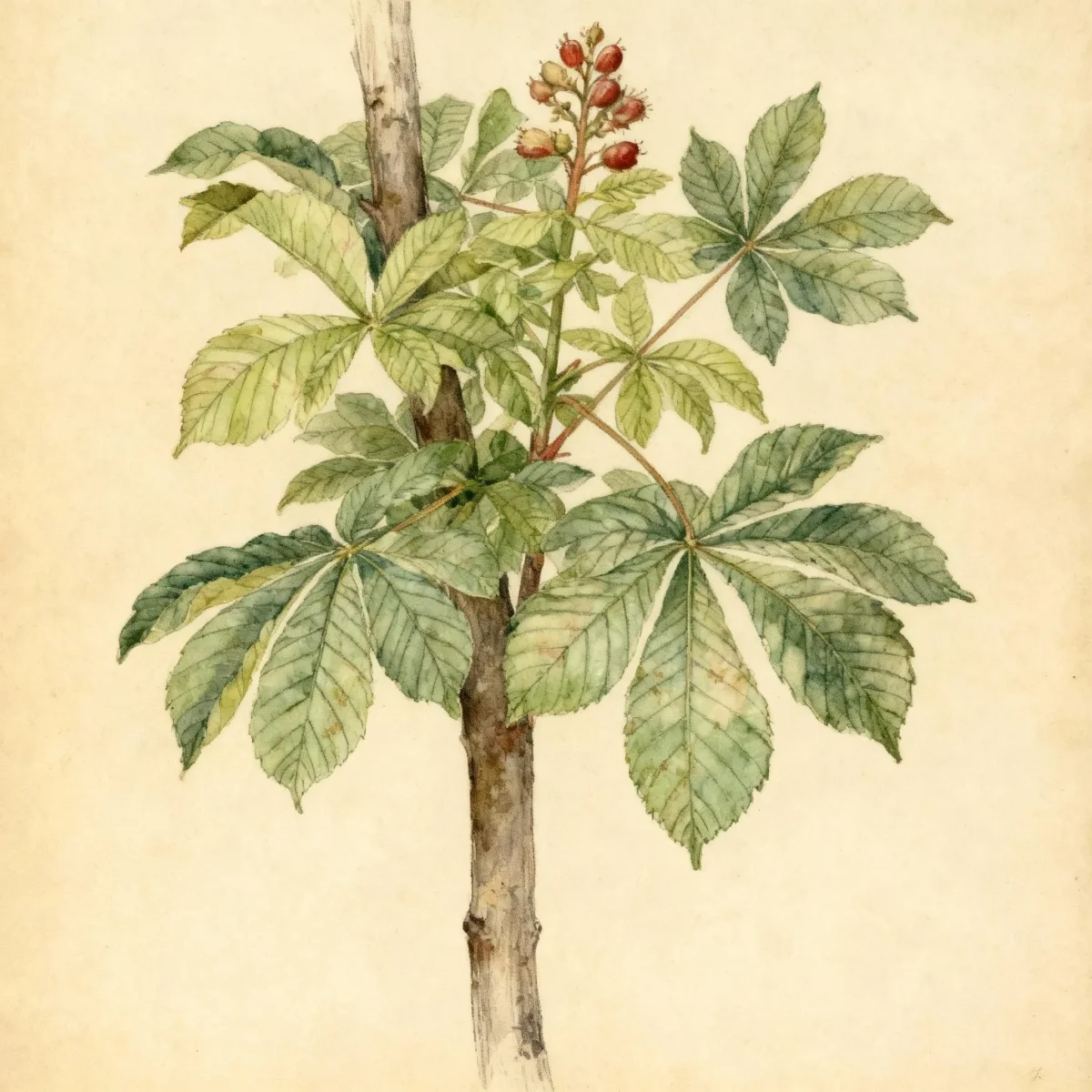
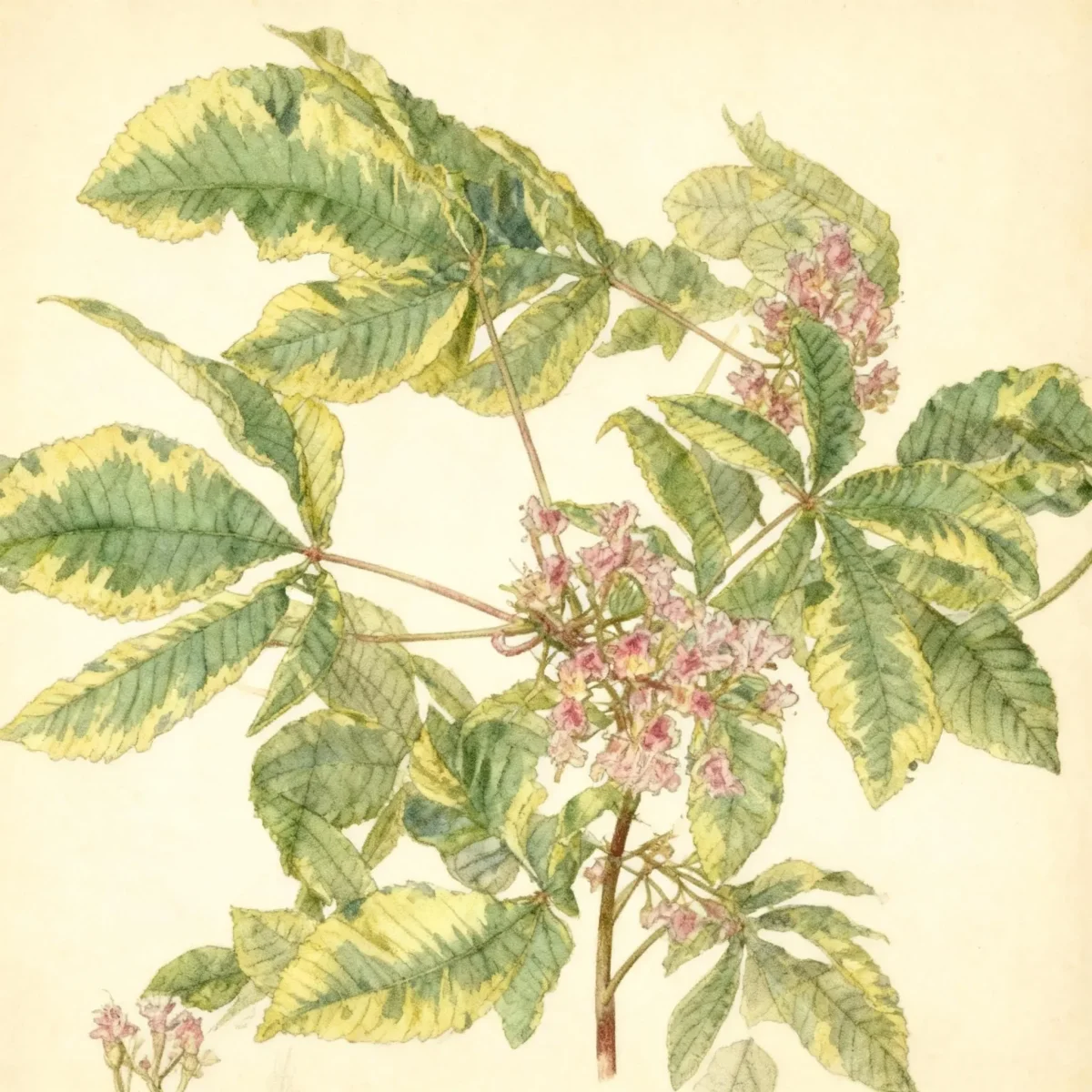
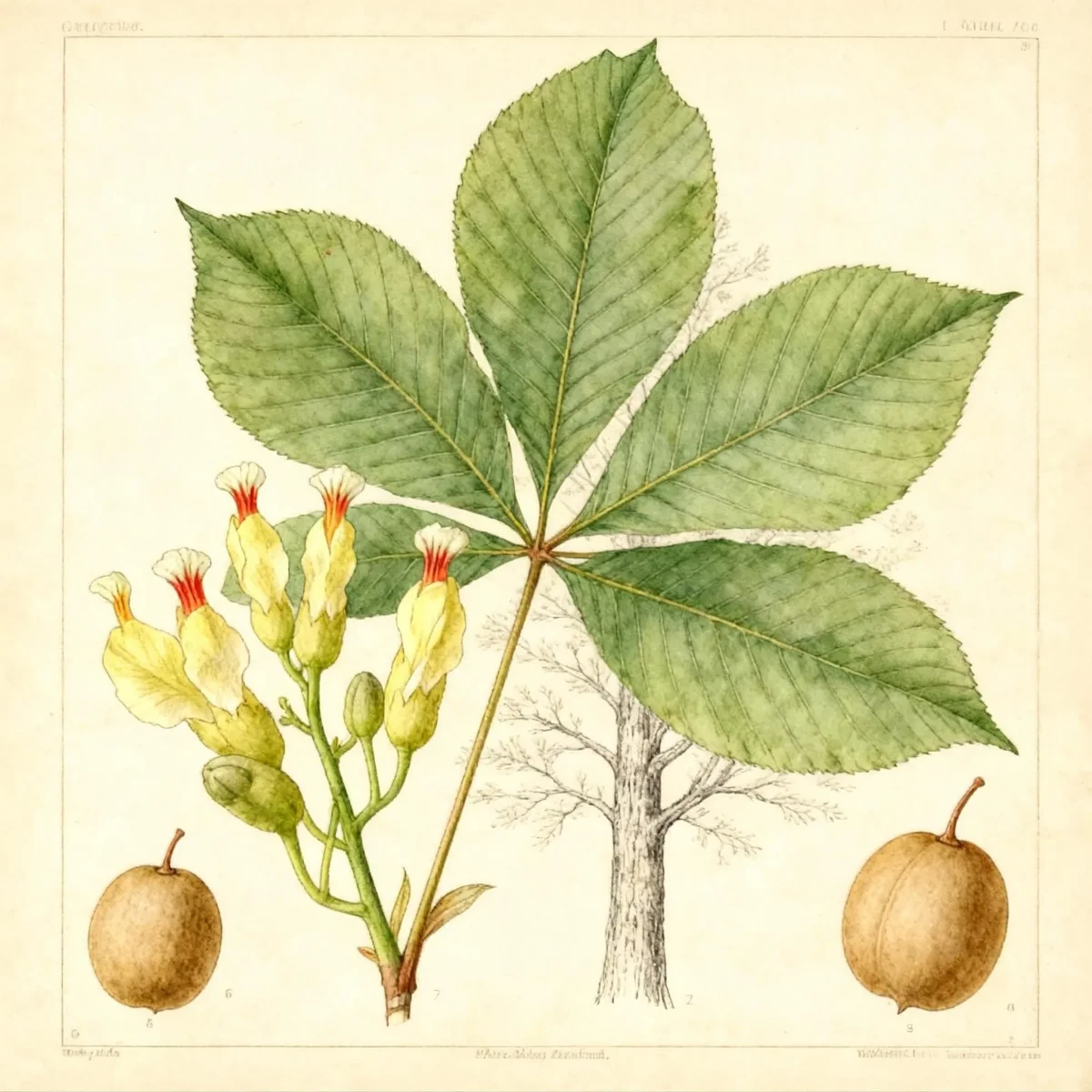
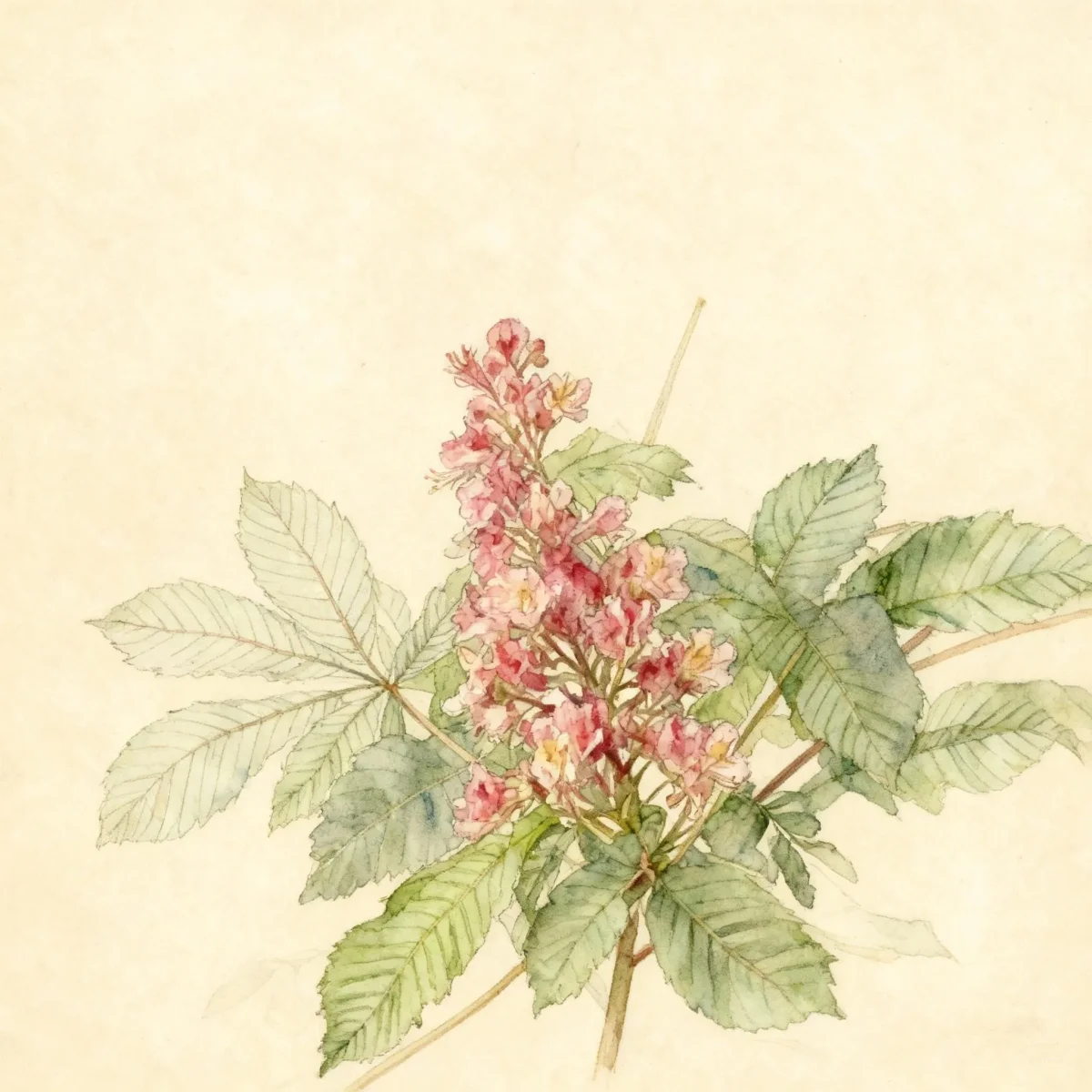
Red horse chestnut (Aesculus × carnea 'Briotii')
Aesculus × carnea 'Briotii' offers brilliant red spring flowers, growing into a 25-35 ft Red horse chestnut perfect for large lawns.

Bloom Boldly, No Matter the Season - Sweatshirt
Cozy organic cotton sweatshirt featuring our exclusive Purple Coneflower design. Perfect for gardeners who bloom year-round.
Inspired by the beautiful Red horse chestnut
Limited first batch (50) — join the waitlist for early access
Waitlist closes Feb 15, 2026.
Complete Plant Information
Field Guide Continues
Ready for care notes, companion picks, and planting tips?
The map is just the start. The full guide below covers growth habits, seasonal performance, and landscape uses.
Overview
The Red horse chestnut, scientifically known as Aesculus × carnea ‘Briotii’, is a stunning hybrid tree valued primarily for its vibrant spring floral display. Valued for its dense, medium green foliage and upright presentation, this cultivar distinguishes itself from its parentage with notably darker red flowers and larger flower panicles. Gardeners select Aesculus × carnea ‘Briotii’ when a medium-sized shade tree with significant ornamental impact is required for open areas.
This deciduous tree establishes quickly when young but develops a noticeable taproot, making transplanting later in its life span challenging for landscapers. It thrives in well-drained soils receiving ample moisture, though the foliage of the Red horse chestnut is prone to scorching in dry, windy environments. While maintenance is categorized as medium, its impressive spring color makes the effort worthwhile for homeowners with space for this handsome specimen.
Fast Facts
- Plant Family: Sapindaceae
- Plant Type: Tree
- Hardiness Zones: USDA Zones 5-8
- Size at Maturity:
- Height: 25-35 ft
- Spread: 25-35 ft
- Bloom Time: May
- Bloom Description: Red
- Sun Exposure: Full sun to part shade
- Water Needs: Medium
- Maintenance Level: Medium
How to Grow
Planting the Red horse chestnut is best achieved in spring or fall when soil temperatures are moderate, ensuring the establishment of its critical taproot system. Locate Aesculus × carnea ‘Briotii’ where it will receive full sun to partial shade; however, protection from excessive afternoon heat and wind is crucial to minimize leaf scorch. This tree prefers average, well-drained soils, but consistently moist, fertile conditions will promote the best growth and foliage quality.
Care requirements center on maintaining consistent moisture, especially during establishment and hot weather, as dry conditions rapidly cause foliage depreciation. While fertilizing is usually unnecessary in fertile soil, avoid over-fertilizing, which can sometimes encourage susceptibility to pests. Pruning should be minimal, focusing only on removing crossing or damaged limbs, as the tree naturally develops a pleasing oval to rounded canopy structure.
A key consideration for Aesculus × carnea ‘Briotii’ is its difficulty to move once mature due to its deep taproot, so select the permanent location carefully from day one. Although it is a hybrid, gardeners should note that plants grown from the viable seeds produced by the tree will generally grow true to type, offering a low-cost method of propagation.
Landscape Uses
The Red horse chestnut functions exceptionally well as a specimen or shade tree in spacious parks and large residential lawns where its structure can be fully appreciated. Its upright flower panicles offer an excellent focal point in the mid-spring landscape, demanding attention before many other deciduous trees reach their full leaf-out. Given its mature size, it requires significant clearance from structures and overhead utility lines.
While it serves beautifully as a shade tree, garden designers should exercise caution when placing the Red horse chestnut near patios or walkways. The tree produces prickly capsules containing nuts, leading to significant litter problems that can make it unsuitable as a street tree or in high-traffic garden areas. When selecting companions, choose understory plants that tolerate partial shade and can handle root competition once the tree matures.
Standout Features
Flower Qualities
- Showy
Noteworthy Characteristics
Aesculus × carnea, commonly called red horse chestnut, is the result of a cross between A. Hippocastanum and A. Pavia that was discovered in Europe in 1812. It is a small, oval to rounded, deciduous tree noted for its attractive red flowers featuring dark green, palmate compound leaves. The cultivar ‘Briotii’, named in 1858, is distinguished by its darker red flowers appearing in upright terminal panicles up to 8-10 inches long in mid-spring. These flowers are followed by slightly prickly capsules containing poisonous nuts.
Tolerances
- None listed
Potential Problems
Leaf blotch is cited as a significant potential disease problem for Red horse chestnut. Gardeners should also watch for powdery mildew and general leaf spotting, which can detract from the tree’s aesthetic appeal, particularly later in the season. Insects such as bagworms, Japanese beetles, and borers can sometimes pose a threat, though they are generally infrequent.
Preventative care is crucial for the health of Aesculus × carnea ‘Briotii’. Ensure proper watering to prevent drought stress, which leads directly to leaf scorch (browning at the edges). While the tree has better disease resistance than some relatives like A. Hippocastanum, maintaining good air circulation during planting can help mitigate fungal issues like leaf blotch.
Frequently Asked Questions
What hardiness zones is Red horse chestnut suitable for?
The Red horse chestnut, Aesculus × carnea ‘Briotii’, is suitable for USDA Hardiness Zones 5 through 8.
How large does Red horse chestnut grow?
This tree typically reaches a mature height between 25 and 35 feet, with a similar spread of 25 to 35 feet.
What sun exposure does Aesculus × carnea ‘Briotii’ need?
Aesculus × carnea ‘Briotii’ performs best when situated in a location that receives full sun to part shade.
When does Red horse chestnut bloom?
The blooming time for the Red horse chestnut is generally in May, producing showy red flowers.
Conclusion
The Red horse chestnut, or Aesculus × carnea ‘Briotii’, remains a magnificent choice for large landscape settings needing substantial scale and brilliant seasonal color from its dark red blooms. Its disease resistance is generally superior to some related chestnuts, though moisture management is key to preventing leaf scorch. Before planting, verify that your planting site falls within USDA Zones 5-8 and that you have sufficient room for its mature canopy.
Companion Planting
When planning the understory for your Red horse chestnut, focus on species that share similar preferences for medium moisture and well-drained soil. Plants that tolerate dappled light from the tree’s canopy once it matures, such as Hostas or certain shade-loving ferns, make excellent groundcovers. Avoid planting shallow-rooted, highly competitive species too close, as the Aesculus × carnea ‘Briotii’ develops a substantial root system, including a prominent taproot.
For seasonal color contrast, consider spring-flowering bulbs planted beneath the tree, as they will complete their cycle before the large leaves of the Red horse chestnut create deep shade. In late summer or fall, drifts of Astilbe or Brunnera can thrive on the moisture the tree prefers, providing texture when the prominent flower panicles of Aesculus × carnea ‘Briotii’ are long gone.
Propagation Tips
Gardeners interested in increasing their stock of this hybrid can utilize the seeds it produces. While standard Aesculus species can be tricky to germinate, plants grown from the nuts of Aesculus × carnea ‘Briotii’ will generally come true to the parent cultivar. Start seeds indoors after a period of cold stratification to mimic natural winter conditions and improve germination rates.
Be aware that this tree is a hybrid, meaning propagation by cuttings is notoriously difficult and generally unreliable for achieving the desired cultivar traits. Therefore, seed collection and nursery sourcing remain the most reliable methods to introduce new specimens of this Red horse chestnut to your garden space.