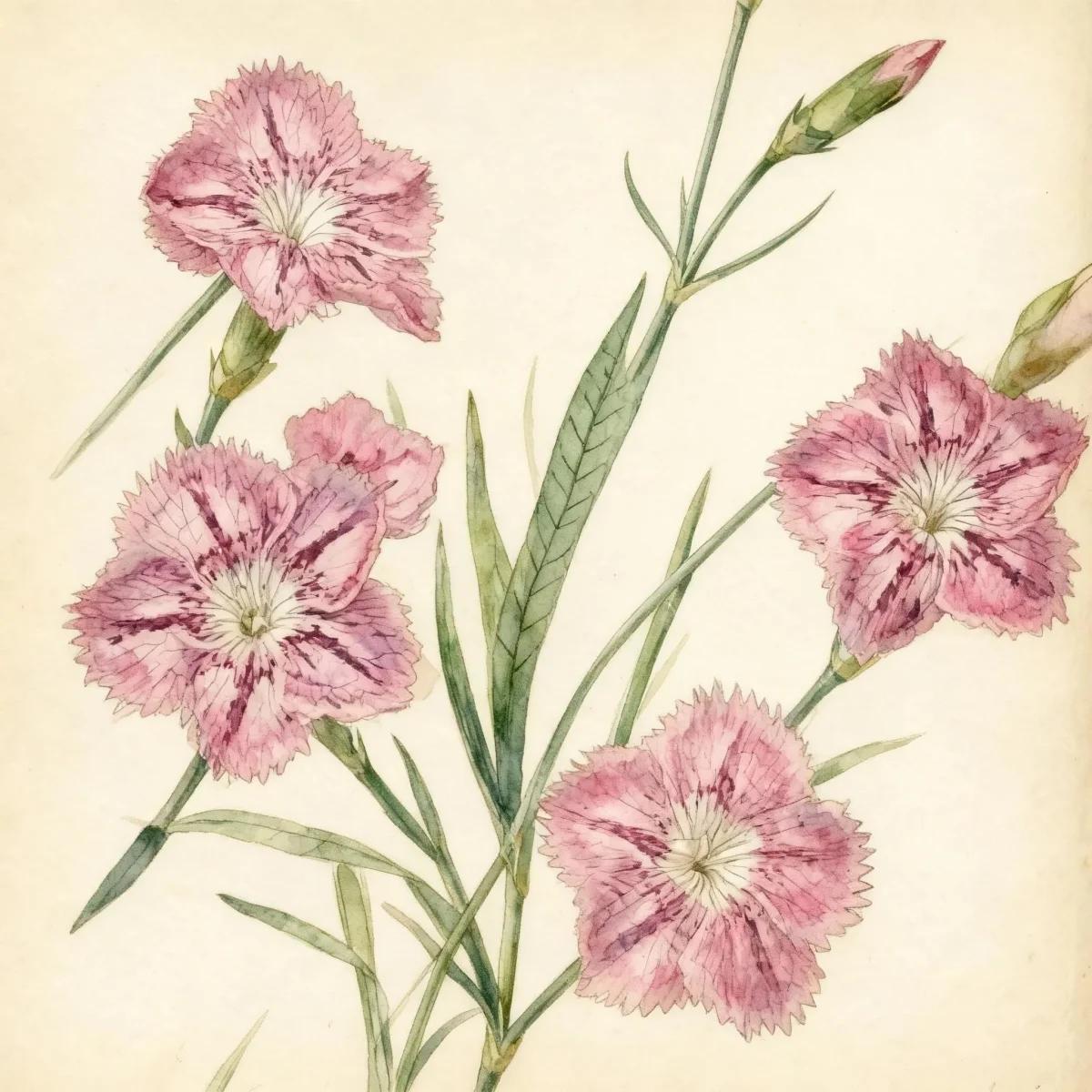
Carnation (Dianthus 'Laced Romeo')
Dianthus 'Laced Romeo' is a low-maintenance, fragrant Carnation known for its showy red flowers fringed with white, thriving in full sun.
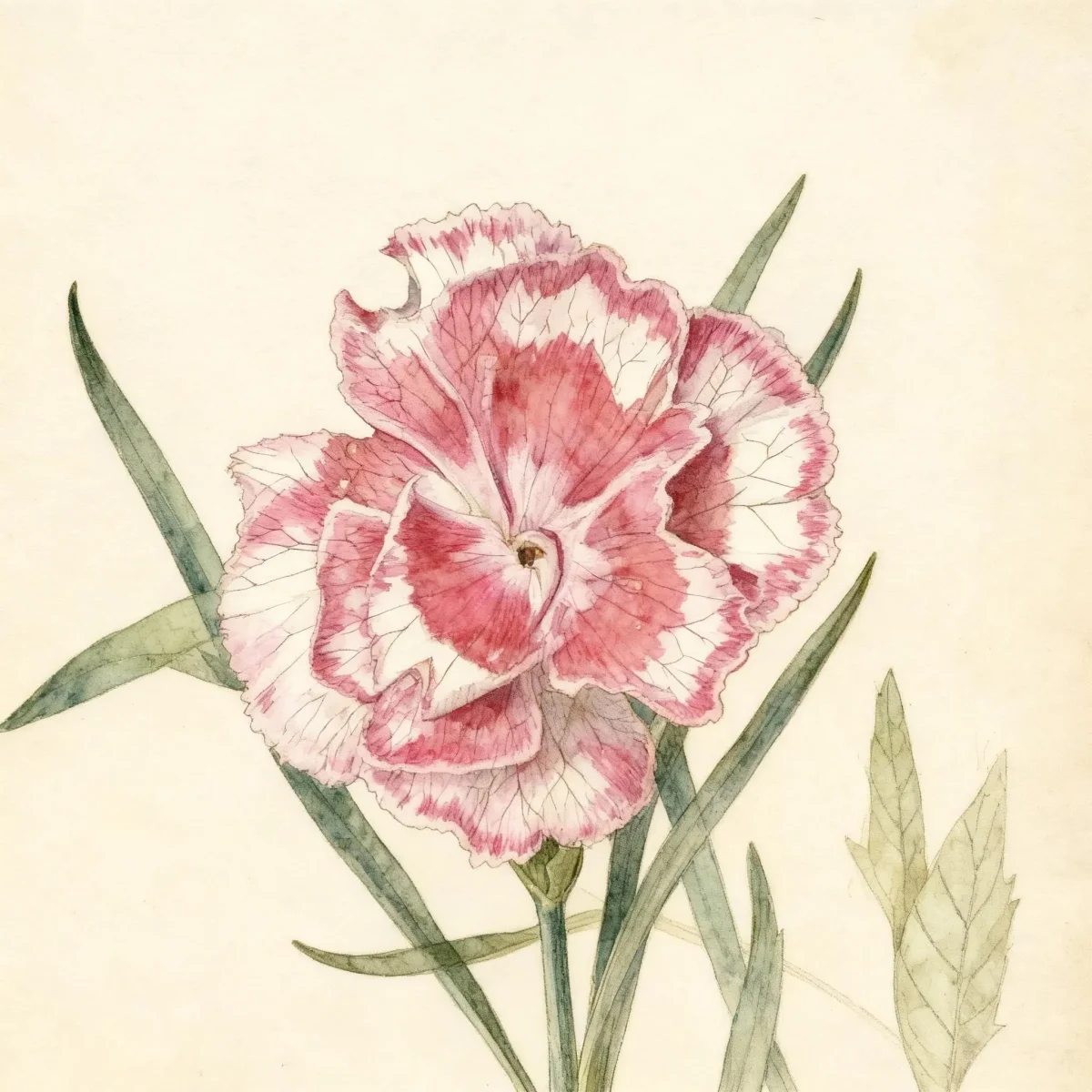

Bloom Boldly, No Matter the Season - Sweatshirt
Cozy organic cotton sweatshirt featuring our exclusive Purple Coneflower design. Perfect for gardeners who bloom year-round.
Inspired by the beautiful Carnation
Limited first batch (50) — join the waitlist for early access
Waitlist closes Feb 15, 2026.
Complete Plant Information
Field Guide Continues
Ready for care notes, companion picks, and planting tips?
The map is just the start. The full guide below covers growth habits, seasonal performance, and landscape uses.
Overview
Dianthus ‘Laced Romeo’ offers gardeners a charming, low-growing option among the diverse world of carnations. This herbaceous perennial stands out with its intensely fragrant, deeply fringed flowers, presenting a striking color combination of red edged perfectly with white. Its compact habit makes it an excellent structural piece in mixed borders and rockeries.
This variety, often simply called a pink or carnation, thrives when given ample sunlight, which is crucial for prolific blooming. While it appreciates consistent moisture, good drainage is paramount to its survival, particularly during hot summers. Dianthus ‘Laced Romeo’ brings reliable performance and year-after-year color to the garden space.
The appealing fragrance and the visual pop of the ruffled blooms also make this plant a favored choice for cutting gardens, although it is most commonly enjoyed as a long-lasting border accent. Growing Dianthus ‘Laced Romeo’ successfully requires attention to soil structure and sun exposure to maximize its performance as a low-maintenance perennial.
Fast Facts
- Plant Family: Caryophyllaceae
- Plant Type: Herbaceous perennial
- Hardiness Zones: USDA Zones 5-8
- Size at Maturity:
- Height: 1-1.5 ft
- Spread: 1-1.5 ft
- Bloom Time: May to July
- Bloom Description: Red fringed with white
- Sun Exposure: Full sun
- Water Needs: Medium
- Maintenance Level: Low
How to Grow
Dianthus ‘Laced Romeo’ should ideally be planted in the spring after the danger of hard frost has passed, placing it in a location that receives full, uninterrupted sun exposure. Plants perform best in organically rich, gritty loam soils that are slightly alkaline to neutral. Ensure excellent drainage, as sitting water or perpetually soggy conditions will quickly lead to root issues for this carnation. Incorporating leaf mold can help retain necessary moisture while still keeping the soil gritty enough for proper aeration.
Water this perennial moderately, aiming for evenly moist soil, especially during dry spells in the summer months when temperatures rise. While the plant needs consistent moisture, avoid overhead watering whenever possible, which can encourage fungal issues like powdery mildew. Fertilization is generally simple; enrich the soil prior to planting, but heavy feeding later is usually unnecessary.
Pruning is crucial for maintaining the tidy appearance and extending the bloom period of Dianthus ‘Laced Romeo’. Deadheading spent flowers promptly will encourage the plant to produce subsequent flushes of bloom into late summer or early fall. After the main spring bloom finishes, consider shearing the entire plant back lightly to tidy up the mat of foliage and refocus the plant’s energy on new growth.
Landscape Uses
The compact size and spreading habit of Dianthus ‘Laced Romeo’ make it exceptionally versatile in landscape design. A primary role for this carnation is along the front edge of perennial borders, where its texture and distinct flower color can clearly define the border line. Its dense matting nature also makes it suitable for use as a low-growing ground cover in sunny, well-drained areas where a splash of red and white is desired.
Beyond traditional borders, Dianthus ‘Laced Romeo’ excels in specialized settings. It is highly recommended for rock gardens, cascading over stones where the gritty soil mimics its preferred environment. Similarly, it thrives when planted in containers or window boxes, providing vertical interest that is often elevated above the rim, and it can even establish itself successfully on dry stone walls.
Standout Features
Flower Qualities
- Showy
- Fragrant
Noteworthy Characteristics
Perennial dianthus, commonly called carnations or pinks, are loosely-tufted, herbaceous perennials that features fragrant, often double flowers on stiff stems clad with narrow, linear, gray-green foliage. The cultivar ‘Laced Romeo’ is specifically recognized for double red flowers fringed with white rising 12-15 inches above a silver-gray foliage mat, releasing a pleasing fragrance during its main bloom period from mid-spring to early summer. The common name “pink” likely refers to the fringed margins of the petals, which resemble cuts made by pinking shears.
Tolerances
- Deer
Potential Problems
Carnations, including Dianthus ‘Laced Romeo’, are susceptible to various fungal and bacterial issues such as botrytis, rust, and powdery mildew, particularly if humidity is too high or air circulation is poor. To manage these, ensure the plant has full sun and excellent drainage, and avoid overhead watering. Pest concerns include aphids, leafminers, and scale, which are generally less severe when the plant is grown outdoors compared to greenhouse production. Proactive deadheading and light shearing after the first flush help keep the plant vigorous enough to fend off minor infestations.
Frequently Asked Questions
What hardiness zones is Carnation (Dianthus ‘Laced Romeo’) suitable for?
Dianthus ‘Laced Romeo’ is suitable for growing within USDA Hardiness Zones 5 through 8.
How large does Carnation (Dianthus ‘Laced Romeo’) grow?
This variety typically reaches a height between 1 and 1.5 feet, with a similar spread ranging from 1 to 1.5 feet wide.
What sun exposure does Carnation (Dianthus ‘Laced Romeo’) need?
Dianthus ‘Laced Romeo’ requires full sun exposure to achieve its best flowering performance.
When does Carnation (Dianthus ‘Laced Romeo’) bloom?
This carnation variety blooms primarily from May to July, displaying flowers that are red fringed with white.
Conclusion
Dianthus ‘Laced Romeo’ is a highly valuable addition to any sunny garden spot, rewarded with showy, richly fragrant blooms with minimal effort. Its low maintenance level and deer resistance make this reliable carnation a gardener’s friend. Ensure you have well-drained soil and full sun before planting this beautiful variety to enjoy its display year after year.
Companion Planting
When planning a border featuring Dianthus ‘Laced Romeo’, consider pairing it with plants that share its cultural needs for drainage and sun while offering contrasting texture or foliage color. Silver-leaved companions work well to complement the gray-green foliage of the carnation. Consider planting alongside Thyme, Sedum varieties, or low-growing ornamental grasses, all of which appreciate similar gritty, well-drained soil conditions.
Container Growing Success
While Dianthus ‘Laced Romeo’ excels in the ground, it is an excellent candidate for container arrangements, especially in mixed planters where it can spill slightly over the edge. When planting in pots, use a high-quality potting mix amended with extra grit, sand, or perlite to guarantee the necessary sharp drainage. Because containers dry out faster than garden beds, monitor watering closely, ensuring the ‘medium’ water needs are consistently met without allowing waterlogging at the bottom of the pot.