

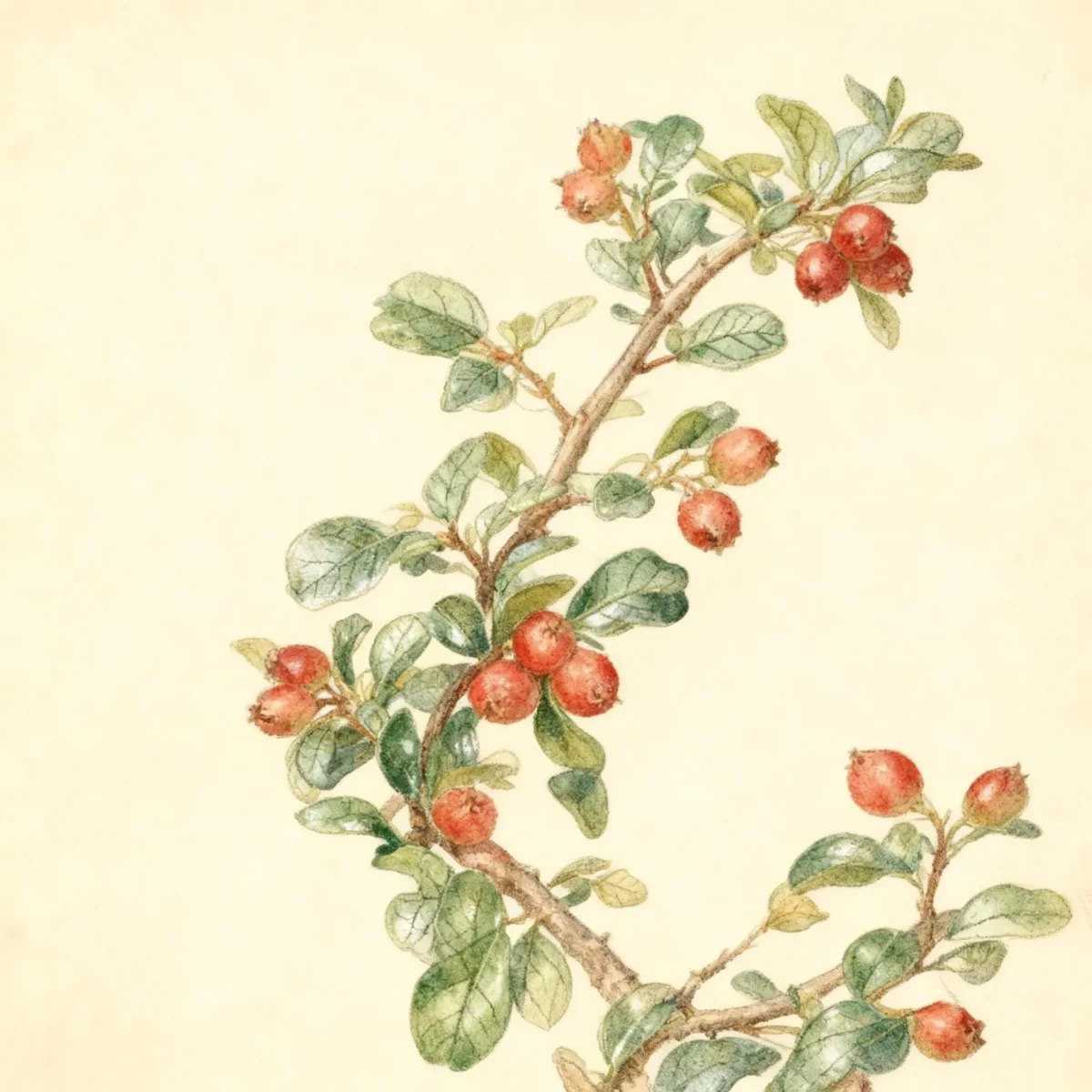
Creeping cotoneaster (Cotoneaster nanshan)
The low-growing Cotoneaster nanshan forms dense mounds, valued for bright red berries and glossy foliage. Ideal ground cover.

Bloom Boldly, No Matter the Season - Sweatshirt
Cozy organic cotton sweatshirt featuring our exclusive Purple Coneflower design. Perfect for gardeners who bloom year-round.
Inspired by the beautiful Creeping cotoneaster
Limited first batch (50) — join the waitlist for early access
Waitlist closes Feb 15, 2026.
Complete Plant Information
Field Guide Continues
Ready for care notes, companion picks, and planting tips?
The map is just the start. The full guide below covers growth habits, seasonal performance, and landscape uses.
Overview
Creeping cotoneaster, scientifically known as Cotoneaster nanshan, is a robust, low-growing deciduous shrub highly valued for its dense, spreading habit. This plant excels at covering slopes and difficult areas due to its arching stems that readily root where they touch the soil, forming an almost impenetrable mat. Gardeners prize Cotoneaster nanshan not only for its attractive glossy green foliage but especially for the abundant display of small, bright red berries that ripen in late summer and persist well into the winter months.
This resilient shrub is an excellent choice for naturalized plantings or as a functional ground cover where a tidy, manicured look is secondary to coverage. While the tiny pink flowers in spring are modest, the resulting fall and winter interest provided by the fruit truly distinguishes the Creeping cotoneaster in the landscape. Understanding the specific needs of Cotoneaster nanshan ensures it thrives across its hardiness range.
Fast Facts
- Plant Family: Rosaceae
- Plant Type: Deciduous shrub
- Native Range: China
- Hardiness Zones: USDA Zones 4-7
- Size at Maturity:
- Height: 2-3 ft
- Spread: 4-6 ft
- Bloom Time: May
- Bloom Description: Pinkish
- Sun Exposure: Full sun to part shade
- Water Needs: Medium
- Maintenance Level: Medium
How to Grow
Plant Cotoneaster nanshan during the cooler seasons—spring or fall—to reduce transplant shock. It thrives best when situated in locations receiving full sun to partial shade. This species is remarkably adaptable, tolerating a wide range of soils, but it performs optimally in medium-moisture, well-drained conditions. Proper drainage is critical to prevent root issues common in heavier, saturated clay soils.
Maintenance for Creeping cotoneaster is generally moderate. Water regularly, especially when establishing, ensuring the soil remains consistently medium in moisture. Once established, its drought tolerance increases, though supplemental watering during prolonged dry spells is beneficial. Generally, heavy fertilization is unnecessary; focus instead on yearly inspection.
Pruning should primarily be aesthetic or corrective, removing dead or crossing branches. Because its value lies in its spreading form, avoid shearing it into formal shapes. If stems root along the ground, you can selectively prune these areas to control spread if necessary, or allow them to continue forming a dense protective cover.
Landscape Uses
The Creeping cotoneaster is perfectly suited for its primary role as ground cover, quickly establishing a dense, shrubby mound that suppresses weeds effectively. Its trailing nature makes it an exceptional choice for softening the edges of retaining walls or cascading over slopes where erosion control is needed. Use the Cotoneaster nanshan as an informal bank cover.
When planting in foundation beds, allow ample space for its significant spread, recognizing that it will sprawl readily into naturalized areas. It works well when interspersed with taller, contrasting shrubs or placed near flowering perennials that bloom during the summer when the cotoneaster’s flowers are past. For broader impact, masses of these ever-spreading shrubs create striking seasonal uniformity.
Standout Features
Flower Qualities
- Showy
Fruit Qualities
- Showy
Noteworthy Characteristics
Cotoneaster nanshan is a deciduous, low-growing shrub grown primarily for its red berries and attractive glossy green foliage that turns reddish purple in autumn. Arching and creeping stems form a dense, spreading mound, with stems capable of rooting where they contact the ground. The small flowers give way to an abundant crop of bright red, berry-like fruits that contrast beautifully with the small, rounded, glossy dark green leaves.
Tolerances
- Rabbit
- Air Pollution
Potential Problems
Cotoneaster nanshan is susceptible to several common shrub diseases, notably fireblight, leaf spots, and canker. Vigilant cultural care is the best defense against these issues. Ensure good air circulation through proper spacing to minimize humidity that encourages fungal development.
Watch actively for pest infestations, including aphids, lacebugs, and the damaging cotoneaster webworm. If pest populations surge, particularly during hot, dry periods when mites are more active, targeted insecticidal soap or horticultural oil applications can manage the outbreak. Quick identification allows for prompt treatment before severe damage occurs.
Frequently Asked Questions
What hardiness zones is Creeping cotoneaster suitable for?
The Cotoneaster nanshan is generally suitable for USDA Hardiness Zones 4 through 7.
How large does Creeping cotoneaster grow?
This shrub achieves a modest height between 2 to 3 feet but spreads widely, typically ranging from 4 to 6 feet in diameter.
What sun exposure does Cotoneaster nanshan need?
Cotoneaster nanshan thrives best when planted in locations receiving full sun or light part shade.
When does Creeping cotoneaster bloom?
Bloom time is typically in May, featuring pinkish blossoms.
Conclusion
The Creeping cotoneaster offers year-round interest through its dense habit, glossy leaves, and persistent red fruit, making Cotoneaster nanshan a highly functional landscape plant for tough spots. Whether used for steep banks or broad ground cover, this plant proves its value as a low-maintenance evergreen-like presence. Before planting, confirm your garden’s location falls within USDA Zones 4-7 to ensure optimal performance for your Creeping cotoneaster.
Companion Planting
Choosing suitable companions prevents overcrowding and accentuates the fine texture of the Cotoneaster nanshan foliage. Pair it with later-blooming perennials that offer color during mid-to-late summer when the cotoneaster’s flowers have faded. Consider medium-height shrubs like Dwarf Fothergilla or Japanese Anemone, which prefer similar sun and moisture conditions but offer varied texture.
Since this plant spreads aggressively via low, arching stems, avoid placing it next to specimen plants that require constant clear sightlines. Instead, use it as a living mulch beneath taller trees or large deciduous shrubs where its tendency to sprawl is an asset rather than a maintenance chore. This ground cover excels adjacent to plantings that can tolerate occasional, light encroachment.
Design Ideas for Slope Stabilization
Because Cotoneaster nanshan is listed for both ground cover and naturalizing uses, it excels in steep applications where mowing is impossible or impractical. Planting in staggered drifts across a slope helps capture soil and slows water runoff immediately. The dense network of roots aids significantly in long-term stability.
When designing naturalized areas, allow Cotoneaster nanshan to mingle with native grasses or hardy native evergreens that share the full sun/part shade preference. This combination creates a low-maintenance, multi-layered ecosystem that supports local wildlife while maintaining effective erosion control throughout the year. The structure of the shrub offers persistent winter interest against dormant grasses.


