
Tall bearded iris (Iris 'Sable Night')
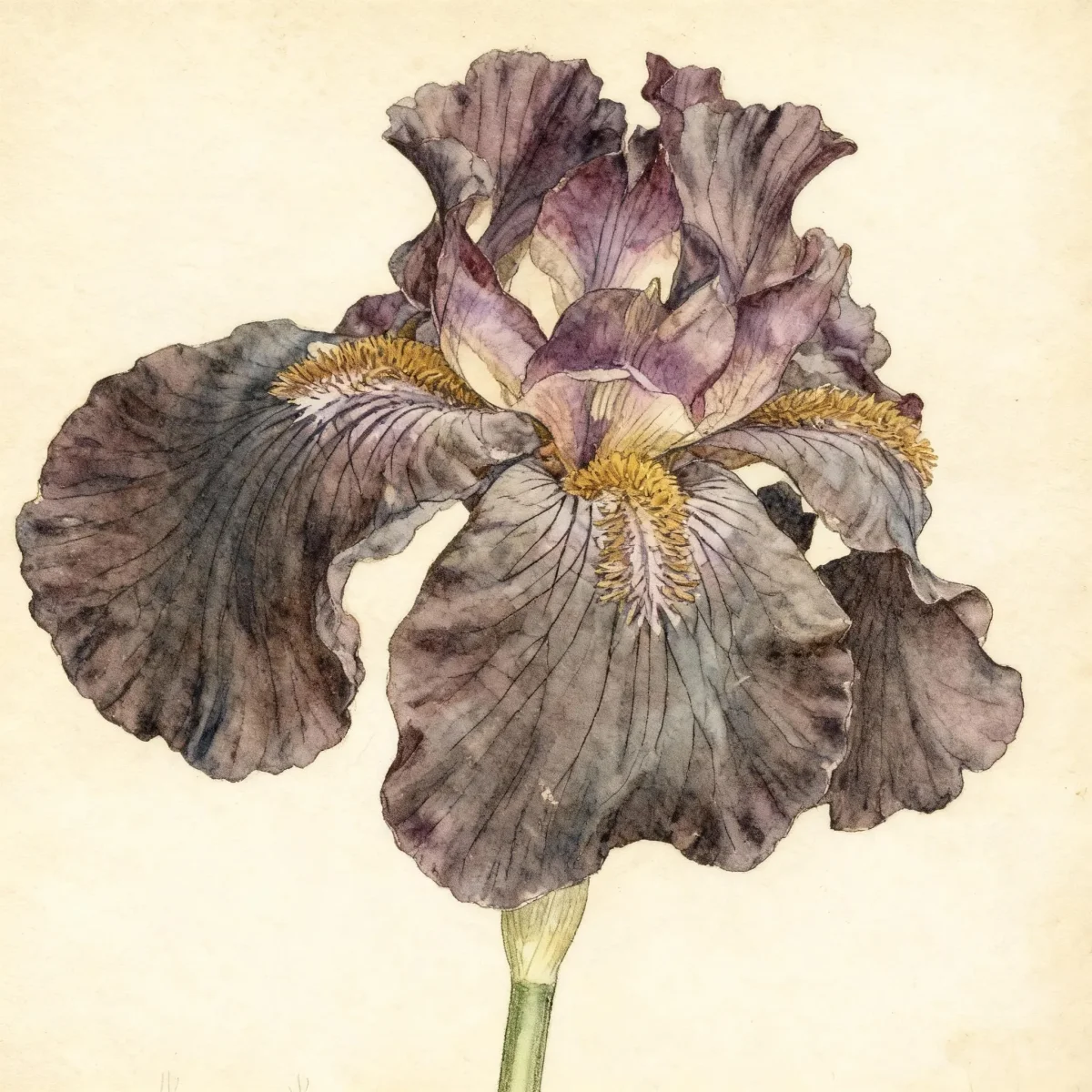
Iris 'Sable Night' is a dramatic Tall bearded iris featuring striking black-violet flowers. Hardy in zones 5-8, it requires full sun and medium water.

Bloom Boldly, No Matter the Season - Sweatshirt
Cozy organic cotton sweatshirt featuring our exclusive Purple Coneflower design. Perfect for gardeners who bloom year-round.
Inspired by the beautiful Tall bearded iris
Limited first batch (50) — join the waitlist for early access
Waitlist closes Feb 15, 2026.
Complete Plant Information
Field Guide Continues
Ready for care notes, companion picks, and planting tips?
The map is just the start. The full guide below covers growth habits, seasonal performance, and landscape uses.
Overview
Iris ‘Sable Night’ delivers dramatic, near-black blooms, making it a standout selection among the Tall bearded iris class. This herbaceous perennial provides robust vertical interest with its erect, sword-shaped leaves, framing the richly colored flowers beautifully. Gardeners prize this cultivar for its intense coloration and reliable performance in sunny borders.
As a rhizomatous iris, successful cultivation of Iris ‘Sable Night’ hinges on providing excellent drainage, particularly in regions prone to high rainfall. When established, this variety displays some drought tolerance, though consistent moisture through the spring encourages the best flowering display. Planning is key, as planting time impacts establishment timing and winter survival.
The visual impact of the deep black-violet standards and falls on this Tall bearded iris is significant, offering incredible contrast against lighter green foliage or brighter spring blooms. Incorporating Iris ‘Sable Night’ into perennial groupings ensures a captivating mid-season floral show.
Fast Facts
- Plant Family: Iridaceae
- Plant Type: Herbaceous perennial
- Hardiness Zones: USDA Zones 5-8
- Size at Maturity:
- Height: 2-3 ft
- Spread: 1-2 ft
- Bloom Time: May
- Bloom Description: Black-violet
- Sun Exposure: Full sun
- Water Needs: Medium
- Maintenance Level: Medium
How to Grow
For optimal vigor, plant the rhizomes of Iris ‘Sable Night’ from late July through October, depending on your local climate, ensuring they are set before the ground freezes hard. Select a location providing full sun exposure, although brief afternoon shade is tolerated in very hot climates. The soil must be well-drained; growth thrives in average, medium-moisture conditions, preferably light and sandy.
Planting technique is crucial for bearded irises to prevent rhizome rot. Create a small mound of soil and place the rhizome over it so that one-third of the rhizome remains exposed above the soil line, with the roots spread horizontally underneath for support. Space individual rhizomes 12 to 20 inches apart. Best performance requires consistent moisture from early spring until about six weeks post-flowering concludes.
If you encounter heavy clay soils or very wet conditions, amend drainage significantly or plant on slopes or raised beds to ensure water moves quickly away from the rhizomes. Good cultural practice involves keeping the bed meticulously weed-free to reduce competition. Over time, if clumps become overcrowded, lift them gently using a garden fork in late summer (August), divide the rhizomes, and immediately replant the healthy divisions.
Landscape Uses
Tall bearded iris specimens, like Iris ‘Sable Night’, function wonderfully as focal points or utilized collectively for mass planting effects. Their upright stature makes them excellent for layering in the middle to back of perennial borders, providing strong vertical accents throughout the season. They pair well with early-summer bloomers that appreciate similar sun and drainage requirements.
Consider grouping Iris ‘Sable Night’ along sunny foundation plantings where their dramatic dark color can contrast sharply against lighter architectural elements or lighter-colored companion flowers such as pale yellow lilies or white salvia. Because they form dense clumps over the years, they work effectively to define the edge of a border or path when planted en masse.
Standout Features
Flower Qualities
- Showy
Noteworthy Characteristics
Tall Bearded Iris is a rhizomatous iris class whose numerous hybrid cultivars grow to heights above 27.5” tall featuring two or more branches and 7 or more blossoms per stem with flowers spreading to more than 5” wide. Each flower has upright standards and pendant falls. The Bearded name comes from the bushy beard easily visible in the middle of each fall. ‘Sable Night’ is a tall bearded iris which typically grows to 36” tall and slowly spreads by rhizomes; each flower features black-violet standards and falls with a dark brown beard, blooming in early to mid-season.
Tolerances
- Deer
- Drought
Potential Problems
Iris ‘Sable Night’ can be susceptible to several diseases, including bacterial soft rot, crown rot, and fungal leaf spot, alongside pests like slugs, aphids, and the destructive iris borer. The most frequent cause of lack of flowering is improper planting depth—rhizomes planted too deep will fail to bloom well. Overcrowding, excessive shade, or too much fertilizer can also inhibit flower production.
The primary defense against disease and pest issues is proactive cultural management. Ensure excellent sanitation by promptly removing and destroying all fallen debris and foliage in the autumn after the first frost. If borers are present, immediate removal of infected foliage and rhizomes is necessary to prevent overwintering.
When bacterial soft rot is suspected, promptly remove the affected parts, ensuring improved drainage immediately. For all bearded irises, prioritize planting correctly in full sun with superior drainage to minimize preventative fungicide applications and insect challenges.
Frequently Asked Questions
What hardiness zones is Tall bearded iris suitable for?
Iris ‘Sable Night’ is reliably hardy and thrives across USDA Zones 5 through 8.
How large does Iris ‘Sable Night’ grow?
This Tall bearded iris typically reaches a height between 2 and 3 feet, with a spread of 1 to 2 feet.
What sun exposure does Iris ‘Sable Night’ need?
This variety requires full sun exposure for the most robust flowering and growth habit.
When does Iris ‘Sable Night’ bloom?
The deep black-violet flowers of Iris ‘Sable Night’ appear during the month of May.
Conclusion
Iris ‘Sable Night’ offers gardeners unparalleled depth of color in the spring garden, standing tall with its striking black-violet blooms. Proper rhizome planting and ensuring impeccable drainage are the keys to successfully maintaining this beautiful Tall bearded iris cultivar. Check your local hardiness and plan your late summer planting now to enjoy this dramatic perennial next season.
Companion Planting
When selecting companions for Iris ‘Sable Night’, focus on plants that share the same need for full sun and excellent drainage, but offer contrasting textures or bloom times. Traditional companion pairings often involve Alliums, which bloom slightly later, or silvery-leaved lamb’s ears (Stachys byzantina) which provide a soft, textural backdrop that accentuates the crisp lines of the iris foliage.
Avoid heavy feeders or groundcovers that might spread aggressively over the exposed rhizomes of your bearded irises. Plants that remain short throughout the season, such as creeping thyme or low-growing ornamental grasses, are excellent choices for the front of the border. These shorter companions allow the full impact of the 2-3 foot tall Iris ‘Sable Night’ to be appreciated without obscuring the base.
Seasonal Care Calendar
Spring care for your Tall bearded iris begins as new growth emerges after the last hard freeze. At this time, perform a clean-up of any winter debris and apply a balanced fertilizer sparingly, remembering that over-fertilizing encourages foliage at the expense of blooms. Ensure the tops of the rhizomes remain uncovered as temperatures warm.
Summer maintenance centers on bloom management and division preparation. Deadhead spent flower stalks immediately after bloom finishes, cutting the stem back to the main foliage rather than trimming the leaves. If dividing is necessary, late summer (August) is the ideal time to lift, separate, and replant the iris clumps.
In the late fall, after the first hard frost signals dormancy, perform the essential annual cleanup. Cut back all the foliage to about 4-6 inches above the ground. This practice removes potential hiding spots for pests and diseases waiting to strike the following spring, contributing greatly to the long-term health of your Iris ‘Sable Night’.