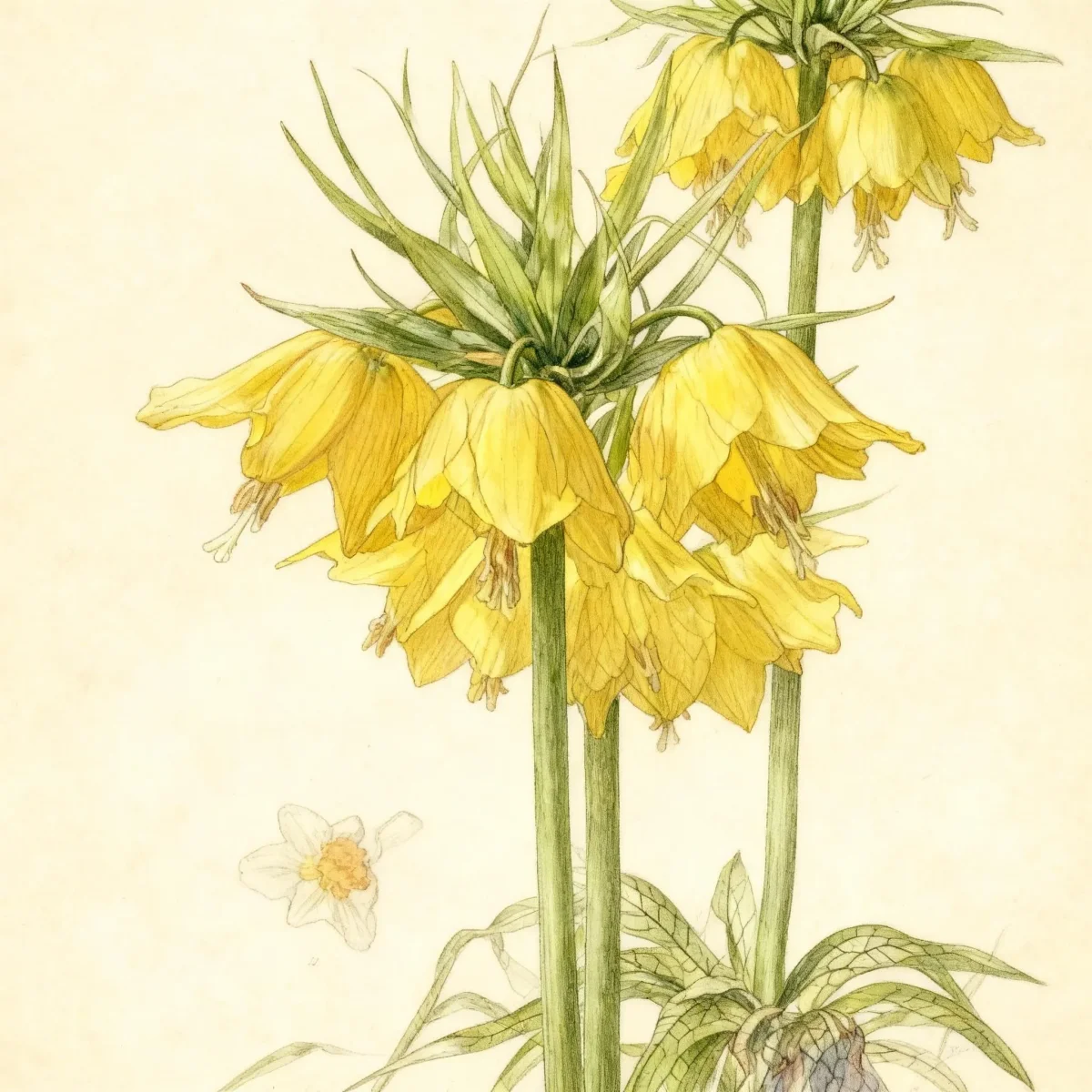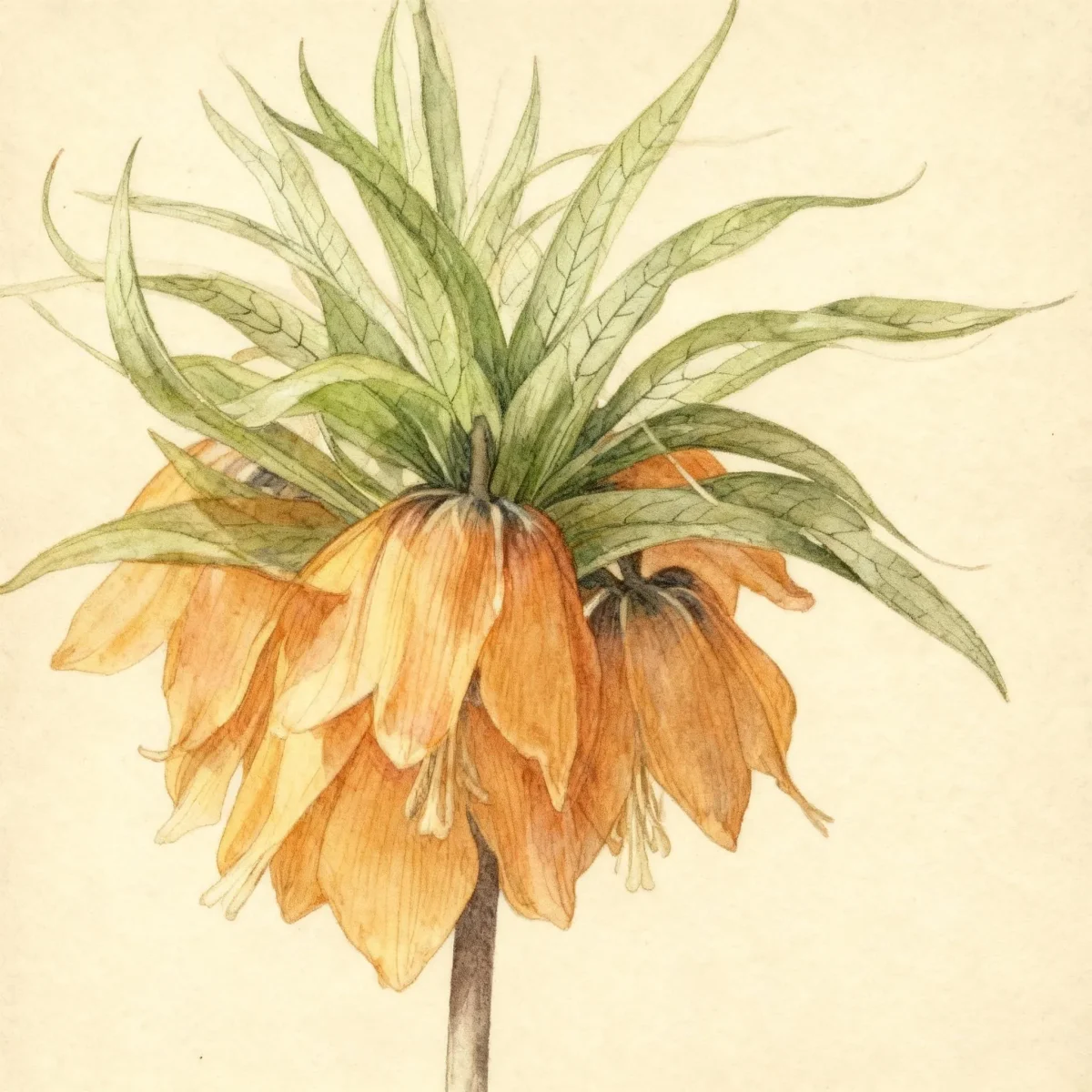

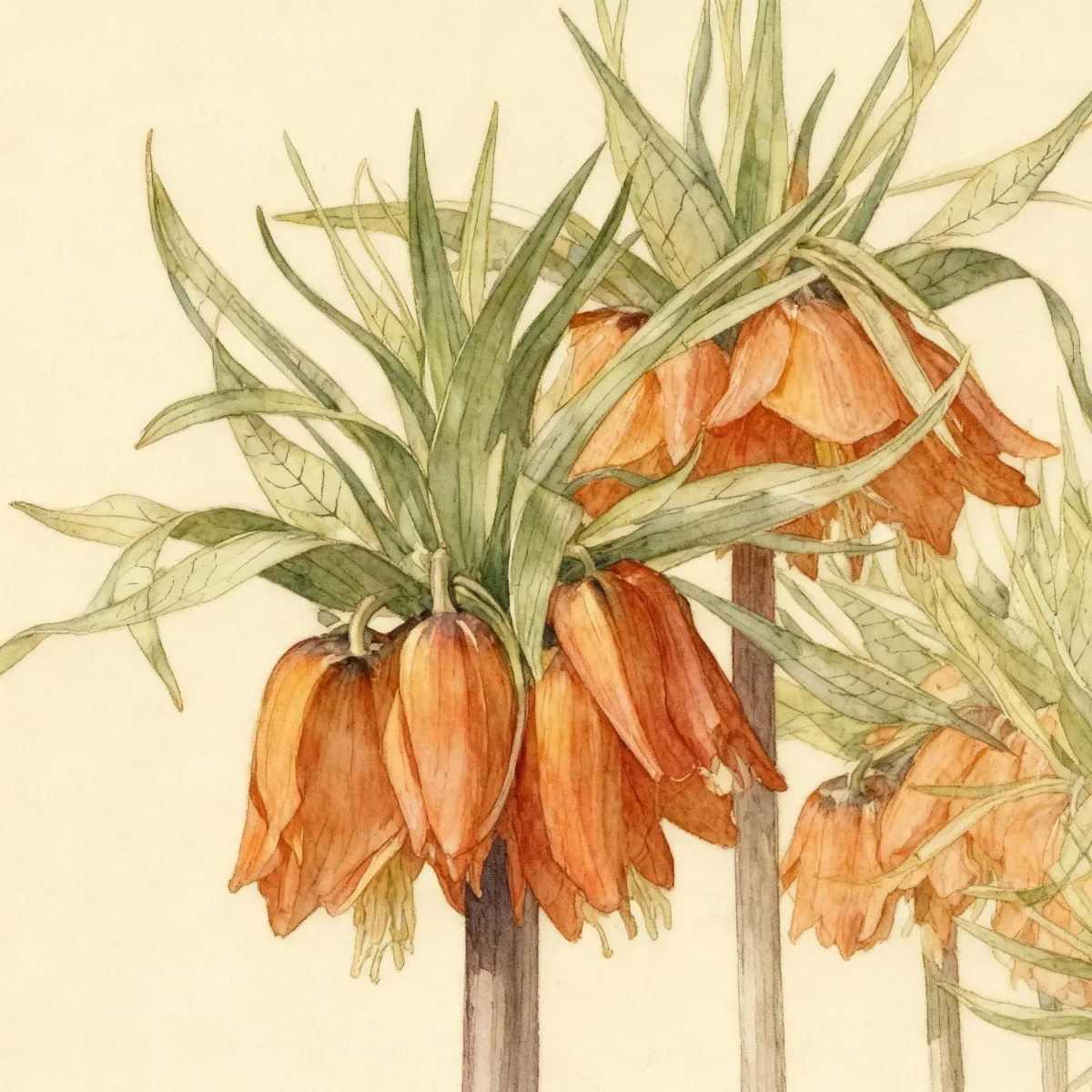
Crown imperial (Fritillaria imperialis 'Rubra')
The stunning Crown imperial, Fritillaria imperialis 'Rubra', features spectacular orange-red blooms in spring and demands attention in borders.
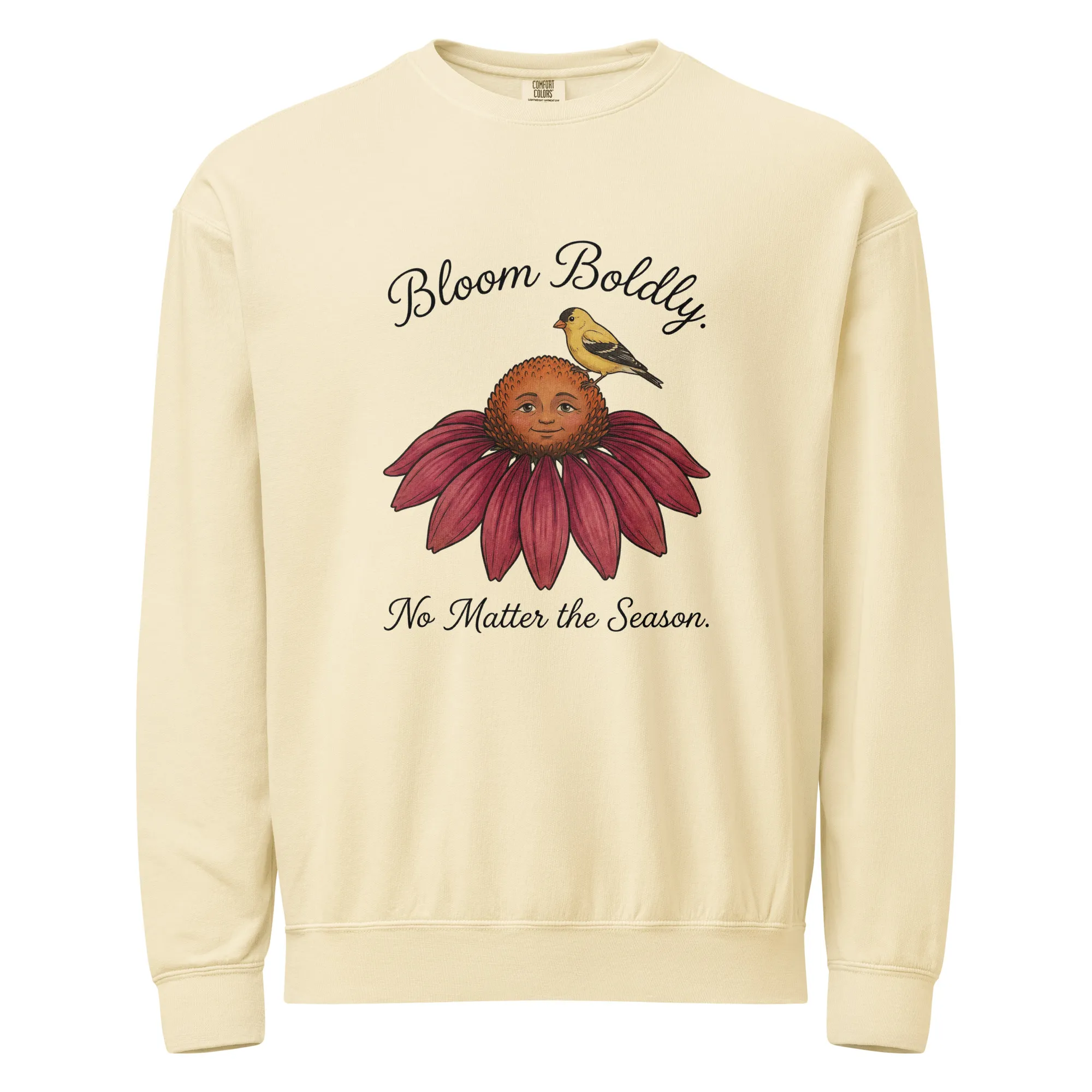
Bloom Boldly, No Matter the Season - Sweatshirt
Cozy organic cotton sweatshirt featuring our exclusive Purple Coneflower design. Perfect for gardeners who bloom year-round.
Inspired by the beautiful Crown imperial
Limited first batch (50) — join the waitlist for early access
Waitlist closes Feb 15, 2026.
Complete Plant Information
Field Guide Continues
Ready for care notes, companion picks, and planting tips?
The map is just the start. The full guide below covers growth habits, seasonal performance, and landscape uses.
Overview
Fritillaria imperialis ‘Rubra’, commonly known as Crown imperial, is an unmissable spring feature in temperate gardens, highly valued for its dramatic vertical structure. This impressive bulb sends up a stout, ramrod-straight stem topped by a whorl of striking, drooping, orange-red, bell-shaped flowers crowned by a tuft of leafy bracts. While the overall presentation of the magnificent Crown imperial is exceptionally showy, be advised that all parts of the plant possess a distinct, skunky odor that deters unwanted visitors like rabbits and deer.
This towering perennial reaches heights up to four feet, making Fritillaria imperialis ‘Rubra’ ideal for the back of perennial borders where its height can be appreciated. Proper cultural care ensures robust perennial returns, although the large, fragile bulbs require specific planting techniques to guarantee success and avoid common issues like rot.
Gardeners seeking bold early-season color should consider incorporating the unique architecture of the Crown imperial. Its deep, burnt orange to vermillion red blooms herald late spring, providing a vertical element often missing when spring bulbs finish flowering.
Fast Facts
- Plant Family: Liliaceae
- Plant Type: Bulb
- Hardiness Zones: USDA Zones 5-8
- Size at Maturity:
- Height: 3-4 ft
- Spread: 1-1.5 ft
- Bloom Time: May to June
- Bloom Description: Orange-red
- Sun Exposure: Full sun to part shade
- Water Needs: Medium
- Maintenance Level: Medium
How to Grow
Planting Fritillaria imperialis ‘Rubra’ bulbs should occur in the fall. Successful establishment requires patience and precise handling, as the bulbs are large and delicate. Aim for locations offering full sun, though light afternoon shade is beneficial, especially in the warmer reaches of its growing range. Cultivate deep, organically rich soils with medium moisture.
When setting the bulbs, planting depth is critical: place them approximately 6 inches deep and space them 9 to 12 inches apart. A crucial practical tip for these Crown imperials is to plant the bulbs slightly on their side, ensuring the central stem hole does not hold standing water, which drastically increases the risk of bulb rot. Once planted, bulbs rarely require disturbance.
Watering needs are medium throughout the active growing season. As early summer arrives, the foliage of the Crown imperial will naturally die back as the bulb enters dormancy underground. Be prepared for this summer disappearance.
For winter preparation, bulbs appreciate a good layer of winter mulch to protect them from hard freezes, particularly in colder zones within the acceptable range.
Landscape Uses
Groupings of 6-12 Fritillaria imperialis ‘Rubra’ at the rear of a mixed border can create a truly spectacular, commanding visual impact. Their height ensures they don’t get lost among shorter perennials, serving as magnificent vertical accents integrated with late spring and early summer bloomers that enjoy similar sun exposure and moisture profiles. Given their strong architectural presence, they pair well with lower-growing structures like globe irises or broad-leaved hostas that emerge later to disguise the drying foliage.
Because of their strong vertical habit, consider mass plantings near entryways or flanking wider garden paths where their height can be fully appreciated without overwhelming a smaller space. While they are imposing specimens, their foliage declines quickly, so ensure companions are chosen that gracefully fill the gap left after the bloom season concludes.
Standout Features
Flower Qualities
- Showy
- Fragrant
Noteworthy Characteristics
Fritillaria imperialis ‘Rubra’ is an impressive plant that anchors itself with a thick, upright stem reaching up to four feet tall. The signature feature is the spring crown of drooping, bell-shaped, orange-red flowers, each topped by a small, pineapple-like tuft of green bracts. This specific selection, ‘Rubra’, is renowned for its intense burnt orange to vermilion red coloration, standing apart from its yellow-flowered relations.
Tolerances
- Rabbit
- Deer
- Black Walnut
Potential Problems
The primary concern when growing the Crown imperial is bulb rot, which growers must mitigate by planting bulbs sideways to prevent water accumulation in the stem indentation. Beyond this cultural issue, plants can occasionally suffer from common fungal and viral diseases, especially in humid conditions. Watch for signs of rust or leaf spot, which appear as discolored lesions on the leaves. Management involves ensuring good air circulation around the plants and promptly removing infected foliage. Mosaic virus is generally incurable, and infected bulbs should be carefully removed and discarded to prevent spread.
Frequently Asked Questions
What hardiness zones is Crown imperial suitable for?
Fritillaria imperialis ‘Rubra’ is best suited for USDA Zones 5 through 8.
How large does Fritillaria imperialis ‘Rubra’ grow?
This magnificent bulb typically reaches a height between 3 and 4 feet, with a spread of 1 to 1.5 feet across.
What sun exposure does Crown imperial need?
Aim to provide the Crown imperial with full sun, though light afternoon shade will benefit the plant in hotter climates.
When does Fritillaria imperialis ‘Rubra’ bloom?
This showy bulb displays its signature orange-red flowers throughout the late spring, specifically from May into June.
Conclusion
The Crown imperial offers unparalleled vertical drama and intense color in the late spring garden, making Fritillaria imperialis ‘Rubra’ a worthy investment for experienced bulb gardeners. Its unique structure and striking hue ensure it becomes a focal point when successfully established. Check your local hardiness zone compatibility and plan to plant these special bulbs correctly this fall to enjoy their regal display next season.
Companion Planting
Selecting appropriate companions is key to maintaining the aesthetic appeal of Fritillaria imperialis ‘Rubra’ throughout the season, as its foliage declines early. Pair the Crown imperial with plants that have comparable full sun to partial shade needs and medium water requirements. Consider early-blooming herbaceous peonies or Iris germanica, whose blooms overlap with the Fritillaria’s majestic show.
For summer interest after the Crown imperial has gone dormant, underplant the area with robust perennials. Hostas with contrasting leaf textures or later-emerging ornamental grasses will effectively fill the space left by the rapidly fading bulb foliage, ensuring the border remains attractive.
Designing with Drifts
Growing Fritillaria imperialis ‘Rubra’ in drifts, rather than as single specimens, maximizes the visual impact of their towering structure. A drift of three, five, or seven bulbs planted slightly staggered creates a more impactful, naturalistic grouping than an isolated plant. This mass planting technique also helps balance their strong scent with an overwhelming visual presence.
When integrating this plant into your design, remember its height dictates placement toward the rear of standard borders. Use its strong vertical lines to break up the horizontal flow of massed perennials or to define transitions between garden rooms, creating focal points visible from a distance.