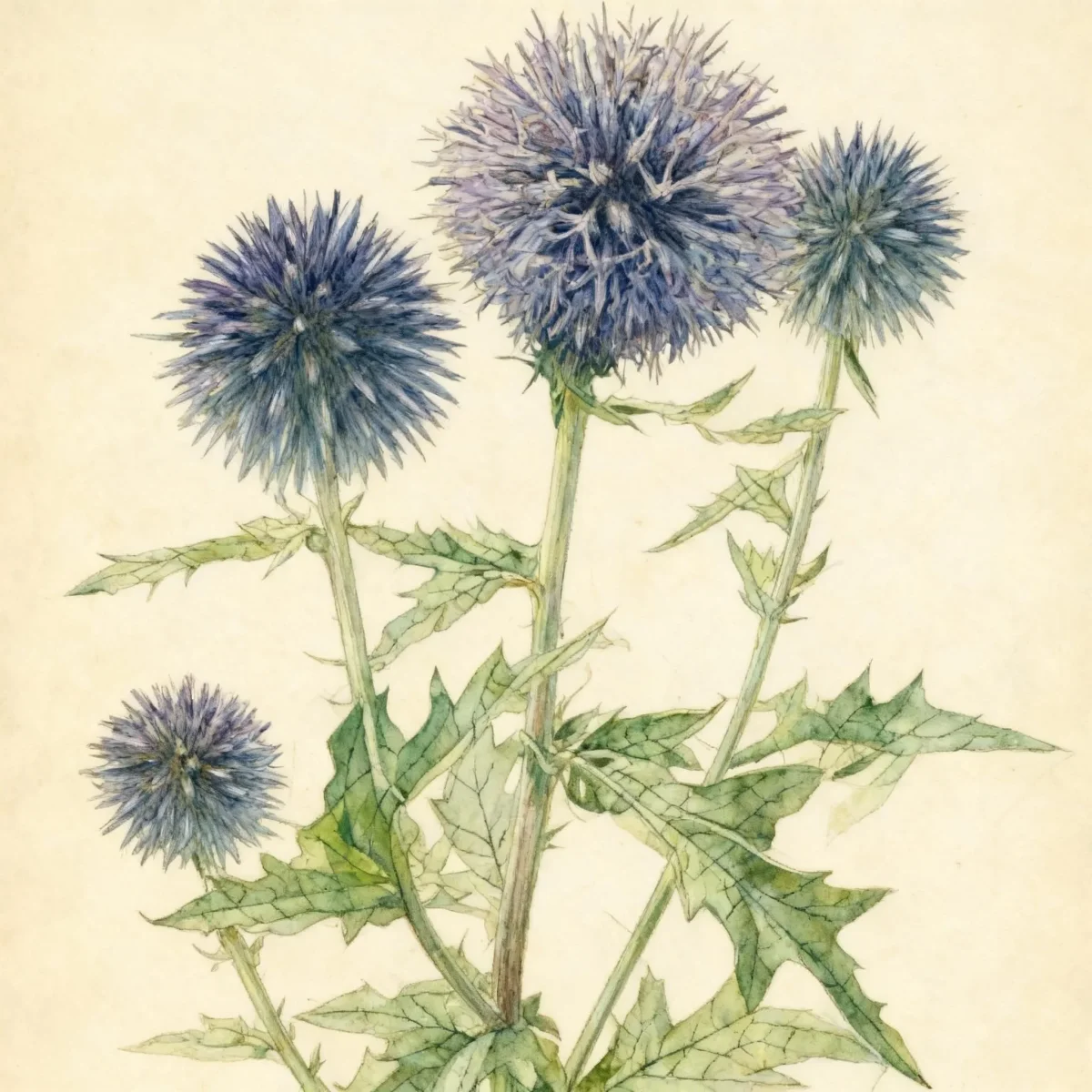
Blue globe thistle (Echinops bannaticus 'Blue Glow')
Echinops bannaticus 'Blue Glow' offers intense steel blue globe flowerheads in summer. This low-maintenance Blue globe thistle thrives in full sun and poor soils.
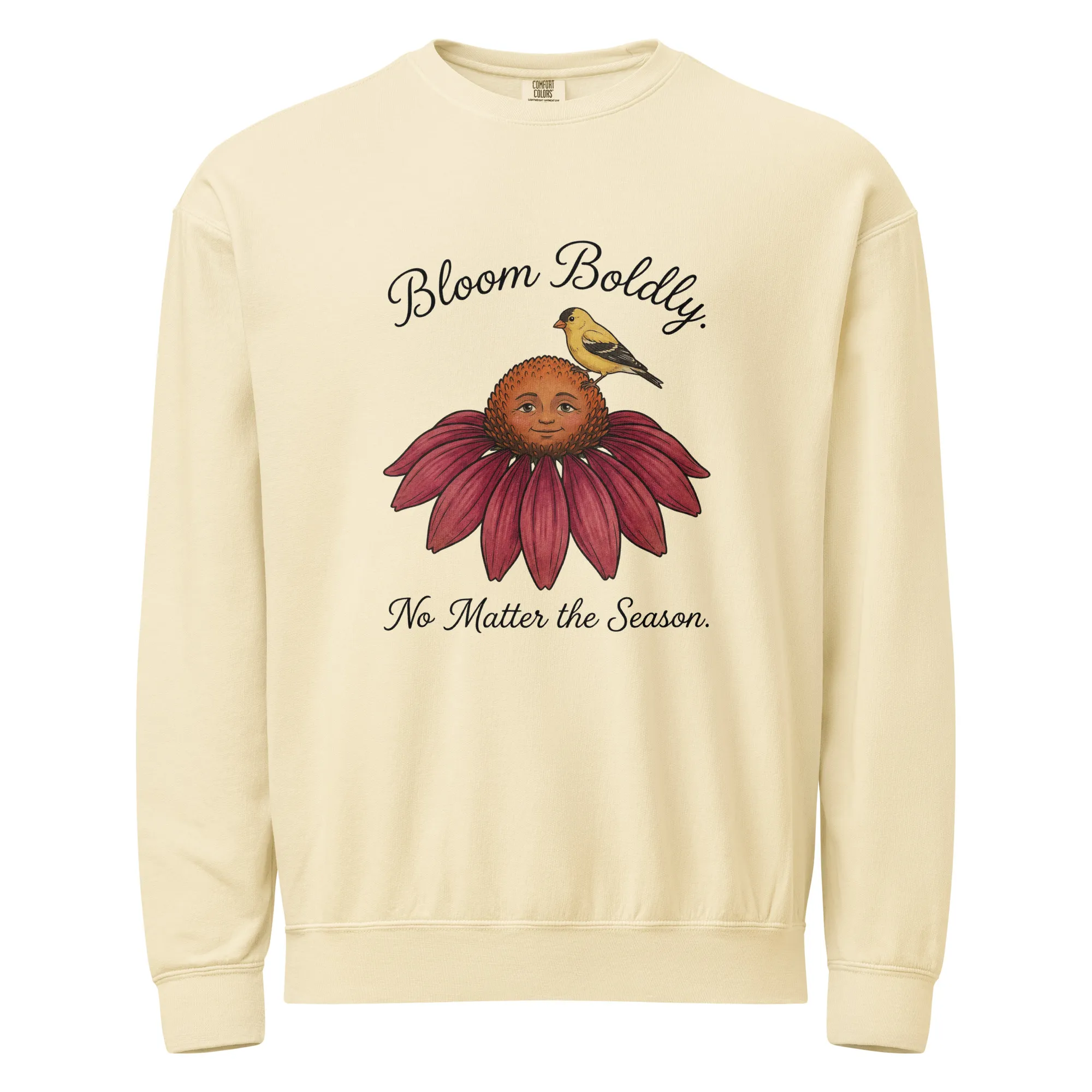
Bloom Boldly, No Matter the Season - Sweatshirt
Cozy organic cotton sweatshirt featuring our exclusive Purple Coneflower design. Perfect for gardeners who bloom year-round.
Inspired by the beautiful Blue globe thistle
Limited first batch (50) — join the waitlist for early access
Waitlist closes Feb 15, 2026.
Complete Plant Information
Field Guide Continues
Ready for care notes, companion picks, and planting tips?
The map is just the start. The full guide below covers growth habits, seasonal performance, and landscape uses.
Overview
The remarkable Echinops bannaticus ‘Blue Glow’, commonly known as Blue globe thistle, brings architectural interest and intense color to the summer garden. This variety is prized specifically for its improved, intense steel blue flowerheads that stand out against its deeply-dissected, structural foliage. As an erect, clump-forming perennial, it offers significant vertical accent without excessive breadth.
Cultivating Blue globe thistle is straightforward, making it a favorite for gardeners seeking low-input selections. It thrives best when given full sun and well-drained soil, even tolerating poor or shallow conditions where other plants might struggle. The visual payoff from Echinops bannaticus ‘Blue Glow’ is high, providing unique texture and consistent blue tones from mid-summer through early autumn for borders and cutting arrangements.
Due to its strong vertical nature and excellent drought tolerance once established, this thistle is a dependable performer. Gardeners should note that this plant develops a deep taproot, meaning it dislikes being moved or divided, so careful placement during initial planting is crucial for long-term success with Echinops bannaticus ‘Blue Glow’.
Fast Facts
- Plant Family: Asteraceae
- Plant Type: Herbaceous perennial
- Hardiness Zones: USDA Zones 3-8
- Size at Maturity:
- Height: 2-4 ft
- Spread: 1-2 ft
- Bloom Time: July to August
- Bloom Description: Steel blue
- Sun Exposure: Full sun
- Water Needs: Medium
- Maintenance Level: Low
How to Grow
Plant Blue globe thistle in spring or fall, ensuring it receives full sun exposure throughout the day. While it establishes well in average, medium-moisture soil, it is highly adaptable. The key requirement is drainage; Echinops bannaticus ‘Blue Glow’ suffers quickly in overly rich or consistently wet conditions, so avoid amending heavy soils excessively.
Watering should be consistent while the plant is establishing its system. Subsequently, its medium water needs mean it tolerates dry spells quite well, especially if situated in thinner, well-drained ground. Fertilization is generally unnecessary; rich soils can lead to lush top growth that requires staking.
Maintenance for this plant is refreshingly low. Pruning involves cutting back the flowering stems immediately after the primary bloom period ends in summer to potentially encourage a secondary, albeit smaller, fall flowering flush. Because Echinops bannaticus ‘Blue Glow’ develops a taproot, treat established specimens as permanent fixtures, as division or transplanting is difficult and often unsuccessful.
Landscape Uses
Blue globe thistle excels in sunny borders where its strong vertical lines and unusual blue spheres can contrast with softer, mounding perennials. It functions perfectly as an accent plant, breaking up masses of less formal greenery. Consider using it in cottage gardens where its rugged texture complements traditional roses or flowing ornamental grasses, providing essential mid-summer color when other perennials begin to fade.
The structural quality of the spent flower heads also adds winter interest, so planting locations where this structure can be appreciated through the colder months are ideal. For cutting gardens, Echinops bannaticus ‘Blue Glow’ is excellent both fresh and dried; the steel blue globes hold their form beautifully when dried stiffly.
Standout Features
Flower Qualities
- Showy
Noteworthy Characteristics
Echinops bannaticus is an erect, clump-forming perennial globe thistle that typically grows to 4’ (less frequently to 6’) tall on stiff, sometimes branching stems. Deeply-dissected, spiny leaves are rough green above and downy-white below, contrasting nicely with the globular, thistle-like, gray-blue flower heads that bloom at the stem tops in summer. The cultivar ‘Blue Glow’ specifically improves on the species by producing more intense steel blue flowerheads.
Tolerances
- Dry Soil
- Shallow-Rocky Soil
Potential Problems
Echinops bannaticus ‘Blue Glow’ is generally very resistant to serious insect or disease issues, which contributes to its low-maintenance rating. Occasionally, aphids might be sighted but rarely cause significant damage. The main cultural concern is lodging; taller stems of the Blue globe thistle may benefit from staking, especially if the plant is situated where soil fertility is high, as excessive richness encourages weak, floppy vertical growth susceptible to wind damage. Planting in its preferred lean, well-drained soil helps mitigate this need for support.
Frequently Asked Questions
What hardiness zones is Blue globe thistle suitable for?
Echinops bannaticus ‘Blue Glow’ is reliably hardy across USDA Zones 3 through 8, making it versatile for many climates.
How large does Echinops bannaticus ‘Blue Glow’ grow?
This herbaceous perennial typically reaches a height between 2 to 4 feet, with a spread of 1 to 2 feet.
When does Blue globe thistle bloom?
The prominent steel blue globe flowers of the Blue globe thistle appear reliably from July through August.
What sun exposure does Echinops bannaticus ‘Blue Glow’ need?
For optimal flowering and strong stems, this plant requires consistent full sun exposure in the garden.
Conclusion
The Blue globe thistle, Echinops bannaticus ‘Blue Glow’, remains an indispensable structural element for hot, sunny borders. Its fantastic steel blue blooms, combined with notable ease of care and impressive tolerance for poor soils, offer exceptional garden value. Before planting, confirm your site offers excellent drainage and full sun, and remember to site this taprooted perennial carefully for years of low-fuss, dependable blue accents.
Companion Planting
When designing borders featuring Echinops bannaticus ‘Blue Glow’, select companions that appreciate similar lean soil and full sun conditions. Grasses like Calamagrostis (Feather Reed Grass) provide soft, vertical texture that contrasts beautifully with the thistle’s rigid structure. Alternatively, use late-blooming salvias or silvery Artemisia varieties whose dusty foliage complements the blue-gray tones of the Blue globe thistle flowers.
Wildlife Benefits
The unique, thistle-like flowerheads of Echinops bannaticus ‘Blue Glow’ are highly attractive to several beneficial insects. The composite flower structure provides an excellent landing pad for a variety of pollinators, including long-tongued bees and butterflies searching for nectar during mid-to-late summer. Leaving the spent seed heads intact over winter also provides textural structure and a potential food source for winter birds, adding ecological value to your landscape design.