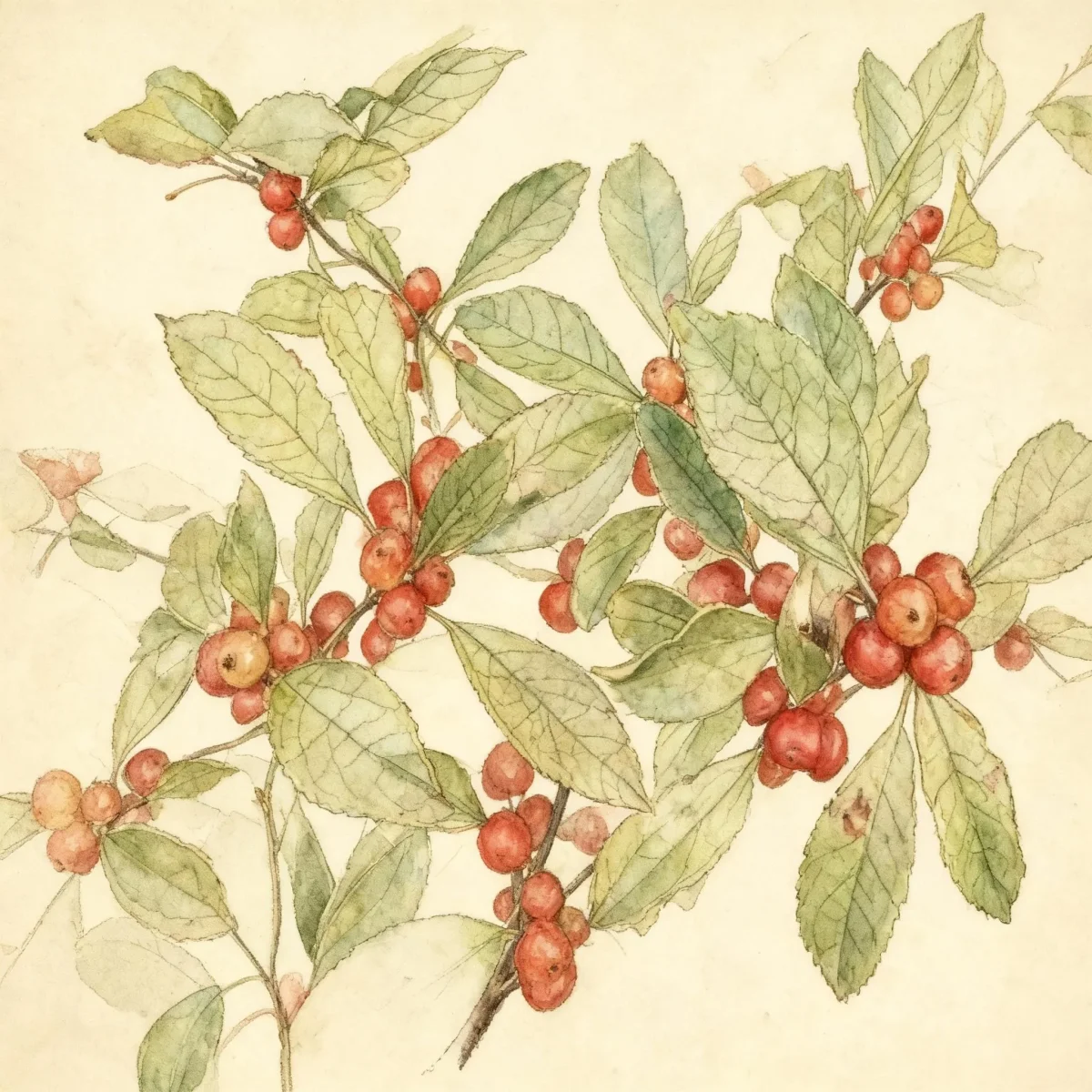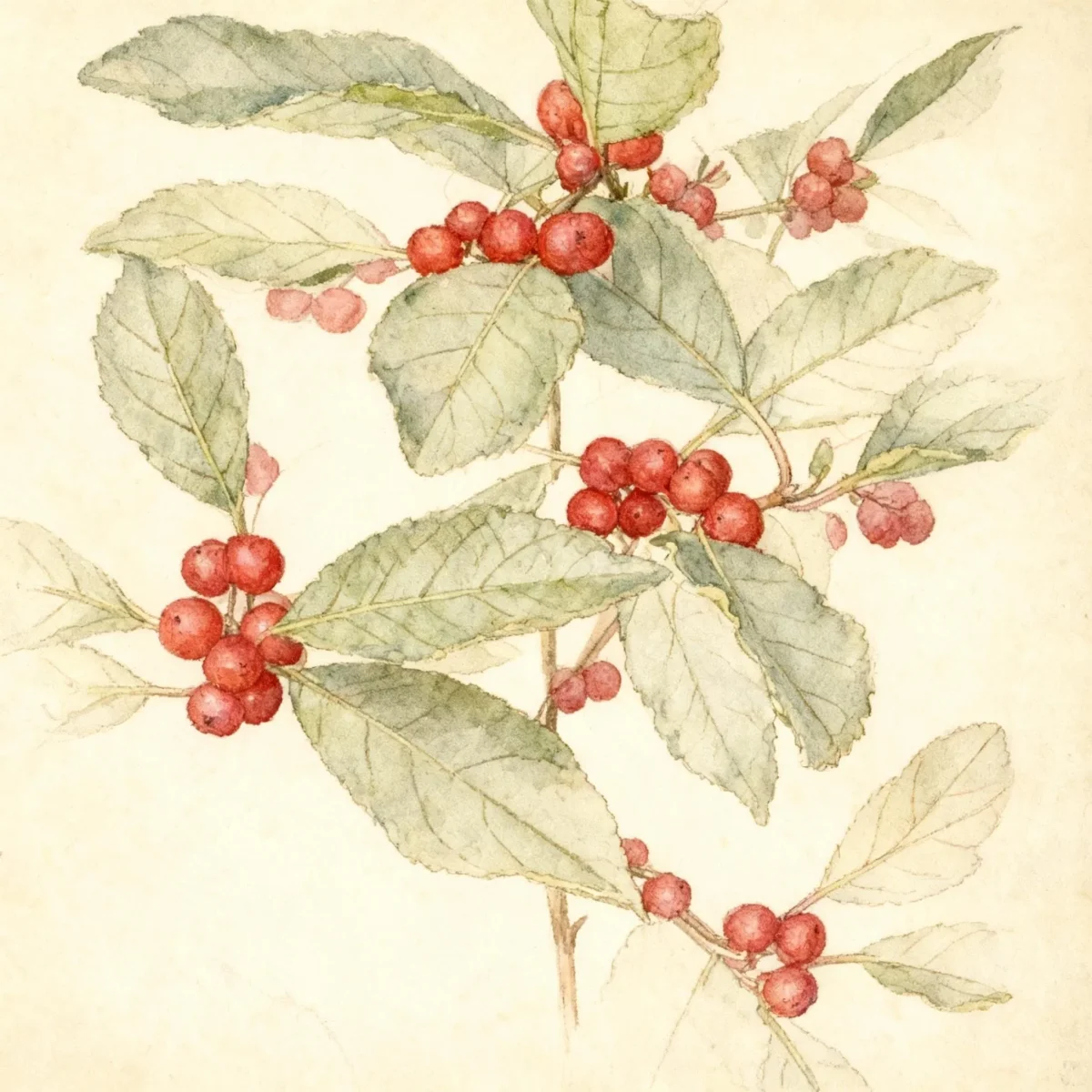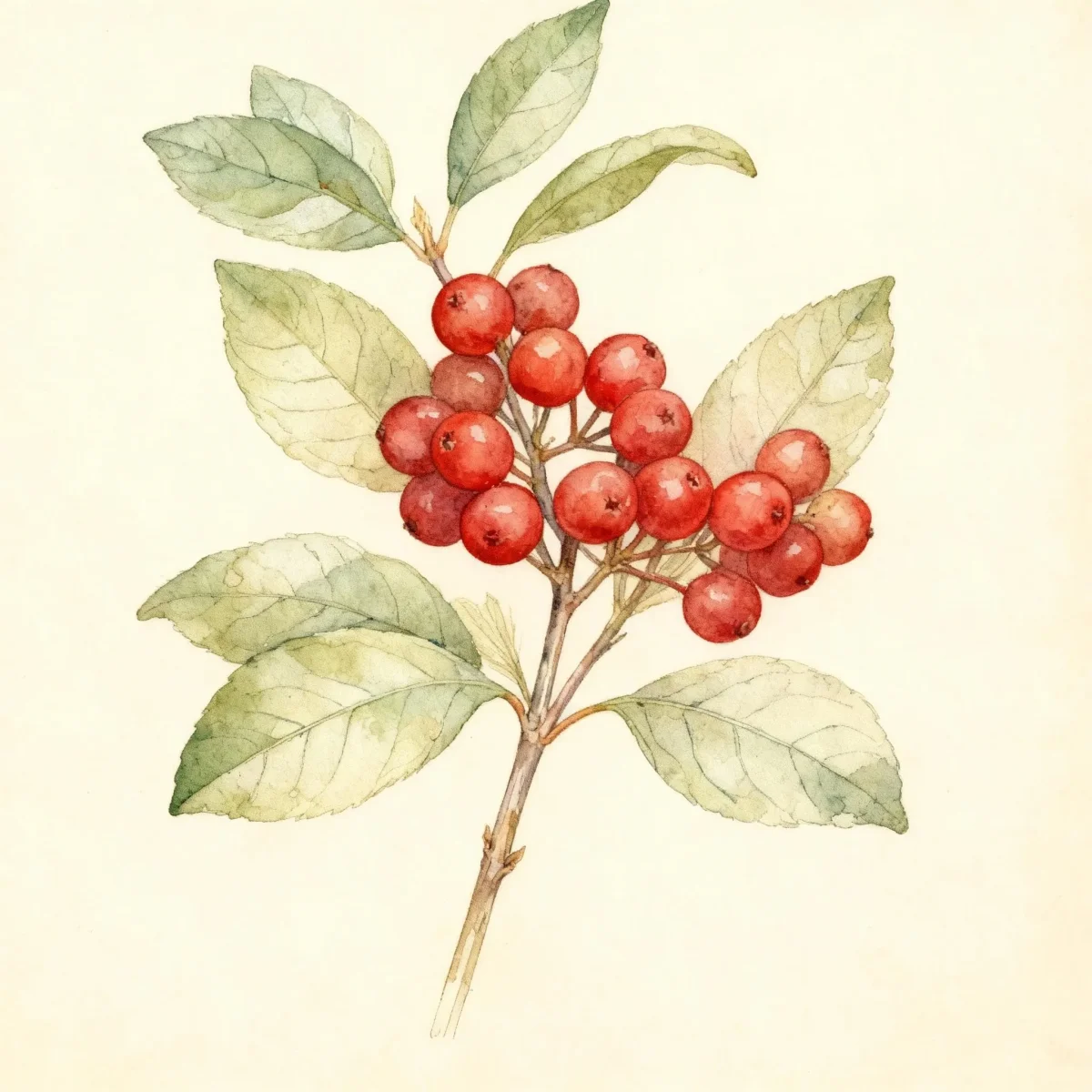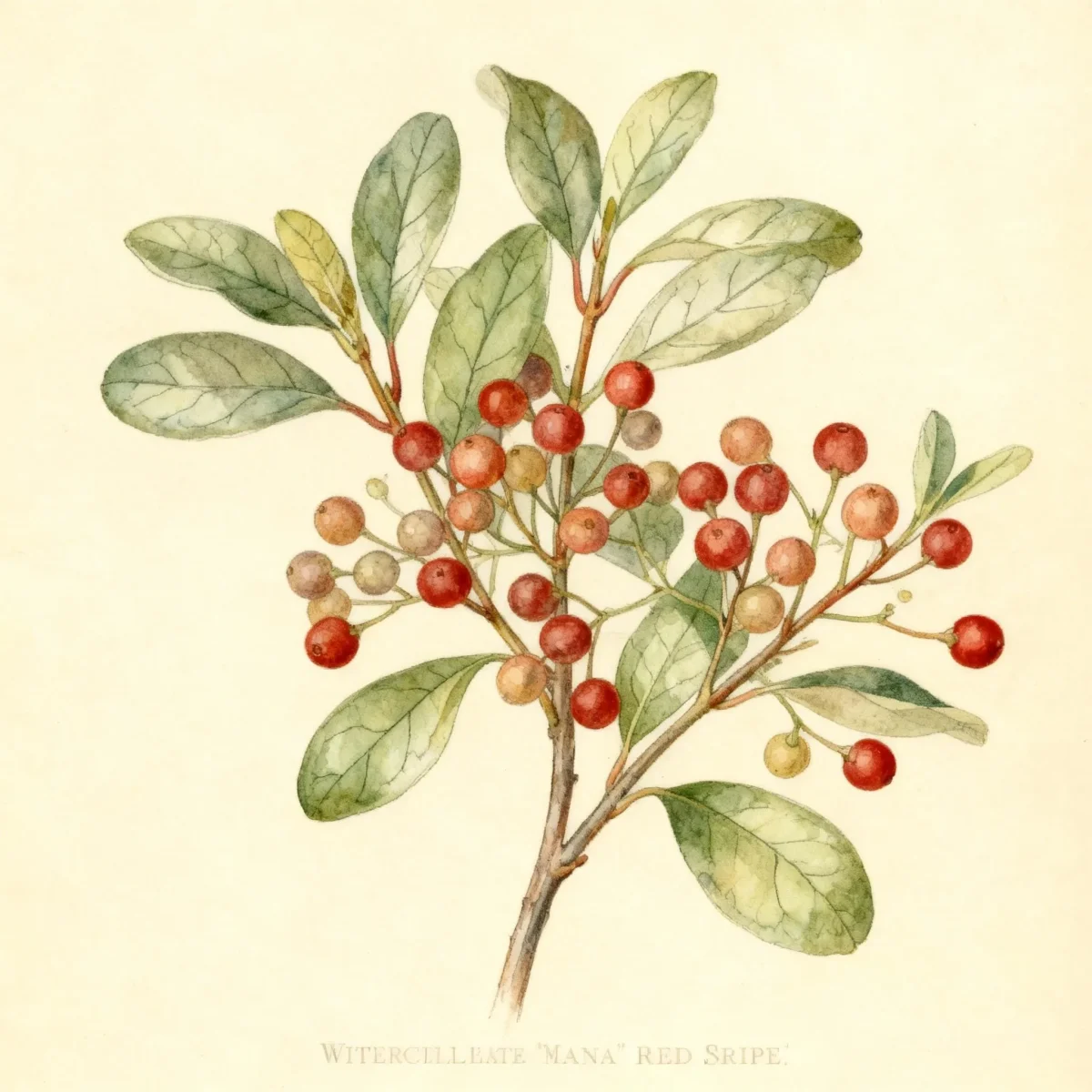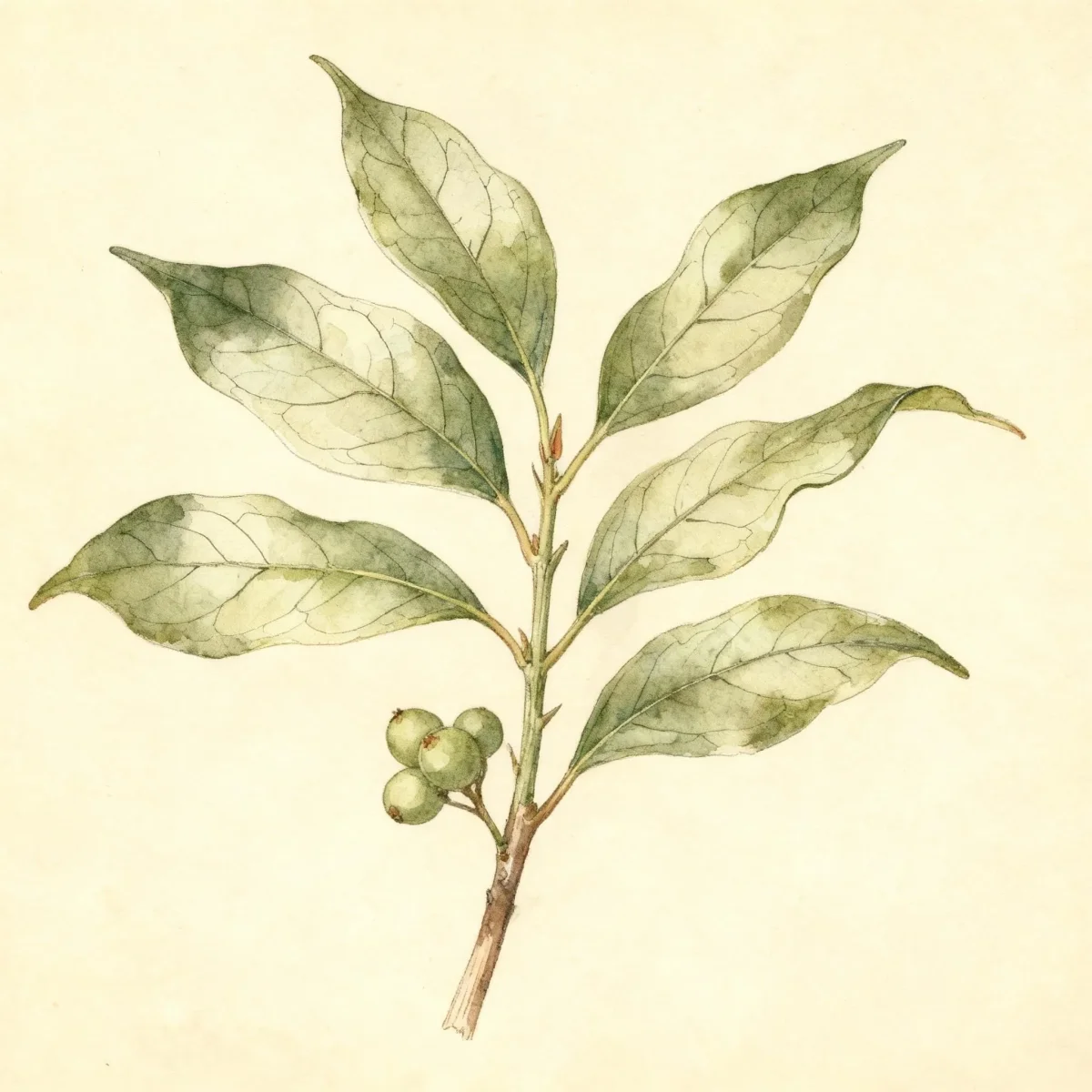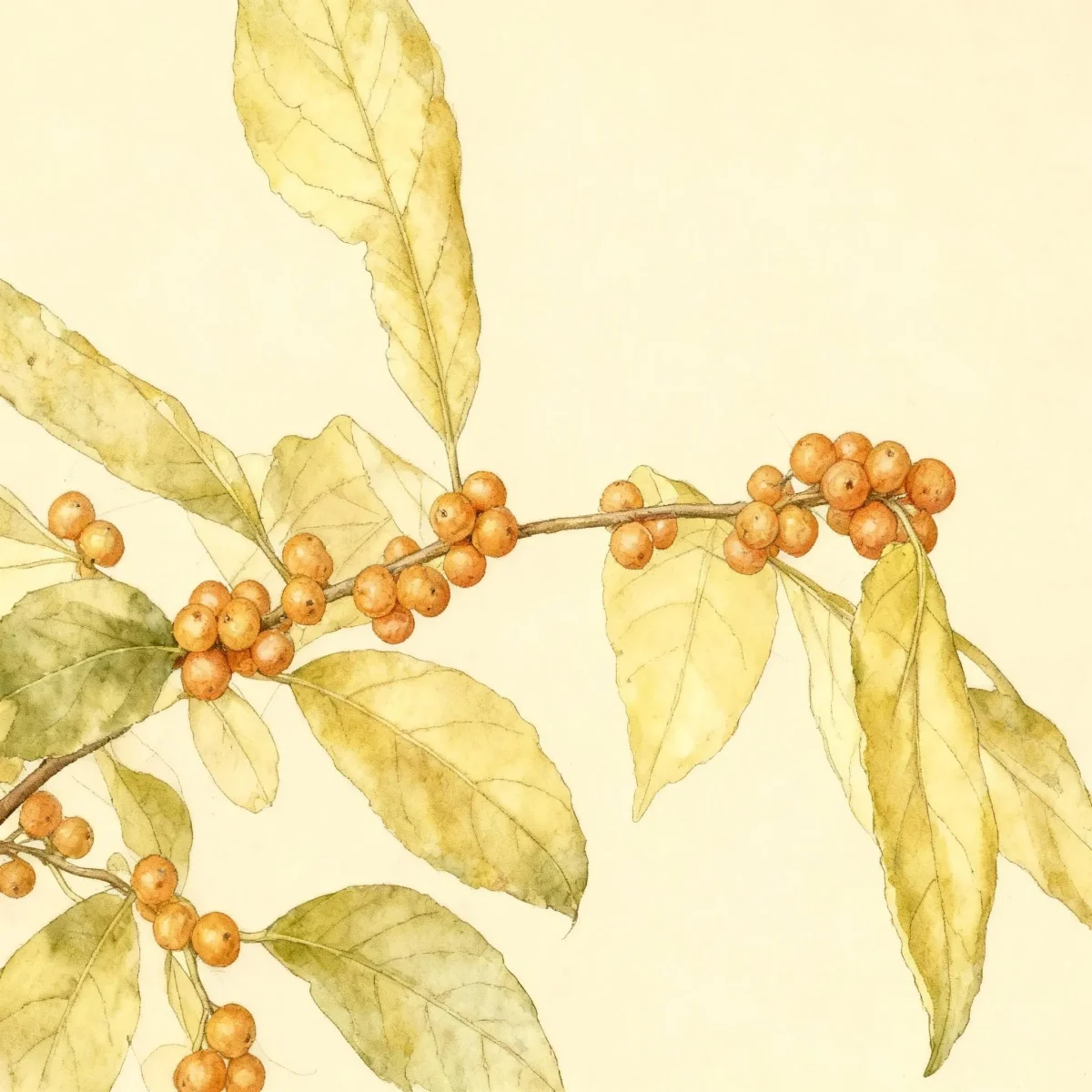

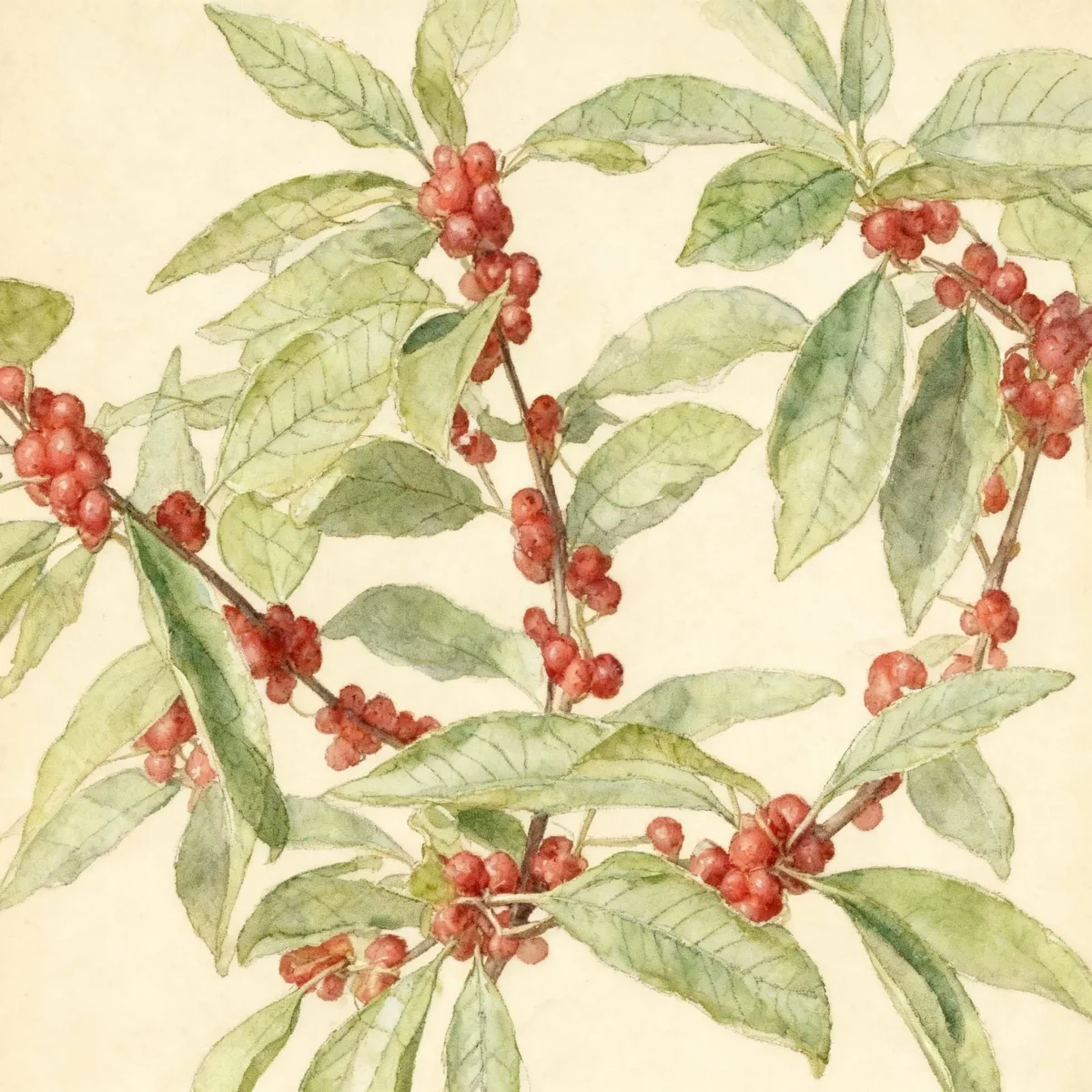
Winterberry (Ilex verticillata 'Winter Red')
Achieve stunning winter interest with Ilex verticillata 'Winter Red' Winterberry, known for profuse, bright red berries persisting through snow.
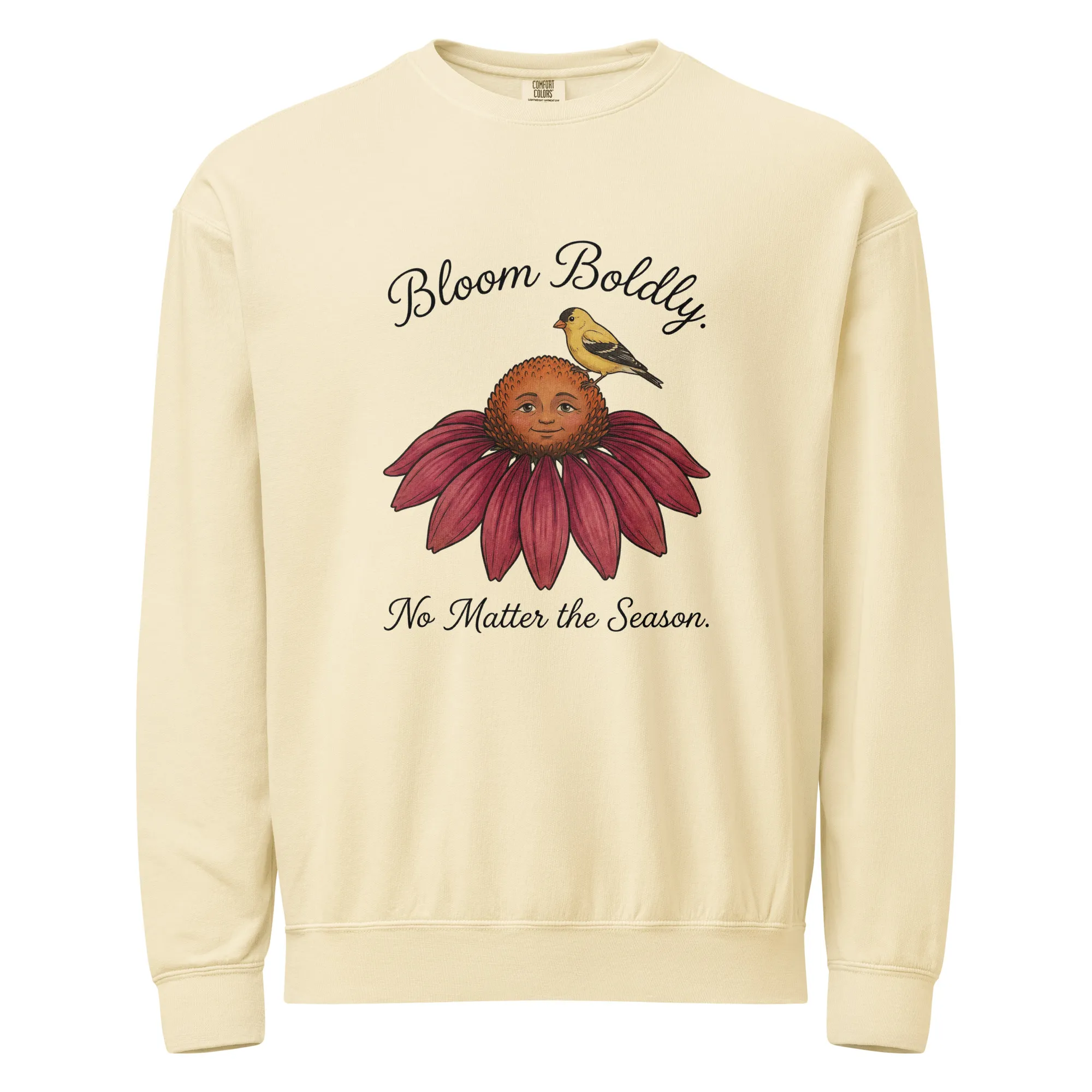
Bloom Boldly, No Matter the Season - Sweatshirt
Cozy organic cotton sweatshirt featuring our exclusive Purple Coneflower design. Perfect for gardeners who bloom year-round.
Inspired by the beautiful Winterberry
Limited first batch (50) — join the waitlist for early access
Waitlist closes Feb 15, 2026.
Complete Plant Information
Field Guide Continues
Ready for care notes, companion picks, and planting tips?
The map is just the start. The full guide below covers growth habits, seasonal performance, and landscape uses.
Overview
Ilex verticillata ‘Winter Red’, commonly known as Winterberry, is essential for gardeners seeking dramatic winter landscape impact. This deciduous holly cultivar is celebrated for retaining a profusion of brilliant red berries long after the leaves have dropped, providing vital color contrast against snow and evergreens. It thrives in moist to wet conditions, mirroring its native habitat in eastern North American swamps and low woods, making it an invaluable choice for rain gardens or boggy areas. Growing ‘Winter Red’ ensures excellent year-round interest, though gardeners must remember this is a female clone requiring a male pollinator for that signature berry display.
Fast Facts
- Plant Family: Aquifoliaceae
- Plant Type: Deciduous shrub
- Hardiness Zones: USDA Zones 3-9
- Size at Maturity:
- Height: 6-8 ft
- Spread: 6-8 ft
- Bloom Time: June to July
- Bloom Description: White
- Sun Exposure: Full sun to part shade
- Water Needs: Medium to wet
- Maintenance Level: Low
How to Grow
Plant Winterberry shrubs in the early spring or fall, ensuring the site provides the acidic, organic loam it prefers. While adaptable to heavy soils, high moisture is crucial; this plant tolerates poorly drained conditions, including standing water, exceptionally well. Ilex verticillata ‘Winter Red’ requires full sun or partial shade to produce the most abundant fruit set.
Maintenance for this deciduous shrub is generally low. Watering needs are concentrated on keeping the soil consistently moist, especially when establishing the plant. Pruning should be done sparingly in early spring just before new growth emerges to maintain shape; heavy shaping is usually unnecessary.
Remember that ‘Winter Red’ is a female variety; without a male partner, like the cultivar ‘Southern Gentleman’, the spectacular red berries will not form. A single male plant can effectively pollinate numerous female shrubs. Flowers appear on new growth, initiating the fruiting process necessary for the late-season display.
Landscape Uses
The heavy fruiting habit and upright rounded form of Ilex verticillata ‘Winter Red’ make it a superb structural element. Use this Winterberry cultivar massed or grouped to create a striking, informal hedge that transforms the yard in winter. It adapts perfectly to challenging wet sites, serving as an excellent large specimen for rain gardens, the edges of ponds, or low spots where other shrubs might struggle.
For undeniable seasonal impact, pair the deep red berries of ‘Winter Red’ against the dark green foliage of broadleaf evergreens or the gray bark of river birch. Cut branches are highly valued for creating vibrant, naturalistic winter arrangements indoors, extending the enjoyment of this hardy native shrub throughout the colder months.
Standout Features
Flower Qualities
- Insignificant
Fruit Qualities
- Showy
Noteworthy Characteristics
This slow-growing, deciduous holly is best known for its profuse crop of bright red berries, measuring up to 3/8” diameter, which persist through winter. ‘Winter Red’ is specifically noted for retaining excellent fruit color, providing visual interest long after leaf drop. Its lustrous dark green leaves provide good summer screening before yielding to the spectacular winter show.
Tolerances
- Erosion
- Clay Soil
- Wet Soil
- Air Pollution
Potential Problems
Disease issues for this reliable shrub are infrequent, generally limited to occasional leaf spots or powdery mildew, particularly in areas with poor air circulation. The primary cultural pitfall involves soil pH; Winterberry performs poorly in neutral or alkaline soils. When planted in incorrect conditions, plants exhibit chlorosis (yellowing of leaves) and may weaken or decline rapidly. Ensure soil acidity is maintained for optimal health.
Frequently Asked Questions
What hardiness zones is Winterberry suitable for?
Ilex verticillata ‘Winter Red’ is reliably hardy across USDA Zones 3 through 9.
How large does Ilex verticillata ‘Winter Red’ grow?
This cultivar typically matures to a height of 6 to 8 feet, with a corresponding spread of 6 to 8 feet, maintaining an upright rounded habit.
What sun exposure does Winterberry need?
For the best fruit production, position your Ilex verticillata ‘Winter Red’ where it receives full sun, though it tolerates and grows well in part shade conditions.
When does Winterberry bloom?
The relatively inconspicuous white flowers appear in the leaf axils during the peak summer months, generally from June to July.
Conclusion
The unmatched winter color provided by Ilex verticillata ‘Winter Red’ makes it a garden superstar, especially for wet or low-lying areas. Planning for proper pollination by including a male pollinator guarantees the heavy, showy display of bright red berries that defines this Winterberry cultivar. Before planting, always confirm your site’s soil acidity and moisture levels suit this dynamic deciduous shrub.
Wildlife Benefits
The berries of the Winterberry are an essential winter food resource, providing crucial sustenance for a variety of local birds and mammals throughout the colder months. While the flowers themselves are inconspicuous, they are attractive to small bees and flies during their June to July bloom time. Furthermore, the foliage supports local insect ecology, serving as a larval food source for species such as the pawpaw sphinx moth.
Companion Planting
Given its strong preference for moist, acidic soil, pair Ilex verticillata ‘Winter Red’ with other moisture-loving natives that enjoy similar soil chemistry. Excellent partners include various species of Dogwood (Cornus), particularly red-twig types like Cornus sericea for complementary winter stem color, or moisture-tolerant ferns that thrive in dappled shade. Avoid planting near calciphiles or shrubs that demand sharp drainage, as this will stress the Winterberry.