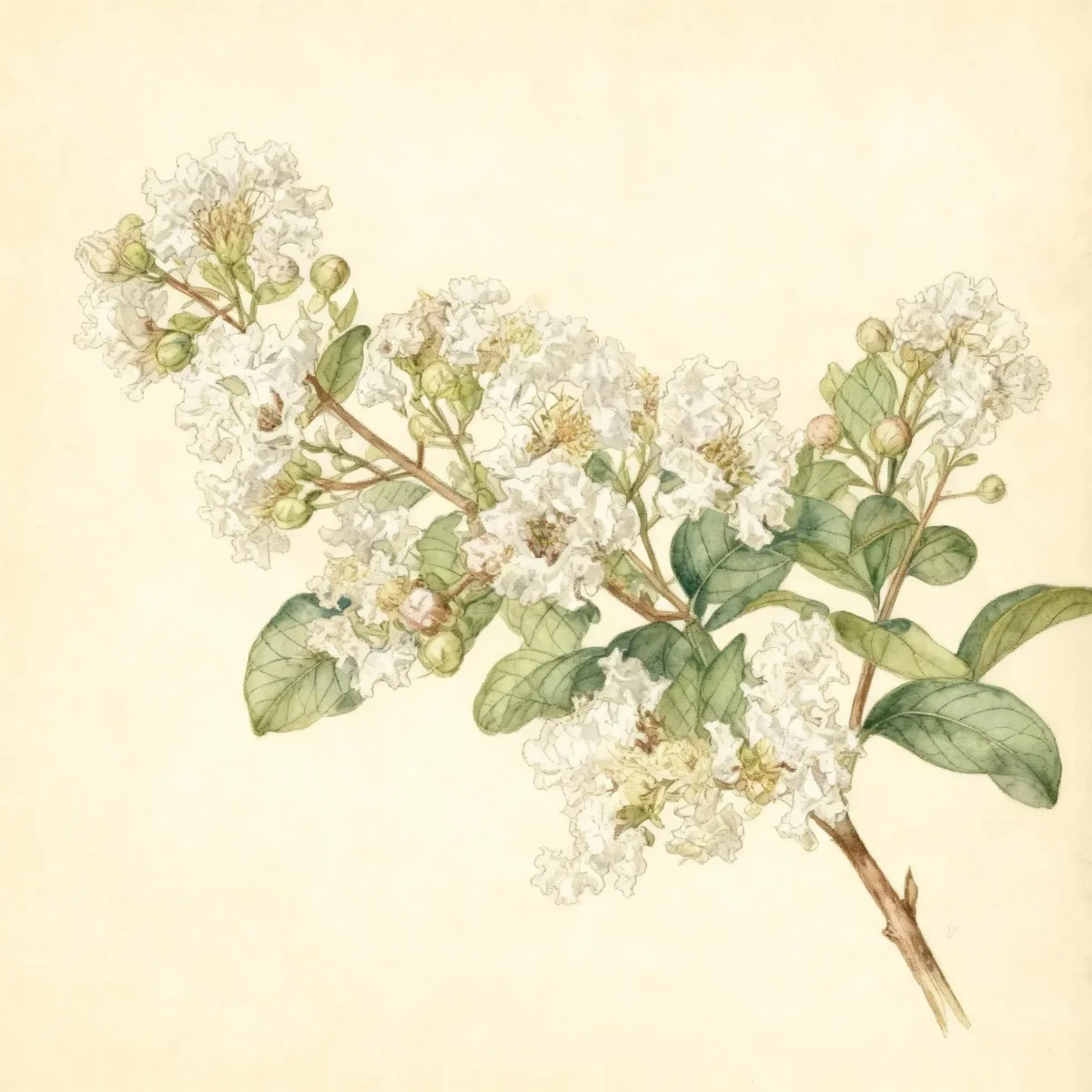
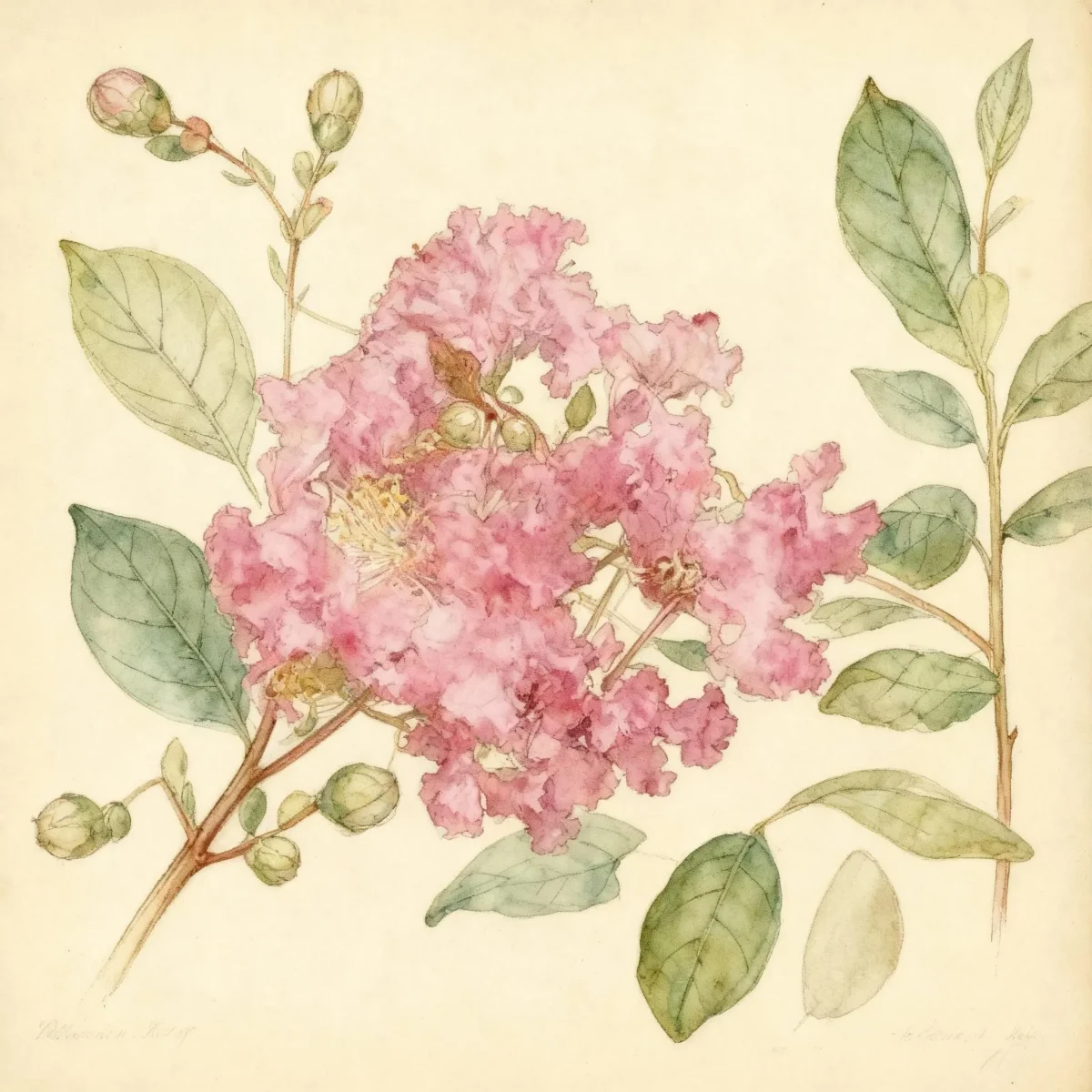
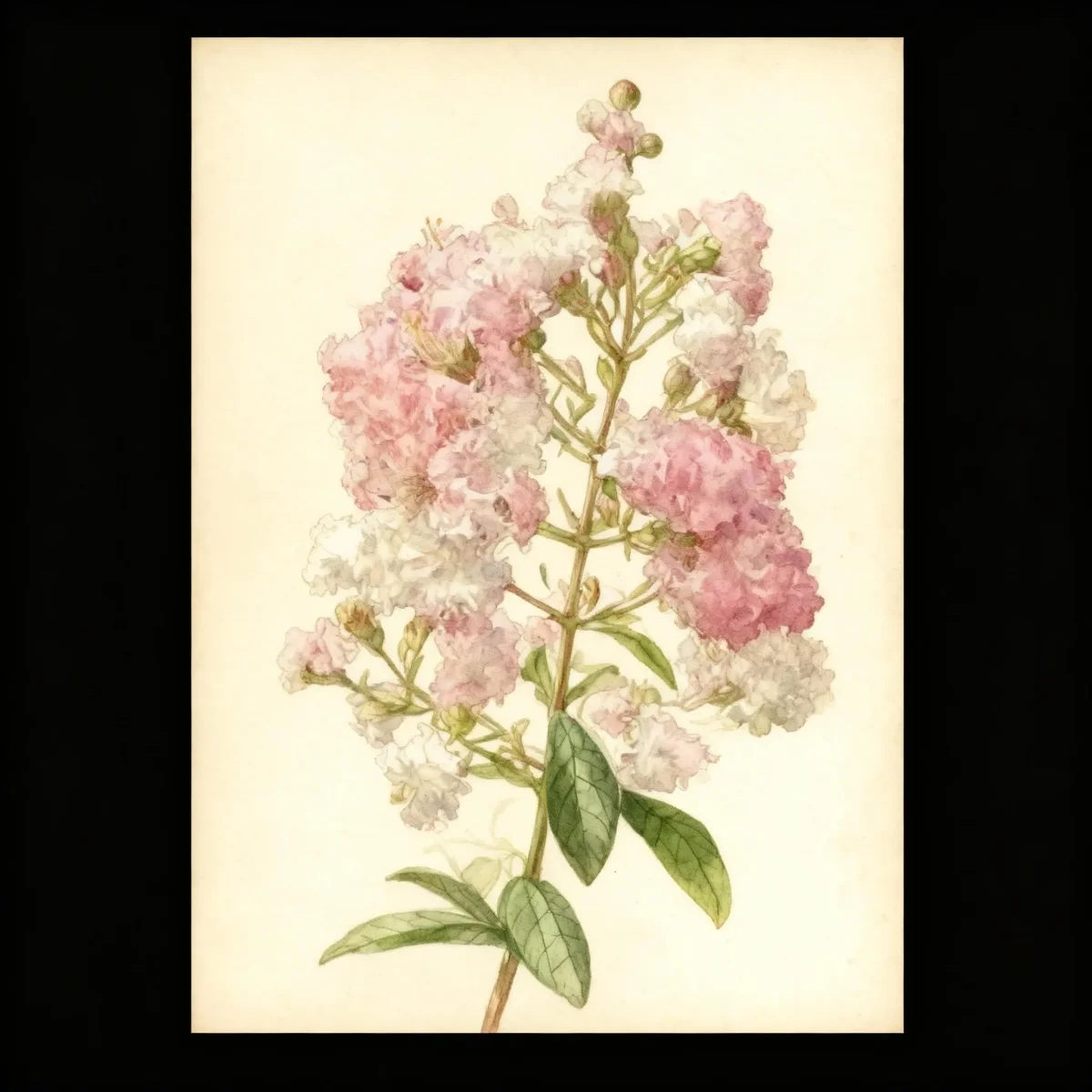
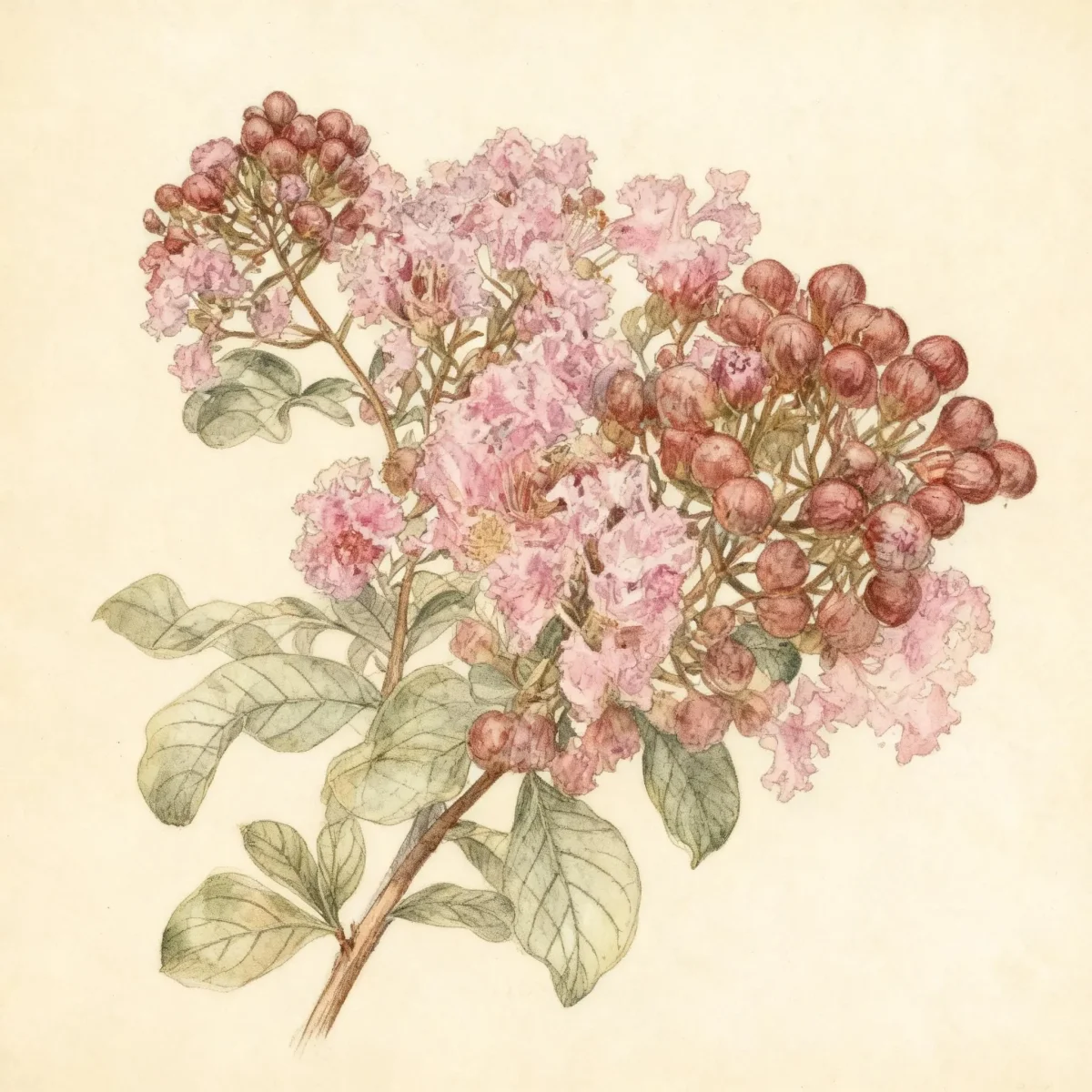
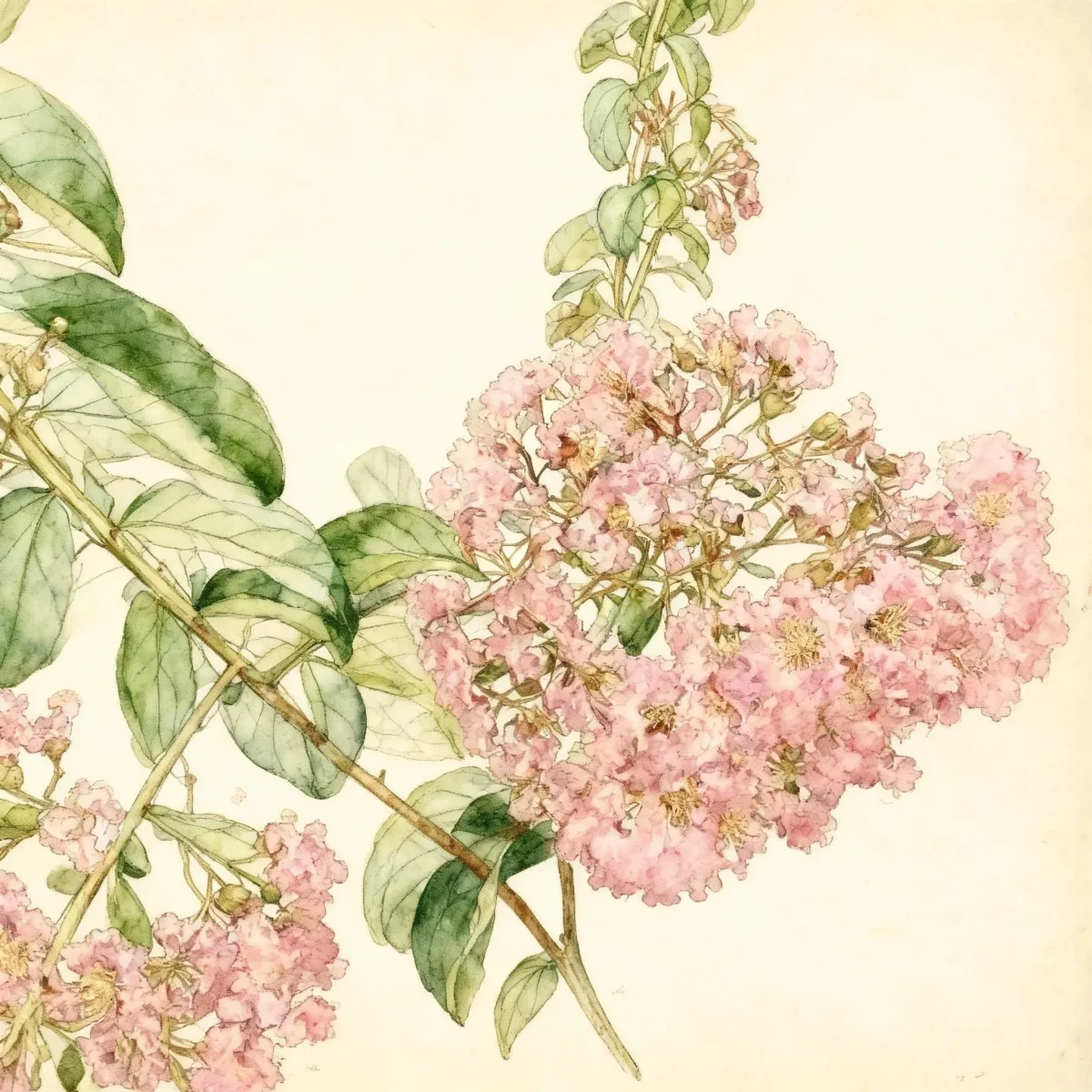
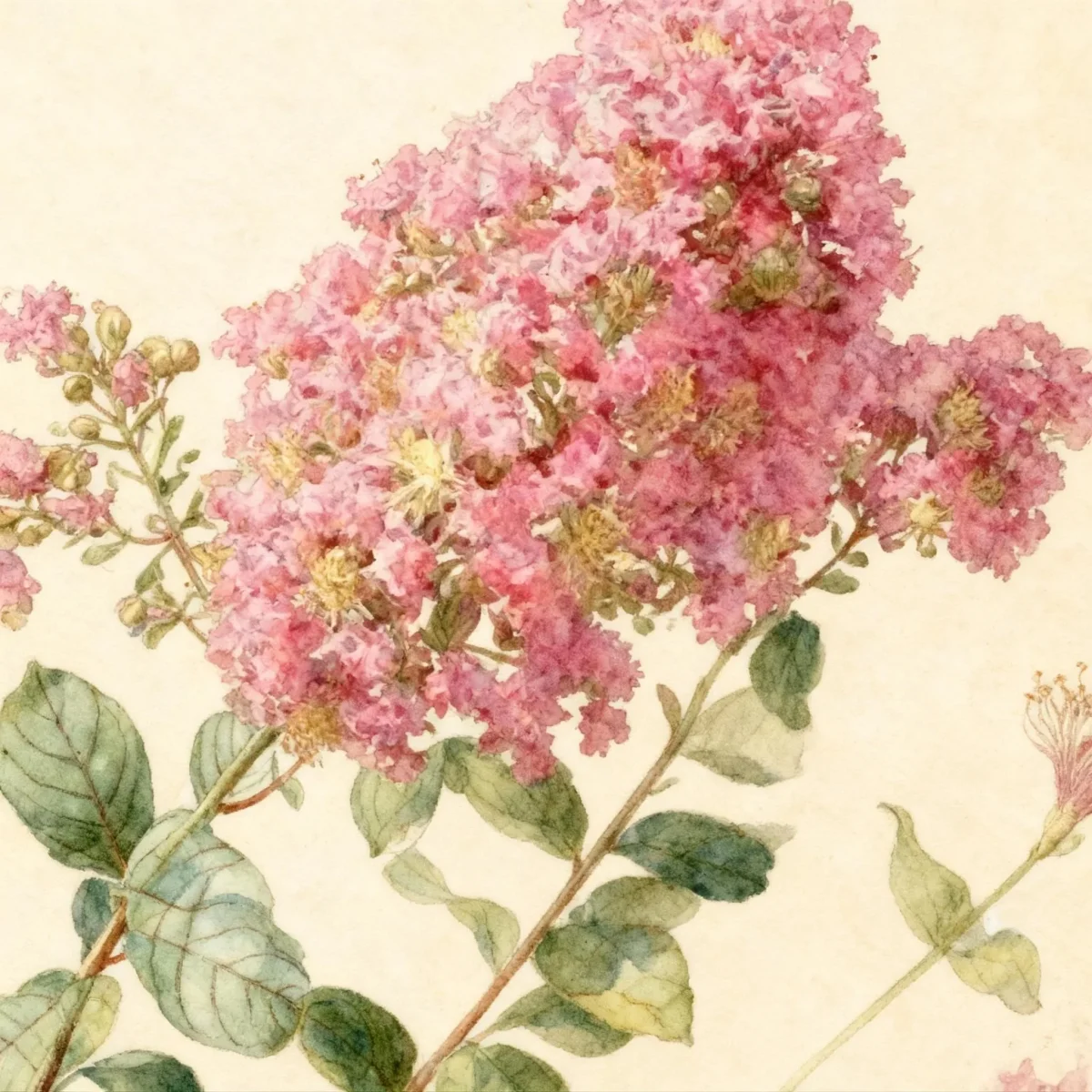
Crape myrtle (Lagerstroemia indica 'Houston')
Lagerstroemia indica 'Houston' is a miniature weeping Crape myrtle offering watermelon red blooms from June to September in full sun.

Bloom Boldly, No Matter the Season - Sweatshirt
Cozy organic cotton sweatshirt featuring our exclusive Purple Coneflower design. Perfect for gardeners who bloom year-round.
Inspired by the beautiful Crape myrtle
Limited first batch (50) — join the waitlist for early access
Waitlist closes Feb 15, 2026.
Complete Plant Information
Field Guide Continues
Ready for care notes, companion picks, and planting tips?
The map is just the start. The full guide below covers growth habits, seasonal performance, and landscape uses.
Overview
Lagerstroemia indica ‘Houston’ is a highly valued, miniature weeping variety of the beloved Crape myrtle, perfect for gardeners seeking drama in small spaces. This cultivar provides a dense, multi-stemmed structure where branch ends gracefully weep downward, contrasting beautifully with its dark green foliage. It stands out due to its exceptionally long bloom period, delivering showy panicles of vibrant watermelon red flowers extending from early summer well into fall.
As a deciduous shrub, this Crape myrtle offers year-round interest, transitioning from summer blooms to attractive fall leaf color (when grown successfully). While the standard, larger Lagerstroemia indica is a symbol of the South, ‘Houston’ maintains the genus’s renowned ornamental qualities in a dwarf stature, ideal for foundational plantings or container gardening where space is limited.
This specific cultivar is celebrated for its unique weeping habit combined with outstanding bloom power, proving that even dwarf varieties of Crape myrtle can be landscape superstars. Proper siting and attention to winter protection in cooler zones are key to enjoying the full potential of this miniature specimen.
Fast Facts
- Plant Family: Lythraceae
- Plant Type: Deciduous shrub
- Hardiness Zones: USDA Zones 6-9
- Size at Maturity:
- Height: 1-2 ft
- Spread: 1-2 ft
- Bloom Time: June to September
- Bloom Description: Watermelon red
- Sun Exposure: Full sun
- Water Needs: Medium
- Maintenance Level: Medium
How to Grow
The Lagerstroemia indica ‘Houston’ thrives best when planted in early spring or fall, ensuring it receives full, direct sunlight all day long for optimal flowering. This plant establishes well in average, medium moisture, well-drained soils, performing admirably even in loamy or clay substrates, provided drainage is adequate. When planting, consider locations protected from the harshest winter winds, especially if you reside near the colder edge of its hardiness range (Zones 5/6).
Consistent care involves deep watering, particularly during dry spells, focusing water directly at the roots rather than wetting the foliage, which can encourage fungal issues. Fertilize sparingly using a slow-release formula; overly fertile conditions may lead to excessive leaf production at the expense of those desirable flowers and can increase winter vulnerability.
Winter care is crucial for this miniature Crape myrtle in Zones 5 and 6. In these areas, top growth may die back when temperatures dip below -5°F. Gardeners should wait until early spring to drastically prune dead wood back to about 8 inches. New growth emerging from the roots will flower reliably on the new wood, though the overall height attained in these marginal zones will be significantly shorter than in warmer climates.
Landscape Uses
The diminutive size of Lagerstroemia indica ‘Houston’ (only 1-2 feet tall) makes it exceptionally versatile in the landscape design. It excels when massed in front of borders or foundation plantings, offering continuous summer color without overwhelming the structure or blocking views. This compact Crape myrtle is also highly recommended as a specimen plant in rock gardens where its weeping form can cascade gently over stones.
Perhaps its greatest utility lies in container gardening. Grown in patio pots or mixed containers, this miniature Crape myrtle can be moved to prime viewing locations throughout spring and summer, bringing the celebrated beauty of the full-sized southern Crape myrtle right up close. Ensure containers have excellent drainage to prevent root issues, echoing the soil requirements for in-ground plantings.
Standout Features
Flower Qualities
- Showy
Noteworthy Characteristics
The ‘Houston’ cultivar is specifically noted as a miniature weeping variety. It produces dense, dark green foliage contrasted by terminal panicles of crepe-papery, watermelon red flowers that bloom reliably from late spring into autumn. This small shrub maintains the classic ornamental features of the wider Lagerstroemia indica genus, including attractive exfoliating bark on mature stems, but in a compact form typically reaching only 18-24 inches high in the South.
Tolerances
- Drought
- Clay Soil
- Air Pollution
Potential Problems
The primary cultural concerns for Crape myrtles involve fungal diseases like powdery mildew and leaf spot, along with potential pest issues such as aphids and scale. To mitigate disease, ensure excellent air circulation by avoiding overly crowded plantings and always water the soil, not the leaves. Foliage may exhibit chlorosis (yellowing) if the soil pH is too alkaline; amending the soil slightly can correct this.
Winter injury remains the most significant potential problem for Lagerstroemia indica ‘Houston’ outside of USDA Zone 7. In Zones 5 and 6, expect top growth dieback following harsh freezes. While the roots are often hardier (down to Zone 5), gardeners in these areas must be prepared to prune back to the ground in early spring. Fortunately, the ‘Houston’ variety reportedly exhibits good resistance to the common diseases that plague some other cultivars.
Frequently Asked Questions
What hardiness zones is Crape myrtle suitable for?
Lagerstroemia indica ‘Houston’ is generally hardy in USDA Zones 6 through 9, though roots may survive Zone 5 with protection.
How large does Lagerstroemia indica ‘Houston’ grow?
This miniature variety typically reaches a height and spread between 1 and 2 feet at maturity, making it ideal for small spaces.
What sun exposure does Crape myrtle need?
For best flowering results, this plant requires full sun exposure throughout the day.
When does Lagerstroemia indica ‘Houston’ bloom?
It offers a long flowering season, typically blooming from June through September with eye-catching watermelon red flowers.
Conclusion
Lagerstroemia indica ‘Houston’ brings reliable, dramatic color to the smallest gardens, thanks to its weeping habit and vibrant watermelon red blooms lasting nearly all summer. Managing its cold hardiness through proper winter mulching and pruning is the main consideration for its long-term success outside ideal southern regions. Assess your USDA zone compatibility and plan to plant this exceptional miniature Crape myrtle in a sunny, well-drained spot this coming season.
Companion Planting
Selecting suitable companions can enhance the aesthetic appeal and microclimate around your dwarf Crape myrtle. Because ‘Houston’ prefers full sun and medium water, select perennials and annuals that share similar dry-to-medium moisture needs once established, such as Coneflowers (Echinacea) or ornamental grasses. These companions won’t compete aggressively for nutrients, allowing the low-growing Lagerstroemia indica ‘Houston’ to shine as a foreground element.
For foundation plantings or borders, consider low-mounding sedums or creeping thyme to edge the planting bed, providing ground cover that thrives in sunny, well-drained soil conditions. Avoid moisture-loving plants that require constant soaking, as this contradicts the plant’s drought tolerance and medium water requirements, especially when grown in containers.
Design Ideas for Miniature Shrubs
The weeping habit of this particular Crape myrtle opens up unique design possibilities not available with upright varieties. Plant it as a specimen focal point in a mixed container garden filled with trailing petunias or calibrachoa, allowing the contrasting forms to blend beautifully on a patio. For sophisticated border design, use repeated groupings of the dwarf Lagerstroemia indica ‘Houston’ every three feet to create a low, colorful, and textural line that maintains openness near walkways.
In contemporary architectural landscapes, this mini shrub excels as a structural element due to its defined shape and clean habits, offsetting hard lines of stone or modern siding. Its size also makes it suitable for brightening up retaining wall caps in sunny locations where a standard shrub would become overgrown too quickly.