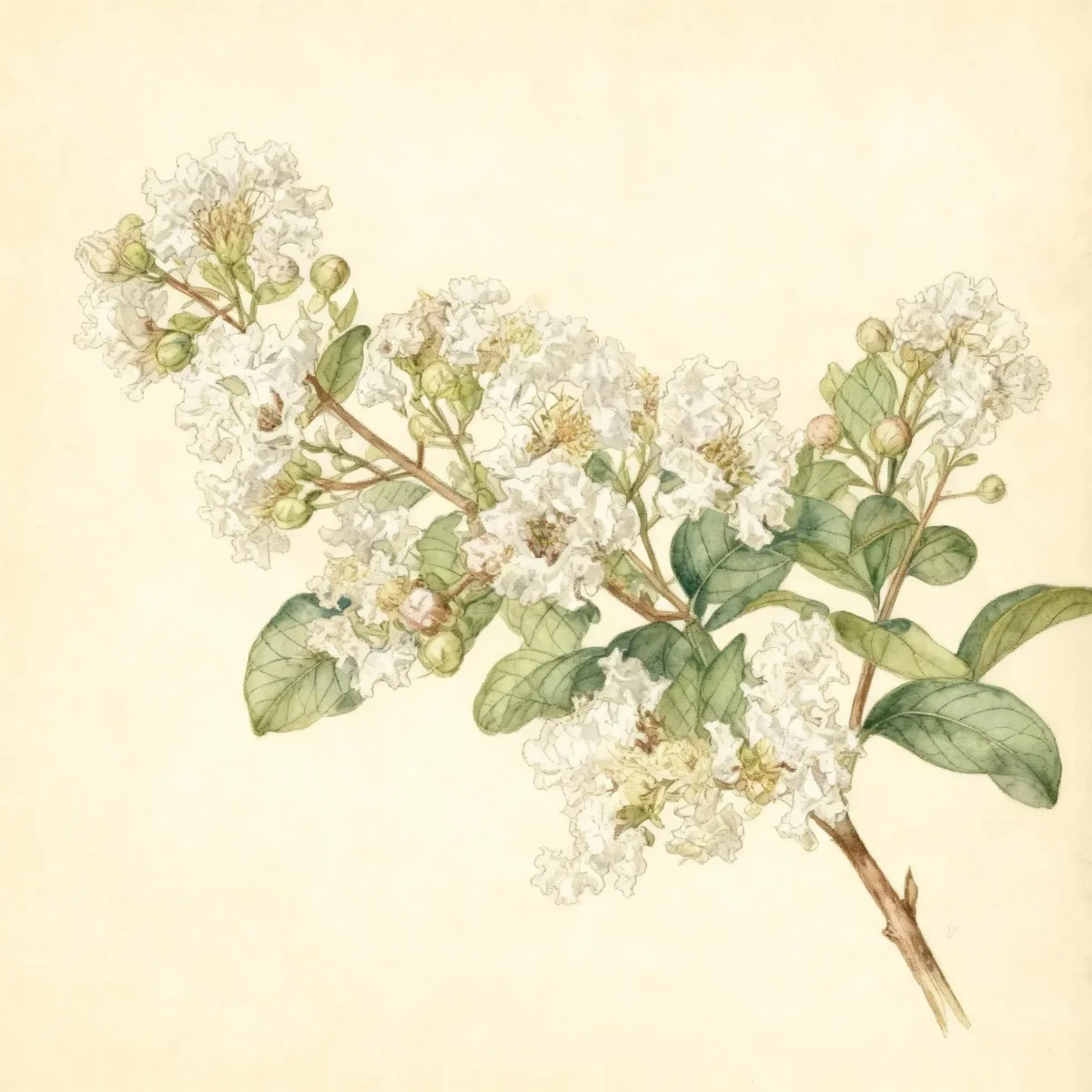
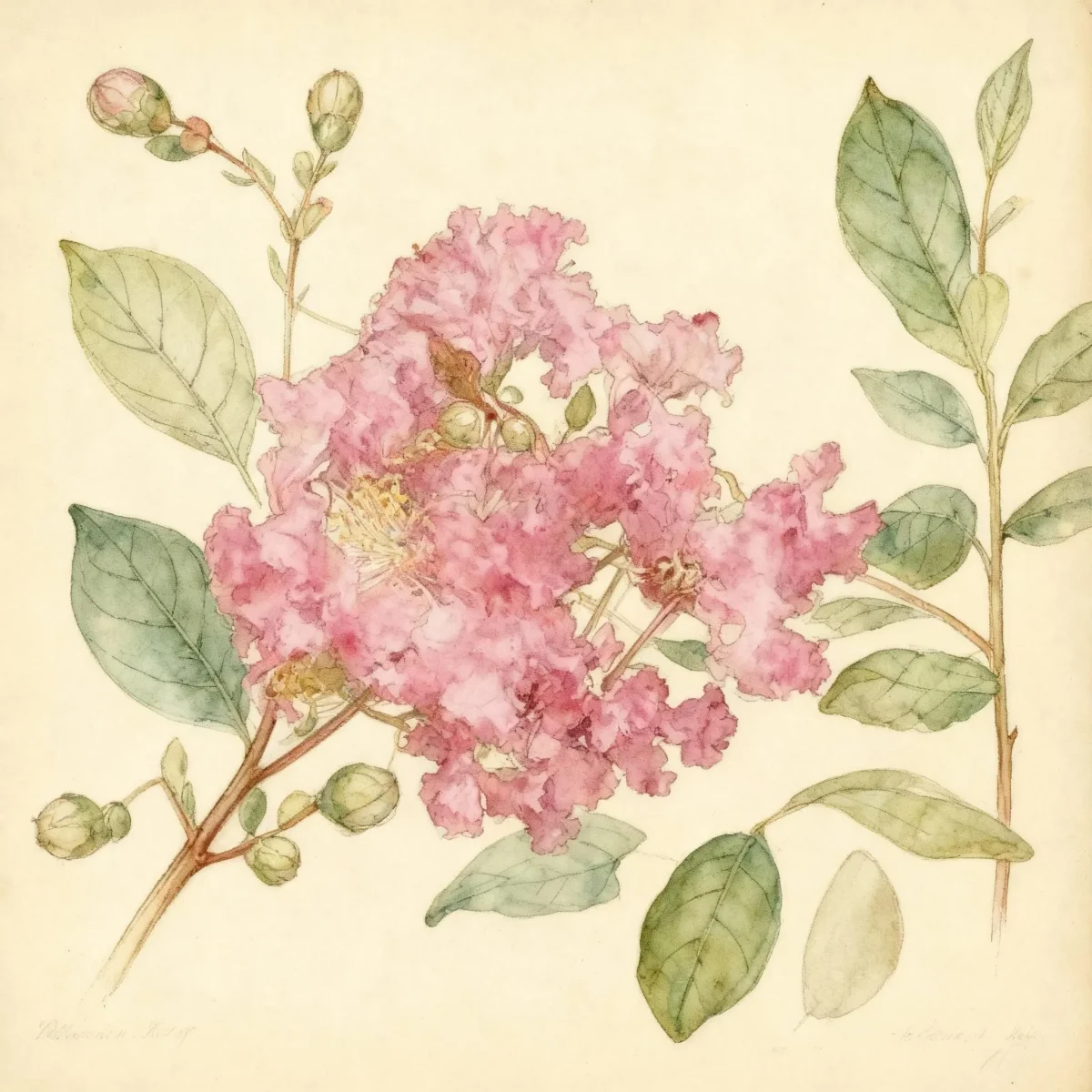
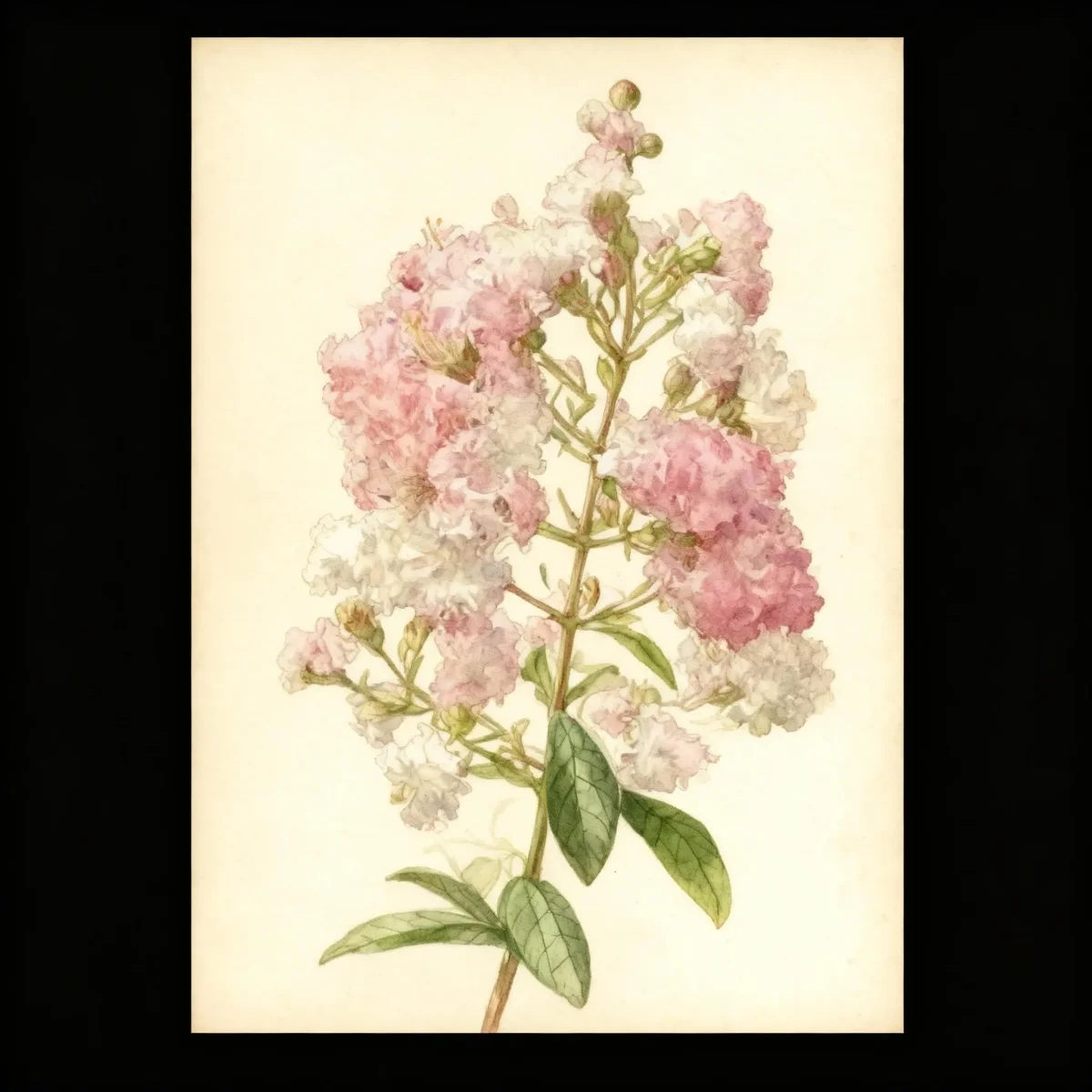
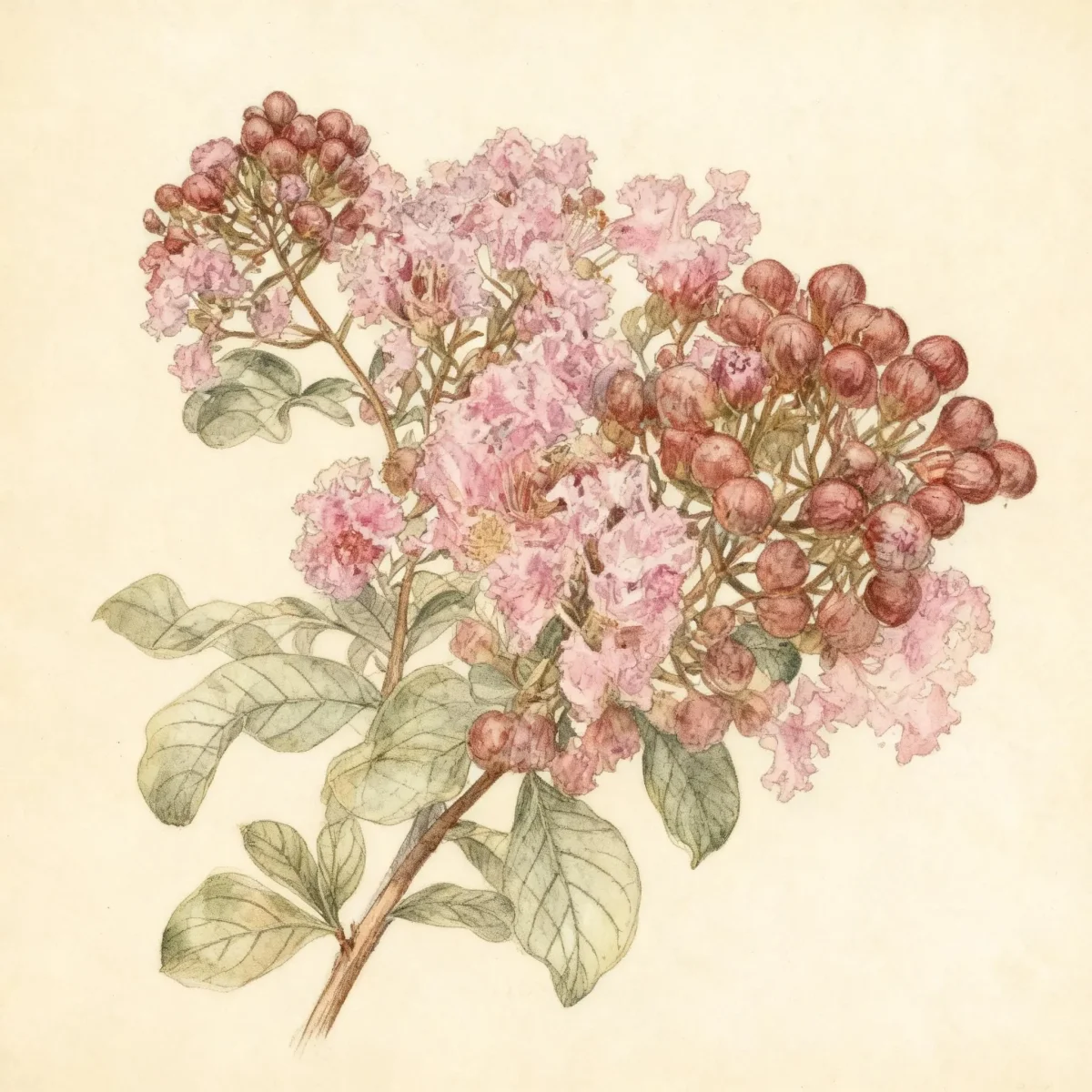
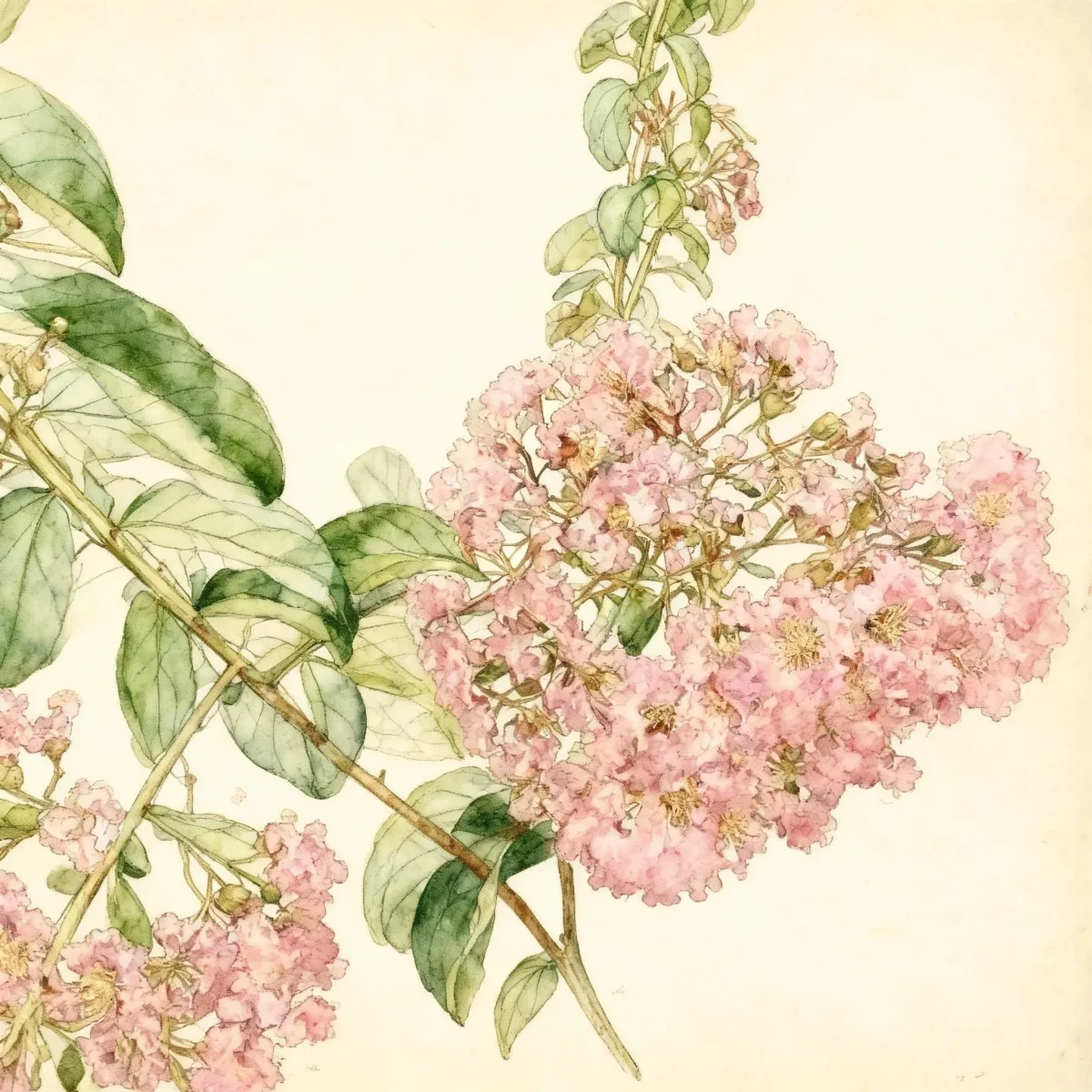
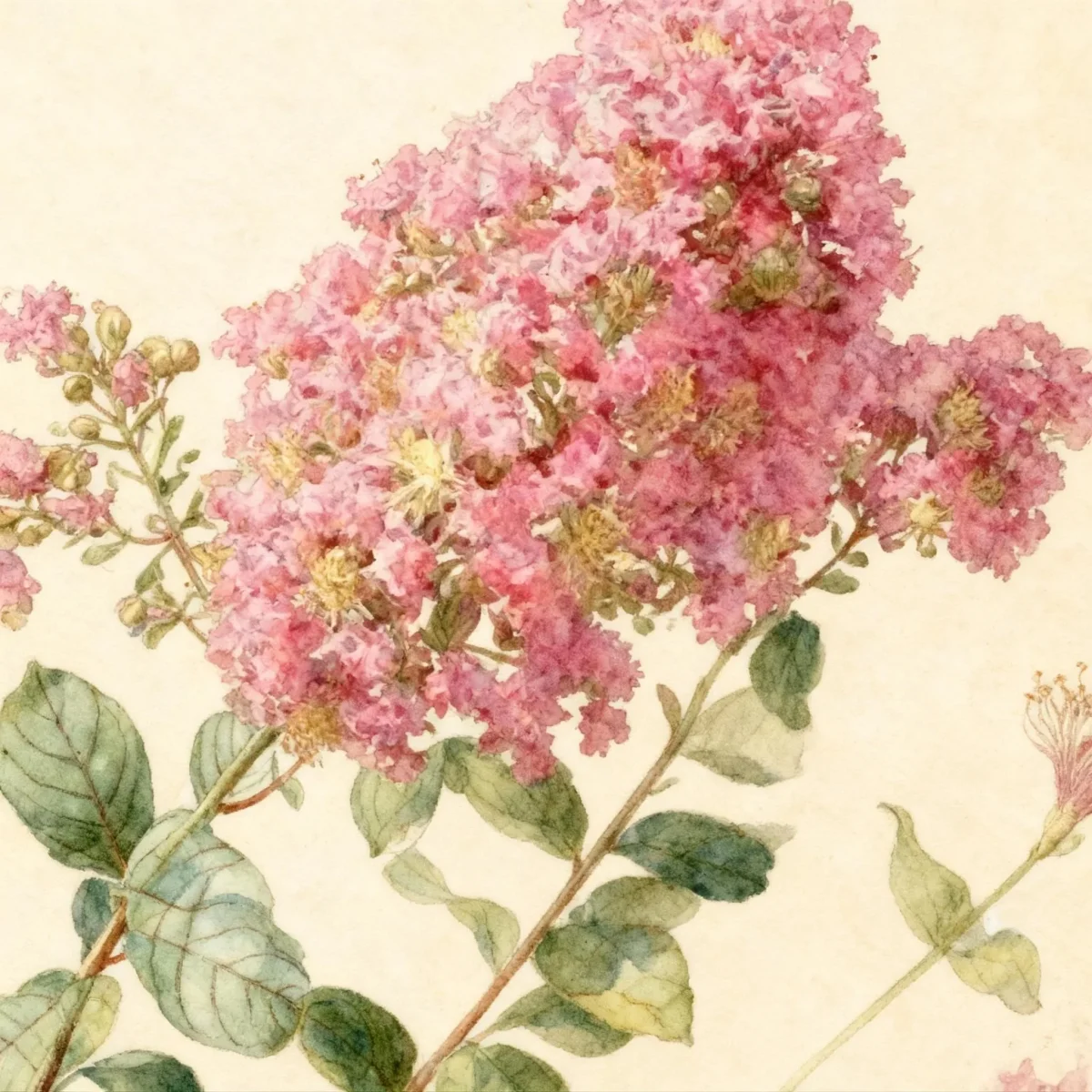
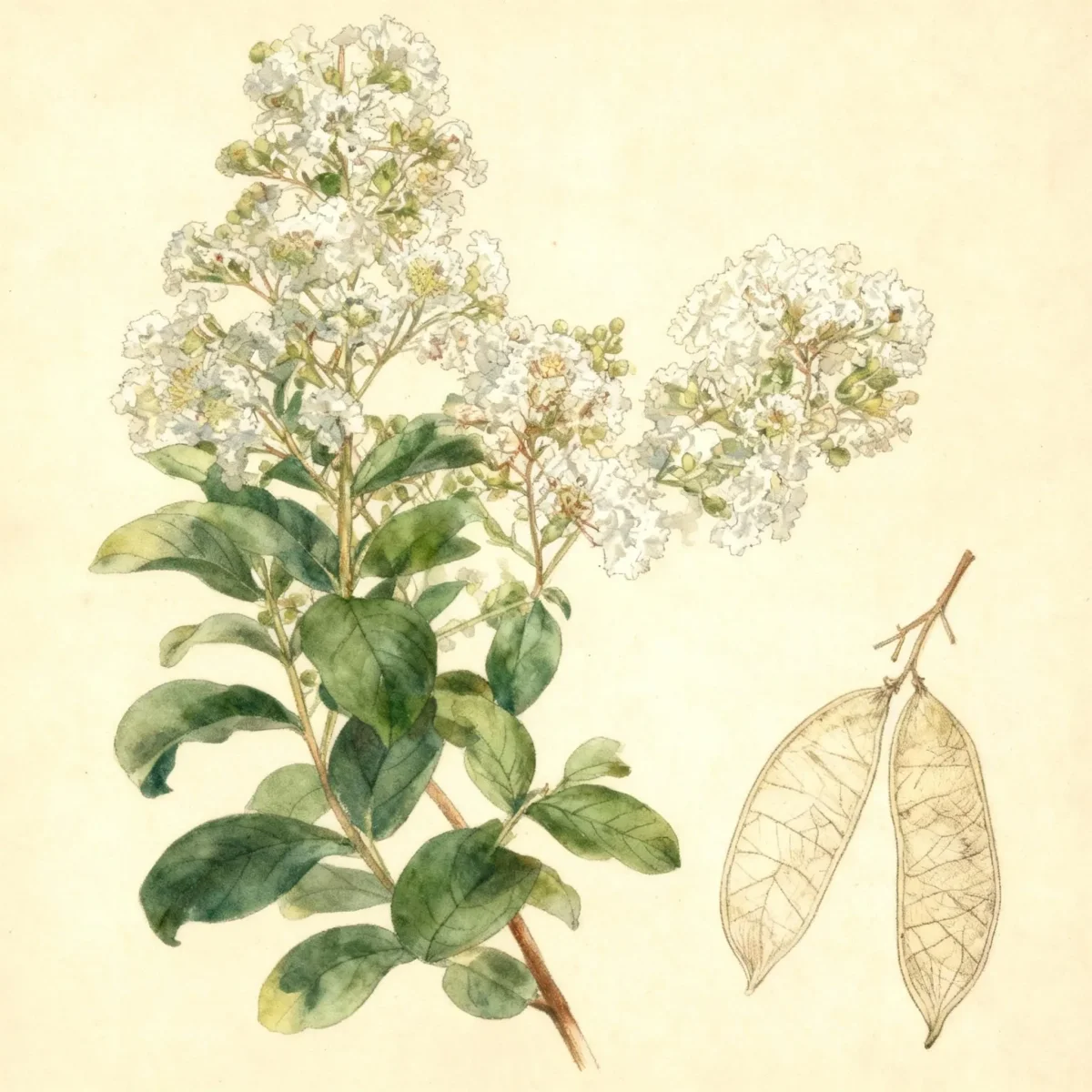
Crape myrtle (Lagerstroemia 'Natchez')
Lagerstroemia 'Natchez' is a stunning Crape myrtle hybrid offering white summer blooms, exfoliating bark, and excellent mildew resistance.

Bloom Boldly, No Matter the Season - Sweatshirt
Cozy organic cotton sweatshirt featuring our exclusive Purple Coneflower design. Perfect for gardeners who bloom year-round.
Inspired by the beautiful Crape myrtle
Limited first batch (50) — join the waitlist for early access
Waitlist closes Feb 15, 2026.
Complete Plant Information
Field Guide Continues
Ready for care notes, companion picks, and planting tips?
The map is just the start. The full guide below covers growth habits, seasonal performance, and landscape uses.
Overview
Lagerstroemia ‘Natchez’ is a highly valued cultivar of Crape myrtle, renowned for its spectacular blooming period that often stretches from July into September with abundant white flowers. Developed as part of the National Arboretum’s successful breeding program, this variety is particularly noted for its strong resistance to powdery mildew, making it a low-fuss option for summer color. It offers year-round interest, transitioning from its summer flowers to striking, exfoliating cinnamon-brown bark that provides visual structure throughout winter.
This deciduous shrub thrives when sited in full sun, ensuring the most prolific flowering performance. While adaptable to clay soils, good drainage remains paramount for long-term health. Mature sizes vary considerably depending on the climate, potentially reaching towering heights up toward 21 feet in warmer regions, though it often presents as a substantial, multi-stemmed shrub.
The ornamental appeal of this Crape myrtle makes Lagerstroemia ‘Natchez’ an excellent focal point or specimen. Its ability to handle heat, drought once established, and urban air pollution adds significant functional value to residential and municipal landscapes across its recommended zones.
Fast Facts
- Plant Family: Lythraceae
- Plant Type: Deciduous shrub
- Hardiness Zones: USDA Zones 6-9
- Size at Maturity:
- Height: 4-21 ft
- Spread: 4-21 ft
- Bloom Time: July to September
- Bloom Description: White
- Sun Exposure: Full sun
- Water Needs: Medium
- Maintenance Level: Medium
How to Grow
Establish your Lagerstroemia ‘Natchez’ in a location receiving full sun, as insufficient light severely limits its summer bloom potential. Plant in average, medium-moisture, well-drained soils; this cultivar handles loamy clay soils well, provided drainage isn’t impeded. When planting, water the roots deeply, especially during dry periods, focusing water at the base and avoiding overhead saturation of the foliage.
Fertilize established plants with a slow-release formula, but be cautious around overly fertile soils, which can encourage excessive leafy growth at the expense of flowers and potentially increase winter susceptibility. In colder areas within its range (Zones 5-6), take precautions such as placing the plant in a sheltered spot and applying a winter mulch.
For gardeners experiencing winter dieback, particularly in zones below 7, managing the plant like a buddleia is a common practice. Cut all stems back to about 8 inches in early spring, allowing vigorous new shoots to emerge that will flower on the current season’s growth. Alternatively, prune back only to visible live wood in spring following a harsh winter, similar to managing shrub roses.
Landscape Uses
The versatility of this Crape myrtle allows Lagerstroemia ‘Natchez’ to be integrated into numerous landscape designs. It excels when used as a prominent specimen shrub, drawing the eye with its summer flowers and winter bark interest. Plant in groups for a more impactful seasonal display or utilize it within shrub borders where its height can anchor the design.
In the warmer end of its hardiness range, this cultivar can easily mature into a single-trunk tree structure, making it highly effective for street plantings or as a tall, informal screen or hedge. Its mature size demands appropriate spacing, but the visual reward of the white blooms against dark green foliage is well worth the commitment.
Consider pairing the graceful, spreading habit of Lagerstroemia ‘Natchez’ with evergreen foundation plantings that contrast its deciduous nature, ensuring winter structure remains when the Crape myrtle is dormant.
Standout Features
Flower Qualities
- Showy
Noteworthy Characteristics
Lagerstroemia is a genus of about 40 species of deciduous and evergreen shrubs and trees from warm-temperate to tropical areas of Asia to Australia. ‘Natchez’ is a mildew-resistant hybrid featuring dark green foliage that turns orange to red in the fall, striking cinnamon brown exfoliating bark, and large panicles of white, crepe-papery flowers from mid-summer to early fall. This cultivar can grow into a substantial tree form (up to 21 ft) in the Deep South but remains smaller where winter dieback is common.
Tolerances
- Drought
- Clay Soil
- Air Pollution
Potential Problems
The most common issues associated with Crape myrtles include fungal leaf spot and powdery mildew, though ‘Natchez’ has demonstrated superior resistance to the latter. Foliage can display yellowing, known as chlorosis, if growing in highly alkaline soils. Some susceptibility to common pests like scale and aphids should be monitored. The primary concern for northern growers is winter injury; top growth is fragile below Zone 7, often dying back to the ground in severe cold snaps. Manage potential pest issues promptly with appropriate horticultural oils or insecticides, and ensure good air circulation to minimize any minor fungal challenges.
Frequently Asked Questions
What hardiness zones is Crape myrtle (Lagerstroemia ‘Natchez’) suitable for?
Lagerstroemia ‘Natchez’ is winter hardy in USDA Zones 6 through 9, though gardeners in Zone 6 must prepare for potential top-growth dieback.
How large does Lagerstroemia ‘Natchez’ grow?
This cultivar can reach heights and spreads between 4 and 21 feet, depending heavily on the severity of winter temperatures.
What sun exposure does Crape myrtle need?
This plant requires full sun exposure to achieve optimal flowering and best overall performance.
When does Lagerstroemia ‘Natchez’ bloom?
This specific Crape myrtle variety blooms robustly from July through September, displaying beautiful white flowers.
Conclusion
Lagerstroemia ‘Natchez’ remains a benchmark entry among summer-flowering shrubs due to its mildew resistance, stunning white floral display, and attractive exfoliating bark. Whether you utilize it as a towering specimen or manage it as a multi-stemmed shrub, this resilient Crape myrtle brings reliable seasonal structure to the garden. Before planting, confirm your local hardiness zone and ensure the chosen location provides the required full sun for maximum enjoyment of this excellent hybrid.
Companion Planting
When selecting companions for Lagerstroemia ‘Natchez’, focus on plants that share similar sunlight and soil preferences but offer complementary colors or textures. Since this Crape myrtle thrives in full sun and medium moisture, consider pairing it with summer-blooming perennials that thrive in heat, such as Coneflowers (Echinacea) or Black-Eyed Susans (Rudbeckia). These offer warmer color tones that contrast beautifully with the cool white blooms of the Natchez variety.
For backdrop planting, utilize dense, dark green evergreens that allow the exfoliating trunk of the Crape myrtle to stand out in winter. Yews or certain upright hollies provide the necessary structure without competing heavily for sun or nutrients. Avoid planting heavy feeders directly adjacent, as this could encourage excessive foliar growth on the Lagerstroemia at the expense of flowering.
Design Ideas for Exfoliating Bark
The exfoliating bark of Lagerstroemia ‘Natchez’—a rich, mottled cinnamon brown—is a vital architectural feature that persists long after the leaves drop. To maximize this trait, avoid planting it directly against dark, flat walls, which can obscure the texture. Instead, position the shrub where surrounding landscape lighting can highlight the bark during evening hours in the winter landscape.
Consider using low-growing, silvery foliage groundcovers or contrasting mulch colors (like light beige gravel) beneath the canopy. This light base helps reflect evening light upwards, emphasizing the intricate patterns revealed as the bark sheds annually. This careful placement ensures the plant provides visual interest across all four seasons, not just the summer bloom period.