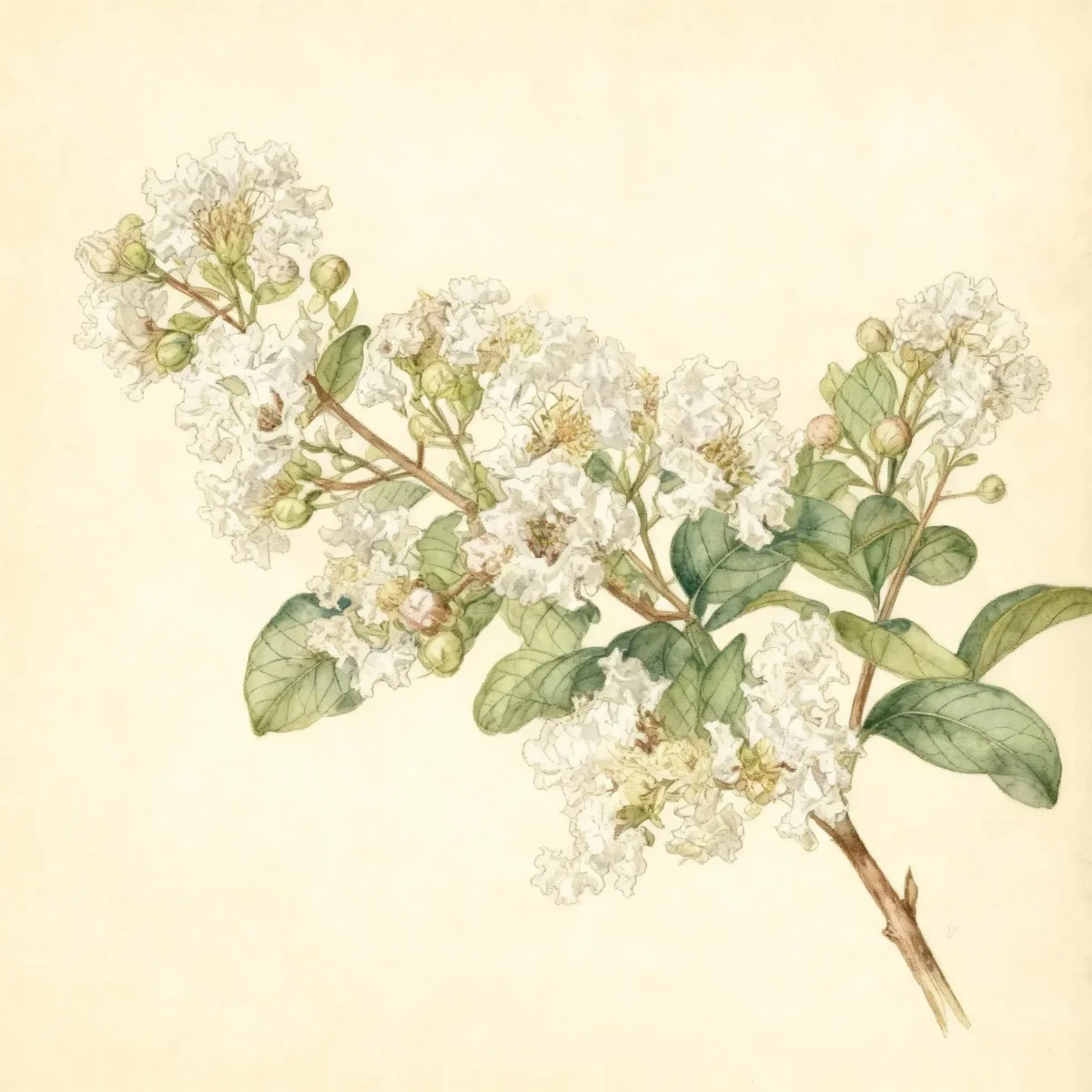
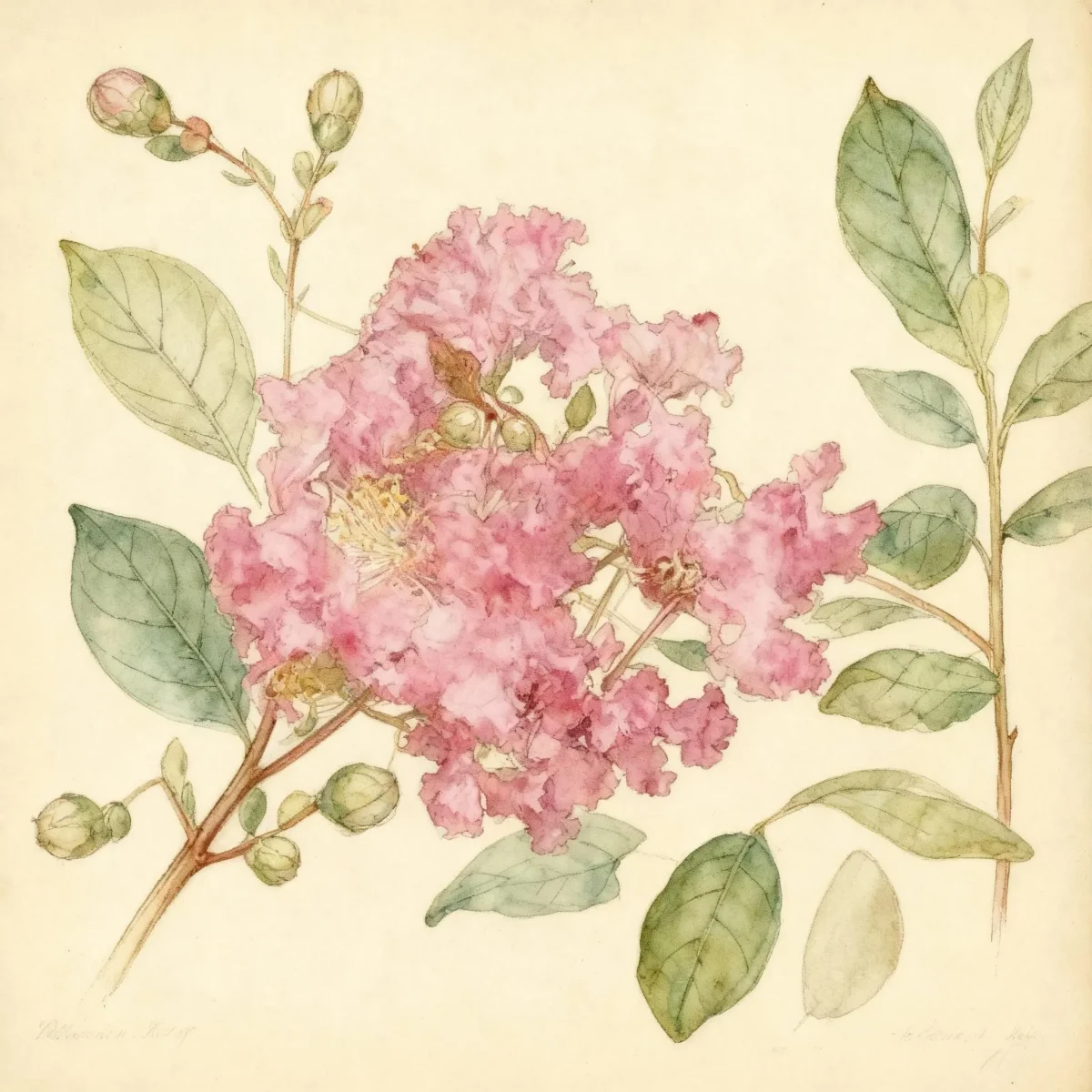
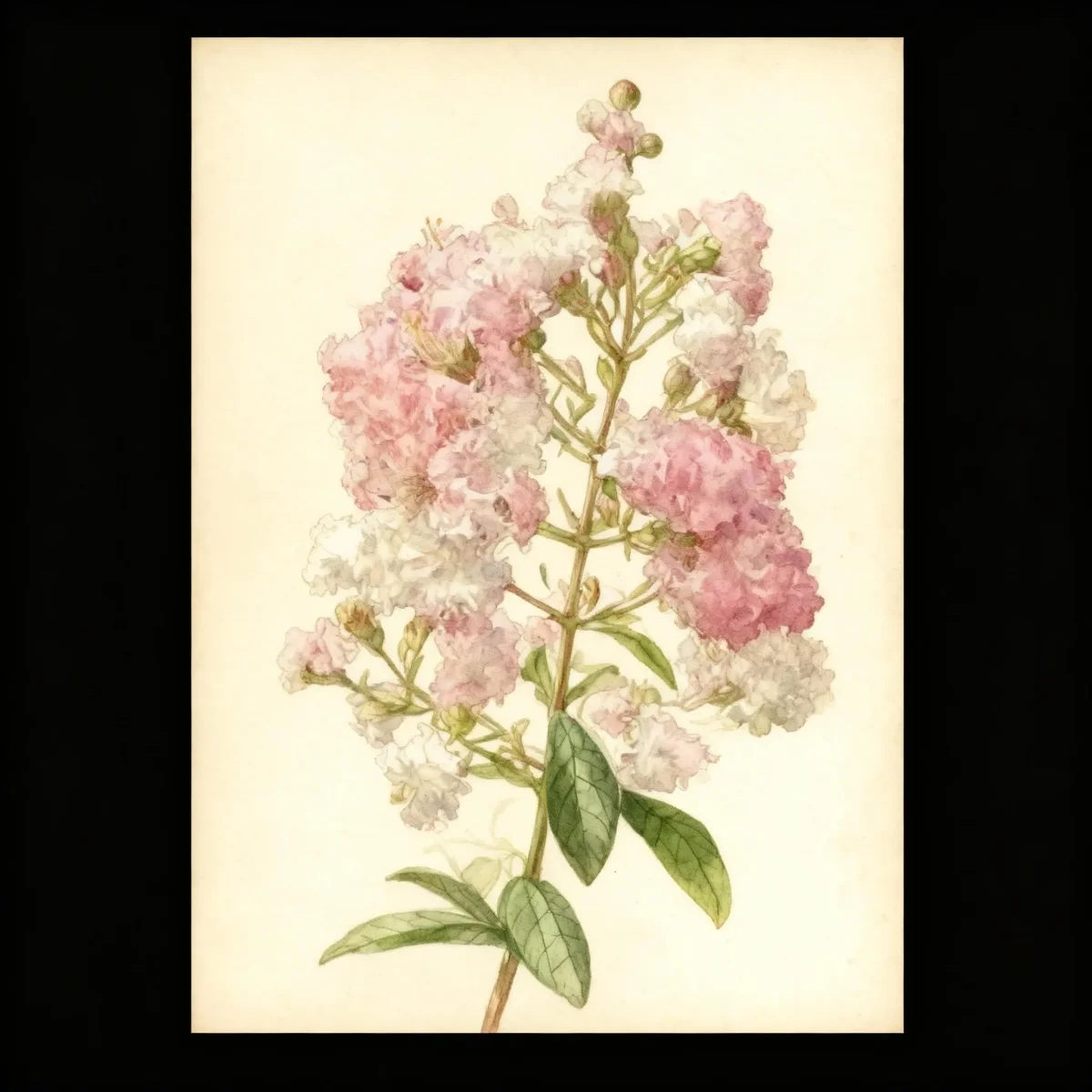
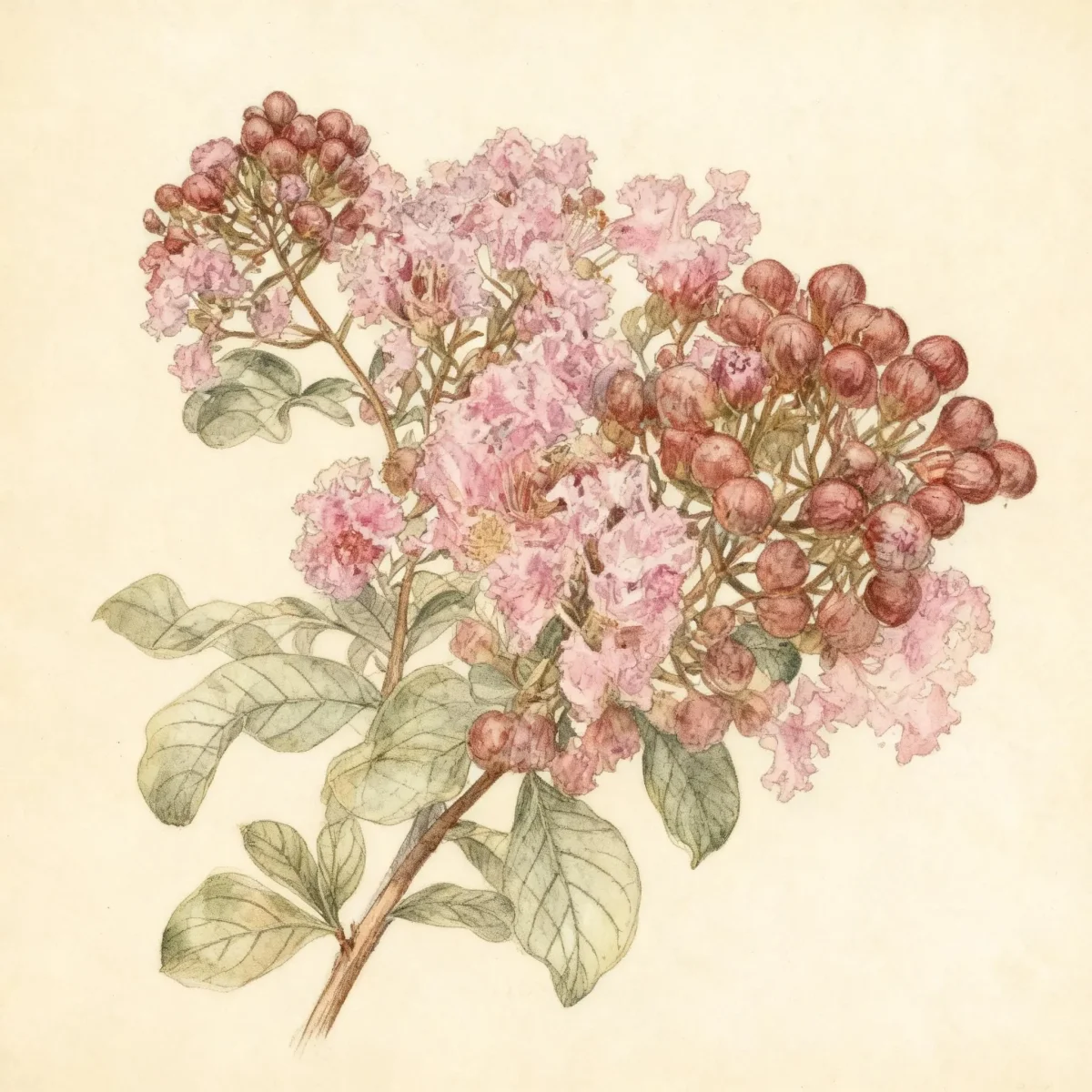
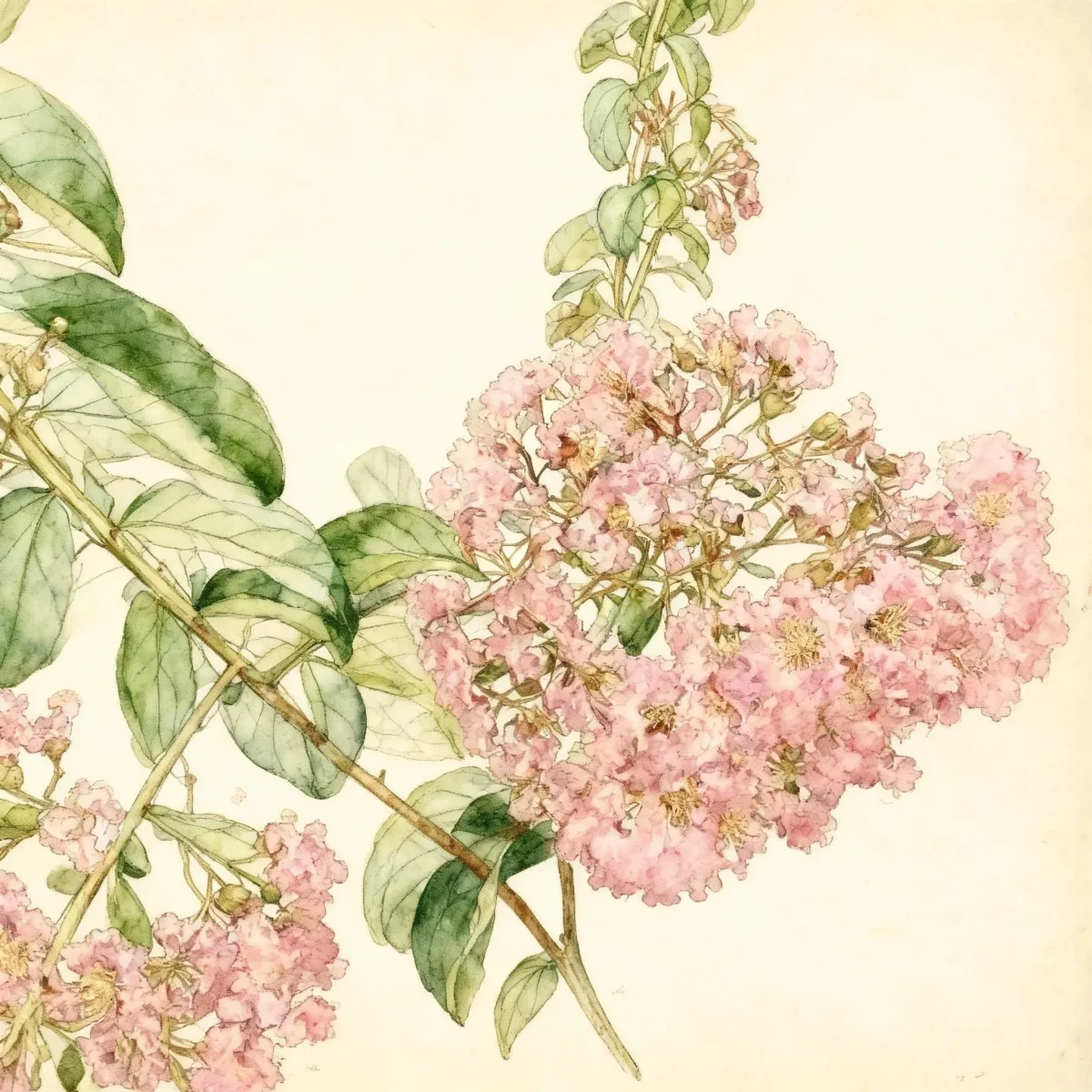
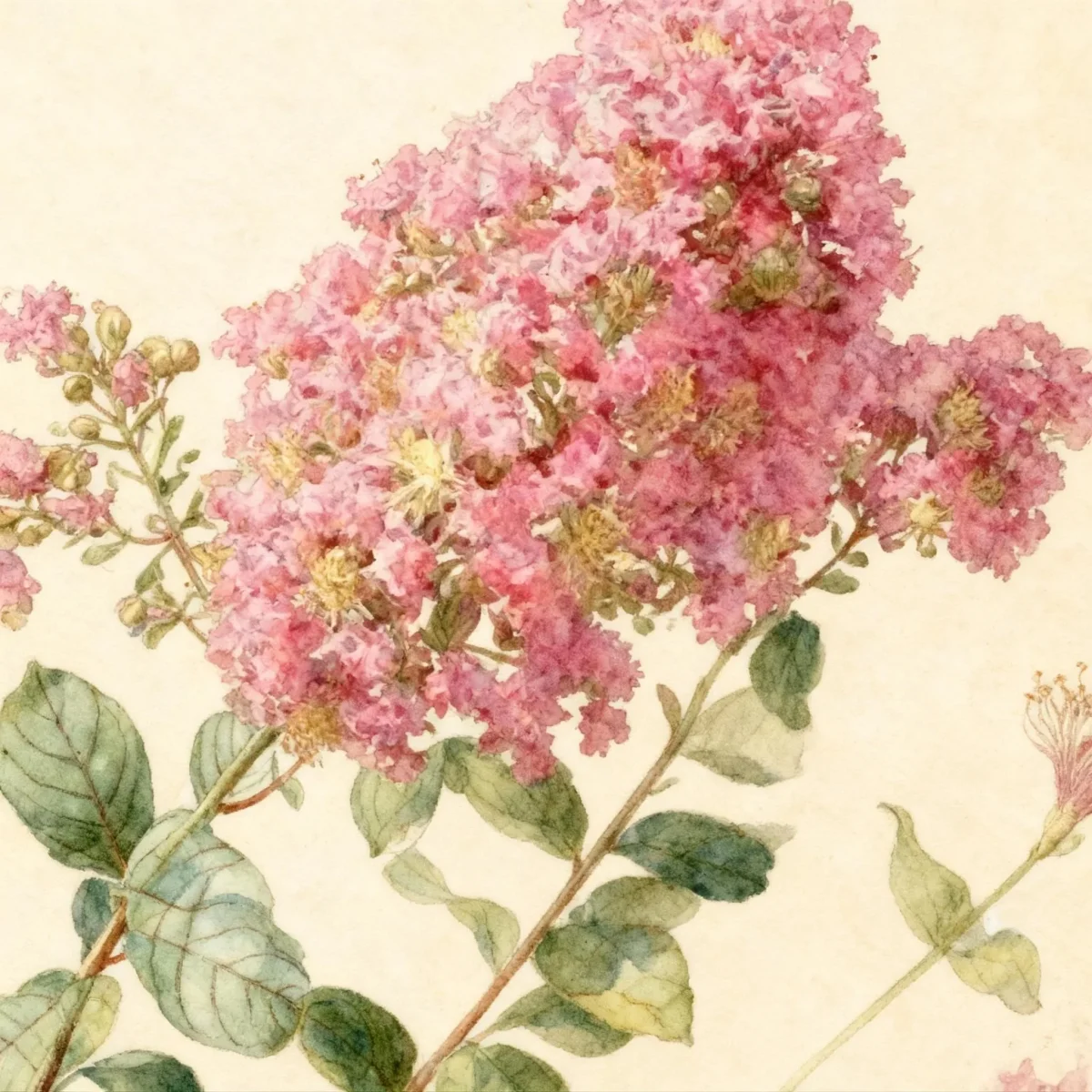
Crape myrtle (Lagerstroemia indica 'Near East')
Lagerstroemia indica 'Near East' is a stunning Crape myrtle offering shell pink blooms from mid-summer to fall, ideal for Zones 6-9.
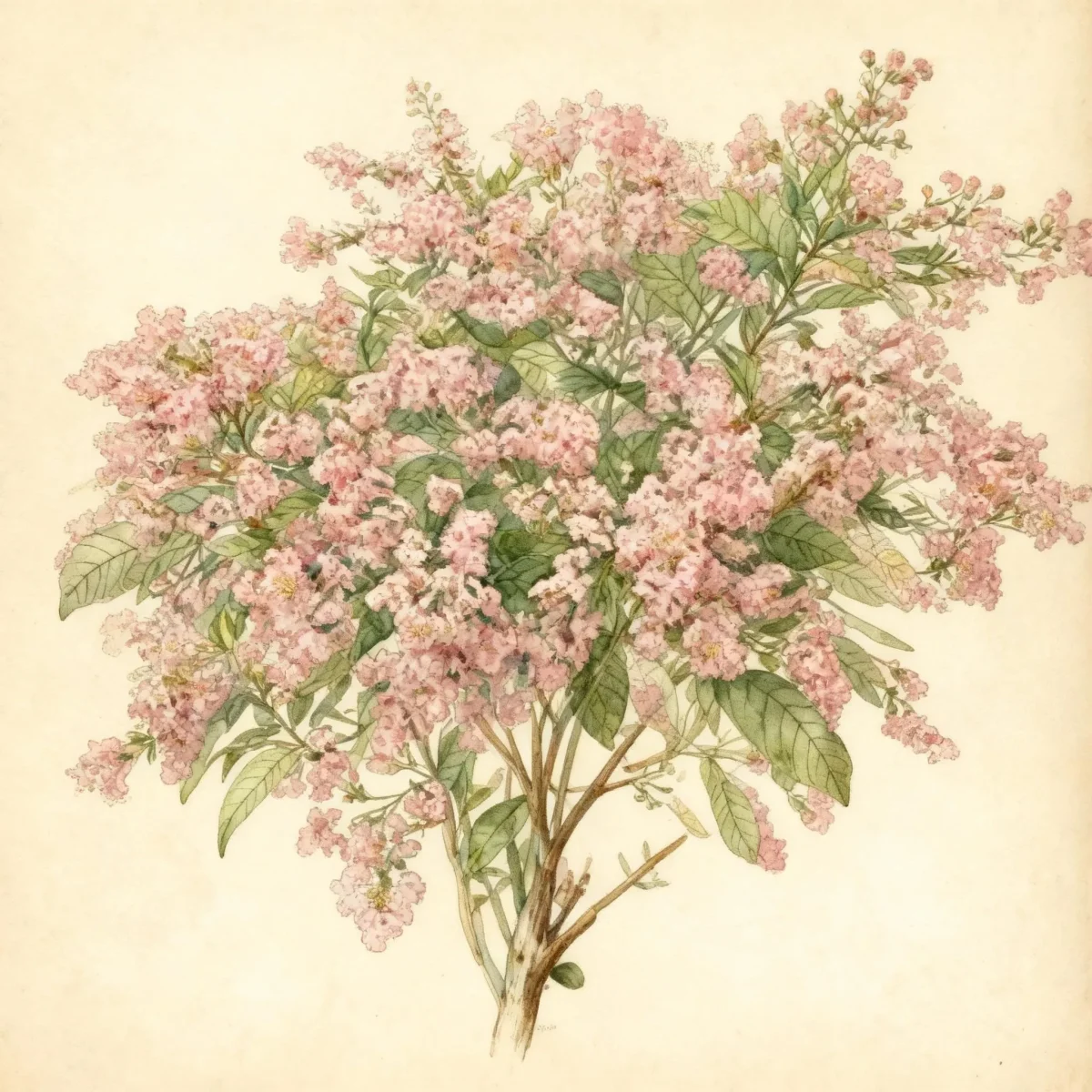

Bloom Boldly, No Matter the Season - Sweatshirt
Cozy organic cotton sweatshirt featuring our exclusive Purple Coneflower design. Perfect for gardeners who bloom year-round.
Inspired by the beautiful Crape myrtle
Limited first batch (50) — join the waitlist for early access
Waitlist closes Feb 15, 2026.
Complete Plant Information
Field Guide Continues
Ready for care notes, companion picks, and planting tips?
The map is just the start. The full guide below covers growth habits, seasonal performance, and landscape uses.
Overview
Lagerstroemia indica ‘Near East’, a beautiful cultivar of the Crape myrtle, provides exceptional ornamental value by extending the hot-weather color palette of the garden. This deciduous shrub is prized for its terminal, crepe-papery inflorescences which bloom prolifically from mid-summer well into early autumn. Beyond its stunning flowers, Lagerstroemia indica ‘Near East’ contributes multi-season interest with attractive exfoliating bark that matures to pale grayish-brown, and vibrant fall foliage.
This versatile shrub typically matures between 6 to 18 feet in height and spread, though its ultimate size can be influenced by climate severity, particularly winter temperatures in cooler zones. While deeply beloved in the South, gardeners in borderline climates must manage expectations regarding top-growth survival when facing harsh freezes.
For gardeners seeking long-lasting summer impact, the Crape myrtle cultivar ‘Near East’ stands out. It establishes well in tough conditions, tolerates urban pollution, and serves effectively as a screen, hedge, or specimen plant, making it a reliable feature in many landscape designs.
Fast Facts
- Plant Family: Lythraceae
- Plant Type: Deciduous shrub
- Hardiness Zones: USDA Zones 6-9
- Size at Maturity:
- Height: 6-18 ft
- Spread: 6-18 ft
- Bloom Time: July to September
- Bloom Description: Pink
- Sun Exposure: Full sun
- Water Needs: Medium
- Maintenance Level: Medium
How to Grow
Best results for your Lagerstroemia indica ‘Near East’ are achieved when planted in spring or fall in a location receiving full sun exposure. The soil should be average, well-drained, and medium in moisture, though this Crape myrtle shows good adaptability to clay soils provided drainage is adequate. Avoid planting in overly fertile areas, as this encourages rapid leaf growth at the expense of the desired summer flowers and can reduce winter hardiness.
Water the root zone deeply, especially during periods of drought, taking care to avoid wetting the foliage, which can exacerbate fungal issues. A slow-release fertilizer applied judiciously can benefit growth. In cooler zones like USDA 5 and 6, winter protection is crucial; planting in a protected spot and applying a winter mulch is recommended because top growth often succumbs to temperatures below -5°F.
For gardeners in marginal zones (like St. Louis, Zones 5b-6a), treat Lagerstroemia indica ‘Near East’ similarly to butterfly bush: be prepared to cut all stems back to 8 inches in early spring, allowing vigorous new flowering wood to emerge. This ensures blooms appear on the current year’s growth, minimizing winter die-back issues seen on established woody stems.
Landscape Uses
The versatility of the Crape myrtle makes Lagerstroemia indica ‘Near East’ an excellent choice for various structural roles within the garden. In milder regions (USDA Zones 7-9), this cultivar excels when used as a natural screen or an informal hedge due to its manageable size and dense summer foliage. It forms a beautiful backdrop when planted in shrub borders or perennial beds, offering color when many other summer bloomers begin to fade.
For smaller settings, or in cooler zones where pruning back to the ground is necessary, this plant functions perfectly as a striking specimen shrub. Its exfoliating bark offers essential winter interest when the shell pink flowers are long gone. Consider pairing the medium-sized Lagerstroemia indica ‘Near East’ with bold, textural evergreens or late-season grasses to highlight its fine texture and persistent summer color.
Flower Qualities
- Showy
Fruit Qualities
- Showy
Noteworthy Characteristics
Lagerstroemia indica, commonly known as crape myrtle, is an upright, wide-spreading, multi-stemmed, deciduous shrub or small tree in the loosestrife family. Its ornamental appeal lies in its long bloom period, superb fall color, and attractive exfoliating bark. The cultivar ‘Near East’ specifically displays terminal, shell pink flowers from mid-summer into early fall, atop dark green foliage that turns orange-red before dropping.
Tolerances
- Drought
- Clay Soil
- Air Pollution
Potential Problems
The two primary concerns for any crape myrtle, including Lagerstroemia indica ‘Near East’, are fungal leaf spot and powdery mildew, though this cultivar shows some resistance to mildew. To manage these issues, ensure good air circulation through proper pruning and avoid wetting the leaves during overhead watering, especially in humid weather. Foliage may develop a yellow tint (chlorosis) if the soil pH is too alkaline.
Another critical issue is winter injury, common in Zones 5 and 6 where top growth may die back to the ground. Aphids and scale insects can occasionally appear; these are usually controllable with horticultural oils or insecticidal soap early in the season. Always check your local frost dates and be prepared to perform an early spring pruning if dieback occurs, ensuring you still receive those beautiful pink blooms on the new shoots.
Frequently Asked Questions
What hardiness zones is Crape myrtle suitable for?
Lagerstroemia indica ‘Near East’ is reliably hardy in USDA Zones 6 through 9.
How large does Crape myrtle grow?
This variety typically reaches a mature height between 6 and 18 feet, with a corresponding spread of 6 to 18 feet, depending on winter conditions and pruning practices.
What sun exposure does Lagerstroemia indica ‘Near East’ need?
This selection requires full sun to perform best both in terms of growth habit and prolific flowering.
When does Crape myrtle bloom?
The blooming period for this cultivar spans from July extending through September, featuring lovely shell pink flowers.
Conclusion
The Lagerstroemia indica ‘Near East’ crape myrtle offers unparalleled mid-to-late summer color combined with attractive bark and fall foliage, providing year-round garden structure. While demanding full sun and careful management in cooler climates prone to winter injury, the reward is a long season of shell pink blooms. Confirm that your garden falls within USDA Zones 6-9, or plan for hard pruning in early spring if gardening near the colder limit of its range.
Companion Planting
When integrating Lagerstroemia indica ‘Near East’ into your borders, select companions that share a similar need for full sun and well-drained soil. Consider planting lower-growing perennials like Russian Sage (Perovskia atriplicifolia) or ornamental grasses such as Panicum virgatum (Switchgrass). These pairings create contrasting textures—fine and airy against the Crape myrtle’s more solid structure—enhancing the visual appeal throughout the summer months. Avoid heavy shade providers beneath your shrub, as insufficient light will dramatically reduce flower production on your Lagerstroemia indica ‘Near East’.
Design Ideas for Hedges and Screens
Since this cultivar is explicitly recommended for use as an informal hedge or screen, consider its mature spacing of up to 18 feet when placing multiple plants. Allow adequate room—at least 10 to 12 feet between specimens for hedging—so that mature wood develops sufficient exfoliation, a key aesthetic feature of the Crape myrtle. If using it in a mixed border, plant it toward the back so that its height does not overwhelm smaller adjacent shrubs or perennials. The consistent pink bloom provides a calming, unified color theme across a long line of hedging material.