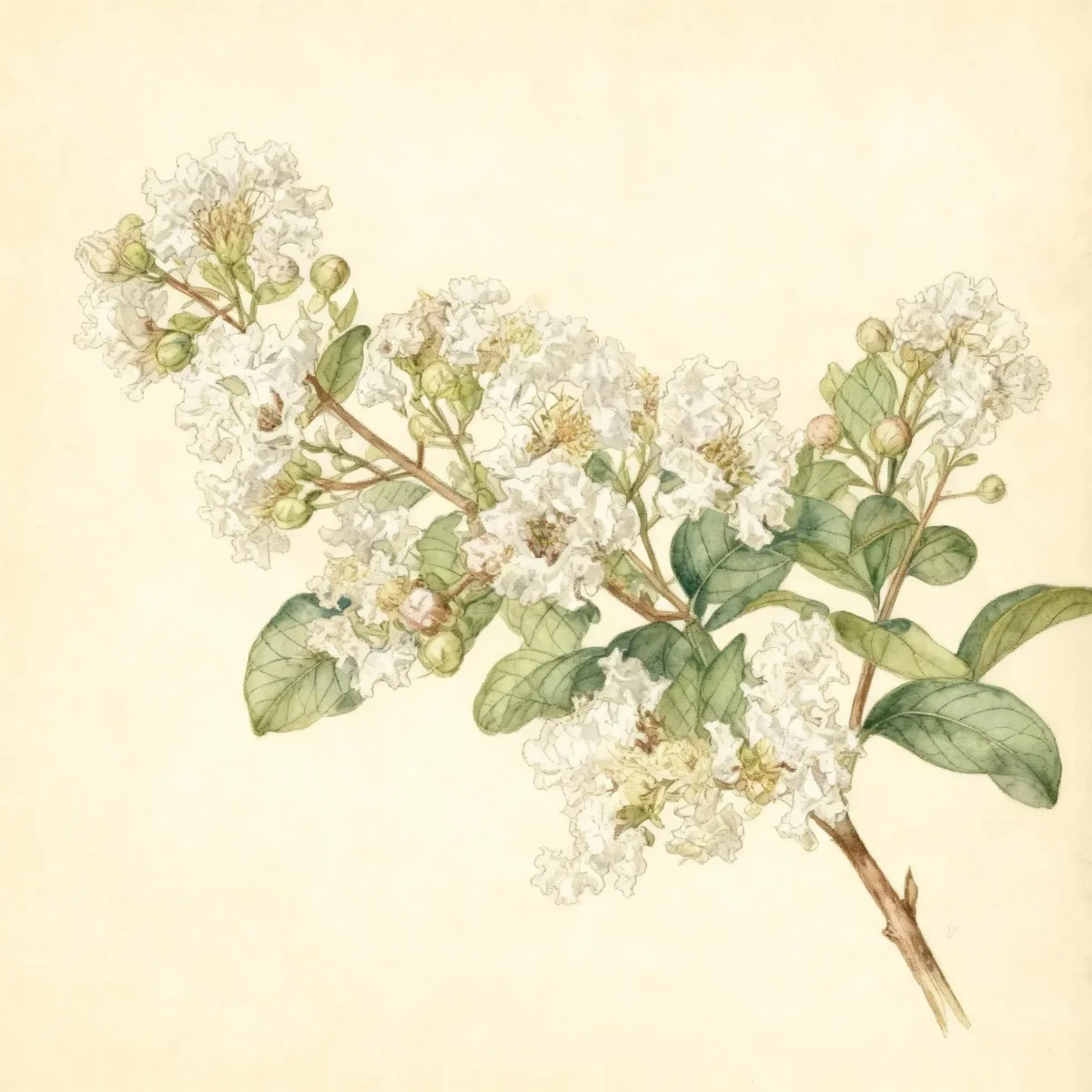
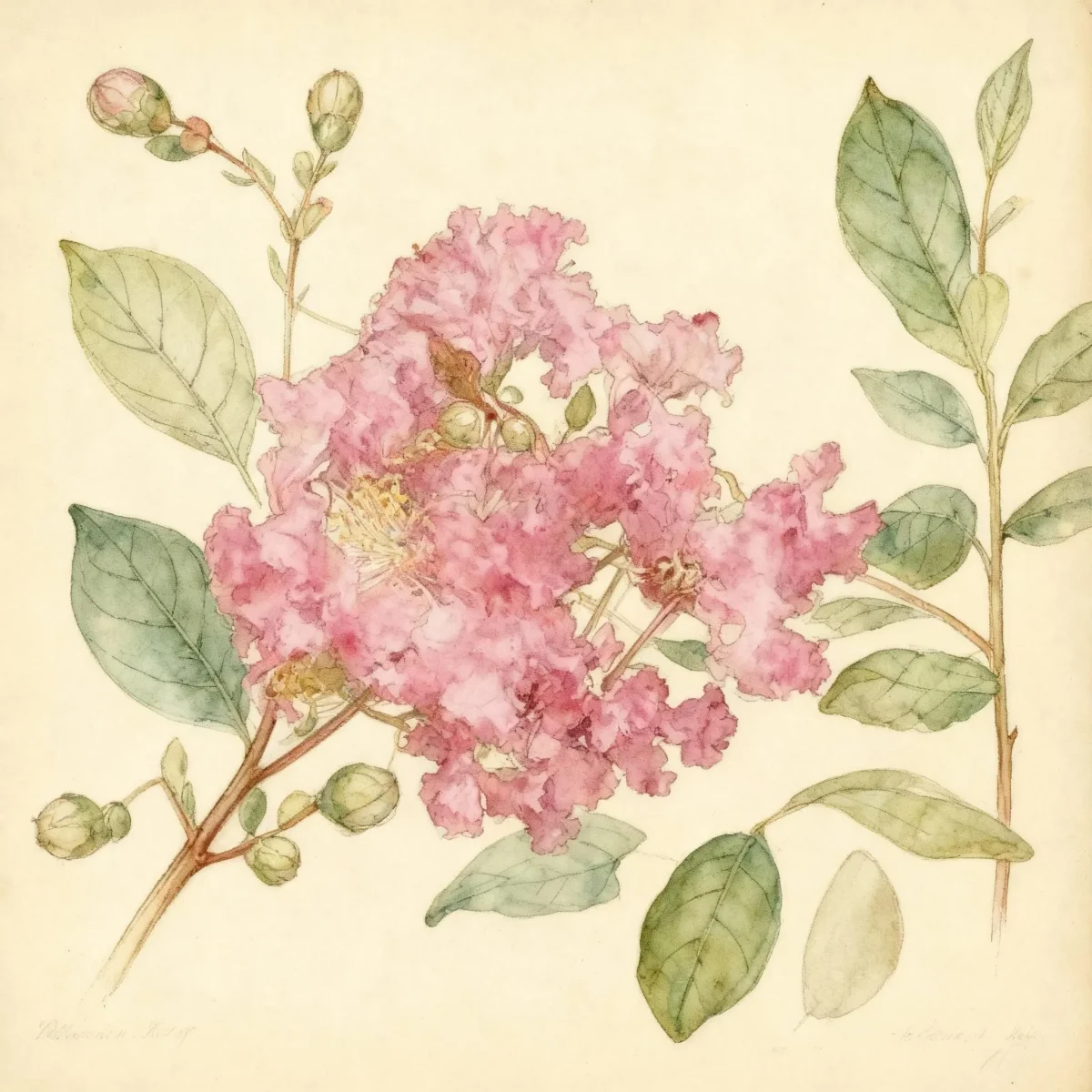
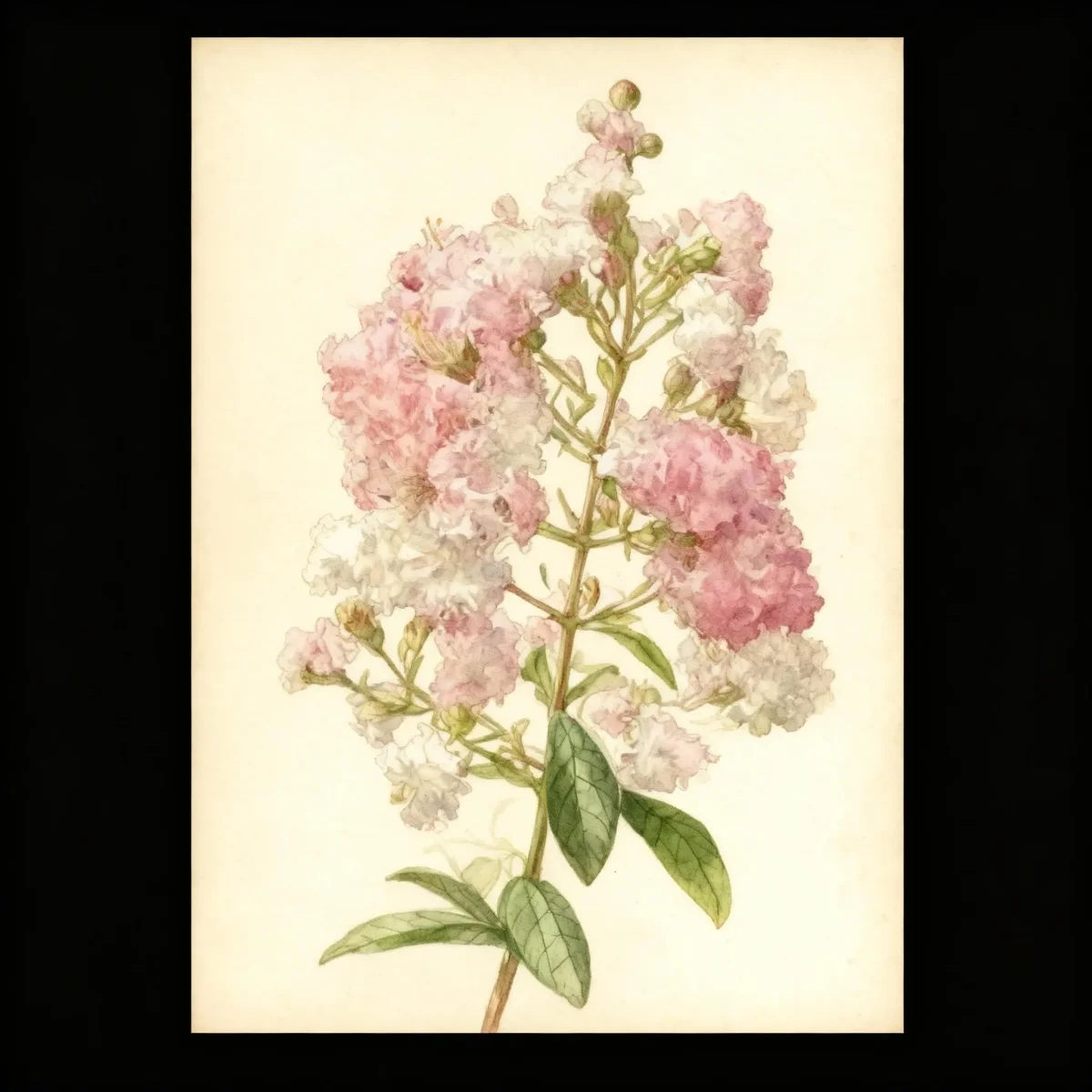
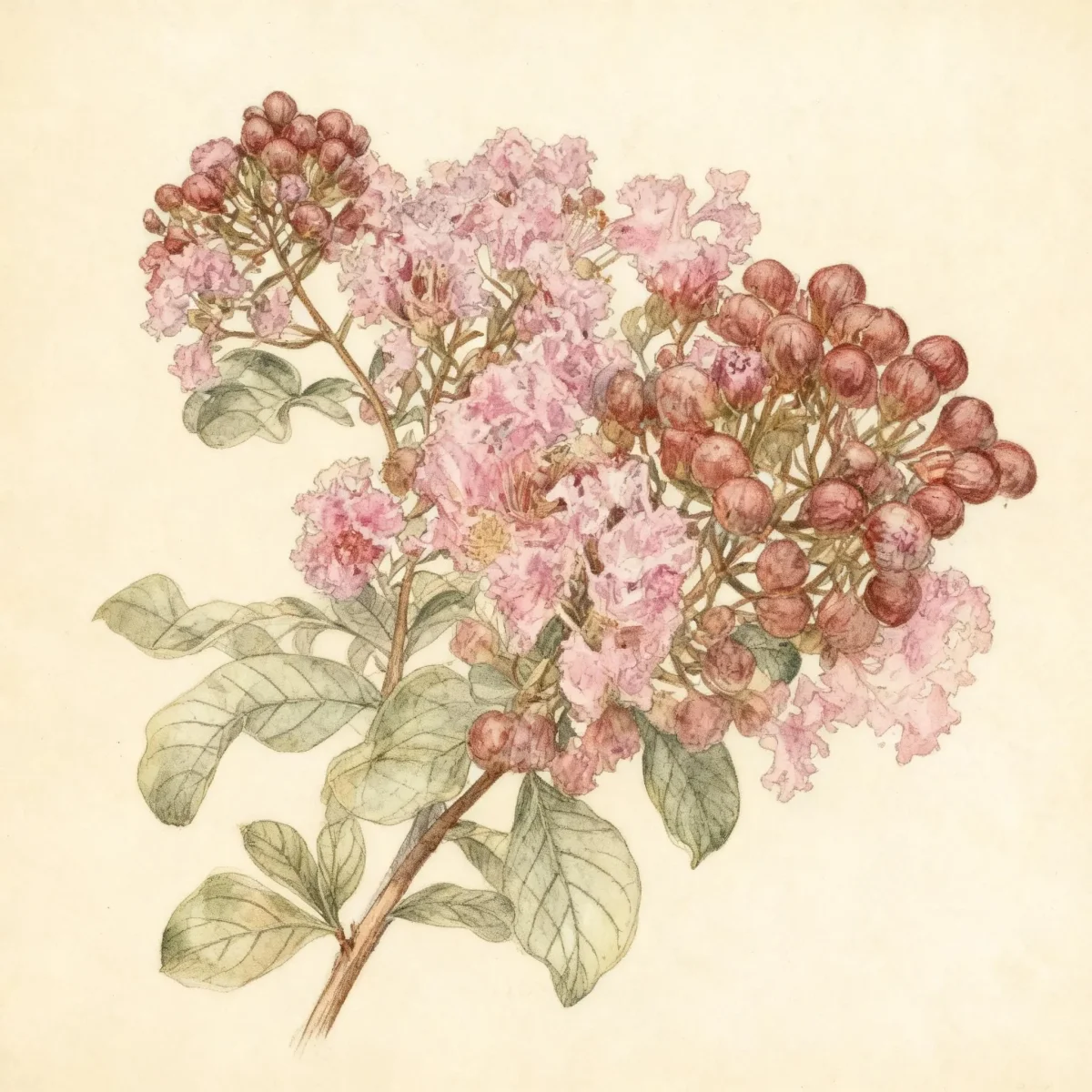
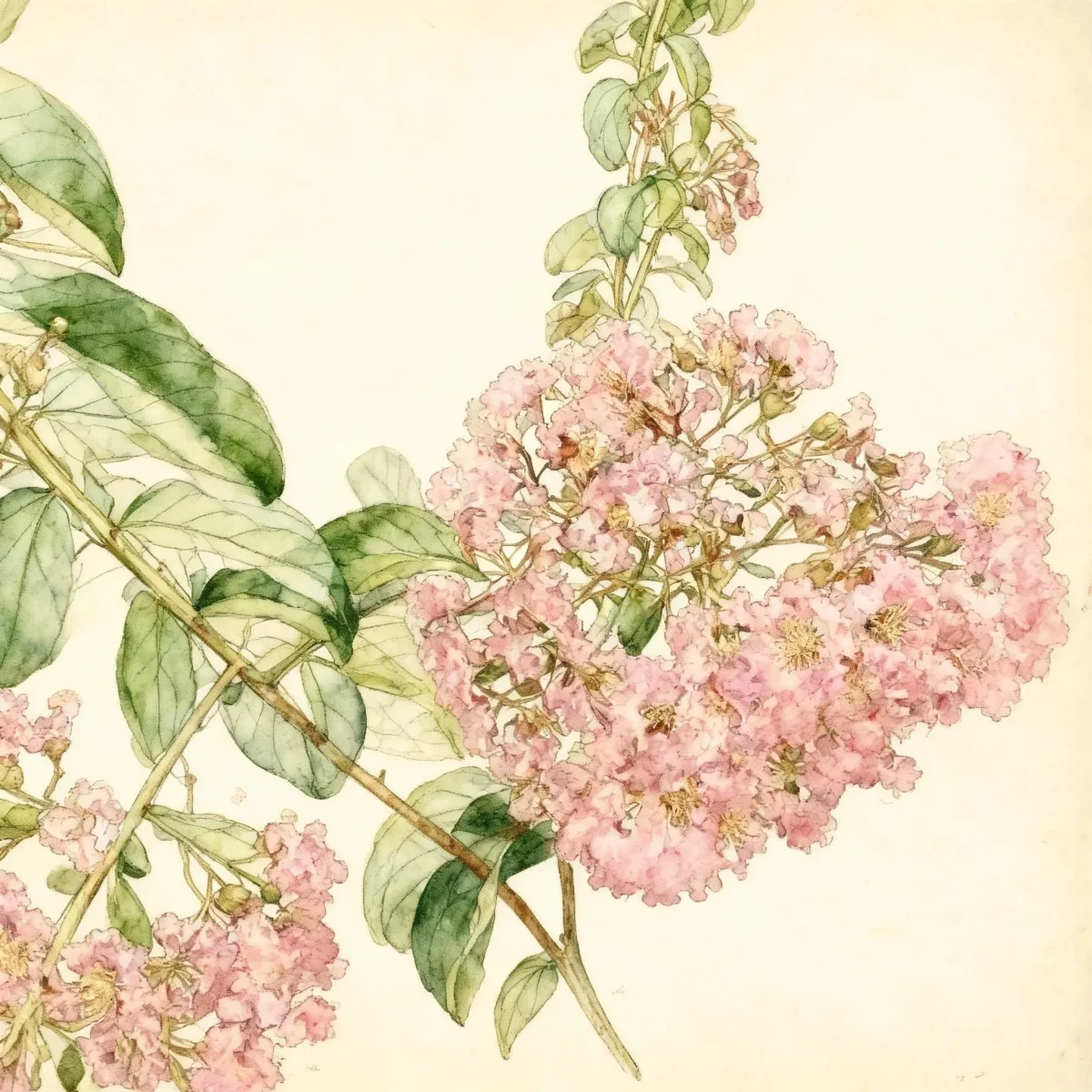
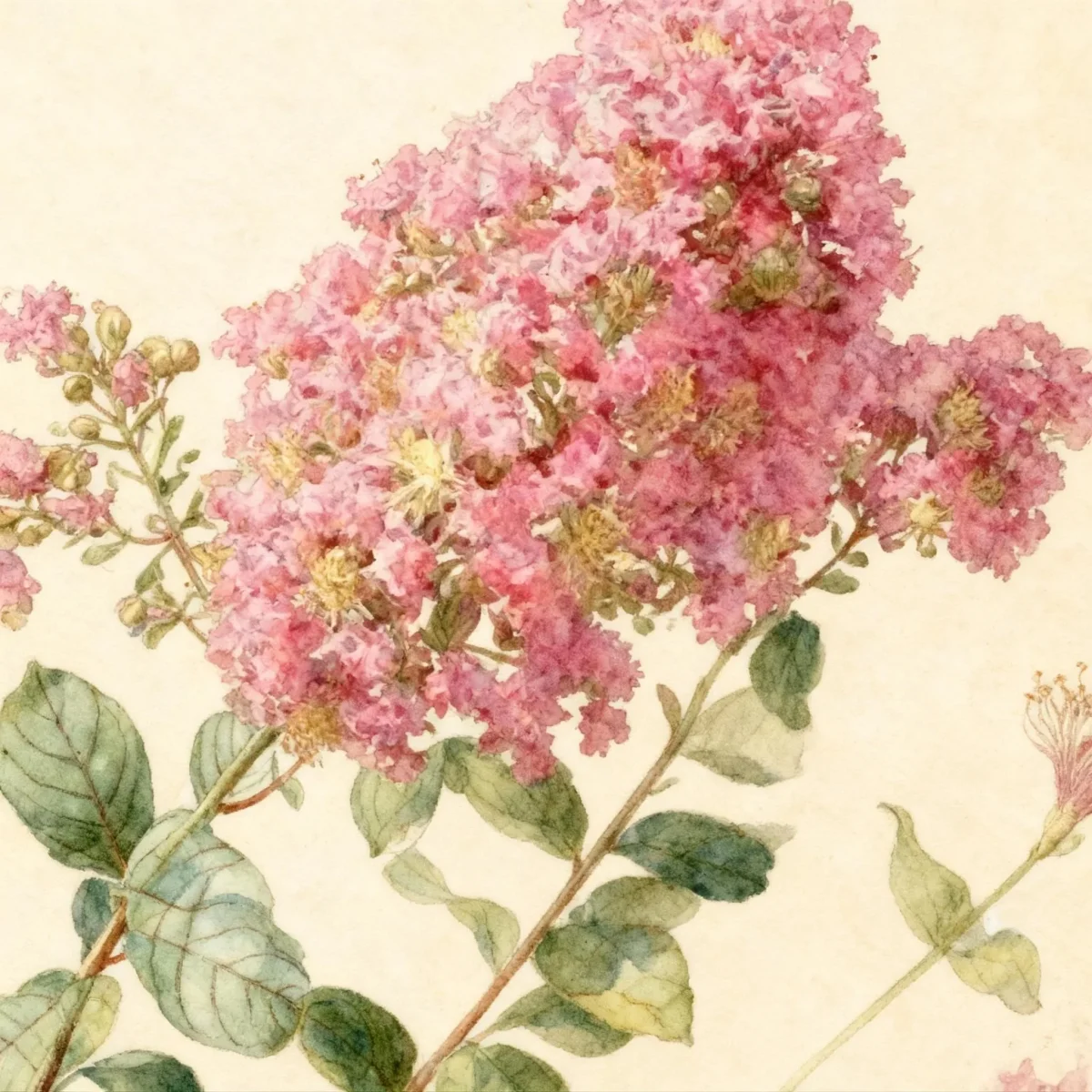
Crape myrtle (Lagerstroemia indica 'Velma's Royal Delight')
Lagerstroemia indica 'Velma's Royal Delight' is a compact Crape myrtle featuring magenta pink blooms from mid-summer. Reliable in Zones 6-9.
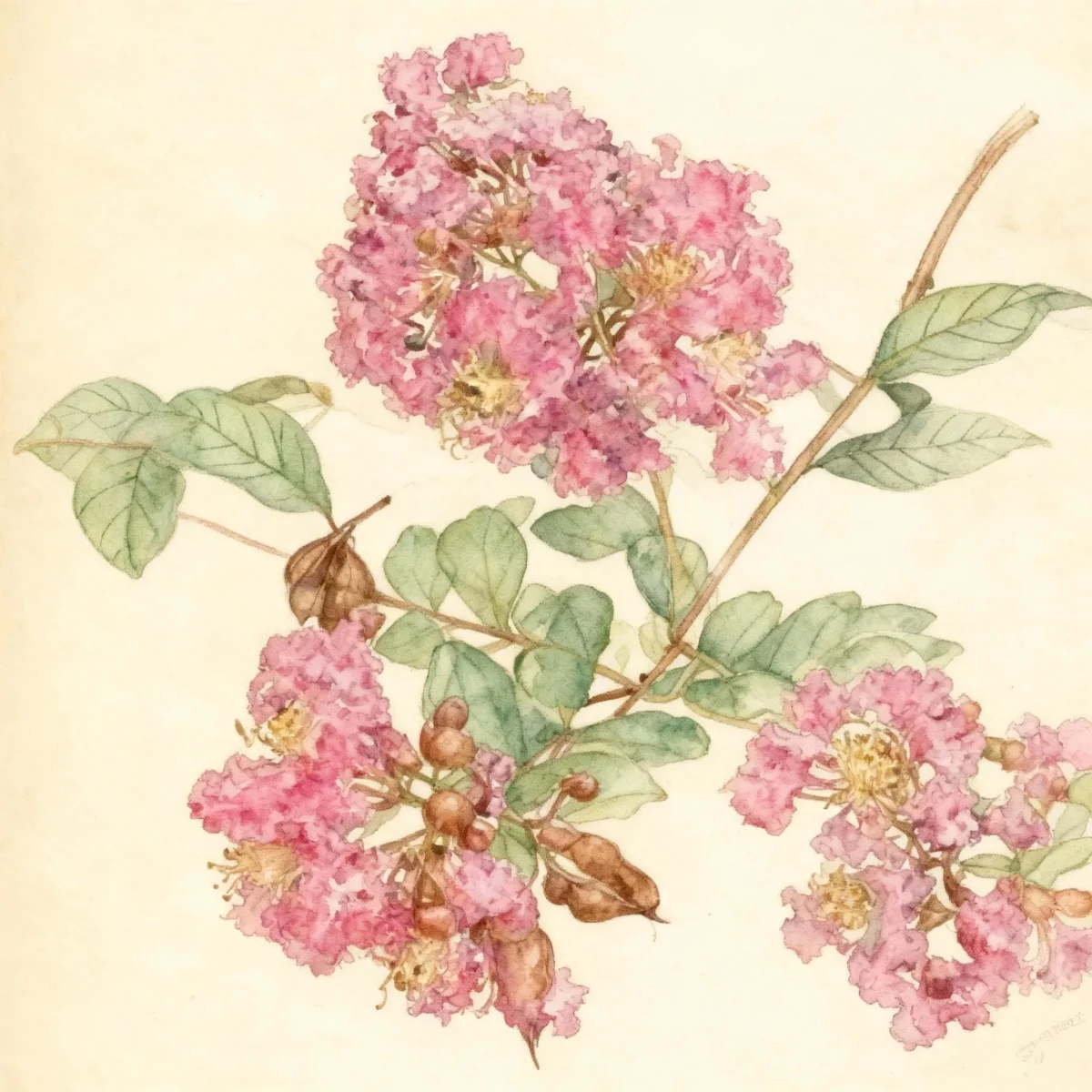

Bloom Boldly, No Matter the Season - Sweatshirt
Cozy organic cotton sweatshirt featuring our exclusive Purple Coneflower design. Perfect for gardeners who bloom year-round.
Inspired by the beautiful Crape myrtle
Limited first batch (50) — join the waitlist for early access
Waitlist closes Feb 15, 2026.
Complete Plant Information
Field Guide Continues
Ready for care notes, companion picks, and planting tips?
The map is just the start. The full guide below covers growth habits, seasonal performance, and landscape uses.
Overview
Lagerstroemia indica ‘Velma’s Royal Delight’ offers gardeners a fantastic flush of summer color in a manageable shrub size, making it a highly desirable cultivar of the classic Crape myrtle. This specific variety is known for its reliable blooming, generally producing magenta pink, crepe-papery flowers throughout the peak summer months and into early fall. While many Crape myrtles are utilized as small trees, ‘Velma’s Royal Delight’ remains compact, usually topping out around 5 feet tall in ideal, warmer conditions.
It is celebrated for its ornamental appeal, which includes attractive exfoliating bark on mature specimens and good fall leaf color that shifts to shades of orange and red. For gardeners situated in marginally cold zones, this cultivar has been noted for potentially better winter hardiness compared to other types of Lagerstroemia indica. Successful cultivation of this showy Crape myrtle relies on consistent cultural care, particularly ensuring adequate sunlight and good drainage.
Fast Facts
- Plant Family: Lythraceae
- Plant Type: Deciduous shrub
- Hardiness Zones: USDA Zones 6-9
- Size at Maturity:
- Height: 2-5 ft
- Spread: 2-4 ft
- Bloom Time: July to September
- Bloom Description: Magenta pink
- Sun Exposure: Full sun
- Water Needs: Medium
- Maintenance Level: Medium
How to Grow
Plant Lagerstroemia indica ‘Velma’s Royal Delight’ in the spring or early fall when possible, ensuring a spot that receives full sun daily. This Crape myrtle thrives in average, well-drained soils; it tolerates clay soils provided drainage is adequate, but avoid overly rich locations which encourage excessive leafy growth over flowering. Water the root zone deeply, especially during dry spells, but take care to keep the foliage dry to minimize potential disease issues.
Maintenance for this compact Crape myrtle often involves applying a slow-release fertilizer in spring to support blooming without overfeeding. Pruning is best done lightly or delayed; in regions where winter dieback is common (Zones 5-6), you may need to cut back the top growth to about 8 inches in early spring, as flowers appear on new wood. New growth resulting from this harsh pruning often reaches 2–4 feet in a season. In southern zones, this plant can be maintained as a neat, small woody shrub with minimal intervention beyond shaping.
For gardeners in Zone 6, applying a winter mulch around the base and planting Lagerstroemia indica ‘Velma’s Royal Delight’ in a location protected from harsh winds is highly recommended. If the top growth freezes back, the robust root system will typically send up new shoots, allowing you to still enjoy blooms later in the season, even if the plant appears smaller.
Landscape Uses
As a relatively small, upright, multi-stemmed shrub, Lagerstroemia indica ‘Velma’s Royal Delight’ shines as a specimen plant where its magenta pink blooms can be prominently displayed. It works beautifully integrated into mixed perennial borders, providing vertical interest amid lower-growing flowers, or used within shrub borders where its season-long color is highly valued.
In sunnier, warmer gardens (Zones 7-9), this versatile Crape myrtle is excellent for creating low, informal screens or hedges where a dense, colorful barrier is desired. Due to its manageable size (up to 5 feet tall), it is also an excellent candidate for anchoring foundation plantings or adding structure to courtyard gardens where larger trees are impractical.
Standout Features
Flower Qualities
- Showy
Noteworthy Characteristics
Lagerstroemia indica, commonly known as crape myrtle, is an upright, wide-spreading, multi-stemmed, deciduous shrub or small tree in the loosestrife family. ‘Velma’s Royal Delight’ is a compact, upright, multi-stemmed cultivar which features dark green foliage turning orange to red in fall and terminal, crepe-papery, 6-9” long inflorescences (panicles) of magenta pink flowers from mid-summer to early fall. This particular cultivar is valued for its smaller stature suitable for residential landscapes and its reportedly better winter hardiness in marginal Zones.
Tolerances
- Drought
- Clay Soil
- Air Pollution
Potential Problems
The primary concerns for Crape myrtles involve fungal diseases, specifically powdery mildew and fungal leaf spot, though ‘Velma’s Royal Delight’ is reported to exhibit good resistance to both. Management involves ensuring good air circulation through proper spacing and avoiding overhead watering. Chlorosis, where foliage yellows, can occur if the soil pH is too high (alkaline). Pests such as aphids and scale may occasionally appear; treating small infestations with horticultural oil or insecticidal soap is usually effective. Winter injury remains the biggest obstacle in Zones 5 and 6, which might cause top growth to die back completely.
Frequently Asked Questions
What hardiness zones is Crape myrtle suitable for?
Lagerstroemia indica ‘Velma’s Royal Delight’ is generally hardy in USDA Zones 6 through 9, though the roots often have better cold tolerance than the stems in the cooler end of that range.
How large does Lagerstroemia indica ‘Velma’s Royal Delight’ grow?
When sited optimally, this compact cultivar usually reaches a height between 2 to 5 feet and spreads 2 to 4 feet wide, making it smaller than the standard species.
What sun exposure does Crape myrtle need?
This plant requires full sun exposure to ensure the best flowering performance and to help deter common fungal diseases like powdery mildew.
When does Lagerstroemia indica ‘Velma’s Royal Delight’ bloom?
You can expect this plant to produce its showy magenta pink flowers consistently from July right through September.
Conclusion
The Lagerstroemia indica ‘Velma’s Royal Delight’ is an excellent low-growing shrub, delivering reliable season-long beauty with its distinct magenta pink blooms and improved cold tolerance for less-mild climates. Its versatility allows it to function as a foundation planting or a colorful border accent. Before planting, confirm your local hardiness zone compatibility and ensure you provide the required full sun exposure for optimal growth of this delightful Crape myrtle.
Companion Planting
When selecting companions for your Lagerstroemia indica ‘Velma’s Royal Delight’, prioritize plants that share similar needs for full sun and well-drained soil. Dwarf Baptisia or low-growing Sedums work well near the front of borders as they offer contrasting textures without competing for canopy space. For late summer interest, pair this Crape myrtle with perennial salvias or coneflowers (Echinacea), which also welcome intense heat and drought conditions once established.
Seasonal Care Calendar
Spring is the prime time for initial feeding; apply a slow-release fertilizer formulated for flowering shrubs, avoiding high nitrogen, which encourages leaf production over blossoms. Summer watering should be deep and infrequent, aiming directly at the base of Lagerstroemia indica ‘Velma’s Royal Delight’ and avoiding overhead spraying. In autumn, focus on monitoring leaf color change, and in very cold zones, ensure a protective winter mulch is applied after the ground freezes to insulate the roots of your Crape myrtle.