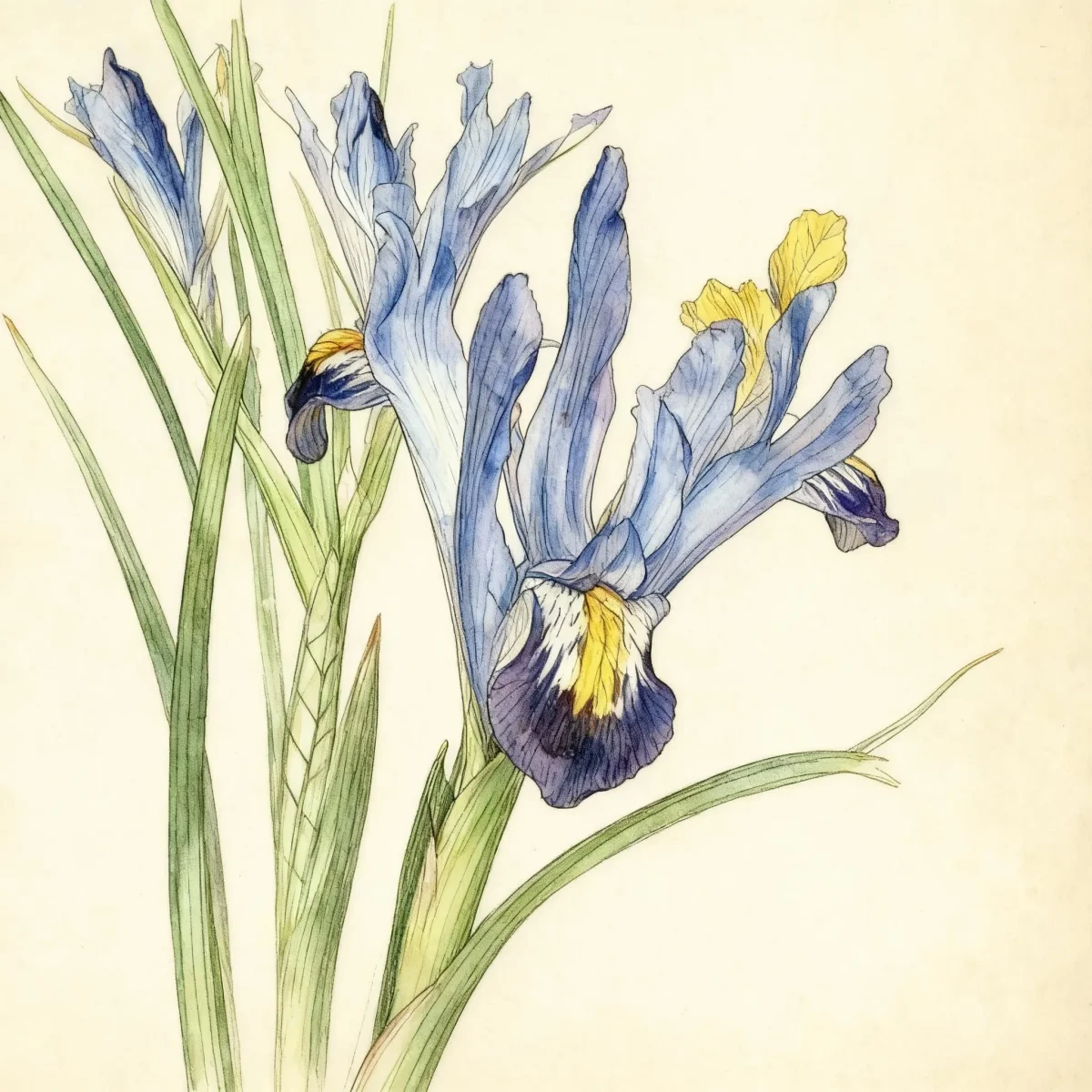
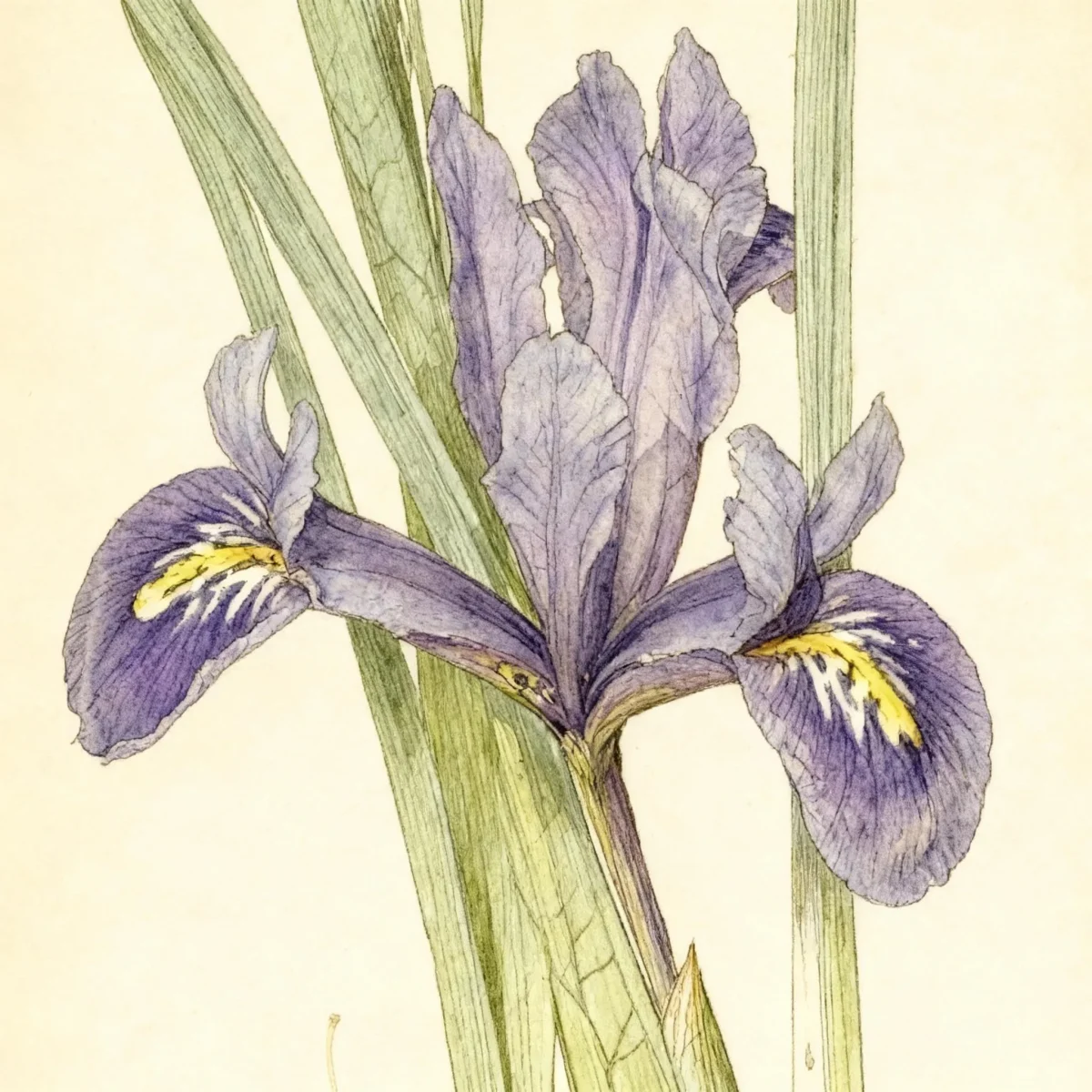
Iris (Iris reticulata 'Clairette')
Iris reticulata 'Clairette' is an early bulbous Iris offering light blue flowers. Low maintenance, deer tolerant, perfect for spring borders.

Bloom Boldly, No Matter the Season - Sweatshirt
Cozy organic cotton sweatshirt featuring our exclusive Purple Coneflower design. Perfect for gardeners who bloom year-round.
Inspired by the beautiful Iris
Limited first batch (50) — join the waitlist for early access
Waitlist closes Feb 15, 2026.
Complete Plant Information
Field Guide Continues
Ready for care notes, companion picks, and planting tips?
The map is just the start. The full guide below covers growth habits, seasonal performance, and landscape uses.
Overview
Iris reticulata ‘Clairette’ provides one of the earliest splashes of color available in the late winter to early spring landscape. As a bulbous perennial Iris, it emerges before many other spring bulbs, offering welcome anticipation for the growing season ahead. This variety is cherished for its striking flower color, featuring light blue standards above dark blue falls, typically appearing in March.
The beauty of growing Iris reticulata ‘Clairette’ lies in its extremely low maintenance level once established. These dwarf bulbs reach less than a foot tall and wide, maximizing visual impact in small spaces. Although noted for its low maintenance, gardeners are encouraged to treat them as annuals or plan on supplemental planting to ensure consistent blooming, as the bulblets take several years to mature enough to flower successfully.
This species, commonly known as reticulated iris, brings early color interest near walkways or rock gardens. The vibrant flowers appear on naked stems before the foliage fully develops, making them distinct features against the still-waking garden backdrop. Planting Iris reticulata ‘Clairette’ ensures a dependable, fragrant floral preview of the spring season.
Fast Facts
- Plant Family: Iridaceae
- Plant Type: Bulb
- Hardiness Zones: USDA Zones 5-9
- Size at Maturity:
- Height: 0.25-0.5 ft
- Spread: 0.25-0.5 ft
- Bloom Time: March
- Bloom Description: Light blue standards and dark blue falls
- Sun Exposure: Full sun to part shade
- Water Needs: Medium
- Maintenance Level: Low
How to Grow
Planting the bulbs for Iris reticulata ‘Clairette’ should occur in the fall. Choose an average, medium-drained soil location that receives full sun to part shade. It is crucial that the soil drains exceptionally well, as moisture must remain relatively dry during the summer months for the bulbs to successfully set buds for the following year’s display. Plant bulbs 3-4 inches deep and space them about 3-4 inches apart to allow the small clusters room to develop.
Watering needs are medium during the growing season, but remember the summer dormancy requirement. Avoid excessive moisture once the foliage begins to die back in late spring to promote good bud formation for next year. Low maintenance is generally expected, but if flowering noticeably declines after a few seasons, you can either gently divide the offsets after bloom or plant fresh Iris reticulata ‘Clairette’ bulbs each fall.
Division of the offsets or bulblets can be done after flowering has finished, but these offsets will require several years in the ground to reach flowering size. Therefore, many gardeners opt to enhance the display by introducing new bulbs annually rather than relying solely on division propagation to maintain vibrant masses of bloom.
Landscape Uses
Iris reticulata ‘Clairette’ excels when planted in mass groupings rather than small, isolated spots; small groups can easily become lost in the larger landscape. They are ideal for planting along the fronts of borders where their early spring height (under 0.5 ft) allows taller perennials to emerge behind them later in the season. Given their dwarf stature and need for sharp drainage, they are perfectly suited for rock gardens.
Consider using these early bulbs along sunny walks or beside streams or ponds where their low profile won’t obstruct pathways. Their appearance aligns beautifully with other early bloomers, such as snowdrops or early crocuses, creating a layered spring effect. This low-growing Iris is also an excellent candidate for forcing indoors in pots, bringing the spring cheer inside ahead of schedule.
Standout Features
Flower Qualities
- Showy
Noteworthy Characteristics
The genus Iris is named for the Greek goddess of the rainbow, reflecting the diversity of flower colors found across the species. This specific variety, Iris reticulata ‘Clairette’, showcases light blue standards contrasting nicely with deep blue falls, each marked with white in the center. The narrow, grass-like foliage emerges with the flower but elongates significantly afterward, eventually disappearing by late spring as the plant enters dormancy.
Tolerances
- Deer
- Drought
- Black Walnut
Potential Problems
Iris reticulata presents no common serious insect or disease issues under ideal conditions. The primary infrequent problem gardeners might encounter is Fusarium basal rot. This fungal disease typically affects bulbs that are stressed, often due to excessive moisture or poor air circulation, especially during storage or summer dormancy.
To manage this potential issue, ensure strict adherence to well-drained soil requirements, especially avoiding wet feet in the summer when the bulbs are resting. If rot is observed, promptly remove and destroy the affected bulbs; do not compost them. Planting supplemental bulbs each fall also reduces the risk associated with perpetually leaving declining bulbs undisturbed.
Frequently Asked Questions
What hardiness zones is Iris suitable for?
Iris reticulata ‘Clairette’ establishes successfully in USDA Hardiness Zones 5 through 9.
How large does Iris reticulata ‘Clairette’ grow?
This bulb typically reaches heights between 0.25 to 0.5 feet and spreads to a similar dimension of 0.25 to 0.5 feet at maturity.
What sun exposure does Iris reticulata ‘Clairette’ need?
This early Iris thrives best when placed in locations receiving full sun to partial shade.
When does Iris bloom?
The bloom time for this variety is March, presenting flowers described as light blue standards and dark blue falls.
Conclusion
The small stature and brilliant, early coloration of Iris reticulata ‘Clairette’ make it an indispensable component for any spring garden design. Its low maintenance profile and tolerance for deer and drought contribute to its reliability, but remember that sharp drainage is key to ensuring the bulbs return yearly, or plan to replace them annually. Check if your area falls within USDA Zones 5-9 and schedule your fall planting promptly to enjoy this spectacular early Iris.
Companion Planting
Selecting companions that share cultural needs, particularly regarding sharp drainage and summer dryness, is essential for Iris reticulata ‘Clareitte’. Pair these bulbs with other early bloomers like Galanthus (Snowdrops) or Chionodoxa (Glory-of-the-Snow), as they share similar bloom timing and often have similar dormant periods. This allows the Iris foliage to mature alongside its neighbors without being overcrowded too early.
Avoid planting Iris reticulata ‘Clairette’ near moisture-loving perennials that require heavy summer watering. During the summer dormancy of the Iris bulbs, excess moisture or rich, decomposing organic matter can encourage rot. Instead, opt for groundcovers that naturally dry out, such as creeping thyme or low-profile sedums, which can fill in the space vacated by the Iris foliage later in the season.
Seasonal Care Calendar
Fall Planting: This is the most critical time for Iris. Plant the bulbs 3-4 inches deep in well-drained soil before the first hard frost. An initial watering after planting can help settle the soil around the bulbs.
Late Winter/Early Spring: Monitor closely as shoots emerge. Water moderately only if a long dry spell occurs before blooming. Once the light blue flowers of Iris reticulata ‘Clareitte’ appear, the plant relies predominantly on stored energy, so avoid walking over or disturbing the delicate emerging foliage.
Late Spring/Early Summer (Post-Bloom): Allow the grass-like foliage to naturally die back completely, which can take 6-15 inches of height extension before it yellows. Do not cut the leaves back prematurely, as this is when the plant replenishes reserves needed for next year’s bloom cycle. Keep the area dry through the summer months.