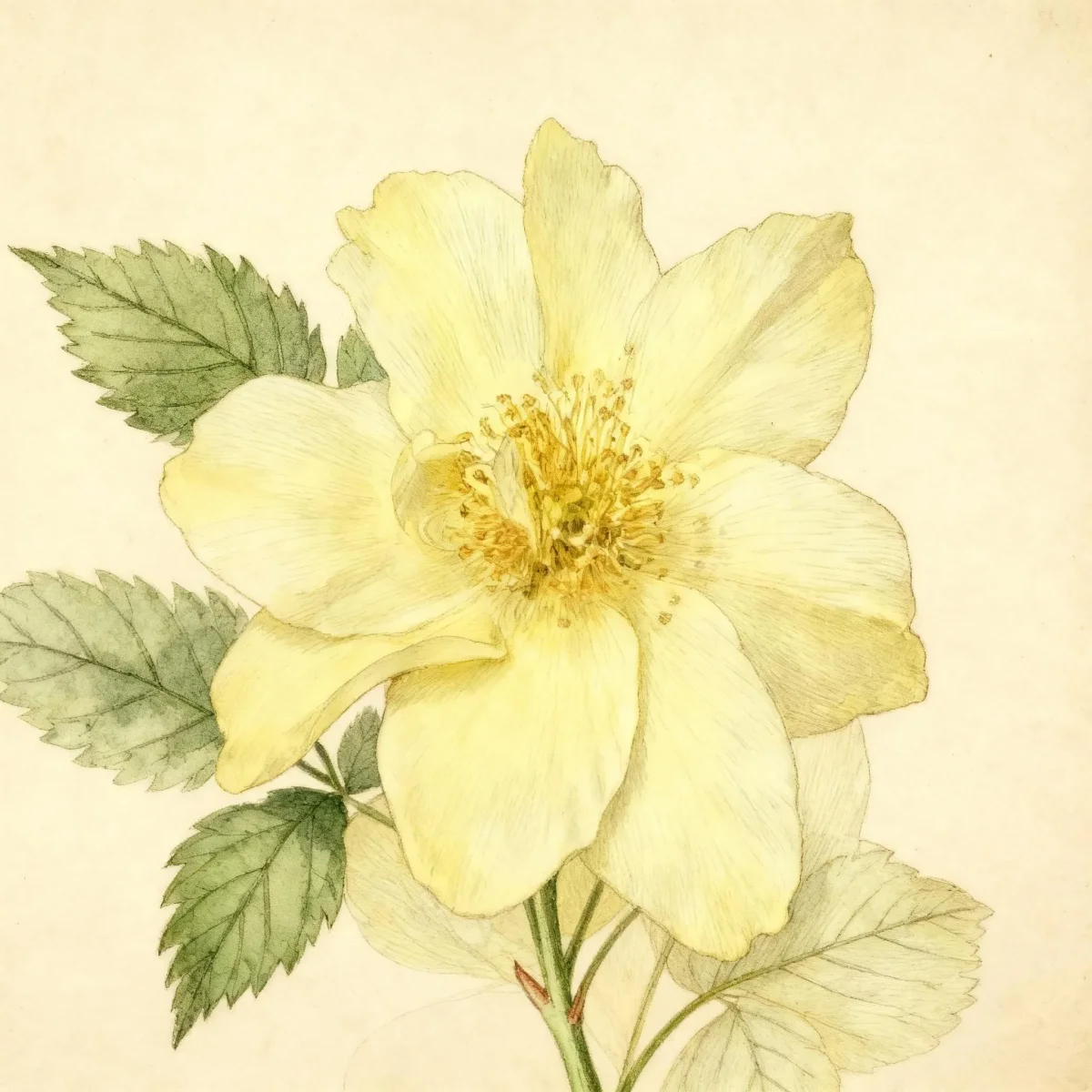
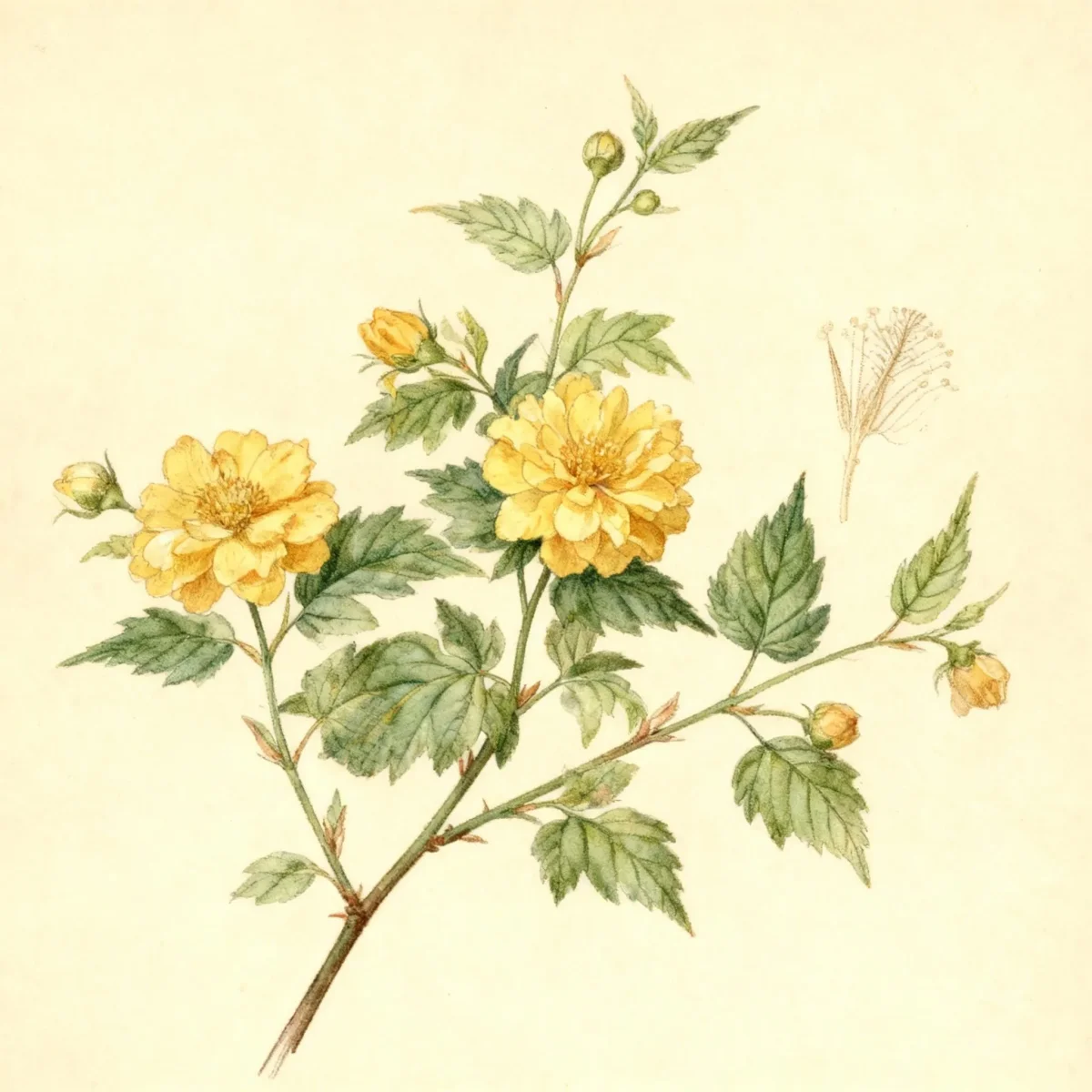
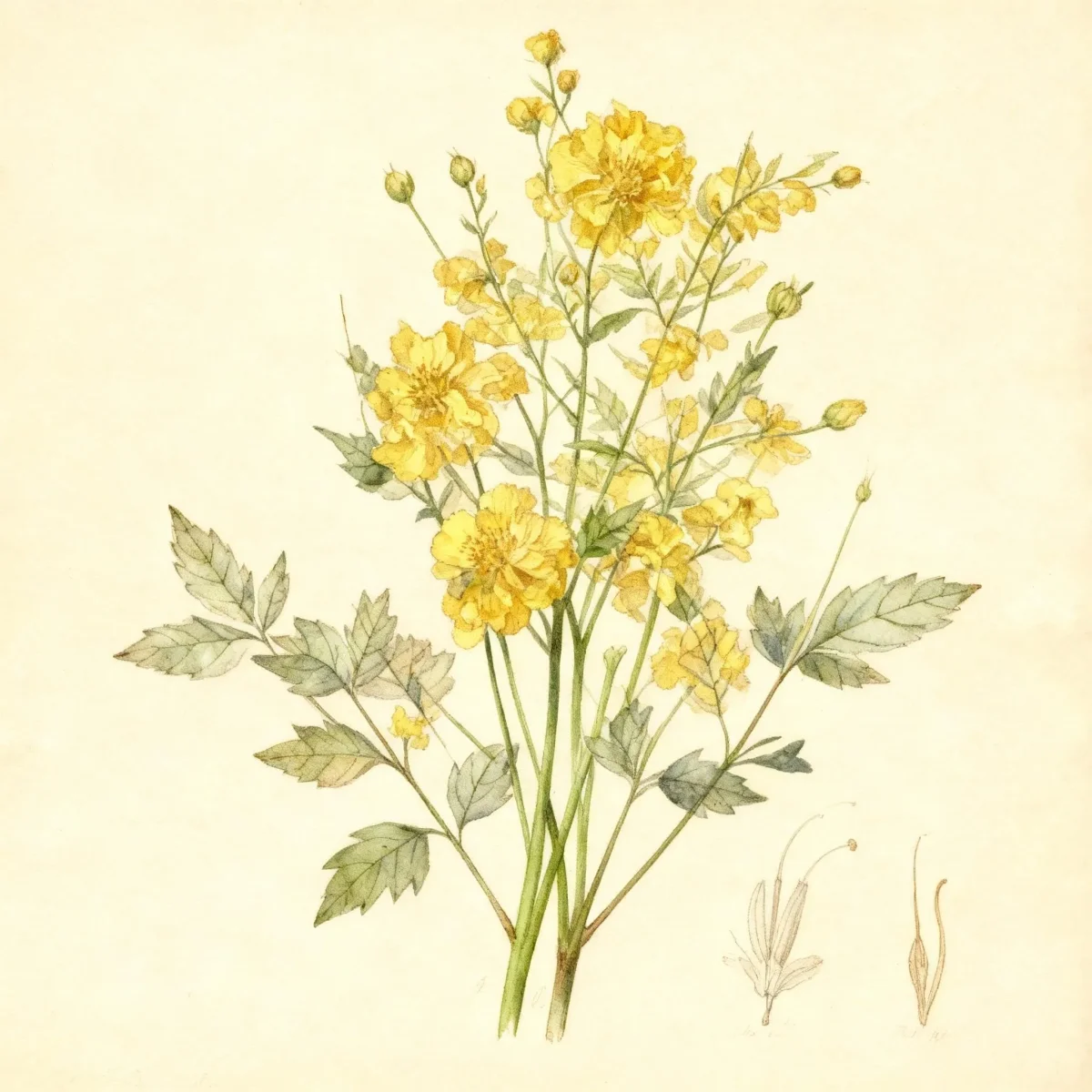
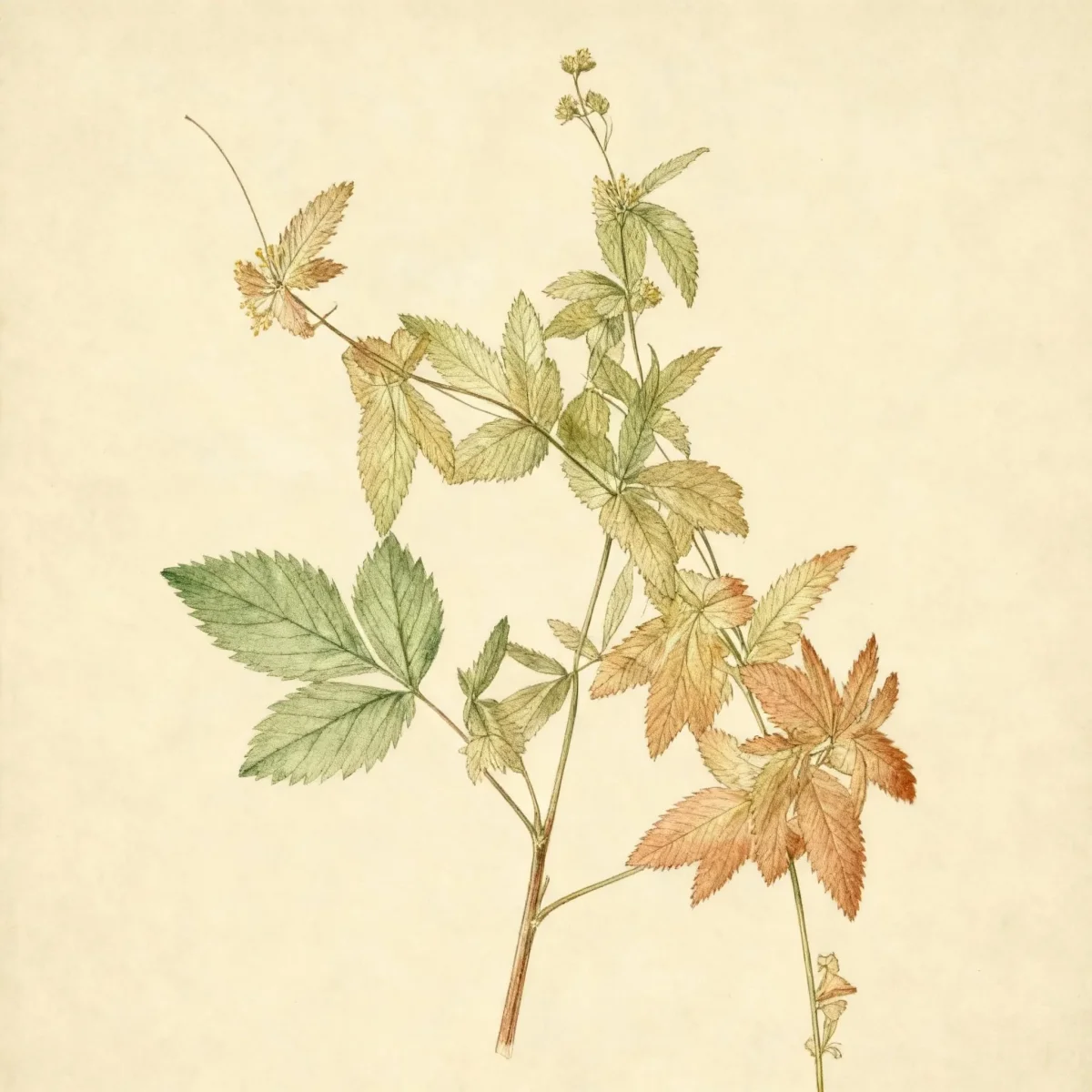
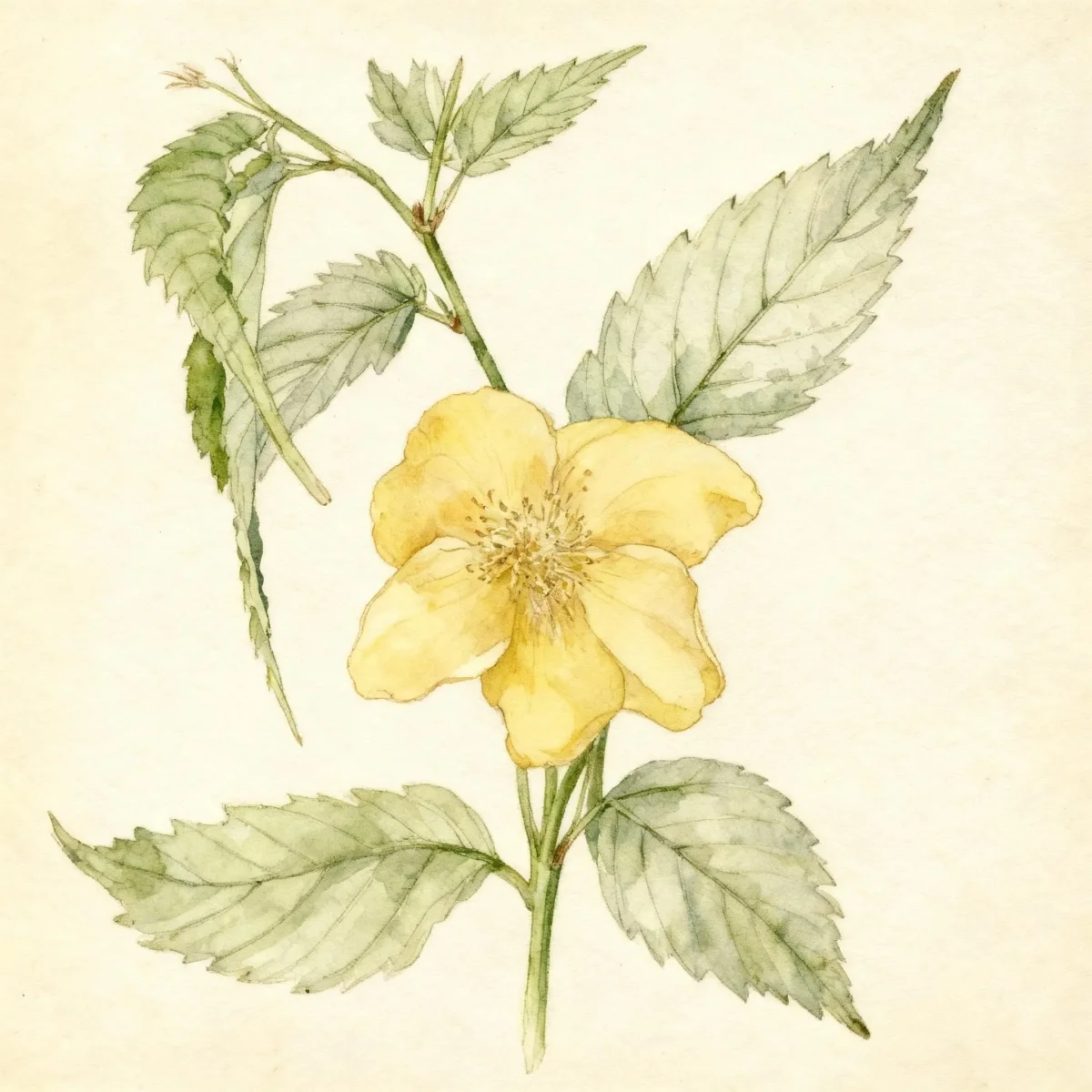
Japanese kerria (Kerria japonica 'Picta')
Kerria japonica 'Picta' is a tough, low-spreading deciduous shrub offering bright yellow spring flowers and attractive green winter stems.

Bloom Boldly, No Matter the Season - Sweatshirt
Cozy organic cotton sweatshirt featuring our exclusive Purple Coneflower design. Perfect for gardeners who bloom year-round.
Inspired by the beautiful Japanese kerria
Limited first batch (50) — join the waitlist for early access
Waitlist closes Feb 15, 2026.
Complete Plant Information
Field Guide Continues
Ready for care notes, companion picks, and planting tips?
The map is just the start. The full guide below covers growth habits, seasonal performance, and landscape uses.
Overview
The Kerria japonica ‘Picta’, commonly known as Japanese kerria, is celebrated for its vibrant spring display and year-round interest provided by its arching, yellowish-green stems. This deciduous shrub offers bright yellow, rose-like flowers that open prolifically in April and May, providing essential early color to the garden. Unlike the species form, the ‘Picta’ cultivar maintains a lower, more manageable, broadly rounded habit, making it excellent for smaller spaces.
Valued for its toughness, Kerria japonica ‘Picta’ thrives in a variety of conditions, including surprising tolerance for heavy shade and wet soils. Its foliage emerges with unique white edging, adding texture even when not in bloom. Gardeners appreciate this Japanese kerria for its reliability and the visual contrast offered by its bright winter stems against snow or bare earth.
As a medium-maintenance plant, the rewards far outweigh the required attention, especially regarding timely pruning to encourage best flowering. Whether used as a specimen or massed in a border, this cultivar provides dependable seasonal interest, cementing its place as a versatile landscape asset.
Fast Facts
- Plant Family: Rosaceae
- Plant Type: Deciduous shrub
- Hardiness Zones: USDA Zones 4-9
- Size at Maturity:
- Height: 2-3 ft
- Spread: 2-4 ft
- Bloom Time: April to May
- Bloom Description: Yellow
- Sun Exposure: Part shade
- Water Needs: Medium
- Maintenance Level: Medium
How to Grow
Planting the Japanese kerria is best done in the spring or fall in average, medium-moisture, well-drained soils. While it prefers loamy, moderately fertile soil, this tough shrub tolerates clay compositions better than many alternatives, though heavy clay should still be avoided if possible. Locate Kerria japonica ‘Picta’ where it receives part shade; too much direct sun can cause the flowers to pale significantly.
Care involves consistent watering until the plant is established. Fertilization is rarely necessary unless the soil is extremely poor. Pruning should be executed promptly in the spring immediately after flowering concludes, as blooms set on the previous year’s wood. Do not prune heavily in late summer or fall, or you risk removing next spring’s flowers.
Due to its suckering habit, be vigilant about promptly removing any unwanted shoots that emerge away from the main base. This is crucial for maintaining the desired shape of the cultivar. For severe renovation, the entire plant can be cut back to the ground during the dormant season, though this sacrifice means losing that year’s bloom cycle.
Landscape Uses
The low-growing, broadly rounded structure of Kerria japonica ‘Picta’ makes it an exceptional choice for mass planting along shrub borders, creating a solid sweep of early spring color offset by silvery-green, variegated foliage. It functions wonderfully as interesting specimens in partially shaded rock gardens or along pathways where its clean structure can be appreciated up close. Furthermore, this Japanese kerria is highly recommended for incorporation into foundation plantings, softening hard architectural lines.
Consider pairing this shrub with later-blooming perennials or evergreens to balance the garden once its spring show fades. Plants that enjoy similar moisture and light conditions, such as Astilbe, Hosta, or various groundcovers, make excellent companions. Its use as an effective element in a rain garden setting is noted, owing to its known tolerance for wet soil.
Standout Features
Flower Qualities
- Showy
Noteworthy Characteristics
Kerria japonica, commonly called Japanese kerria or Japanese rose, is a tough-but-graceful, spring-flowering, deciduous shrub that is native to certain mountainous areas of China and Japan. It typically grows to 3-6’ tall and to 6-8’ wide on slender, arching, yellowish-green stems that remain an attractive green in winter. ‘Picta’ is a low-growing, broadly rounded, slowly spreading cultivar with a dense, twiggy habit which typically grows 2’ tall by 2’ wide in 5 years, featuring profuse, yellow, five-petaled, rose-like flowers in April to early May and toothed, narrow, grayish green leaves edged with white.
Tolerances
- Deer
- Drought
- Heavy Shade
- Clay Soil
- Dry Soil
- Wet Soil
Potential Problems
Kerria japonica ‘Picta’ generally enjoys a good disease and pest resistance profile, meaning gardeners rarely face serious insect infestations or widespread blight issues. However, watch for potential fungal troubles, including leaf spots, cankers, and root rot, especially where drainage is poor or overhead watering is excessive. Proper site selection, ensuring well-drained soil and adequate air circulation, is the best preventative measure against these issues.
Frequently Asked Questions
What hardiness zones is Japanese kerria suitable for?
The Kerria japonica ‘Picta’ is robust and suitable for gardeners in USDA Hardiness Zones 4 through 9.
How large does Kerria japonica ‘Picta’ grow?
This cultivar is relatively compact, typically reaching a height between 2 and 3 feet, spreading to a width of 2 to 4 feet.
When does Japanese kerria bloom?
You can expect the bright yellow flowers of the Japanese kerria to appear in the garden from April into May.
What sun exposure does Kerria japonica ‘Picta’ need?
This plant performs best in part shade, although it exhibits notable tolerance for heavy shade conditions, where it may flower slightly less profusely.
Conclusion
The Kerria japonica ‘Picta’ provides excellent value through reliable early spring blooms and striking winter stem color, making it a cornerstone for year-round interest in shaded areas. This tough, variegated Japanese kerria is adaptable in terms of soil moisture and tolerable of deer browsing. Before planting, confirm your garden sits within USDA Zones 4-9 and plan your pruning schedule for just after its beautiful yellow flowers fade.
Companion Planting
Since Kerria japonica ‘Picta’ thrives in part shade and medium moisture, companion plants that share these preferences work beautifully, creating layered interest beneath taller shrubs or near woodland edges. Consider pairing it with ferns, whose textured foliage contrasts nicely with the fine texture of the Japanese kerria. Spring bulbs, such as late-blooming daffodils or grape hyacinths, can emerge before the shrub fully leafs out, filling the gap with early color.
Seasonal Care Calendar
Spring preparation involves light cleanup of winter debris and the crucial pruning step immediately following the May bloom to encourage next year’s flowering wood. During the summer months, monitor for consistent medium moisture; while drought tolerant once established, supplemental water during extreme heat helps maintain foliage quality. In autumn, the leaves often turn yellow, providing a final bit of color before the distinctive green stems take over for winter structural interest.