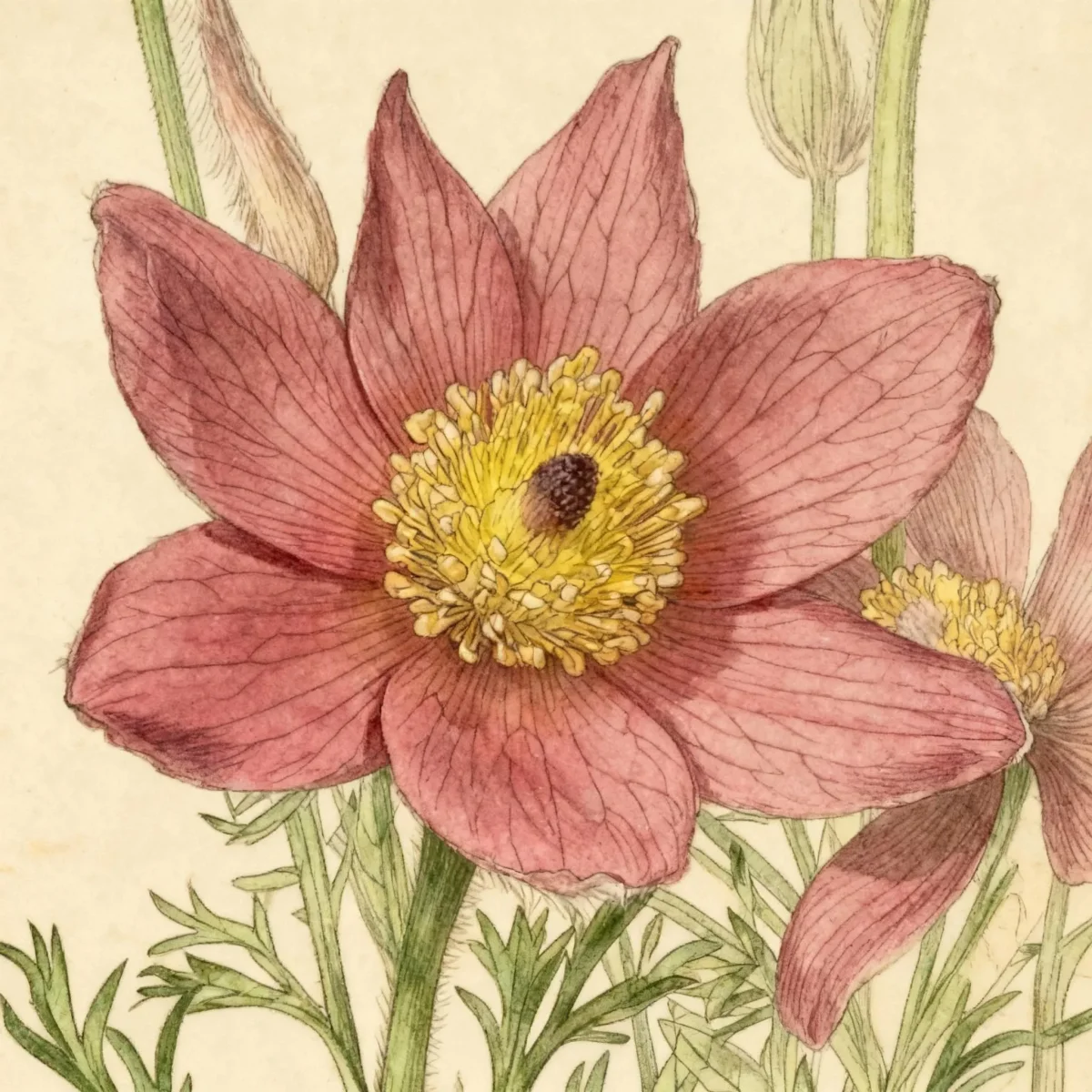
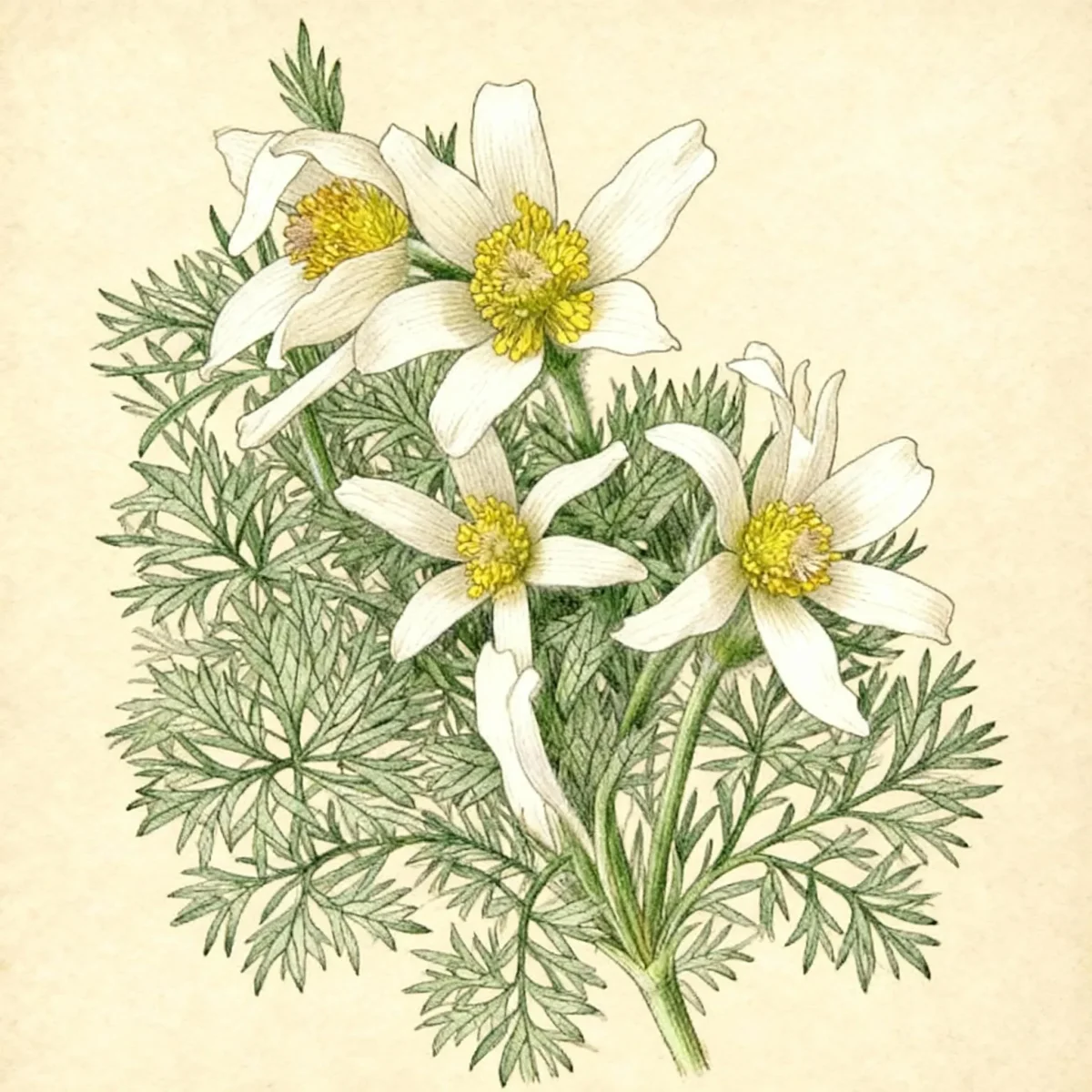
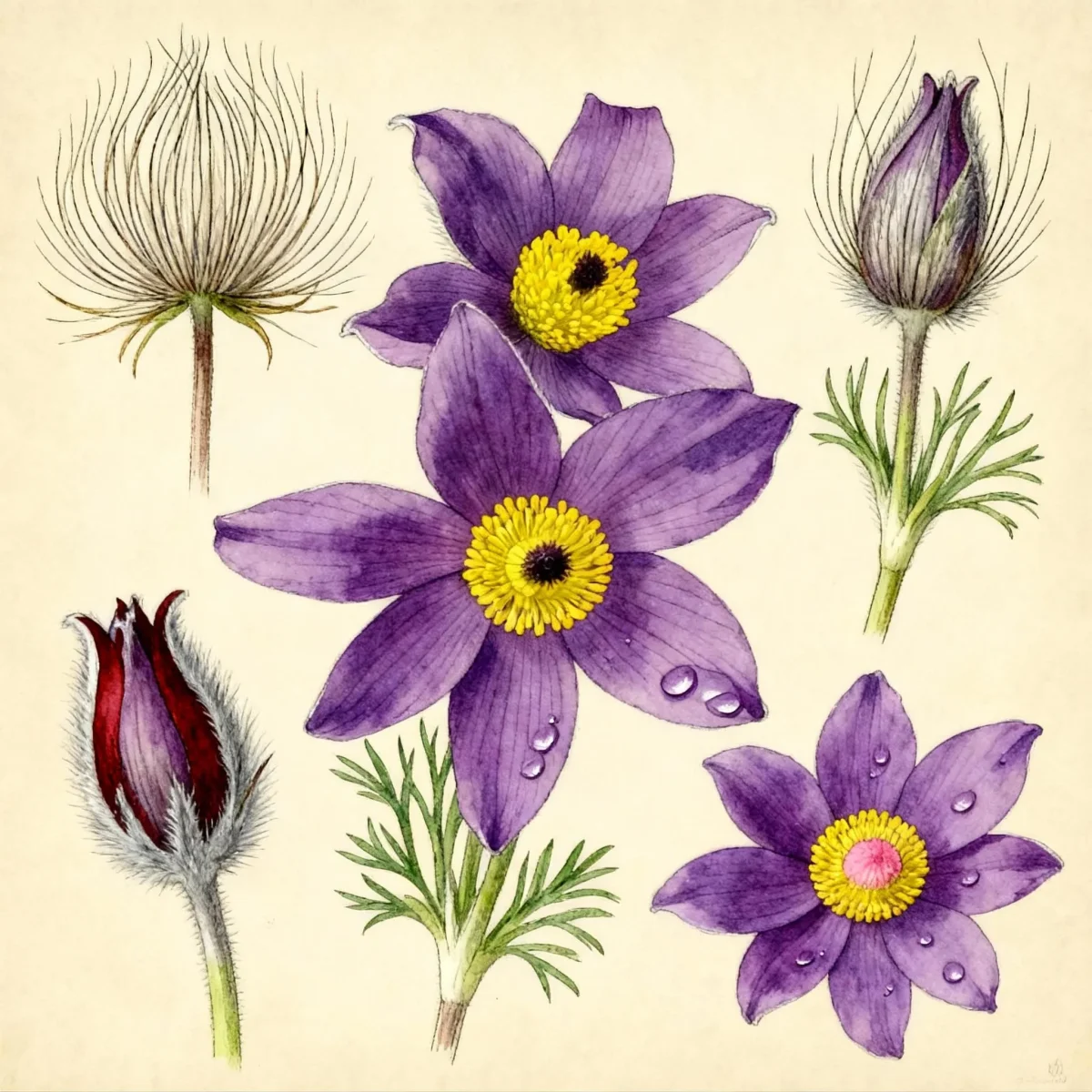
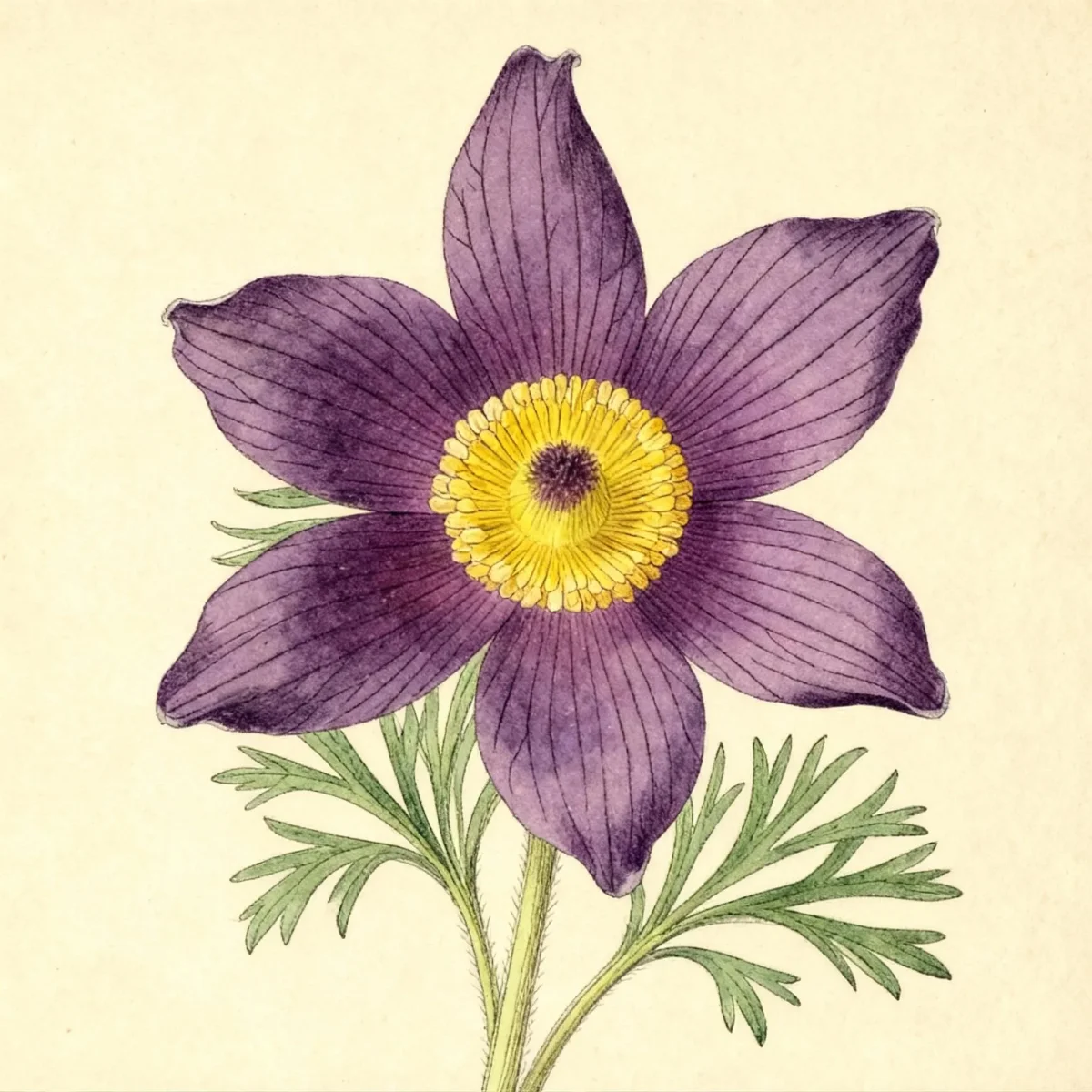
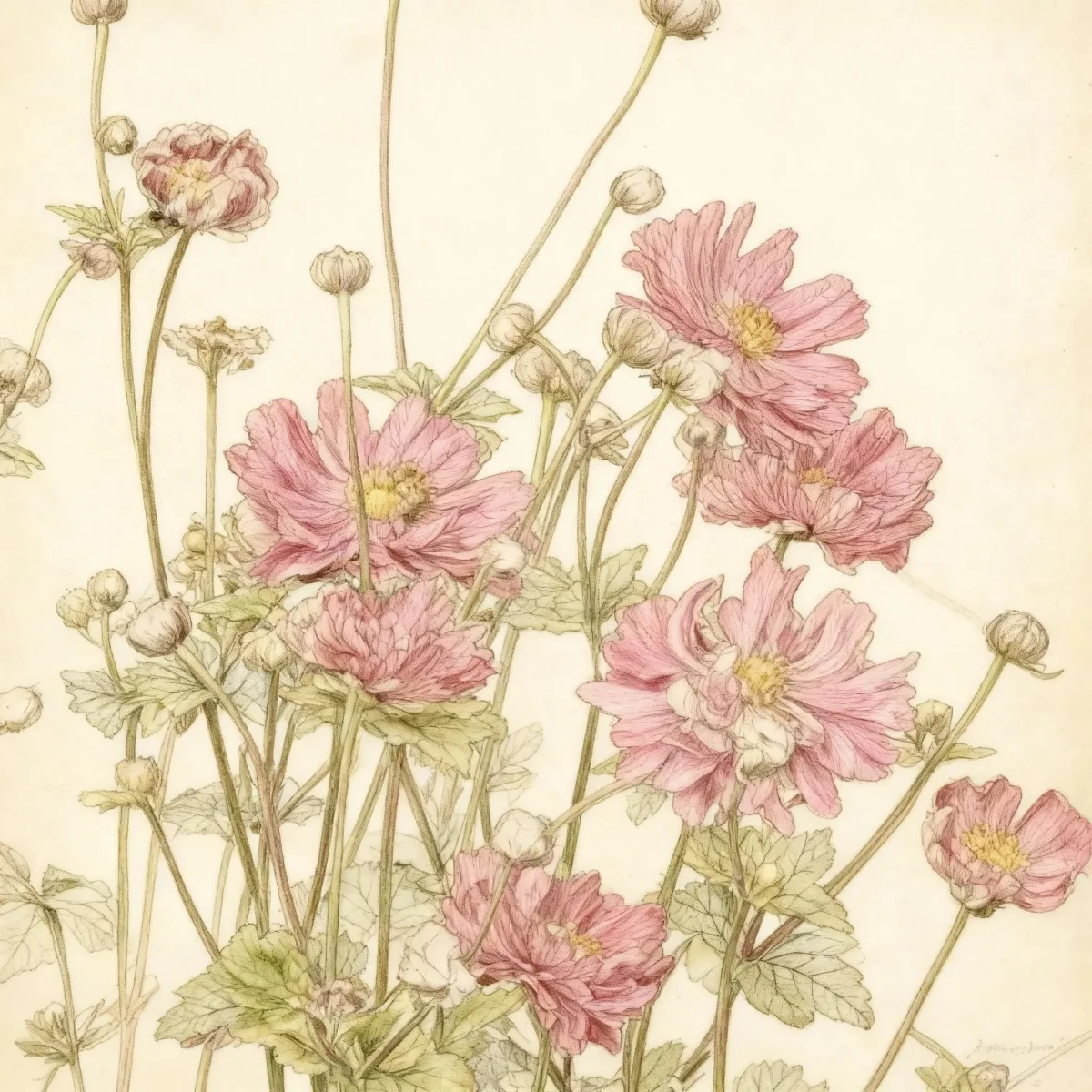
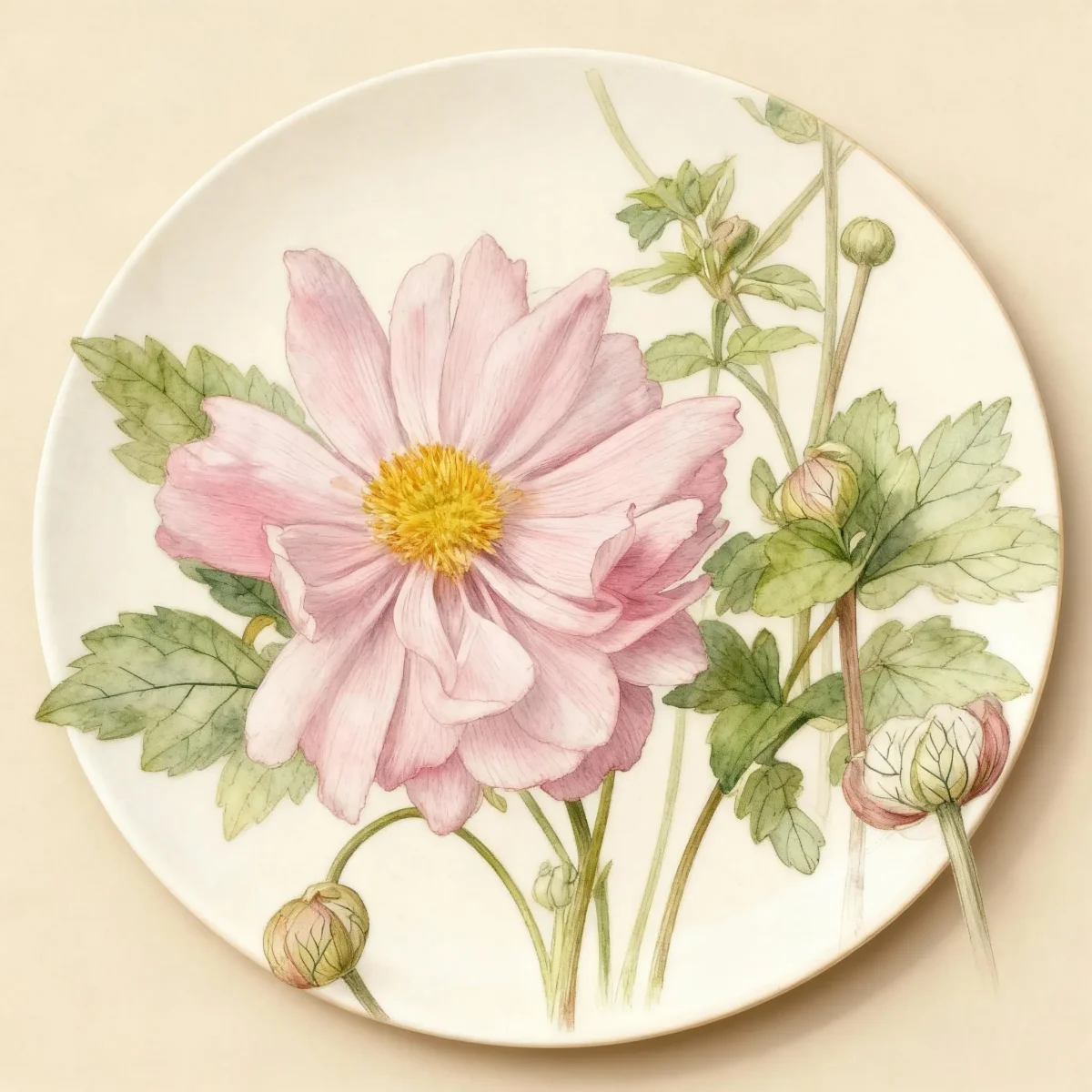
Pasque flower (Pulsatilla vulgaris subsp. Grandis 'Papageno')
Discover Pulsatilla vulgaris subsp. grandis 'Papageno', a low-maintenance Pasque flower prized for its early spring bloom in zones 5-7.

Bloom Boldly, No Matter the Season - Sweatshirt
Cozy organic cotton sweatshirt featuring our exclusive Purple Coneflower design. Perfect for gardeners who bloom year-round.
Inspired by the beautiful Pasque flower
Limited first batch (50) — join the waitlist for early access
Waitlist closes Feb 15, 2026.
Complete Plant Information
Field Guide Continues
Ready for care notes, companion picks, and planting tips?
The map is just the start. The full guide below covers growth habits, seasonal performance, and landscape uses.
Overview
The Pulsatilla vulgaris subsp. grandis ‘Papageno’ is a choice early-blooming perennial, commonly known as the Pasque flower. Its primary appeal lies in its timing; hairy flower stems often emerge while snow is still on the ground, providing much-needed spring color. This cultivar, Pulsatilla vulgaris subsp. Grandis ‘Papageno’, is especially desirable as it exhibits unique fringed double blooms in a stunning mix of colors including white, pink, red, blue, and purple. As a low-maintenance herbaceous perennial that thrives in cool climates, this Pasque flower brings movement and texture to the spring garden tapestry.
Established plants are best left undisturbed, rewarding caretakers with reliable seasonal displays and attractive, plume-like seedheads following the main flowering period. While flowering stems are short initially, the deeply-divided, fern-like foliage remains attractive throughout the growing season. Gardeners should prioritize excellent drainage when planting Pulsatilla vulgaris subsp. grandis ‘Papageno’ to ensure long-term success.
Fast Facts
- Plant Family: Ranunculaceae
- Plant Type: Herbaceous perennial
- Hardiness Zones: USDA Zones 5-7
- Size at Maturity:
- Height: 0.5-1 ft
- Spread: 0.25-0.5 ft
- Bloom Time: April to May
- Bloom Description: Creamy white, pink, red, blue, purple
- Sun Exposure: Full sun to part shade
- Water Needs: Medium
- Maintenance Level: Low
How to Grow
Planting should occur when soil conditions are workable, ideally in slightly cooler weather to reduce transplant shock, ensuring the spot receives full sun to light shade. The most critical cultural requirement for this Pasque flower is soil structure; it must be fertile, humusy, gritty, and have excellent drainage. Good drainage is absolutely essential for the health of Pulsatilla vulgaris subsp. grandis ‘Papageno’.
Water needs are best described as medium, but attention must be paid to local climate. Plants perform best in cool climates where they can tolerate drier conditions, but in hot summers, consistent moisture is necessary to maintain vigor. Avoid overly wet soil, especially in winter. Fertilizing is generally unnecessary if the initial soil preparation is thorough.
Maintenance is low; avoid disturbing the plants once they are established, as this can damage their root systems. Beyond removing old foliage in early spring, minimal intervention is required. Deadheading the spent flowers can encourage the development of the ornamental, fluffy seedheads characteristic of the Pasque flower.
Landscape Uses
The compact size and early bloom of the Pasque flower make Pulsatilla vulgaris subsp. grandis ‘Papageno’ an ideal candidate for rock gardens, where sharp drainage and sunny exposure mimic its native conditions. They are also excellent for the fronts of borders, providing a colorful punctuation mark before taller spring flowers emerge. In prairie settings, where interspersed masses look natural, they fit seamlessly among low-growing ornamental grasses.
Consider pairing the colorful, fringed blooms of ‘Papageno’ with other early bloomers like dwarf irises or low-growing Phlox that share similar soil and sun requirements. Their delicate texture contrasts beautifully against broader-leafed spring ephemerals. The early emergence of this Pasque flower ensures the garden structure is activated long before summer perennials begin to swell.
Standout Features
Flower Qualities
- Showy
Noteworthy Characteristics
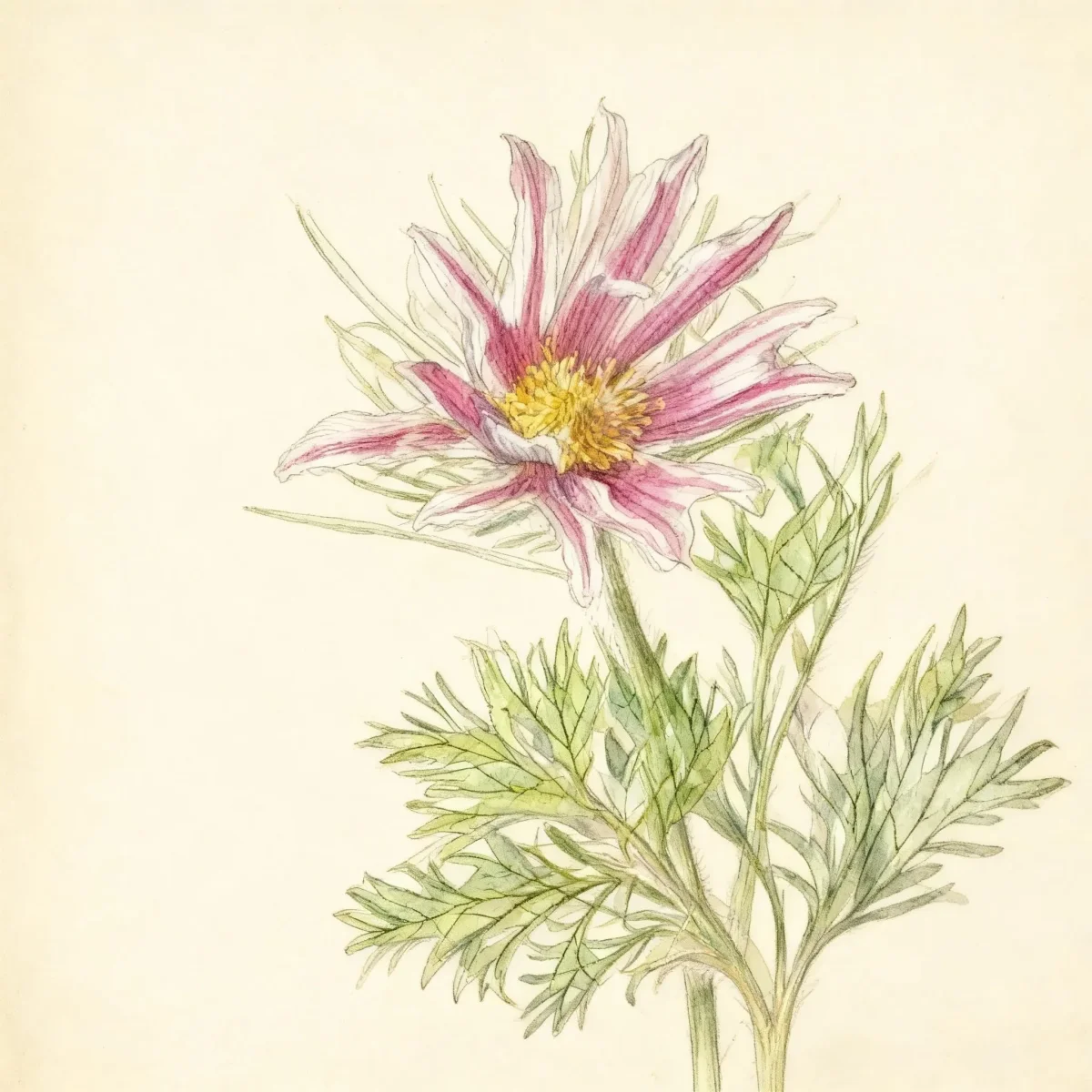
Pulsatilla vulgaris is a purple-flowered pasque flower that is native to Europe (Great Britain and France to the Ukraine). Hairy flower stems emerge from the ground in spring (March-April in St. Louis), sometimes when patches of snow are still on the ground, and flowers bloom as the foliage begins to form. Flowers are solitary, erect-to-nodding and open-bell-shaped, followed by equally-ornamental, plume-like seedheads reminiscent of some clematis. The cultivar ‘Papageno’ features fringed double flowers in a variety of mixed colors including shades of creamy white, pink, red, blue and purple, making it a standout specimen.
Tolerances
- Rabbit
- Heavy Shade
Potential Problems
This Pasque flower variety generally exhibits robust health, suffering from no serious insect or disease problems when sited correctly. The primary pitfall for gardeners is poor soil drainage, which can lead to crown rot, especially over winter. Ensure the planting site prevents water from pooling around the base of the plant, particularly if growing Pulsatilla vulgaris subsp. grandis ‘Papageno’ in heavy clay soil.
Frequently Asked Questions
What hardiness zones is Pasque flower suitable for?
Pulsatilla vulgaris subsp. grandis ‘Papageno’ is typically suited for USDA Hardiness Zones 5 through 7.
How large does Pulsatilla vulgaris subsp. grandis ‘Papageno’ grow?
This Pasque flower usually reaches a height between 0.5 and 1 foot tall, with a narrow spread of 0.25 to 0.5 feet.
When does Pasque flower bloom?
This plant flowers early in the season, typically from April into May, presenting creamy white, pink, red, blue, or purple blooms.
What sun exposure does this Pasque flower need?
Pulsatilla vulgaris subsp. Grandis ‘Papageno’ performs best when given full sun to part shade conditions.
Conclusion
For a spectacular, low-effort display at the very start of spring, the Pasque flower, particularly the multi-hued Pulsatilla vulgaris subsp. grandis ‘Papageno’, is an unparalleled choice. Its tolerance for cool climates and striking bloom time provide excellent early garden structure. Check your garden for well-draining, gritty soil and plan your purchase for early spring or fall planting to enjoy this unique perennial for years to come.
Companion Planting for Early Spring Interest
Selecting companions that thrive in similar gritty, well-drained conditions and bloom either just before or just after the Pasque flower ensures continuous interest. Consider planting low-growing bulbs like species tulips or dwarf daffodils nearby; these companions appreciate the spring sun before the foliage of the Pulsatilla fills out. Ensure companions do not require heavy moisture through the summer, as established Pasque flowers prefer drier conditions once flowering concludes.
Seasonal Care Calendar
Early spring is the time to gently clear away any winter debris from around the crown of your Pulsatilla vulgaris subsp. grandis ‘Papageno’ just as the hairy flower stems begin to push up. Through the crucial bloom window of April and May, monitor moisture levels, providing water if the soil approaches dryness, especially necessary in hotter regions. After flowering, let the foliage remain intact to gather energy; resist cutting it back until it naturally yellows later in the season, which supports the plant’s low-maintenance needs.