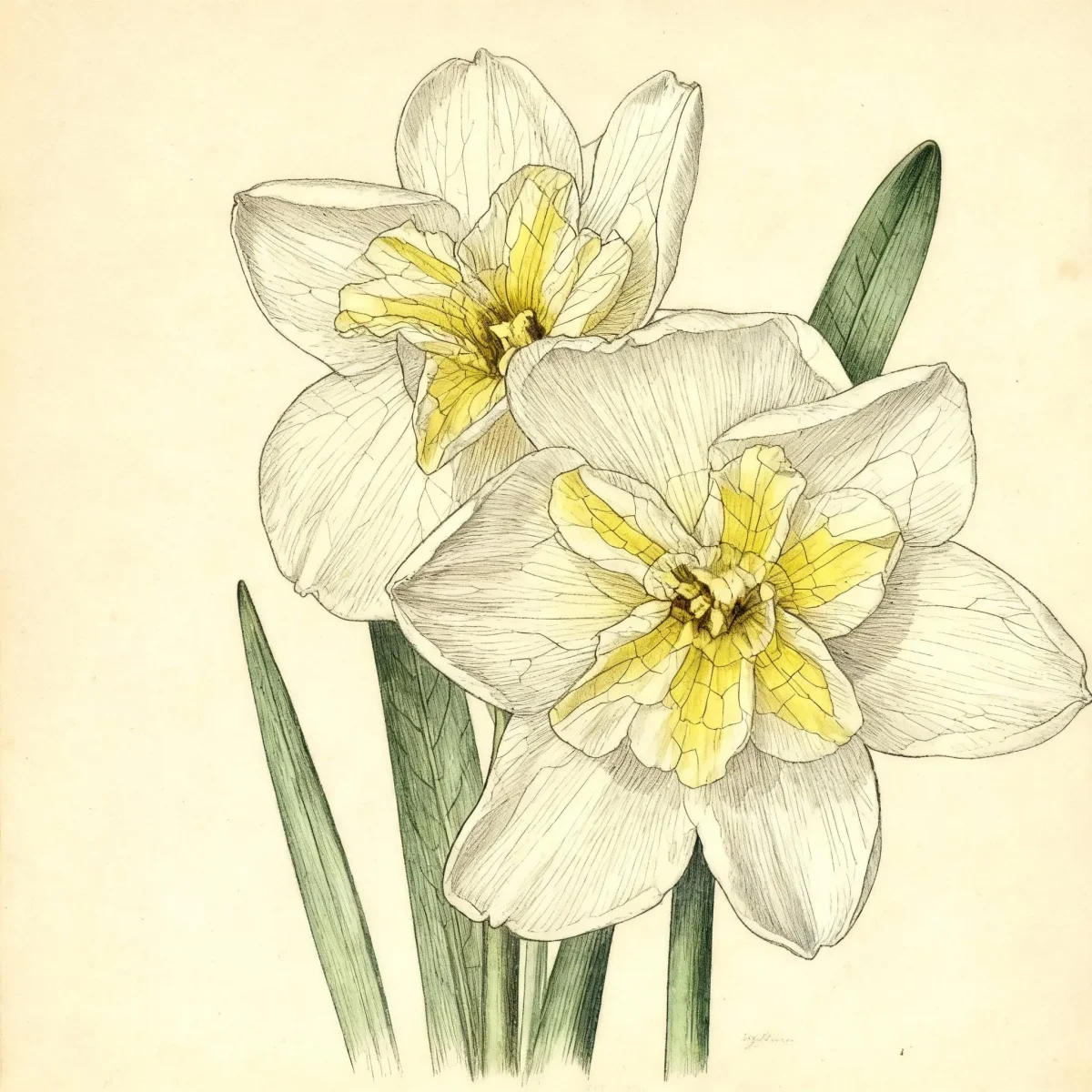
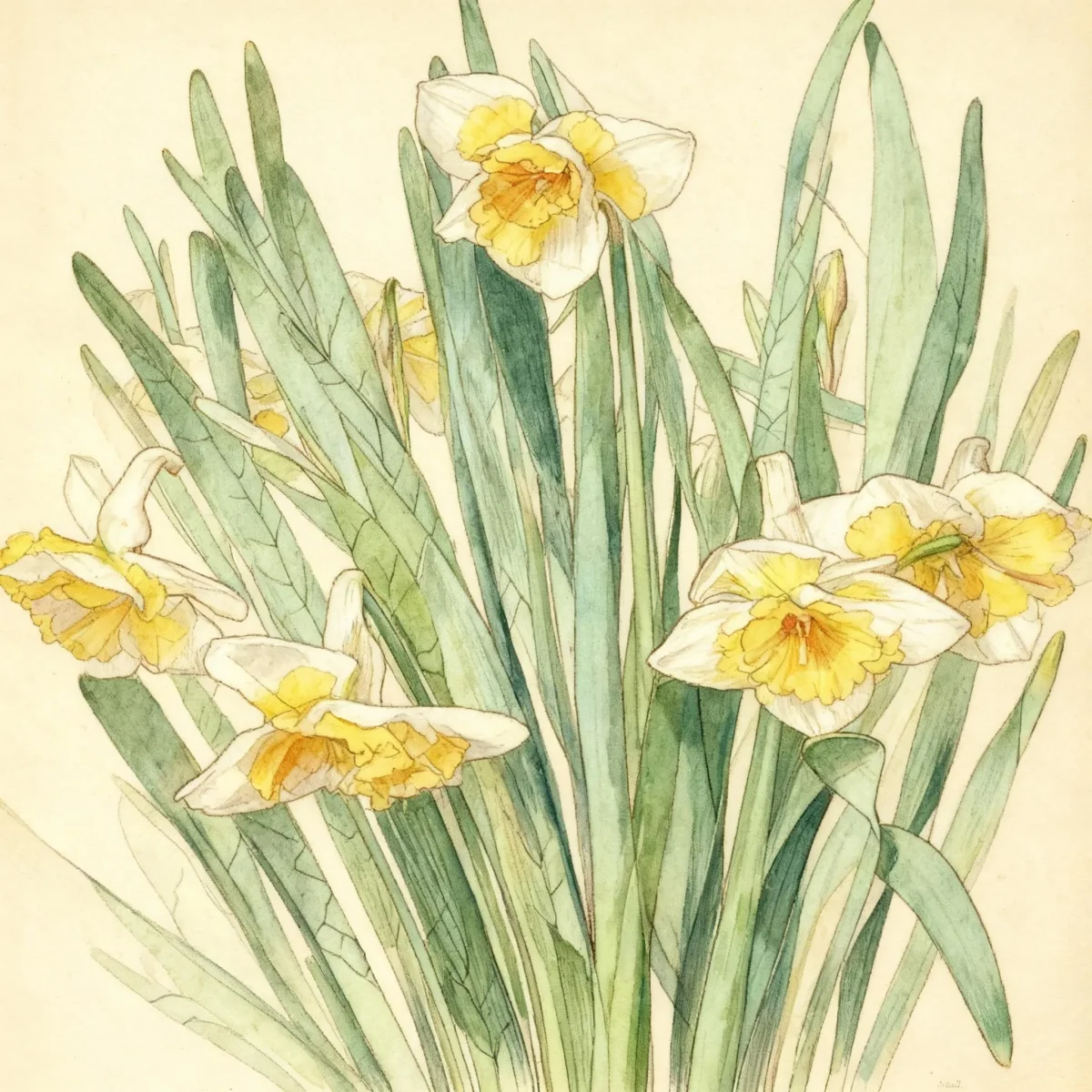
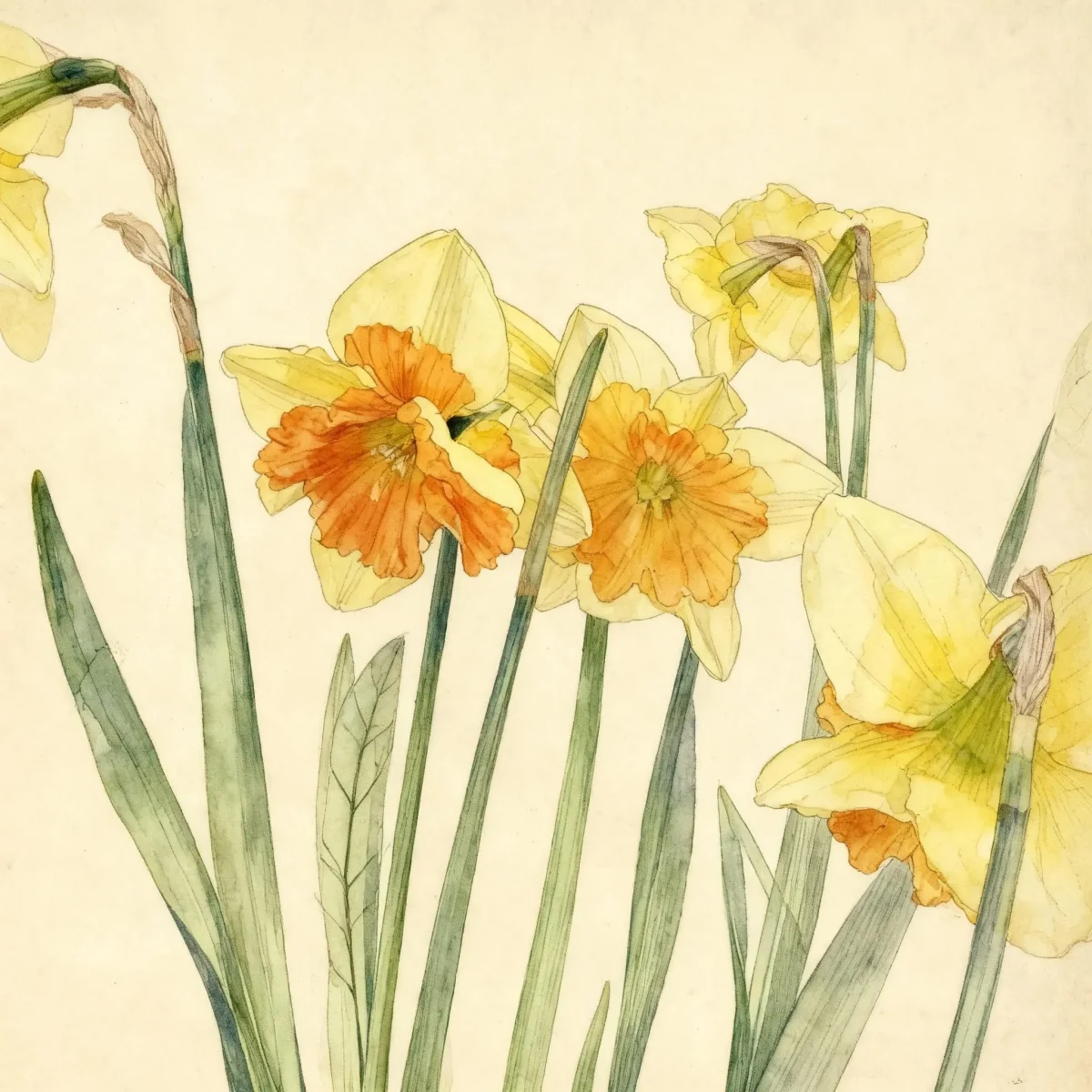
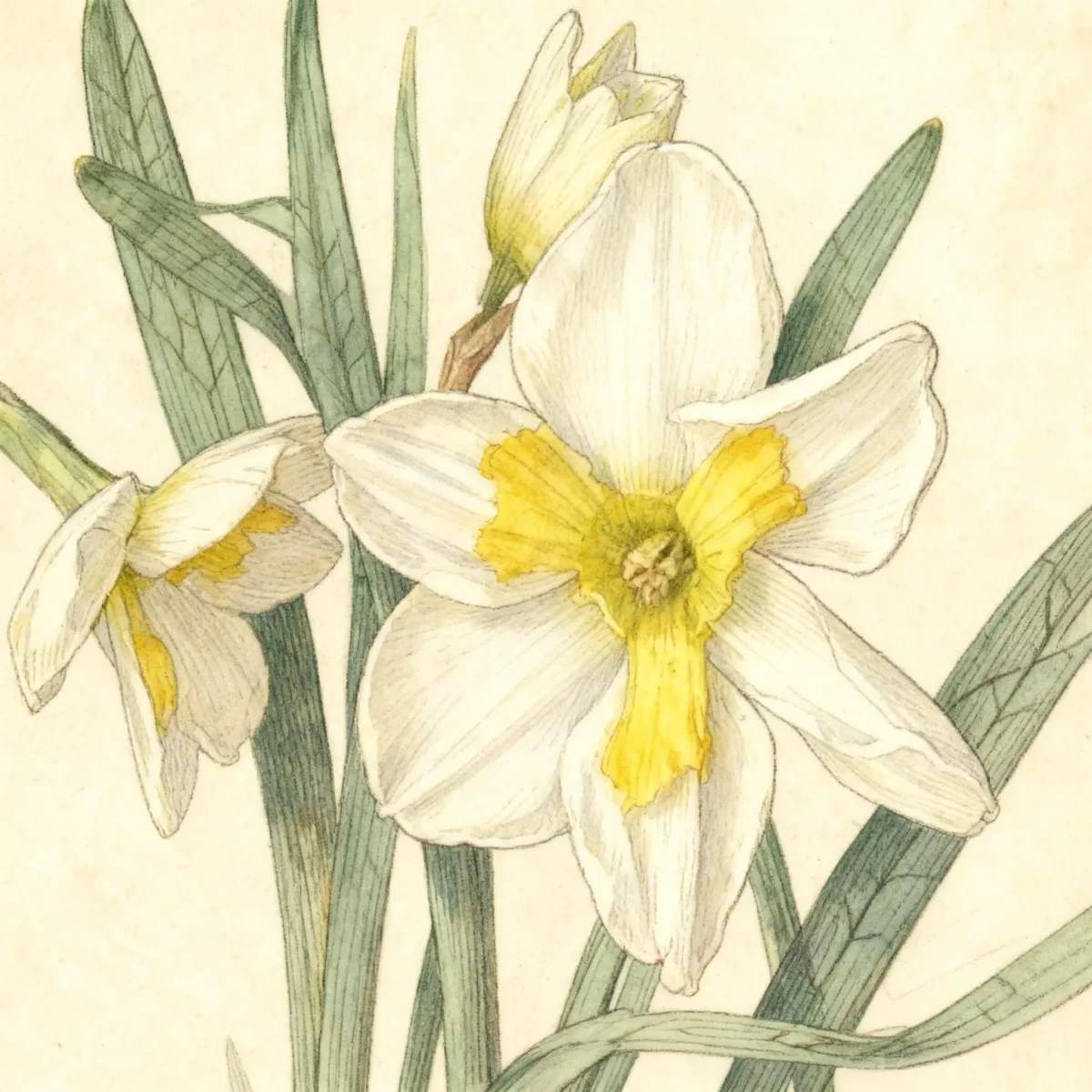
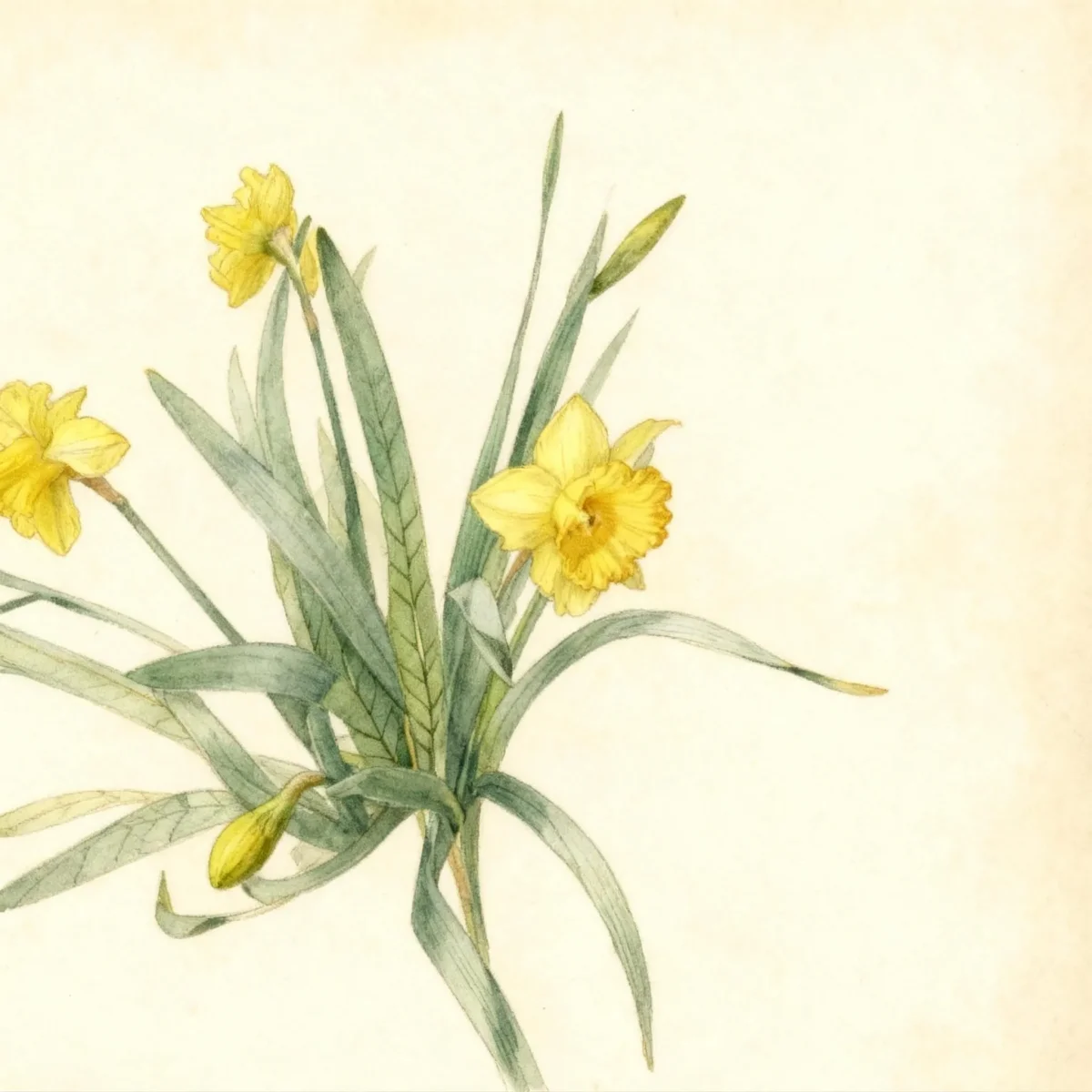
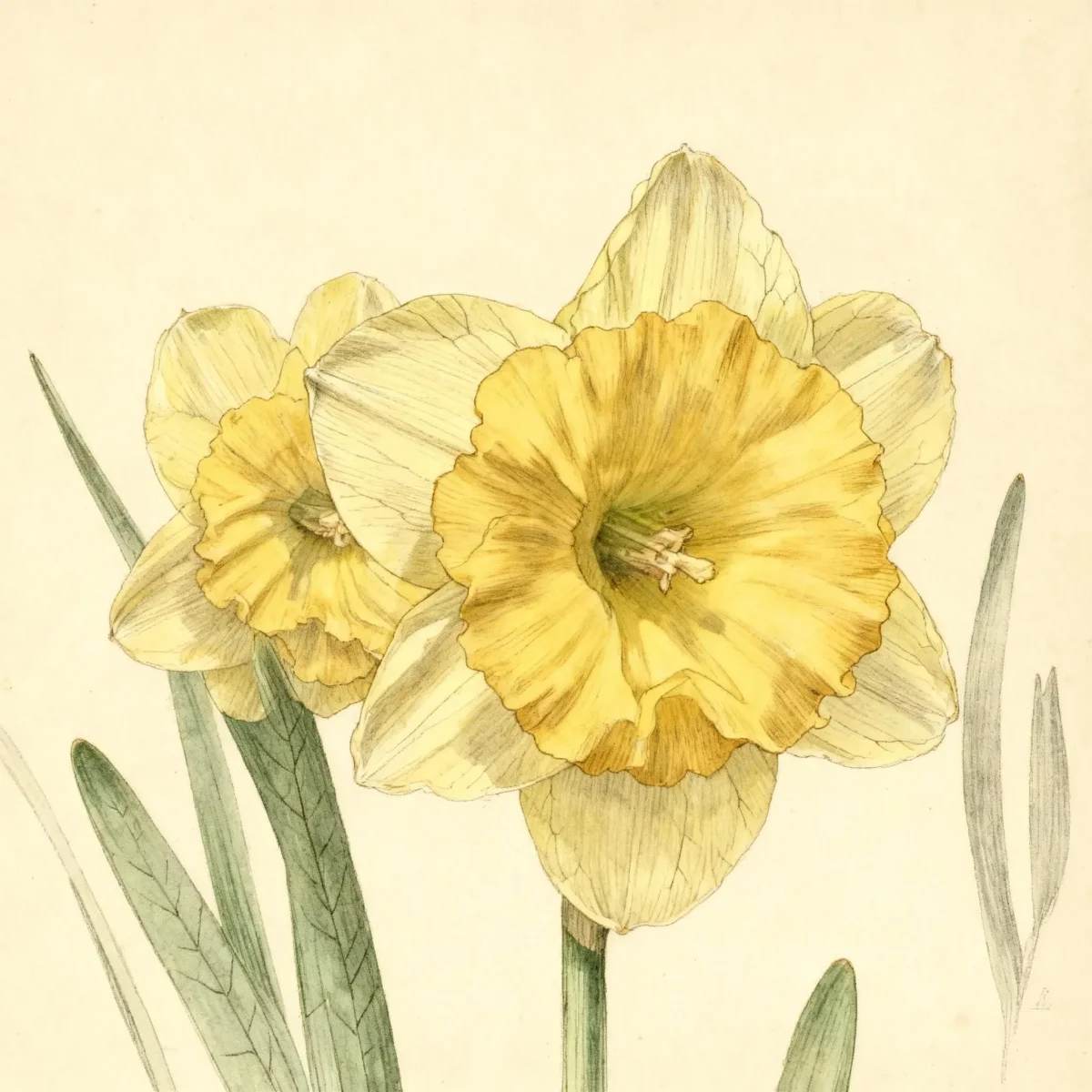
Split-corona daffodil (Narcissus 'Cassata')
Narcissus 'Cassata' is a striking Split-corona daffodil blooming in April with creamy white petals for low-maintenance spring color.

Bloom Boldly, No Matter the Season - Sweatshirt
Cozy organic cotton sweatshirt featuring our exclusive Purple Coneflower design. Perfect for gardeners who bloom year-round.
Inspired by the beautiful Split-corona daffodil
Limited first batch (50) — join the waitlist for early access
Waitlist closes Feb 15, 2026.
Complete Plant Information
Field Guide Continues
Ready for care notes, companion picks, and planting tips?
The map is just the start. The full guide below covers growth habits, seasonal performance, and landscape uses.
Overview
Narcissus ‘Cassata’ brings unique architectural interest to the early spring garden with its distinctive bloom structure. As a favored Split-corona daffodil, its flowers feature creamy white petals prominently contrasting with a serrated, deeply split corona that matures from lemon yellow to white. This bulbous perennial is valued for its easygoing nature, providing reliable, low-maintenance color after the winter thaw.
This cultivar thrives in average, well-drained soils and performs best when receiving full sun to partial afternoon shade. Narcissus ‘Cassata’ is a dependable performer, returning year after year once established, making it an excellent long-term investment for spring displays. Its robust nature, coupled with resistance to common pests, ensures the Split-corona daffodil remains a mainstay for gardeners seeking dependable spring beauty without constant fuss.
Planting bulbs in early to mid-fall sets the stage for these stunning blooms appearing reliably in April. Whether massed in drifts or featured in borders, Narcissus ‘Cassata’ offers a sophisticated, elegant entryway to the gardening season.
Fast Facts
- Plant Family: Amaryllidaceae
- Plant Type: Bulb
- Hardiness Zones: USDA Zones 4-8
- Size at Maturity:
- Height: 1-1.5 ft
- Spread: 0.5-0.75 ft
- Bloom Time: April
- Bloom Description: Creamy white petals and yellow cup
- Sun Exposure: Full sun to part shade
- Water Needs: Medium
- Maintenance Level: Low
How to Grow
Planting your Narcissus ‘Cassata’ bulbs should occur in early to mid-fall before the ground freezes hard. Ensure the planting location offers good drainage, as this is crucial; soggy conditions lead to bulb rot. Set each bulb 2 to 3 times as deep as its height, generally 3-6 inches deep, spacing them 4 to 8 inches apart for a naturalized look over time. They prefer organically rich loam but adapt well to average, medium-moisture soils.
During the active growing season—spring and early summer—keep the soil uniformly moist. While Narcissus ‘Cassata’ tolerates drought once dormant, consistent moisture aids bulb development for the following year. Following bloom, deadhead the spent flower stems to prevent seed production, but critically, leave the foliage intact. Allow the leaves to yellow and die back naturally, as this process replenishes the energy reserves required for next season’s show.
These bulbs prefer to be left undisturbed; they naturalize well and increase steadily over several years. If the quality or quantity of blooms begins to noticeably decline, divide the clumps immediately after the foliage fully dies back. For the best visual display, consider the flower orientation; since the blooms often face the strongest light source, position any shaded areas to the rear of your planting arrangement.
Landscape Uses
Dwarf and mid-sized daffodils like the Split-corona daffodil are wonderfully versatile, contrasting beautifully with early-flowering shrubs. Unlike tulips, which often require annual replacement, these bulbs offer reliable, perennial performance, making them invaluable for long-term landscape planning. They are ideally suited for mass plantings, creating sweeping drifts in naturalized areas, open woodlands, or beneath deciduous trees where they receive sun before leaf-out.
Plant Narcissus ‘Cassata’ in defined beds or borders where their unique form can be appreciated up close. They pair excellently with other spring ephemerals such as Grape Hyacinth (Muscari) or early blooming tulips, providing textural contrast against their smooth cups and petals. Their deer and rabbit resistance significantly improves their value in gardens prone to browsing pests.
For a naturalized effect, plant them in quantities, aiming for groupings of at least six bulbs, allowing them to slowly colonize the space between shrubs or under the canopy of young trees. Their medium-height structure also makes them effective in the middle layer of a layered perennial border.
Standout Features
Flower Qualities
- Showy
Noteworthy Characteristics
Narcissus is characterized by approximately 50 species of bulbous perennials native to Europe and North Africa, forming a cornerstone of the spring garden. Flowers typically feature a central cup (corona) surrounded by six petals, exhibiting colors from white through yellow, orange, and pink. ‘Cassata’ is specifically classified within Division XI, featuring upward-facing flowers accented by creamy white petals and lemon-yellow to white, serrated, split coronas; this unique Split-corona daffodil rises nicely on stems 16-18 inches tall.
Tolerances
- Rabbit
- Deer
- Drought
Potential Problems
Daffodils are generally robust, enjoying a reputation for being nearly pest-free when planted in appropriate, well-drained soil. The primary cultural issue to monitor for Narcissus ‘Cassata’ is bulb rot, which almost always signals excessive moisture or poor drainage in the planting site. Infrequently, garden pests like slugs and snails may bother tender foliage early on, and occasionally bulbs can be affected by narcissus bulb fly or narcissus nematode. For cultural issues, avoid planting in heavy clay that retains water. If symptoms of Narcissus yellow stripe virus appear, immediately remove the infected plant to prevent minor spread.
Frequently Asked Questions
What hardiness zones is Split-corona daffodil suitable for?
Narcissus ‘Cassata’ is hardy and reliably returns in USDA Zones 4 through 8.
How large does Narcissus ‘Cassata’ grow?
This Split-corona daffodil typically reaches a height between 1 and 1.5 feet, with a spread of 0.5 to 0.75 feet.
What sun exposure does Narcissus ‘Cassata’ need?
This variety performs best when sited in locations that receive full sun to part shade throughout the day.
When does Split-corona daffodil bloom?
You can expect the distinctive flowers of Narcissus ‘Cassata’ to appear in April, noted for their creamy white petals and yellow cup.
Conclusion
The elegance and resilience of Narcissus ‘Cassata’ make it an essential addition for reliable early spring color. Its unique Split-corona daffodil form, combined with low maintenance requirements and excellent pest resistance, ensures it will brighten your landscape for years to come. Plan your fall planting now, ensuring excellent soil drainage to welcome this stunning display next April.
Companion Planting
Effective companion planting for Narcissus ‘Cassata’ relies on layering plants that emerge later or require similar cultural conditions. Since the daffodil foliage yellows as it dies back, consider planting earlier-emerging annuals like pansies or violas directly around the base of the bulbs. These annuals will provide continuous color as the daffodil leaves drop out of sight. Additionally, plant mid-to-late season perennials such as Hostas or Siberian Iris nearby; these companions will fill in the space left by receding daffodil foliage, offering shade that helps keep the daffodil bulbs cool over the summer months.
Propagation Tips
The primary method for increasing your stock of Narcissus ‘Cassata’ is through division of established clumps. Daffodils naturalize well, but after several years, overcrowding can reduce bloom quality. Wait until the foliage has completely turned yellow in early summer before digging up the clumps. Carefully separate the offsets (smaller bulbs) from the main bulb. When replanting, adhere to the general rule of planting each new bulb 3 to 6 inches deep and 4 to 8 inches apart to ensure vigorous flowering in subsequent seasons.