Cyclamineus daffodil(Narcissus 'February Gold')
Grow February Gold cyclamineus daffodil (Narcissus): reflexed golden petals, ultra-early March blooms, weatherproof stems, rodent immunity, USDA zones 4–8 care.
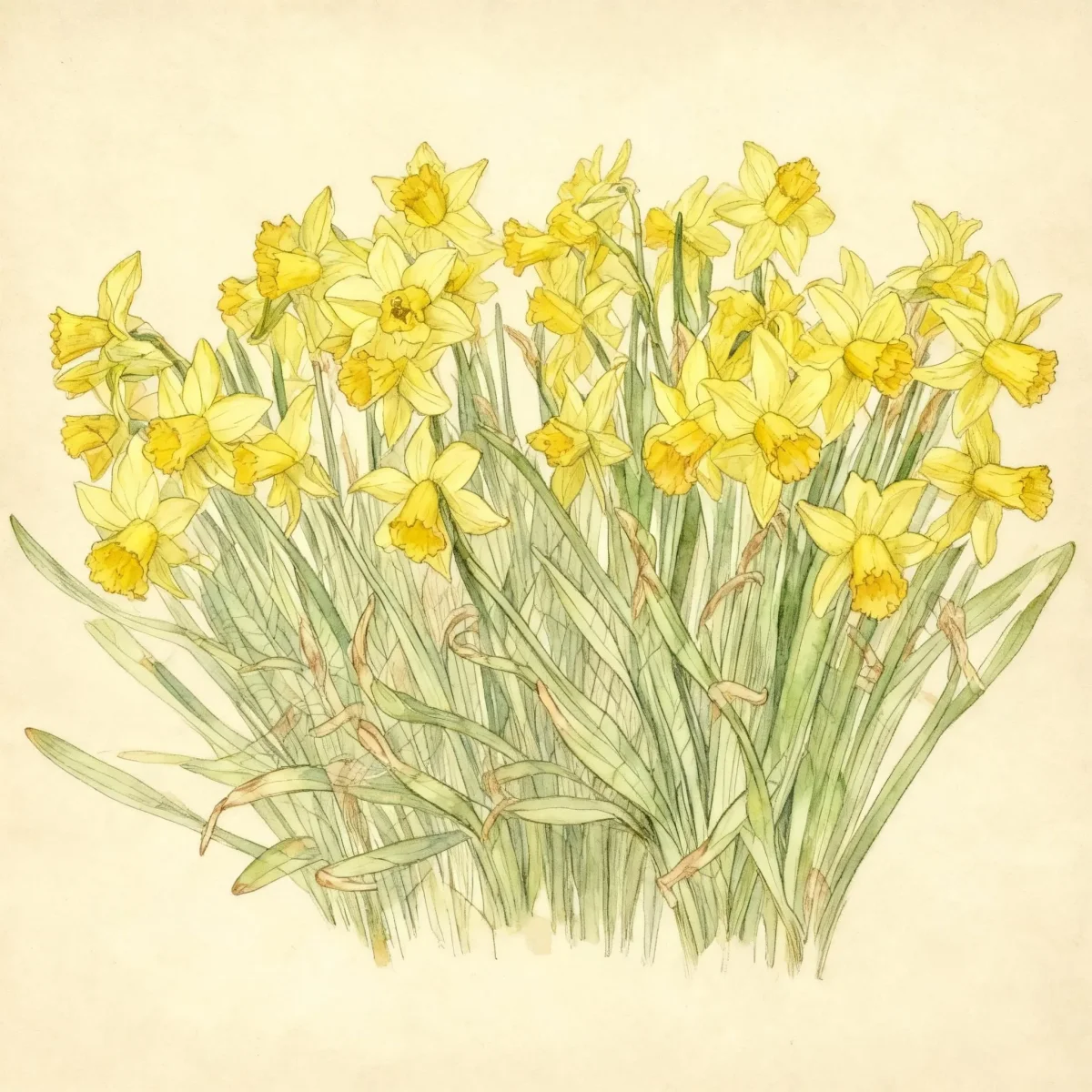
Complete Plant Information
- Hardiness zones
- USDA 4–8
- Plant type
- Bulb
- Plant family
- Amaryllidaceae
- Sun exposure
- Full sun to part shade
- Water needs
- Medium during active growth, dry in summer dormancy
- Maintenance
- Low
- Height
- 0.8–1.2 ft (24–37 cm)
- Spread
- 0.5–0.8 ft (15–24 cm)
- Bloom time
- March to April
- Flower color
- Nodding golden-yellow flowers with swept-back reflexed petals and a straight fluted cup
- Flower qualities
- Showy, Early spring bloomer
- Fruit qualities
- Not recorded
- Tolerances
- Rabbit, Deer, Drought, Black Walnut
- Garden uses
- Lawn naturalizing, deciduous understory drift, rockery, early pollinator border
- Native range
- Southern Europe (cultivar hybridized by de Graaff Bros., 1923)
Field Guide Continues
Ready for care notes, companion picks, and planting tips?
The map is just the start. The full guide below covers growth habits, seasonal performance, and landscape uses.
Overview
February Gold daffodil (Narcissus ‘February Gold’) is a world-renowned, early-spring flowering bulb in the cyclamineus daffodil division (Division 6), hardy across USDA Zones 4 through 8 and holder of the Royal Horticultural Society’s Award of Garden Merit. Hybridized in the Netherlands in 1923 by de Graaff Brothers (N. cyclamineus × N. ‘Golden Spur’), it has provided over a century of bulletproof performance. Growing 10 to 14 inches tall, it bears charming, nodding golden-yellow blossoms whose outer petals sweep backwards like wind-blown hair, blooming weeks ahead of standard trumpet daffodils when late winter snow is still thawing.
The swept-back reflexed perianth petals and nodding flower poise make ‘February Gold’ virtually weatherproof against late winter freezing rain and gale-force spring winds.
How to Grow
- Hardiness & Siting: USDA Zones 4 through 8. Plant in full sun to light woodland shade. Planting beneath deciduous canopy trees allows bulbs to soak in full early spring sunlight before trees leaf out.
- Fall Planting Depth: Plant dormant bulbs in early to mid-autumn 4 to 6 inches deep and 4 to 6 inches apart.
- Effortless Naturalization: One of the most reliable multiplier daffodils in cultivation. Clumps slowly divide and expand over decades, forming dense golden carpets across lawns and orchard meadows without overcrowding or losing vigor.
- Crucial Foliage Rule: After petals fade, snap off the developing seed head, but leave green foliage intact for at least 6 weeks until it turns completely yellow and dry. The leaves photosynthesize sunlight to recharge the underground bulb for next spring’s bloom.
Landscape Uses
- Lawn & Meadow Naturalizing: Scatter bulbs across open turf for a wild, early spring meadow effect before mowing begins in May.
- Deciduous Tree Understory: Drifts illuminate bare soil beneath maple, oak, and birch trees before tree canopies leaf out.
- Rock Gardens & Walkways: Compact 12-inch stems make it ideal for low border fronts, rockeries, and stone path edgings.
Potential Problems
- Cutting Foliage Too Early: Mowing or clipping leaves before they turn yellow prevents bulbs from storing energy, causing “blind” non-flowering clumps in future years.
- Basal Rot in Saturated Summer Soils: Bulbs require dry to medium soil during summer dormancy; avoid poorly drained boggy spots.
- Pet Safety Warning: Like all daffodils, bulbs and leaves contain toxic lycorine alkaloids and calcium oxalate crystals. Ingestion causes vomiting and diarrhea in dogs and cats. However, this toxicity makes bulbs completely immune to burrowing voles, squirrels, chipmunks, and deer.
Frequently Asked Questions
Why do the petals on ‘February Gold’ sweep backwards?
‘February Gold’ belongs to Division 6 (Cyclamineus hybrids), inheriting sharply reflexed petals from its wild ancestor Narcissus cyclamineus, giving the flower an aerodynamic, wind-resistant form.
When does ‘February Gold’ bloom?
It is one of the earliest daffodils, opening in late February in warm southern zones (Zone 7 and 8) and early-to-mid March in cold northern regions (Zones 4 and 5).
Do squirrels or deer eat the bulbs?
No. All parts of the plant contain bitter, poisonous lycorine alkaloids that deer, rabbits, squirrels, and voles strictly avoid.
Companion Plants
Pair February Gold daffodils with early-spring bulbs and perennials that bloom concurrently:
- Blue Spring Bulbs: Interplant with Siberian squill (Scilla siberica), grape hyacinths (Muscari), or glory-of-the-snow (Chionodoxa) for gold-and-blue contrast.
- Early Perennials: Combine with hellebores (Helleborus), lungwort (Pulmonaria), and creeping phlox.
- Groundcovers: Plant through vinca or creeping thyme.
Sources & Lineage
- Missouri Botanical Garden PlantFinder: Record taxon 251068 (Narcissus ‘February Gold’) — de Graaff 1923 registration, Division 6 morphology, and culture.
- Kew Plants of the World Online (POWO): Narcissus L. (POWO: 1558-1) — genus taxonomy and Mediterranean distribution.
- Royal Horticultural Society (RHS): Narcissus ‘February Gold’ AGM Profile — Award of Garden Merit evaluation and weather resistance notes.
Recommended Companion Plants
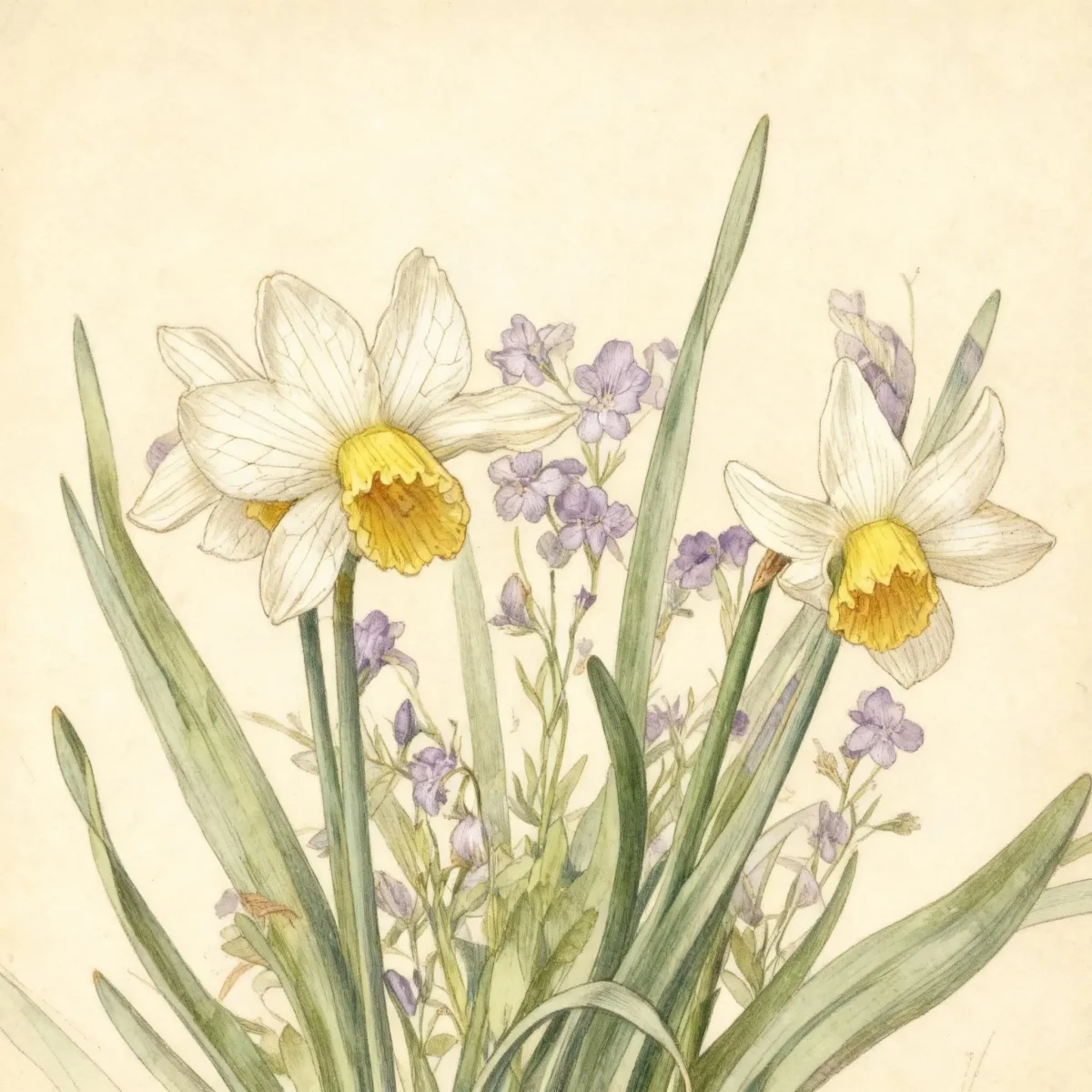
Cyclamineus daffodil
Narcissus 'Jack Snipe'
- USDA zones
- 4–8
- Light
- Full sun to part shade
- Water
- Medium
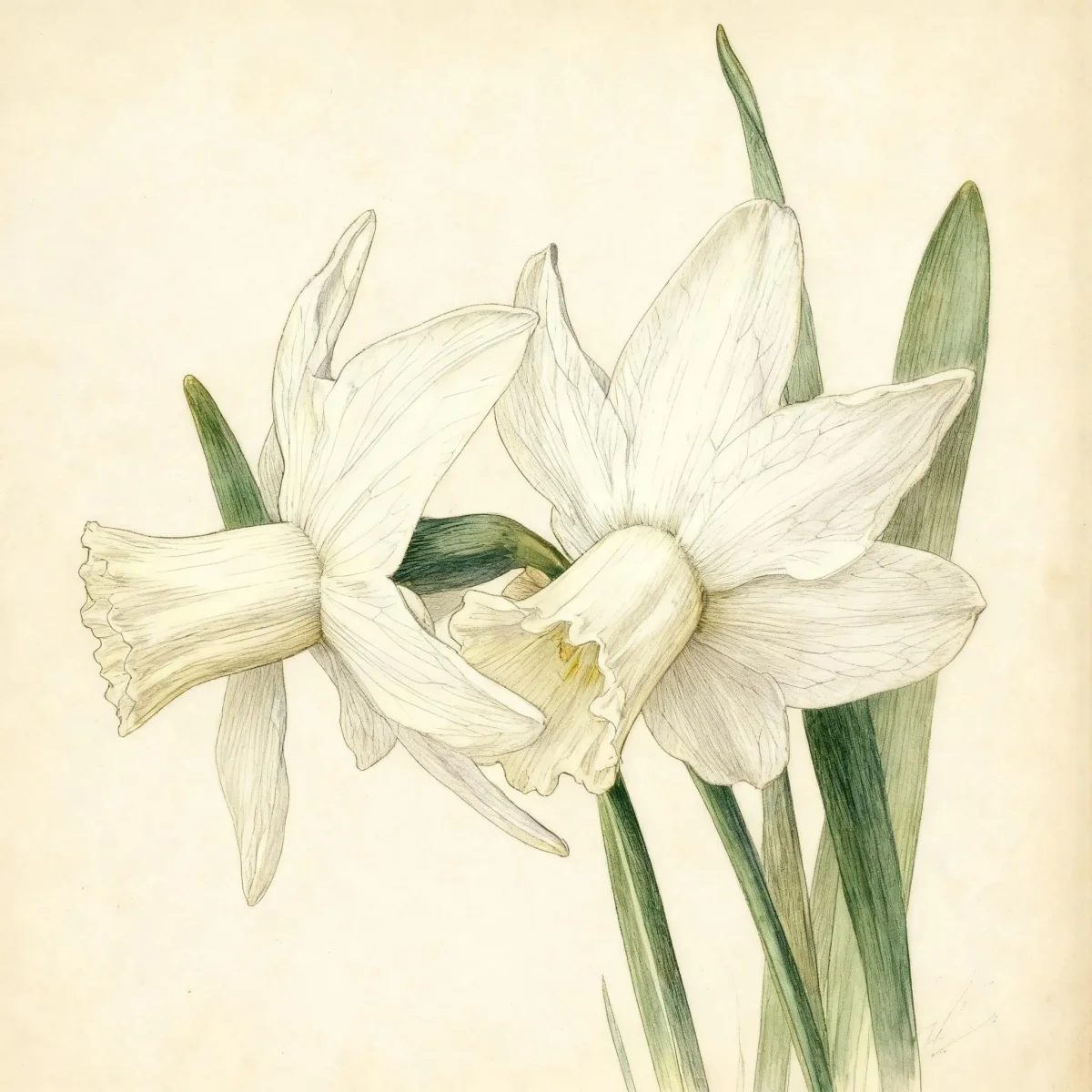
Cyclamineus daffodil
Narcissus 'Jenny'
- USDA zones
- 3–8
- Light
- Full sun to part shade
- Water
- Medium
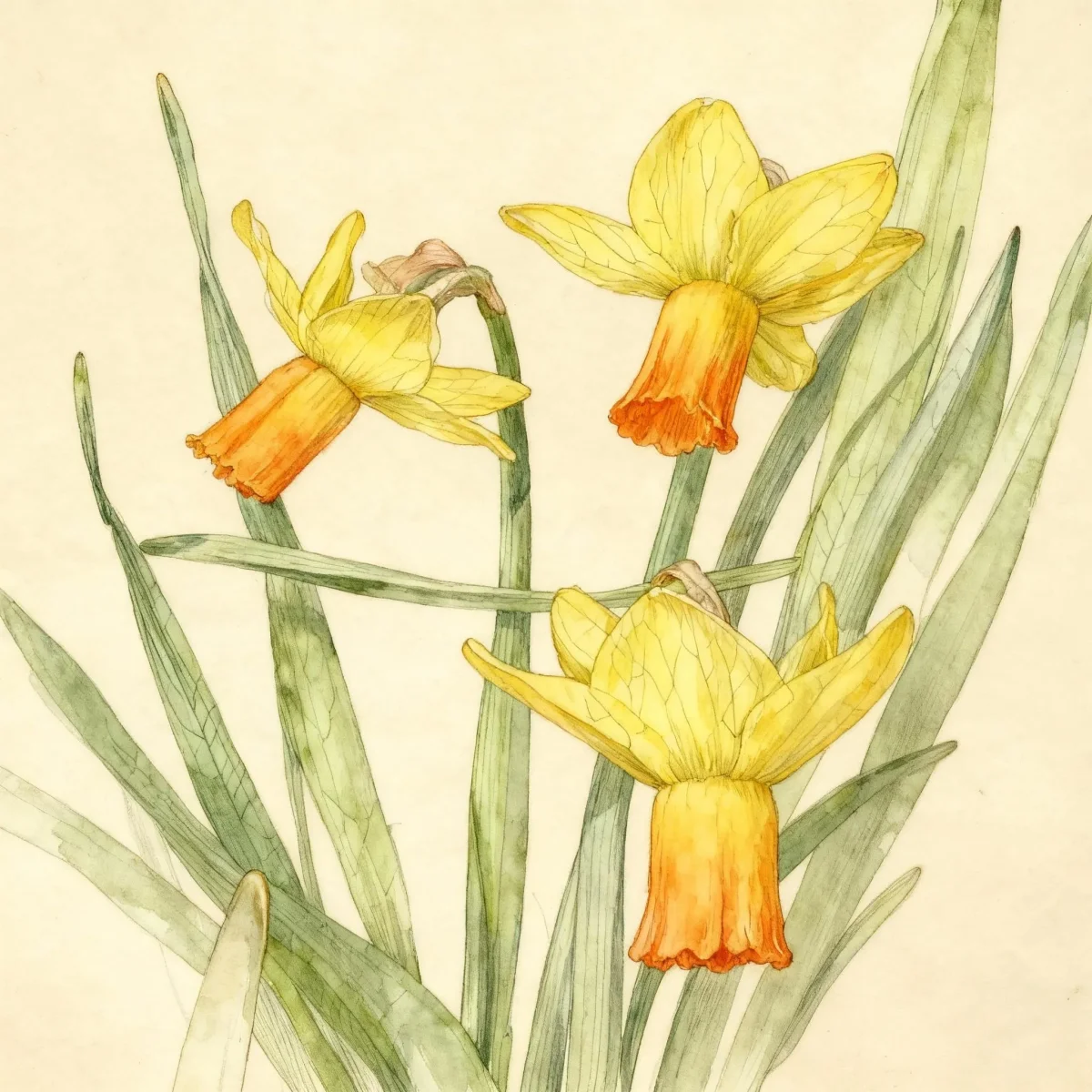
Cyclamineus daffodil
Narcissus 'Jetfire'
- USDA zones
- 4–8
- Light
- Full sun to part shade
- Water
- Medium
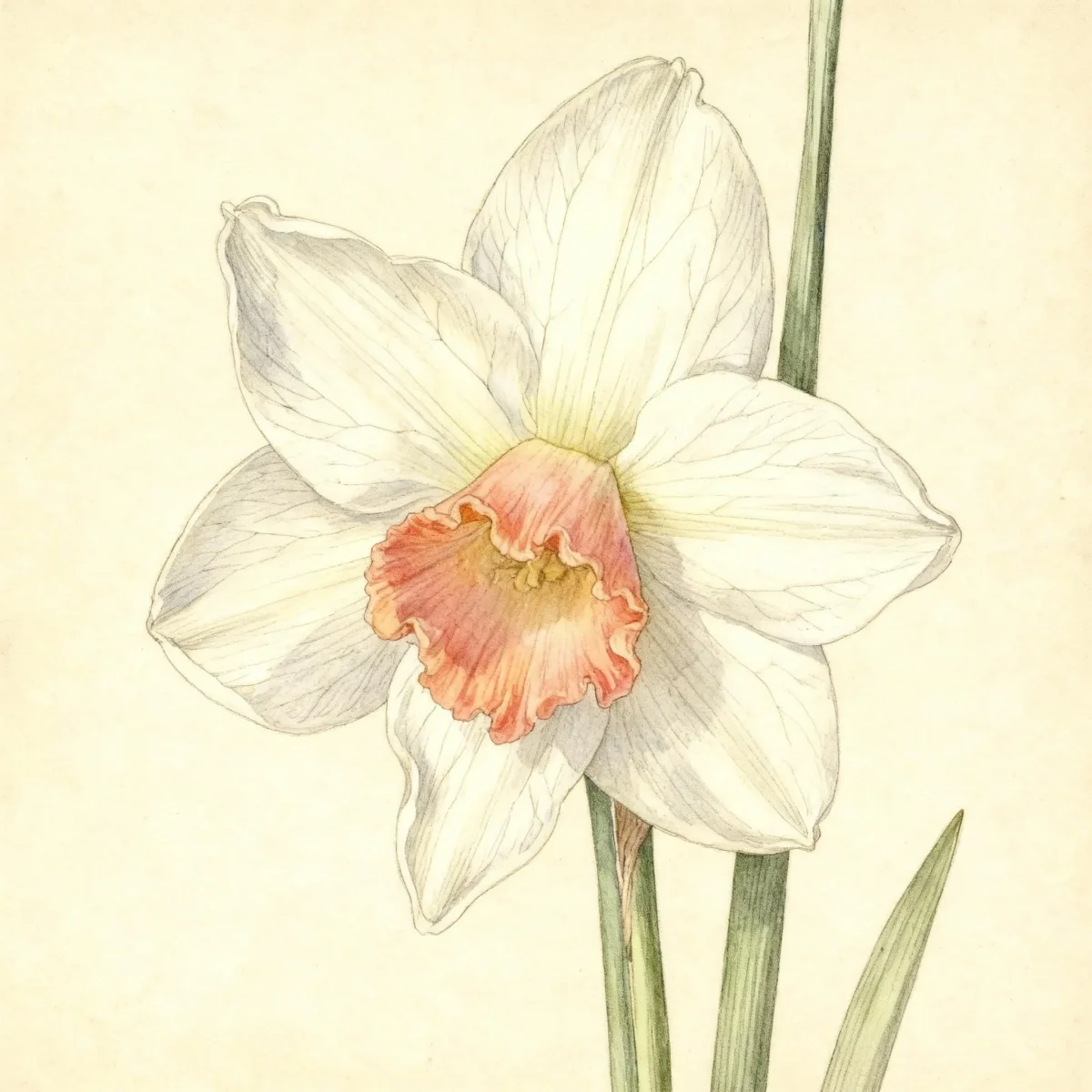
Cyclamineus daffodil
Narcissus 'Little Princess'
- USDA zones
- 3–8
- Light
- Full sun to part shade
- Water
- Medium
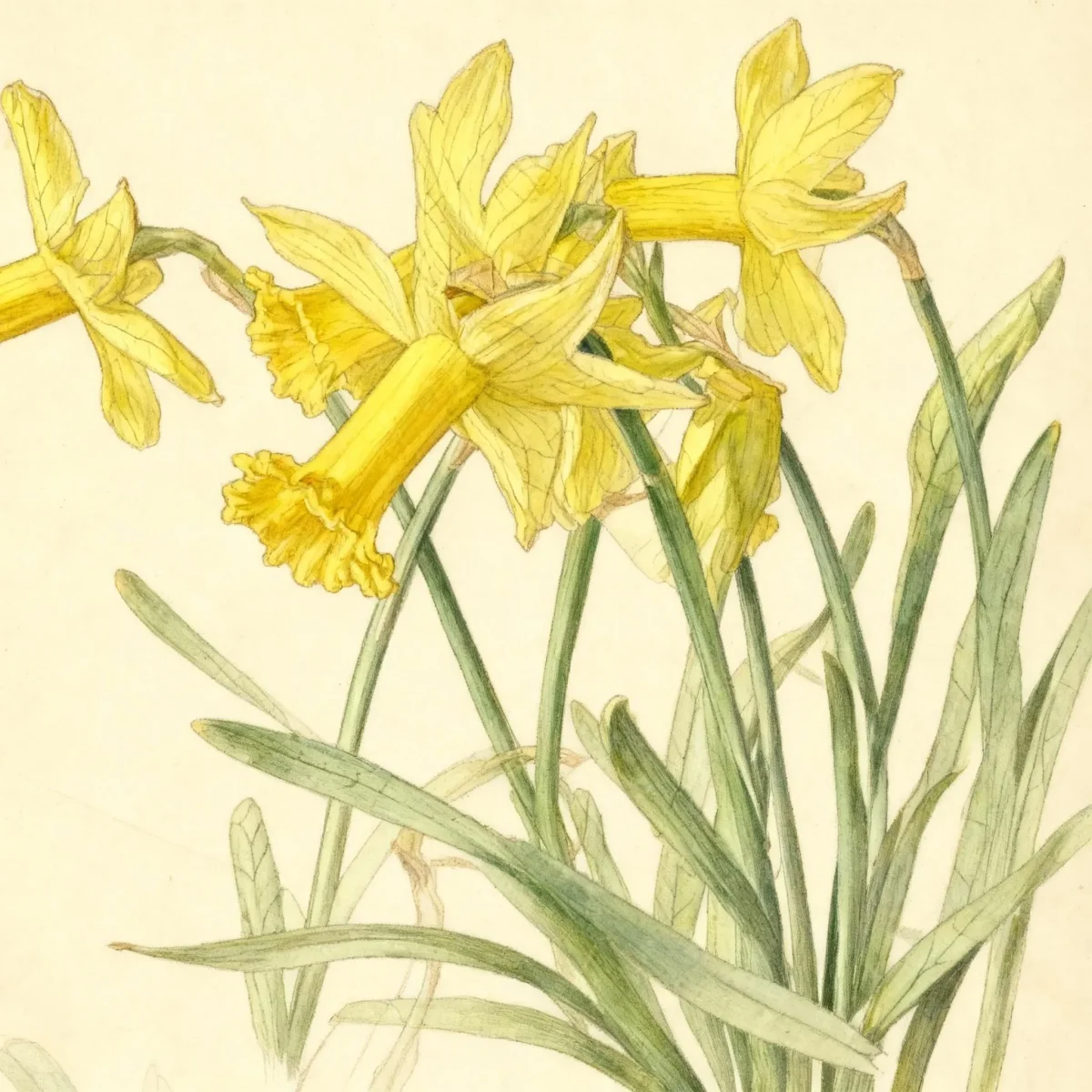
Cyclamineus daffodil
Narcissus 'Peeping Tom'
- USDA zones
- 4–8
- Light
- Full sun to part shade
- Water
- Medium
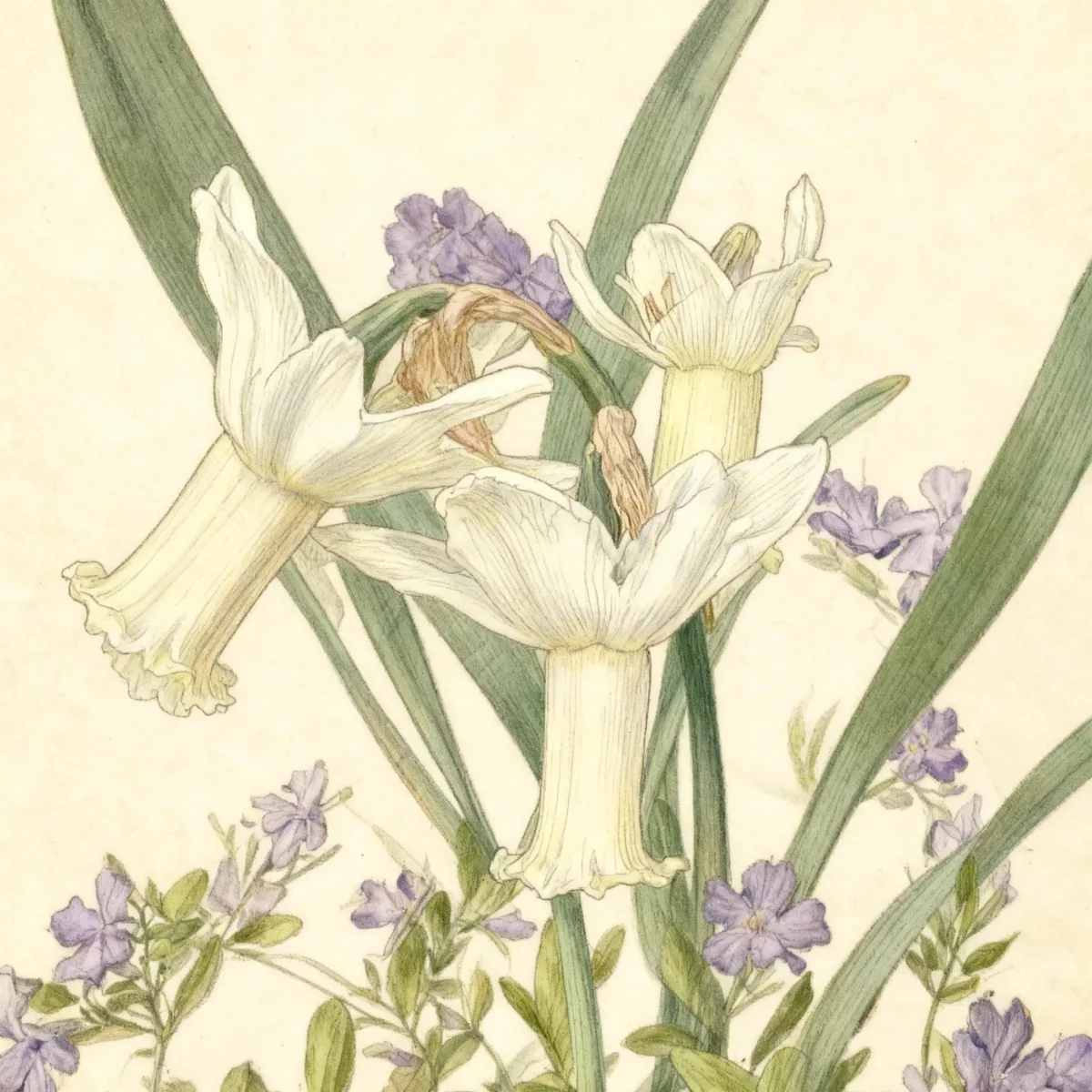
Cyclamineus daffodil
Narcissus 'Tracey'
- USDA zones
- 3–8
- Light
- Full sun to part shade
- Water
- Medium
Keep Learning
Test what you know with a garden quiz
You have the plant facts and care notes. Continue with a related challenge, or browse the complete quiz library.
Spring Garden Basics
Ready for spring? Test your gardening knowledge!
Start quiz
Beginner Composting Quiz: Test Your Knowledge
Curious about composting? Take this quick quiz to see how much you know about turning kitchen scraps and yard waste into garden gold.
Start quizBrowse the full quizzes section
Explore plant identification, zone strategy, and seasonal gardening challenges.
View all quizzes