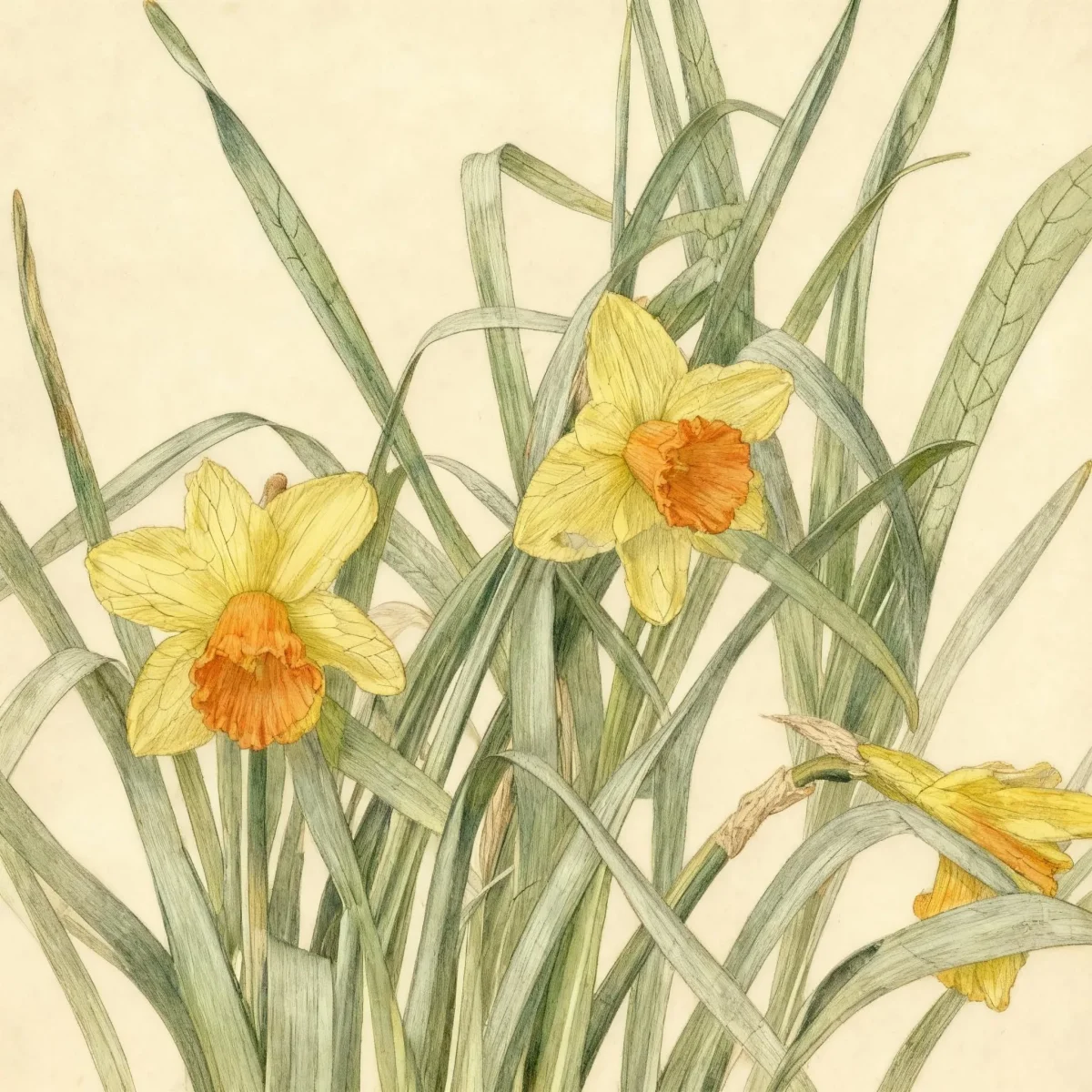
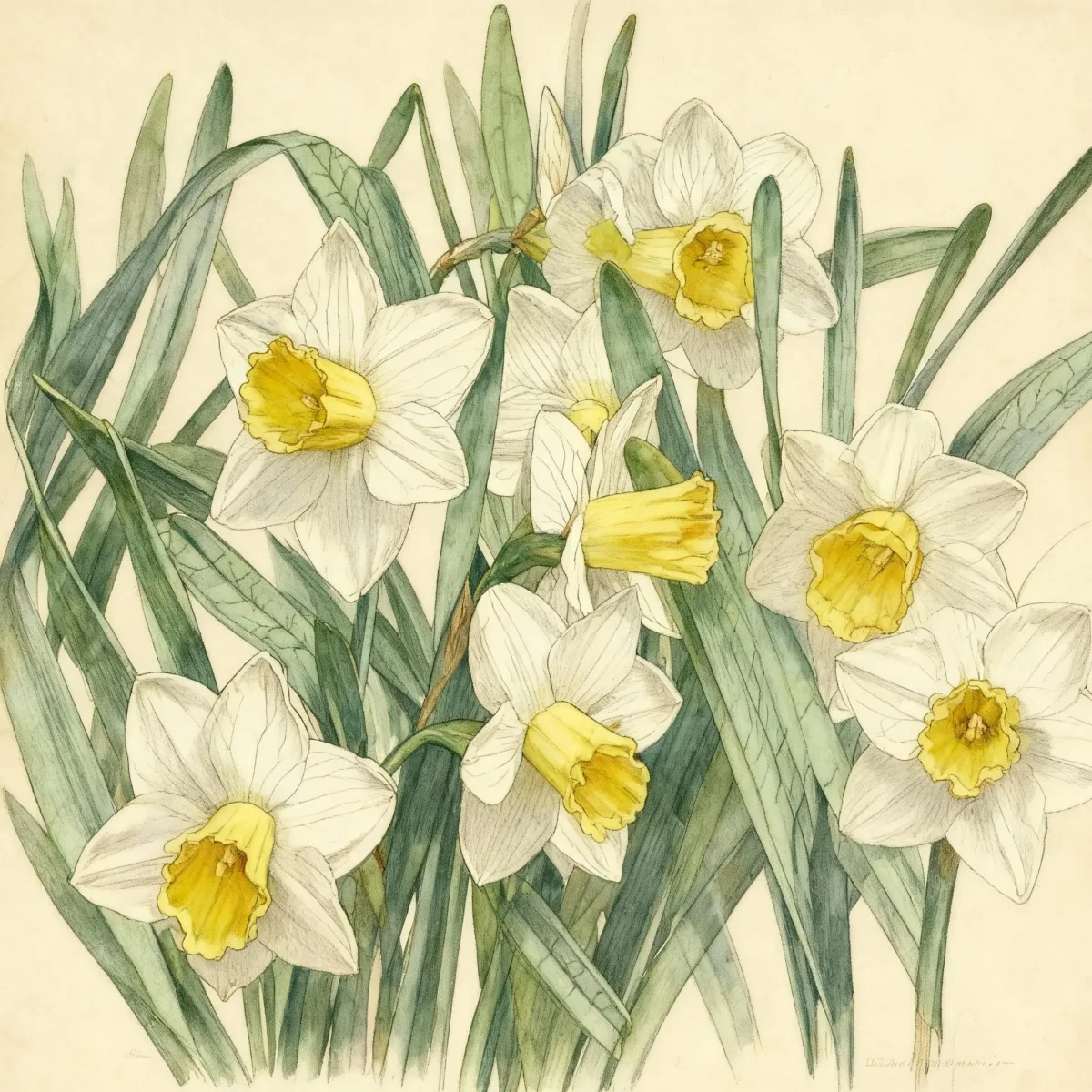
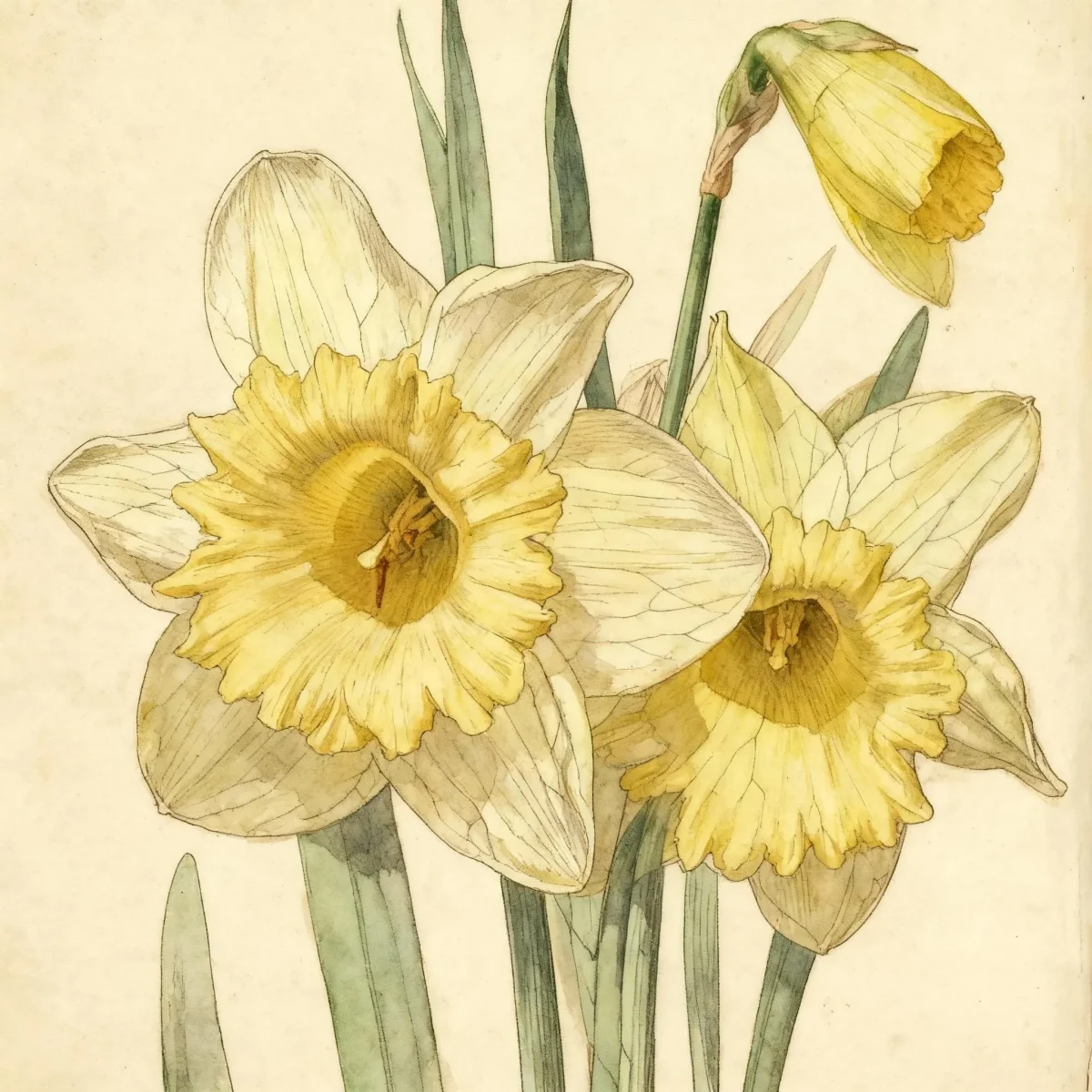
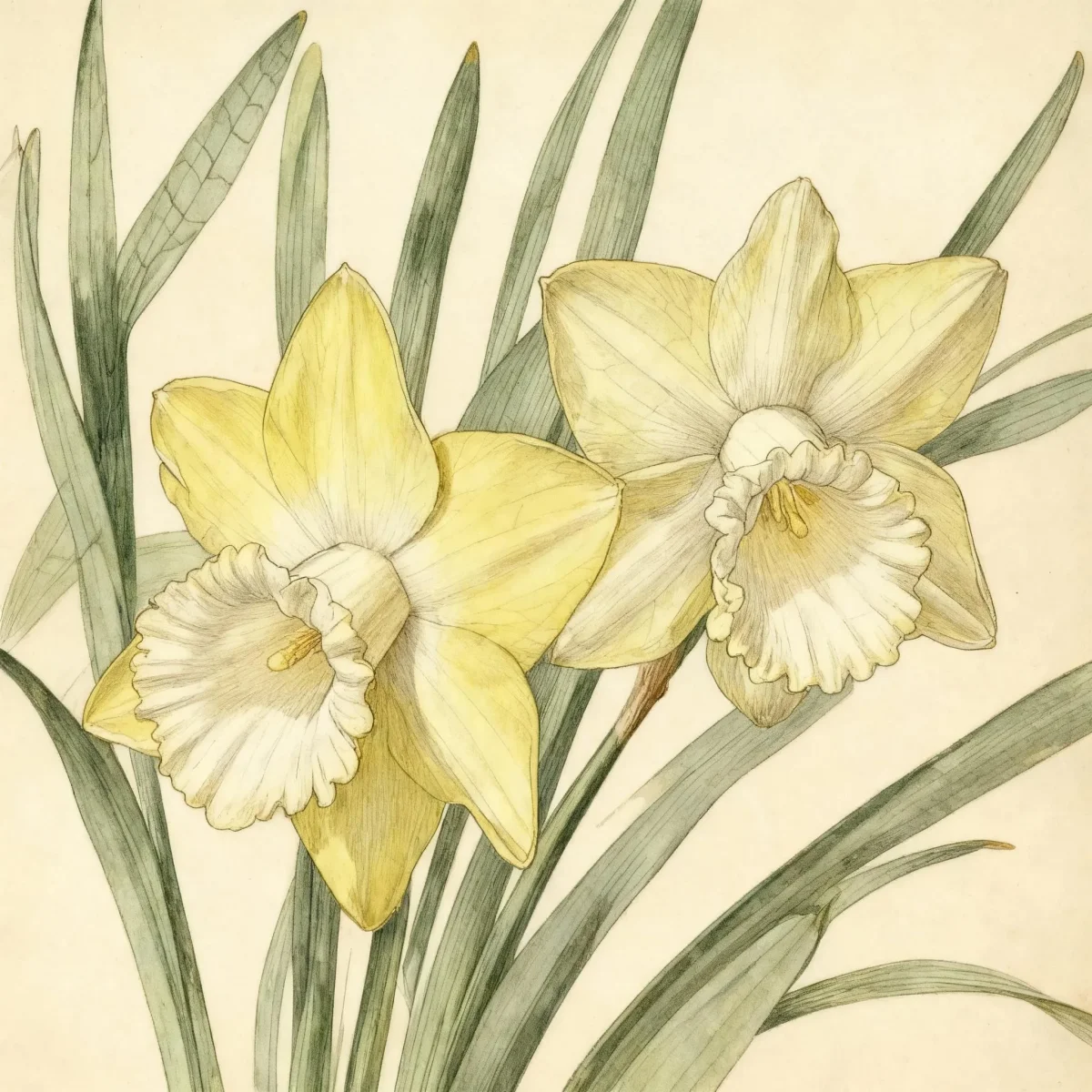
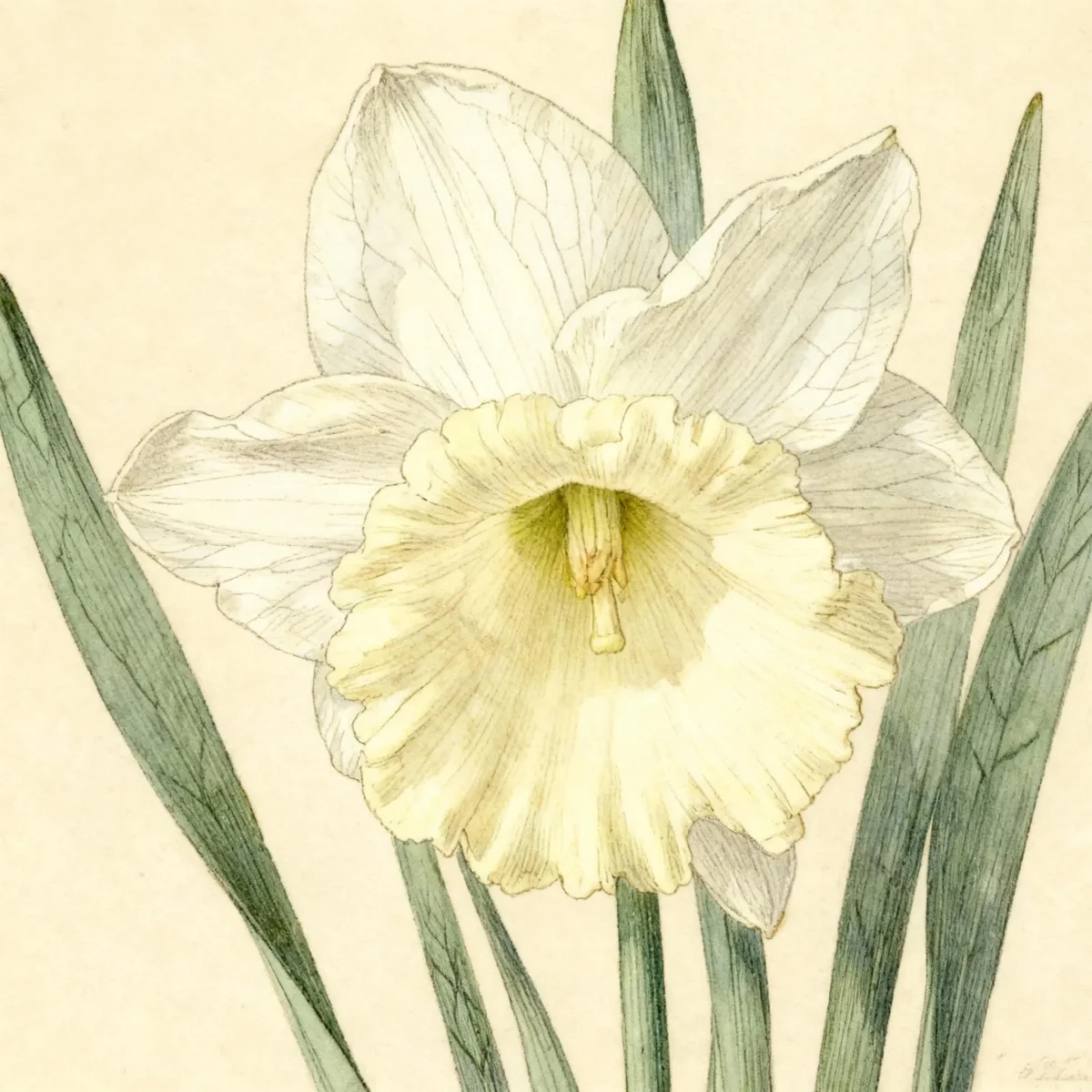
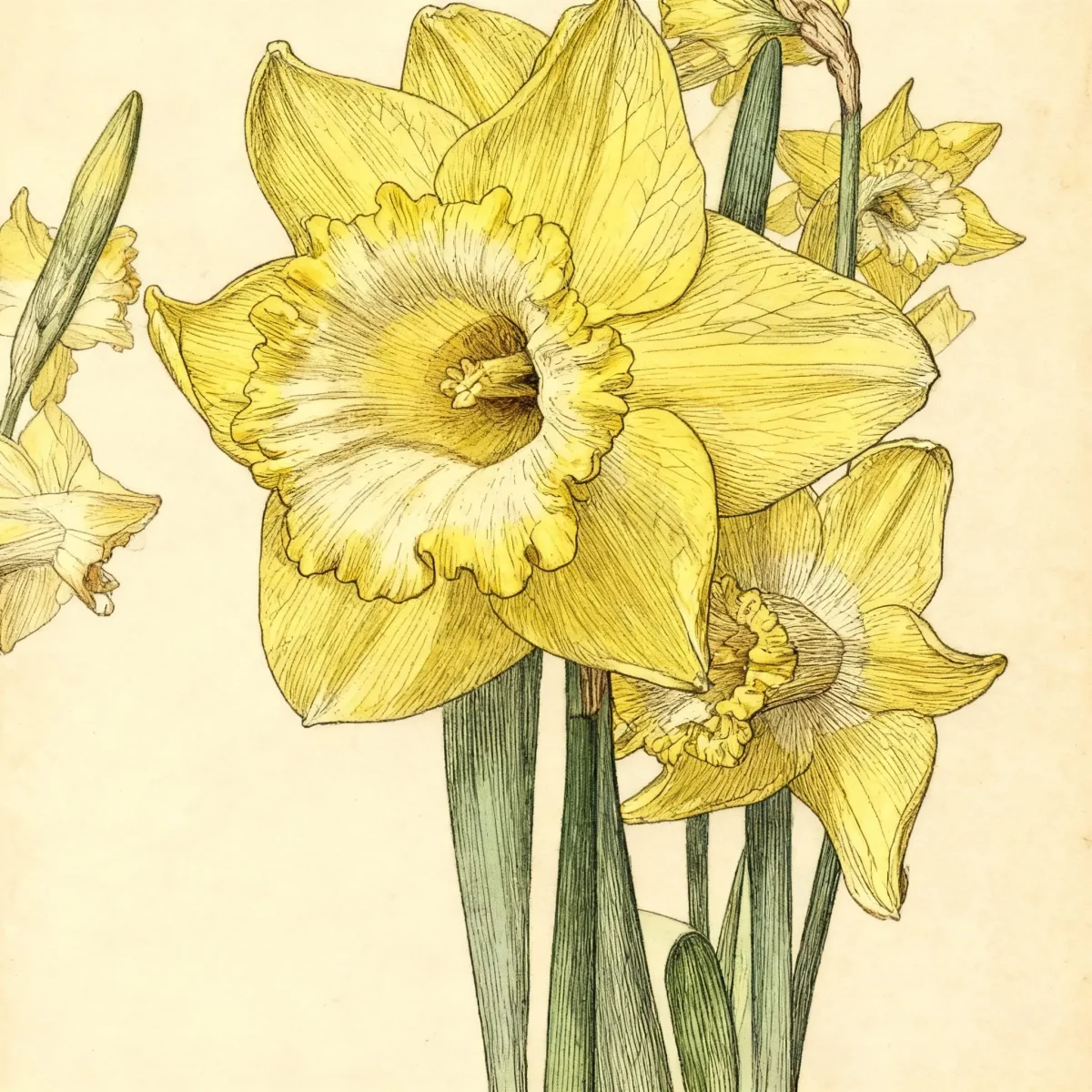
Trumpet daffodil (Narcissus 'King Alfred')
The classic Narcissus 'King Alfred', a traditional trumpet daffodil, offers brilliant yellow blooms in early spring. Easy to grow and low maintenance.


Bloom Boldly, No Matter the Season - Sweatshirt
Cozy organic cotton sweatshirt featuring our exclusive Purple Coneflower design. Perfect for gardeners who bloom year-round.
Inspired by the beautiful Trumpet daffodil
Limited first batch (50) — join the waitlist for early access
Waitlist closes Feb 15, 2026.
Complete Plant Information
Field Guide Continues
Ready for care notes, companion picks, and planting tips?
The map is just the start. The full guide below covers growth habits, seasonal performance, and landscape uses.
Overview
The Trumpet daffodil, specifically the cultivar Narcissus ‘King Alfred’, stands as an iconic presence in the spring garden, renowned for its vibrant, classic yellow coloration. These bulbs deliver large, showy blooms where the trumpet-shaped corona is equal to or longer than the surrounding petals, confirming its status as a true trumpet daffodil. Culturally straightforward, Narcissus ‘King Alfred’ performs reliably in average garden settings as long as drainage is adequate, providing dependable color after the winter thaw.
These perennials are excellent naturalizers, meaning they multiply and return year after year without requiring frequent division or intense care. While the original Narcissus ‘King Alfred’ is rarely found commercially today (often replaced by improved yellow look-alikes), understanding its requirements ensures success with any similar yellow trumpet daffodil you plant. They are a quintessential sign of spring, excellent for mass plantings and borders.
Fast Facts
- Plant Family: Amaryllidaceae
- Plant Type: Bulb
- Hardiness Zones: USDA Zones 3-8
- Size at Maturity:
- Height: 1-2 ft
- Spread: 0.5-1 ft
- Bloom Time: March to April
- Bloom Description: Yellow
- Sun Exposure: Full sun to part shade
- Water Needs: Medium
- Maintenance Level: Low
How to Grow
Planting Narcissus ‘King Alfred’ bulbs should occur in the early to mid-fall, providing enough time for root development before the hard freeze. Ensure the location receives full sun to part shade; orient the planting spot so any overhead shade is behind the flowers, as the blooms generally face the sun. Good soil drainage is paramount; these thrive in organically rich loams with medium moisture.
For planting depth, bury the bulb two to three times its height deep, ensuring at least three inches of soil cover. Spacing ranges from 4 to 10 inches apart, depending on the size of the bulb, though wider spacing initially leads to fewer necessary divisions later. Keep the soil uniformly moist during the active growing season, though the bulbs are drought-tolerant once dormant.
After the majestic yellow flowers of the Trumpet daffodil fade, resist the urge to cut the foliage immediately. Allow leaves to yellow naturally (until they begin yellowing) as this process refuels the bulb for next year’s display. Removing only the dead flower stem prevents unwanted seed production. Clumps should only be dug up for division if the flower quantity or quality declines after several successful years.
Landscape Uses
Daffodils, including the esteemed Narcissus ‘King Alfred’, excel when planted in large drifts rather than sparse groupings of just a few bulbs. Aim for groupings of six or more bulbs to create sweeping blankets of early spring color in beds and borders. Their reliability and return performance make them superior to many annuals or even tulips in long-term landscaping projects.
Consider massing them under deciduous trees or in open woodland settings where they receive sun before the canopy leafs out fully. They blend beautifully with other early bloomers like Grape Hyacinth (Muscari) or early tulips for sequential color displays. Leaving the foliage to die back naturally allows this Trumpet daffodil to naturalize, filling in spaces over time beautifully between shrubs or in informal garden areas.
Standout Features
Flower Qualities
- Showy
Noteworthy Characteristics
Narcissus is a genus well-loved for initiating the spring season with reliable color. The cultivar ‘King Alfred’ belongs to Division I—the Trumpet Daffodils—distinguished by a trumpet (corona) that matches or exceeds the length of the perianth segments. This particular historic cultivar features bright yellow, slightly pointed petals and a matching yellow trumpet, rising atop stems that are generally 16-22 inches tall. Although largely replaced by modern cultivars, ‘King Alfred’ set the aesthetic standard for yellow daffodils for half a century.
Tolerances
- Rabbit
- Deer
- Drought
Potential Problems
Daffodils are celebrated for their low incidence of serious pest or disease issues when planted correctly. The primary concern stems from poor drainage, which invites bulb rot—a potentially fatal issue. Infrequently, gardeners may encounter slugs, snails, or the narcissus bulb fly. Management centers on amending heavy soils to ensure sharp drainage. Furthermore, deer and rabbits generally find the plant foliage distasteful due to toxic alkaloids present in the bulb.
Frequently Asked Questions
What hardiness zones is Trumpet daffodil suitable for?
Narcissus ‘King Alfred’, the classic Trumpet daffodil, is reliably hardy across USDA Zones 3 through 8.
How large does Narcissus ‘King Alfred’ grow?
When fully mature, this daffodil typically reaches a height between 1 and 2 feet, with a spread of about 0.5 to 1 foot.
What sun exposure does Trumpet daffodil need?
The ideal conditions for Narcissus ‘King Alfred’ are full sun to light or part shade.
When does Narcissus ‘King Alfred’ bloom?
This variety flowers reliably in mid-season, generally blooming from March into April, producing striking yellow flowers.
Conclusion
The enduring appeal of the Narcissus ‘King Alfred’ lies in its robust constitution and the unmistakable visual impact of its brilliant yellow trumpet bloom. As a low-maintenance, naturalizing bulb, it offers exceptional seasonal value for minimal effort. Ensure you have well-drained soil and plant your Trumpet daffodil bulbs in the autumn to secure a classic welcome to spring next year.
Companion Planting
When designing an early spring display, pair Narcissus ‘King Alfred’ with plants that appreciate similar sunlight and soil conditions during their spring growth phase. Consider planting low-growing annuals like Pansies or Violas around the base of the daffodils; these offer continuous color just as the daffodil foliage begins to yellow and may need cutting back later in the season. For taller visual interest, plant them near early-blooming spring shrubs like Forsythia, ensuring the daffodil’s yellow hue contrasts well with the shrub’s branch structure.
Seasonal Care Calendar
Spring maintenance involves timely deadheading of spent blooms on your Trumpet daffodil to prevent seed energy drain, followed by allowing all foliage to ripen completely. In the summer, the plants become completely dormant; this is the best time to address soil amendments or transplanting if necessary. Fall is the critical period for bulbs: ensure planting is completed before the ground freezes heavily, maintaining that medium moisture level throughout the fall planting preparation.