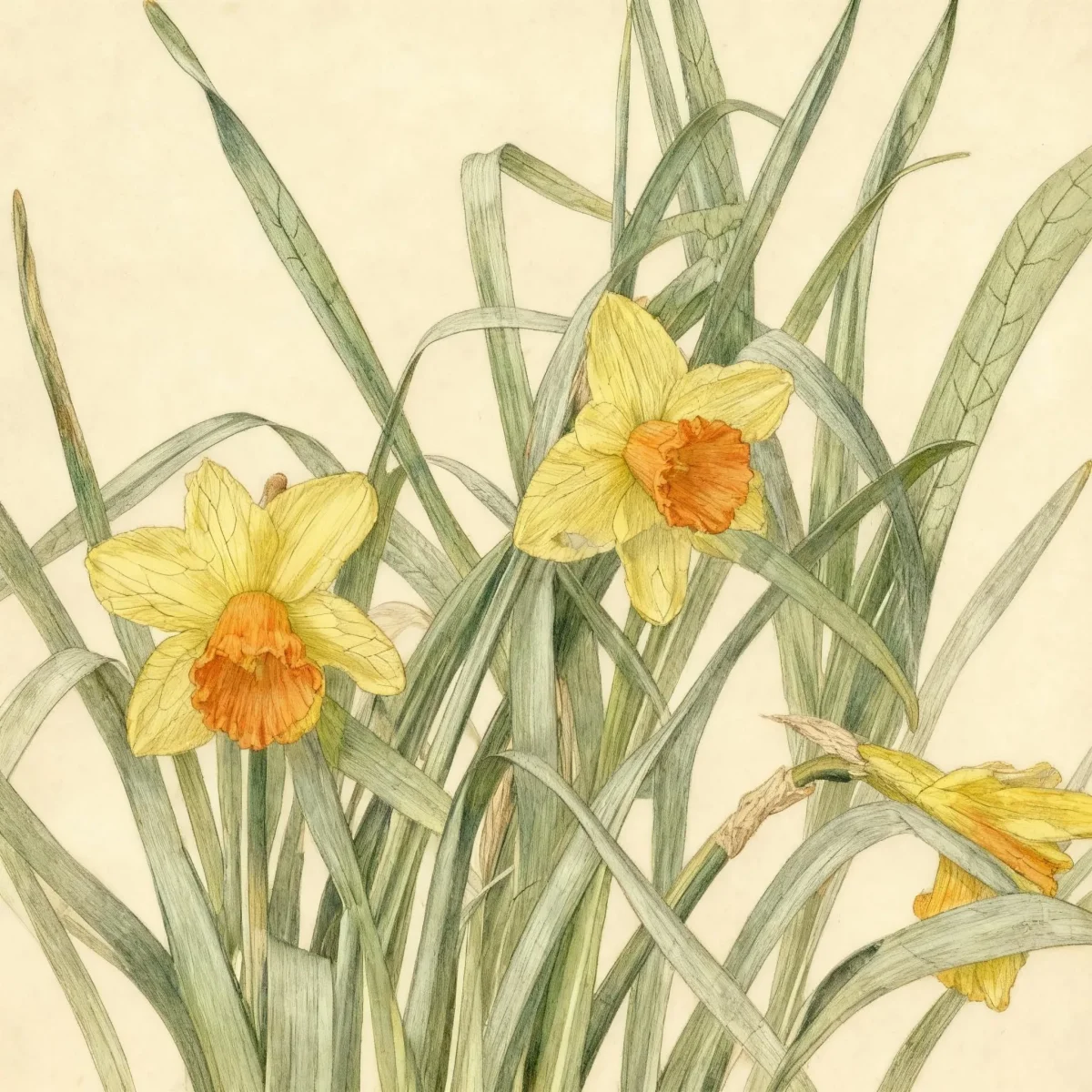
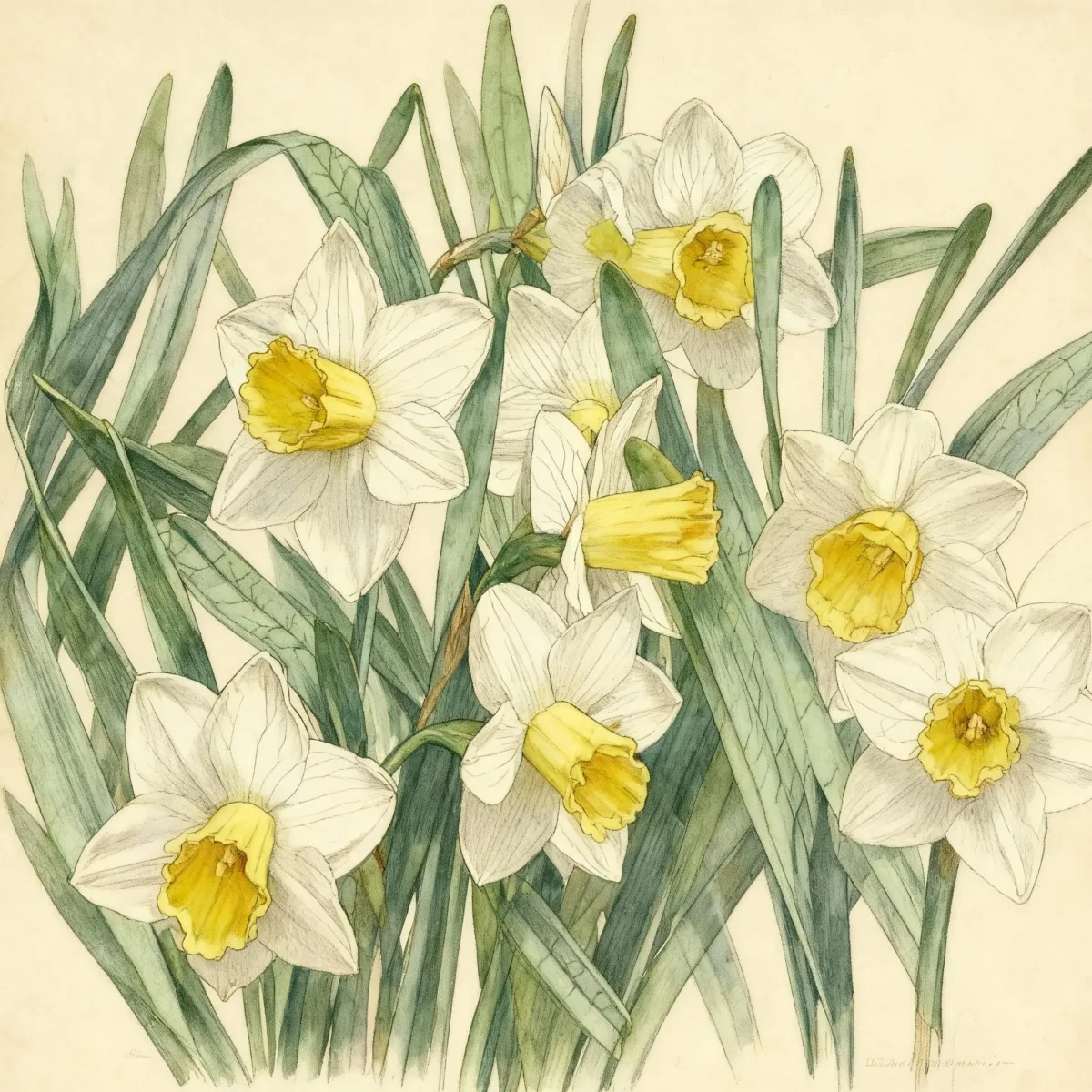
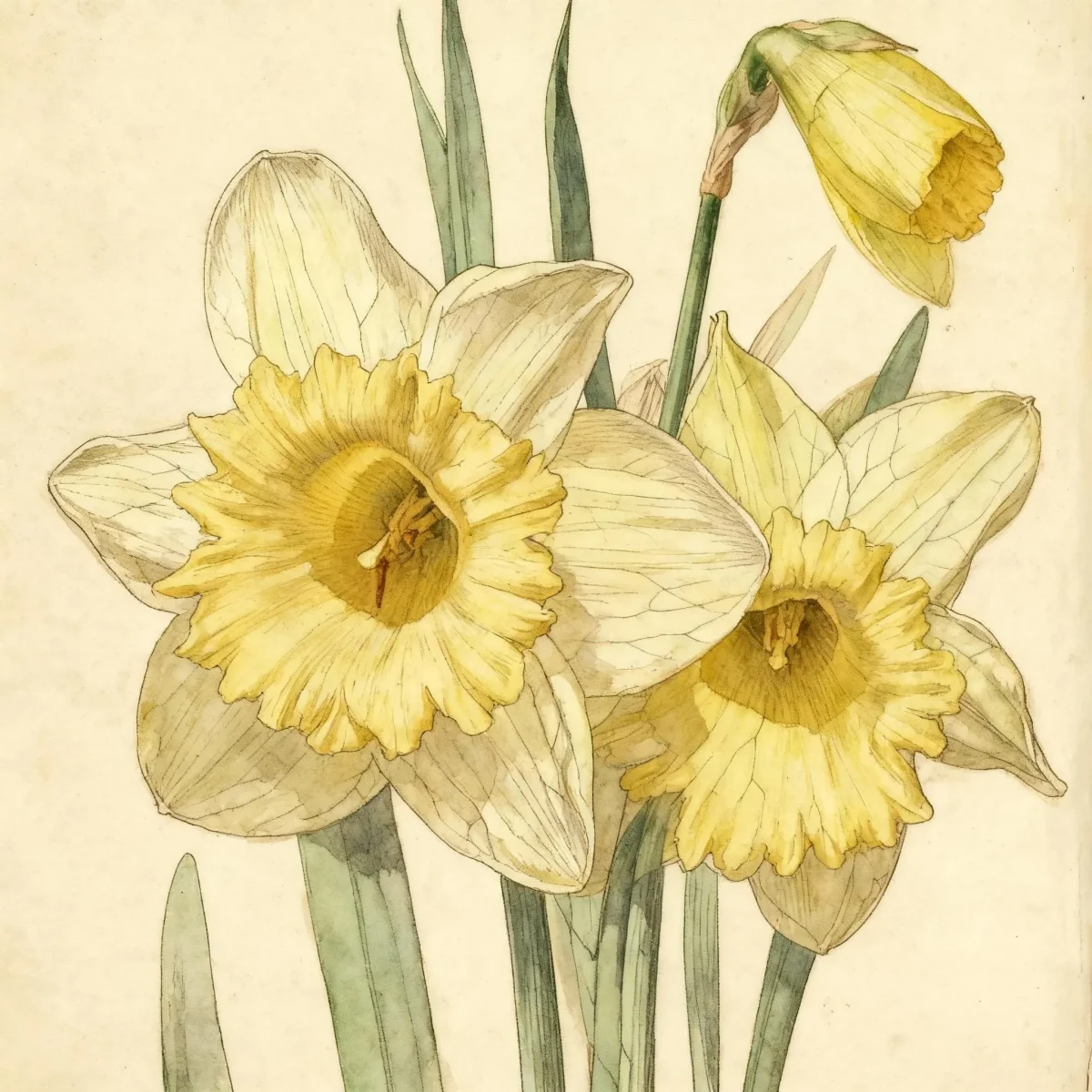
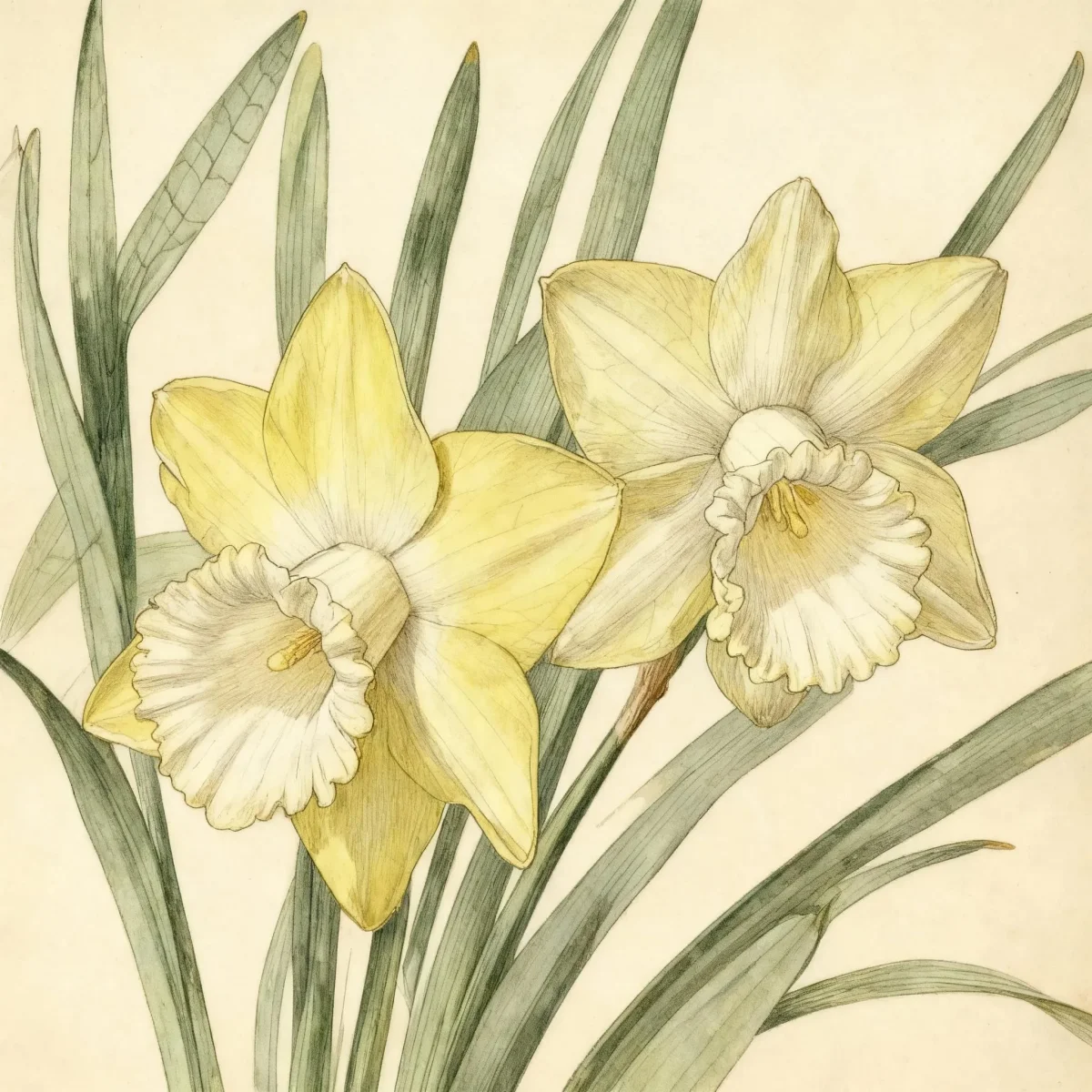
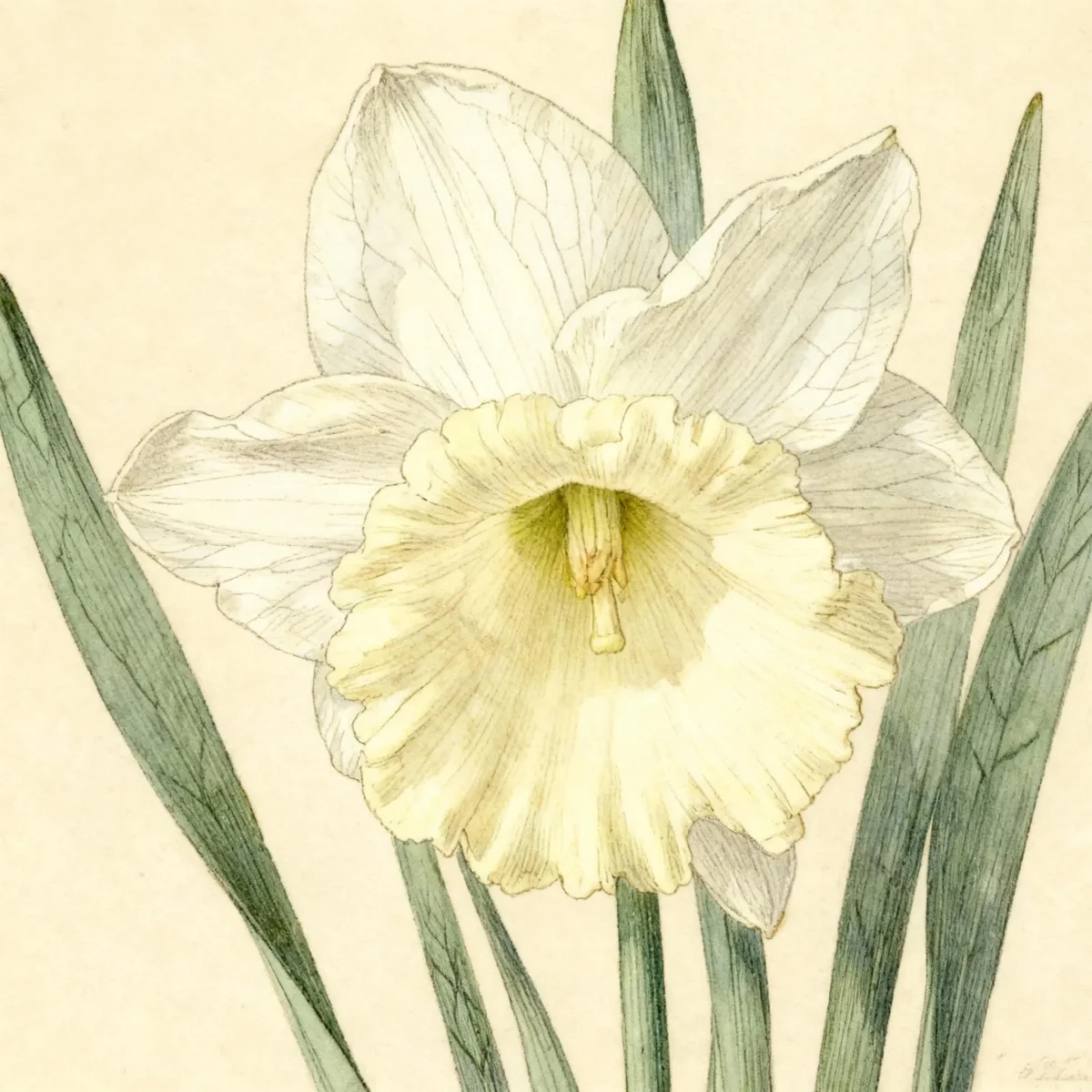
Trumpet daffodil (Narcissus 'Spellbinder')
Narcissus 'Spellbinder' is a desirable Trumpet daffodil, famed for its greenish-yellow petals and white trumpet blooming reliably in April.
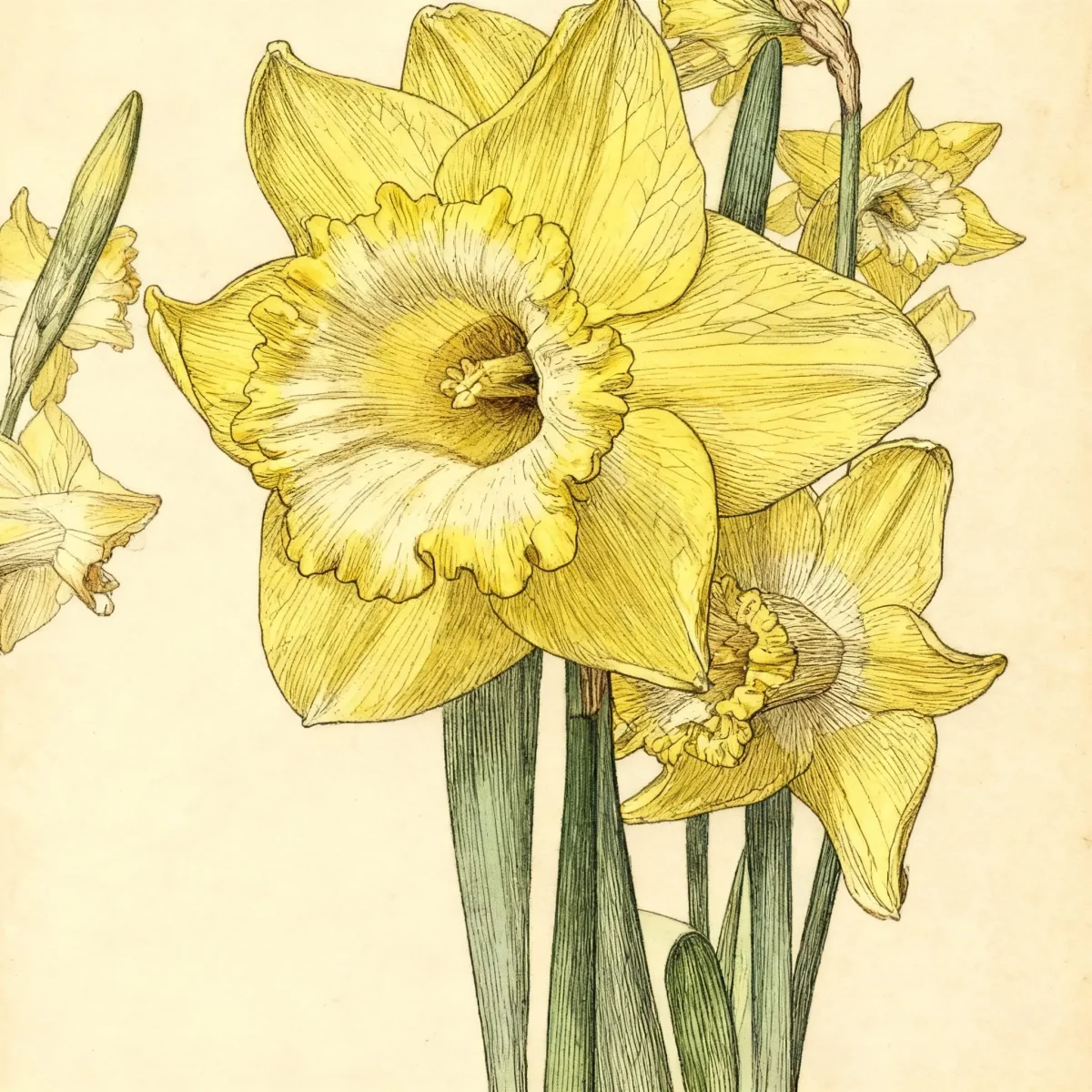

Bloom Boldly, No Matter the Season - Sweatshirt
Cozy organic cotton sweatshirt featuring our exclusive Purple Coneflower design. Perfect for gardeners who bloom year-round.
Inspired by the beautiful Trumpet daffodil
Limited first batch (50) — join the waitlist for early access
Waitlist closes Feb 15, 2026.
Complete Plant Information
Field Guide Continues
Ready for care notes, companion picks, and planting tips?
The map is just the start. The full guide below covers growth habits, seasonal performance, and landscape uses.
Overview
Narcissus ‘Spellbinder’ is a celebrated member of the Trumpet daffodil group, bringing classic spring structure and color to the garden. This cultivar is particularly valued for its distinctive bloom structure featuring broadly ovate, somewhat twisted, greenish-yellow petals surrounding a large, cylindrical, pale greenish-yellow trumpet that whitens as it matures. As a reliable bulb, the Trumpet daffodil offers low-maintenance beauty, returning dependably year after year to signal the arrival of spring.
This hardy perennial thrives in average, well-drained soils and performs best receiving full sun to partial afternoon shade. Narcissus ‘Spellbinder’ exhibits the robust nature characteristic of daffodils, resulting in pest-free performance when cultural needs are met. Its early to mid-spring display provides essential early season interest when few other flowers are available.
Planting Narcissus ‘Spellbinder’ in drifts or mass plantings showcases its elegance best, creating sweeping bands of light color across borders or beneath deciduous trees. Gardeners appreciate this cultivar not only for its aesthetic appeal but also for its perennial vigor and ability to naturalize successfully over time.
Fast Facts
- Plant Family: Amaryllidaceae
- Plant Type: Bulb
- Hardiness Zones: USDA Zones 3-8
- Size at Maturity:
- Height: 1-1.5 ft
- Spread: 0.5-1 ft
- Bloom Time: April
- Bloom Description: Greenish-yellow petals and white trumpet
- Sun Exposure: Full sun to part shade
- Water Needs: Medium
- Maintenance Level: Low
How to Grow
Plant your Narcissus ‘Spellbinder’ bulbs in early to mid-fall for best establishment before the ground freezes. Choose a location with full sun exposure or light afternoon shade, ensuring the soil is organically rich and possesses excellent drainage, as this is crucial for bulb health. Depth is key: plant each bulb 2 to 3 times as deep as the bulb is tall, aiming for at least 3 inches of soil above the top. Spacing generally ranges from 4 to 10 inches apart, though slightly wider spacing initially helps prevent overcrowding later.
During the active growing season, maintain medium moisture levels, keeping the soil uniformly moist, although the Trumpet daffodil tolerates drought once the foliage has died back following bloom. After flowering, deadhead the faded flower stems to prevent seed formation, but resist the urge to cut back the foliage. The leaves must be allowed to yellow and slowly die back naturally, as this process replenishes the energy stored in the bulb for next year’s display of Narcissus ‘Spellbinder’.
Daffodils like this cultivar can be left undisturbed for many years, naturalizing beautifully. If bloom quantity or quality diminishes significantly after several seasons, divide the clumps shortly after the foliage has completely yellowed. Ensure any shade elements are positioned behind the planting area, as Narcissus ‘Spellbinder’ flowers tend to orient themselves toward the brightest light source.
Landscape Uses
Daffodils, including the exceptional Narcissus ‘Spellbinder’, are unsurpassed for creating reliable, reappearing early spring color, unlike many annuals or short-lived perennials. They are ideally suited for massing in large drifts, which maximizes their visual impact as the melt begins. Consider planting them along woodland edges, in front of evergreen shrubs, or within open woodland areas where they receive full sun while leafless, but welcome dappled shade later in the season.
Because they naturalize readily, plan plantings in quantities of at least six bulbs or more for a substantial effect, mixing them liberally with other spring bloomers like early tulips or grape hyacinths. The structure of the Trumpet daffodil works well in structured beds and borders, providing vertical accent points. Allow the yellow and white hues of Narcissus ‘Spellbinder’ to provide contrast against emerging blue or purple spring ephemerals planted nearby.
Standout Features
Flower Qualities
- Showy
Noteworthy Characteristics
Narcissus is a genus of about 50 species of bulbous perennials from Europe and North Africa. They are a mainstay of the spring garden. Depending upon species or hybrid type, flowers appear singly or in clusters atop stems rising from 6-30” tall. Flowers generally feature a trumpet or cup (the corona) surrounded by six petals (perianth segments), in colors ranging from white to yellow to orange to pink to bicolors. ‘Spellbinder’ is a trumpet daffodil (Division I), meaning its corona is equal to or greater than the length of the petals. This specific Trumpet daffodil rises 16-18” tall in spring, showing brilliant greenish yellow petals and a pale greenish yellow trumpet that fades to white towards the rim.
Tolerances
- Rabbit
- Deer
- Drought
Potential Problems
Daffodils are generally noted for being pest-free if cultural requirements, particularly drainage, are respected. Bulb rot is the primary concern, typically resulting from poorly-drained, waterlogged soils where the Narcissus ‘Spellbinder’ bulbs sit too wet. To prevent this, amend heavy soils with organic matter before planting. Infrequent insect pests might include slugs and snails, which can damage emerging foliage, so monitor young shoots. Occasionally, Narcissus yellow stripe virus can cause distortion, but generally, if bulbs are healthy and environmental conditions are correct, these perennials reward the gardener with very little input.
Frequently Asked Questions
What hardiness zones is Trumpet daffodil suitable for?
Narcissus ‘Spellbinder’ is reliably cold-hardy, thriving in USDA Zones 3 through 8.
How large does Trumpet daffodil grow?
This Trumpet daffodil typically reaches a height between 1 and 1.5 feet, with a modest spread of 0.5 to 1 foot.
What sun exposure does Narcissus ‘Spellbinder’ need?
Narcissus ‘Spellbinder’ performs best when established in locations receiving full sun to part shade.
When does Narcissus ‘Spellbinder’ bloom?
This variety blooms reliably during April, presenting its characteristic greenish-yellow petals and white trumpet.
Conclusion
Narcissus ‘Spellbinder’ offers gardeners a timeless, low-effort investment in early spring color, boasting robust resistance to common garden pests. As a classic Trumpet daffodil, its unique pale blooms provide essential contrast against the emerging green landscape. Ensure excellent soil drainage before planting this bulb in the fall to guarantee years of effortless beauty from your Trumpet daffodil display.
Companion Planting
When planning your spring bulb tapestry, consider companions that share cultural needs with Narcissus ‘Spellbinder’, mainly well-drained soil and sun to part-shade exposure. Early blooming tulips are excellent partners, as their later flowering window extends the season while their structural leaves overlap nicely with the daffodils. Low-growing Scilla (Squill) or Chionodoxa (Glory-of-the-Snow) bloom slightly earlier, providing a delightful carpet of blue beneath the taller stems of the Trumpet daffodil.
For summer interest after the foliage of Narcissus ‘Spellbinder’ has completely faded, utilize perennials that thrive in similar light conditions. Hostas, although slow to emerge, will perfectly occupy the space later in the year, benefiting from the shade cast by taller deciduous trees overhead once summer heat arrives. Ensure any companions planted closely do not require excessive moisture, respecting the drought tolerance demonstrated by this daffodil.
Seasonal Care Calendar
Spring is primarily about observation; deadhead faded flowers on the Narcissus ‘Spellbinder’ as needed to prevent seed set, but never touch the foliage until it completely yellows. Summer is the dormant period; resist the urge to water constantly or disturb the bulbs, allowing the foliage to dry out completely, which is vital for bulb replenishment. Fall is the main planting time; if adding new bulbs to the garden, ensure they are set at the proper depth—three times the bulb height deep—in amended, well-draining soil. Winter care is purely hands-off; the bulbs are hardy down to Zone 3 and require no special protection once established.