

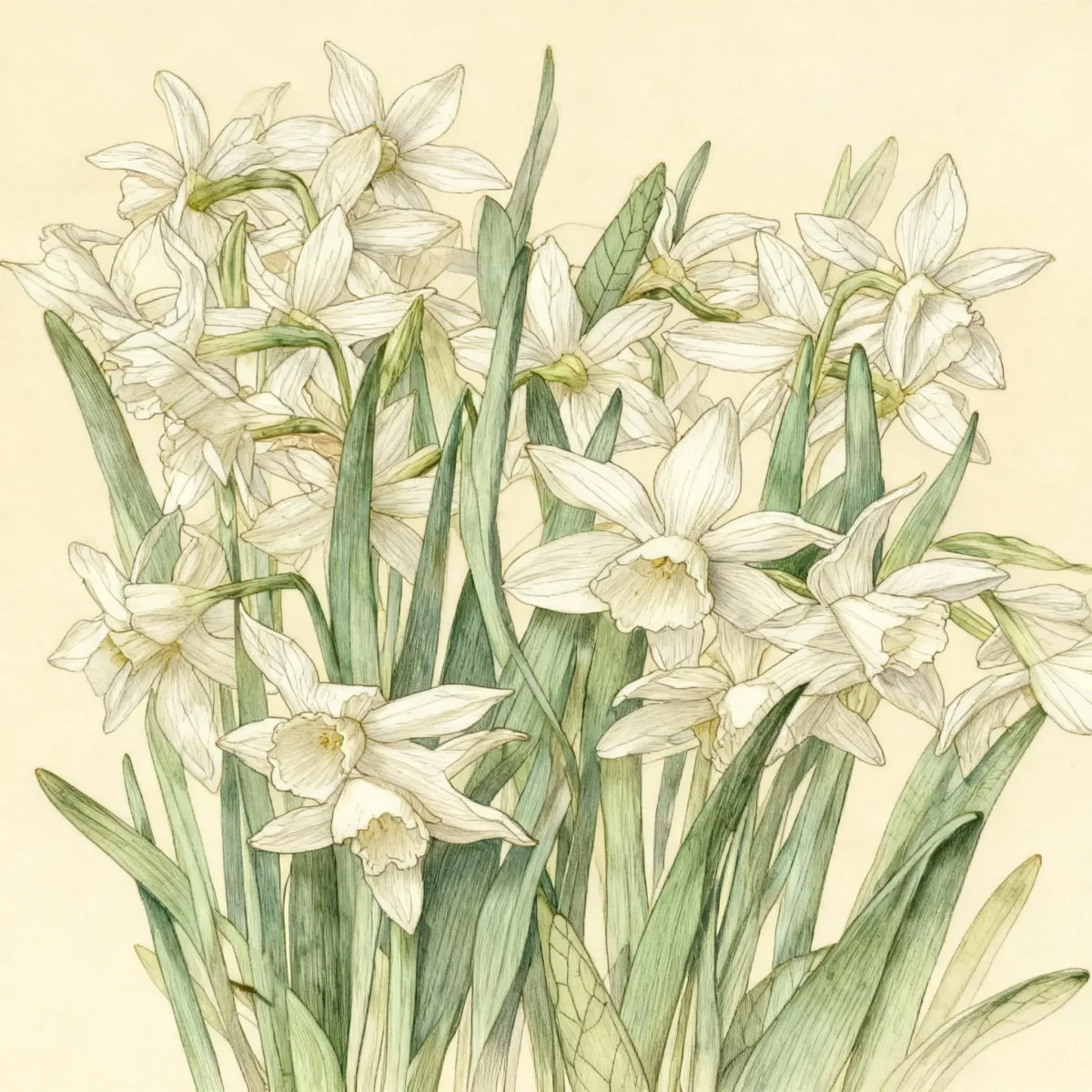
Triandrus daffodil (Narcissus 'Thalia')
Narcissus 'Thalia' is a fragrant Triandrus daffodil, a low-maintenance bulb featuring showy white flowers from March to April.

Bloom Boldly, No Matter the Season - Sweatshirt
Cozy organic cotton sweatshirt featuring our exclusive Purple Coneflower design. Perfect for gardeners who bloom year-round.
Inspired by the beautiful Triandrus daffodil
Limited first batch (50) — join the waitlist for early access
Waitlist closes Feb 15, 2026.
Complete Plant Information
Field Guide Continues
Ready for care notes, companion picks, and planting tips?
The map is just the start. The full guide below covers growth habits, seasonal performance, and landscape uses.
Overview
Narcissus ‘Thalia’, a prized member of the Triandrus daffodil group, brings elegance and enchanting fragrance to the early spring garden. This cultivar is highly valued for its pure white blooms that stand gracefully atop slender stems, providing a sophisticated color accent before many other perennials wake up. Gardeners appreciate this bulb for its reliable performance and attractive flower structure.
As a Division V daffodil, the Triandrus daffodil exhibits slightly reflexed petals surrounding a delicate cup. Narcissus ‘Thalia’ typically reaches heights around 1 to 1.5 feet, making it perfectly sized for borders or woodland plantings where its subtle beauty can be appreciated up close. It is an excellent choice for naturalizing, creating long-lasting sweeps of color with minimal seasonal care.
The fragrance and visual appeal of Narcissus ‘Thalia’ make it a versatile addition to any landscape plan. It thrives when planted in thoughtful drifts and offers excellent longevity, reliably returning year after year to signal the arrival of spring, often being left undisturbed for many seasons.
Fast Facts
- Plant Family: Amaryllidaceae
- Plant Type: Bulb
- Hardiness Zones: USDA Zones 3-8
- Size at Maturity:
- Height: 1-1.5 ft
- Spread: 0.5-0.75 ft
- Bloom Time: March to April
- Bloom Description: White
- Sun Exposure: Full sun to part shade
- Water Needs: Medium
- Maintenance Level: Low
How to Grow
Planting Narcissus ‘Thalia’ bulbs should occur in the early to mid-fall, allowing sufficient time for root establishment before the ground freezes. These bulbs flourish in average, medium-moisture, well-drained soils. Good drainage is absolutely essential to prevent bulb rot, so amend heavy soils generously. An organically rich loam provides the best environment for vigorous perennial blooms.
For successful establishment, plant each bulb two to three times as deep as the bulb is tall, ensuring at least 3 inches of soil covers the top. Spacing should range between 4 to 10 inches apart; closer spacing results in a more immediate visual impact but may require less frequent division later. Keep the soil uniformly moist throughout the active growing season, though the bulbs tolerate drought once they enter dormancy.
After the pure white flowers of the Triandrus daffodil have faded in spring, resist the urge to cut back the foliage. The leaves must remain intact until they naturally yellow, usually several weeks later, as this process recharges the bulb for next year’s display. Stems can be deadheaded just above the foliage to prevent unwanted seeding. If bloom quantity declines after several years, divide the clumps immediately after the foliage dies back completely.
Landscape Uses
Daffodils, including enduring varieties like Narcissus ‘Thalia’, are far superior to annuals because they reliably bloom year after year, making them central to the spring perennial border. For the best effect, plant these bulbs in generous quantities—think groupings of six or more, extending into large, spreading drifts. They work wonderfully mixed with other early bloomers like species tulips or hardy scilla.
Consider massing the Narcissus ‘Thalia’ beneath deciduous shrubs or trees where they will receive ample spring sunlight before the canopy fills in. Their graceful height (1 to 1.5 feet) makes them ideal for the middle or front of perennial borders, providing a bright contrast to emerging foliage from later-season perennials. Because Deer and rabbits tend to ignore them, these bulbs are a reliable choice for naturalizing in open woodland settings or along paths.
The classic white flowers of this Triandrus daffodil lend themselves well to formal bedding schemes or more relaxed, cottage-style gardens. Allow them to naturalize freely in lawns for a cheerful early spring effect, remembering to delay mowing until the foliage has fully matured.
Standout Features
Flower Qualities
- Showy
- Fragrant
- Good Cut
Noteworthy Characteristics
Narcissus is a genus of about 50 species of bulbous perennials originating from Europe and North Africa, serving as fixtures in the spring garden. Flowers display a central cup (corona) surrounded by six petals (perianth segments) in various colors. Narcissus ‘Thalia’ is specifically known as a triandrus daffodil (Division V), characterized by petite, outward-facing, bell-like, pure white flowers that are often very fragrant. Typically, two to three flowers appear per stem, rising to about 12–14 inches tall.
Tolerances
- Rabbit
- Deer
- Drought
Potential Problems
Narcissus ‘Thalia’ is generally noted for being nearly pest-free when planted in appropriate conditions, showing resistance to serious insect or disease threats when cultural needs are met. The primary concern revolves around soil—bulb rot is a major risk if the planting location suffers from poor drainage and becomes waterlogged. Control this by ensuring high soil permeability. Infrequent pests like slugs and snails can occasionally trouble developing foliage, and the narcissus bulb fly may affect bulbs if vigilance is low. Be aware of Narcissus yellow stripe virus, although it is not a common issue.
Frequently Asked Questions
What hardiness zones is Triandrus daffodil suitable for?
Narcissus ‘Thalia’ is hardy and reliable across a wide range, suitable for USDA Zones 3 through 8.
How large does Narcissus ‘Thalia’ grow?
This Triandrus daffodil generally reaches a mature height between 1 and 1.5 feet, with a spread of about 0.5 to 0.75 feet.
When does Narcissus ‘Thalia’ bloom?
This beautiful daffodil typically bursts into bloom from March to April, displaying its pure white, noticeable flowers.
What sun exposure does Triandrus daffodil need?
For optimal flowering, Narcissus ‘Thalia’ performs best when sited in locations receiving full sun to light part shade.
Conclusion
The Narcissus ‘Thalia’ offers incomparable value as a low-maintenance, highly fragrant, and reliably perennial spring component. This delightful Triandrus daffodil provides elegant white blooms and naturalizes beautifully when planted en masse in well-drained soil. Before winter sets in, ensure you have acquired your bulbs and planned their fall planting locations to secure a stunning display next spring.
Companion Planting
For continuous springtime interest alongside Narcissus ‘Thalia’, consider pairing it with bulbs that bloom slightly earlier or later, such as Muscari (grape hyacinth) or early Fritillaria varieties. Because this Triandrus daffodil requires moisture during its early growth phase but dislikes wet dormancy, companion plants whose foliage dies back early help maintain necessary soil conditions during the growing season. Planting it forward of shrubs ensures that the leaves have adequate sunlight exposure before the tree canopy leafs out, making foundation plantings ideal partners.
Design Ideas
Utilizing Narcissus ‘Thalia’ in monochromatic mass plantings emphasizes its pure white color and classic form. For cooler color schemes, blend these daffodils with blue-flowering bulbs like Siberian Squill or Chionodoxa. Alternatively, plant them loosely beneath spring-blooming deciduous azaleas; the azaleas’ developing color and structure create a beautiful backdrop for the nodding white Triandrus daffodil flowers.


