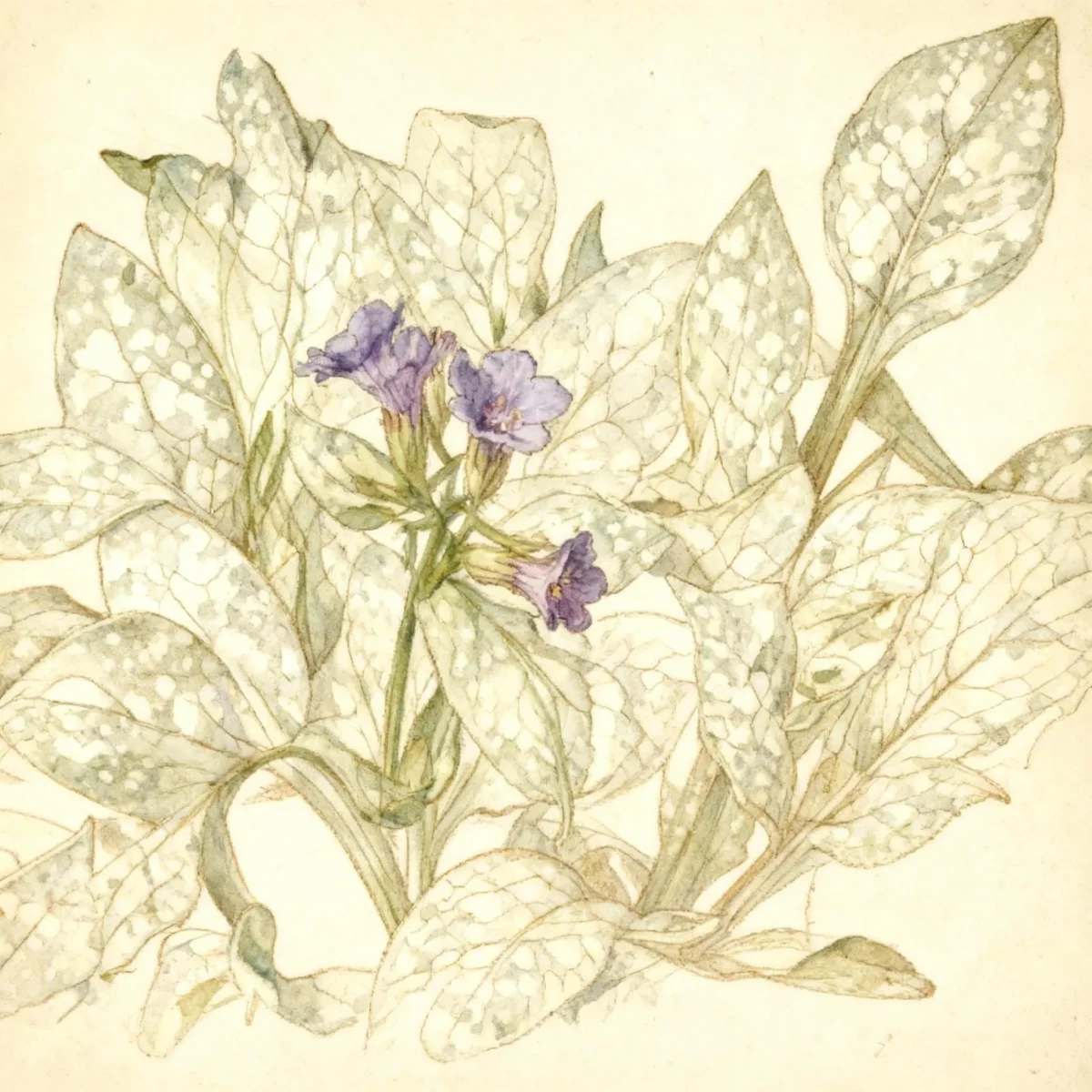
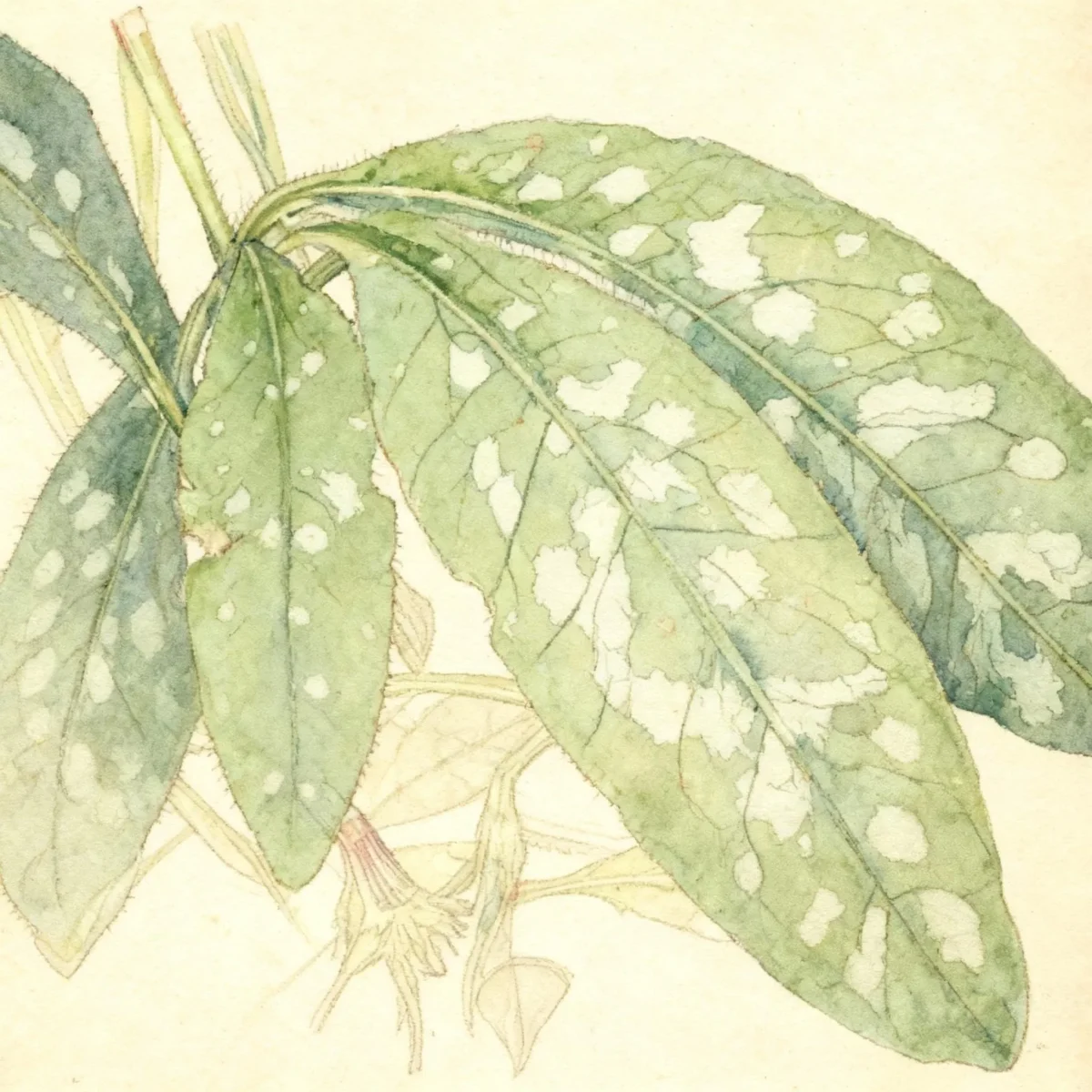
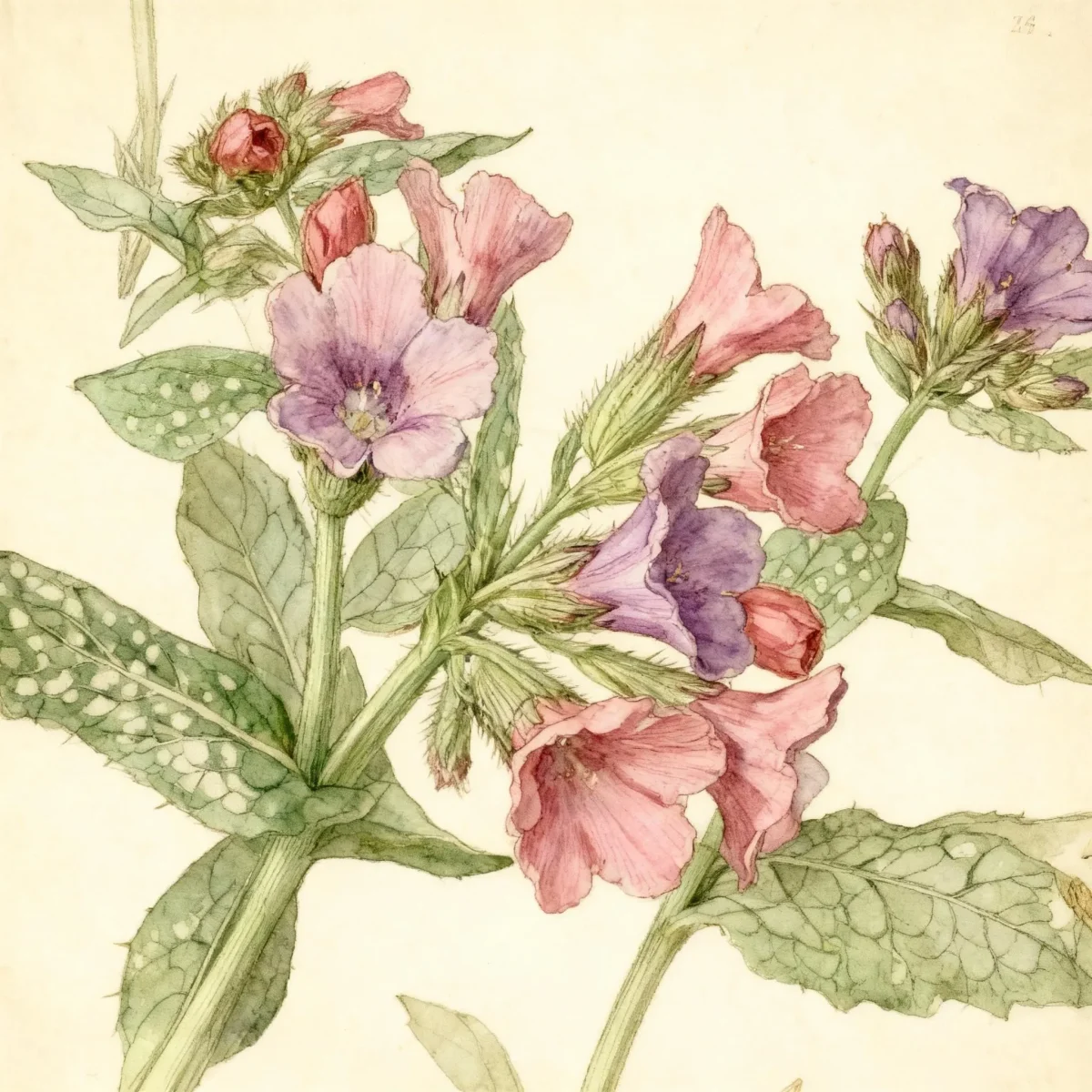
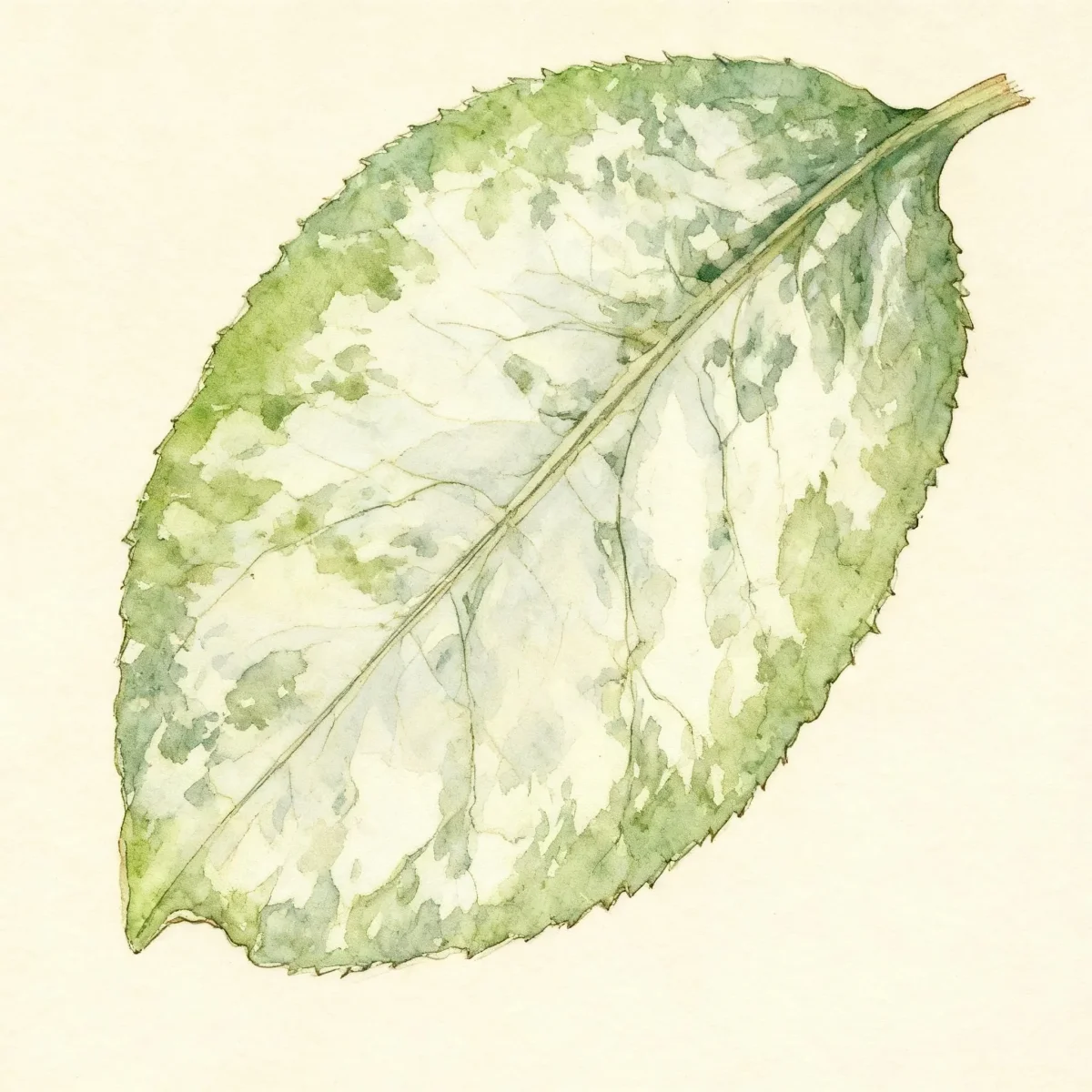
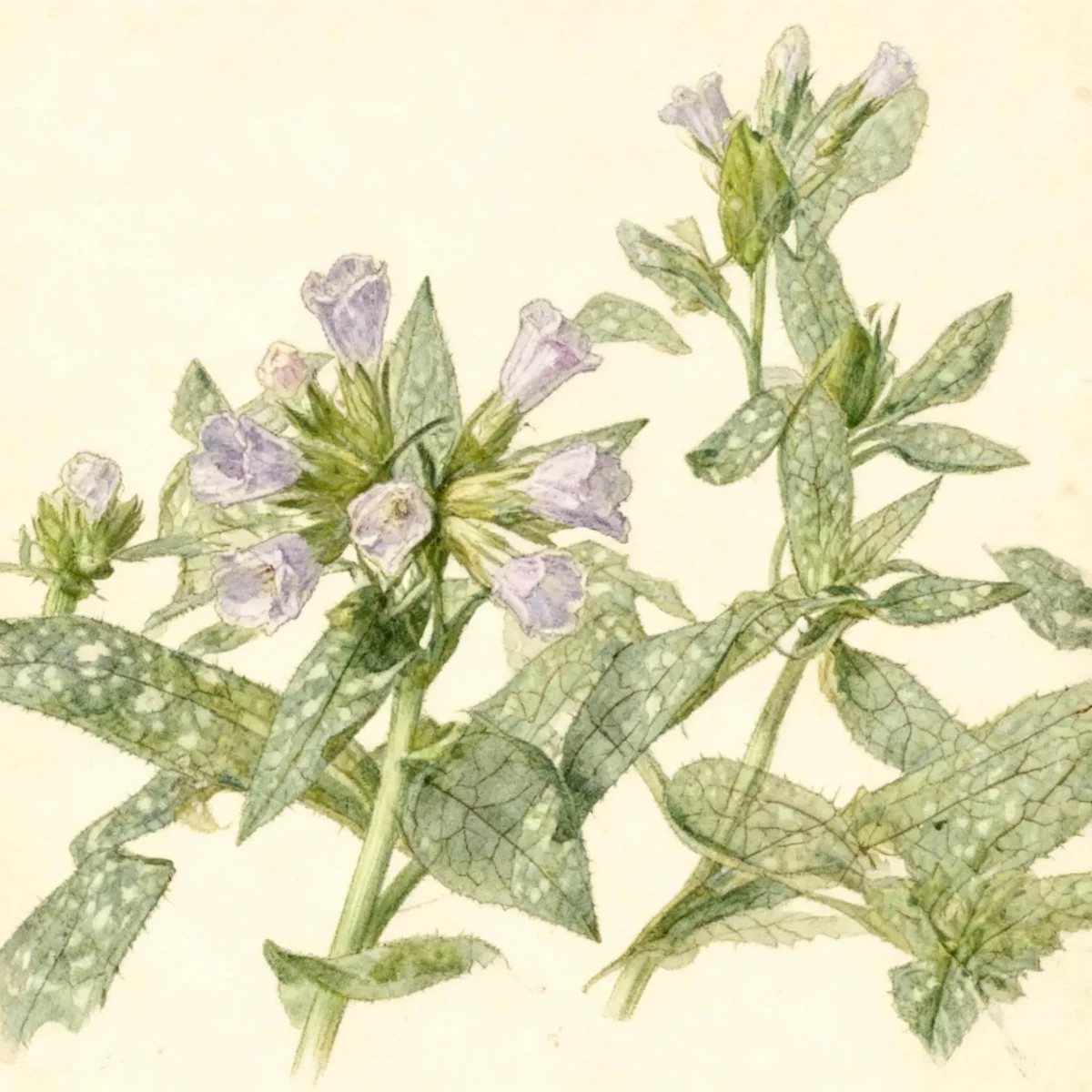
Bethlehem sage (Pulmonaria saccharata 'Janet Fisk')
Bethlehem sage, Pulmonaria saccharata 'Janet Fisk', offers stunning heavily mottled foliage brightness for deep shade areas. Low maintenance perennial.
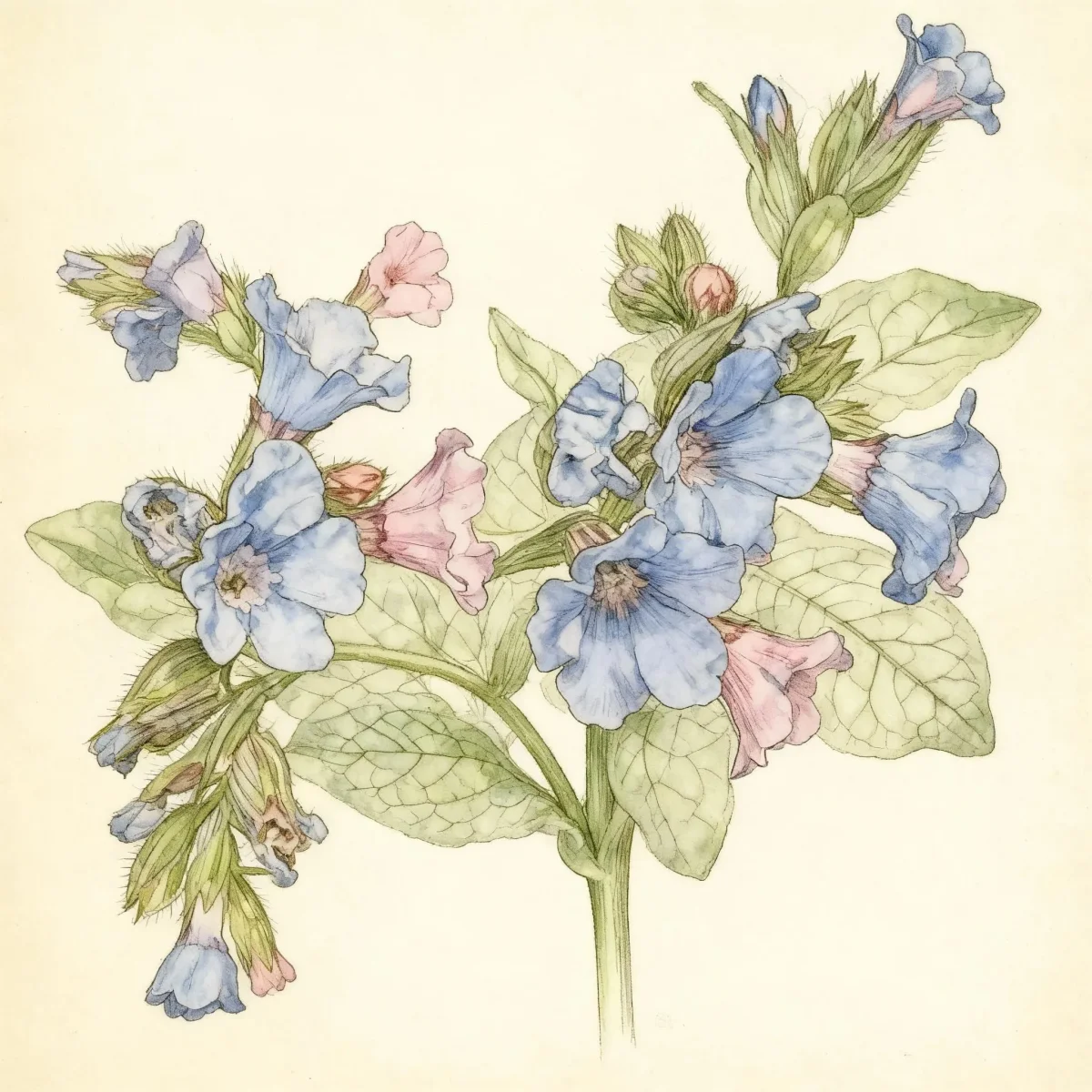

Bloom Boldly, No Matter the Season - Sweatshirt
Cozy organic cotton sweatshirt featuring our exclusive Purple Coneflower design. Perfect for gardeners who bloom year-round.
Inspired by the beautiful Bethlehem sage
Limited first batch (50) — join the waitlist for early access
Waitlist closes Feb 15, 2026.
Complete Plant Information
Field Guide Continues
Ready for care notes, companion picks, and planting tips?
The map is just the start. The full guide below covers growth habits, seasonal performance, and landscape uses.
Overview
Pulmonaria saccharata ‘Janet Fisk’, commonly known as Bethlehem sage, is prized far more for its exceptional foliage than for its delicate blooms. This herbaceous perennial transforms deeply shaded garden spots with basal clumps of bristly leaves heavily marbled, almost entirely covered, in striking white. The cultivar ‘Janet Fisk’ is especially noted for this intense variegation, lending brightness to areas where few other plants thrive.
As a rhizomatous perennial, Bethlehem sage spreads slowly, providing excellent ground cover without becoming invasive. It produces funnel-shaped blue flowers in spring, which often start pink before maturing, offering visual interest throughout a long season. Plant Pulmonaria saccharata ‘Janet Fisk’ where you need reliable, low-maintenance texture and light reflection in dark corners of the landscape.
Fast Facts
- Plant Family: Boraginaceae
- Plant Type: Herbaceous perennial
- Hardiness Zones: USDA Zones 3-8
- Size at Maturity:
- Height: 1-1.5 ft
- Spread: 1.5-2 ft
- Bloom Time: April to May
- Bloom Description: Blue
- Sun Exposure: Part shade to full shade
- Water Needs: Medium
- Maintenance Level: Low
How to Grow
For optimal performance, establish Bethlehem sage—specifically the robust Pulmonaria saccharata ‘Janet Fisk’—in cool, humusy, organically rich soils. These plants require consistent moisture; the soil must be evenly moist but well-drained. Avoid wet, poorly-drained conditions which can lead to root rot, and strictly avoid full sun locations, as this exposure will quickly scorch the attractive leaves.
Watering is crucial during dry spells, as soils must not be allowed to completely dry out, especially when the plant is establishing or during hot summer weather. Fertilization is rarely necessary if the soil structure is organically rich. Maintenance is low; divide plants in the fall only if they become overcrowded and start competing too heavily for space.
In warmer winter climates, the basal foliage of Pulmonaria saccharata ‘Janet Fisk’ largely persists, offering semi-evergreen cover. Manage leaf appearance by cleaning up old foliage in very early spring before new growth emerges, though older leaves can sometimes look diminished by intense heat or sun stress late in the season.
Landscape Uses
The heavy white marbling on the foliage of Pulmonaria saccharata ‘Janet Fisk’ makes it an ideal choice for mass planting, functioning beautifully as a ground cover in dense shade. Due to its requirement for consistent moisture and preference for low light, it excels in woodland gardens, under mature deciduous trees, or along shaded borders where dappled light penetrates.
Consider using Bethlehem sage to brighten dark pathways or as an edging plant along shaded terraces. It pairs well with other shade-loving bloomers like Hellebores (Lenten Rose) or spring ephemerals, providing contrast with its bold, spotted texture once the bulbs have faded. Its slow creep allows it to naturally fill in spaces over several seasons.
Standout Features
Flower Qualities
- Showy
Noteworthy Characteristics
Pulmonaria saccharata, commonly known as Bethlehem sage or lungwort, is more valued for its attractive foliage than for its flowers. It is a setose-hairy, rhizomatous, herbaceous perennial of the borage family that features basal clumps to 8-12” tall of slightly-winged, long-stalked, acuminate, elliptic, bristly-pubescent, deep green leaves (4-12” long) which are heavily mottled with striking white spots or blotches. ‘Janet Fisk’ features much heavier white marbling on plant leaves to the point where the blotches run together creating an almost white leaf, making the foliage particularly effective in bringing brightness to shady areas.
Tolerances
- Deer
- Heavy Shade
- Clay Soil
- Black Walnut
Potential Problems
This plant is generally regarded as highly resilient, facing no serious recurring insect or disease concerns. The primary issues garden managers face relate to environmental stress rather than pests. Slugs and occasionally powdery mildew can appear, especially if air circulation is poor or humidity is consistently high.
The greatest risk to Pulmonaria saccharata ‘Janet Fisk’ involves leaf health. Leaves will rapidly depreciate, scorch, or wilt if exposed to intense, unrelenting summer sun or if the soil is allowed to dry out completely for extended periods. Conversely, where drainage is poor and soil stays perpetually waterlogged, root rot can quickly destroy the clump. Ensure planting locations meet the medium water needs while maintaining excellent soil porosity.
Frequently Asked Questions
What hardiness zones is Bethlehem sage suitable for?
Pulmonaria saccharata ‘Janet Fisk’ is suitable for USDA Zones 3 through 8, making it a reliable perennial across much of the temperate garden landscape.
How large does Pulmonaria saccharata ‘Janet Fisk’ grow?
This perennial typically reaches a mature height between 1 to 1.5 feet and spreads to a width of 1.5 to 2 feet via slow creeping roots.
When does Bethlehem sage bloom?
Bethlehem sage blooms reliably in the spring, generally from April to May, producing distinctive blue, bell-shaped flowers.
What sun exposure does Pulmonaria saccharata ‘Janet Fisk’ need?
It thrives best in part shade to full shade environments, requiring protection from harsh afternoon sun to prevent leaf scorch.
Conclusion
The spectacular, near-white marbling of the foliage ensures that Pulmonaria saccharata ‘Janet Fisk’ stands out as a champion shade performer. This low-maintenance Bethlehem sage offers consistent visual interest throughout the growing season with minimal effort required from the gardener. Before planting, confirm your site offers adequate moisture and deep shade to enjoy years of bright coverage from this exceptional perennial.
Companion Planting
When designing a deeply shaded border, consider pairing Bethlehem sage with other structure-providing shade lovers that share similar moisture needs. Hostas with dark green or deep blue foliage offer a wonderful textural counterpoint to the white-mottled leaves of Pulmonaria saccharata ‘Janet Fisk’. Similarly, ferns that prefer moist soil, such as the Japanese Painted Fern or Autumn Fern, complement the woodland feel this plant helps create.
Allow drifts of spring ephemeral bulbs like Snowdrops or Scilla to pop up through the slow-spreading clumps of foliage. Since the lungwort foliage matures and fills in as the bulbs go dormant, this technique maximizes seasonal interest in the same footprint, ensuring the ground cover remains effective all season.
Seasonal Care Calendar
Early Spring (Pre-Emergence): Gently remove any remaining tattered foliage from the previous year to tidy the bed, but only once new leaf growth is actively emerging. Late Spring/Early Summer (Bloom & Heat Transition): Monitor soil moisture closely as the weather warms. This is the critical period to ensure medium water needs are met to prevent leaf burn as temperatures rise after flowering concludes. Fall (Division & Cleanup): If clumps of Pulmonaria saccharata ‘Janet Fisk’ appear too congested, fall is the best time to divide them and spread the cheerful foliage to new, dark corners of the garden. Winter: Foliage may remain partially present (semi-evergreen) in milder zones, offering some winter structure. In colder areas, protect crowns lightly if the ground is subject to harsh freeze-thaw cycling.