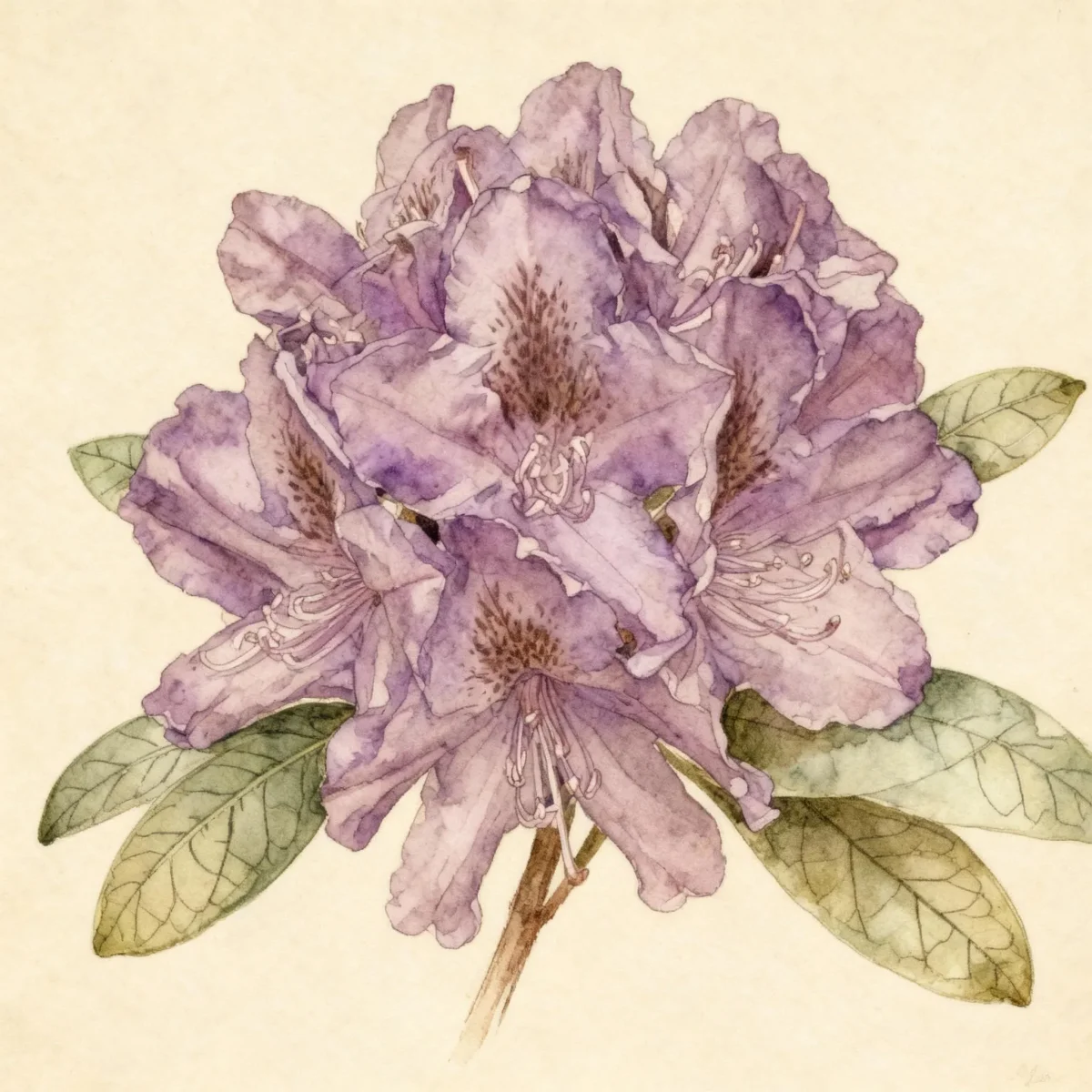
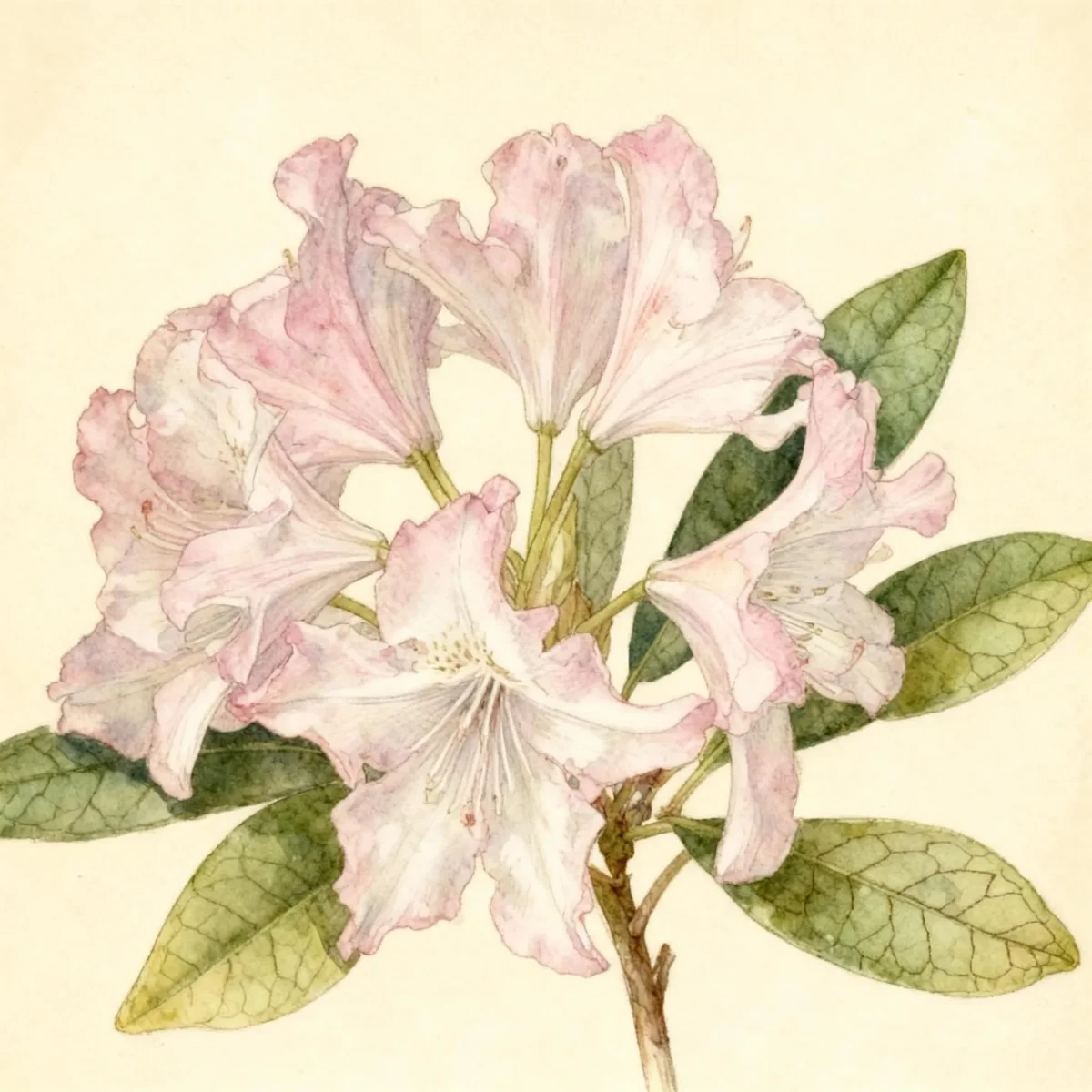
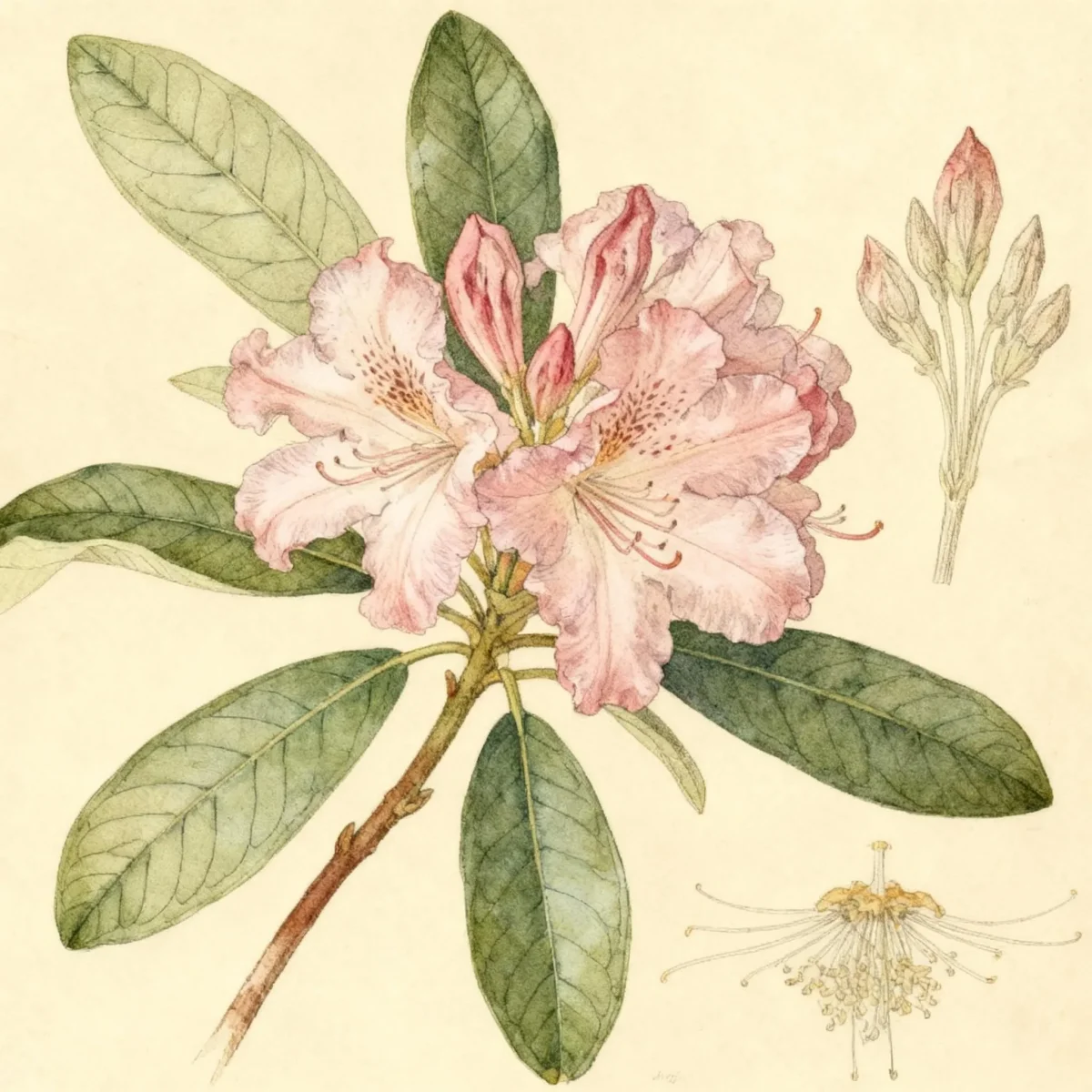
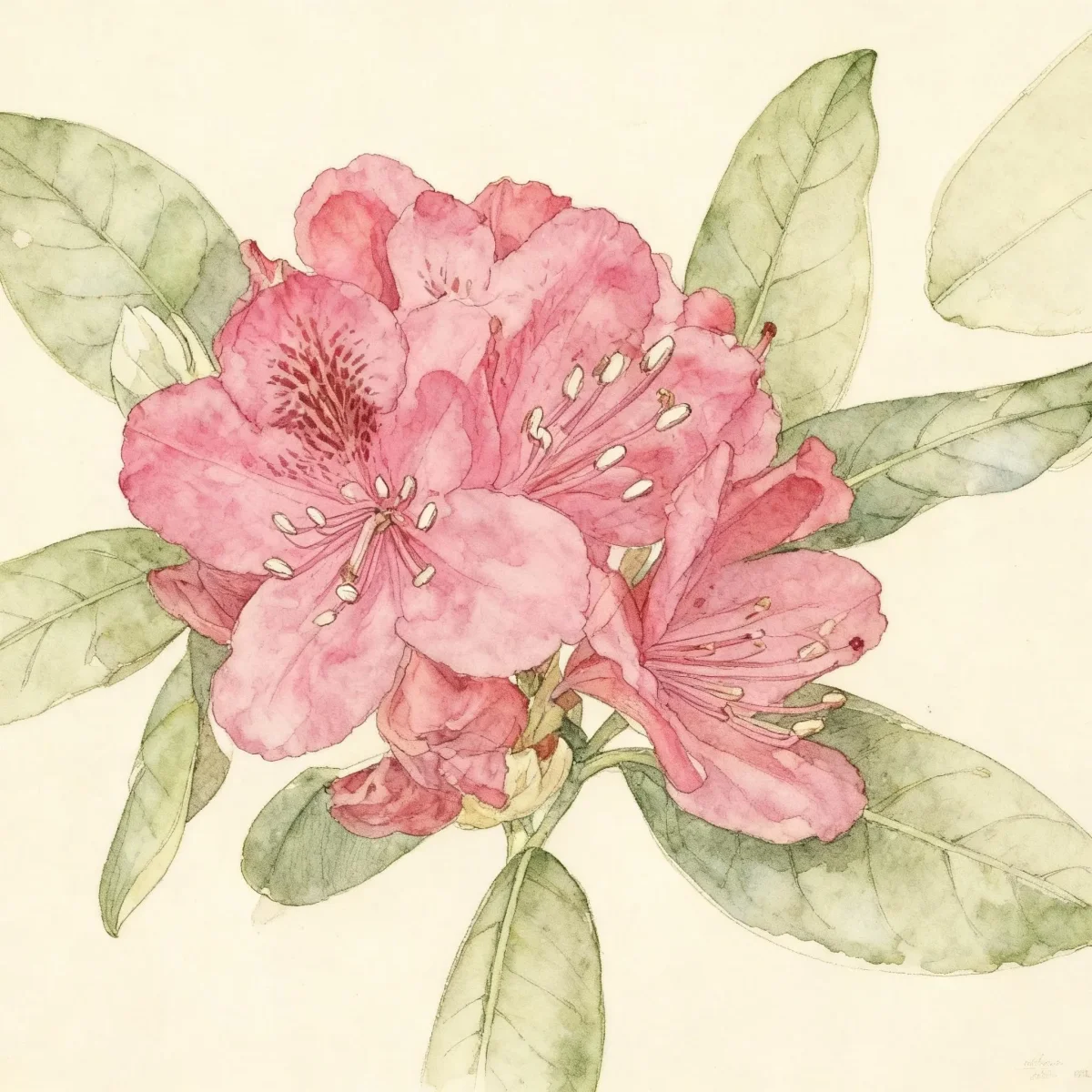
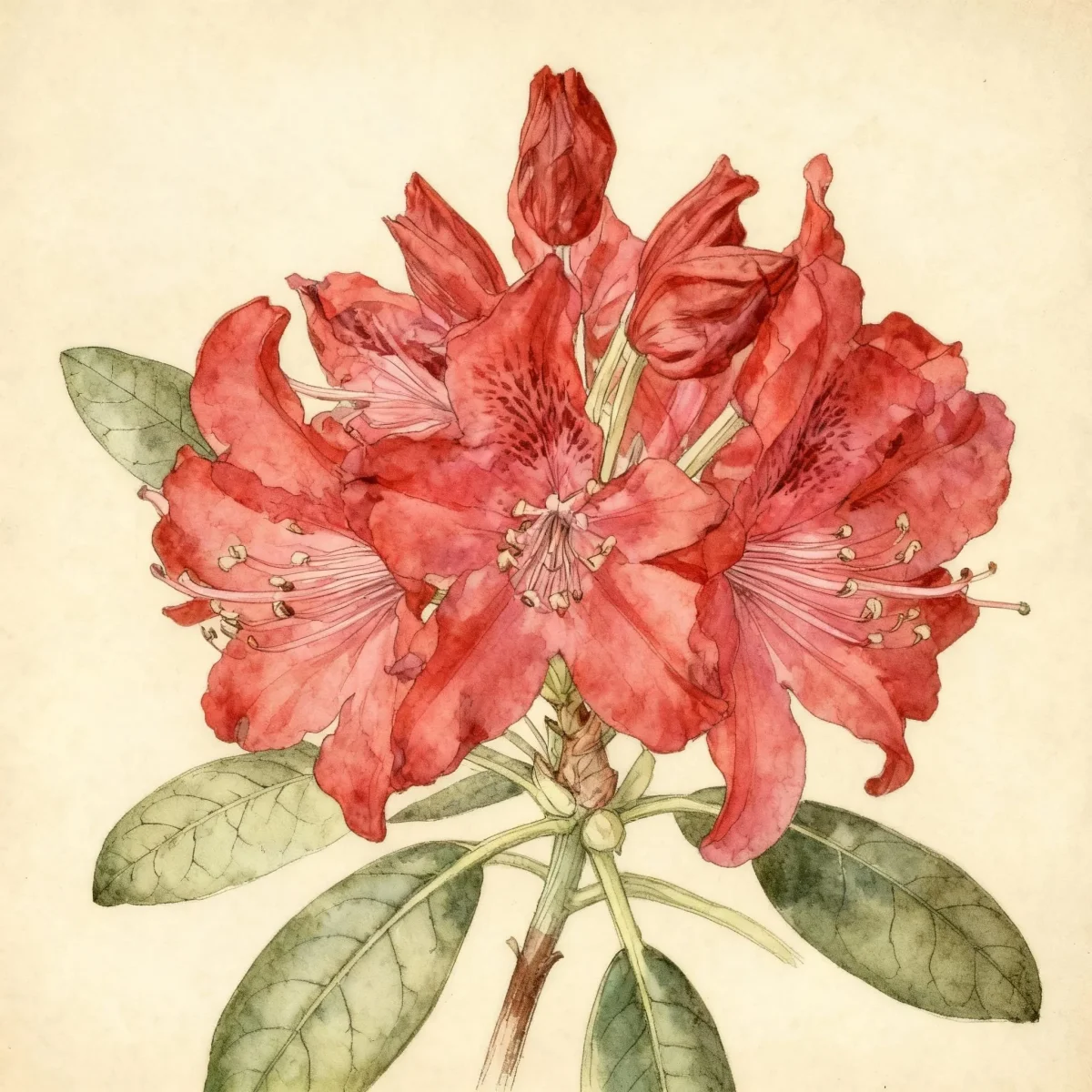
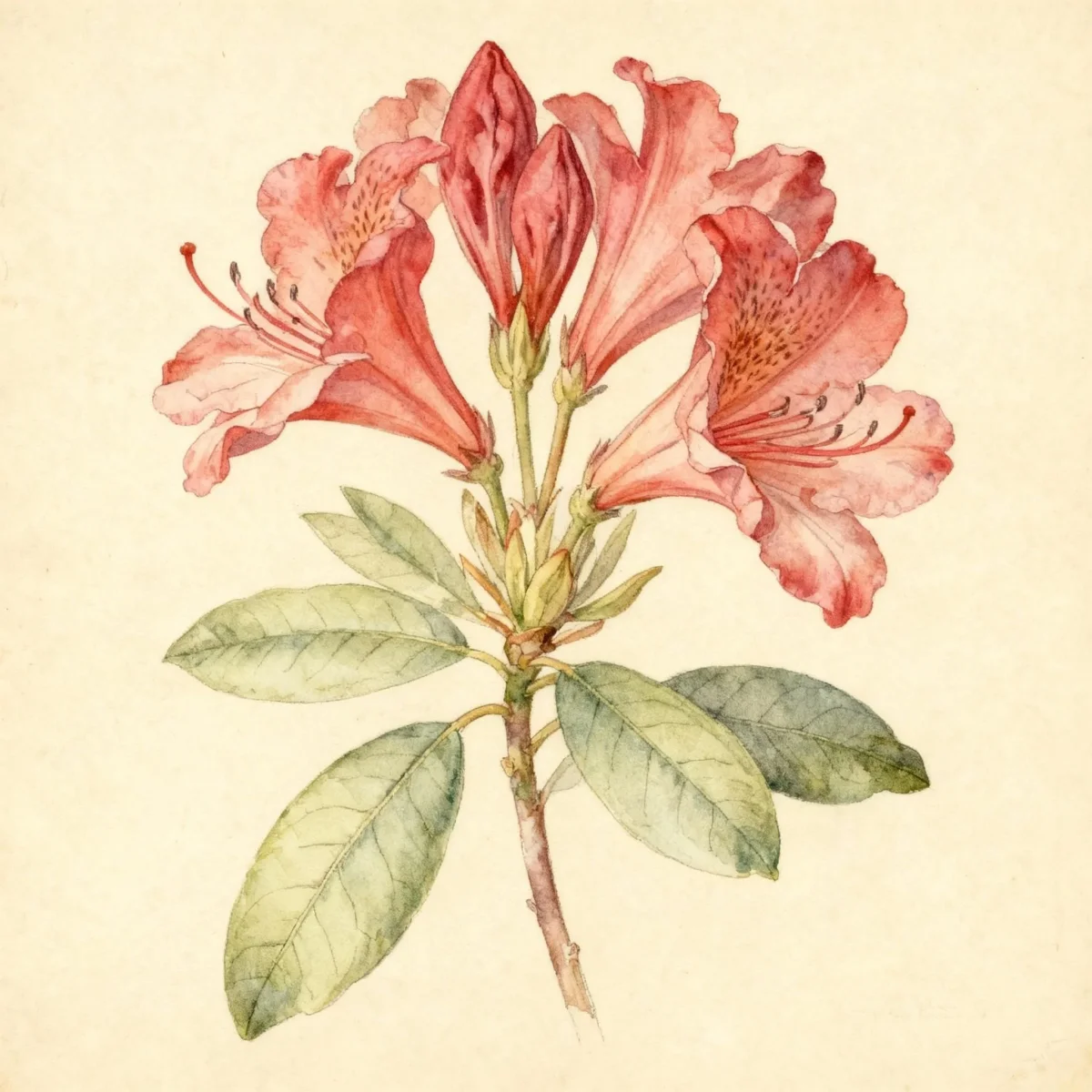
Rhododendron (Rhododendron 'Maxecat')
Rhododendron 'Maxecat' is a dense, vigorous evergreen shrub offering showy pink blooms in May, ideal for woodland margins.

Bloom Boldly, No Matter the Season - Sweatshirt
Cozy organic cotton sweatshirt featuring our exclusive Purple Coneflower design. Perfect for gardeners who bloom year-round.
Inspired by the beautiful Rhododendron
Limited first batch (50) — join the waitlist for early access
Waitlist closes Feb 15, 2026.
Complete Plant Information
Field Guide Continues
Ready for care notes, companion picks, and planting tips?
The map is just the start. The full guide below covers growth habits, seasonal performance, and landscape uses.
Overview
Rhododendron ‘Maxecat’ is a distinctive Gable hybrid that enriches the landscape with its dense, vigorous, and mound-forming habit. As a broadleaf evergreen, it maintains its presence year-round, making it a valuable structural plant, complemented by its late-spring display of showy pink flowers. Gardeners prize this specific Rhododendron for its reliable performance and attractive, shiny dark green foliage.
This cultivar typically reaches a manageable height and spread of 4-6 feet tall and 3-5 feet wide, fitting well into defined borders and foundation plantings. Successful cultivation of Rhododendron ‘Maxecat’ depends heavily on mimicking its native mountainous environment, focusing on acidic, humus-rich, and consistently moist but well-drained soil conditions.
Offering both aesthetic appeal and functional screening, Rhododendron ‘Maxecat’ excels in woodland garden settings or as a formal hedge. Ensuring protection from harsh winds and afternoon sun scorch is key to maintaining the lush foliage that defines this elegant variety of Rhododendron.
Fast Facts
- Plant Family: Ericaceae
- Plant Type: Broadleaf evergreen
- Hardiness Zones: USDA Zones 5-8
- Size at Maturity:
- Height: 4-6 ft
- Spread: 3-5 ft
- Bloom Time: May
- Bloom Description: Pink
- Sun Exposure: Full sun to part shade
- Water Needs: Medium
- Maintenance Level: Medium
How to Grow
The foundation of success for Rhododendron ‘Maxecat’ lies in proper soil preparation; these plants demand acidic, organically rich, humusy, medium-moisture soils that drain exceptionally well. Avoid planting near walnuts, as the roots produce toxic juglones detrimental to Rhododendrons. Ideal placement provides sun dappled or high open shade, though a location receiving morning sun followed by afternoon shade is generally accepted.
Watering must be consistent, as the shallow, fibrous root systems must never be allowed to dry out. In regions with heavy clay, consider raised beds to guarantee superior drainage, which is essential to prevent the disastrous root rot common to Rhododendrons in wet feet. Apply a generous layer of mulch, such as wood chips or pine needles, to stabilize soil temperatures and retain crucial moisture.
Soil pH management is critical for this Rhododendron, targeting a range between 5.0 and 5.5. Acidify soils as needed using sulfur or iron sulfate to lower the pH, or use limestone to raise it. Minor pruning involves promptly clipping off spent flower clusters immediately after bloom to encourage better energy allocation for next season’s growth.
Landscape Uses
Rhododendron ‘Maxecat’ provides excellent texture and structure throughout the year, making it highly versatile in landscape design. It is frequently utilized for creating defined shrub borders, nestled within mixed borders, or employed as a specimen plant to highlight focal points. Its evergreen quality also makes it effective when used close to structures in foundation plantings or for formal hedging where a low, dense screen is desired.
When pairing plants, select companions that share the same cultural needs—namely, acidic soil and dappled shade. Consider planting under high-branching trees or alongside woodland natives like Japanese Maples, Ferns, or Hosta varieties. The pink spring flowers of Rhododendron ‘Maxecat’ contrast beautifully with deep green conifers or the white blooms of shade-loving understory trees.
For woodland gardens, mass plantings of this Rhododendron create a strong, unifying visual element lining pathways or softening the edge between dense woods and open lawn areas. The mature size of Rhododendron ‘Maxecat’ ensures it offers substance without overwhelming smaller companion plantings.
Standout Features
Flower Qualities
- Showy
Noteworthy Characteristics
Rhododendron is a genus of 500 to 900 species and includes both of what we commonly call rhododendrons and azaleas. Much hybridization has resulted in a great number of hybrid cultivars, and Rhododendron ‘Maxecat’ is a Gable hybrid known for its dense, vigorous, mound-forming structure. Its stiff, evergreen leaves are shiny and dark green, providing excellent winter interest before the large trusses of pink flowers appear in late season.
Tolerances
- Rabbit
Potential Problems
Rhododendrons and azaleas face susceptibility to a range of pests and diseases if cultural needs are ignored. Common insect pressures include aphids, scale, and lacebugs, while fungal issues like blight, canker, and root rot are often linked to poor drainage or excessive moisture. A frequent visible problem is chlorosis—yellowing leaves—which almost always signals an iron deficiency caused by overly high soil pH.
Prevention focuses on adhering strictly to the preference for acidic, well-drained soil and avoiding stressful conditions like strong winds or late-day scorching sun. A healthy plant situated in its preferred environment will naturally resist most serious outbreaks. If water stress occurs, watch for mites, which thrive on stressed foliage.
If soil pH is too high, use iron sulfate or sulfur to acidify the medium to encourage iron uptake and resolve chlorosis. Always ensure air movement around the plants to minimize the development of powdery mildew and other foliage diseases.
Frequently Asked Questions
What hardiness zones is Rhododendron ‘Maxecat’ suitable for?
Rhododendron ‘Maxecat’ is best suited for USDA Hardiness Zones 5 through 8.
How large does Rhododendron ‘Maxecat’ grow?
This medium-sized Rhododendron typically achieves a height between 4 and 6 feet, with a spread ranging from 3 to 5 feet wide.
What sun exposure does Rhododendron ‘Maxecat’ need?
This cultivar performs best in conditions ranging from full sun to part shade, though afternoon shade is often beneficial in hotter climates.
When does Rhododendron ‘Maxecat’ bloom?
The blooming period for this variety is in May, producing notable pink flowers.
Conclusion
Rhododendron ‘Maxecat’ offers gardeners a reliable, evergreen presence complemented by beautiful pink spring blooms, making it a stalwart in the shade or woodland border. By strictly managing soil acidity and drainage—key requirements for any Rhododendron—you ensure this Gable hybrid thrives. Check your local hardiness zone and soil pH promptly to plan successful planting for your Rhododendron ‘Maxecat’ this season.
Companion Planting for Acid Lovers
Selecting appropriate neighbors is crucial when growing Rhododendron ‘Maxecat’, as they share specific soil nutrient demands. Excellent companions include other acid-loving plants such as Camellias, Blueberries, and Pieris, which thrive in similar low-pH environments. These plants benefit from the same soil amendments used to keep the Rhododendron healthy.
For textural contrast in shaded areas, integrate groundcovers that appreciate consistent moisture without being waterlogged. Astilbe, Japanese Forest Grass (Hakonechloa), and various shade-tolerant ferns create a beautiful, soft understory beneath the structure provided by the evergreen foliage of the Rhododendron.
Avoid planting turfgrass tightly around the base, as turf competes aggressively for water and nutrients needed by the shallow, fibrous roots of the Rhododendron. Instead, use bark mulch or decomposed leaf litter as a natural, non-competitive ground cover in the area surrounding your Rhododendron ‘Maxecat’.
Seasonal Care Calendar
Early Spring (Pre-Bloom): Begin monitoring soil pH and amend with sulfur if levels are too high (above 5.5). Apply a specialized, slow-release fertilizer formulated for acid-loving plants just as new leaf buds begin to swell.
Late Spring/Early Summer (Post-Bloom): This is the ideal time for light pruning, specifically deadheading or clipping off the spent pink flower trusses. Focus also on applying a fresh layer of organic mulch to regulate soil temperature during the onset of summer heat.
Summer: The primary focus is consistently adequate watering. Because Rhododendrons have shallow roots, deep, slow soakings during dry spells are necessary to prevent drought stress, especially during hot afternoons.
Fall/Winter: Ensure the plant is well-hydrated before the ground freezes solid (a deep watering cycle in late fall). Evergreens need moisture retained in their leaves during winter dormancy to prevent windburn or desiccation.