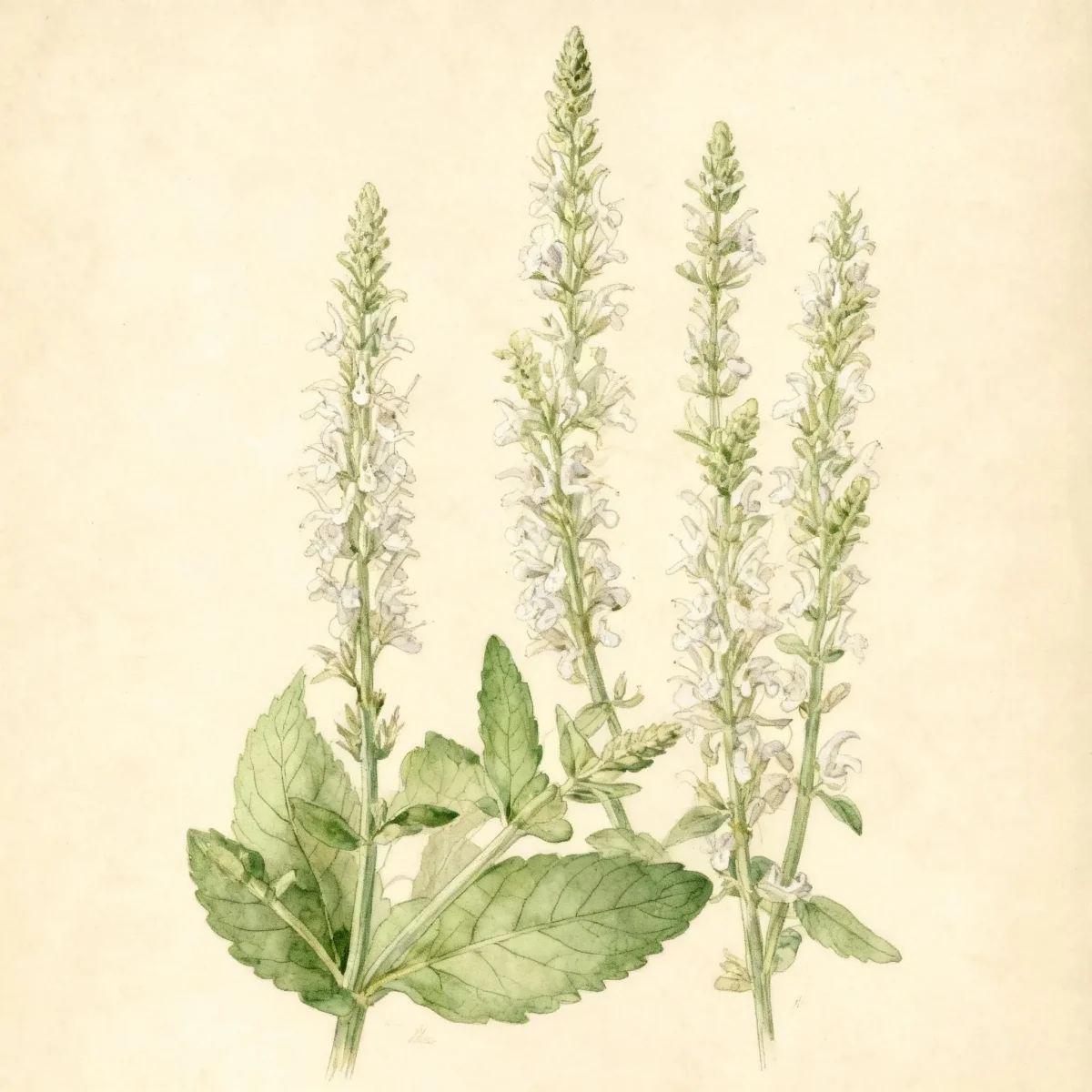
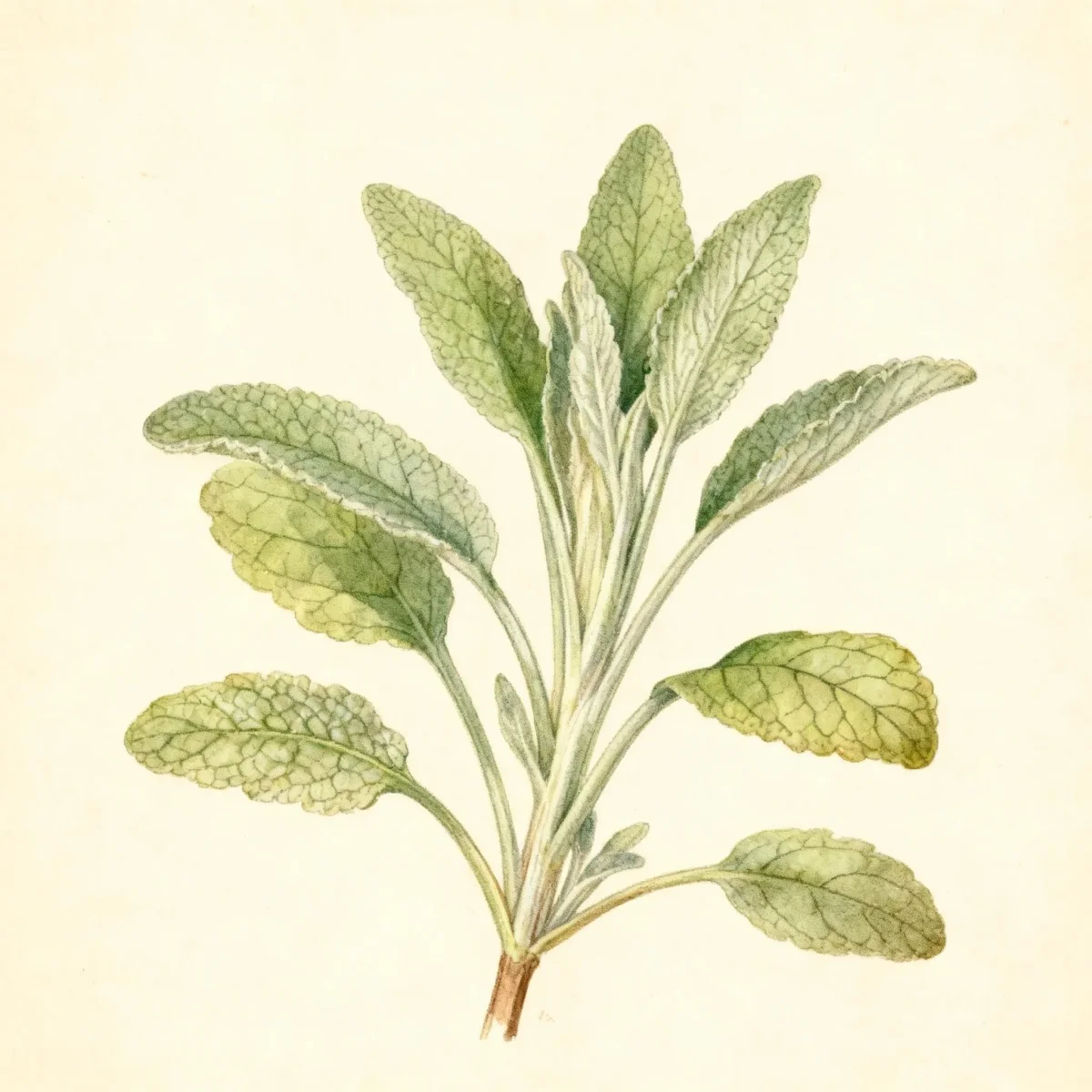
Lamb's ears (Stachys byzantina 'Primrose Heron')
Stachys byzantina 'Primrose Heron' offers striking, soft, yellowish-green Lamb's ears foliage. A low-maintenance perennial offering excellent groundcover.

Bloom Boldly, No Matter the Season - Sweatshirt
Cozy organic cotton sweatshirt featuring our exclusive Purple Coneflower design. Perfect for gardeners who bloom year-round.
Inspired by the beautiful Lamb's ears
Limited first batch (50) — join the waitlist for early access
Waitlist closes Feb 15, 2026.
Complete Plant Information
Field Guide Continues
Ready for care notes, companion picks, and planting tips?
The map is just the start. The full guide below covers growth habits, seasonal performance, and landscape uses.
Overview
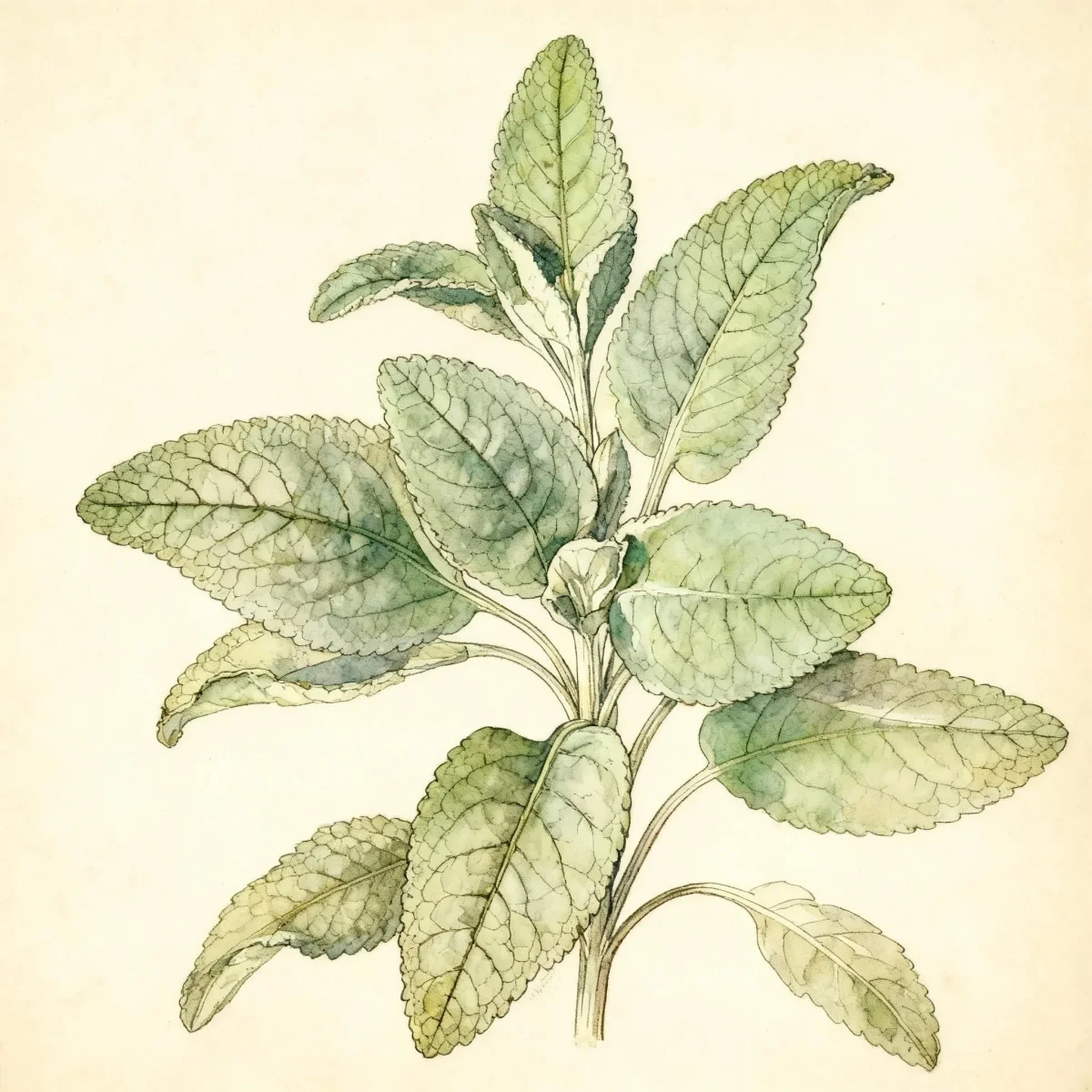
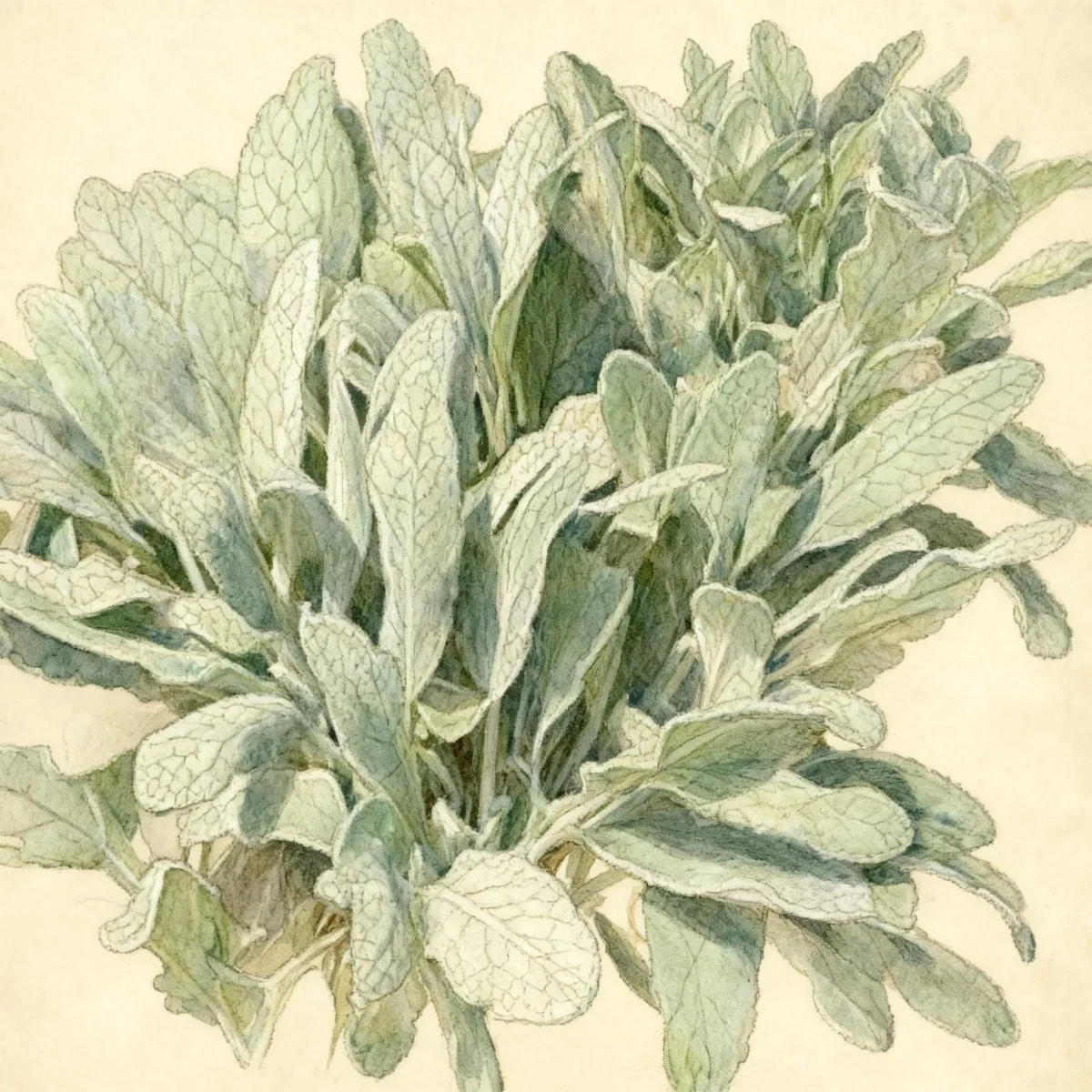
Stachys byzantina ‘Primrose Heron’ is highly valued by gardeners primarily for its exceptionally textured, velvety foliage. This cultivar of Lamb’s ears provides a spreading mat of woolly leaves that transition from chartreuse in spring to silvery-green in summer, offering outstanding visual interest. As a low-maintenance herbaceous perennial, it establishes quickly, suppressing weeds as it expands via creeping stems.
The primary appeal of Lamb’s ears lies in its tactile quality and unique silver-gray cast, but ‘Primrose Heron’ adds an extra layer of color interest with its yellowish-green tones. It thrives in bright, sunny conditions and boasts remarkable drought tolerance once established, making it an excellent, reliable ground cover option.
Due to its soft texture, this plant, commonly known as Lamb’s ears, brightens borders bordered by rougher textures. Gardeners should site Stachys byzantina ‘Primrose Heron’ where air circulation is adequate to prevent common fungal issues associated with humidity.
Fast Facts
- Plant Family: Lamiaceae
- Plant Type: Herbaceous perennial
- Hardiness Zones: USDA Zones 4-8
- Size at Maturity:
- Height: 1-1.5 ft
- Spread: 1-1.5 ft
- Bloom Time: May to July
- Bloom Description: Purplish pink
- Sun Exposure: Full sun
- Water Needs: Dry to medium
- Maintenance Level: Low
How to Grow
Plant Stachys byzantina ‘Primrose Heron’ starters 12 to 18 inches apart when using them as a ground cover, favoring spring or fall planting. The absolute key to success for this Lamb’s ears variety is ensuring excellent drainage; plant in average, well-drained soil. While it prefers full sun, providing some light relief from intense afternoon sun in very hot climates can protect the foliage.
Water should be provided sparingly, as these plants are generally drought tolerant. Avoid overwatering, especially in humid conditions, as excess moisture trapped by the distinctive woolly leaves invites rot and leaf spot diseases. Fertilization is rarely required; rich soils can encourage overly aggressive spreading.
In mid-summer, if foliage appears damaged or declines due to excessive moisture, shearing off the affected leaves will refresh the mat of foliage. Many gardeners routinely snip off the flowering stems, which bear tiny, purplish-pink flowers, to maintain a denser, more uniform ground cover effect for the silver-and-yellow leaves of Stachys byzantina ‘Primrose Heron’. Division is the standard method for propagation when the plant masses become too dense.
Landscape Uses
The fuzzy, chartreuse-to-silver foliage of Stachys byzantina ‘Primrose Heron’ makes it an exceptional textural element in the garden design. It functions beautifully as an effective edger, clearly defining the transition between a pathway and a planting bed. Its low, spreading habit also makes it suitable for naturalizing small, dry areas where turf grass struggles.
When used as a ground cover, Lamb’s ears provides a soft, year-round structure in borders or rock gardens. Pair its silvery tones with plants featuring dark green or burgundy foliage to maximize contrast. Its drought tolerance also allows it to thrive alongside other sun-loving, low-water perennials.
Standout Features
Flower Qualities
- Showy
Noteworthy Characteristics
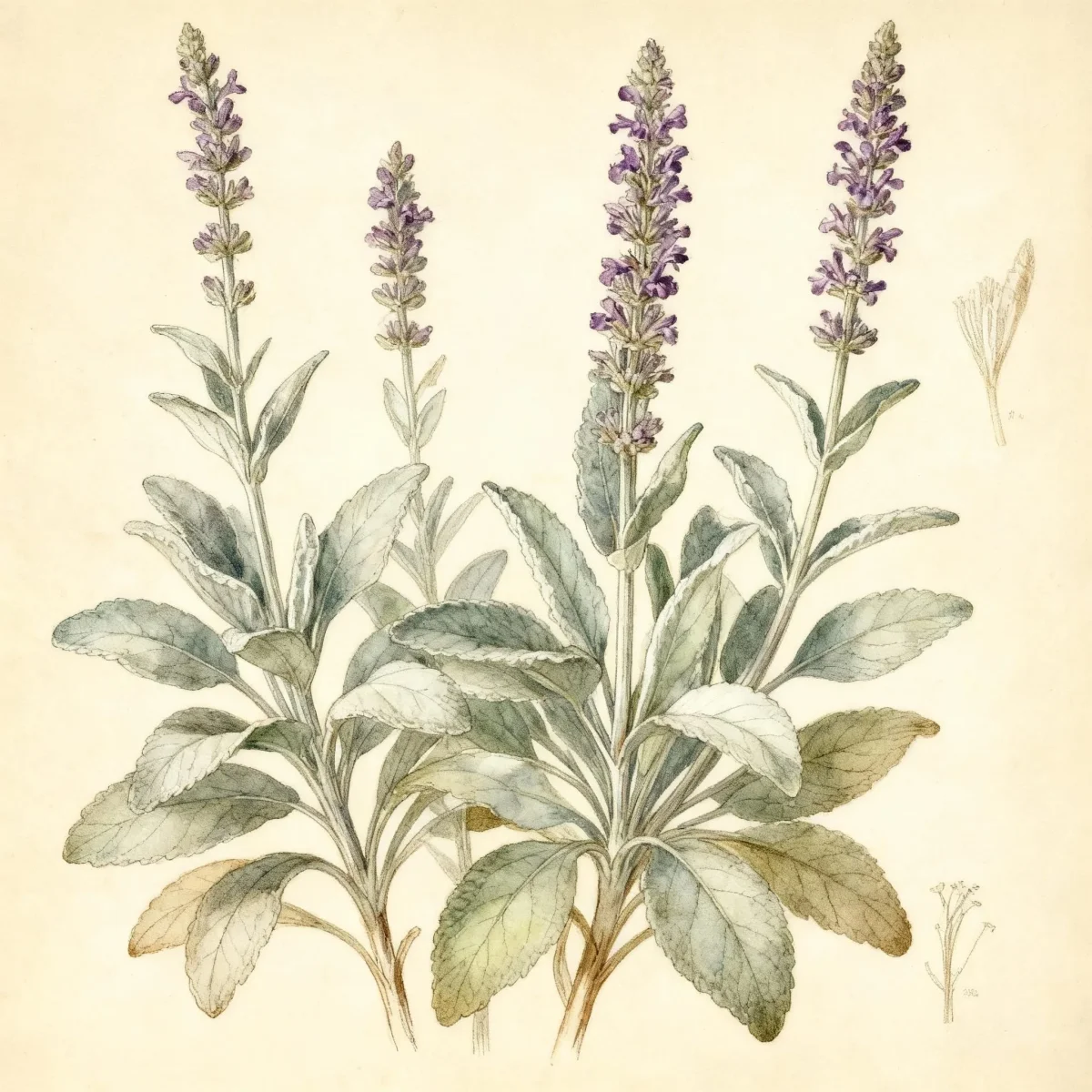
Stachys byzantina, known as lamb’s ears, is grown primarily for its thick, soft, velvety, silver-gray leaves which typically form a rapidly spreading mat approximately 4-6” off the ground. Leaves are evergreen in warm climates, but will depreciate considerably in harsh winters. Erect, small-leaved flowering stems with terminal spikes of insignificant, tiny, purplish-pink flowers appear in summer rising above the foliage to 10-15” tall. Many gardeners remove the flowering stems to enhance the ground cover effect. Dense rosettes of woolly, tongue-shaped, gray-green leaves (to 4” long) spread by runners. Leaf shape and texture resemble a lamb’s ear, hence the common name. This cultivar, ‘Primrose Heron’, is noted for its unique foliage, emerging chartreuse in spring and maturing to silvery-green, making Stachys byzantina ‘Primrose Heron’ a year-round visual asset.
Tolerances
- Rabbit
- Deer
- Drought
- Dry Soil
- Shallow-Rocky Soil
- Black Walnut
- Air Pollution
Potential Problems
The main challenge encountered when growing Lamb’s ears, including the ‘Primrose Heron’ cultivar, relates to moisture management during humid summers. The woolly leaves easily trap moisture, leading to rot or fungal issues like leaf spot, a common complaint in regions like the St. Louis area. To combat this, prioritizing well-drained soils is essential; avoid heavy clay or perpetually moist sites.
Although summer die-out can occur where high humidity persists, Stachys byzantina ‘Primrose Heron’ generally exhibits better resistance to these problems compared to the species form. If die-out does occur, promptly pick off damaged leaves to promote air circulation and prevent spread. Furthermore, be aware that the plant spreads by creeping stems that root as they travel along the ground; in extremely rich soils, this spread can become mildly aggressive and may require dividing or edging.
Frequently Asked Questions
What hardiness zones is Lamb’s ears suitable for?
Stachys byzantina ‘Primrose Heron’ is reliably hardy in USDA Zones 4 through 8.
How large does Lamb’s ears grow?
This perennial typically reaches a height between 1 and 1.5 feet tall and spreads to a width of 1 to 1.5 feet, forming a dense mat.
What sun exposure does Stachys byzantina ‘Primrose Heron’ need?
For best results and healthiest foliage, plant this Lamb’s ears cultivar in full sun conditions.
When does Stachys byzantina ‘Primrose Heron’ bloom?
The ornamental flowers of this cultivar appear between May and July, offering spikes of purplish pink blooms above the silvery foliage.
Conclusion
Stachys byzantina ‘Primrose Heron’ stands out as a superior ground cover choice due to its unique yellowish-green to silvery foliage texture and easy-care nature. The tactile quality of this Lamb’s ears variety ensures year-round interest with minimal maintenance needs, provided drainage is adequate. Evaluate your garden’s drainage and sun exposure before planting the exceptional foliage of Stachys byzantina ‘Primrose Heron’.
Companion Planting
Because successful cultivation of Lamb’s ears relies heavily on sharp drainage and full sun, companion plants should share these xeriscaping preferences. Consider pairing Stachys byzantina ‘Primrose Heron’ with ornamental grasses that also tolerate dry conditions, such as Prairie Dropseed (Sporobolus heterolepis), whose finer texture contrasts beautifully with the broad, woolly leaves. Succulents or low-growing sedums that thrive in rocky, dry soil also make excellent companions along the edge of a border planted with Lamb’s ears.
Propagation Tips
The primary method for increasing your patch of Stachys byzantina ‘Primrose Heron’ is through division or stem rooting. As the plant spreads via creeping stems, these runners will often root where they touch the soil surface. In late spring or early fall, newly rooted sections of Lamb’s ears can be carefully separated from the parent plant using a sharp spade or trowel. Ensure each division has a healthy root system attached before transplanting it to its new location. Established mats can also be carefully dug up and divided into smaller viable clumps to refresh older sections or spread the desirable ‘Primrose Heron’ color elsewhere.