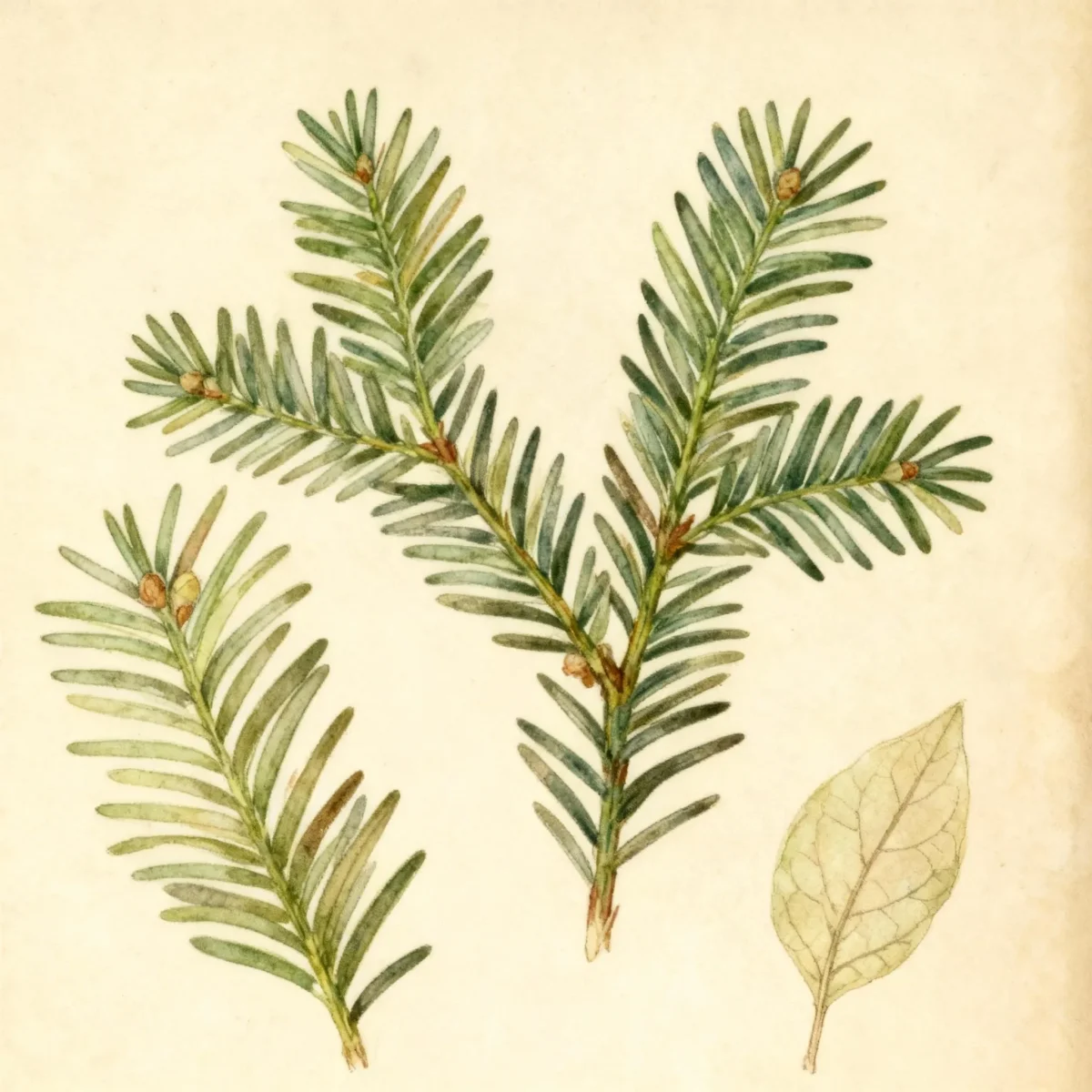
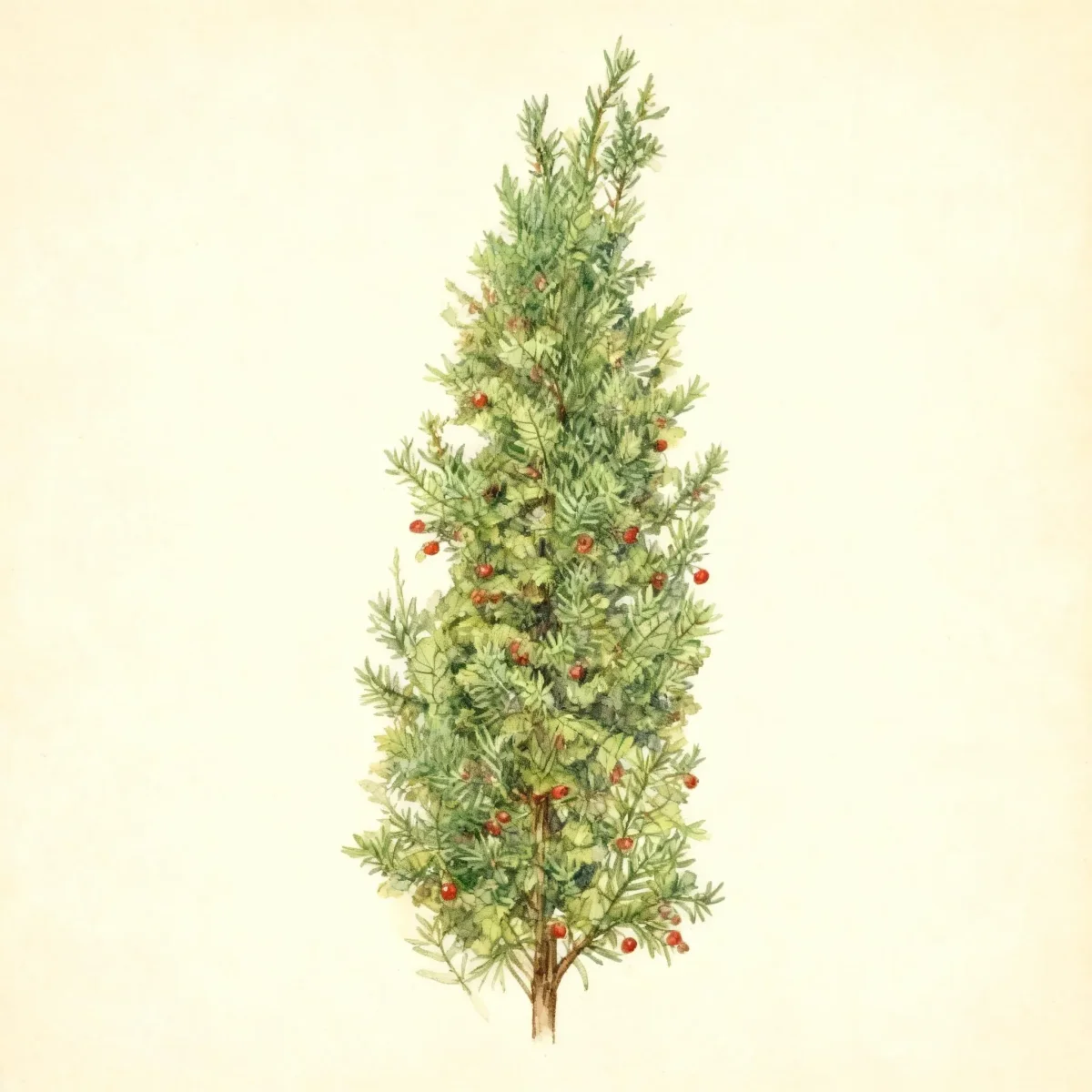
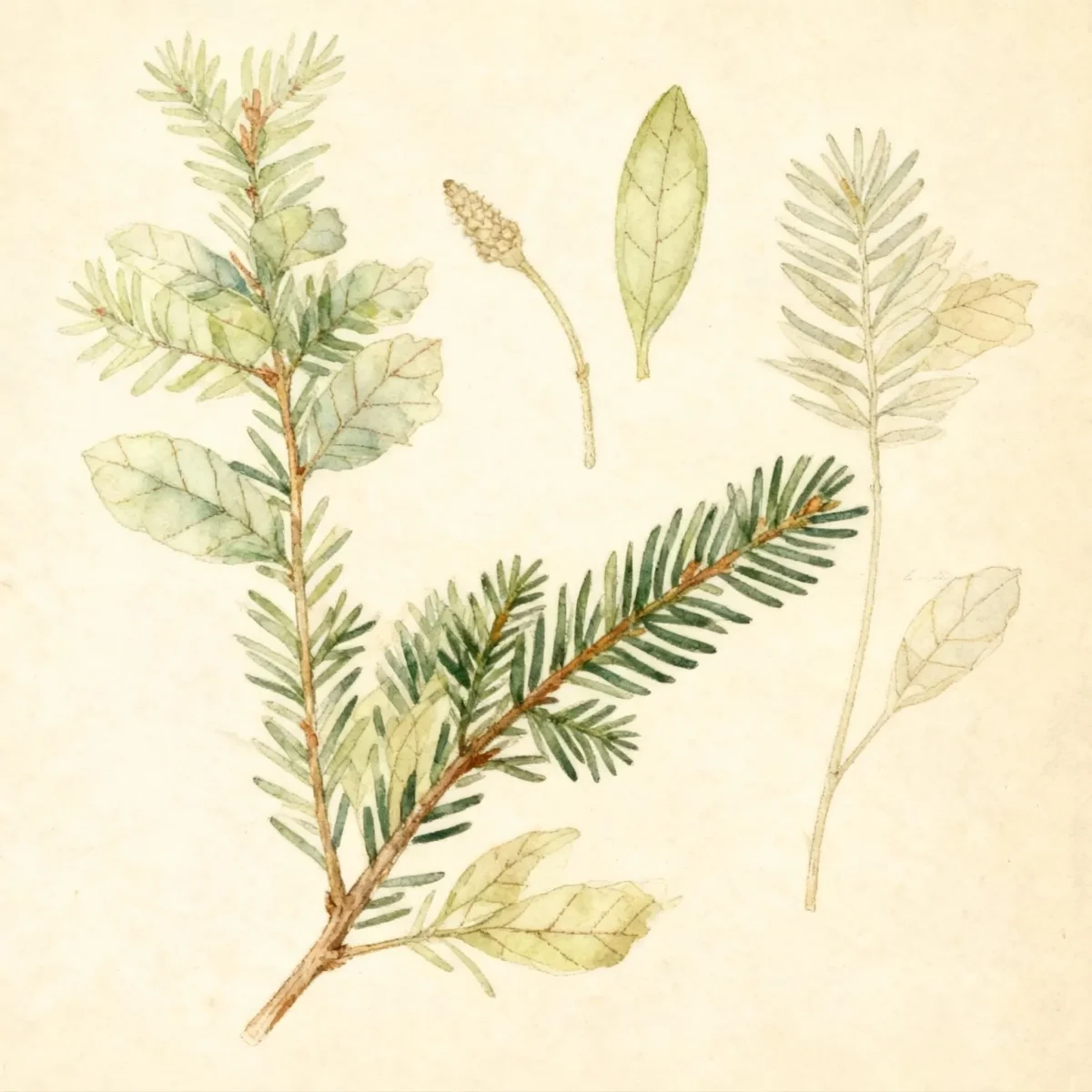
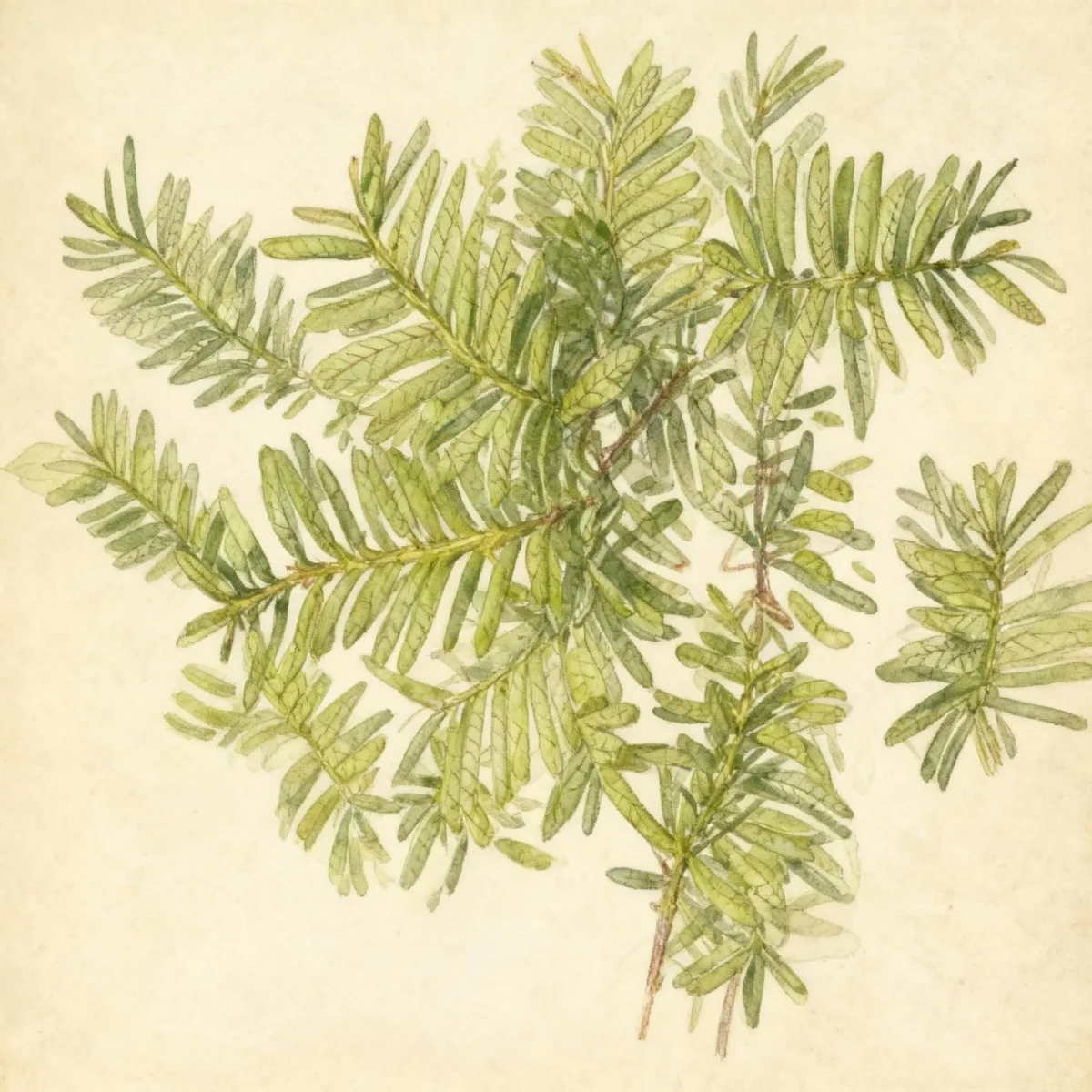
Yew (Taxus × media 'Brownii')
Taxus × media 'Brownii' Yew is a dense, low-maintenance needled evergreen ideal for hedges in zones 4-7.


Bloom Boldly, No Matter the Season - Sweatshirt
Cozy organic cotton sweatshirt featuring our exclusive Purple Coneflower design. Perfect for gardeners who bloom year-round.
Inspired by the beautiful Yew
Limited first batch (50) — join the waitlist for early access
Waitlist closes Feb 15, 2026.
Complete Plant Information
Field Guide Continues
Ready for care notes, companion picks, and planting tips?
The map is just the start. The full guide below covers growth habits, seasonal performance, and landscape uses.
Overview
The Taxus × media ‘Brownii’, commonly known as the Yew, is a highly valued hybrid evergreen prized for its dense structure and year-round dark green foliage. This cultivar is a robust selection, combining desirable traits from both English and Japanese yews, resulting in superior winter hardiness suitable for colder climates. Gardeners appreciate the Yew for its reliability as a screen or formal element.
As a needled evergreen, Taxus × media ‘Brownii’ offers consistent texture and color throughout all seasons, making it an excellent anchor plant in the landscape design. It naturally forms a broad, densely-rounded shrub, though it responds exceptionally well to disciplined pruning and shearing. This versatility ensures the Yew remains popular for foundational plantings and defined borders.
This specific clone of Taxus × media ‘Brownii’ is a male selection, meaning it will not produce the fleshy, berry-like cones (arils) typical of female yews. This characteristic simplifies maintenance in areas where fruit litter is undesirable, solidifying its role as a dependable, low-fuss structural plant.
Fast Facts
- Plant Family: Taxaceae
- Plant Type: Needled evergreen
- Hardiness Zones: USDA Zones 4-7
- Size at Maturity:
- Height: 8-10 ft
- Spread: 6-12 ft
- Bloom Time: Non-flowering
- Bloom Description: Non-flowering
- Sun Exposure: Full sun to part shade
- Water Needs: Medium
- Maintenance Level: Low
How to Grow
Planting the Yew should ideally occur in spring or early fall, allowing the root system time to establish before extreme weather. Choose a site with excellent soil drainage, as Taxus × media ‘Brownii’ tolerates urban conditions but has zero tolerance for perpetually wet feet, which can quickly lead to root rot. These shrubs thrive equally well in full sun or deep shade, though protection from harsh winter winds is beneficial to prevent winter burn.
Watering requirements are medium; ensure consistent moisture, especially during the first year after planting. Once established, the Yew shows good drought tolerance, although supplemental watering during prolonged dry spells is always prudent. Fertilization is generally unnecessary unless the soil is extremely poor, as heavy feeding can encourage overly floppy growth unsuitable for formal shaping.
Pruning and shearing are defining aspects of managing this shrub. Taxus × media ‘Brownii’ accepts shaping easily. The best time for rejuvenation or heavy shearing is typically early spring, just before new growth begins to emerge. Avoid substantial summer pruning, which can expose the interior wood too late in the season.
Landscape Uses
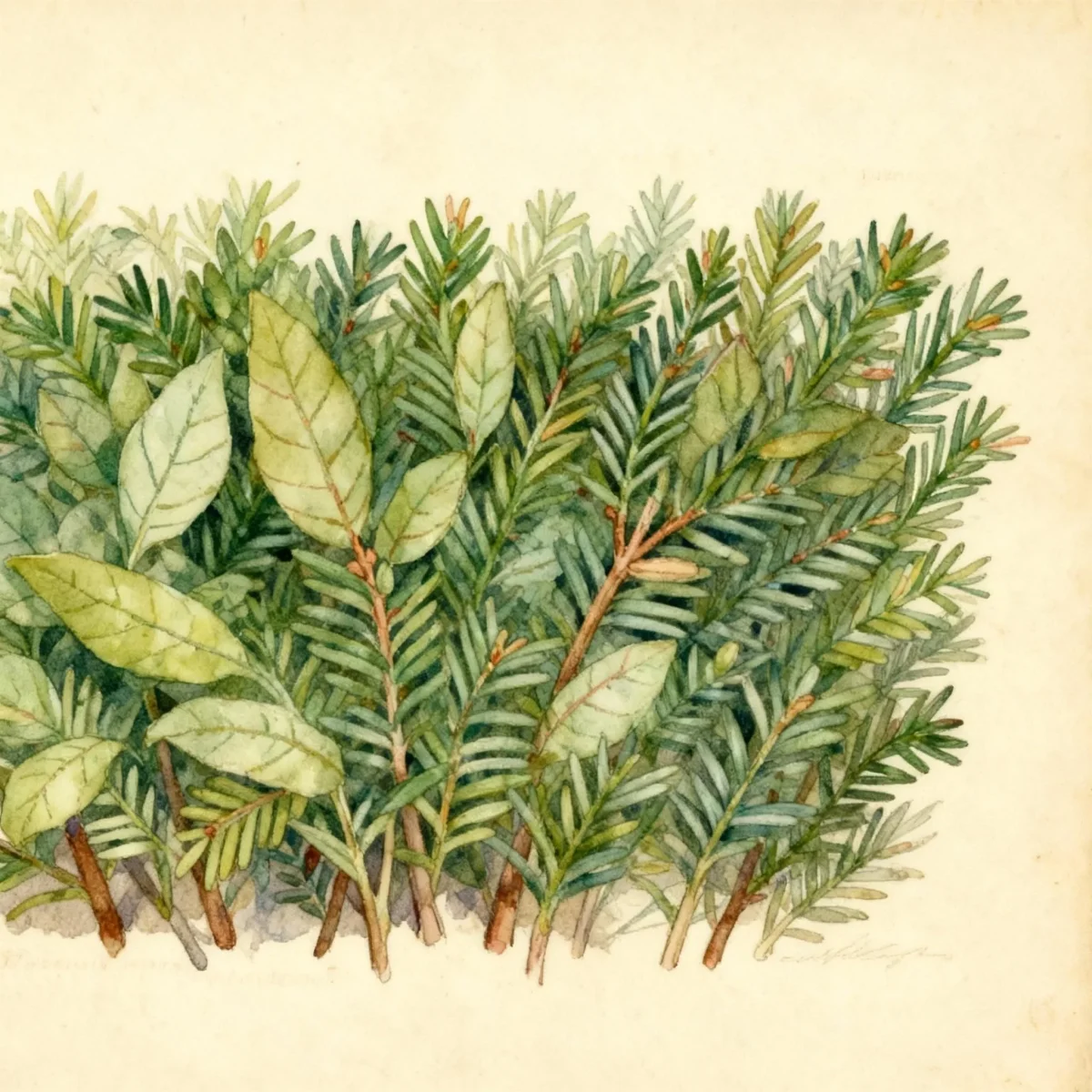
The primary recommended use for the Taxus × media ‘Brownii’ Yew is establishing effective, low, dense hedges where a formal boundary or screen is desired. Its compact habit also makes it an excellent choice for foundation plantings near structures, providing consistent green mass year-round without rapidly outgrowing its space.
For shrub borders, plant this Yew strategically to provide evergreen structure against deciduous underplantings or vibrant seasonal color. Due to its tolerance for heavy shade, it serves as a reliable backdrop in darker garden areas where fewer other broadleaf evergreens can perform as effectively. Because it is a male clone, its dark green foliage contrasts elegantly with flowering shrubs that produce bright spring color.
Standout Features
Noteworthy Characteristics
Taxus × media is a hybrid designation for a large number of shrubby, often wide-spreading crosses of English yew (Taxus baccata) and Japanese yew (Taxus cuspidata). These hybrids are noted for combining the ornamental excellence of English yew with the winter hardiness of Japanese yew. ‘Brownii’ is a broad, densely-rounded, shrubby form that typically grows to 8-10’ tall and spreads to 6-12’ wide, however plants can be kept smaller through regular pruning. Glossy dark green foliage is attractive throughout the year, and this is a male clone that will not produce fleshy, berry-like fruits.
Tolerances
- Rabbit
- Drought
- Heavy Shade
Potential Problems
The Taxus × media ‘Brownii’ Yew is relatively robust, but gardeners should be watchful for environmental stressors. Susceptibility to winter burn is a notable issue, particularly when plants are sited in exposed locations or subjected to drying winter winds when the ground is frozen. Positioning the Yew in a slightly protected area can mitigate this damage.
Fungal issues, such as twig blight and needle blight, can occasionally appear, often exacerbated by poor air circulation or overly moist conditions. Ensure adequate spacing between plants when using them for hedging. For soil-borne issues, root rot is a significant threat if drainage is poor; always amend heavy soils to ensure water moves away from the root crown.
Pest management typically focuses on occasional outbreaks of common pests. Weevils, mealybugs, and scale insects may become problematic in certain regions. Regular inspection of the glossy dark green needles allows for early treatment with horticultural oils or targeted insecticides before infestations become severe.
Frequently Asked Questions
What hardiness zones is Yew suitable for?
The Taxus × media ‘Brownii’ Yew is hardy in USDA Zones 4 through 7, offering reliable performance across a broad temperate range.
How large does Taxus × media ‘Brownii’ grow?
At maturity, expect this shrub to reach heights between 8 to 10 feet tall with a spread ranging from 6 to 12 feet wide, though pruning controls its final size.
What sun exposure does Yew need?
This evergreen performs well across a wide spectrum, tolerating full sun to part shade, and is known to be an excellent choice for shady garden conditions.
When does Taxus × media ‘Brownii’ bloom?
This plant is classified as non-flowering; it does not produce ornamental flowers, relying instead on its consistent evergreen foliage for visual interest.
Conclusion
The Taxus × media ‘Brownii’ Yew provides exceptional value through its dense structure, low maintenance needs, and outstanding year-round color. Its adaptability to both sun and deep shade, combined with its responsiveness to pruning, cements its role as an essential structural plant. Before installing your Yew, always confirm your planting zone compatibility and ensure the location offers the well-drained soil it requires for long-term success.
Companion Planting
When selecting companion plants for the Taxus × media ‘Brownii’, prioritize species that share similar water and sun requirements but offer contrasting texture or color. Because the Yew performs so well in heavy shade, pairing it with shade-tolerant perennials like Hostas, Astilbes, or spring ephemerals creates beautiful seasonal layered effects. In sunnier spots, low-growing, fine-textured ornamental grasses can complement the Yew’s dense form without competing heavily for root space.
Consider plants that bloom in late spring or early summer, such as certain Ajuga varieties or low-growing Rhododendrons, to inject temporary bursts of color around the dark green foliage of the Yew. The goal in foundation planting is to utilize the Taxus × media ‘Brownii’ as a reliable, dark green base layer that highlights brighter, shorter elements placed in front of it.
Seasonal Care Calendar
Spring is the most active season for the Yew. Perform any necessary heavy pruning or shearing in early spring before rapid vegetative growth commences, maximizing regeneration time. This is also the best time to apply a slow-release, general-purpose evergreen fertilizer if soil enrichment is desired.
Summer care revolves primarily around vigilant watering during drought periods. Since these shrubs tolerate urban conditions, monitor soil moisture weekly, particularly if planted near pavement or structures that limit rainfall penetration. Avoid letting the soil dry out excessively, despite the drought tolerance.
Winter preparation requires ensuring the plant is adequately watered going into dormancy; this reduces the likelihood of winter burn. If high exposure is unavoidable, wrapping protection or applying an anti-desiccant spray (like those used for Holly) can help Taxus × media ‘Brownii’ retain moisture during frozen periods.