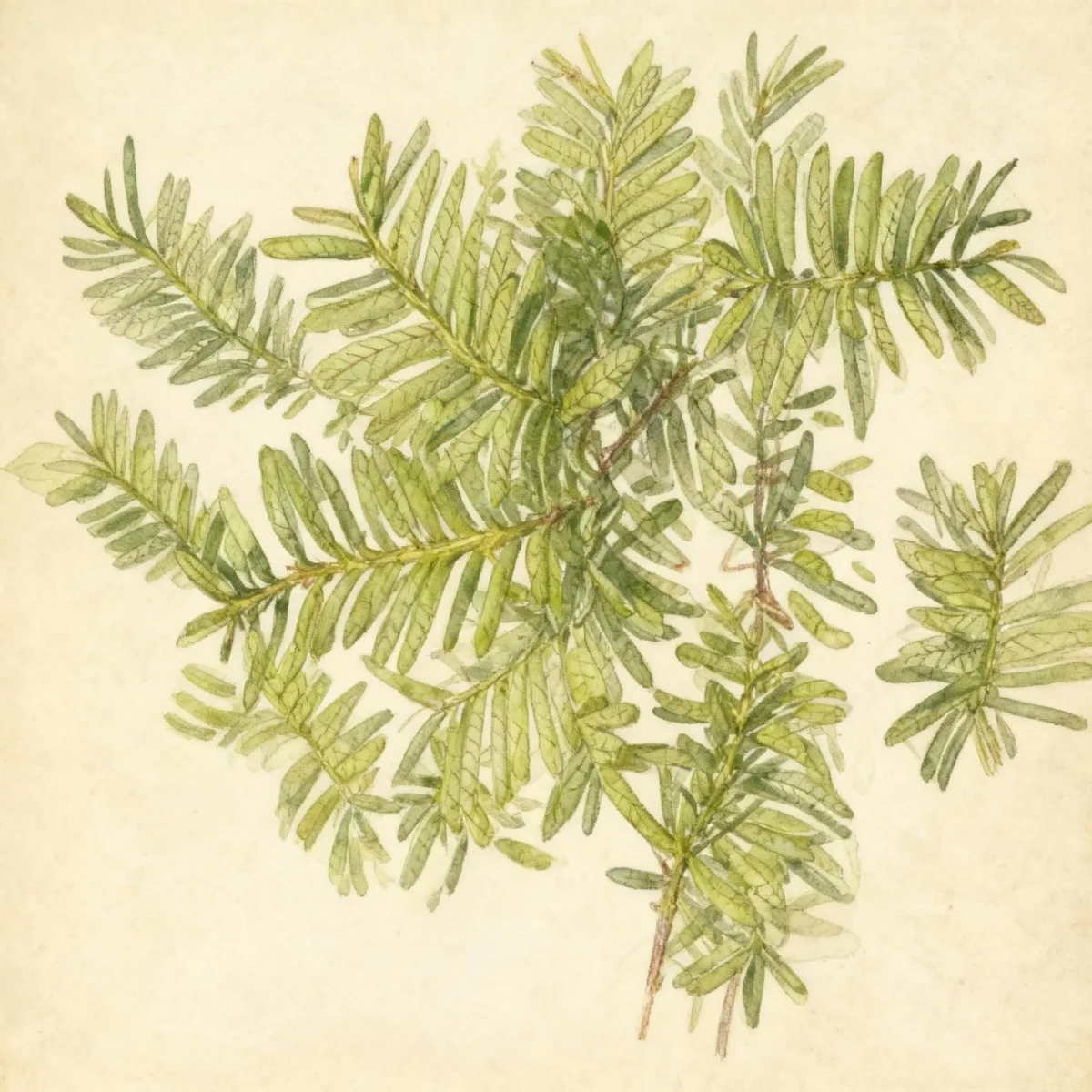
Yew (Taxus × media 'Hatfieldii')
Taxus × media 'Hatfieldii' Yew is a low-maintenance, broad pyramidal evergreen ideal for screening in USDA Zones 4-7.


Bloom Boldly, No Matter the Season - Sweatshirt
Cozy organic cotton sweatshirt featuring our exclusive Purple Coneflower design. Perfect for gardeners who bloom year-round.
Inspired by the beautiful Yew
Limited first batch (50) — join the waitlist for early access
Waitlist closes Feb 15, 2026.
Complete Plant Information
Field Guide Continues
Ready for care notes, companion picks, and planting tips?
The map is just the start. The full guide below covers growth habits, seasonal performance, and landscape uses.
Overview
The Taxus × media ‘Hatfieldii’ Yew is a highly valued needled evergreen, celebrated for its robust constitution combining the best traits of English and Japanese Yews. This specific cultivar forms an attractive, broad pyramidal shape, making it an excellent structural plant in foundation plantings or as a formal screen. Its glossy, dark green foliage provides essential year-round color and texture, offering significant aesthetic appeal even in deep winter.
As a hybrid Yew, Taxus × media ‘Hatfieldii’ exhibits superior hardiness compared to some pure species relatives, thriving in zones 4 through 7. It is categorized as a low-maintenance specimen once established, requiring only moderate water and forgiving of many common garden challenges. Its density makes the Taxus × media ‘Hatfieldii’ a practical choice for creating defined borders and evergreen backdrops.
Gardeners appreciate this Yew for its adaptability to shade, which expands planting options significantly within the landscape design. While it handles urban conditions well, proper drainage remains crucial for long-term success. The dense structure and rich green color ensure this particular Yew remains a cornerstone of formal and mixed evergreen plantings.
Fast Facts
- Plant Family: Taxaceae
- Plant Type: Needled evergreen
- Hardiness Zones: USDA Zones 4-7
- Size at Maturity:
- Height: 8-15 ft
- Spread: 5-10 ft
- Bloom Time: Non-flowering
- Bloom Description: Non-flowering
- Sun Exposure: Full sun to part shade
- Water Needs: Medium
- Maintenance Level: Low
How to Grow
Planting Taxus × media ‘Hatfieldii’ is best done in early spring or fall, allowing the roots to establish before temperature extremes. Ensure the site offers excellent soil drainage; this Yew has absolutely no tolerance for standing water, which leads swiftly to root rot. While adaptable, it prefers medium-moisture soils, sometimes succeeding best in moist, sandy loams.
Maintenance for this evergreen is generally low. Water moderately, especially during dry spells in the first few years after planting. Fertilizing is rarely necessary unless the soil quality is extremely poor. The Taxus × media ‘Hatfieldii’ accepts pruning and shearing exceptionally well, making it superb for hedging.
For shaping, perform any significant pruning or shearing in early spring, just before the new growth flushes out. To minimize winter burn, which this species is susceptible to, site your Yew away from harsh winter winds if possible. If placed in an exposed location, ensure deep watering before the ground freezes solid.
Landscape Uses
The primary recommended use for Taxus × media ‘Hatfieldii’ is as an architectural element, specifically for creating dense Hedge structures or as a Screen. Its broad pyramidal habit naturally lends itself to formal hedging where uniformity and substantial height are desired. When placed strategically, it excels at masking utilitarian views or defining property lines.
When used as a screen, allow the Yew sufficient space to reach its mature spread of 5 to 10 feet wide, avoiding overcrowded conditions that restrict air circulation. For lower borders, regular shearing will keep the plant dense and shorter than its natural 15-foot potential.
This evergreen pairs well with broadleaf deciduous shrubs that offer seasonal color contrast against its deep green needles, or with lighter green conifers like certain golden arborvitae cultivars for textural variation. Its shade tolerance means it can also anchor the back border of a partially shaded woodland garden setting.
Standout Features
Noteworthy Characteristics
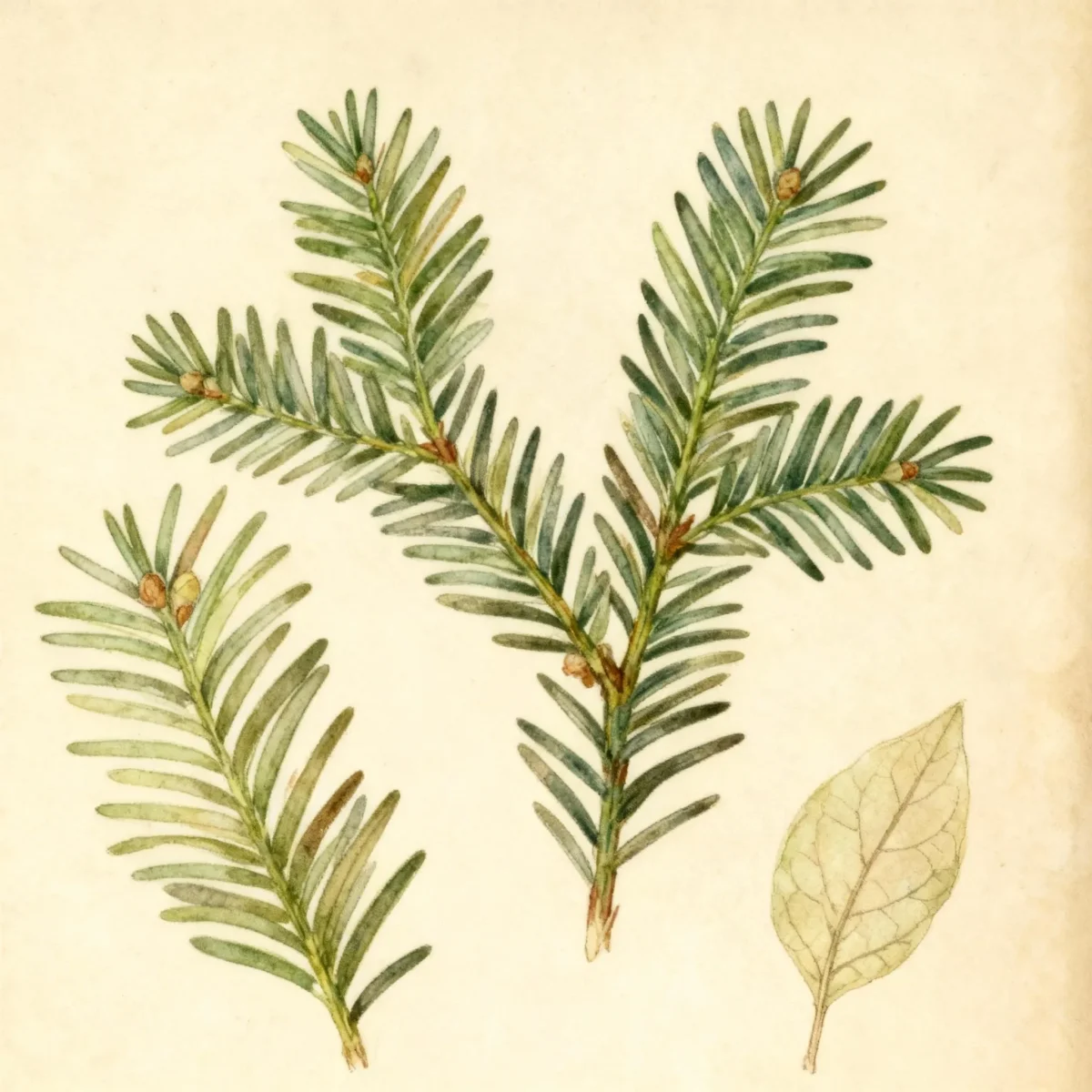
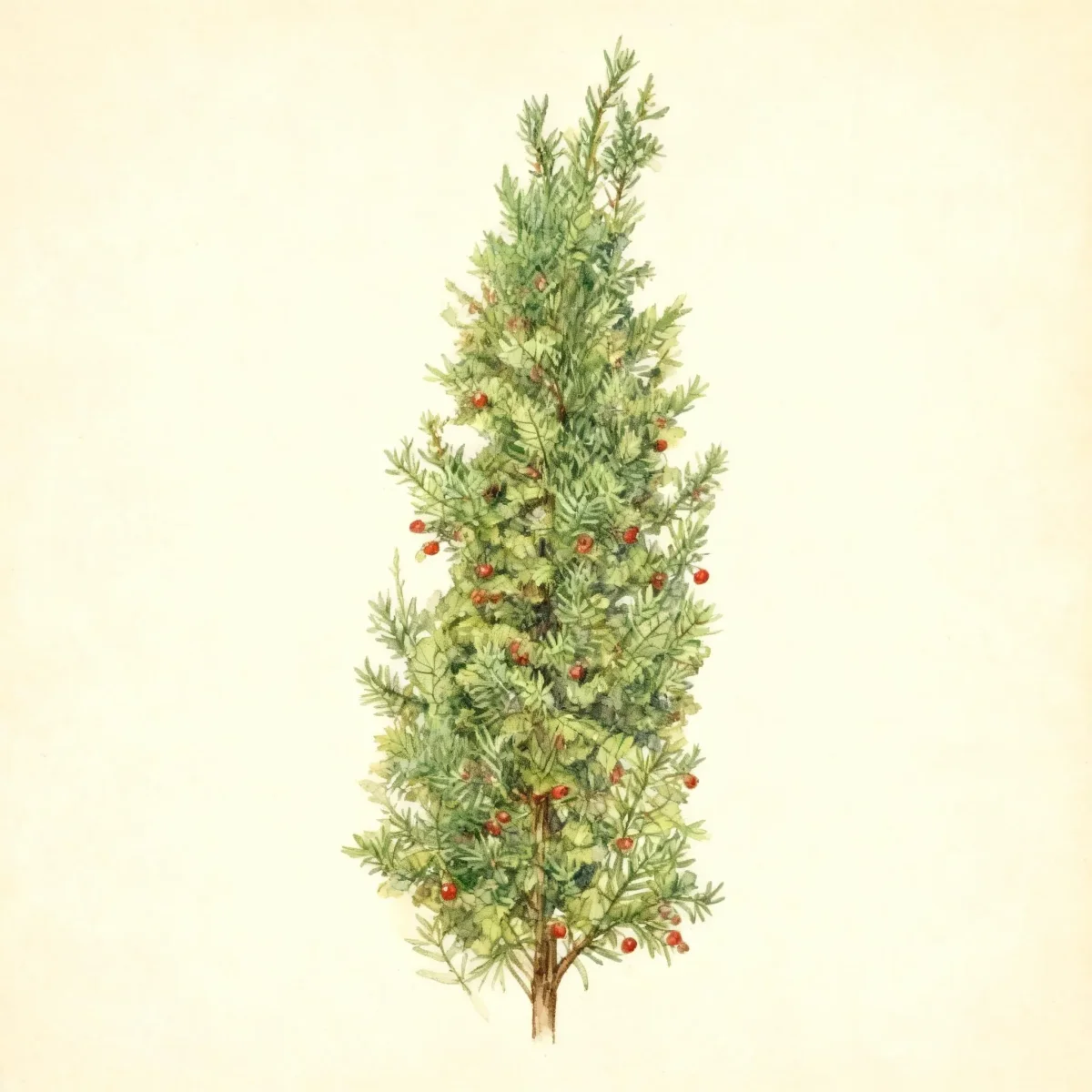
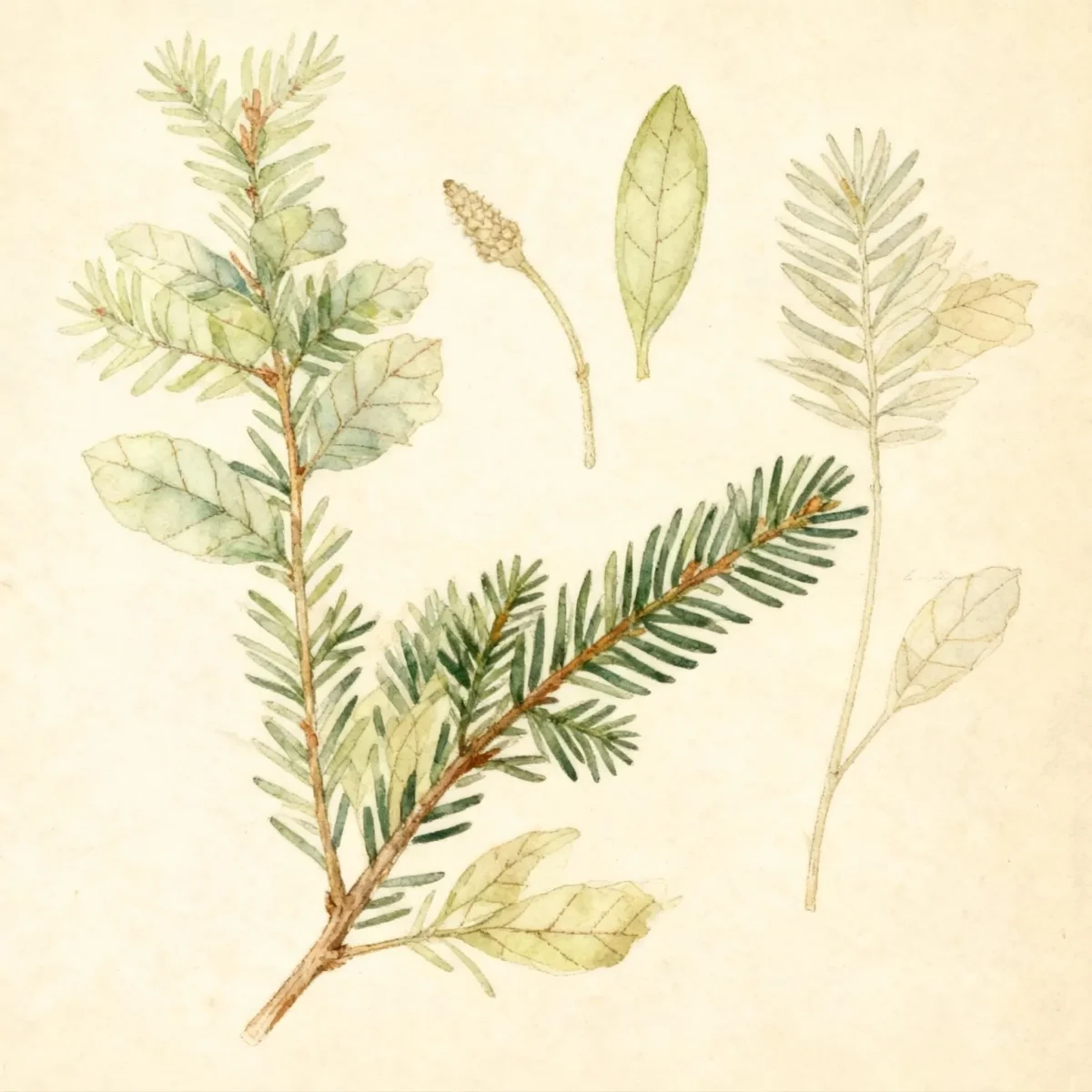
Taxus × media is a hybrid designation for a large number of shrubby, often wide-spreading crosses of English yew (Taxus baccata) and Japanese yew (Taxus cuspidata). These hybrids are noted for combining the ornamental excellence of English yew with the winter hardiness of Japanese yew. Although primarily resembling T. Cuspitata in appearance, the various hybrid cultivars can vary considerably in size and character. Height ranges from 2-20’ tall depending on the cultivar. Two ranked, pointed, oblong to needle-like, olive to dark green leaves are attractive year round. Bark is scaly brown. Plants are dioecious (separate male and female plants). Female plants produce berry-like cones made up of a single seed surrounded by a red, fleshy structure called an aril. The aril is formed by two fused, modified scale leaves.Genus name is an old Latin name for yews.Specific epithet means intermediate.‘Hatfieldii’ is a broad pyramidal form that typically grows to 8’ tall over the first 10 years, but eventually matures to 12-15’ tall by 8-10’ wide unless pruned shorter. It is a male clone that produces no red fruit. Glossy dark green foliage is attractive throughout the year.
Tolerances
- Rabbit
- Drought
- Heavy Shade
Potential Problems
The Yew is generally resistant to most major issues, but certain conditions must be monitored, particularly regarding its foliage. Susceptible to winter burn, particularly in exposed sites where harsh winter winds desiccate the needles; ensure adequate moisture before winter sets in. Twig blight and needle blight are occasional fungal problems, often managed by improving air circulation through careful pruning or avoiding overhead watering. Furthermore, root rot is a significant threat, occurring when the essential requirement for good soil drainage is ignored, leading to waterlogged conditions. Scale insects, weevils, and mealybugs can also occasionally pose problems in certain regions.
Frequently Asked Questions
What hardiness zones is Yew suitable for?
The Taxus × media ‘Hatfieldii’ Yew is adaptable to USDA hardiness zones 4 through 7.
How large does Taxus × media ‘Hatfieldii’ grow?
In ideal conditions without excessive pruning, this cultivar typically matures to a height of 8 to 15 feet, with a spread between 5 and 10 feet.
What sun exposure does Yew need?
This evergreen performs well in a range of lighting conditions, thriving from full sun exposure through to partial shade.
When does Yew bloom?
Taxus × media ‘Hatfieldii’ is non-flowering; it produces no noticeable flowers in the landscape.
Conclusion
The Taxus × media ‘Hatfieldii’ Yew offers unparalleled year-round structure and a low-input maintenance profile, making it a reliable evergreen for hedging and screening applications. Its successful cultivation hinges upon ensuring well-drained soil and protecting it from drying winter winds where possible. Before planting, verify that your local gardening area falls within USDA Zones 4 to 7 to guarantee the best performance from this excellent cultivar.
Design Ideas
The dense, formal habit of Taxus × media ‘Hatfieldii’ makes it perfect for geometric landscape designs. Use it to establish formal allees leading to an entryway, or shape it into low, clipped platforms for specimen accent plants, especially when contrasting it with deciduous materials that offer vibrant fall foliage.
Due to its shade tolerance, this Yew functions exceptionally well under the high canopy of mature deciduous trees where turf grasses often struggle. Planting Taxus × media ‘Hatfieldii’ beneath oaks or maples provides a necessary dark green backdrop that helps other light-colored perennials or spring bulbs truly stand out.
Companion Planting with Yew
When selecting companions for Taxus × media ‘Hatfieldii’, focus on species that share similar, though perhaps less stringent, water and sun needs. Near the foundation or near areas receiving full sun, contrast its habit with fine-textured, mounding evergreens like dwarf varieties of Hinoki Cypress or low-growing ornamental grasses.
For areas leaning toward part shade, consider woodland edge plants that appreciate the protection this Yew offers from intense afternoon sun. Hostas, especially those with chartreuse or blue foliage, offer wonderful leaf contrast, while Hellebores provide winter and very early spring color right at the base of the Yew planting.