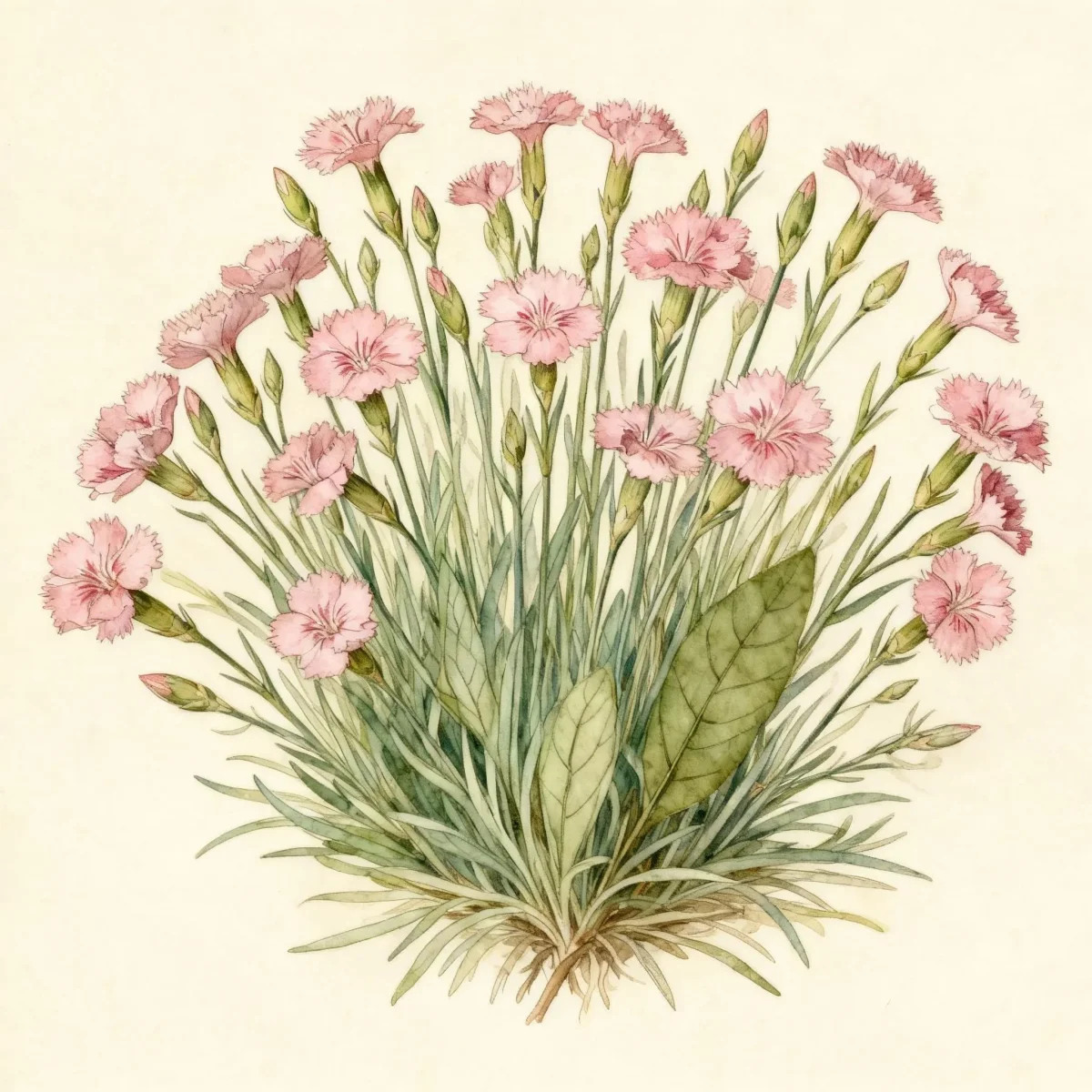
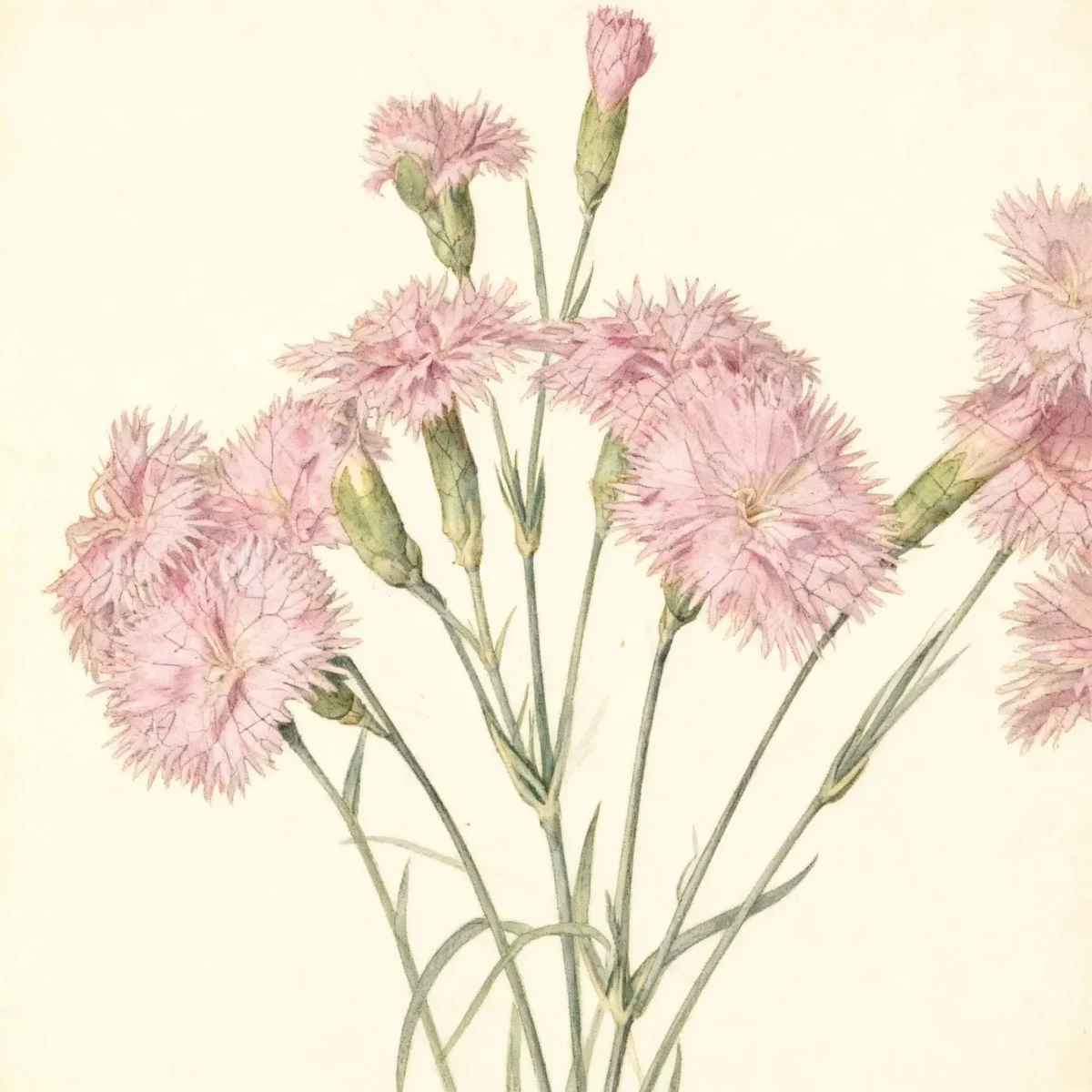
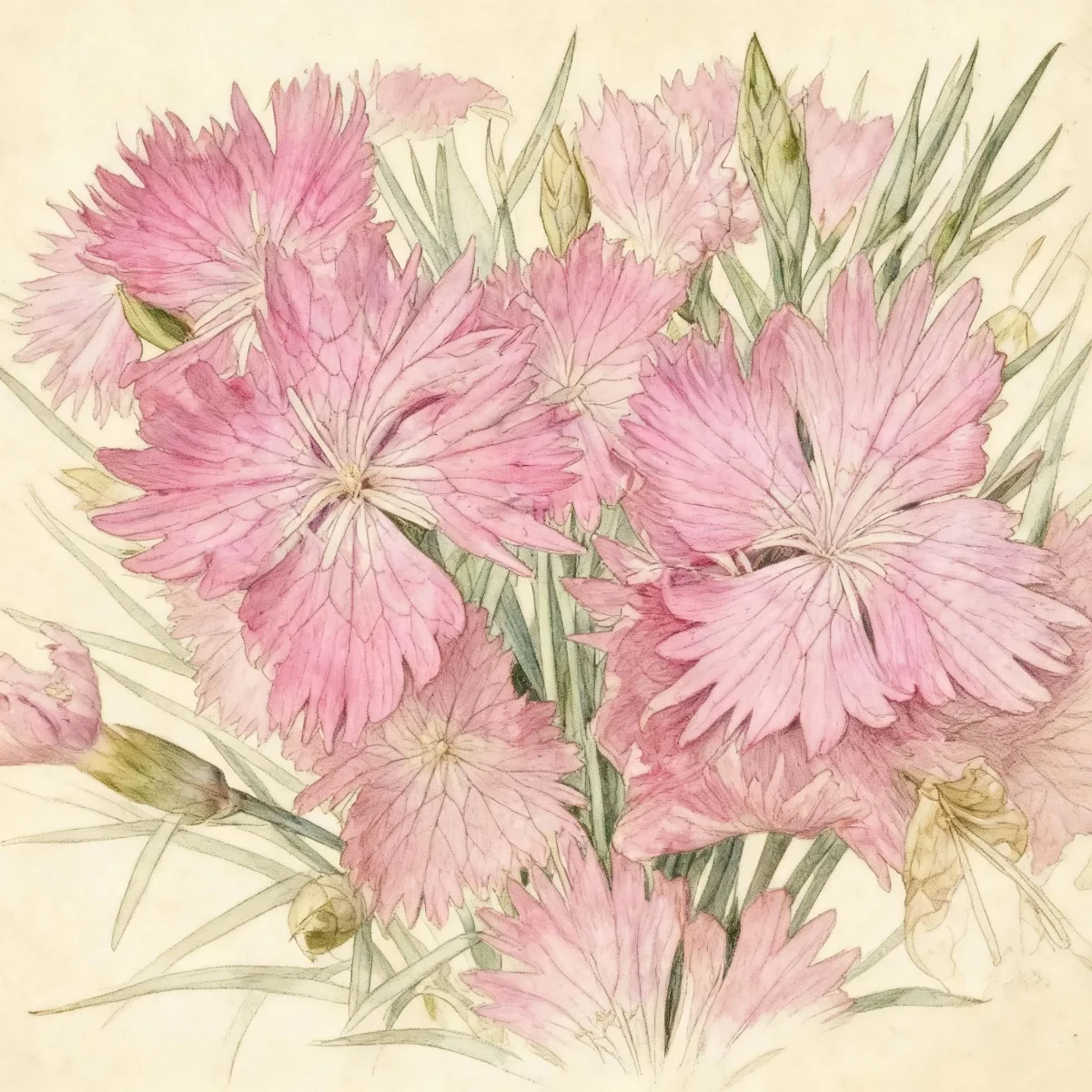
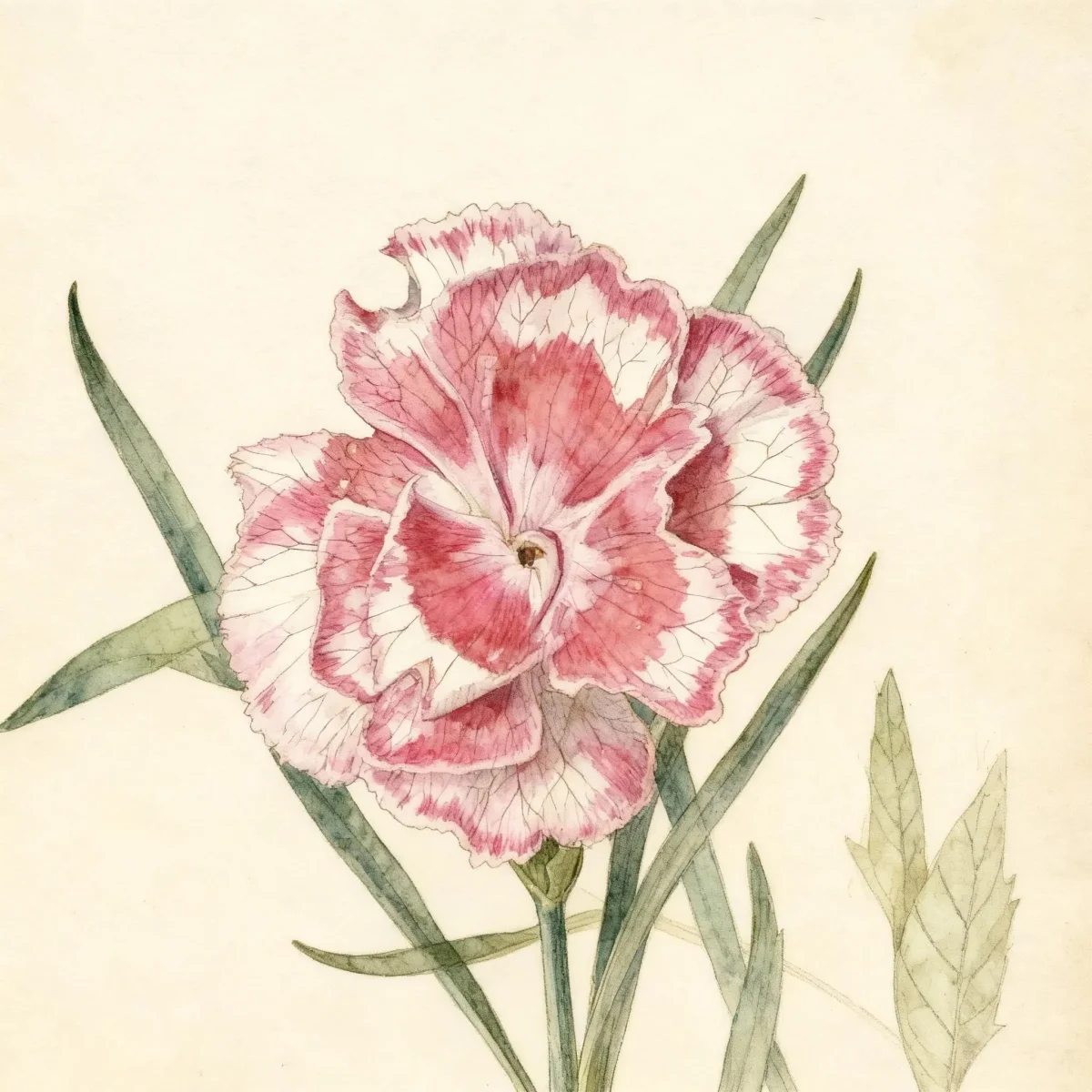
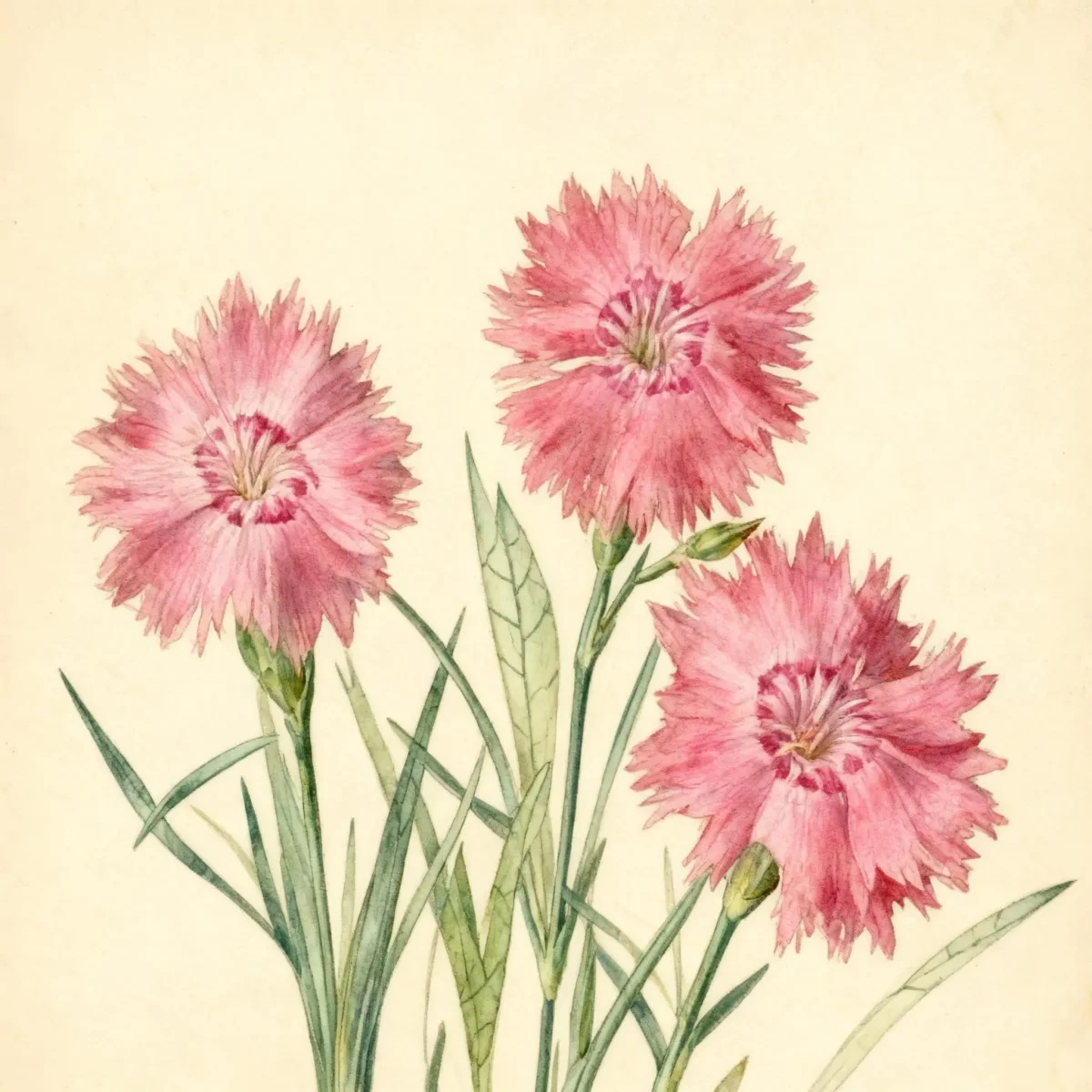
Cheddar pink (Dianthus gratianopolitanus 'Grandiflorus')
Dianthus gratianopolitanus 'Grandiflorus' (Cheddar pink) forms mats of fragrant rose-pink flowers. Low maintenance perennial perfect for borders and rocks.

Bloom Boldly, No Matter the Season - Sweatshirt
Cozy organic cotton sweatshirt featuring our exclusive Purple Coneflower design. Perfect for gardeners who bloom year-round.
Inspired by the beautiful Cheddar pink
Limited first batch (50) — join the waitlist for early access
Waitlist closes Feb 15, 2026.
Complete Plant Information
Field Guide Continues
Ready for care notes, companion picks, and planting tips?
The map is just the start. The full guide below covers growth habits, seasonal performance, and landscape uses.
Overview
Dianthus gratianopolitanus ‘Grandiflorus’, commonly known as Cheddar pink, is a highly valued mat-forming herbaceous perennial celebrated for its dense, long-lasting foliage and abundant blooms. Gardeners prize this variety for the clusters of fragrant, showy, rose-pink flowers that appear profusely in late spring and early summer. The striking blue-gray, grassy foliage creates an excellent textural contrast in perennial beds.
This plant brings significant ornamental value to the landscape, often performing well even in challenging sites where other perennials struggle. Dianthus gratianopolitanus ‘Grandiflorus’ is notably more heat, humidity, and drought-tolerant than many of its dianthus cousins, making it a reliable performer, especially in southeastern climates.
Cultivating Dianthus gratianopolitanus ‘Grandiflorus’ is straightforward, requiring minimal effort once established, provided its crucial drainage needs are met. Its spreading habit makes it an effective groundcover, offering persistent seasonal interest with its attractive mounding form and springtime floral display.
Fast Facts
- Plant Family: Caryophyllaceae
- Plant Type: Herbaceous perennial
- Hardiness Zones: USDA Zones 4-8
- Size at Maturity:
- Height: 0.5-1 ft
- Spread: 1-2 ft
- Bloom Time: May to July
- Bloom Description: Rose pink
- Sun Exposure: Full sun
- Water Needs: Medium
- Maintenance Level: Low
How to Grow
Planting Cheddar pink in the spring or fall is ideal, allowing it to settle before summer heat or winter cold. The most crucial requirement for Dianthus gratianopolitanus ‘Grandiflorus’ is excellent drainage; plant it in average, medium moisture, well-drained soils. This variety favors fertile, slightly alkaline, somewhat gritty loams, preventing crown rot, which thrives in wet winter conditions.
Routine care is minimal due to its low maintenance classification. Water thoroughly when the soil is mid-way dry, maintaining medium moisture levels consistently during the blooming period. While it tolerates occasional drought, avoid soil saturation. Fertilization is usually unnecessary unless soils are extremely poor; however, if needed, use a balanced, slow-release fertilizer applied sparingly in early spring.
To encourage repeat blooming throughout the rest of the summer, promptly remove spent flowers (deadheading). This process can be labor-intensive but extends the colorful display. After the primary flowering concludes, lightly shearing the entire plant back helps maintain a tidy, dense carpet of ornamental foliage until the next season begins. As a hardy perennial, it generally requires little winter protection if drainage is adequate.
Landscape Uses
Dianthus gratianopolitanus ‘Grandiflorus’ excels anywhere a low, spreading mat of texture and color is desired. It is exceptionally well-suited for rock gardens, providing soft, colorful mounds nestled between stones. Use it along border fronts to soften hard edges or in cottage gardens where its fragrant blooms contribute to nostalgic charm.
The gentle draping habit of Cheddar pink makes it perfect for spilling over the edges of retaining walls or containers, softening architectural lines beautifully. Furthermore, this dianthus serves as an effective small-area groundcover, slowly spreading to blanket the soil. Its drought and heat tolerance make it an interesting choice for difficult, rocky slopes where shallow-rooted plants often struggle.
Standout Features
Flower Qualities
- Showy
- Fragrant
Noteworthy Characteristics
Dianthus gratianopolitanus, commonly known as cheddar pink, is a mat-forming perennial that produces numerous, fragrant, usually solitary, rose-pink flowers (each to 1” diameter) which bloom in May-June atop wiry stems rising above a tufted mound of foliage to as much as 12” tall. The glaucous, grassy, linear leaves form a dense spreading mat of blue-gray to gray-green foliage which is attractive throughout the growing season. Notably, the ‘Grandiflorus’ cultivar features flowers slightly larger than the straight species, reaching up to 1.5” in diameter.
Tolerances
- Deer
Potential Problems
Crown rot is the primary risk for Dianthus gratianopolitanus ‘Grandiflorus’, attacking plants situated in moist to wet, poorly drained soils, particularly during winter dormancy. By contrast, this dianthus exhibits resilience against most common insect pests and serious diseases. Prevention focuses entirely on soil management; ensure the planting site is sharply draining and slightly gritty to mitigate moisture buildup around the crown, ensuring the longevity of your Cheddar pink.
Frequently Asked Questions
What hardiness zones is Cheddar pink suitable for?
Dianthus gratianopolitanus ‘Grandiflorus’ is winter hardy across USDA Zones 4 through 8.
How large does Cheddar pink grow?
At maturity, this perennial typically reaches a height between 0.5 to 1 foot tall, spreading outward to cover an area between 1 and 2 feet wide.
What sun exposure does Dianthus gratianopolitanus ‘Grandiflorus’ need?
This durable perennial requires full sun exposure to thrive, bloom profusely, and maintain the densest foliage mat.
When does Cheddar pink bloom?
Cheddar pink produces its main flush of fragrant, rose pink flowers from May through July, with potential for intermittent bloom afterward if consistently deadheaded.
Conclusion
The combination of fragrance, showy pink blooms, and durable, blue-green mat-forming foliage makes Dianthus gratianopolitanus ‘Grandiflorus’ an exceptional addition to sunny garden spaces. Its relatively low maintenance and tolerance for heat and drought confirm the status of Cheddar pink as a garden workhorse. Before planting, confirm your site has the sharp drainage required, and place this beauty where its spreading form can be best appreciated.
Propagation Tips
Growing Dianthus gratianopolitanus ‘Grandiflorus’ from seed is a viable option, especially for gardeners looking to produce many plants cheaply for groundcover or massed displays. Since the species can be grown from seed, start them indoors several weeks before the last expected frost for early summer blooming. For maintaining the specific characteristics of the cultivar, vegetative propagation through stem cuttings taken from new summer growth is recommended.
Companion Planting
Cheddar pink performs best with neighbors that share its love for full sun and excellent drainage. Pair it with Mediterranean herbs like Thyme or Oregano, which have similar soil preferences. Low-growing Sedums or Sempervivum are excellent companions in rock gardens, as they provide seasonal interest in the shoulders of the season when the Dianthus is not in full bloom, ensuring textural coverage throughout the year.