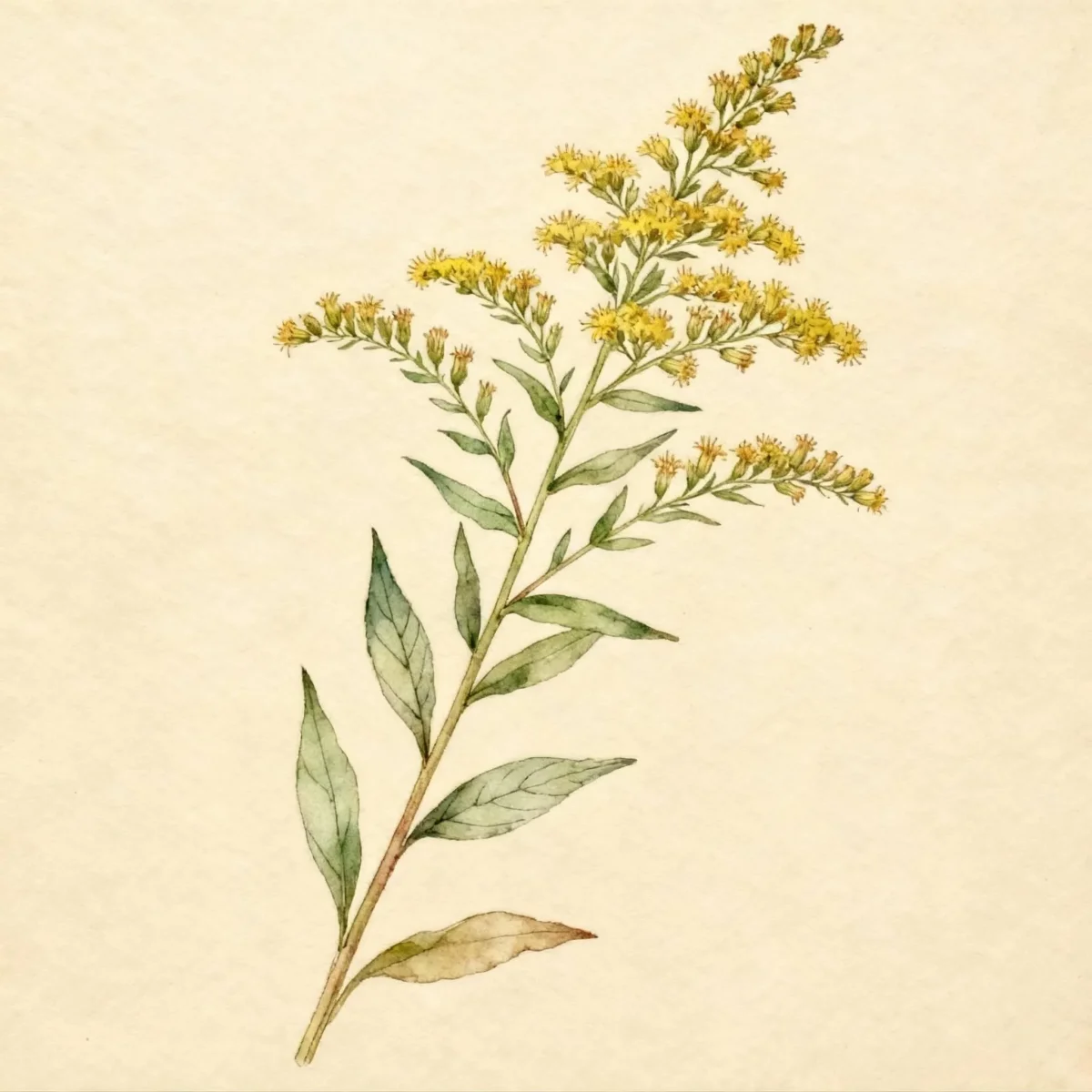
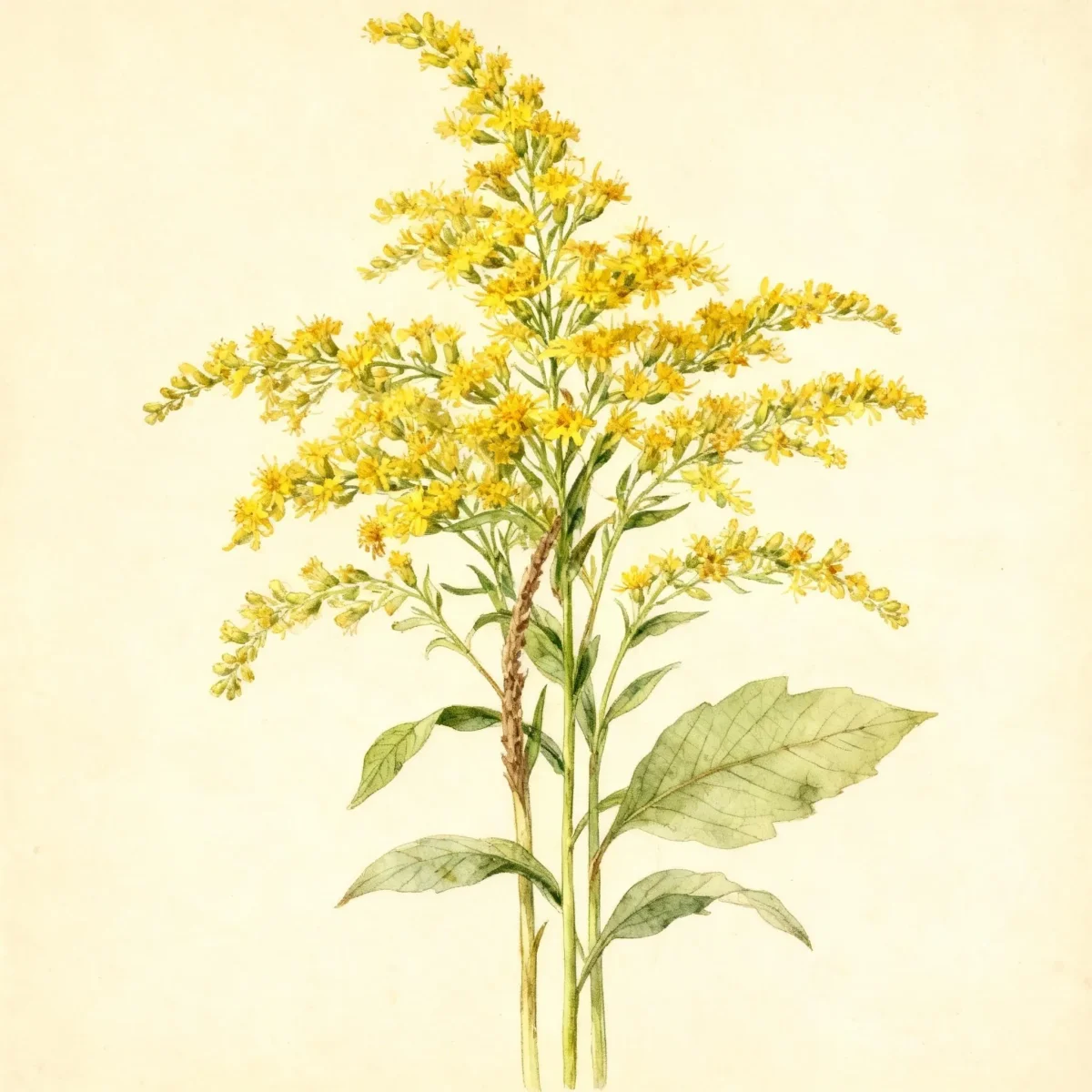
Rough goldenrod (Solidago rugosa 'Fireworks')
Solidago rugosa 'Fireworks', Rough goldenrod, offers spectacular late-season yellow blooms and thrives in wet soil.

Bloom Boldly, No Matter the Season - Sweatshirt
Cozy organic cotton sweatshirt featuring our exclusive Purple Coneflower design. Perfect for gardeners who bloom year-round.
Inspired by the beautiful Rough goldenrod
Limited first batch (50) — join the waitlist for early access
Waitlist closes Feb 15, 2026.
Complete Plant Information
Field Guide Continues
Ready for care notes, companion picks, and planting tips?
The map is just the start. The full guide below covers growth habits, seasonal performance, and landscape uses.
Overview
Solidago rugosa ‘Fireworks’ is a spectacular late-season bloomer highly valued for its vibrant display when many other perennials start fading. This cultivar of Rough goldenrod produces dense, plume-like panicles of bright yellow flowers held above the foliage, creating a dramatic, airy effect reminiscent of its namesake. Its robust nature ensures it remains an attractive and resilient feature in the fall garden landscape.
As an herbaceous perennial, Solidago rugosa ‘Fireworks’ offers reliable structure and texture year after year. It thrives in diverse soil conditions, provided moisture levels are adequate, making it an excellent choice for challenging or damp spots in the garden. This goldenrod also serves a crucial ecological role by providing vital late-season nectar for pollinators.
Gardening with Rough goldenrod is straightforward due to its low maintenance requirements and adaptability. Whether used as a structural element in a rain garden or massed in a naturalized meadow, the consistent performance and late-season interest of Solidago rugosa ‘Fireworks’ make it an essential plant for extending the season of color.
Fast Facts
- Plant Family: Asteraceae
- Plant Type: Herbaceous perennial
- Hardiness Zones: USDA Zones 4-8
- Size at Maturity:
- Height: 3-3.5 ft
- Spread: 2.5-3 ft
- Bloom Time: September to October
- Bloom Description: Yellow
- Sun Exposure: Full sun
- Water Needs: Medium to wet
- Maintenance Level: Low
How to Grow
Plant Solidago rugosa ‘Fireworks’ during spring or fall, allowing it time to establish roots before extreme weather hits. It thrives best when situated in full sun, though it will tolerate light shade. The ideal environment features average, slightly acidic soils that retain moisture—a key consideration since this plant prefers medium to wet conditions. Ensure the soil is well-drained to prevent standing water stagnation, despite its preference for dampness.
Watering needs are generally moderate; once established in a consistently moist area, supplemental water may only be required during prolonged dry spells. Fertilization is rarely necessary. Rough goldenrod has evolved to handle the nutrient profile of its native habitats, and over-fertilizing can lead to excessive, floppy vegetative growth.
Maintenance for this rhizomatous spreader is mostly focused on management rather than intensive care. Since Solidago rugosa ‘Fireworks’ spreads moderately via rhizomes, heavy-handed gardeners may need to divide plants every two to three years to maintain desired spacing and prevent overcrowding in mixed borders. Cut back stems close to the ground in late winter or early spring before new growth begins.
This tough perennial may self-seed lightly in the garden, an action gardeners can either encourage for naturalized drifts or manage by deadheading faded plumes if self-seeding is unwelcome. Its general ruggedness means pests and diseases are rarely a serious issue.
Landscape Uses
The recommended uses for Solidago rugosa ‘Fireworks’ perfectly illustrate its versatility, particularly in functional landscape designs. Its upright habit and late bloom make it an excellent choice for adding structure and intense yellow contrast to the back or middle of the perennial border as summer transitions to autumn. Similarly, its tolerance for wet feet makes it a cornerstone in rain gardens where it effectively manages runoff while providing reliable color.
For a strong naturalistic effect, mass planting Rough goldenrod within a wild garden or meadow setting allows its flowing flower structure to shine. Integrate it alongside other late-season bloomers like Asters or Joe Pye Weed, ensuring companion plants share similar moisture requirements (medium to wet). Its vertical lines contrast beautifully with lower, mounding perennials.
Because Solidago rugosa ‘Fireworks’ provides such crucial late nectar, even in smaller gardens it can anchor a pollinator patch. Consider pairing its bright plumes with deep purple or blue flowers to maximize the visual impact during its September and October shows.
Standout Features
Flower Qualities
- Showy
Noteworthy Characteristics
Solidago rugosa, commonly called rough goldenrod, rough-stemmed goldenrod or wrinkle-leaved goldenrod, features panicles of showy yellow flowers in late summer to fall (August to October). Flowers bloom at the ends of rough, hairy, often unbranched stems clad with hairy, ovate to lanceolate, medium to dark green leaves (to 4” long) with crenate to sharply serrate margins and broad-margined stalks. Deep pinnate veins give the leaves a rough and wrinkled appearance. ‘Fireworks’ features tiny, bright yellow flowers borne in dense, plume-like panicles on the ends of stiff, alternate-leaved stems typically growing 3-3.5’ tall.
Tolerances
- Deer
- Clay Soil
- Wet Soil
Potential Problems
This goldenrod variety is generally robust, showing no serious insect or disease problems under ideal circumstances. Gardeners should remain vigilant for common fungal issues like rust, powdery mildew, or leaf spot, especially in humid conditions or areas with poor air circulation. Ensuring adequate spacing, aligned with its 2.5 to 3-foot spread, helps mitigate these issues.
The primary management concern for Solidago rugosa ‘Fireworks’ relates to its spreading nature. As a rhizomatous plant, it can become quite vigorous in optimal, consistently moist conditions. To maintain control in smaller settings, periodic division every 2 to 3 years is recommended to prevent it from overwhelming nearby plantings.
Frequently Asked Questions
What hardiness zones is Rough goldenrod suitable for?
Solidago rugosa ‘Fireworks’ is reliably hardy across USDA Zones 4 through 8.
How large does Rough goldenrod grow?
This cultivar typically reaches a height of 3 to 3.5 feet and spreads between 2.5 and 3 feet wide at maturity.
What sun exposure does Solidago rugosa ‘Fireworks’ need?
The plant performs best in full sun, although it exhibits tolerance for sites receiving light shade.
When does Rough goldenrod bloom?
This variety provides its characteristic yellow flowers during the late season, blooming reliably from September into October.
Conclusion
Solidago rugosa ‘Fireworks’ is an indispensable plant for adding consistent, vibrant color to the landscape precisely when floral interest wanes. Its reliable performance, suitability for wet soils, and high value to pollinators secure its place in ecological and formal gardening designs alike. Before planting, confirm your site conditions align with the sun and moisture needs of Rough goldenrod, and enjoy the spectacular autumnal display this cultivar offers.
Wildlife Benefits
The dense, late-season flower clusters of Solidago rugosa ‘Fireworks’ make it a critical resource for local ecosystems. Goldenrods are magnets for native bees, butterflies, and other beneficial insects preparing for winter or migration. Unlike its infamous counterpart, ragweed, the pollen from this goldenrod is heavy and insect-borne, meaning it does not cause the hay fever often blamed on wind-pollinated species.
Planting Solidago rugosa ‘Fireworks’ supports biodiversity well into autumn. By providing nectar and pollen sources after primary summer blooms have faded, you offer essential refueling stations for pollinators. This makes the Rough goldenrod an invaluable structural plant for any dedicated wildlife garden or naturalized border.
Companion Planting
Given the preference of Solidago rugosa ‘Fireworks’ for medium to wet soils and full sun, successful companions should share these requirements. Excellent partners include Purple Coneflower (Echinacea purpurea) if sited slightly drier, or specific moisture-loving Asters and Sedges (Carex species). Avoid pairing it with plants that demand sharp drainage or dry shade, as the constant moisture required by the goldenrod will harm them.
When designing with this plant, consider textural contrast. The fine, lacy texture of the yellow ‘Fireworks’ plumes pairs superbly against bold, broad leaves or spikier flower forms like those found in Liatris or tall ornamental grasses. This interplay of form enhances the visual interest throughout the late summer and fall season.