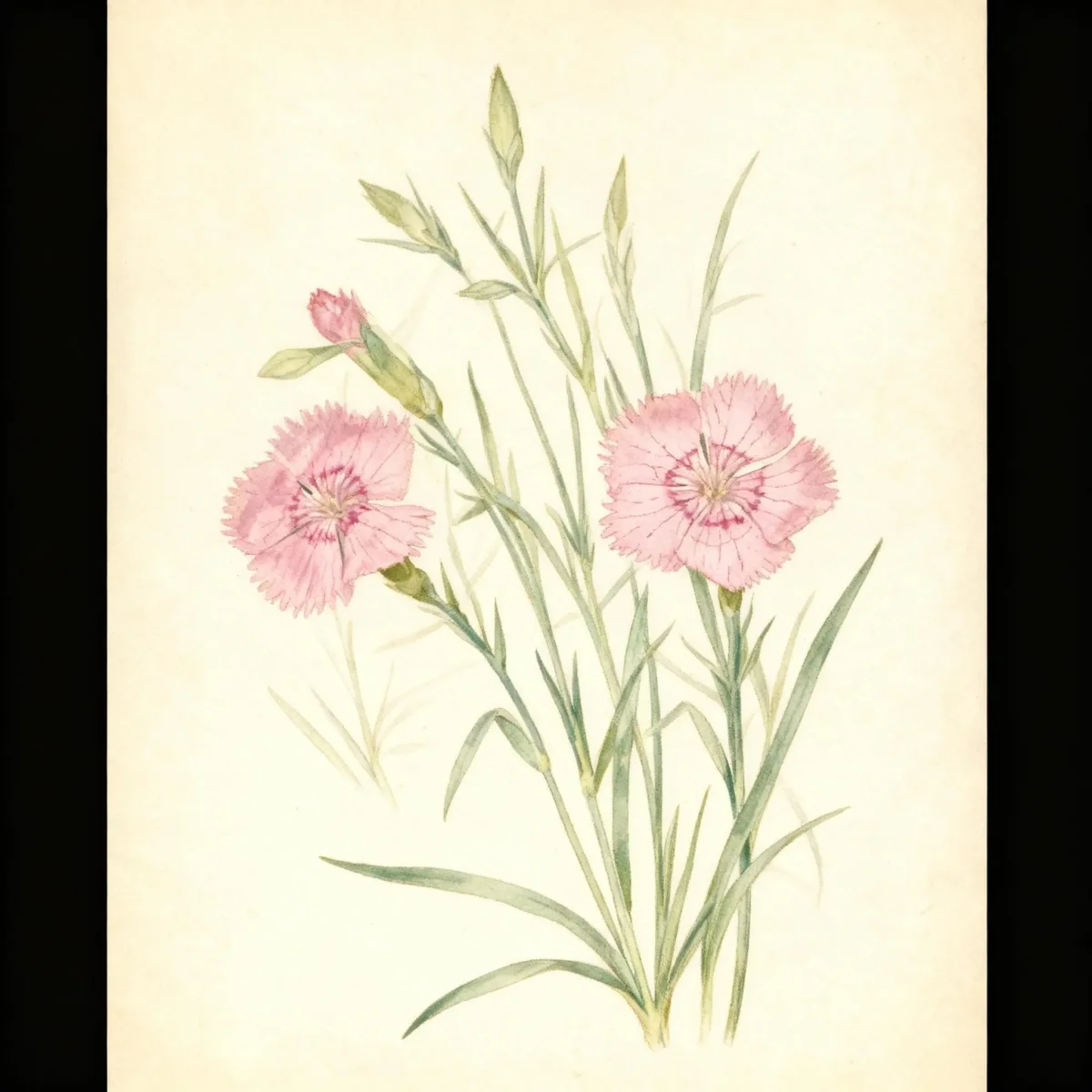
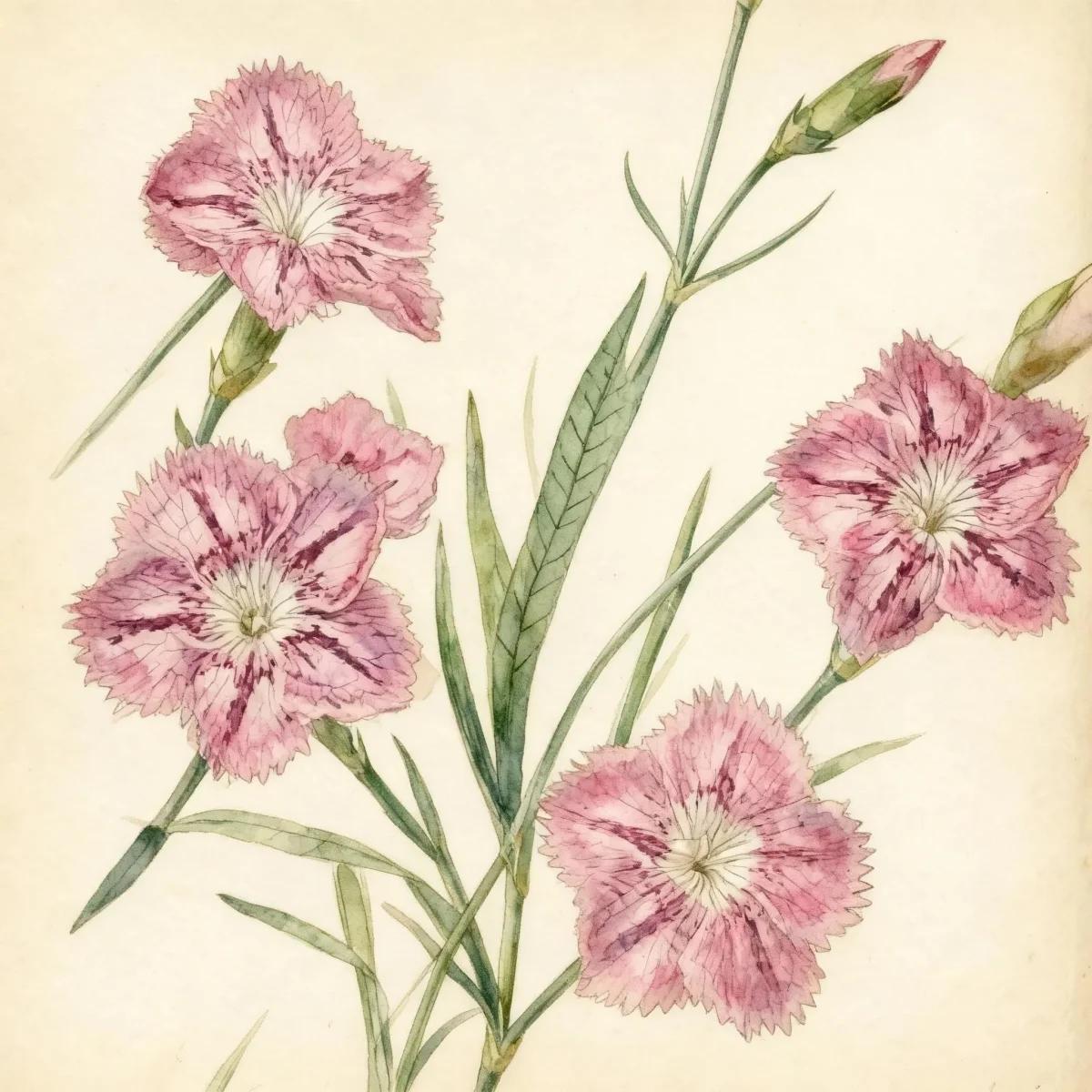
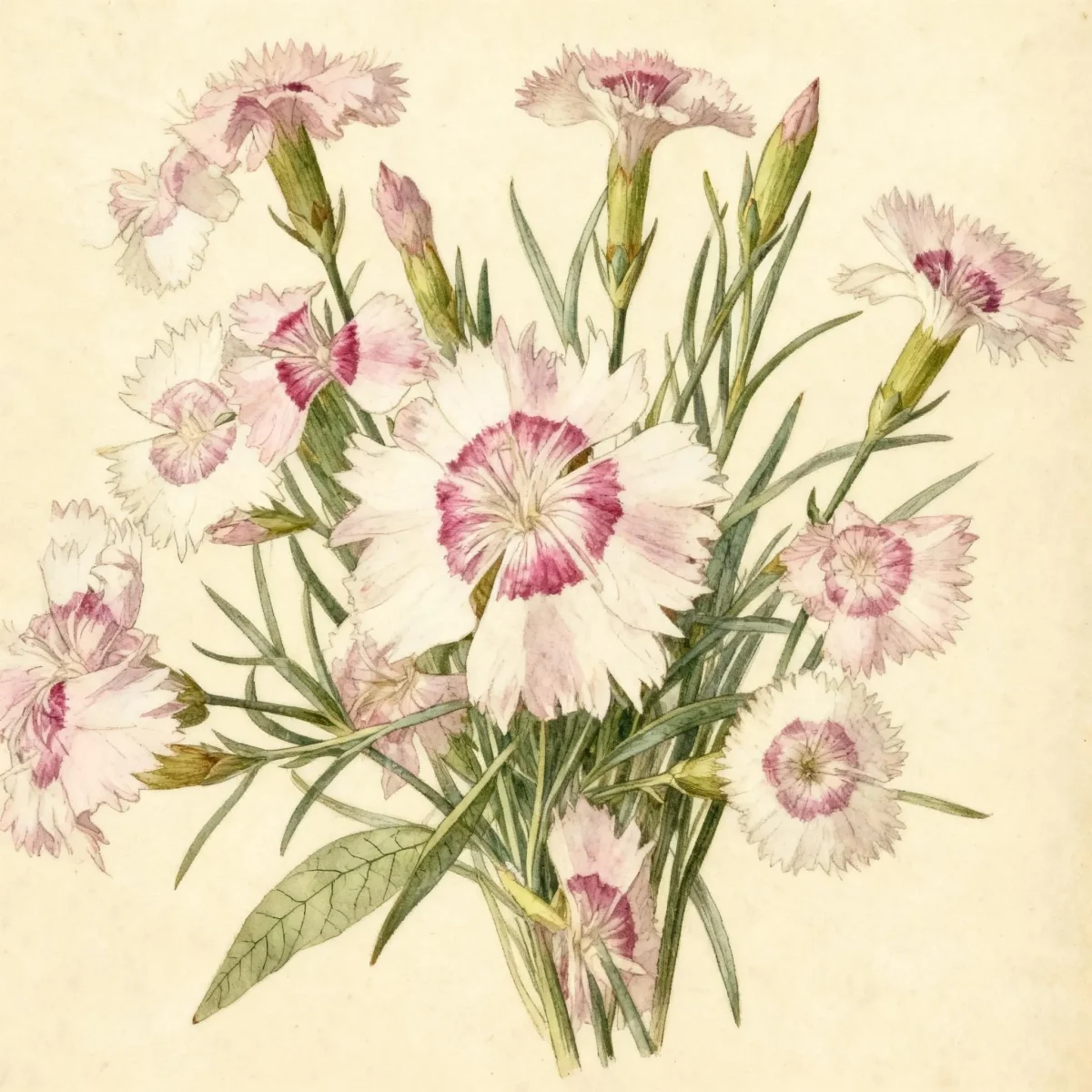
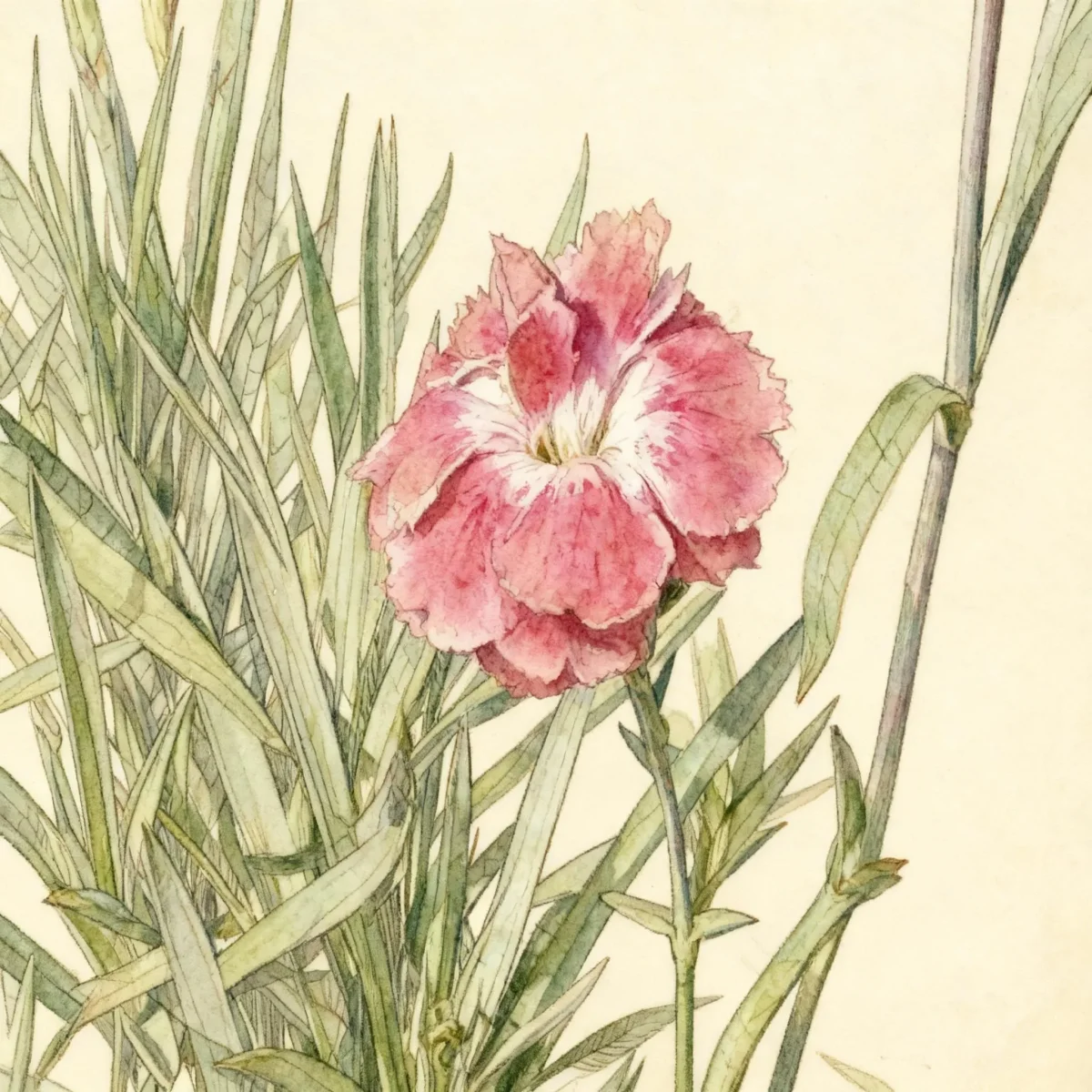
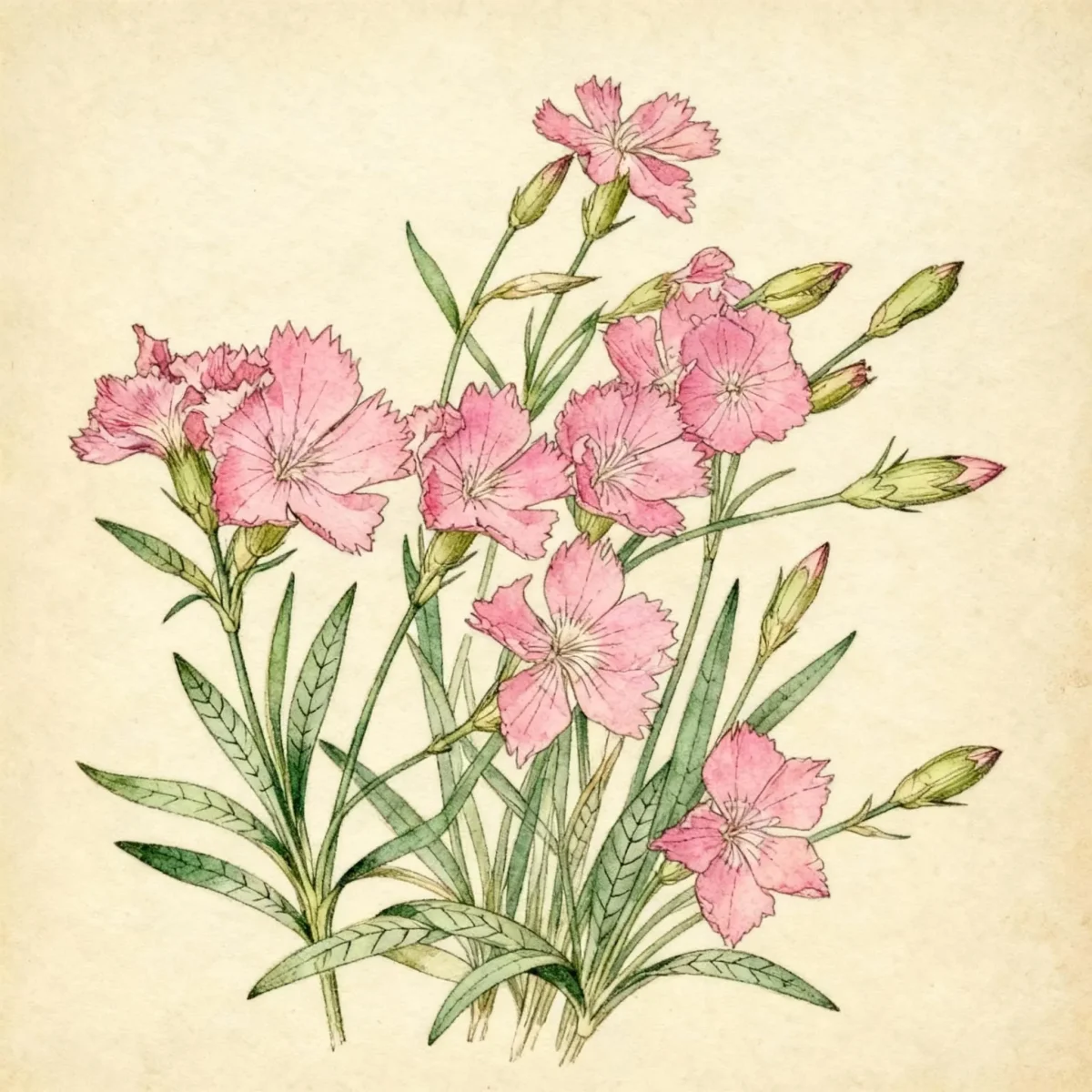
Pink (Dianthus plumarius 'Itsaul White')
Dianthus plumarius 'Itsaul White' is a fragrant, showy Pink, perfect for borders needing low-maintenance, white-flowering ground cover.


Bloom Boldly, No Matter the Season - Sweatshirt
Cozy organic cotton sweatshirt featuring our exclusive Purple Coneflower design. Perfect for gardeners who bloom year-round.
Inspired by the beautiful Pink
Limited first batch (50) — join the waitlist for early access
Waitlist closes Feb 15, 2026.
Complete Plant Information
Field Guide Continues
Ready for care notes, companion picks, and planting tips?
The map is just the start. The full guide below covers growth habits, seasonal performance, and landscape uses.
Overview
Dianthus plumarius ‘Itsaul White’, commonly known as Pink, offers gardeners a delightful, low-maintenance option for adding texture and fragrance to sunny borders. This specific cultivar features semi-double white flowers that rise just above a mat of attractive, narrow, gray-green evergreen foliage. Its compact nature makes Dianthus plumarius ‘Itsaul White’ extremely versatile in smaller garden spaces.
As a herbaceous perennial, this Pink is valued for its tidy growth habit, typically remaining under one foot tall. Its resilience across USDA Zones 3 through 9 confirms its suitability for many climates, provided its crucial soil drainage needs are met. Gardeners appreciate the continuous display offered by Dianthus plumarius ‘Itsaul White’ when deadheaded regularly.
Beyond its aesthetic charm, the fragrance and visual appeal—resulting in showy, fringed blooms—make this plant a key component for cutting gardens or cottage-style arrangements. The mat-forming foliage provides excellent winter interest where temperatures are mild enough to keep the leaves evergreen.
Fast Facts
- Plant Family: Caryophyllaceae
- Plant Type: Herbaceous perennial
- Hardiness Zones: USDA Zones 3-9
- Size at Maturity:
- Height: 0.5-0.75 ft
- Spread: 1-1.5 ft
- Bloom Time: May to July
- Bloom Description: White
- Sun Exposure: Full sun
- Water Needs: Medium
- Maintenance Level: Low
How to Grow
Planting Dianthus plumarius ‘Itsaul White’ should occur in spring after the danger of hard frost has passed. The primary requirement for success with this Pink is excellent drainage; it thrives in average, medium-moisture, well-drained soils. Incorporating leaf mold or other organic material helps gritty loams retain slight moisture, which is beneficial during hot summers.
Ongoing care centers around moisture management and appearance. Water consistently, maintaining medium soil moisture, but avoid wet, poorly drained conditions, which can quickly lead to crown rot. While prompt deadheading prolongs the bloom period for Dianthus plumarius ‘Itsaul White’, busy gardeners might find it more practical to shear the entire plant back lightly after the main bloom flush to encourage the foliage cushion effect.
Division is a straightforward propagation method, best performed in the spring when new growth begins. Be mindful that Dianthus plumarius, in general, does not perform well where summer heat is intense and prolonged, so planting in an area that receives afternoon relief, if necessary, can improve longevity.
Landscape Uses
Dianthus plumarius ‘Itsaul White’ excels near the front of a border where its low height and fine foliage can be fully appreciated. Its use as edging along pathways or sidewalks highlights the neat, mounding habit of this Pink selection. It is equally at home providing seasonal color in cottage gardens or nestled among the foliage mounds of peony or rose beds.
For rock gardens, the need for sharp drainage makes this a perfect fit, particularly when paired with other sun-loving, gritty-soil companions such as Sedum or creeping Thyme. Because Dianthus plumarius ‘Itsaul White’ is so adaptable to containers, it can bring its signature fragrance and white blooms right up to seating areas or patios.
Standout Features
Flower Qualities
- Showy
- Fragrant
- Good Cut
Noteworthy Characteristics
Dianthus plumarius typically forms a compact, mat-forming habit, growing 9-12” tall and spreading outwards. Fringed, fragrant blooms appear in late spring to early summer, with deadheading extending this display. The foliage consists of narrow, grass-like, gray-green leaves that are usually evergreen. The ‘Itsaul White’ cultivar specifically offers semi-double white flowers on stems reaching about 8” high, having been introduced as an Itsaul Plant selection.
Tolerances
- Deer
Potential Problems
Dianthus plumarius ‘Itsaul White’ generally enjoys robust health, with no serious insect or disease issues typically noted. The most significant threat comes from poor soil conditions; crown rot frequently attacks plants situated in moist or wet, poorly drained soils. Monitor for common garden pests such as slugs, cutworms, aphids, caterpillars, thrips, and red spider mites. Maintaining sharp drainage is the best preventative measure against fungal issues in your Pink plantings.
Frequently Asked Questions
What hardiness zones is Pink suitable for?
Dianthus plumarius ‘Itsaul White’ is highly adaptable, thriving in USDA Zones 3 through 9.
How large does Dianthus plumarius ‘Itsaul White’ grow?
This perennial usually reaches a height between 0.5 and 0.75 feet tall, spreading to cover an area of 1 to 1.5 feet wide.
What sun exposure does Pink need?
This plant requires full sun to achieve its best flowering performance and maintain its compact shape.
When does Dianthus plumarius ‘Itsaul White’ bloom?
The white flowers appear predominantly from May through July, offering season-long color if managed appropriately.
Conclusion
Dianthus plumarius ‘Itsaul White’ remains a celebrated choice for gardeners seeking perpetual fragrance, reliable low maintenance, and excellent texture from their cool-season bloomers. This beautiful Pink provides semi-double white flowers that attract attention without demanding constant fuss. Before planting your Dianthus plumarius ‘Itsaul White’, confirm your site offers full sun and, critically, soil that drains exceptionally fast.
Companion Planting
When selecting companions for Dianthus plumarius ‘Itsaul White’, focus on plants that share its love for gritty, neutral to slightly alkaline soils and full sun exposure. Plants like Lavender, Thyme varieties, and Hens and Chicks (Sempervivum) naturally complement the Pink’s cultural needs and fine texture. Pairing it with these neighbors creates a drought-tolerant, low-growing tapestry of contrasting foliage and long-lasting summer color.
Propagation Tips
While division provides the easiest way to maintain clumps of Dianthus plumarius ‘Itsaul White’, propagation from tip cuttings is also highly effective. Take soft-wood cuttings from healthy, non-flowering growth during the summer months. Ensure the growing medium remains consistently moist but never saturated, and provide bottom warmth if possible to encourage rapid root development. This method allows you to increase your stock of this desirable snowy white Pink easily.