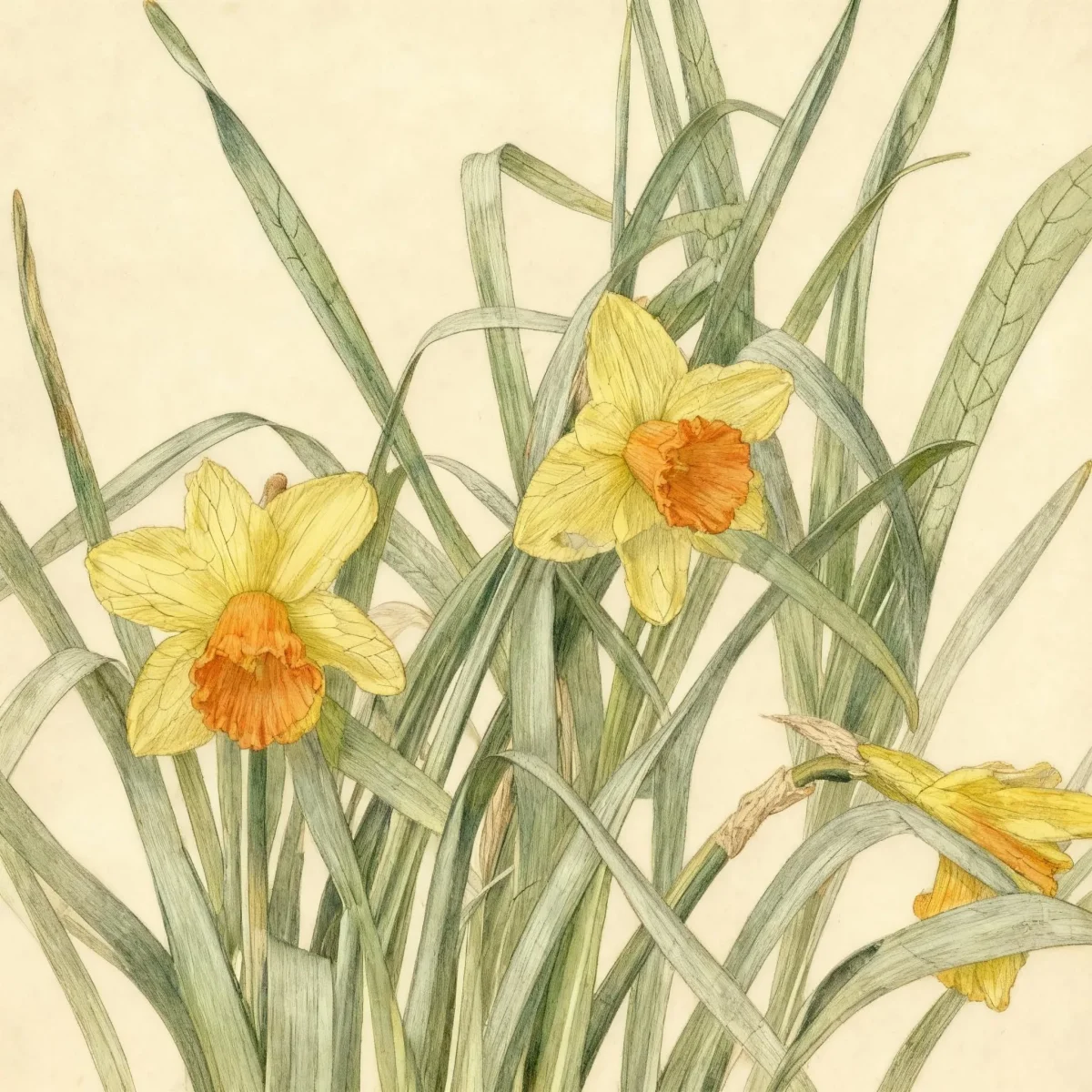
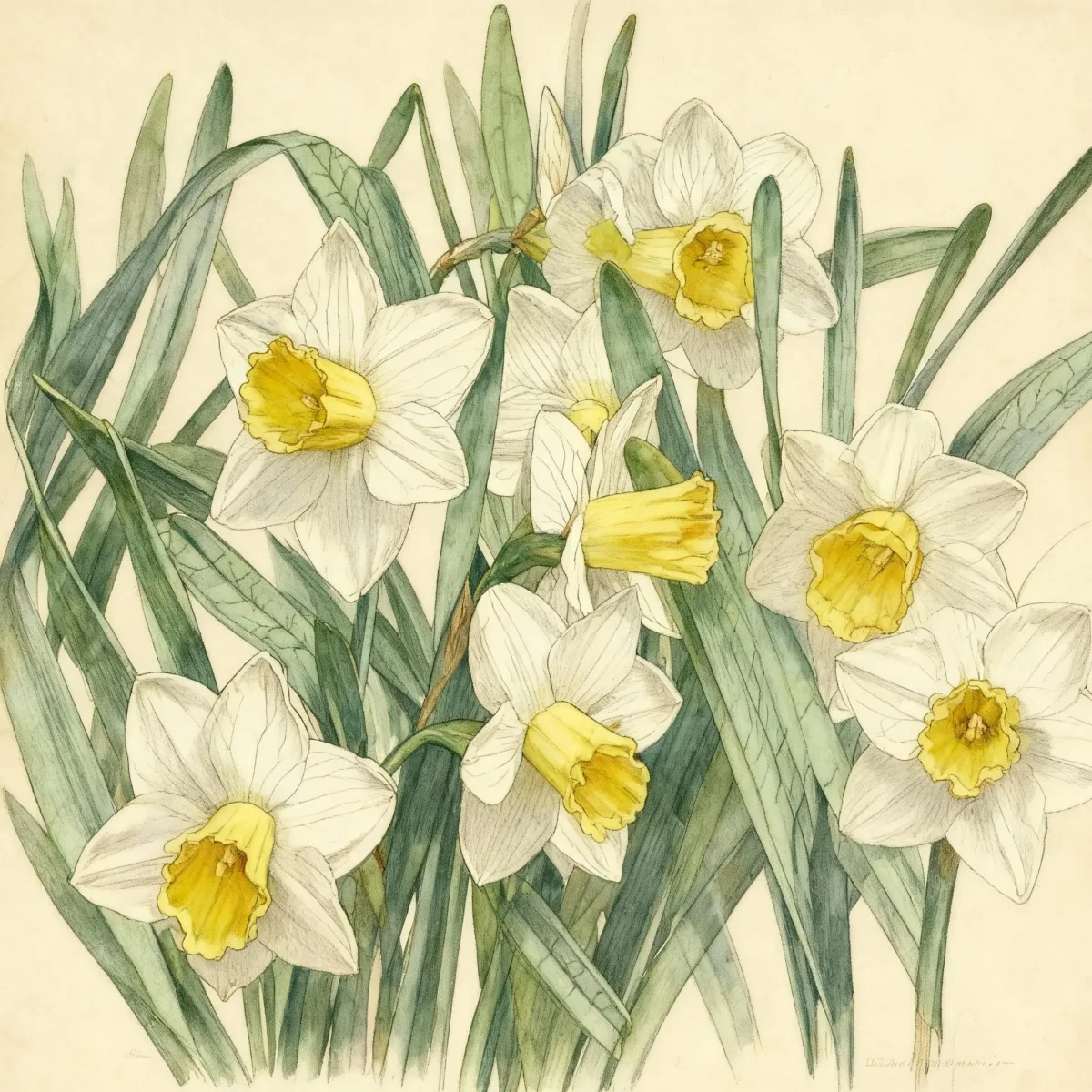
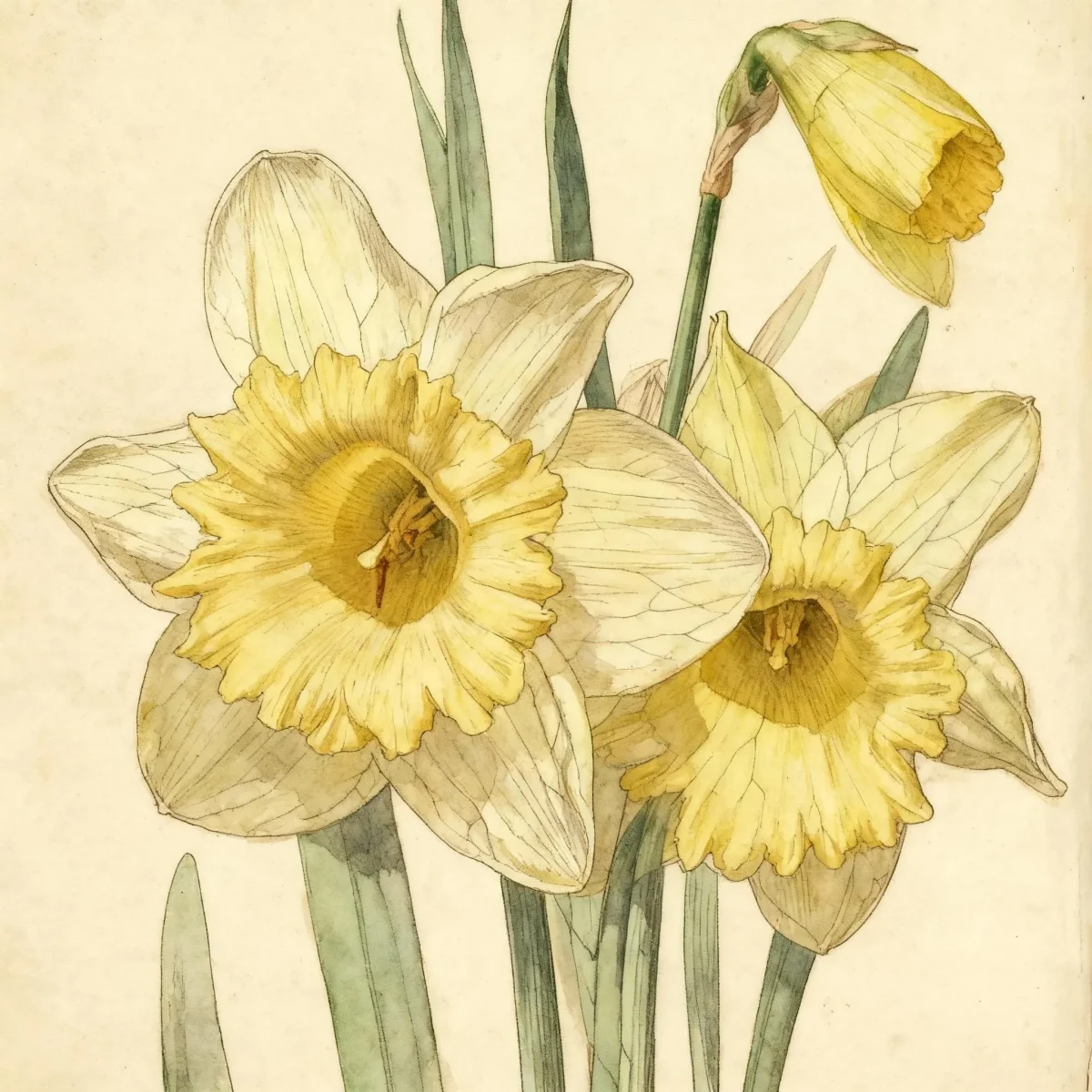
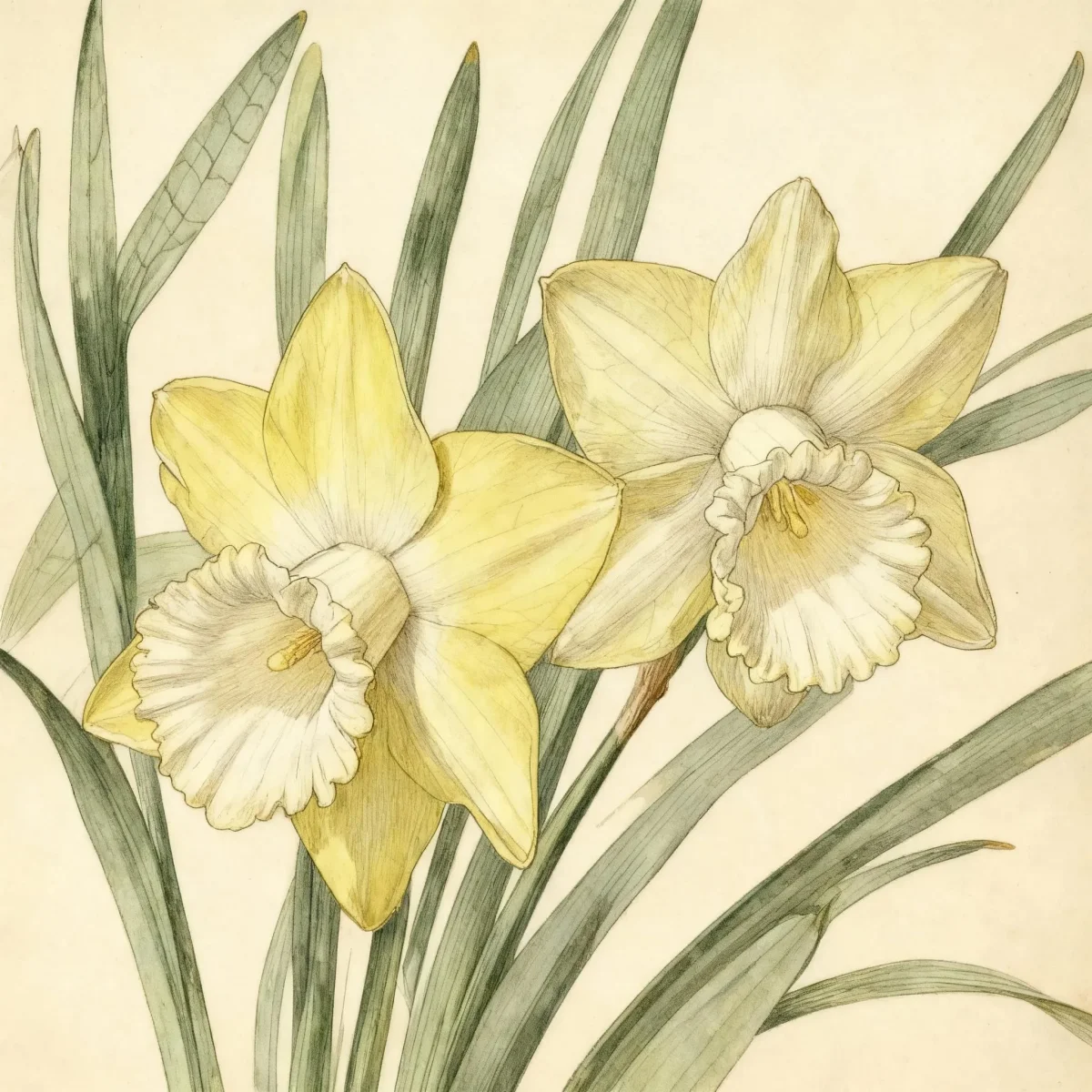
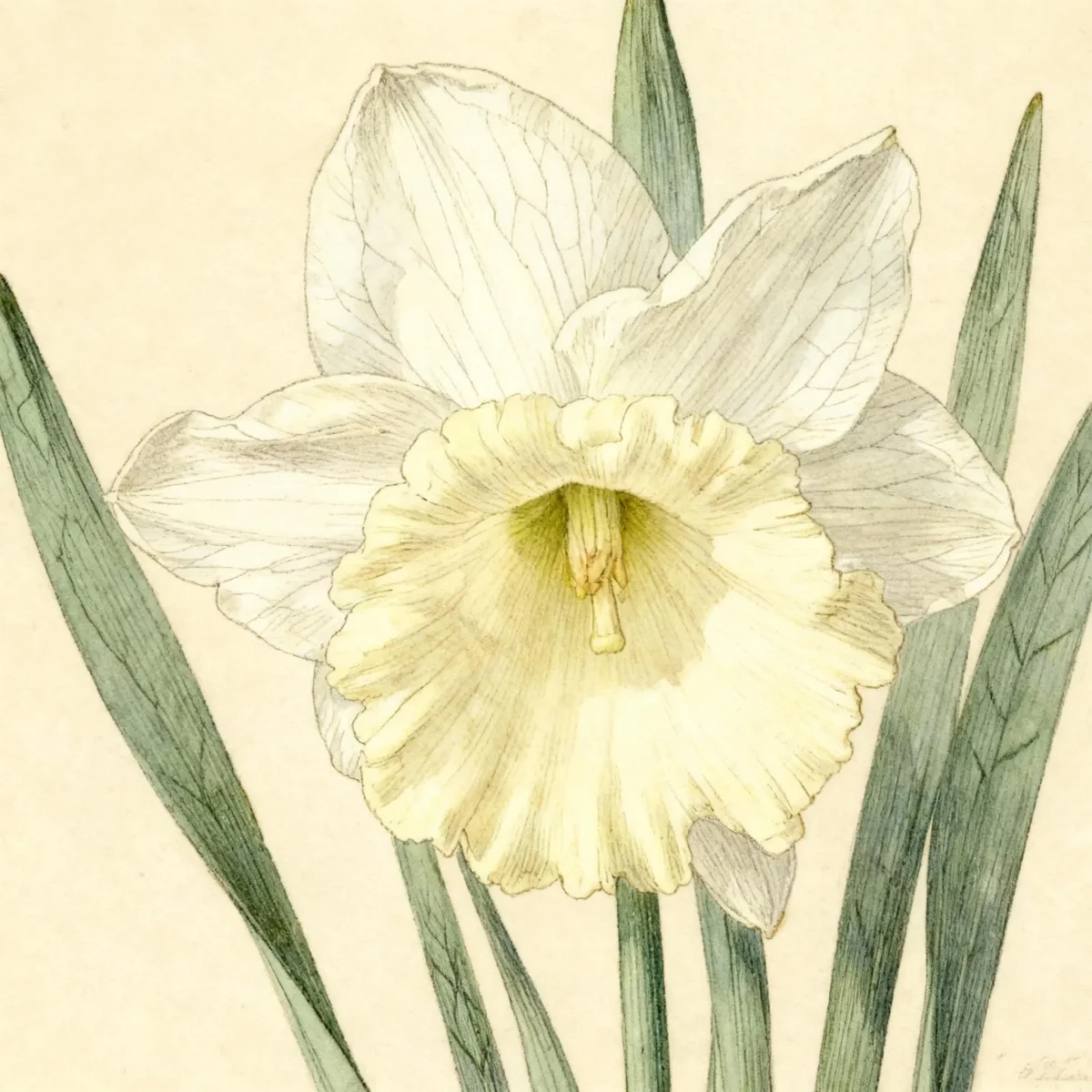
Trumpet daffodil (Narcissus 'Lugano')
Stunning Narcissus 'Lugano' trumpet daffodil offers primrose yellow petals and a contrasting white trumpet. Low maintenance bulb for zones 3-8.
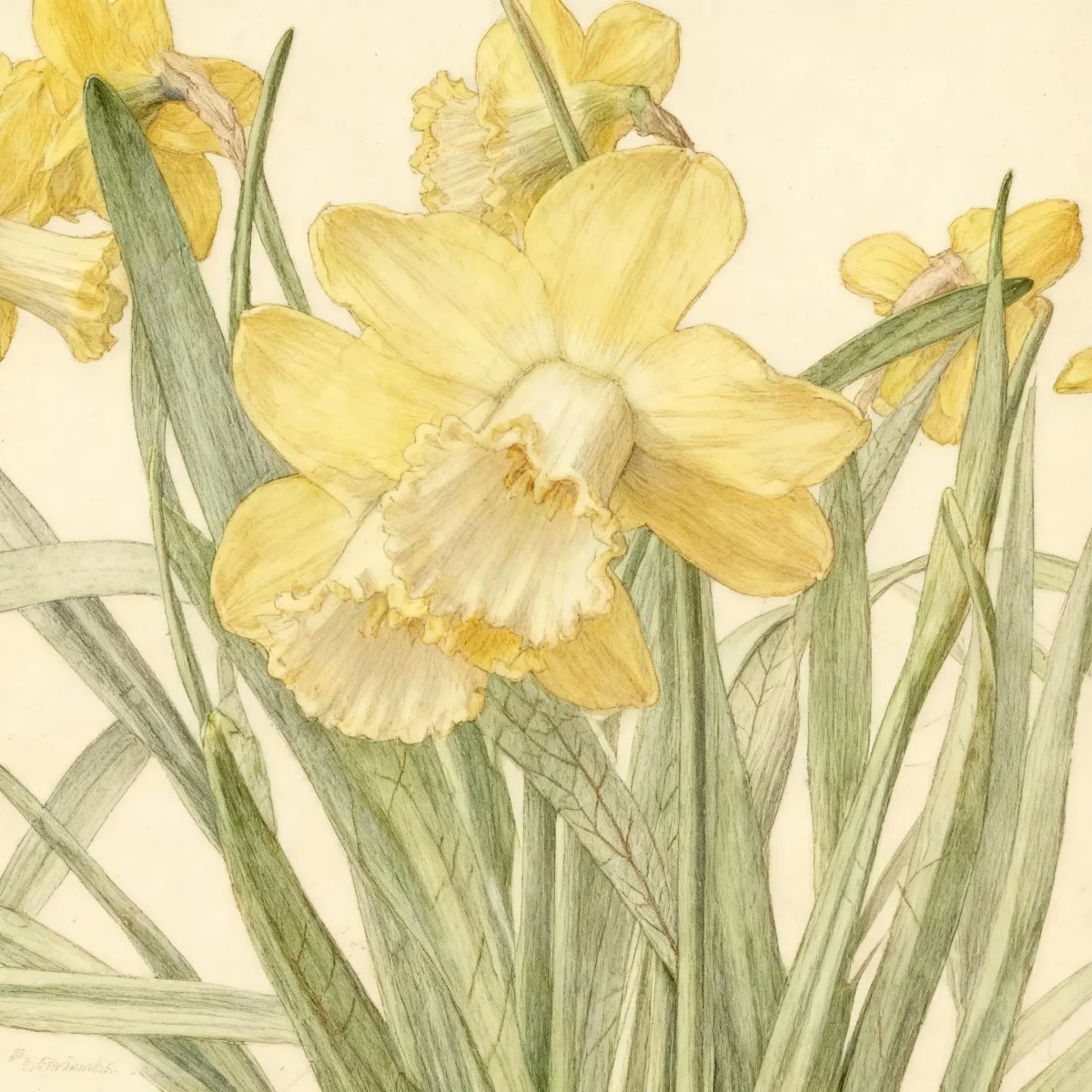

Bloom Boldly, No Matter the Season - Sweatshirt
Cozy organic cotton sweatshirt featuring our exclusive Purple Coneflower design. Perfect for gardeners who bloom year-round.
Inspired by the beautiful Trumpet daffodil
Limited first batch (50) — join the waitlist for early access
Waitlist closes Feb 15, 2026.
Complete Plant Information
Field Guide Continues
Ready for care notes, companion picks, and planting tips?
The map is just the start. The full guide below covers growth habits, seasonal performance, and landscape uses.
Overview
Narcissus ‘Lugano’ is a magnificent addition to the early spring garden, celebrated for its classic structure as a trumpet daffodil. This variety puts on a reliably low-maintenance show, emerging with primrose yellow petals framing a stark white corona, making it highly visible after the cold of winter. As a bulbous perennial, it establishes itself quickly and returns year after year without significant intervention.
This particular cultivar belongs to Division I, meaning its trumpet (corona) is as long as or longer than the surrounding petals. The reliable bloom time between March and April signals the true arrival of spring across USDA hardiness zones 3 through 8. For gardeners seeking proven performance and vibrant color contrast, the Trumpet daffodil ‘Lugano’ is an essential choice.
Planting Narcissus ‘Lugano’ in quantity creates sweeping drifts that maximize its visual impact, blending beautifully with later-flowering spring bulbs. Its relatively compact size (1 to 1.5 feet tall) ensures it doesn’t overcrowd neighboring early bloomers, offering structure through its erect, strap-like foliage even after flowering concludes.
Fast Facts
- Plant Family: Amaryllidaceae
- Plant Type: Bulb
- Hardiness Zones: USDA Zones 3-8
- Size at Maturity:
- Height: 1-1.5 ft
- Spread: 0.5-0.75 ft
- Bloom Time: March to April
- Bloom Description: Primrose yellow petals and white trumpet
- Sun Exposure: Full sun to part shade
- Water Needs: Medium
- Maintenance Level: Low
How to Grow
Planting Narcissus ‘Lugano’ bulbs should occur in early to mid-fall before the ground freezes solid, allowing roots time to establish over winter. These bulbs thrive in average, medium-moisture, well-drained soils, preferring organically rich loams for the best performance. Good drainage is non-negotiable to prevent bulb rot. Aim to plant each bulb three times as deep as the bulb is tall, ensuring at least three inches of soil cover the top, and space them between 4 to 10 inches apart depending on the desired naturalized look.
During the active growing season in spring, keep the soil uniformly moist; however, the plant tolerates drought once the foliage begins to fade post-bloom. After the distinctive blooms of the Narcissus ‘Lugano’ fade, resist the urge to cut back the foliage. Allow the leaves to naturally yellow, which ensures the plant gathers enough energy to successfully flower the following year. Remove only the spent flower stem above the leaves to prevent seed production.
These dependable bulbs generally need few cultural adjustments once established and can be left undisturbed for several years. If you notice a decline in the number or quality of blooms, divide the clumps immediately after the foliage has fully died back. Remember that the flowers naturally orient themselves toward the strongest available light source, so plan your placement so that any surrounding shade is behind the grouping.
Landscape Uses
Daffodils, including the impressive Trumpet daffodil variety ‘Lugano’, are exceptional naturalizing bulbs that reliably return year after year, unlike many tulips. They are perfectly suited for mass plantings in beds and borders where their early spring color is eagerly anticipated. Plant them in large drifts, ideally groupings of six bulbs or more, rather than as solitary specimens for the greatest visual impact.
Consider planting Narcissus ‘Lugano’ in open woodland areas or under deciduous shrubs where they receive ample sun during their crucial spring growing phase but benefit from afternoon shade in the heat of summer. They mix exceptionally well with other early spring bloomers like grape hyacinths (Muscari) or early flowering tulips, creating layers of continuous garden interest. The bright white and yellow combination of ‘Lugano’ offers excellent contrast when planted near deep purple or deep blue companions.
For a cottage garden aesthetic, let the bulbs naturalize freely beneath taller perennials or weave them through evergreen foundation plantings, providing necessary structure against the returning greenery. Since the foliage yellows after flowering, plan surrounding perennials that will emerge later in the season to mask the fading daffodil leaves.
Standout Features
Flower Qualities
- Showy
Noteworthy Characteristics
Narcissus is a genus of about 50 species of bulbous perennials from Europe and North Africa. They are a mainstay of the spring garden. Depending upon species or hybrid type, flowers appear singly or in clusters atop stems rising from 6-30” tall. Flowers generally feature a trumpet or cup (the corona) surrounded by six petals (perianth segments), in colors ranging from white to yellow to orange to pink to bicolors. Flowers are sometimes fragrant. Flowers bloom in early spring. Narrow, linear to strap-shaped, green leaves appear in erect to sprawling clumps. Cultivated daffodils have been organized into 13 divisions based on the characteristics of the blooms.Genus name honors a beautiful youth who became so entranced with his own reflection that he pined away and the gods turned him into this flower.‘Lugano’ is a trumpet daffodil (Division I). By definition, a trumpet daffodil features a trumpet (corona) that is equal to or greater than the length of the petals (perianth segments). ‘Lugano’ rises 13-15” tall in spring. Each flower features primrose yellow petals with white at the base and a white trumpet. One flower per stem. Blooms early season (late March to April in St. Louis). Narrow, linear to strap-shaped, green leaves in erect to sprawling clumps. Excellent fresh cut flower
Tolerances
- Rabbit
- Deer
- Drought
Potential Problems
Generally, daffodils, including Narcissus ‘Lugano’, are remarkably resistant to serious pest or disease issues, provided they are grown in suitable conditions. The primary threat comes from poor soil drainage, which can lead directly to bulb rot. Ensure your planting site drains thoroughly; if your soil is heavy clay, amending it significantly with grit or organic matter is essential.
Infrequent pests that might occasionally appear include slugs and snails, especially when new growth first emerges in early spring, as well as narcissus bulb fly or the nematode. For early season pests, physical barriers or appropriate baits used selectively can manage them. Occasionally, the Narcissus yellow stripe virus, which causes discoloration, may be seen, but this is uncommon. Fortunately, deer and rabbits typically leave this plant alone due to the mild toxicity contained within the bulbs.
Frequently Asked Questions
What hardiness zones is Trumpet daffodil suitable for?
Narcissus ‘Lugano’ is highly adaptable and thrives across USDA hardiness zones 3 through 8, making it suitable for much of the temperate gardening world.
How large does Trumpet daffodil grow?
This Trumpet daffodil typically reaches a mature height between 1 and 1.5 feet tall, with a spread of approximately 0.5 to 0.75 feet.
When does Trumpet daffodil bloom?
Narcissus ‘Lugano’ blooms relatively early in the spring season, usually from March to April, showcasing its defining primrose yellow petals and white trumpet just as winter recedes.
What sun exposure does Trumpet daffodil need?
For the best flowering and vigor, plant Narcissus ‘Lugano’ where it receives full sun or light to partial shade throughout the day.
Conclusion
The Trumpet daffodil, specifically the reliable Narcissus ‘Lugano’, offers unparalleled cheer with its bright, bicolored blooms early in the season. Its low maintenance needs and strong return rate make it a foundational element for any successful spring bulb display. Before the first frost arrives, plan your placement and ensure the soil drains well to welcome these beautiful flowers next spring.
Companion Planting
When designing your spring display around Narcissus ‘Lugano’, look for companions that emerge slightly later to ensure continuous visual interest as the daffodil foliage naturally begins to fade. Plants that thrive in full sun to part shade and require similar soil drainage are ideal partners. Consider pairing the 1.5-foot height of the Trumpet daffodil with early-blooming tulips, especially those with deep red or purple blooms, which provide a striking color contrast to the white trumpet.
For ongoing color once the bloom season passes, aim for perennials that fill the gaps left by yellowing daffodil leaves. Hostas, while tolerant of partial shade, can be planted around the edges of the grouping to slowly take over the space in summer. Alternatively, late-blooming alliums can look excellent planted among naturalized daffodils, maintaining the bulbous theme throughout the season.
Propagation Tips
One of the greatest advantages of Trumpet daffodil bulbs like ‘Lugano’ is their ability to naturalize, meaning they will multiply on their own over many years without intervention. However, for gardeners wishing to actively increase their stock or refresh tired clumps, division is the recommended propagation method. Wait until the foliage has completely died back, typically by early summer, before digging up the entire clump.
Once dug, separate the bulbs gently by hand. Replant the viable daughter bulbs immediately at the correct depth and spacing; this process helps prevent necessary division for years to come. Avoid attempting to propagate Narcissus ‘Lugano’ from seed, as resulting plants may not come true to the parent hybrid form, unlike divisions which retain the exact characteristics of this beautiful trumpet daffodil.