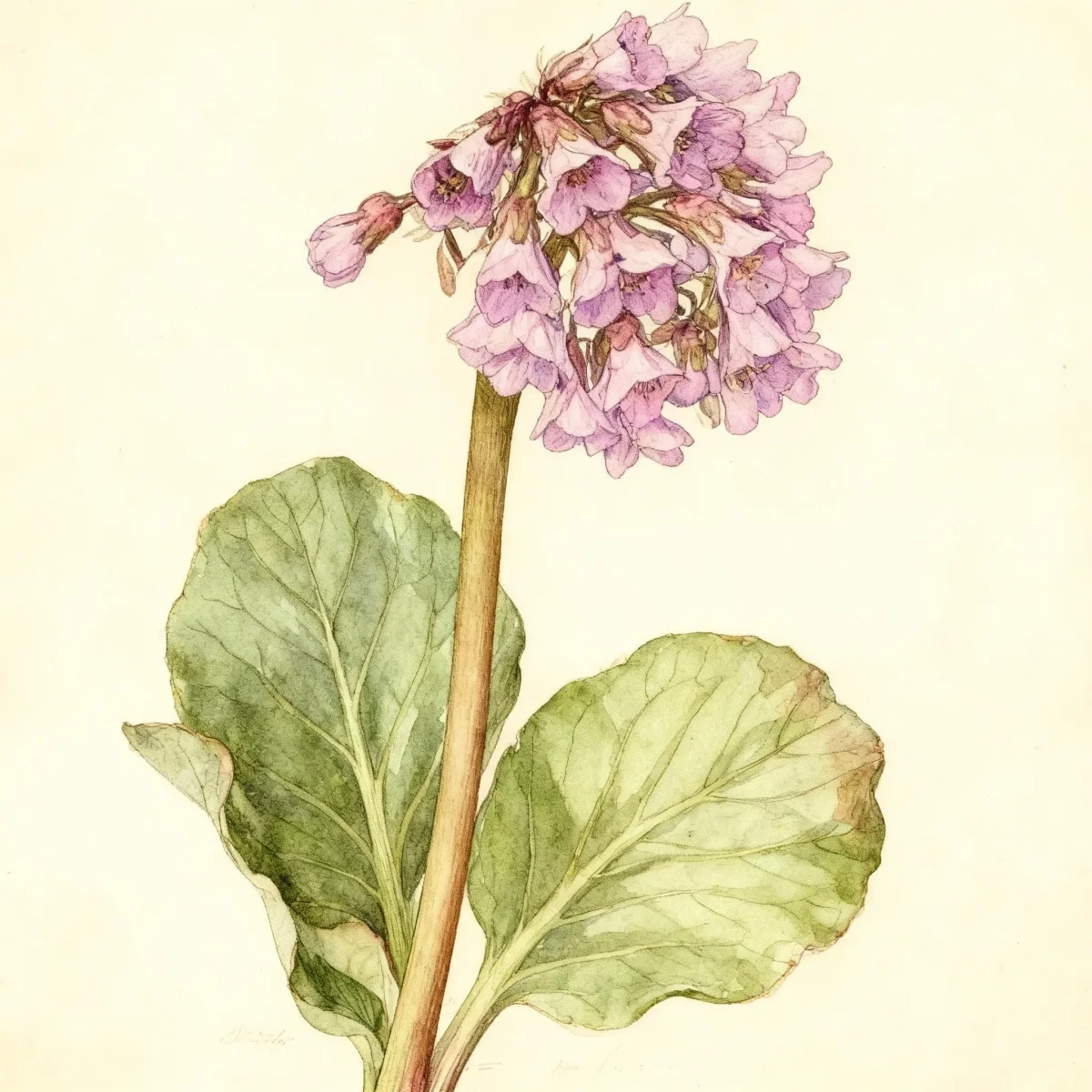
Bergenia (Bergenia 'Abendglocken')
Bergenia 'Abendglocken' offers tough, glossy foliage and early rose-red blooms. A low-maintenance Bergentia ground cover for shady spots.

Bloom Boldly, No Matter the Season - Sweatshirt
Cozy organic cotton sweatshirt featuring our exclusive Purple Coneflower design. Perfect for gardeners who bloom year-round.
Inspired by the beautiful Bergenia
Limited first batch (50) — join the waitlist for early access
Waitlist closes Feb 15, 2026.
Complete Plant Information
Field Guide Continues
Ready for care notes, companion picks, and planting tips?
The map is just the start. The full guide below covers growth habits, seasonal performance, and landscape uses.
Overview
Bergenia ‘Abendglocken’ is cherished by gardeners for providing substantial, glossy foliage that often gains attractive bronzed tones in cooler weather, making it a year-round asset. As a rhizomatous herbaceous perennial, this variety of Bergenia spreads slowly, creating a dense, effective ground cover ideal for challenging shady locations. Its primary aesthetic appeal arrives in spring when stout stalks emerge bearing clusters of unmistakable rose-red flowers, announcing the end of winter.
This cultivar, Bergenia ‘Abendglocken’, stands out due to its robust nature and generally low maintenance requirements once established. It thrives in partial to full shade, though some dappled sun improves foliage appearance in hot climates. For gardeners seeking reliable evergreen coverage that resists common browsing pests, incorporating Bergenia into the landscape offers both functional stability and significant seasonal color.
The tough, leathery leaves of the Bergenia genus lend themselves well to mass plantings where large areas need consistent evergreen texture. Furthermore, the cultivar ‘Abendglocken’ provides excellent winter interest, especially south of Zone 7, securing its role as a foundational plant in perennial borders and woodland settings.
Fast Facts
- Plant Family: Saxifragaceae
- Plant Type: Herbaceous perennial
- Hardiness Zones: USDA Zones 4-8
- Size at Maturity:
- Height: 1-1.5 ft
- Spread: 1-1.5 ft
- Bloom Time: April to May
- Bloom Description: Rose-red
- Sun Exposure: Part shade to full shade
- Water Needs: Medium
- Maintenance Level: Low
How to Grow
Plant Bergenia ‘Abendglocken’ during the cooler, wetter months, such as early spring or fall, to allow it time to establish rhizomes before summer heat sets in. Optimal soil conditions involve material that is organically rich and provides consistent drainage, although established plants tolerate brief dry spells. While these plants perform well in close to full shade, achieving the best leaf coloration often requires some sun exposure, particularly dappled light, rather than deep, dark shade.
Consistent moisture is key to success; let the soil get barely dry before watering deeply, but never allow the medium to completely dry out, especially during the establishment phase. Fertilization is usually unnecessary in fertile garden soil, reflecting the low maintenance level associated with this Bergenia hybrid. Promptly clip off spent flower stems to maintain a tidy appearance, though this is not strictly required for plant health.
In northern zones (5-7), the foliage of Bergenia can become battered or semi-deciduous due to harsh freezes; applying a protective winter mulch around the root zone before the ground freezes can prevent this cold damage and root heaving. Be aware that early spring frosts can unfortunately damage newly emerging flower buds or open blooms.
Landscape Uses
Bergenia ‘Abendglocken’ excels as a dependable ground cover, particularly effective in shady areas where lawn grass struggles or where a durable, low-growing mass planting is desired. Its impressive, large leaves create excellent textural contrast against finer-textured woodland companions. Consider using this Bergenia variety for edging paths and walkways, where its consistent structure defines borders year-round.
For design flexibility, Bergenia works beautifully in shaded foundation plantings or beneath deciduous trees where its foliage remains visible after autumn leaf drop. Since the leaves are known to be excellent greens for cutting, planting Bergenia near a patio or cutting garden allows easy access. For evergreen impact in mixed borders, pair the deep green foliage of Bergenia ‘Abendglocken’ with ferns, hostas, or other spring bloomers like early Daffodils.
Standout Features
Flower Qualities
- Showy
Noteworthy Characteristics
Bergenia is a genus of rhizomatous herbs mainly sourced from temperate Asia, celebrated for their ornamental value spanning glossy leaves and early spring blooms. Bergenia ‘Abendglocken’ is specifically valued as a large-leaved ground cover, producing small, rose-red flowers atop stout stalks, often reaching 16 inches tall, precisely in April. The genus claims the slightly amusing common name “pigsqueak” because the leathery leaves rub together to emit a squeaking sound when handled.
Tolerances
- Rabbit
- Deer
- Drought
- Heavy Shade
- Erosion
- Dry Soil
Potential Problems
The most frequently reported issue for Bergenia is a fungal infection known as leaf spot, which appears as dark blemishes on the foliage. Management involves ensuring good air circulation during planting and promptly removing any infected leaves to limit spore dispersal. Occasionally, the plant can host pests such as aphids, mealybugs, slugs, and snails.
To manage these small invaders, routine visual inspection is key, especially under humid conditions. Applying insecticidal soap or hand-picking larger pests like slugs can keep populations manageable. Despite these minor concerns, gardeners value Bergenia because common browsing animals like deer and rabbits tend to avoid the foliage.
Frequently Asked Questions
What hardiness zones is Bergenia ‘Abendglocken’ suitable for?
Bergenia ‘Abendglocken’ is reliably hardy in USDA Zones 4 through 8, offering broad adaptability across much of the United States.
How large does Bergenia grow?
This herbaceous perennial generally reaches a height between 1 and 1.5 feet, with a similar spread of 1 to 1.5 feet once fully established.
What sun exposure does this Bergenia need?
It adapts well to part shade or full shade conditions, though afternoon shade is recommended in very hot summer climates to prevent scorch.
When does Bergenia ‘Abendglocken’ bloom?
This cultivar provides beautiful color from April into May, showcased by its distinctive rose-red flowers.
Conclusion
Bergenia ‘Abendglocken’ delivers superb year-round structural interest with minimal effort, proving an excellent choice for low-maintenance shady borders. Its combination of tough foliage, deer resistance, and early spring flower display makes this Bergenia a reliable perennial workhorse in the landscape. Before planting, confirm your site falls within USDA Zones 4-8 and ensure the soil offers consistent drainage for the best performance.
Companion Planting
Choosing appropriate companions for Bergenia ‘Abendglocken’ centers around plants that share a preference for part shade and medium moisture. Hostas provide a wonderful contrast in leaf texture; plant the broad, ribbed leaves of Hostas next to the smooth, round leaves of the Bergenia for dynamic visual interest. Woodland Phlox (Phlox stolonifera) is another excellent pairing, as it offers early color right when the Bergenia flowers begin to fade, thriving in similar conditions.
For ground cover layering beneath taller shrubs, consider pairing these plants with shade-loving woodland natives like Foamflower (Tiarella) or certain varieties of wild Ginger (Asarum). These companions help maintain consistent ground moisture, benefiting the Bergenia roots and creating a lush, continuous carpet effect throughout the growing season.
Propagation Tips
The primary method for increasing your stock of Bergenia ‘Abendglocken’ is through the division of its slow-spreading rhizomes. This process should ideally be done in early spring, just as new growth begins, or in the early fall. Carefully dig up sections of the established clump using a clean spade, ensuring each division retains several healthy leaves and a robust section of root.
Replant the divisions immediately into their new locations, taking care not to bury the crown too deeply; the top of the rhizome should sit just below the soil line. Water the newly planted Bergenia thoroughly to settle the soil around the roots. While division is simple, remember that Bergenia is not a fast spreader, so patience is required to achieve extensive mass plantings.