

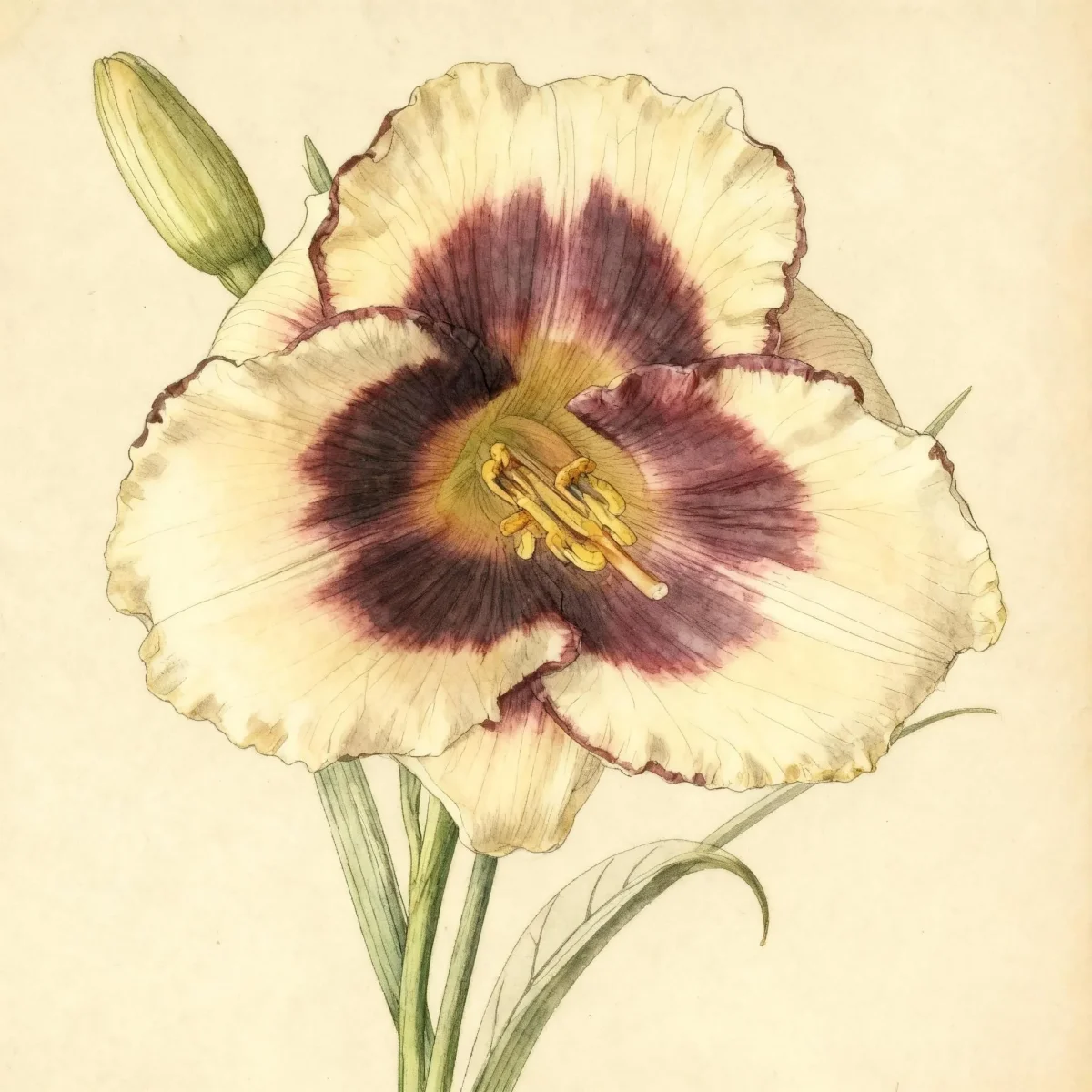
Tetraploid daylily (Hemerocallis 'Canadian Border Patrol')
Hemerocallis 'Canadian Border Patrol' is a low-maintenance Tetraploid daylily offering creamy white, purple-eyed blooms from June to July.

Bloom Boldly, No Matter the Season - Sweatshirt
Cozy organic cotton sweatshirt featuring our exclusive Purple Coneflower design. Perfect for gardeners who bloom year-round.
Inspired by the beautiful Tetraploid daylily
Limited first batch (50) — join the waitlist for early access
Waitlist closes Feb 15, 2026.
Complete Plant Information
Field Guide Continues
Ready for care notes, companion picks, and planting tips?
The map is just the start. The full guide below covers growth habits, seasonal performance, and landscape uses.
Overview
Hemerocallis ‘Canadian Border Patrol’ is an appealing herbaceous perennial known widely as a Tetraploid daylily. This cultivar is highly valued for its robust performance and beautiful coloration, featuring creamy white blooms highlighted by a distinct purple eyezone and a green throat. As a low-maintenance garden staple, it reliably provides color and texture across the sunny borders of the garden landscape.
This easy-to-grow plant thrives in average, well-drained soils and prefers sites receiving full sun to partial shade. Hemerocallis ‘Canadian Border Patrol’ reaches a moderate height, making it an excellent choice for mid-border structure or mass plantings where clumps of arching, blade-like foliage provide year-round interest, especially in semi-evergreen environments.
Gardeners appreciate the continuous display provided by daylilies; although individual flowers only last a day, the successive blooming ensures a long season of beauty. Growing the Hemerocallis ‘Canadian Border Patrol’ is an excellent strategy for achieving consistent seasonal impact without excessive labor.
Fast Facts
- Plant Family: Asphodelaceae
- Plant Type: Herbaceous perennial
- Hardiness Zones: USDA Zones 3-9
- Size at Maturity:
- Height: 2-2.5 ft
- Spread: 1.5-2 ft
- Bloom Time: June to July
- Bloom Description: Creamy white with purple eyezone and green throat
- Sun Exposure: Full sun to part shade
- Water Needs: Medium
- Maintenance Level: Low
How to Grow
Planting new stock of this robust Tetraploid daylily is best done in spring or fall, ensuring the fibrous roots establish before summer heat or winter cold sets in. While daylilies are adaptable to many soil types, they achieve their best performance in deep, fertile loams that offer medium moisture retention and excellent drainage. Select a location where the plants receive at least six hours of direct sun daily for the most prolific flowering.
Routine care for Hemerocallis ‘Canadian Border Patrol’ is blessedly straightforward. Water moderately, ensuring deep soaking during dry spells, especially when foliage starts to show stress from heat or humidity. Deadheading spent flowers each day keeps the plant looking tidy and encourages the production of subsequent blooms. Remove the entire flower scape once the blooming period concludes for the season.
Division is recommended every three to four years, preferably in the spring in colder regions like Zone 3, to refresh the plant vigor and prevent overcrowding. Note that hybrid daylilies like this one will not come true from seed, so division is the primary means of propagation. Winter dormant varieties require a requisite cold period; avoid planting this cultivar where winter dormancy protection cannot be ensured, particularly near the warmest edge of Zone 9.
Landscape Uses
Hemerocallis ‘Canadian Border Patrol’ excels as an easy-to-grow herbaceous perennial suitable for numerous landscape applications. The medium height (2 to 2.5 feet) makes it ideal for defining borders, providing a solid mid-layer backdrop for shorter annuals or perennials, or establishing neat edging along walkways. Planted in sweeping masses, this Tetraploid daylily creates a dramatic visual sweep when the creamy white flowers open simultaneously.
Consider using the clumping nature of Hemerocallis ‘Canadian Border Patrol’ to soften hard architectural lines or stabilize slight slopes due to its erosion control capabilities. When massing, space plants appropriately (allow for that 1.5 to 2-foot spread) to ensure good air circulation, which minimizes potential fungal issues. The arching foliage remains attractive even when the plant is not in bloom.
Standout Features
Flower Qualities
- Showy
Noteworthy Characteristics
Hemerocallis is a genus of about 15 species of herbaceous perennials commonly known as daylilies, originating from Asia and central Europe. Hybridizers have created thousands of cultivars, and ‘Canadian Border Patrol’ stands out as a semi-evergreen, tetraploid daylily featuring creamy white flowers (5-6”) accented by thin purple edges, a distinct purple eyezone, and a green throat. Flowers bloom continuously from early to mid-season on scapes rising 26-28” high above the neat clump of green, blade-like leaves.
Tolerances
- Rabbit
- Erosion
- Air Pollution
Potential Problems
As extremely adaptable perennials, daylilies are generally easy to cultivate and relatively pest free, which adds to the appeal of Hemerocallis ‘Canadian Border Patrol.’ Minor issues can sometimes include aphids, mites, or thrips, which can usually be managed with simple horticultural oil applications or a strong blast of water. In humid climates, daylily rust fungus might become a concern; ensure good airflow and avoid overhead watering late in the day to prevent moisture buildup on the foliage. Rabbits, fortunately, tend to avoid consuming daylily foliage.
Frequently Asked Questions
What hardiness zones is Tetraploid daylily suitable for?
Hemerocallis ‘Canadian Border Patrol’ is reliably hardy in USDA Zones 3 through 9.
How large does Hemerocallis ‘Canadian Border Patrol’ grow?
This variety typically reaches a height between 2 and 2.5 feet, spreading to occupy an area 1.5 to 2 feet wide.
What sun exposure does Tetraploid daylily need?
This variety prefers a location receiving full sun to part shade conditions for optimal growth and flowering.
When does Hemerocallis ‘Canadian Border Patrol’ bloom?
The primary bloom period for this cultivar is from June through July, showcasing creamy white blooms with a purple eyezone and green throat.
Conclusion
Hemerocallis ‘Canadian Border Patrol’ offers reliable, low-maintenance beauty, perfect for gardeners seeking vibrant, creamy white blooms with a subtle purple highlight. Its adaptability across USDA Zones 3-9 ensures widespread success for those planting this appealing Tetraploid daylily. Before planting, confirm your local site conditions match its needs for full sun to part shade and plan for division every few years to maintain peak performance.
Companion Planting
When planning borders featuring Hemerocallis ‘Canadian Border Patrol,’ consider companions that share similar sun and water needs. Plants that offer contrasting textures or colors work exceptionally well next to the grassy, arching foliage of the daylily. Good companions include Ornamental Grasses, which offer vertical rhythm, or Coneflowers (Echinacea) and Black-Eyed Susans (Rudbeckia), which provide late-summer blooms that extend the garden’s visual interest past the main Tetraploid daylily flush.
Design Ideas
The moderate size and clump-forming habit of Hemerocallis ‘Canadian Border Patrol’ make it an anchor plant for foundational garden beds. Use groups of three or five plants near the front of a mixed perennial border to establish the creamy white color palette. For a cottage garden look, interplant them sparingly with shorter, mounding perennials like Catmint or Coreopsis. Because they tolerate erosion, use drifts of these daylilies on gentle slopes where their fibrous root systems will help hold the soil structure.


