

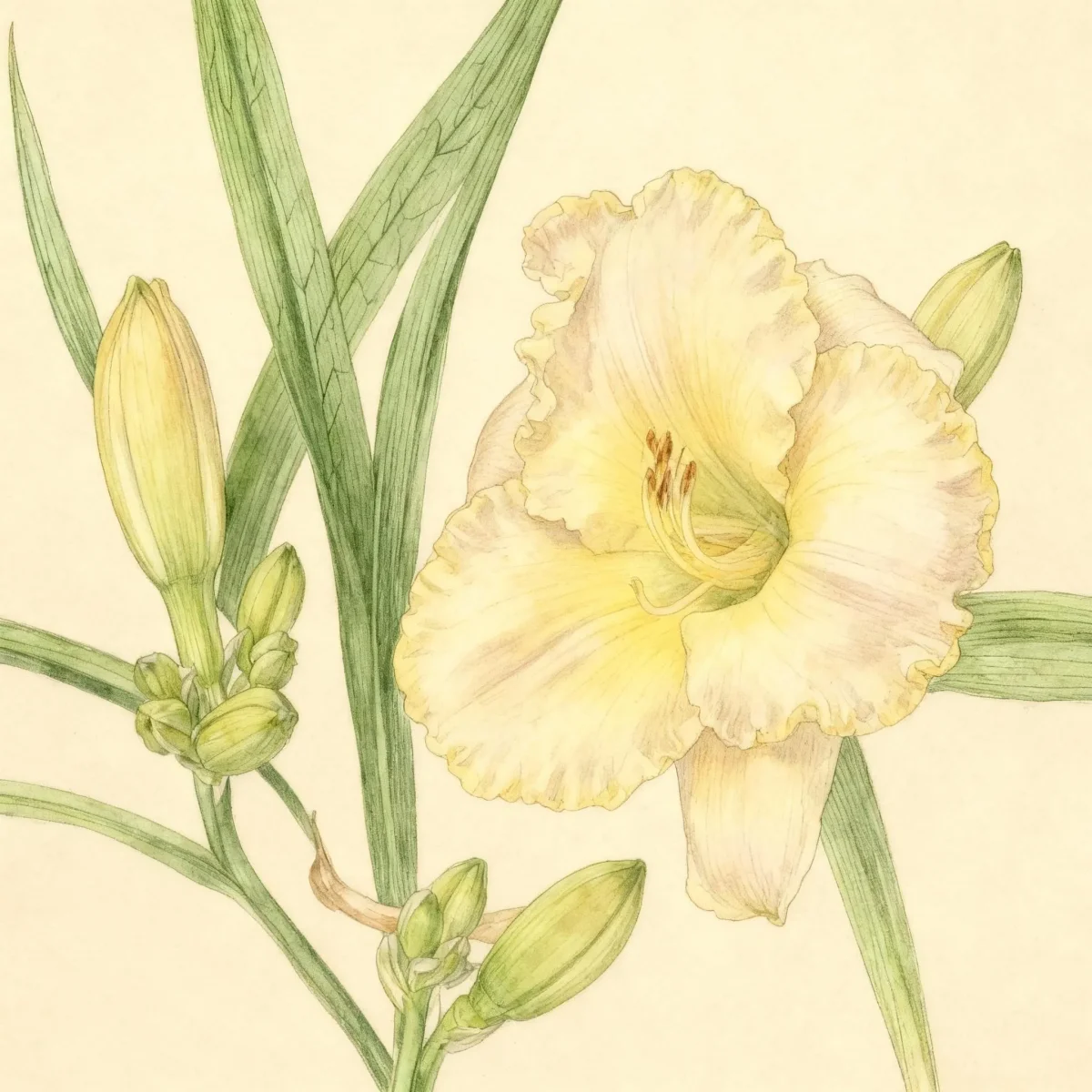
Tetraploid daylily (Hemerocallis 'Baby Lamb')
Hemerocallis 'Baby Lamb' is a low-maintenance Tetraploid daylily offering fragrant, showy creamy yellow blooms from May to June.

Bloom Boldly, No Matter the Season - Sweatshirt
Cozy organic cotton sweatshirt featuring our exclusive Purple Coneflower design. Perfect for gardeners who bloom year-round.
Inspired by the beautiful Tetraploid daylily
Limited first batch (50) — join the waitlist for early access
Waitlist closes Feb 15, 2026.
Complete Plant Information
Field Guide Continues
Ready for care notes, companion picks, and planting tips?
The map is just the start. The full guide below covers growth habits, seasonal performance, and landscape uses.
Overview
Hemerocallis ‘Baby Lamb’ is a highly desirable Tetraploid daylily known for its delicate coloring and pleasant fragrance. This cultivar introduces creamy yellow flowers subtly blushed with pink, providing reliable seasonal interest in numerous garden settings. Gardeners appreciate this plant for its robust nature and relatively easy cultural demands, making it a staple in perennial beds.
As an herbaceous perennial, Hemerocallis ‘Baby Lamb’ forms tidy clumps of arching, linear, green foliage, from which the flower scapes rise. The individual blooms are relatively small, topping out around 4 inches wide, but they appear prolifically, ensuring continuous color throughout the early summer season. This plant offers excellent structural texture in the garden even when not in flower.
This specific variety is valued for its low maintenance level and adaptability across a broad range of climates, thriving from USDA Zone 3 through Zone 9. Whether used for mass planting or as an accent, the dependable performance of this Tetraploid daylily ensures long-term garden impact with minimal fuss.
Fast Facts
- Plant Family: Asphodelaceae
- Plant Type: Herbaceous perennial
- Hardiness Zones: USDA Zones 3-9
- Size at Maturity:
- Height: 1.5-2 ft
- Spread: 1-1.5 ft
- Bloom Time: May to June
- Bloom Description: Creamy yellow with pink blush
- Sun Exposure: Full sun to part shade
- Water Needs: Medium
- Maintenance Level: Low
How to Grow
Planting Hemerocallis ‘Baby Lamb’ is best performed in spring or fall, allowing the roots time to establish before extreme summer heat or winter cold arrives. These daylilies perform well in average, medium moisture, well-drained soils, although they truly flourish in deep, fertile loams. Ensure the crown (where the leaves meet the roots) is set at or just slightly above the soil line; burying the crown can inhibit future blooming.
Maintenance for this low-maintenance Tetraploid daylily is straightforward. Deadhead spent flowers daily for a neat appearance, and once a flower scape has finished completely blooming, remove the entire scape near the base. While they tolerate heat and humidity, deep watering during dry spells is beneficial to keep the foliage looking fresh.
For optimal performance, especially in colder regions (Zones 3-8), division is recommended every three to four years, usually performed in spring. Remember that hybrid daylilies like ‘Baby Lamb’ will not reliably come true from seed. In warmer zones (near Zone 9), be mindful of dormancy requirements; winter-dormant types need a cold period, whereas evergreen foliage might persist but could be cut back after cold snaps to maintain tidiness.
Landscape Uses
Hemerocallis ‘Baby Lamb’ excels as an easy-to-grow component in mixed perennial borders, where its mid-range height provides excellent transitional structure. Plant them en masse to create broad sweeps of pale color that brighten partially shaded areas of the garden. They are also effective used for simple edging, defining pathways or flower beds with their tidy, clumping habit.
Due to their adaptability, these daylilies serve well when planted to stabilize slopes or banks, leveraging their fibrous roots to help prevent erosion. Furthermore, their neat, clean mounds of foliage offer excellent foundational planting beneath taller shrubs or beneath the canopy layer of trees where they receive partial shade. This variety’s resilience makes it a reliable choice across various design applications.
Standout Features
Flower Qualities
- Showy
- Fragrant
Noteworthy Characteristics
Hemerocallis is renowned for having over 60,000 registered cultivars, stemming from species native to Asia and Europe. Each bloom, typical of daylilies, lasts only a single day, but the quantity produced ensures long blooming periods. Hemerocallis ‘Baby Lamb’ is a specific tetraploid cultivar featuring pale creamy yellow flowers with a pinkish blush, rising on scapes to about 20 inches tall, and importantly, this variety is noted for being a rebloomer.
Tolerances
- Rabbit
- Erosion
- Air Pollution
Potential Problems
Daylilies are famously adaptable and generally resistant to serious pest or disease issues, contributing to their low maintenance profile. However, watch for occasional outbreaks of mites, aphids, or thrips, which can usually be managed with targeted insecticidal soap if necessary. In humid climates, daylily rust can sometimes present a challenge; prevention involves ensuring good air circulation and avoiding overhead watering late in the day. Rabbits, fortunately, tend to leave Hemerocallis ‘Baby Lamb’ alone.
Frequently Asked Questions
What hardiness zones is Tetraploid daylily suitable for?
Hemerocallis ‘Baby Lamb’ is suitable for cultivation in USDA Hardiness Zones 3 through 9.
How large does Hemerocallis ‘Baby Lamb’ grow?
This variety typically reaches a height between 1.5 and 2 feet tall, with a spread of 1 to 1.5 feet wide.
What sun exposure does Tetraploid daylily need?
Hemerocallis ‘Baby Lamb’ prefers full sun but will tolerate partial shade, thriving best where it receives substantial light.
When does Hemerocallis ‘Baby Lamb’ bloom?
These daylilies bloom early, typically from May to June, displaying creamy yellow flowers with a pink blush.
Conclusion
Hemerocallis ‘Baby Lamb’ provides excellent value through its fragrant, showy blooms and remarkable tolerance for varied conditions, cementing its status as a dependable garden perennial. This Tetraploid daylily is an ideal choice for gardeners seeking beauty without demanding intensive care. Before planting, confirm that your local USDA zone falls between 3 and 9 to ensure the best blooming performance for your Hemerocallis ‘Baby Lamb’.
Companion Planting
Selecting appropriate companions helps accentuate the pale tones of Hemerocallis ‘Baby Lamb’ while complementing its cultural needs for medium moisture and sun/part-shade. Consider pairing it with plants that contrast in height and foliage texture, such as ornamental grasses that appreciate similar drainage. Blue or deep purple bloomers, like Salvia or Catmint (Nepeta), create a stunning complementary color palette against the creamy yellow flowers.
Because daylilies perform best when the soil remains relatively consistent in moisture, avoid planting them directly beside extremely thirsty annuals or drought-tolerant succulents unless you can manage individual watering zones. Hostas are popular partners in semi-shaded locations, as they enjoy similar soil richness and appreciate the contrasting linear foliage of the daylily fans.
Seasonal Care Calendar
Spring is the primary time for preparatory work; clean up any remaining winter debris and assess the foliage health of your Hemerocallis ‘Baby Lamb’. If necessary, this is the best time to divide crowded clumps, ideally every three to four years, to encourage robust flowering. As temperatures rise in late spring, begin consistent watering if rainfall is scarce, ensuring the plants receive medium moisture levels.
During the primary bloom window of May through June, consistent deadheading is key. Removing spent flowers promptly keeps the clump looking tidy and encourages the reblooming cycles often associated with better quality cultivars like this Tetraploid daylily. In mid-summer, monitor for signs of stress related to drought; if leaf scorch appears, provide a deep soak rather than frequent, shallow watering.
In the fall, once foliage naturally yellows or dies back (especially for dormant types), you can trim the spent blades down near the crown, though leaving them helps protect the plant over winter. Protection required in the colder end of the range (Zones 3-5) usually involves simply ensuring good drainage and applying a light layer of mulch after the ground freezes.


