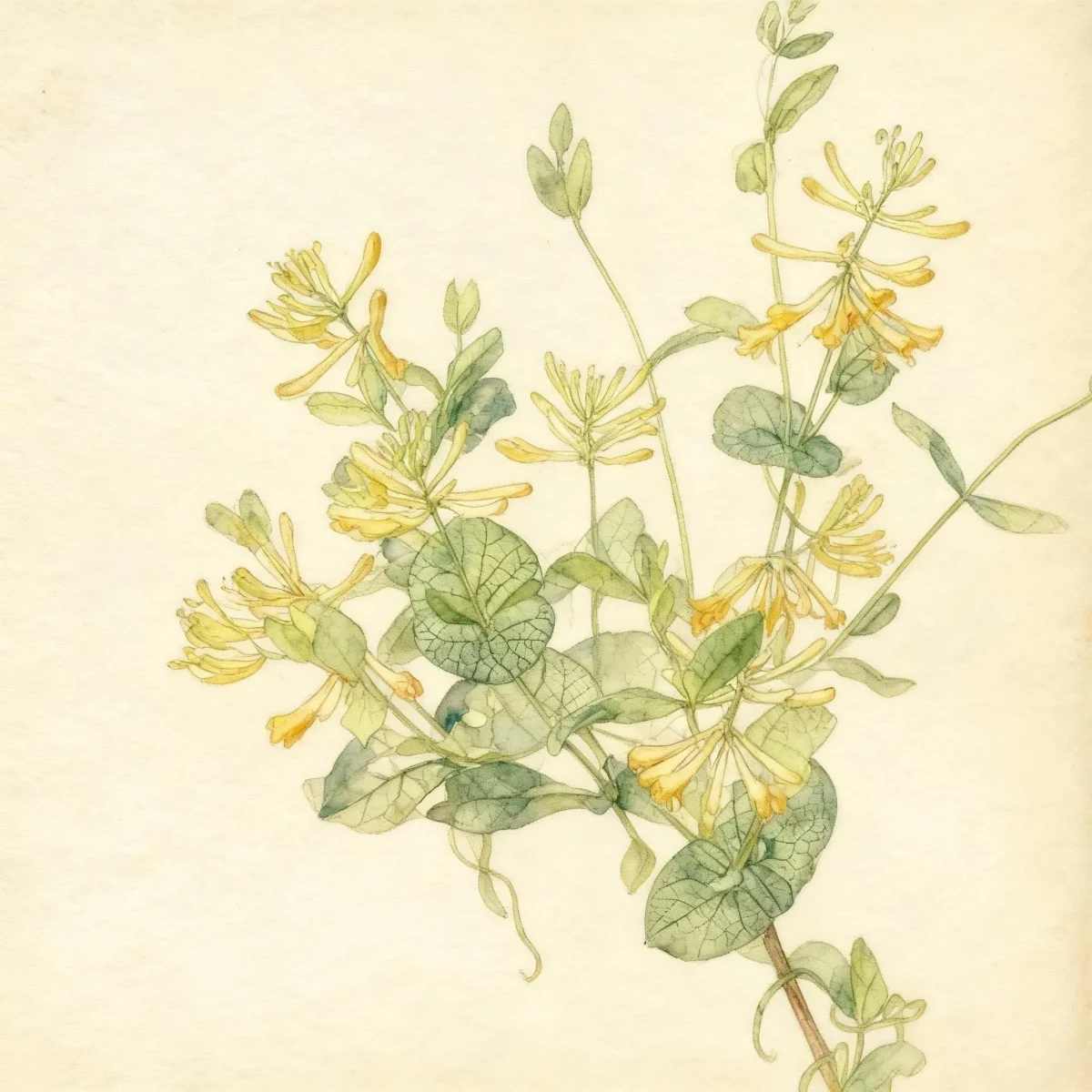
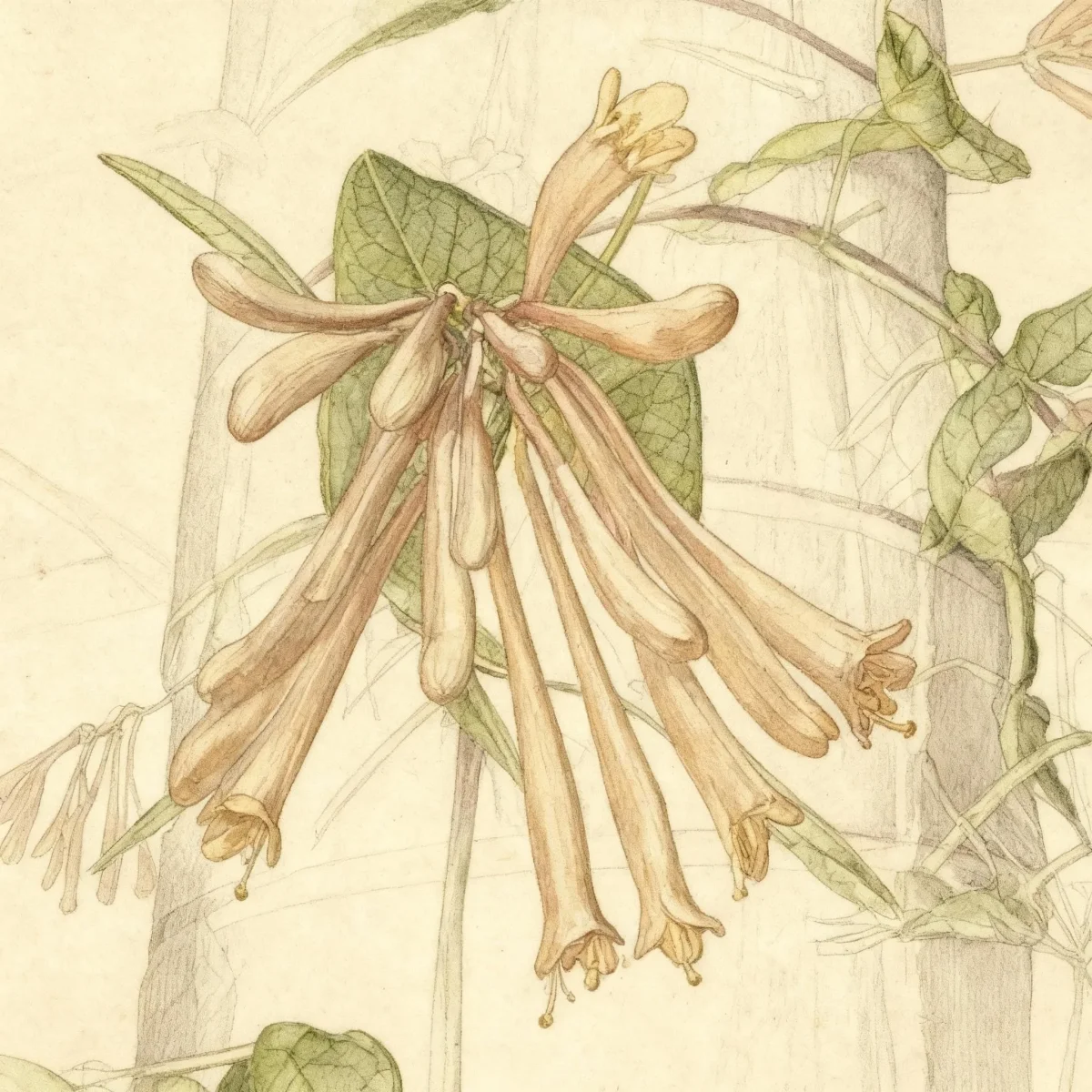
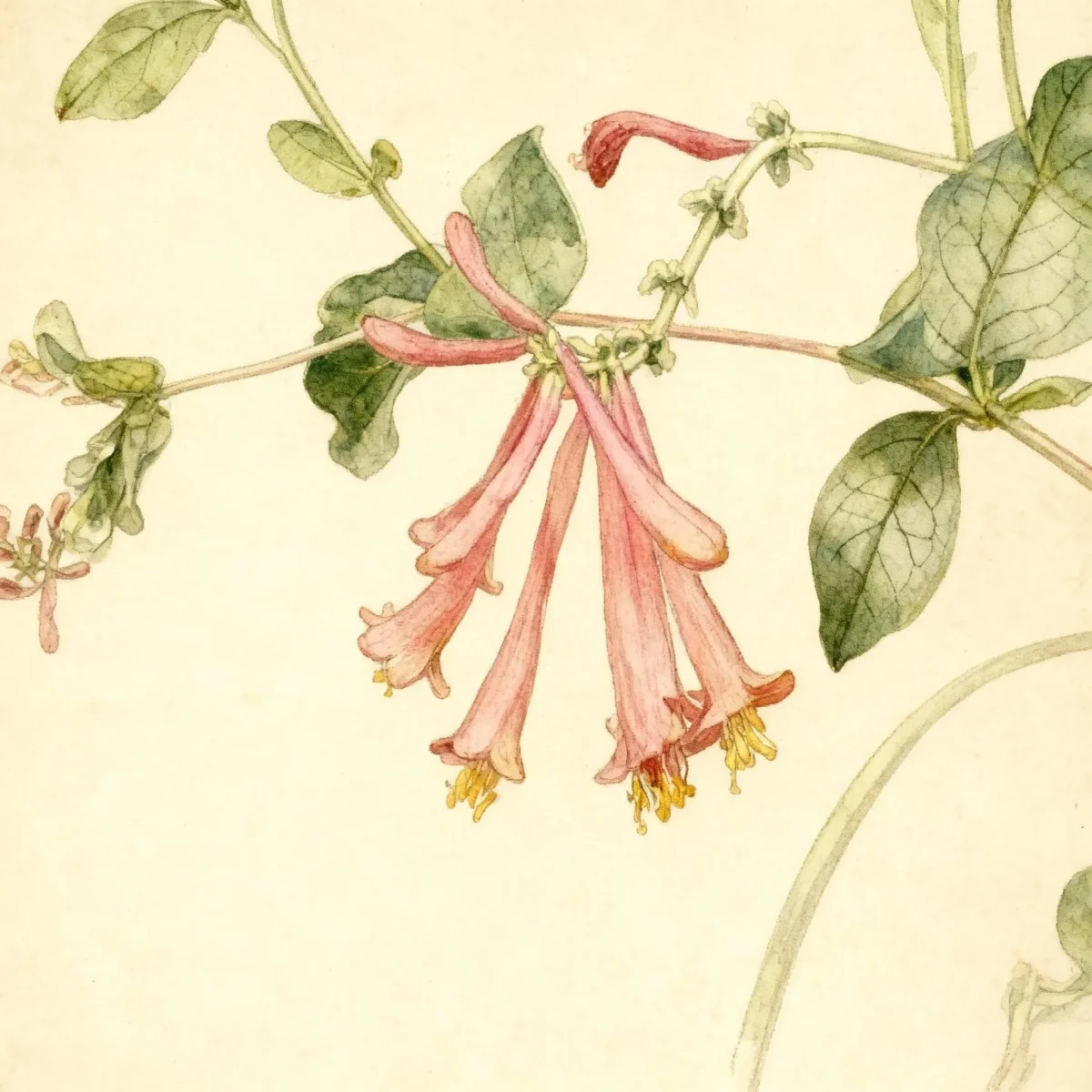
Trumpet honeysuckle (Lonicera sempervirens 'Blanche Sandman')
Grow the vigorous Lonicera sempervirens 'Blanche Sandman', a low-maintenance vine known for its showy orange-red flowers attractive to hummingbirds.

Bloom Boldly, No Matter the Season - Sweatshirt
Cozy organic cotton sweatshirt featuring our exclusive Purple Coneflower design. Perfect for gardeners who bloom year-round.
Inspired by the beautiful Trumpet honeysuckle
Limited first batch (50) — join the waitlist for early access
Waitlist closes Feb 15, 2026.
Complete Plant Information
Field Guide Continues
Ready for care notes, companion picks, and planting tips?
The map is just the start. The full guide below covers growth habits, seasonal performance, and landscape uses.
Overview
Lonicera sempervirens ‘Blanche Sandman’, commonly known as Trumpet honeysuckle, is a highly valued, vigorous twining vine celebrated for its abundant, showy blooms. This particular cultivar is noted for its distinct orange-red, tubular flowers that reliably appear from late spring into summer, making it a superb vertical accent in the landscape. Unlike some of its heavily scented relatives, this species offers beautiful structure and vibrant color without overwhelming fragrance.
This deciduous vine is relatively fast-growing and requires physical assistance to climb, making it perfect for vertical gardening structures. It offers excellent ecological benefits, primarily serving as a magnet for hummingbirds, butterflies, and bees drawn to its nectar-rich blossoms. The Lonicera sempervirens ‘Blanche Sandman’ is a hardy and low-maintenance choice for gardeners seeking substantial coverage and extended ornamental interest.
If planted in warmer climates (Zone 8+), the Trumpet honeysuckle often remains semi-evergreen, retaining some foliage throughout mild winters. Whether trained up an arbor or allowed to sprawl as groundcover, this vine provides reliable texture and color across USDA Hardiness Zones 4 through 9.
Fast Facts
- Plant Family: Caprifoliaceae
- Plant Type: Vine
- Hardiness Zones: USDA Zones 4-9
- Size at Maturity:
- Height: 10-20 ft
- Spread: 3-6 ft
- Bloom Time: May to June
- Bloom Description: Orange-red
- Sun Exposure: Full sun
- Water Needs: Medium
- Maintenance Level: Low
How to Grow
The best success for Lonicera sempervirens ‘Blanche Sandman’ is achieved by planting in full sun, though it can tolerate partial shade. For the most prolific bloom display, ensure the location receives at least six hours of direct sunlight daily. This vine thrives in average, medium moisture, well-drained soils. While adaptable, it performs best when planted in humusy, organically rich soils that maintain consistent moisture without becoming waterlogged.
Maintenance for this Trumpet honeysuckle is generally considered low once established. Provide a sturdy support structure, such as a trellis, arbor, or fence, as it is a twining vine that needs something to grip. Water moderately, especially during dry spells, as it prefers medium moisture conditions. Light pruning should be performed immediately after the initial heavy bloom period concludes to encourage any sporadic rebloom throughout the remainder of the season.
Be aware that while deciduous in cooler climates, the vine can become semi-evergreen in warmer regions (Zone 8 and above). In early spring, check for any damaged or dead wood from winter exposure before new growth begins. Because this vine prefers good drainage, gardeners in heavier clay soils should amend the planting site generously to improve soil structure before planting Lonicera sempervirens ‘Blanche Sandman’.
Landscape Uses
The vigorous growth habit of the Trumpet honeysuckle makes it a superb flowering screen or vertical cover. It is excellent when utilized on trellises or arbors to create beautiful, fragrant-free passageways overhead, providing dappled shade during the summer months. Its ability to climb allows it to soften the harsh lines of fences or utilitarian structures beautifully.
Furthermore, this vine can be effectively used as an unsupported sprawling ground cover, useful for stabilizing slopes or filling in large areas where climbing support is impractical. Garden designs incorporating verticality greatly benefit from the sustained color provided by the Lonicera sempervirens ‘Blanche Sandman’ throughout late spring and early summer. Pair it with later-blooming deciduous vines or tall, heat-tolerant perennials that complement the orange-red coloration.
Standout Features
Flower Qualities
- Showy
Fruit Qualities
- Showy
Noteworthy Characteristics
Lonicera sempervirens, commonly called trumpet honeysuckle, is a vigorous, deciduous, twining vine which typically grows 10-15’ (less frequently to 20’) and is one of the showiest of the vining honeysuckles. It is primarily native to the southeastern U.S., but has escaped from gardens and naturalized in many other areas of the eastern U.S. Including several counties in central and southern Missouri where it typically occurs along roadsides, along stream banks and in thickets (see Steyermark). Large, non-fragrant, narrow, trumpet-shaped flowers are scarlet to orangish red on the outside and yellowish inside. Flowers appear in late spring at stem ends in whorled clusters. They are attractive to hummingbirds, butterflies and bees. Inedible red berries form in late summer to early fall and can be ornamentally attractive. The small red berries are attractive to birds. Oval, bluish-green leaves are glaucous beneath. This vine is evergreen in the warm winter climates of the deep South. Genus name honors Adam Lonitzer (1528-1586), German botanist, the author of an herbal (Kreuterbuch) many times reprinted between 1557 and 1783. Specific epithet means evergreen. ‘Blanche Sandman’ is noted for its orange-red flowers. It typically grows to 10-20’ long. Tubular, orange-red flowers (to 2” long) in terminal whorls bloom primarily from May to June, with sporadic additional bloom occurring thereafter throughout the summer into fall.
Tolerances
- Deer
- Clay Soil
- Black Walnut
Potential Problems
This vine exhibits strong resilience, generally suffering from no serious insect or disease problems when sited correctly. However, in hot and humid summer climates, growers should watch for the occasional onset of powdery mildew and leaf spots. Prevention centers on ensuring excellent air circulation around the foliage. Occasionally, aphid infestations or the presence of leaf miners may be observed, which can usually be managed with horticultural oil or simply by washing them off the leaves when populations are low.
Frequently Asked Questions
What hardiness zones is Trumpet honeysuckle suitable for?
Lonicera sempervirens ‘Blanche Sandman’ is reliably hardy across USDA Zones 4 through 9.
How large does Trumpet honeysuckle grow?
This vigorous vine typically reaches a height between 10 and 20 feet, with a moderate spread of 3 to 6 feet.
What sun exposure does Lonicera sempervirens ‘Blanche Sandman’ need?
For optimal flowering, this Trumpet honeysuckle requires full sun exposure, although it will tolerate some limited shade.
When does Trumpet honeysuckle bloom?
The primary bloom time for Lonicera sempervirens ‘Blanche Sandman’ is from May to June, featuring striking orange-red flowers, often with sporadic repeat blooming later in the season.
Conclusion
The Lonicera sempervirens ‘Blanche Sandman’ delivers outstanding vertical interest and is a consistent producer of hummingbird-attracting, orange-red flowers, making it a low-maintenance powerhouse for any garden structure. This robust Trumpet honeysuckle proves that easy care does not mean sacrificing visual impact. Before planting, confirm your local hardiness zone compatibility and ensure you have a secure structure ready to support your new vine.
Wildlife Benefits
The tubular, brightly colored flowers of the Lonicera sempervirens ‘Blanche Sandman’ are perfectly adapted for attracting native pollinators, most notably hummingbirds, which favor the long, narrow corollas. These flowers produce copious amounts of nectar throughout their blooming period, offering a vital late-spring nectar source when other food sources may be scarce. Furthermore, the small, showy red berries that develop later in the season provide a secondary food source highly favored by numerous species of songbirds.
Companion Planting
Given its preference for full sun and medium moisture, Lonicera sempervirens ‘Blanche Sandman’ pairs well with other sun-loving, durable perennial partners. Consider planting robust perennials like Coneflowers (Echinacea) or Black-eyed Susans (Rudbeckia) near the base, where they benefit from the structure of the vine without climbing it. For structures where the vine provides high overhead coverage, consider shade-tolerant hostas or astilbes at the base to enjoy the filtered sunlight.