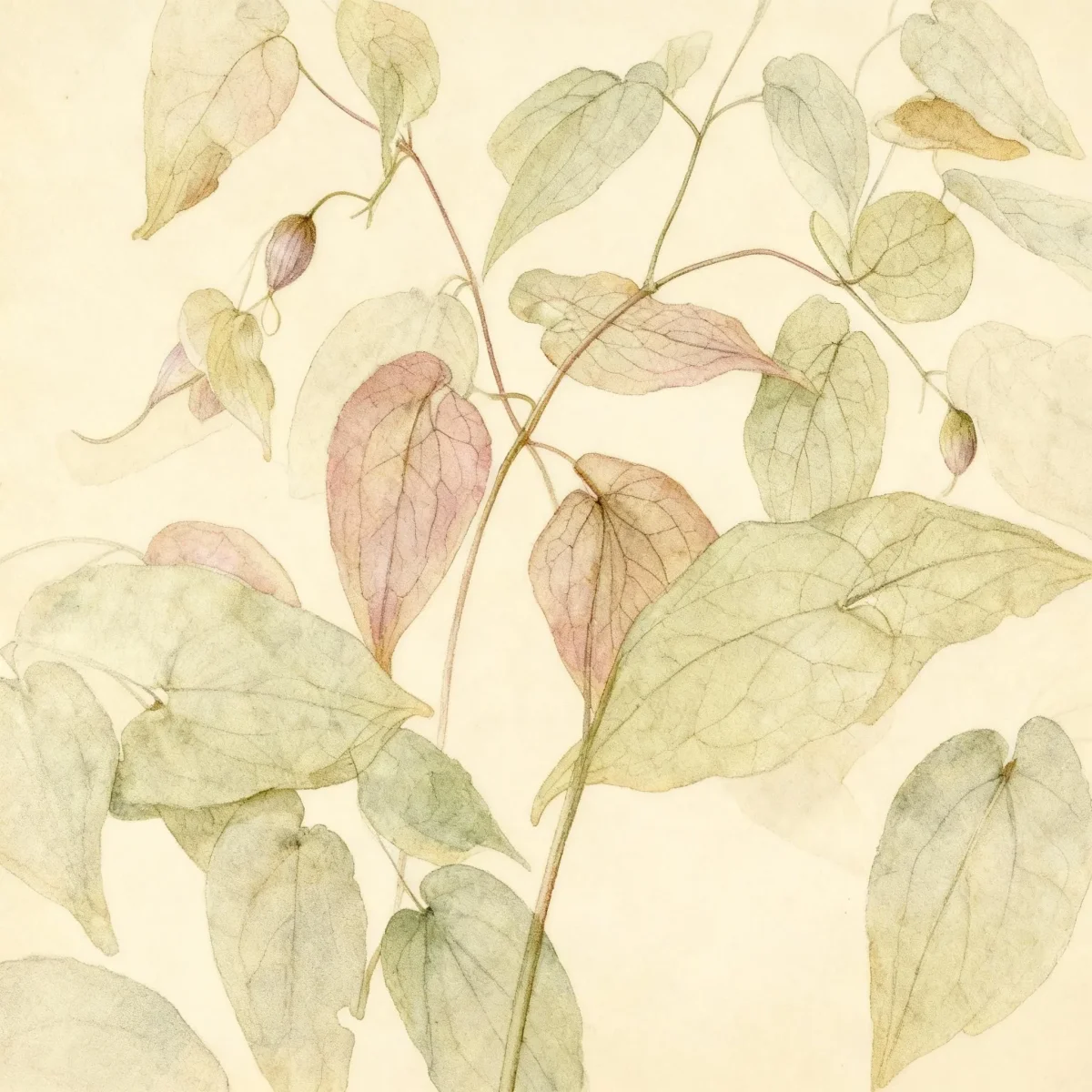
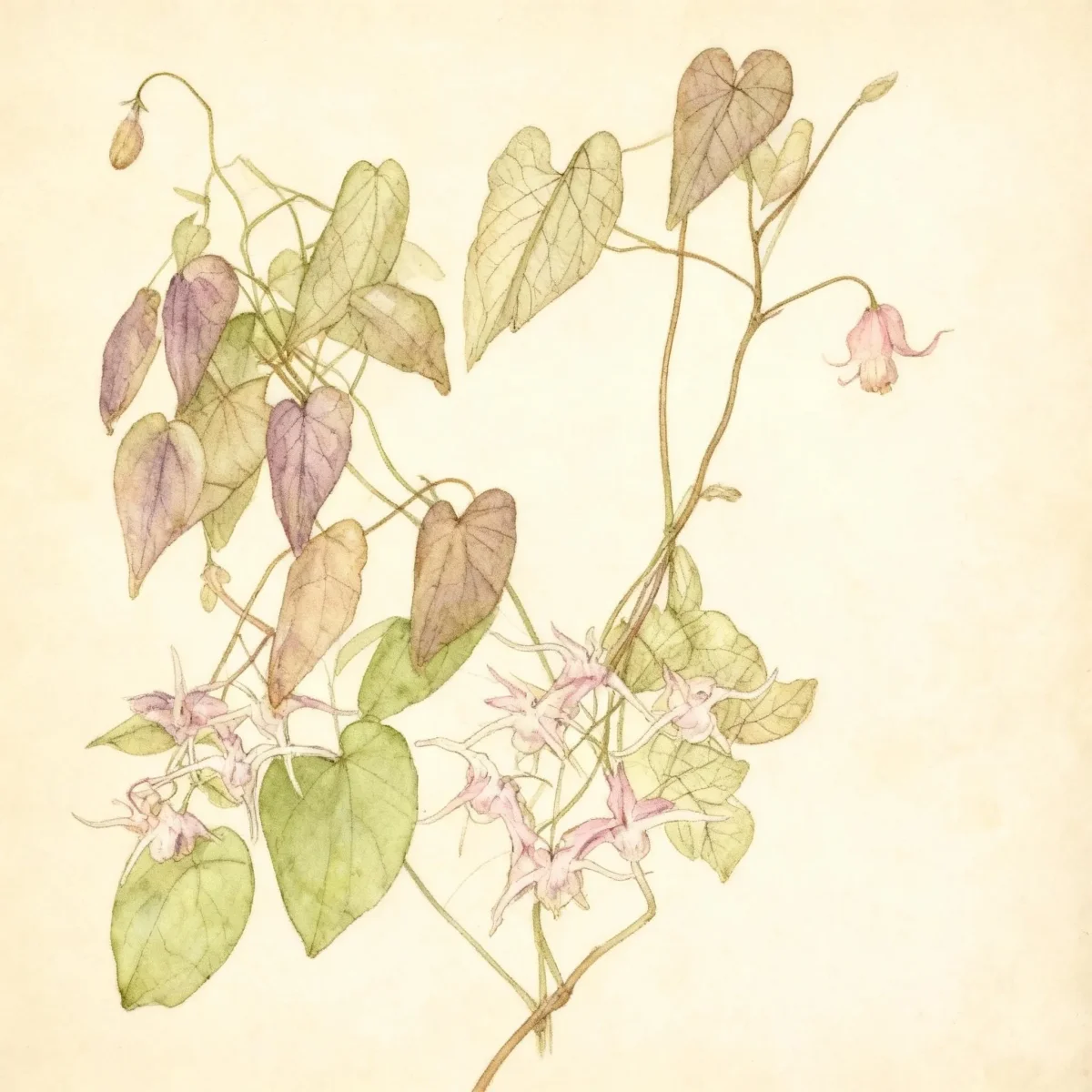
Bishop's hat (Epimedium × youngianum 'Tamabotan')
Epimedium × youngianum 'Tamabotan', or Bishop's hat, offers delicate light lavender spring flowers and adaptable low-maintenance ground cover.

Bloom Boldly, No Matter the Season - Sweatshirt
Cozy organic cotton sweatshirt featuring our exclusive Purple Coneflower design. Perfect for gardeners who bloom year-round.
Inspired by the beautiful Bishop's hat
Limited first batch (50) — join the waitlist for early access
Waitlist closes Feb 15, 2026.
Complete Plant Information
Field Guide Continues
Ready for care notes, companion picks, and planting tips?
The map is just the start. The full guide below covers growth habits, seasonal performance, and landscape uses.
Overview
Epimedium × youngianum ‘Tamabotan’, widely recognized under the common name Bishop’s hat, provides exceptional texture and color contrast in deeply shaded garden spaces. This rhizomatous perennial forms attractive mounds whose fine foliage emerges with purple tints before maturing to green, often exhibiting rich red fall color. Gardeners value Epimedium × youngianum ‘Tamabotan’ because it combines excellent toughness, thriving where many plants struggle, with early spring floral displays.
This hybrid is prized for its ability to colonize slowly, making it an effective, low-maintenance solution for ground cover or naturalizing under established trees. Its tolerance for dry soil conditions once established simplifies its care regimen significantly. Furthermore, the delicate, spurless flowers of Epimedium × youngianum ‘Tamabotan’ appear later in the spring than many of its relatives, extending the season of interest for shady woodland gardens.
Overall, Bishop’s hat is an indispensable component for designers seeking reliable, deer-resistant coverage for dry, shady borders. Its ability to handle heavy shade while remaining relatively compact ensures it integrates seamlessly into woodland plantings.
Fast Facts
- Plant Family: Berberidaceae
- Plant Type: Herbaceous perennial
- Hardiness Zones: USDA Zones 4-8
- Size at Maturity:
- Height: 0.5-1.5 ft
- Spread: 0.5-1.5 ft
- Bloom Time: April
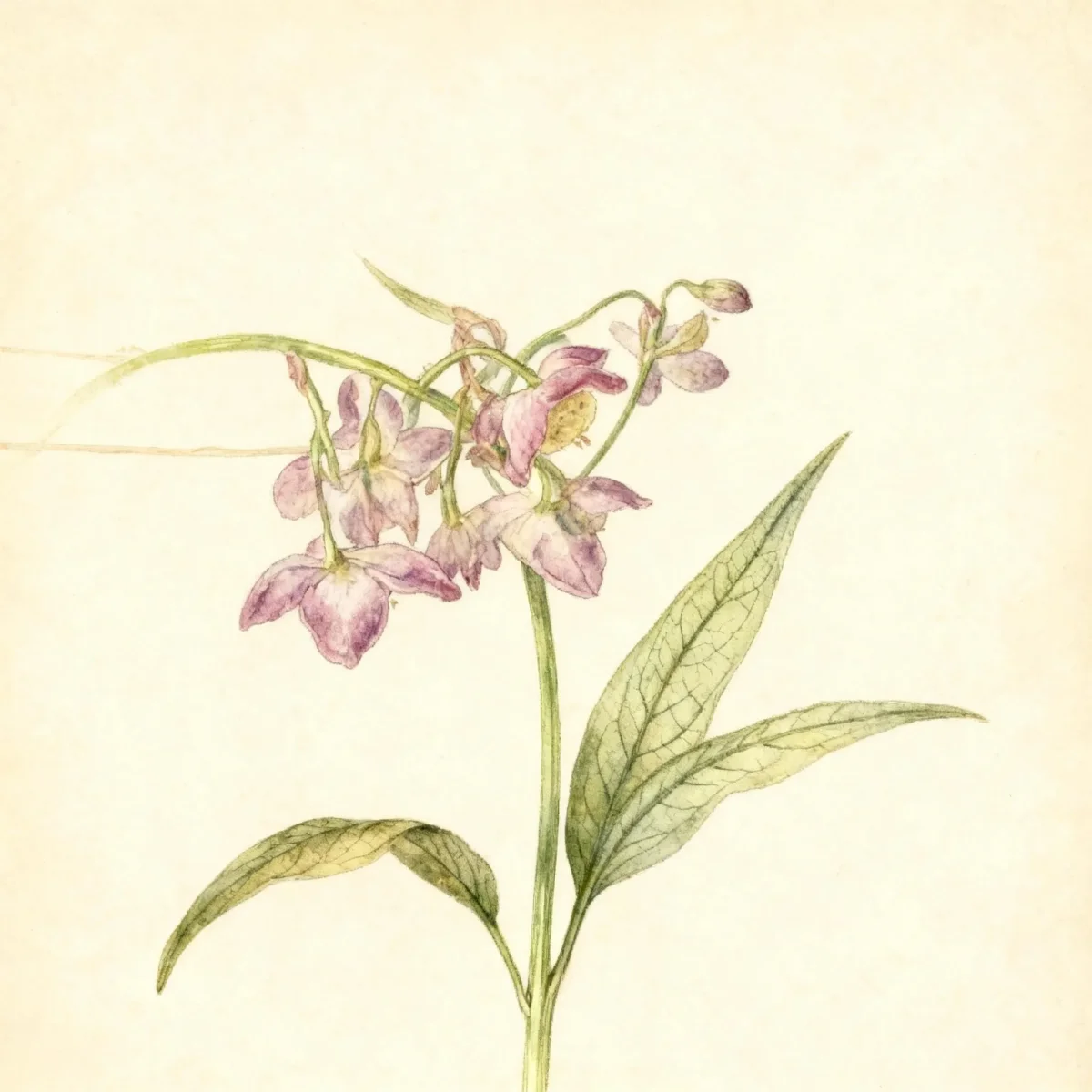
- Bloom Description: Light lavender
- Sun Exposure: Part shade to full shade
- Water Needs: Dry to medium
- Maintenance Level: Low
How to Grow
Planting Epimedium × youngianum ‘Tamabotan’ is best done in the spring or fall when conditions are cool. Locate this Bishop’s hat variety in spots that receive part shade to full shade, ensuring the soil is well-drained. While it performs best in loose, organically rich loams given even moisture, this hybrid is highly adaptable.
Maintenance for this perennial is straightforward, reflecting its low-maintenance rating. While it prefers consistent moisture when first establishing, once established, Epimedium × youngianum ‘Tamabotan’ tolerates significant drought, making it perfect for dry shade. Fertilization is rarely necessary; enriching the soil with compost at planting time is usually sufficient.
Since the foliage of this particular hybrid is not evergreen, cut back the old, tired leaves in late winter or early spring just before new growth emerges. This practice keeps the clumps tidy and allows the spring flowers, which appear above the emerging purple young foliage, to take center stage.
Landscape Uses
Epimedium × youngianum ‘Tamabotan’ excels in functional roles across the landscape due to its adaptability. It is strongly recommended as a small area ground cover or precise edger for shady areas where grass struggles to grow. Mass plantings are highly effective when used to naturalize sections of woodland gardens or wild garden settings, creating a cohesive, textured carpet.
This Bishop’s hat variety is also surprisingly useful in tougher microclimates. It grows well underneath the canopy of established trees, stabilizing banks due to its modest rhizomatous spread and erosion resistance. Consider placing them along the fronts of shaded borders or nestled into partially shaded rock gardens for textural interest.
Look for companion plants with similar dry shade requirements, such as Hostas, Hellebores, or ferns. The upright, airy structure of the flowers in April offers a nice contrast to the broader leaves of these woodland compatriots, enhancing overall design depth.
Standout Features
Flower Qualities
- Showy
Noteworthy Characteristics
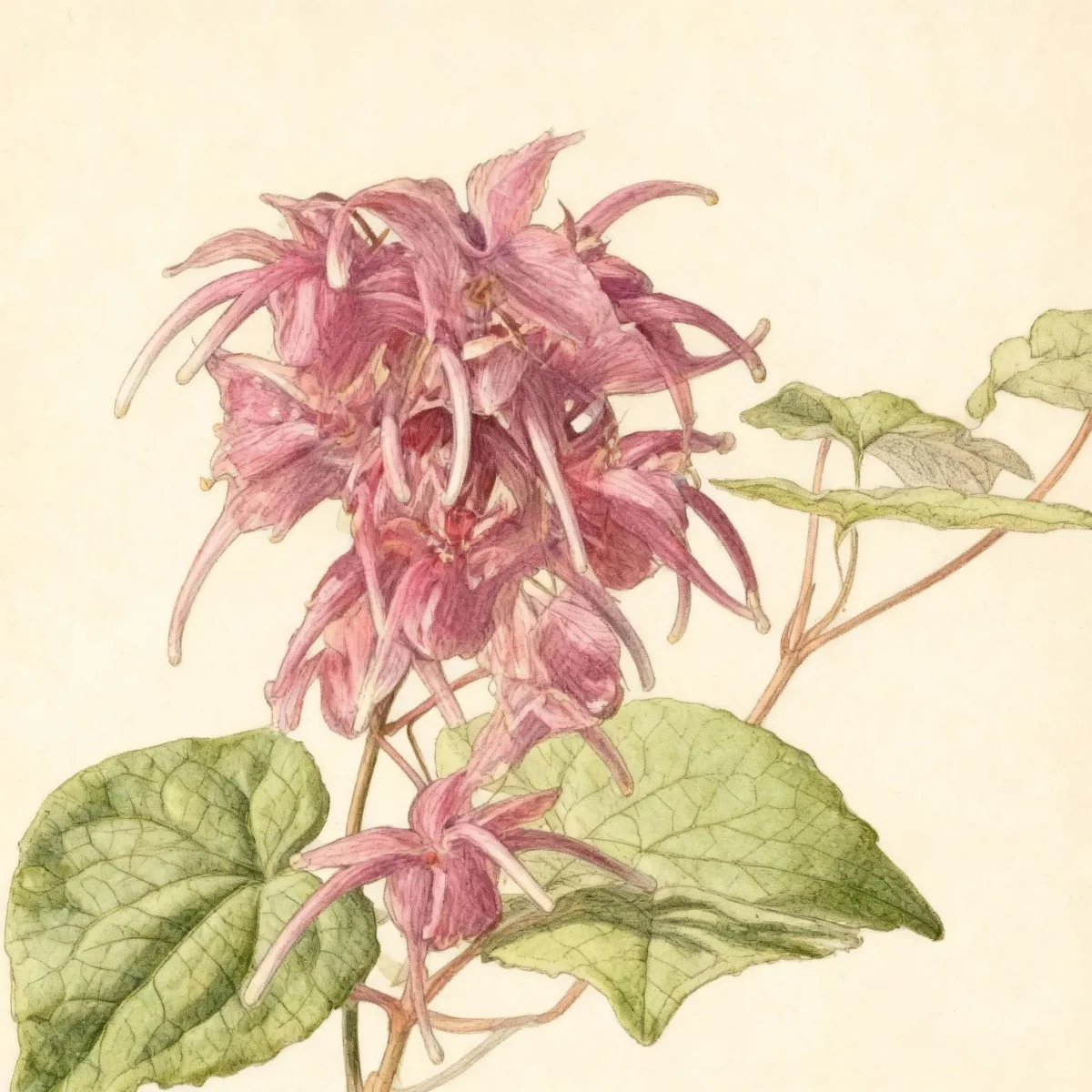
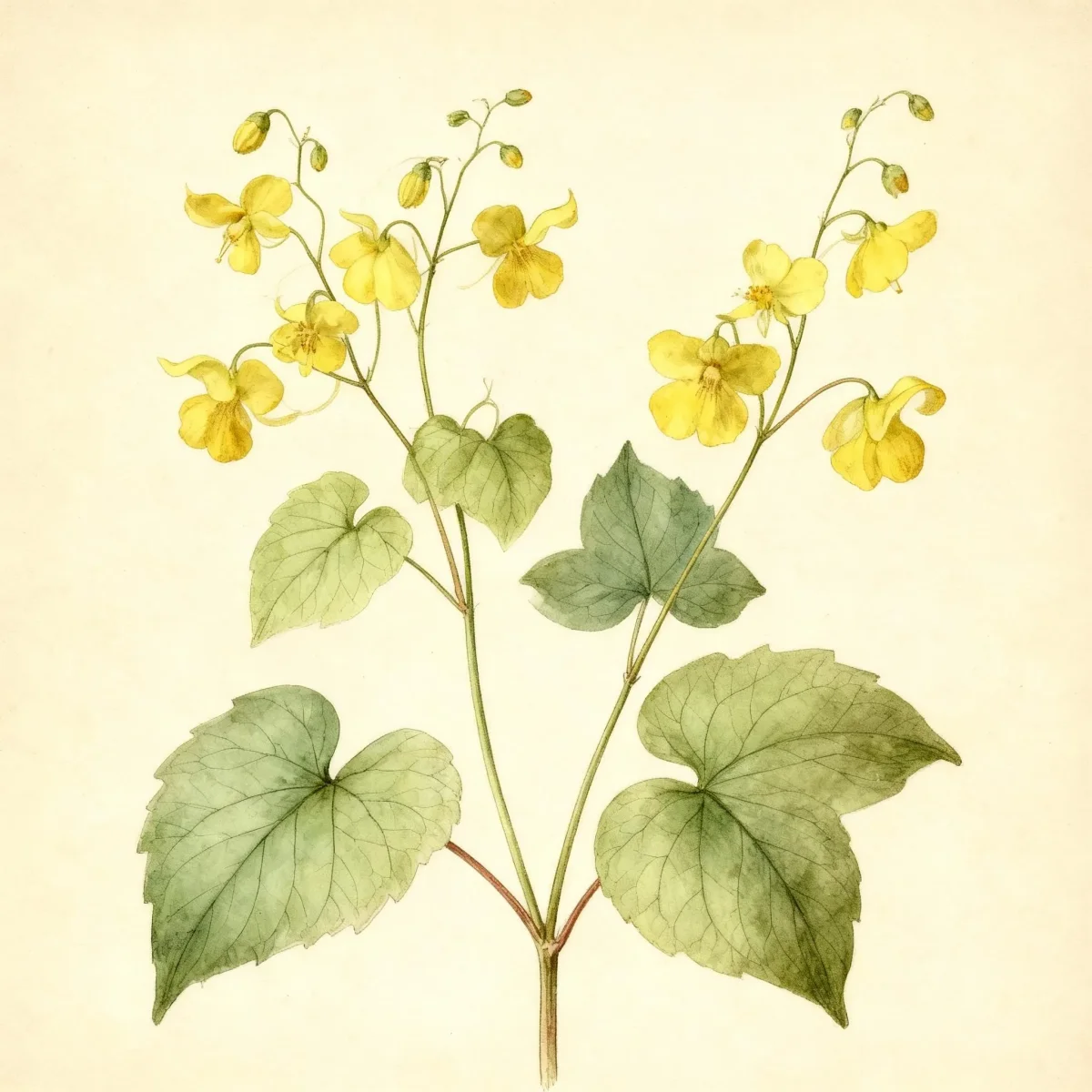
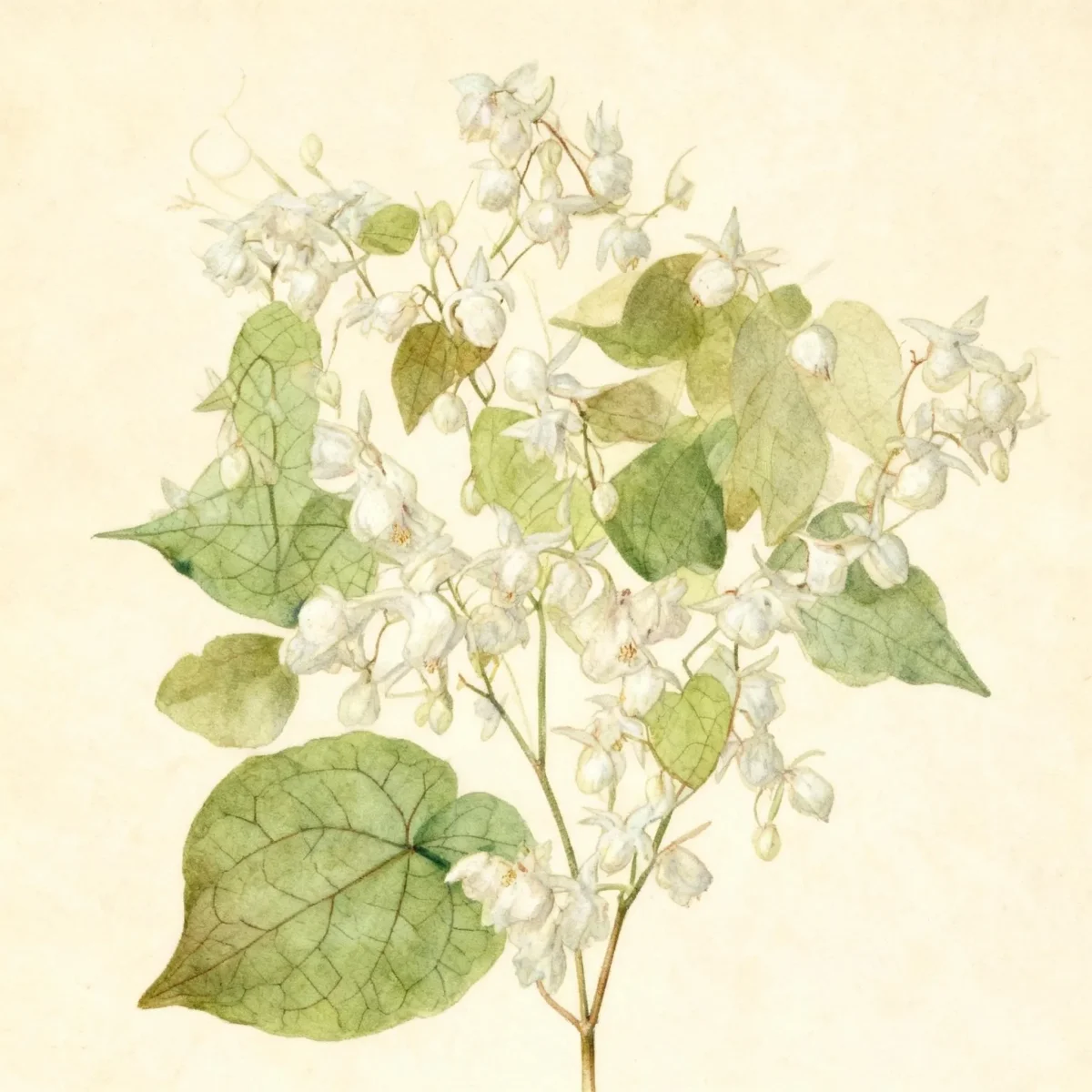
Epimedium × youngianum, sometimes commonly called Young’s barrenwort, is a cross between E. Diphyllum and E. Grandiflorum. It is a rhizomatous, clump-forming perennial which typically grows 6-8” tall and is primarily used as a ground cover or edger in shady or woodland areas. Racemes of short-spurred to spurless, white to pink flowers appear in spring above the foliage. Flowers bloom later in spring than most other epimediums. Compound, pale to medium green leaves with triangular to heart-shaped leaflets (to 3” long) on wiry stems form attractive foliage mounds. New leaves in spring emerge with a red tinge, mature to green and turn deep red in fall. Genus name is of unclear origin and meaning but the Greeks used epimedion for a very different plant. Epimediums are commonly called bishop’s hat or barrenwort. ‘Tamabotan’ typically grows 6-8” tall when in flower, later growing to as much as 16” tall. Spurless, almost bell-shaped, light lavender flowers have darker lavender near the petal tips. Flowers appear in small loose racemes in spring above the foliage. Young foliage is purple in spring at the time of flowering, but later matures to green.
Tolerances
- Rabbit
- Deer
- Drought
- Heavy Shade
- Erosion
- Dry Soil
- Shallow-Rocky Soil
Potential Problems
This plant generally exhibits no serious insect or disease problems, which contributes significantly to its low-maintenance profile in the garden. Gardeners rarely need to apply chemical controls for pests or pathogens when growing Epimedium × youngianum ‘Tamabotan’ correctly. Ensure excellent drainage, as prolonged wet roots in heavy clay soil are the primary factor that can stress this otherwise robust perennial.
Frequently Asked Questions
What hardiness zones is Bishop’s hat suitable for?
Epimedium × youngianum ‘Tamabotan’ is reliably hardy in USDA Zones 4 through 8.
How large does Bishop’s hat grow?
This herbaceous perennial typically reaches heights between 0.5 and 1.5 feet, with a corresponding spread of 0.5 to 1.5 feet at maturity.
What sun exposure does Bishop’s hat need?
This preferred ground cover requires part shade to full shade conditions to thrive best in your landscape.
When does Bishop’s hat bloom?
The light lavender flowers of Epimedium × youngianum ‘Tamabotan’ typically appear in April, often slightly later than other epimediums.
Conclusion
For gardeners managing difficult, dry shade, Epimedium × youngianum ‘Tamabotan’—or Bishop’s hat—offers a virtually fail-safe solution. Its deer resistance, drought tolerance, and attractive foliage make it invaluable for woodland restoration and low-care borders. Before planting, verify your area falls within USDA Zones 4-8 and prepare a location offering at least part shade to maximize the beauty of this exceptional perennial.
Companion Planting
When designing shady borders, pairing Epimedium × youngianum ‘Tamabotan’ with other shade-tolerant, rhizomatous, or clump-forming plants creates rich textural layers. Consider using plants that bloom earlier or later to ensure continuous interest throughout the season in the shadow garden. Good partners include Brunnera, various evergreen ferns like Dryopteris species, and the early blooms of Hepatica.
Grouping these plants ensures that when the light lavender flowers of the Bishop’s hat finish, the bold foliage of nearby Hostas or the spring ephemerals like Trillium can take over the visual focus. Because Epimedium tolerates dry conditions so well, select companions that share this drought tolerance once mature, such as certain varieties of Astilbe or Epimedium’s close relative, Vancouveria.
Seasonal Care Calendar
Early Spring (Pre-bloom): This is the ideal time for minimal cleanup. If the old foliage from last year persisted, cut it back just before the new purple-tinged growth of your Epimedium × youngianum ‘Tamabotan’ emerges. This action primes the plant for its early bloom display.
Summer: Focus on observation rather than intervention, especially if established. If an unusual dry spell occurs, give a deep watering, but otherwise, allow established plants to manage. Avoid heavy mulching directly against the crowns, which can promote rot.
Fall: Monitor the foliage as it transitions to deep red hues. While minimal fall cleanup is necessary, adding a thin layer of compost around the base will feed those rhizomes slowly over the winter, preparing the plant for next spring’s show of light lavender flowers.