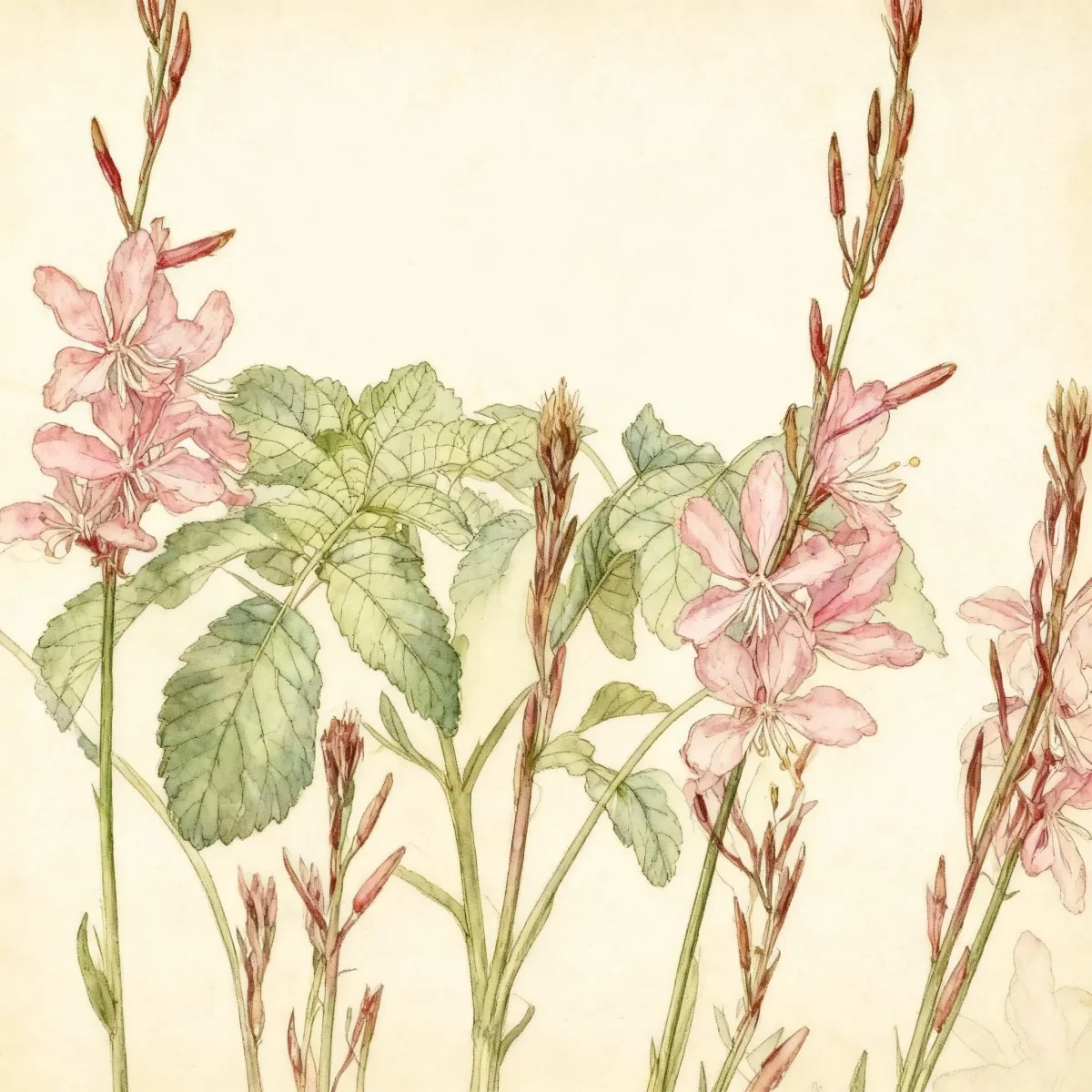
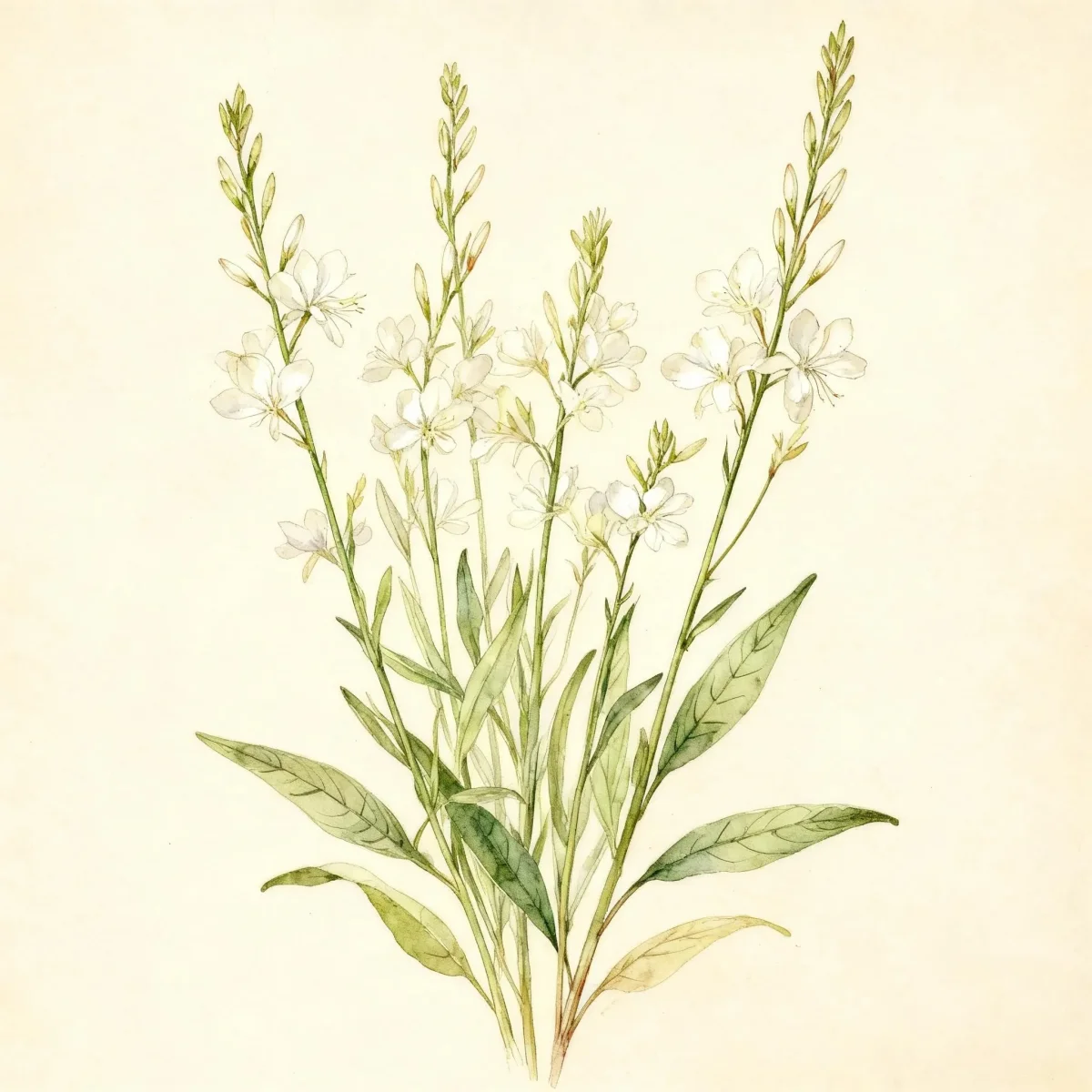
Gaura (Gaura lindheimeri 'Nugauwhite' KARALEE WHITE)
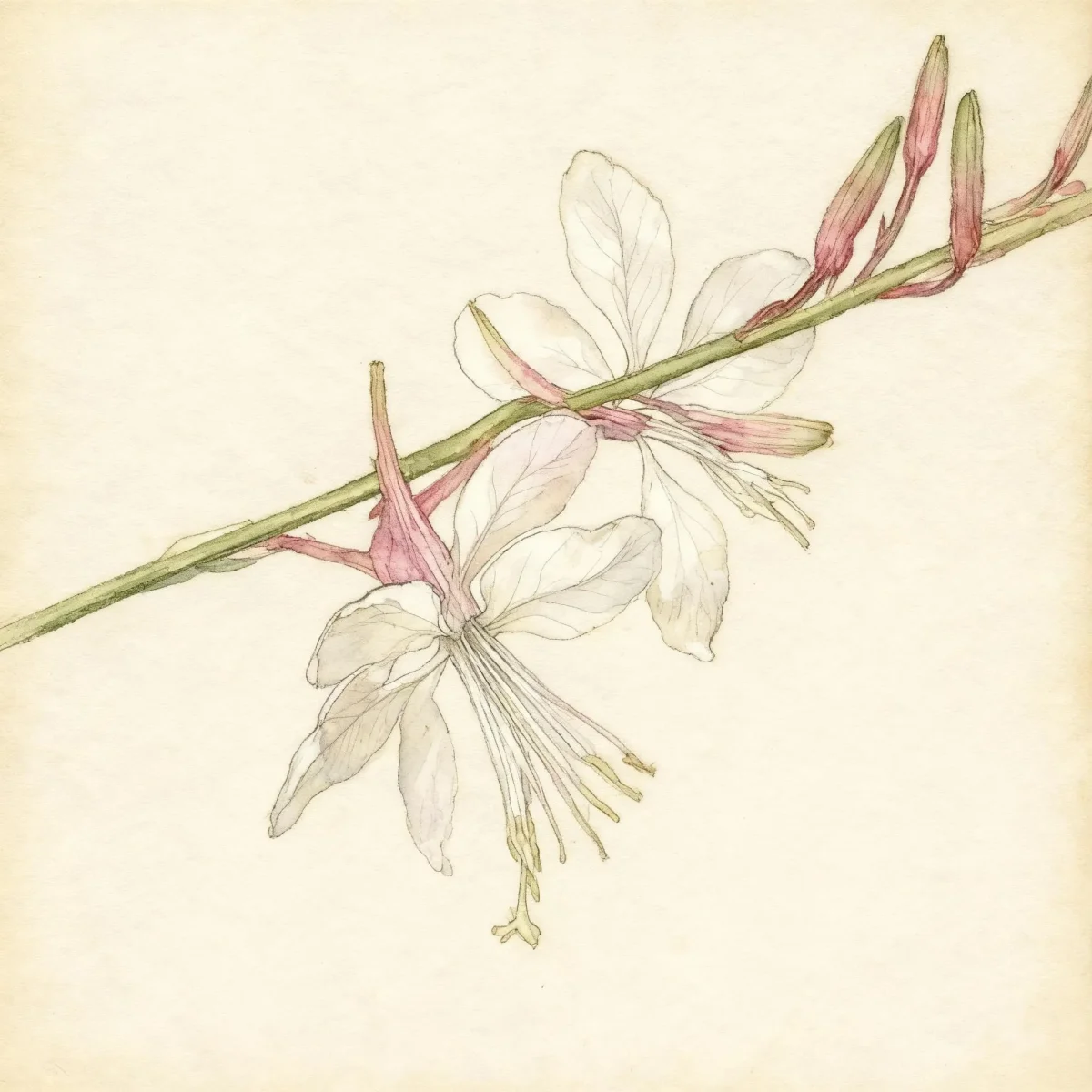
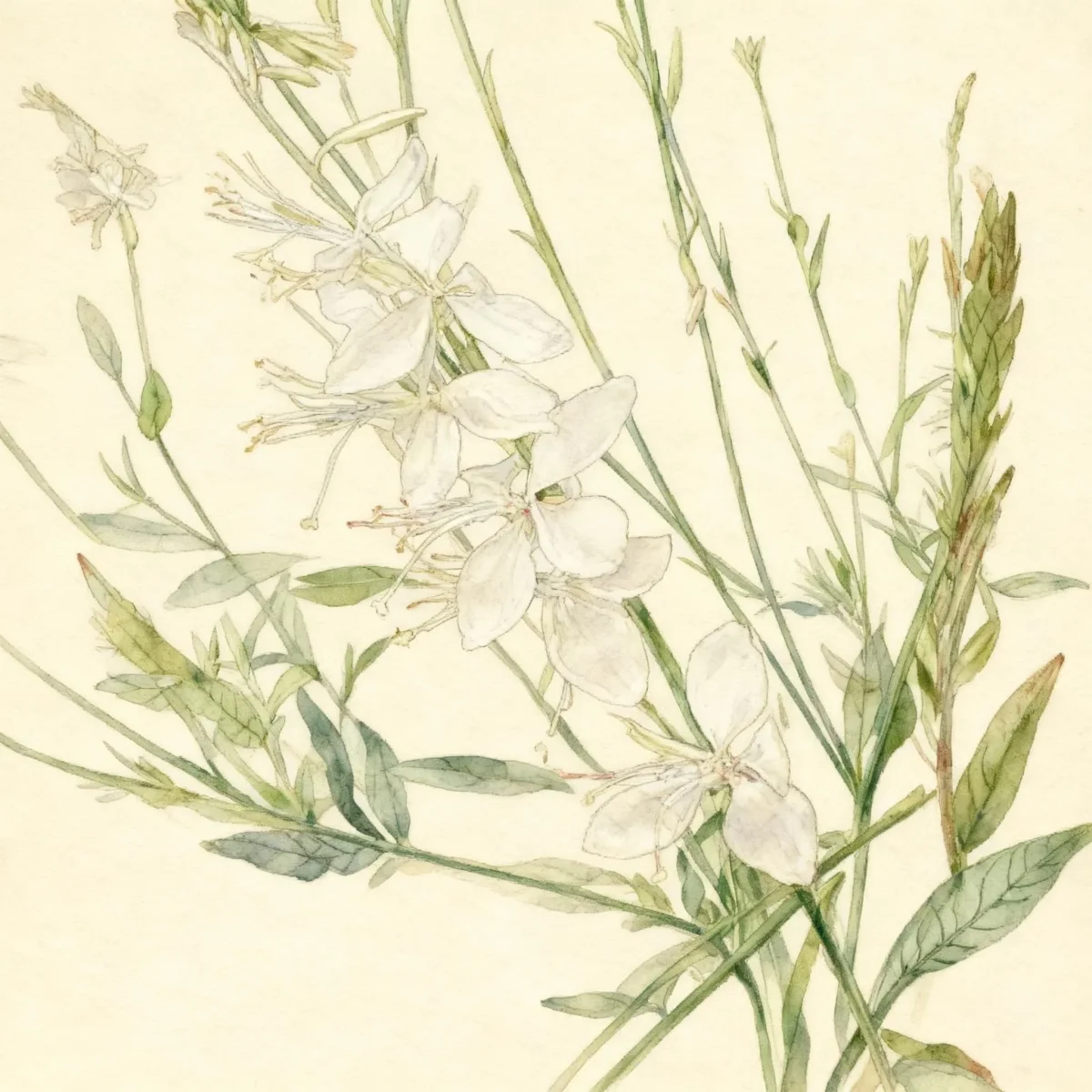
Gaura lindheimeri 'Nugauwhite' KARALEE WHITE offers delicate, white, butterfly-like blooms from May to August atop slender stems, perfect for sunny borders.

Bloom Boldly, No Matter the Season - Sweatshirt
Cozy organic cotton sweatshirt featuring our exclusive Purple Coneflower design. Perfect for gardeners who bloom year-round.
Inspired by the beautiful Gaura
Limited first batch (50) — join the waitlist for early access
Waitlist closes Feb 15, 2026.
Complete Plant Information
Field Guide Continues
Ready for care notes, companion picks, and planting tips?
The map is just the start. The full guide below covers growth habits, seasonal performance, and landscape uses.
Overview
Gaura lindheimeri ‘Nugauwhite’ KARALEE WHITE, often known simply as Gaura, is cherished in the garden for its airy, delicate presentation. This herbaceous perennial produces an almost continuous flurry of white, four-petaled blooms that flutter gracefully in the slightest breeze. The cultivar ‘Nugauwhite’ is especially valued for maintaining a compact, upright habit, making it easier to integrate into mixed plantings without becoming unruly.
As a robust native plant component, this Gaura thrives under challenging conditions common in hot, humid summers. Its relatively small stature, usually reaching only 1.5 feet tall, allows it to provide movement and light contrast throughout the season without overwhelming neighboring plants. The flowers start as pinkish buds before opening pure white, keeping the display fresh from late spring until frost.
This plant is an excellent choice for modern, low-maintenance landscapes where structure and continuous floral interest are priorities. By selecting Gaura lindheimeri ‘Nugauwhite’ KARALEE WHITE, gardeners gain an adaptable specimen that tolerates some drought once established, provided its vital need for excellent drainage is met.
Fast Facts
- Plant Family: Onagraceae
- Plant Type: Herbaceous perennial
- Hardiness Zones: USDA Zones 5-9
- Size at Maturity:
- Height: 0.75-1.5 ft
- Spread: 1-2 ft
- Bloom Time: May to August
- Bloom Description: White
- Sun Exposure: Full sun
- Water Needs: Medium
- Maintenance Level: Medium
How to Grow
The primary requirement for successful cultivation of Gaura is perfectly drained soil. This a taprooted plant thrives best when established in sandy or loamy substrates that do not retain excessive moisture, as root rot presents a significant risk in heavy, soggy conditions. Plan to plant during the optimal season for your region, usually spring after the danger of hard frost has passed, ensuring it receives full sun exposure throughout the day.
Watering needs for Gaura are medium; while it tolerates dry spells once established, consistent moisture is appreciated during initial establishment and peak blooming periods. Fertilization is generally unnecessary; rich soils often lead to thin, floppy stems, spoiling the desirable upright presentation of Gaura lindheimeri ‘Nugauwhite’ KARALEE WHITE. If leggy stems are observed, especially in richer soil, consider planting closely with neighbors to provide mutual support.
Maintenance is generally low, focusing mainly on aesthetics and prolonging bloom. Deadheading spent flower spikes encourages greater flower production, extending the bloom time well into August. Gardeners can strategically cut back plants by half in late spring to manage size, particularly if the plant shows signs of reaching its maximum height. Be aware that if spent stems are left standing in the fall, the species may self-seed.
Landscape Uses
Gaura works exceptionally well positioned in sunny borders where its airy texture can soften hard edges and contrast with bolder foliage plants. Planting in groups or massing the white blooms of Gaura lindheimeri ‘Nugauwhite’ KARALEE WHITE creates significant visual impact as the individual flowers dance in unison. They are also surprisingly effective when included in containers, providing height and constant movement against the static backdrop of patio pots.
When designing borders, pair this Gaura with plants that share its love for heat and excellent drainage. Consider spiky companions like ornamental grasses or dense, low-growing perennials that can help support the sometimes thin stems of the Gaura. The white flowers provide wonderful contrast against deep purple foliage or bright yellow blooms, making placement high value in color schemes.
Standout Features
Flower Qualities
- Showy
Noteworthy Characteristics
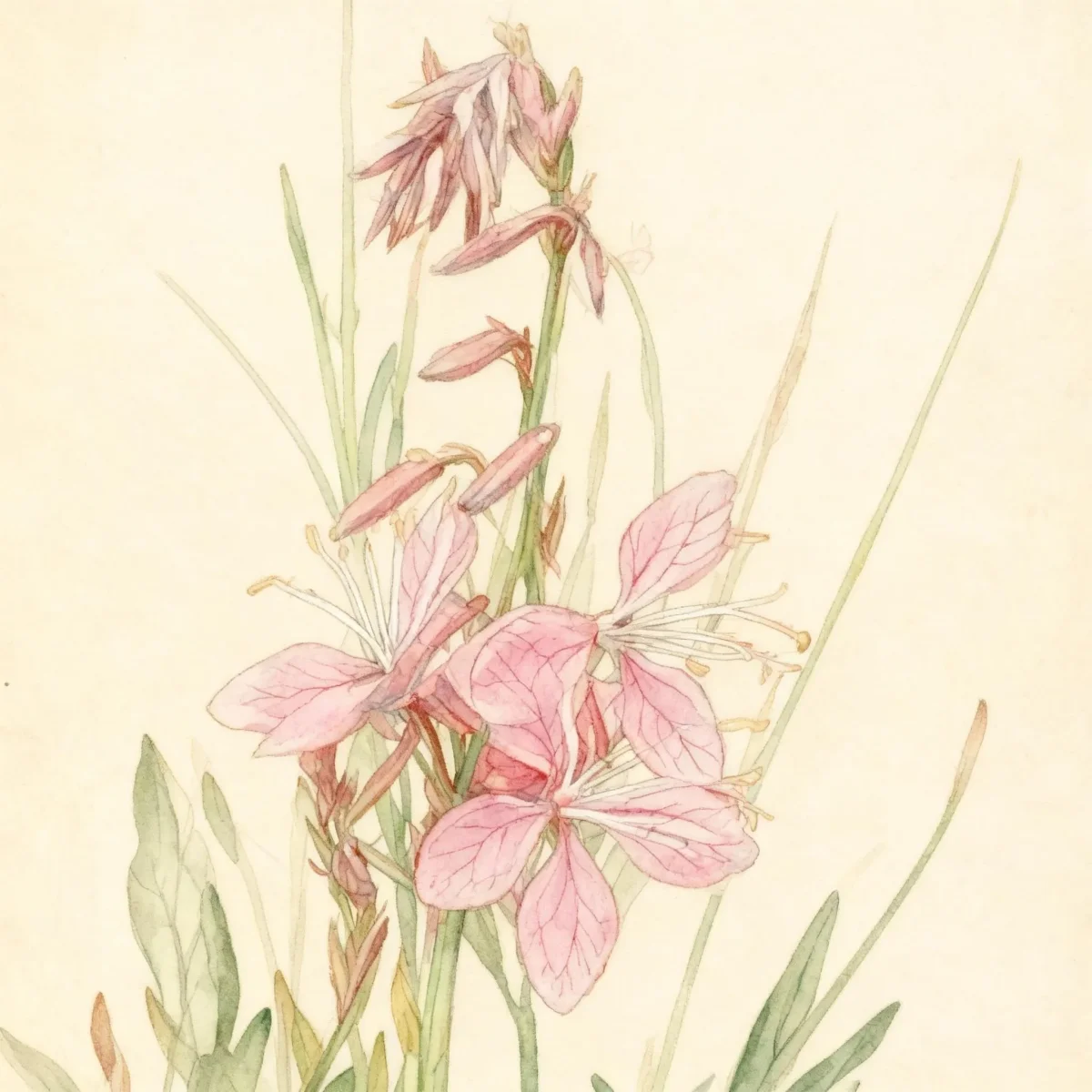
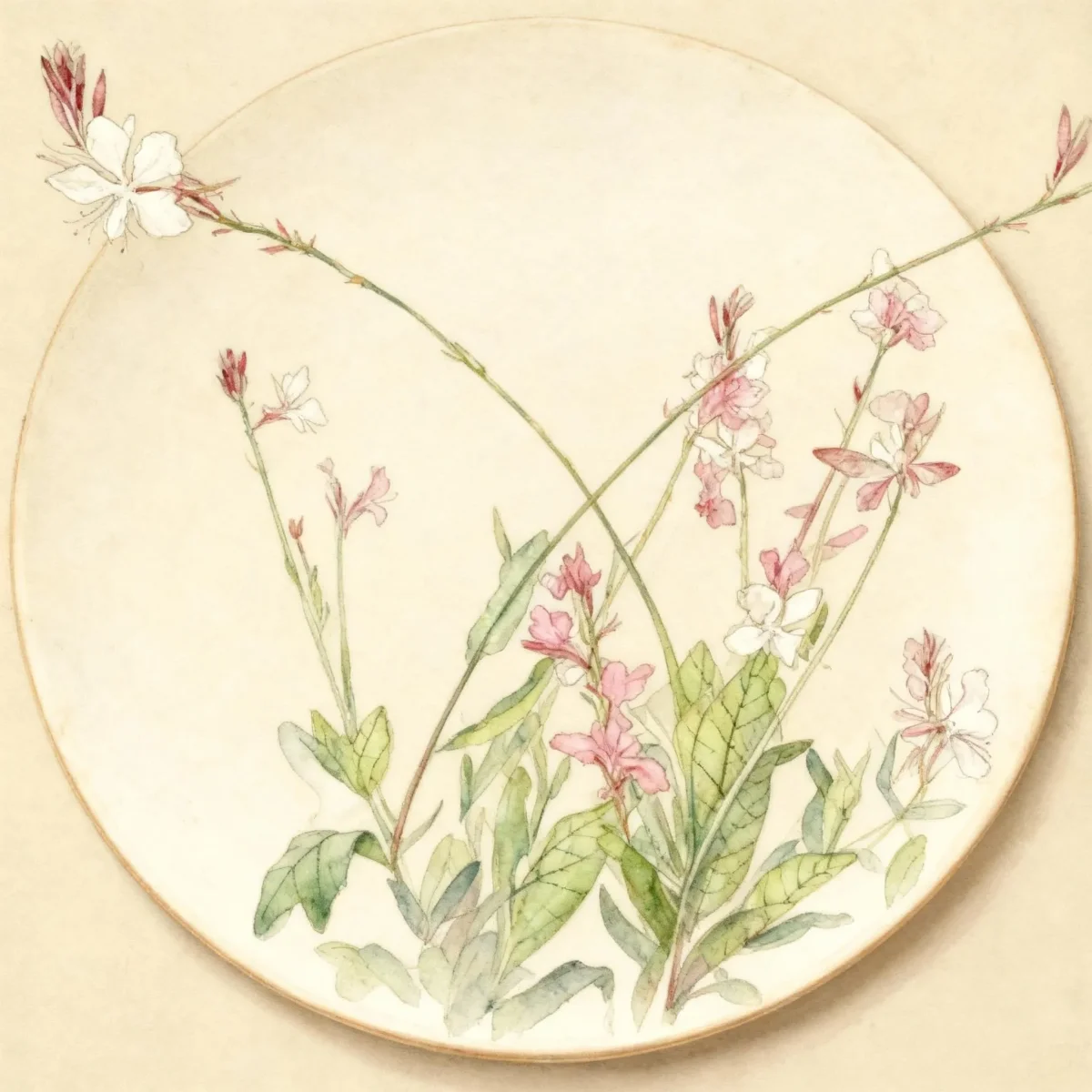
Gaura lindheimeri, commonly called gaura, is a herbaceous clump-forming perennial that is native to Texas and Louisiana. The species opens pinkish buds revealing white flowers which slowly fade to pink, appearing in long, open, terminal panicles. ‘Nugauwhite’, sold under the trade name of KARALEE WHITE, is a compact cultivar noted for its small upright habit, free branching, and long flowering period of white flowers that bloom almost continuously from late spring to fall. These four-petaled white flowers dance in the wind like butterflies above the medium green foliage.
Tolerances
No specific known tolerances are listed for this cultivar.
Potential Problems
Root rot is a severe threat if the soil lacks necessary drainage, so amending heavy clay is crucial before planting Gaura. Fungal issues like rust and powdery mildew can occasionally manifest, usually indicating high humidity or poor air circulation around the foliage. Gardeners should also monitor for common sap-sucking pests, including aphids, whitefly, and flea beetles, treating infestations promptly as they appear.
Frequently Asked Questions
What hardiness zones is Gaura suitable for?
This variety of Gaura, Gaura lindheimeri ‘Nugauwhite’ KARALEE WHITE, is reliably hardy in USDA Zones 5 through 9.
How large does Gaura grow?
In terms of size, this plant typically reaches a height between 0.75 and 1.5 feet and spreads out to occupy an area 1 to 2 feet wide.
What sun exposure does this Gaura need?
For best flowering performance and strongest structure, Gaura requires full sun exposure throughout the growing season.
When does Gaura bloom?
You can expect continuous blooming from May through August, featuring lovely white flowers.
Conclusion
Gaura lindheimeri ‘Nugauwhite’ KARALEE WHITE provides essential vertical interest and tireless white blooms, making it a dynamic yet relatively easy-care addition to sun-drenched gardens. For a spectacular, airy display, ensure you meet the strict drainage requirements of this beautiful Gaura. Always verify that your location falls within USDA Zones 5-9 before planting.
Companion Planting
Selecting appropriate companions is key to ensuring the success and maximizing the aesthetic appeal of your Gaura. Since this plant dislikes rich, overly moist soil, pair it with other sun-loving, drought-tolerant perennials such as Sedums, Russian Sage (Perovskia), or certain types of ornamental grasses. These companions share similar cultural needs for drainage while their differing forms—mounding or spiky—provide excellent textural contrast to the airy wands of the Gaura.
Avoid planting Gaura directly next to moisture-loving bog plants or heavy feeders, as the excess water or nutrients can promote the weak, floppy growth that sometimes plagues this plant when conditions are too favorable. The combination of Gaura lindheimeri ‘Nugauwhite’ KARALEE WHITE with drought-tolerant perennials creates a cohesive, water-wise border that requires minimal attention once established.
Design Ideas for Air and Movement
The unique structure of Gaura allows it to function as a “see-through” plant, meaning you can intersperse it among bolder, blockier plants without obscuring their texture. Use Gaura as a bright, white accent placed towards the middle or back of a sunny border, allowing the slender stems to rise up and catch the light. This effect adds necessary lightness to heavy perennial groupings, especially in late summer gardens needing revitalization.
Mass planting five or more individuals of Gaura lindheimeri ‘Nugauwhite’ KARALEE WHITE together creates a shimmering cloud effect that attracts attention from a distance. For more formal settings, utilize them as an informal edging plant where their height (only up to 1.5 feet) won’t block views but still defines the border line beautifully against a pathway or low wall.