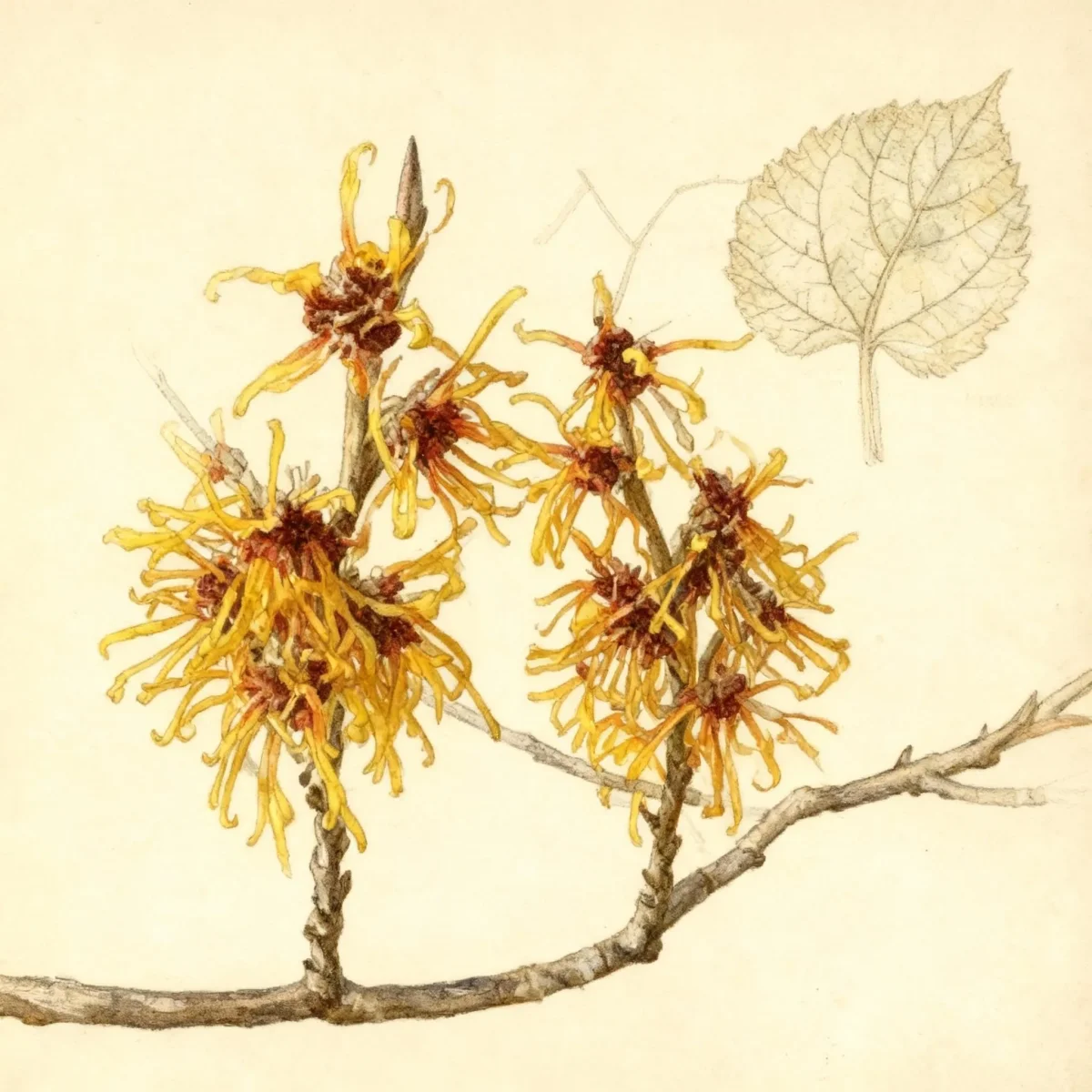
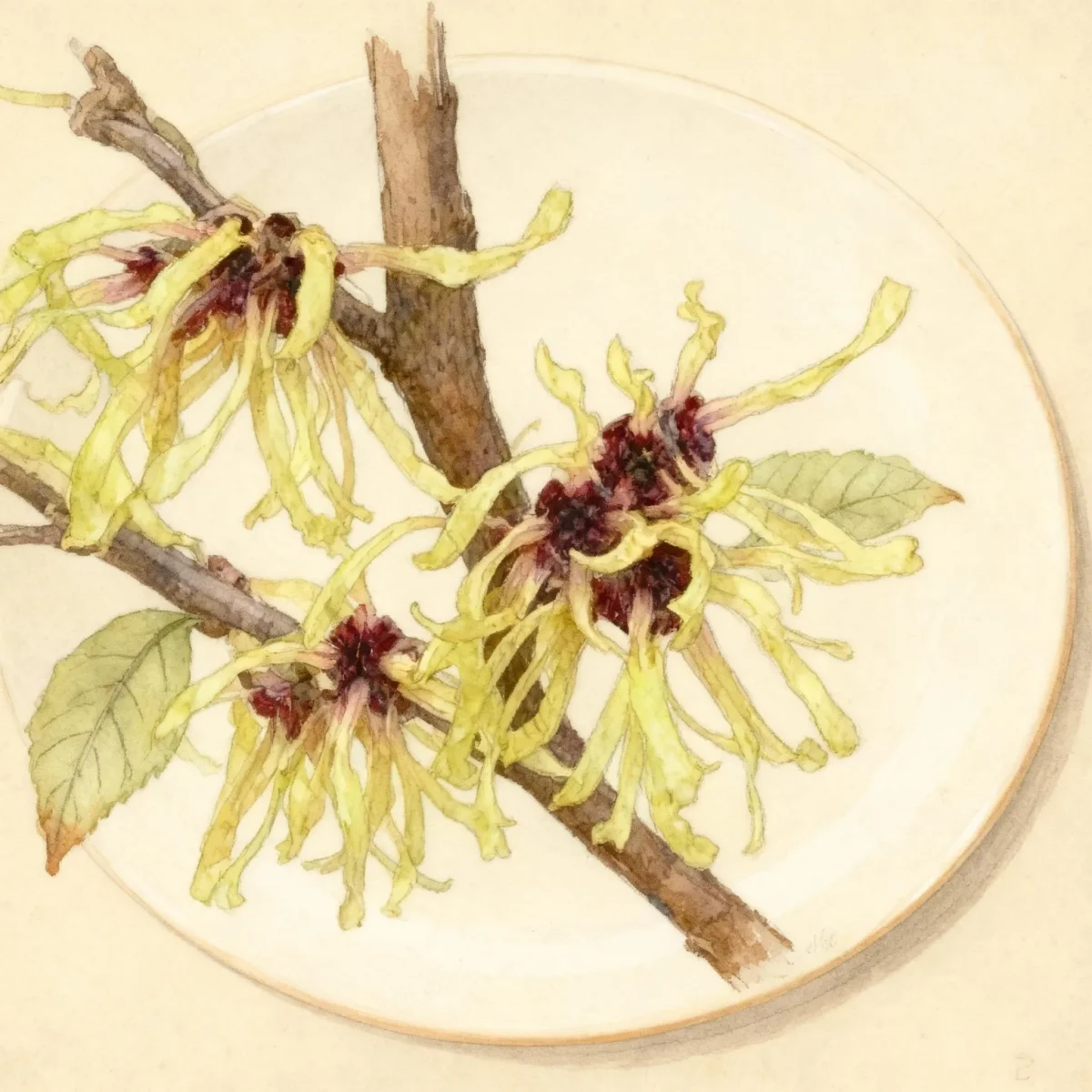
Witch hazel (Hamamelis × intermedia 'Angelly')
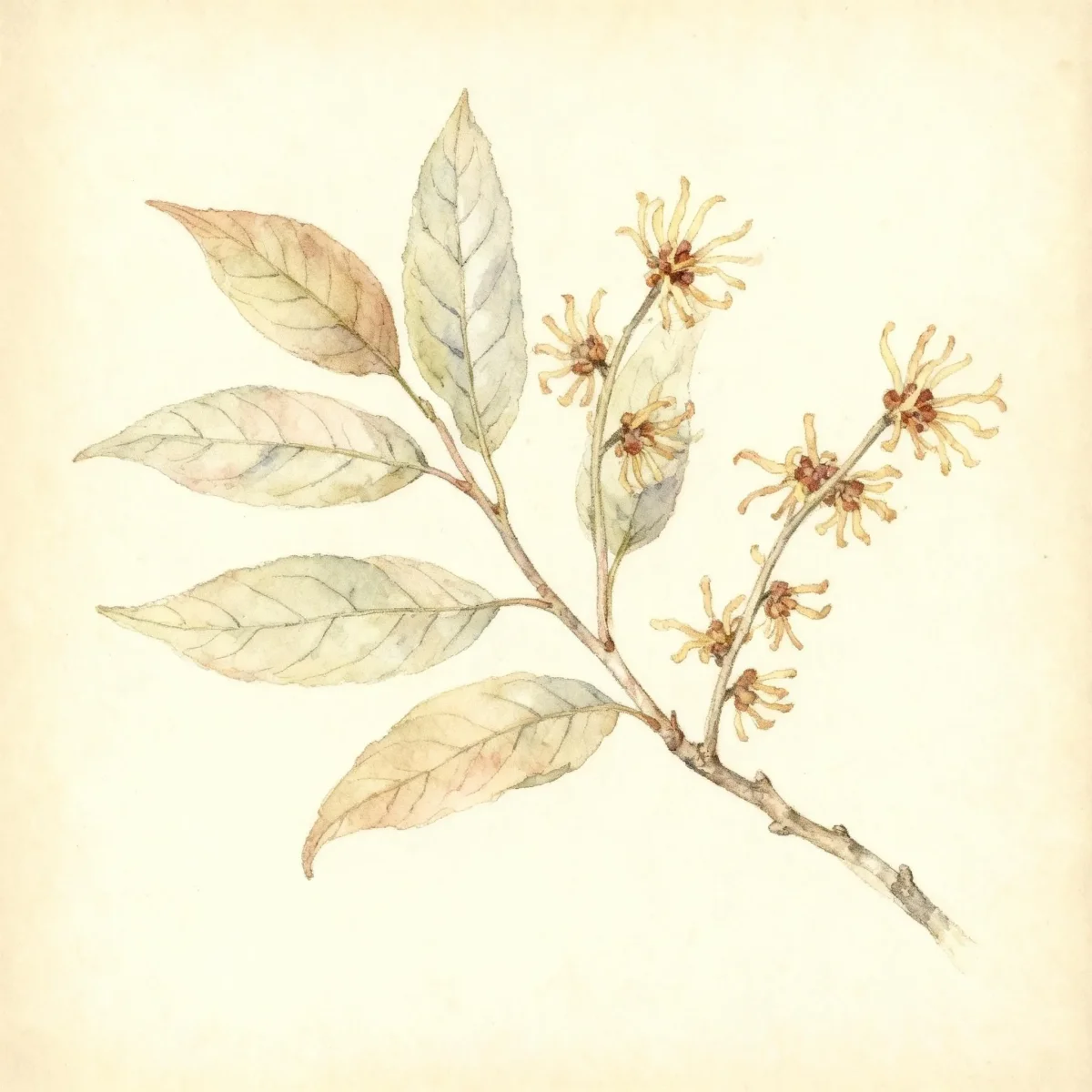
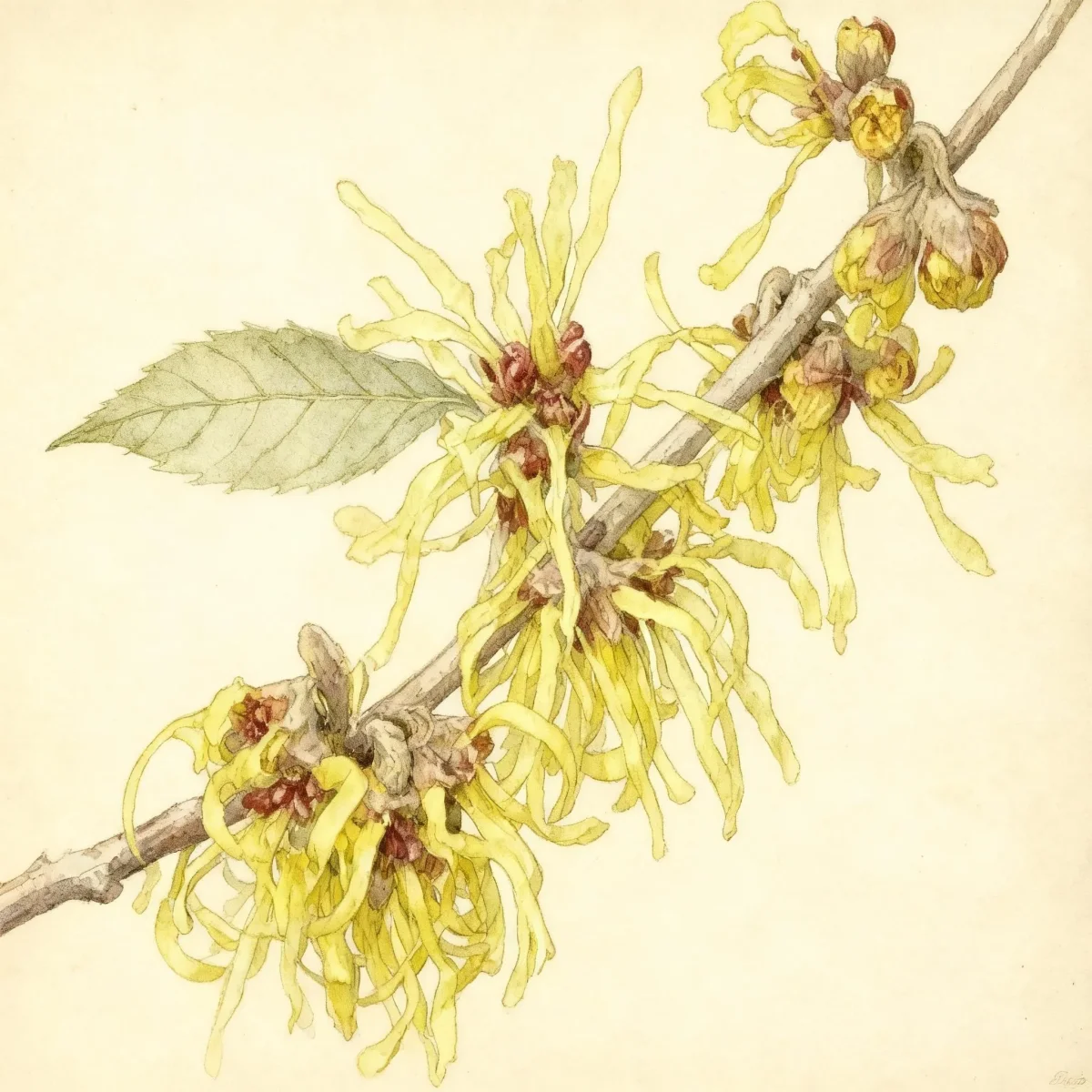
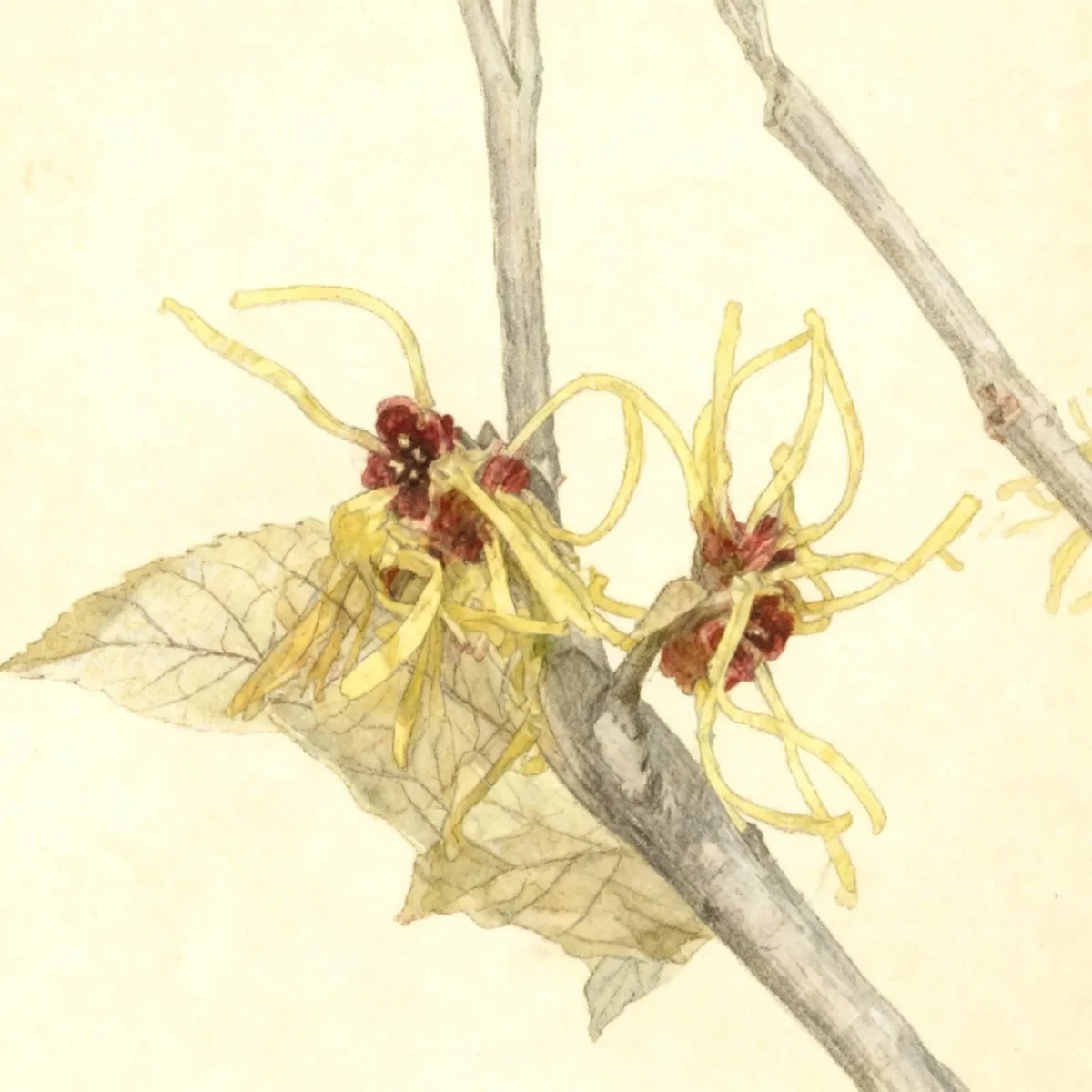
Hamamelis × intermedia 'Angelly' is a compact Witch hazel prized for its fragrant, showy yellow flowers blooming mid-winter.

Bloom Boldly, No Matter the Season - Sweatshirt
Cozy organic cotton sweatshirt featuring our exclusive Purple Coneflower design. Perfect for gardeners who bloom year-round.
Inspired by the beautiful Witch hazel
Limited first batch (50) — join the waitlist for early access
Waitlist closes Feb 15, 2026.
Complete Plant Information
Field Guide Continues
Ready for care notes, companion picks, and planting tips?
The map is just the start. The full guide below covers growth habits, seasonal performance, and landscape uses.
Overview
The Hamamelis × intermedia ‘Angelly’ is a standout deciduous shrub, celebrated for injecting color into the late winter garden when little else is blooming. As a hybrid Witch hazel, it delivers reliable, fragrant blooms directly on bare stems, providing vital visual interest during the cold months. Gardeners value this cultivar for its manageable size, typically reaching 7 to 10 feet tall and wide, making it a superb specimen plant or element in a mixed border.
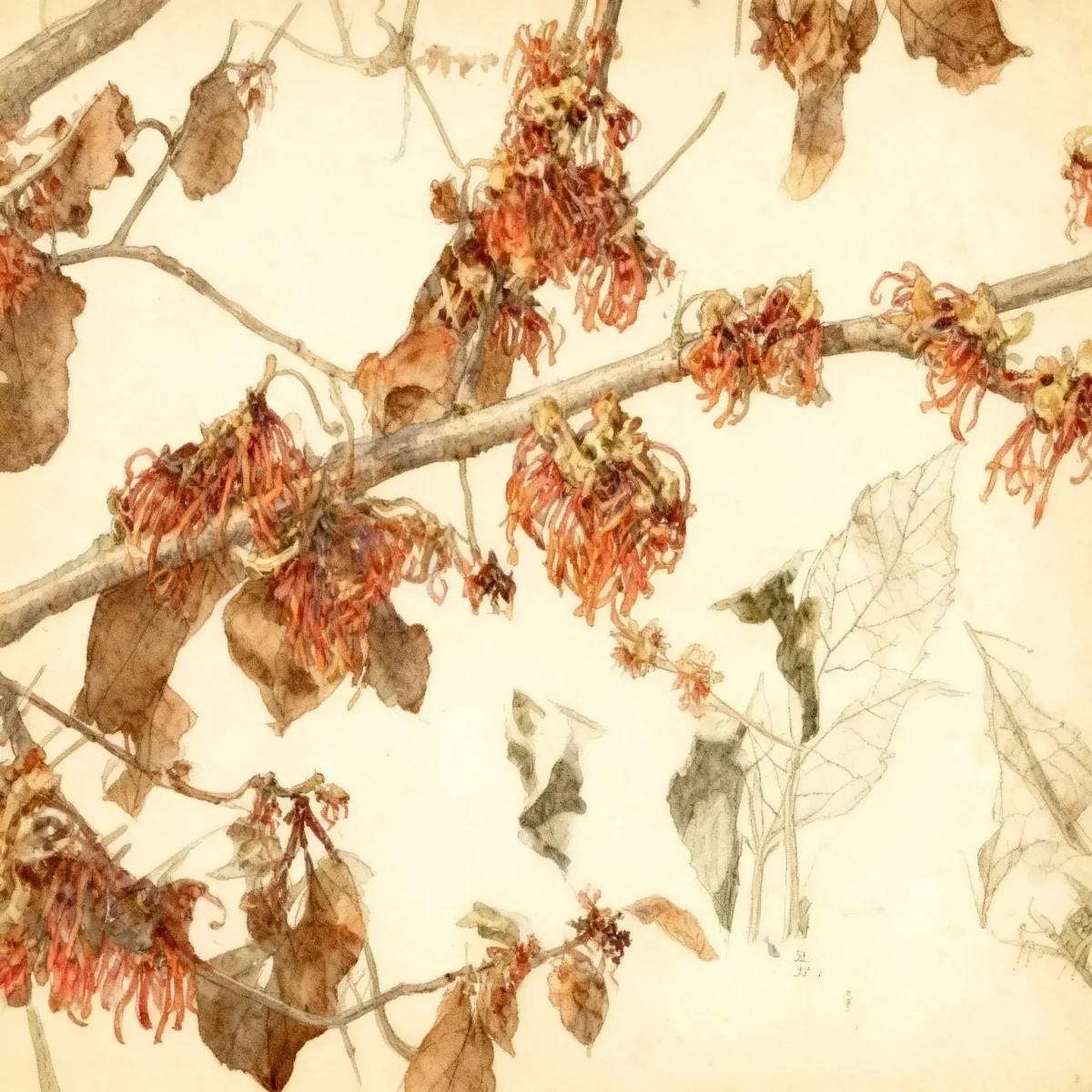
This Witch hazel offers more than just winter flowers; its foliage provides excellent seasonal transition, emerging with a purple tint before maturing and finally turning bright yellow with orange highlights in autumn. Valued for its low maintenance requirements once established, Hamamelis × intermedia ‘Angelly’ thrives in partial shade or full sun, provided its need for consistent moisture is met.
The aesthetic contribution of this specific Witch hazel cultivar is significant. Its showy, ribbon-like yellow petals are a true spectacle against the drab backdrop of late winter landscapes. Planting Hamamelis × intermedia ‘Angelly’ ensures seasonal structure and dependable bloom timing for forward-looking garden planning.
Fast Facts
- Plant Family: Hamamelidaceae
- Plant Type: Deciduous shrub
- Hardiness Zones: USDA Zones 5-8
- Size at Maturity:
- Height: 7-10 ft
- Spread: 7-10 ft
- Bloom Time: February to March
- Bloom Description: Yellow
- Sun Exposure: Full sun to part shade
- Water Needs: Medium
- Maintenance Level: Low
How to Grow
Planting Hamamelis × intermedia ‘Angelly’ is best done during the dormant seasons—fall or early spring—to allow the root system time to establish before summer heat arrives. Select a location that offers full sun for the absolute best flowering performance, though it tolerates part shade well. The ideal growing medium is average, well-drained soil that is moist, acidic, and rich in organic matter.
Watering requirements are crucial for the health of your Witch hazel; consistent moisture is paramount, as drought periods, especially in summer, can lead to unsightly leaf scorch. While this variety shows some tolerance for clay soils, ensure that drainage remains sufficiently good to prevent root issues. Fertilization is rarely necessary if the soil is organically rich.
Pruning should be performed selectively after the shrub finishes flowering in the spring to help control its shape and size. A primary maintenance task involves managing suckers, promptly removing any growth arising from below the graft union to maintain the cultivar’s integrity. Controlling shape after flowering ensures the Hamamelis × intermedia ‘Angelly’ remains attractive year-round.
Landscape Uses
The winter-flowering display offered by this Witch hazel makes it indispensable for winter interest plantings. Its best function is as a superior specimen shrub where its mid-winter flowers can be clearly appreciated, perhaps near a window or along a frequently used path. It also performs excellently in shrub borders and woodland settings, offering textural contrast among evergreen elements.
Due to its moderate height and spread of up to 10 feet, Hamamelis × intermedia ‘Angelly’ functions beautifully as a screen or a tall hedge that retains its structural interest even when leafless, framing later blooming plants. Consider pairing it with early spring bulbs that emerge just as the Witch hazel blooms fade, creating a seamless transition into the growing season.
Standout Features
Flower Qualities
- Showy
- Fragrant
Noteworthy Characteristics
Hamamelis × intermedia hybrids are crosses between Japanese witch hazel (H. Japonica) and Chinese witch hazel (H. Mollis). They are particularly noted for their spidery, often fragrant, mid- to late winter flowers which appear before the spring foliage emerges. The hybrid name intermedia is in reference to the hybrid characteristics being intermediate between the characteristics of the two parent species. In the case of ‘Angelly’, this translates to a compact upright form releasing showy, slightly fragrant, yellow flowers along the bare stems in February and March.
Tolerances
- Deer
- Erosion
- Clay Soil
- Air Pollution
Potential Problems
While generally low-maintenance, Witch hazel can occasionally attract minor pests. Watch for caterpillars and Japanese beetles that may chew visible holes in the leaves during the summer growing season. Additionally, issues like gall aphids, scale, leafroller, and leafminer are occasionally noted.
Diseases are infrequent but may include powdery mildew or minor leaf spots. The good news is that insect and disease pressures on this Hamamelis × intermedia ‘Angelly’ are typically not serious; they rarely necessitate any chemical intervention. Good air circulation and proper watering practices will discourage most fungal issues.
Frequently Asked Questions
What hardiness zones is Witch hazel suitable for?
Hamamelis × intermedia ‘Angelly’ is suitable for USDA Hardiness Zones 5 through 8.
How large does Witch hazel grow?
This cultivar typically matures to a height between 7 and 10 feet, with a corresponding spread of 7 to 10 feet.
What sun exposure does Hamamelis × intermedia ‘Angelly’ need?
For the best and most prolific deep yellow flowers, Hamamelis × intermedia ‘Angelly’ requires full sun, although it can tolerate conditions described as part shade.
When does Witch hazel bloom?
This Witch hazel blooms reliably in the late season, typically from February into March, displaying its signature yellow color before leaf emergence.
Conclusion
Hamamelis × intermedia ‘Angelly’ is a vital addition to any landscape seeking dynamic winter interest, offering fragrant, showy yellow flowers when color is scarcest. This low-maintenance Witch hazel provides structure and seasonal elegance through its entire cycle. Ensure you check your site’s hardiness zone compatibility (5-8) and plan for consistent moisture to enjoy the best performance from your Hamamelis × intermedia ‘Angelly’.
Design Ideas
When placing Hamamelis × intermedia ‘Angelly’, consider its eventual mature spread of up to 10 feet and position it where its stunning winter performance is visible from main entertaining areas or through a window. Because it blooms before leaf-out, it complements the forms and textures of nearby evergreens, such as dark green pines or boxwood globes, allowing the yellow flowers to truly pop. Use its moderate height effectively in the middle layer of a multi-season border.
To complement its late-winter bloom, plan companion plantings that take over as temperatures rise. Snowdrops (Galanthus), early Crocus, and Hellebores are excellent partners, as they emerge just as the Witch hazel flower fade, maintaining continuous interest in the foreground. Avoid highly competitive or shallow-rooted plants directly at the base that might compete aggressively for the consistent moisture this shrub prefers.
Companion Planting
Since Hamamelis × intermedia ‘Angelly’ thrives in moist, acidic, and organically rich soils, companion planting with other acid-loving woodland edge plants is ideal. Rhododendrons and Azaleas, while generally blooming later, share ideal soil preferences and provide excellent evergreen structure throughout the winter months. Consider ferns planted beneath the canopy to add fine texture during summer when the Witch hazel has its full canopy.
If you have clay soil limitations, ensure you amend the planting hole deeply, and pair the Hamamelis with plants tolerant of similar conditions, such as certain Dogwoods or Viburnums known for site adaptability. The key to successful companion planting here is matching soil moisture requirements, keeping the area consistently damp but well-drained.