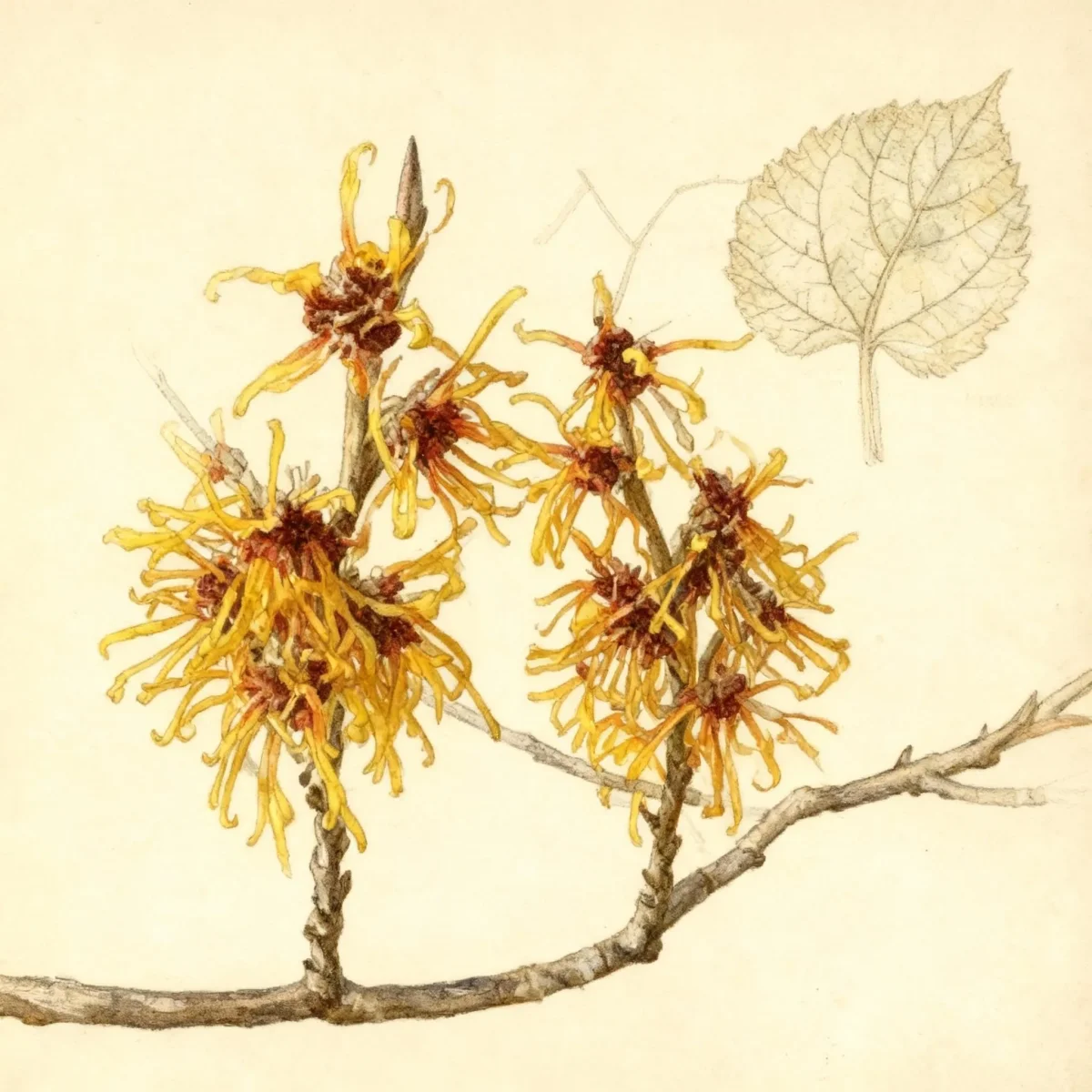
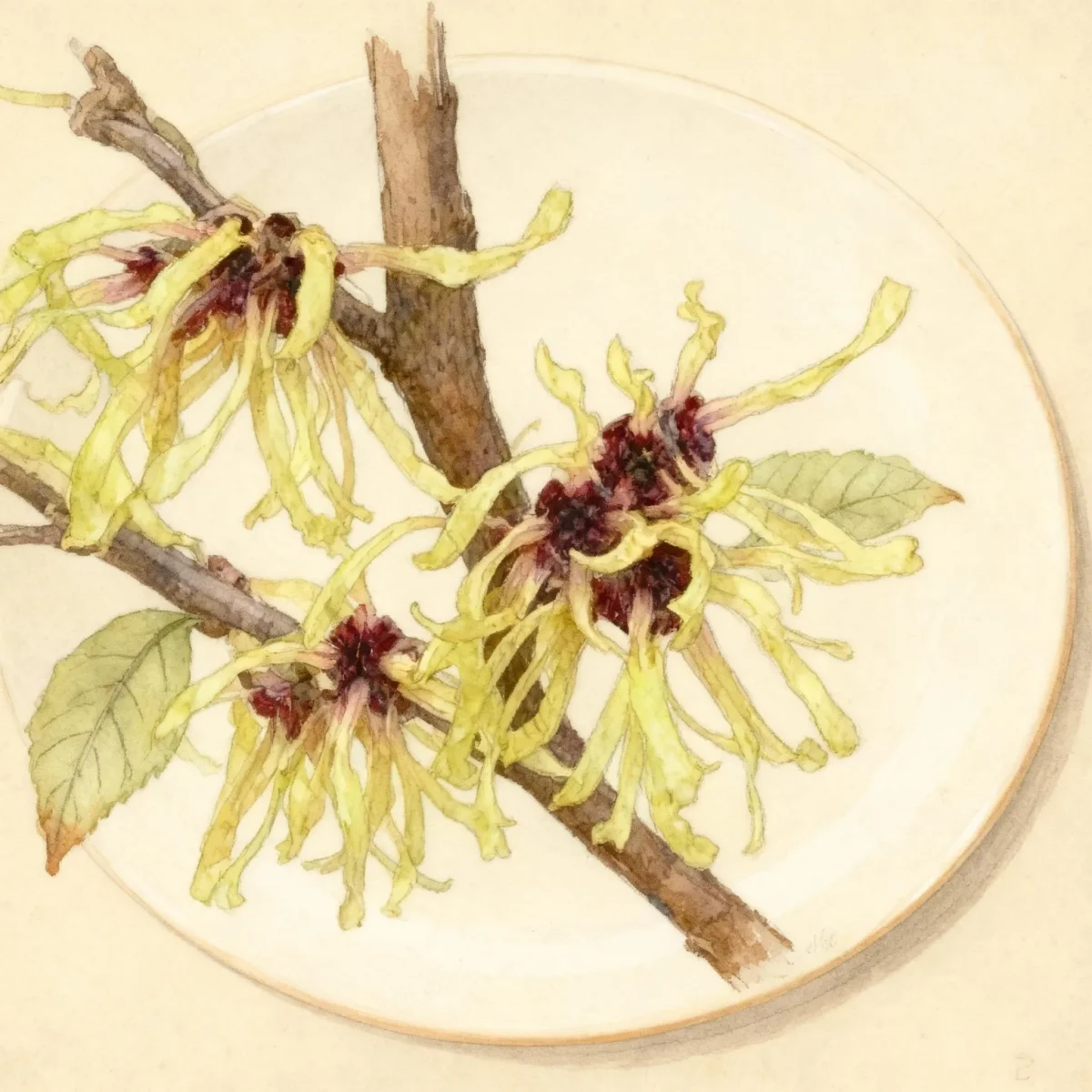
Witch hazel (Hamamelis × intermedia 'Aphrodite')
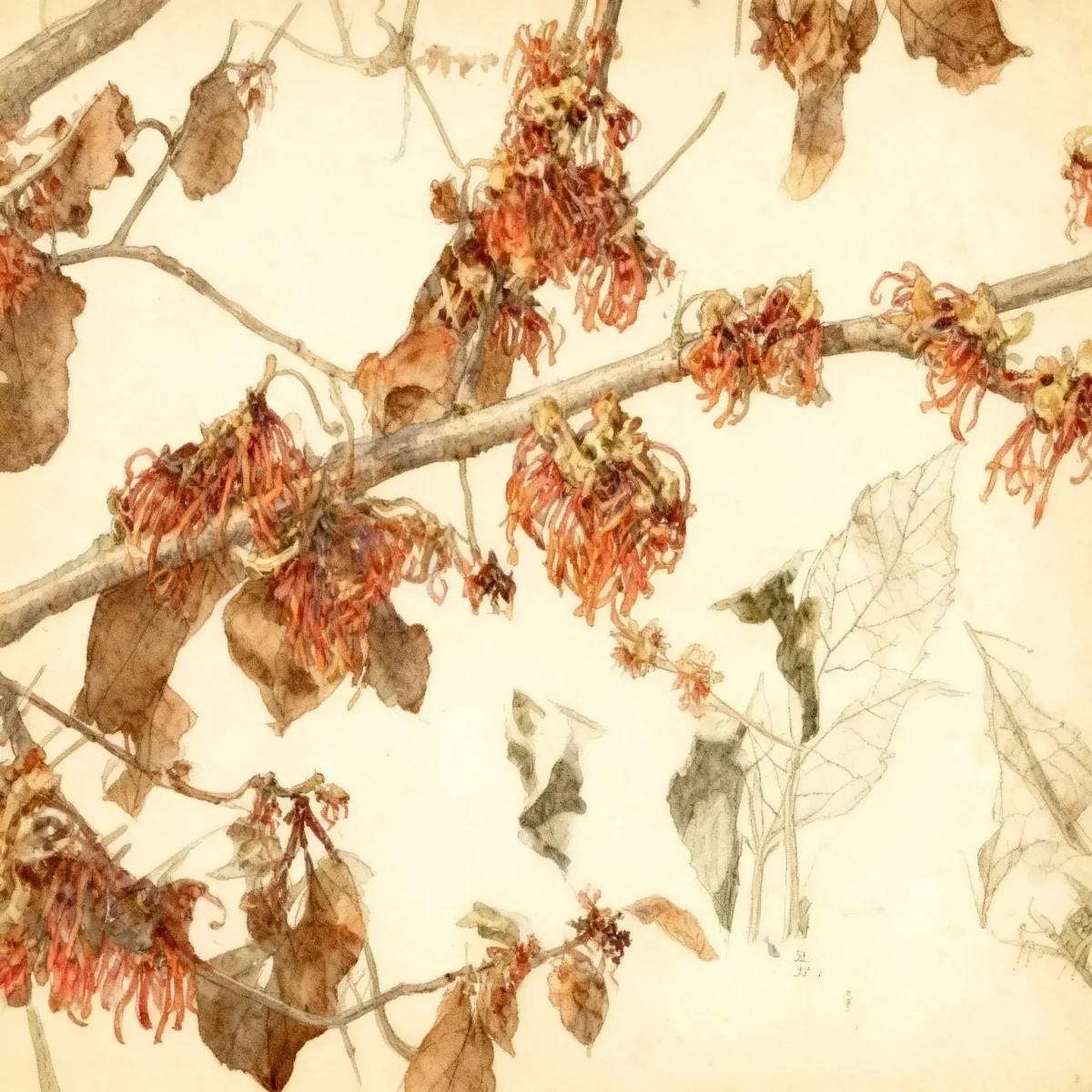
Hamamelis × intermedia 'Aphrodite' offers spectacular burnt-orange winter flowers, making this low-maintenance Witch hazel a garden highlight.
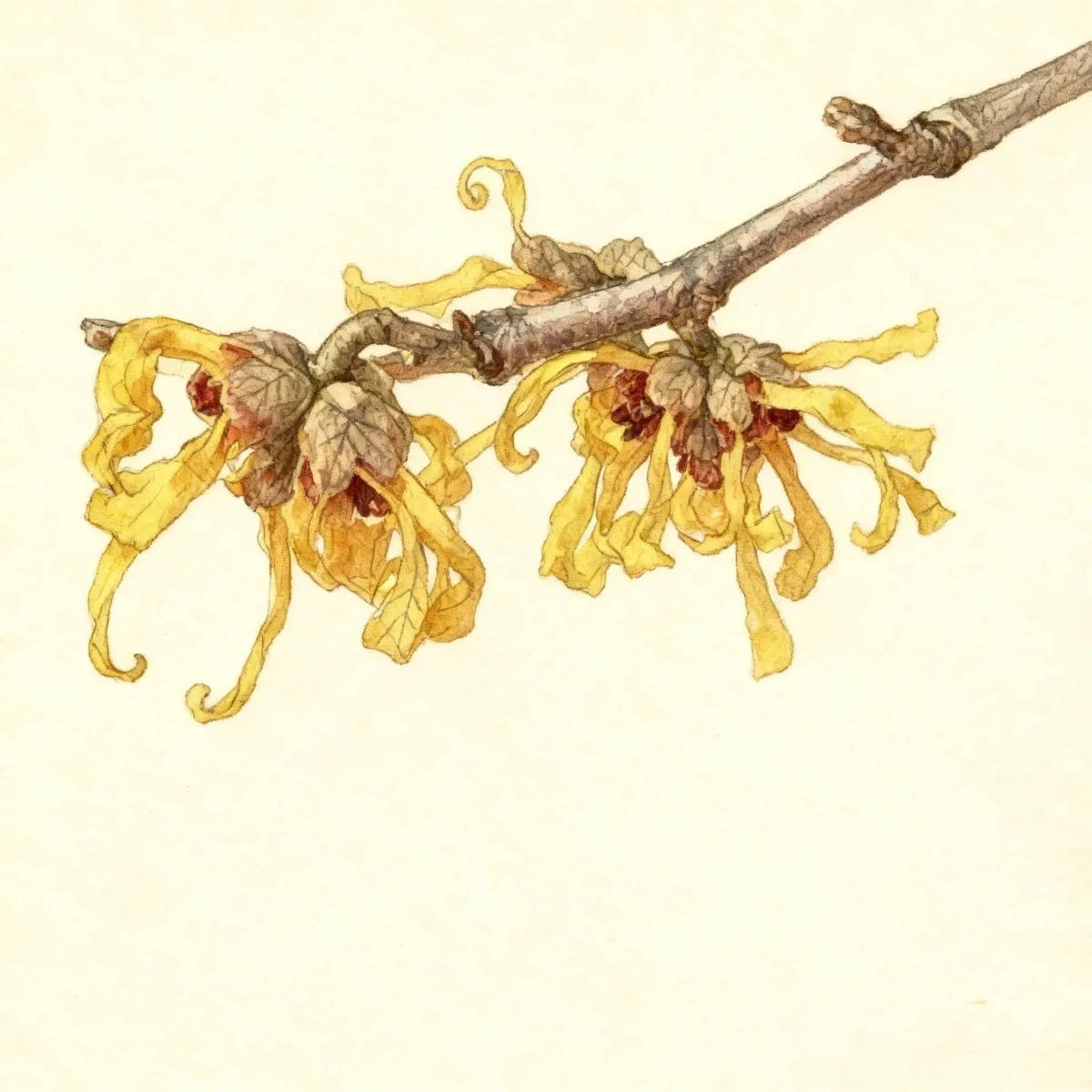

Bloom Boldly, No Matter the Season - Sweatshirt
Cozy organic cotton sweatshirt featuring our exclusive Purple Coneflower design. Perfect for gardeners who bloom year-round.
Inspired by the beautiful Witch hazel
Limited first batch (50) — join the waitlist for early access
Waitlist closes Feb 15, 2026.
Complete Plant Information
Field Guide Continues
Ready for care notes, companion picks, and planting tips?
The map is just the start. The full guide below covers growth habits, seasonal performance, and landscape uses.
Overview
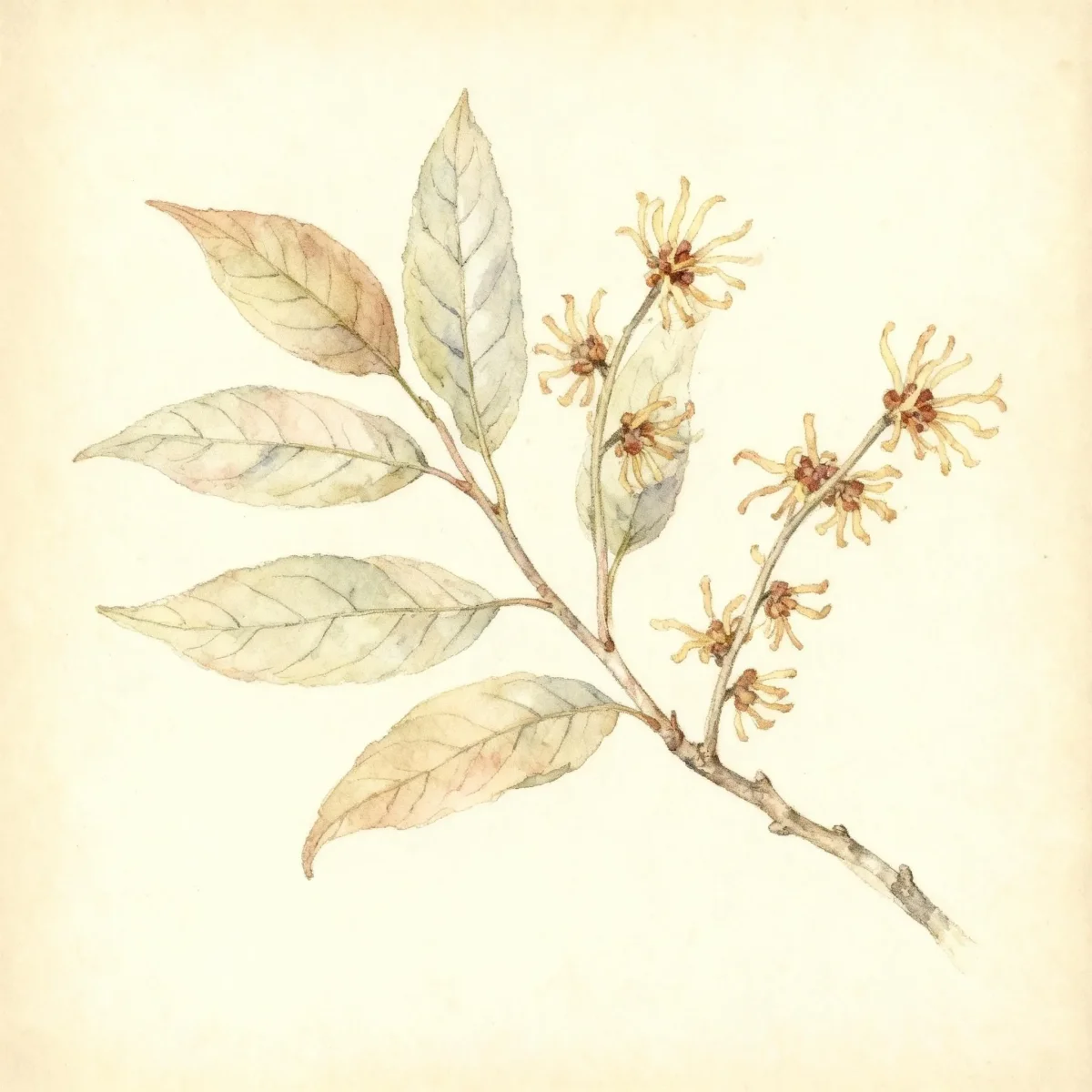
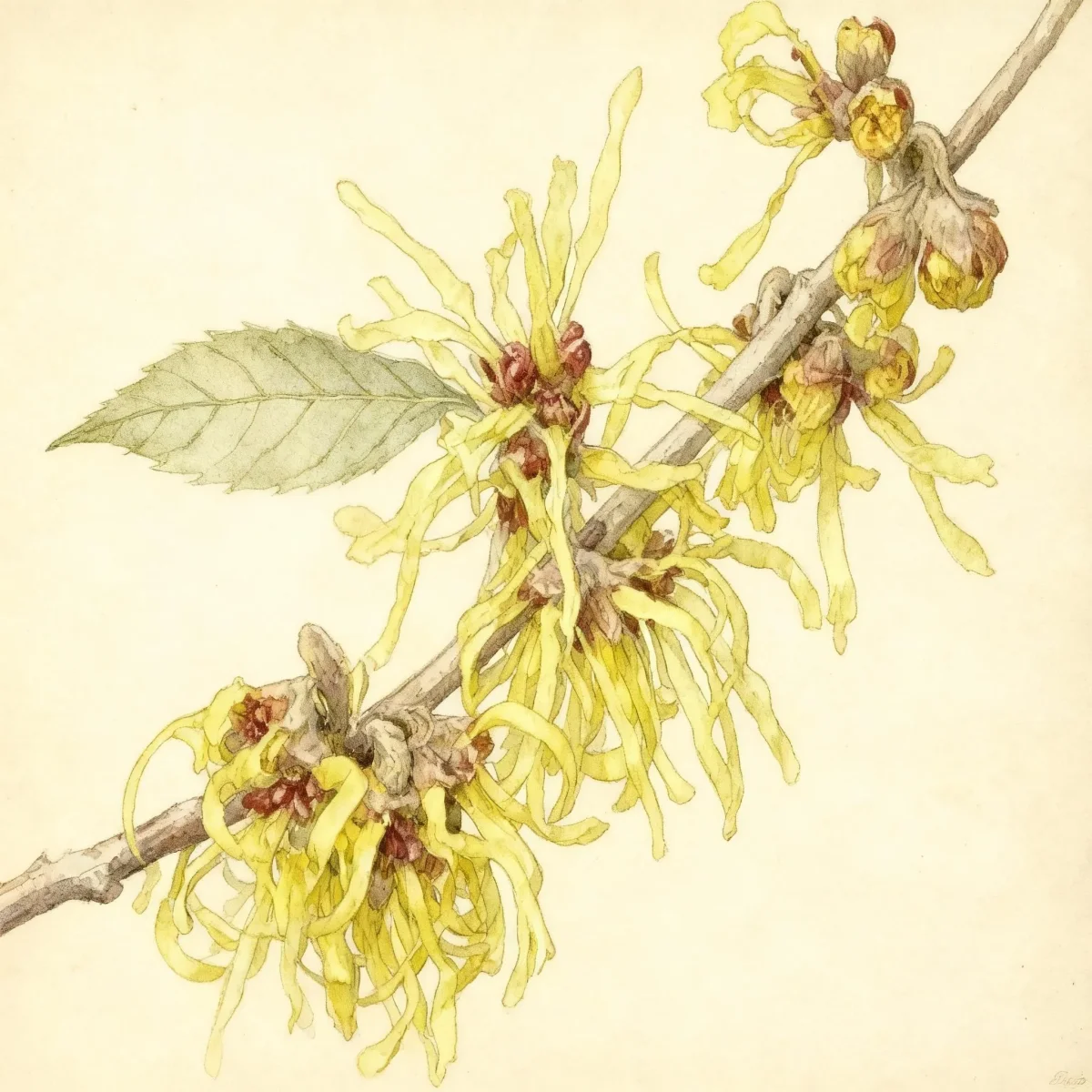
The Witch hazel cultivar Hamamelis × intermedia ‘Aphrodite’ provides essential winter interest when most of the garden is dormant. This hybrid stands out due to its vibrant display of ribbon-like, burnt-orange petals emerging along bare branches from late winter into early spring. As a deciduous shrub known for its reliably low maintenance, it offers significant architectural structure throughout the dormant season.
Hamamelis × intermedia ‘Aphrodite’ is a relatively fast-growing shrub noted for its upright-spreading habit, eventually reaching heights up to 10 feet. While the flowers of this specific variety are not fragrant, their striking color—a deep orange contrasted by a reddish-purple calyx—ensures it remains a focal point during the coldest months. Its eventual size and form make it an excellent screening element or bold specimen.
Gardeners value this Witch hazel for its toughness and adaptability, particularly its tolerance for clay soils, provided drainage is adequate. Planting Hamamelis × intermedia ‘Aphrodite’ ensures structural beauty and attracts early-season attention before spring ephemerals emerge.
Fast Facts
- Plant Family: Hamamelidaceae
- Plant Type: Deciduous shrub
- Hardiness Zones: USDA Zones 5-8
- Size at Maturity:
- Height: 6-10 ft
- Spread: 8-12 ft
- Bloom Time: January to March
- Bloom Description: Burnt-orange with reddish-purple calyx
- Sun Exposure: Full sun to part shade
- Water Needs: Medium
- Maintenance Level: Low
How to Grow
Planting Hamamelis × intermedia ‘Aphrodite’ is best done in the fall or early spring while the shrub is dormant. Choose a location that receives full sun to maximize flower production, though it tolerates partial shade. This plant thrives in average, medium moisture, well-drained soils. For optimal health, aim for moist, acidic, and organically rich soil conditions.
Consistent moisture is crucial for this Witch hazel during the growing season; leaf scorch may appear if the shrub experiences significant summer drought stress. Although tolerant of clay soils, ensure water does not remain soggy around the root zone. Maintenance is generally low. Pruning should occur immediately after flowering ceases in the spring to shape the shrub and manage size.
Be vigilant about suckering. Promptly remove any root suckers, especially those arising below the graft union, to prevent unwanted colonial spread and maintain the desired cultivar characteristics of Hamamelis × intermedia ‘Aphrodite’. This attention to suckers is key to keeping this shrub looking its best.
Landscape Uses
The aesthetic appeal of Hamamelis × intermedia ‘Aphrodite’ centers on its dramatic mid-winter performance. It serves exceptionally well as a superior winter-flowering focal point, drawing the eye exactly when most other plants are asleep. Its eventual size makes it perfectly suited for shrub borders or as a screen element where height and structure are needed.
When incorporated into woodland gardens, this Witch hazel adds crucial vertical interest and winter color that complements evergreen backdrops. As a large, loosely-branched specimen, it functions well as an architectural anchor in larger landscape designs. Consider planting it near structures or paths where its unique bloom time can be fully appreciated during winter walks.
Standout Features
Flower Qualities
- Showy
Noteworthy Characteristics
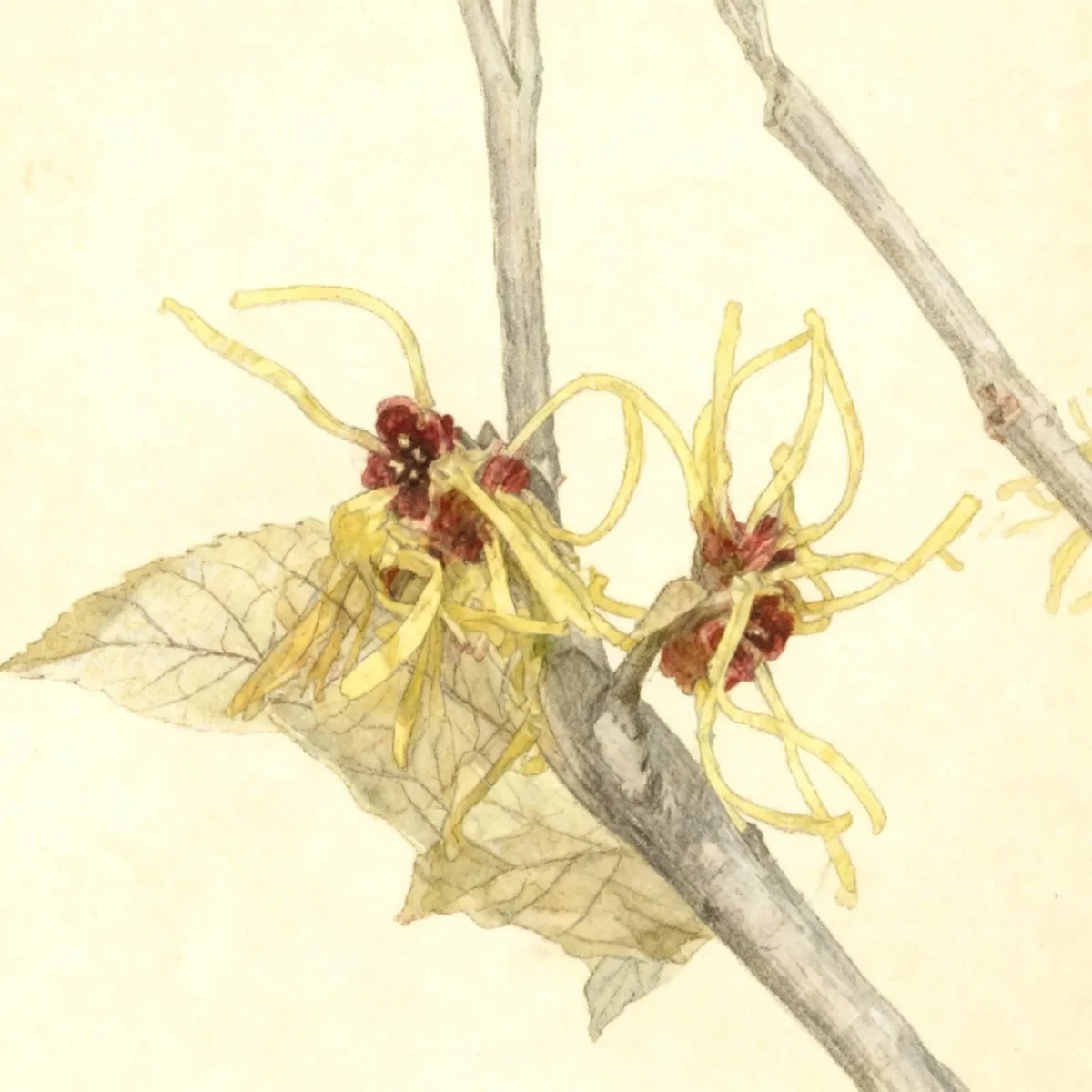
Hamamelis × intermedia hybrids are crosses between Japanese witch hazel (H. Japonica) and Chinese witch hazel (H. Mollis). They are somewhat coarse, loosely-branched, medium to large, deciduous shrubs that typically grow 12-20’ tall. The hybrid name intermedia refers to its intermediate characteristics between the two parent species. ‘Aphrodite’ is specifically noted for its winter-blooming, burnt orange (orange to copper red) flowers, each featuring four narrow, ribbon-like, curled petals with a reddish-purple calyx, blooming from late January to March.
Tolerances
- Deer
- Erosion
- Clay Soil
Potential Problems
Insect and disease issues for this Witch hazel are typically minor and rarely necessitate chemical intervention. Foliage may see minor insect damage from caterpillars or Japanese beetles chewing leaves. Watch for sap-sucking pests such as gall aphids and scale insects, as well as leafrollers and leafminers. Potential fungal issues include powdery mildew, though they are infrequently serious. Ensure good air circulation and proper watering to encourage overall plant vigor.
Frequently Asked Questions
What hardiness zones is Witch hazel suitable for?
Hamamelis × intermedia ‘Aphrodite’ is hardy in USDA Zones 5 through 8, making it a reliable winter bloomer for many regions.
How large does Hamamelis × intermedia ‘Aphrodite’ grow?
This shrub typically matures to a size between 6 to 10 feet in height and spreads between 8 to 12 feet wide, exhibiting an upright-spreading form.
What sun exposure does Witch hazel need?
For the best bloom display, Hamamelis × intermedia ‘Aphrodite’ should be situated where it receives full sun, although it will tolerate partial shade environments.
When does Hamamelis × intermedia ‘Aphrodite’ bloom?
This standout shrub lights up the garden from January through March, displaying beautiful burnt-orange flowers contrasted by a reddish-purple calyx.
Conclusion
The Hamamelis × intermedia ‘Aphrodite’ offers exceptional value by delivering intense color during the bleak mid-winter landscape. Its low maintenance needs and established hardiness across Zones 5-8 ensure it remains a reliable feature. Plan your planting during the dormant season and ensure consistent moisture availability to enjoy the spectacular, unique floral display of this reliable Witch hazel.
Companion Planting
When selecting companions for Hamamelis × intermedia ‘Aphrodite’, focus on plants that complement its winter color or provide interest in the spring once the blooms fade. Consider planting early-blooming spring bulbs such as snowdrops (Galanthus) or snow glories (Chionodoxa) nearby; their small blooms provide a delicate contrast to the large, woody structure of the shrub. Evergreen shrubs or conifers placed behind the Witch hazel will effectively highlight the burnt-orange winter flowers.
Evergreen groundcovers in the understory can also provide year-round texture around the base and help maintain the desirable cool, consistent soil moisture levels that this plant prefers. Avoid planting aggressive shallow-rooted competitors that might vie for surface moisture, adhering instead to a planting strategy that respects the Witch hazel’s need for well-drained but consistently damp soil.
Design Ideas
Utilize the upright-spreading habit of Hamamelis × intermedia ‘Aphrodite’ in mixed shrub borders where it takes a starring role late in the season. Because it is such a strong structural element, placing it slightly off-center can create dynamic winter sightlines across the garden. It performs admirably as an informal screen when planted in multiples, gradually filling in the space over time with its coarse yet attractive branching.
For smaller gardens, the mature size (up to 10 feet tall and 12 feet wide) requires careful placement to avoid overwhelming the space. In these instances, use pruning immediately after bloom to manage its spread, keeping structure while respecting boundaries. Ensure visibility from main viewing areas, such as kitchen windows or patios, to maximize enjoyment of this crucial winter color source.