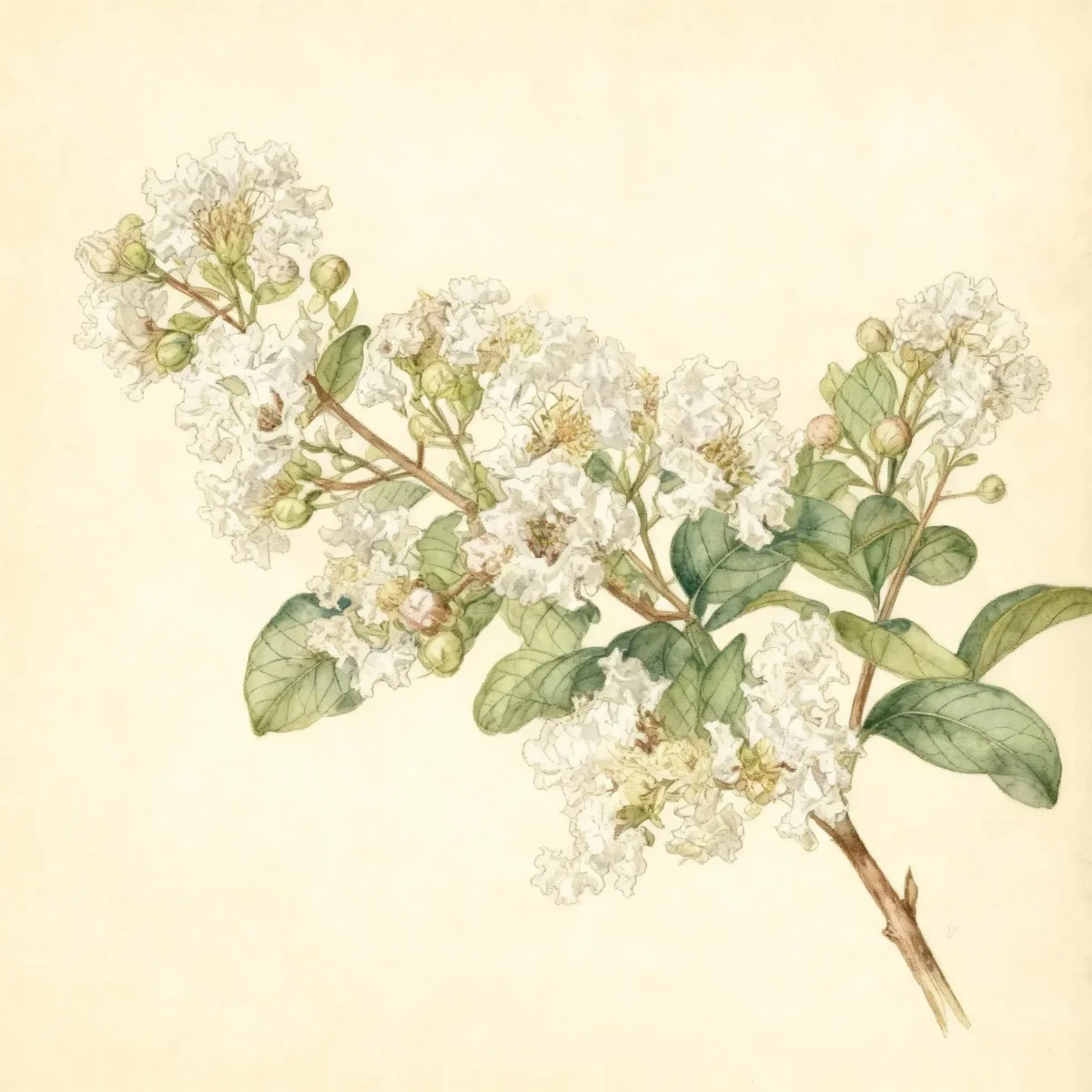
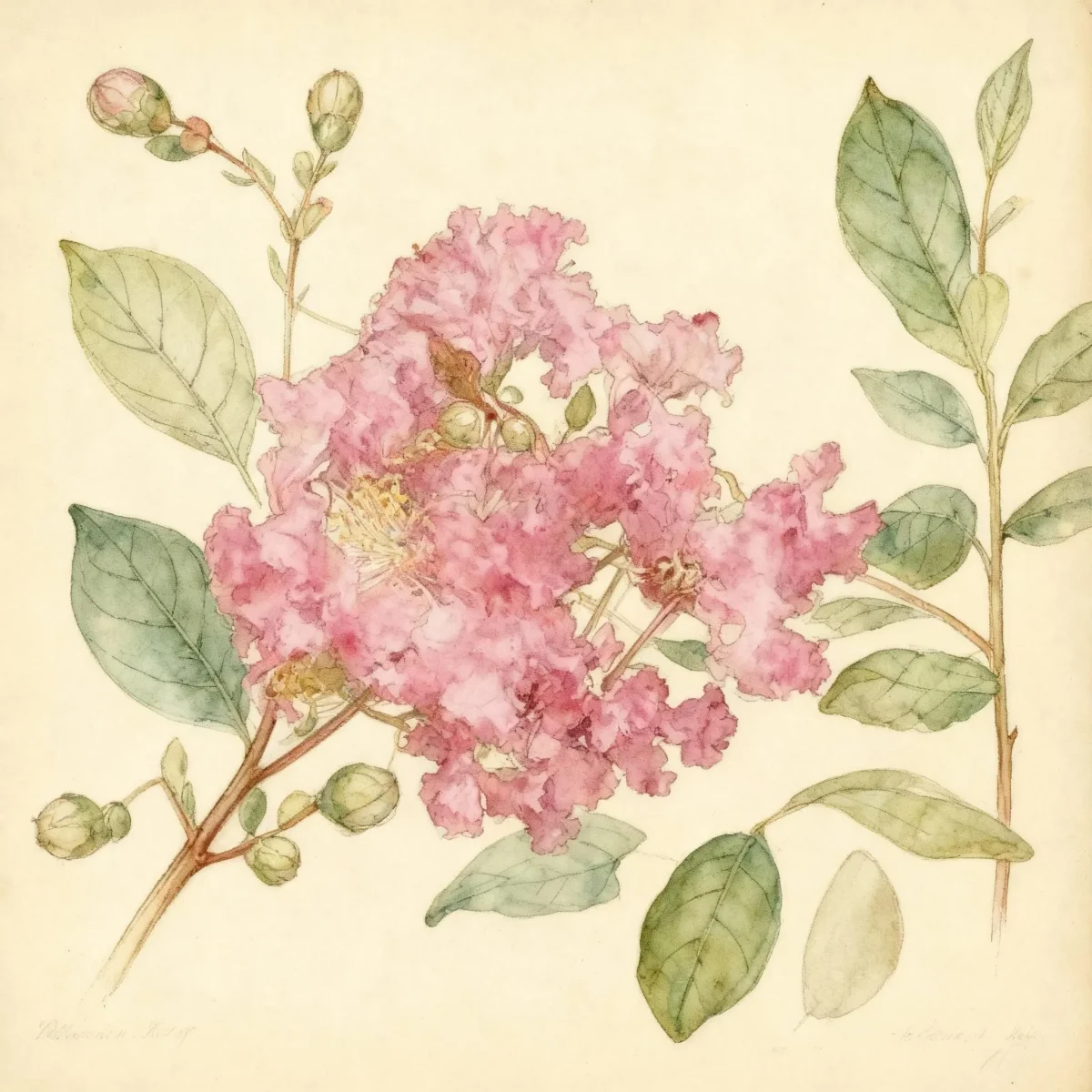
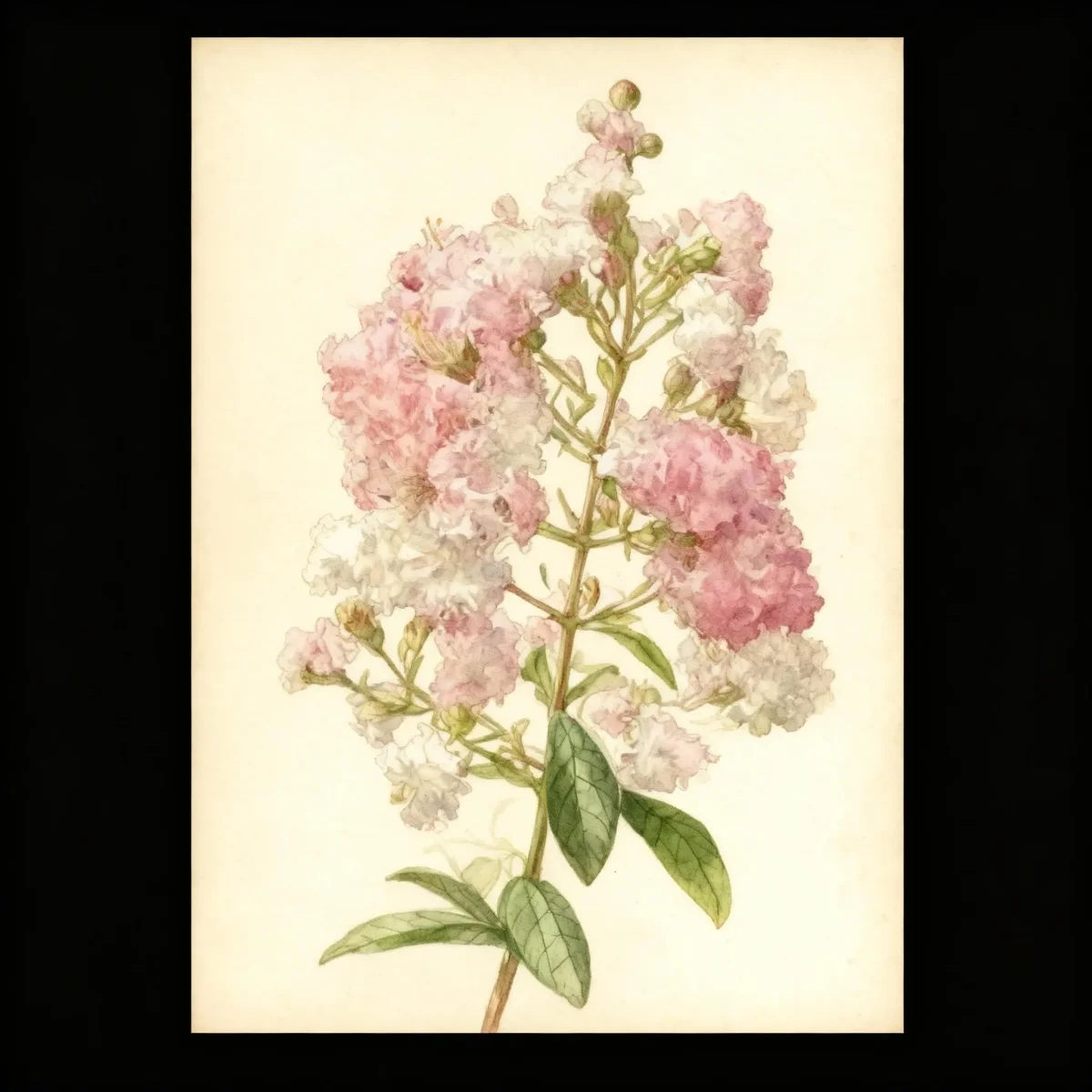
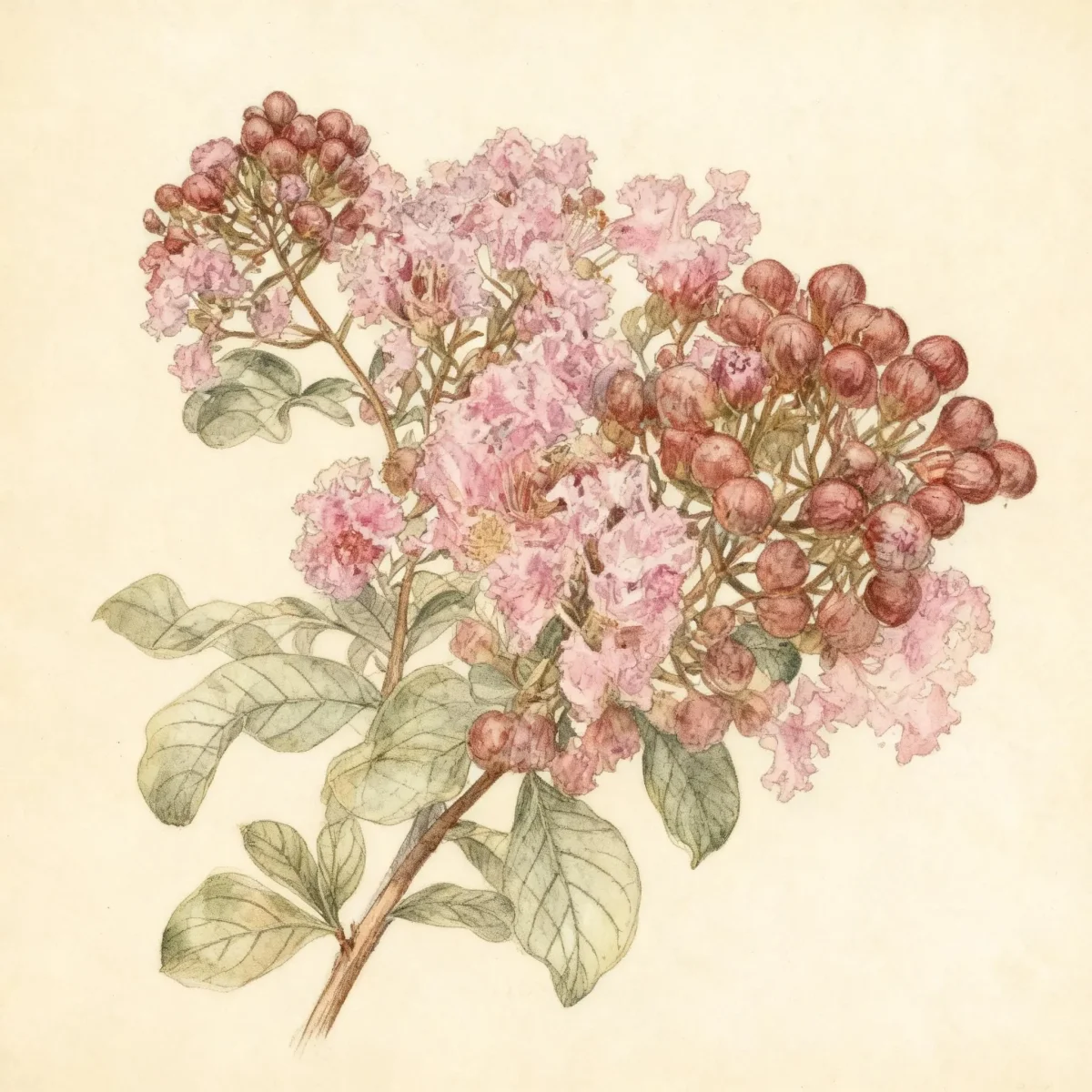
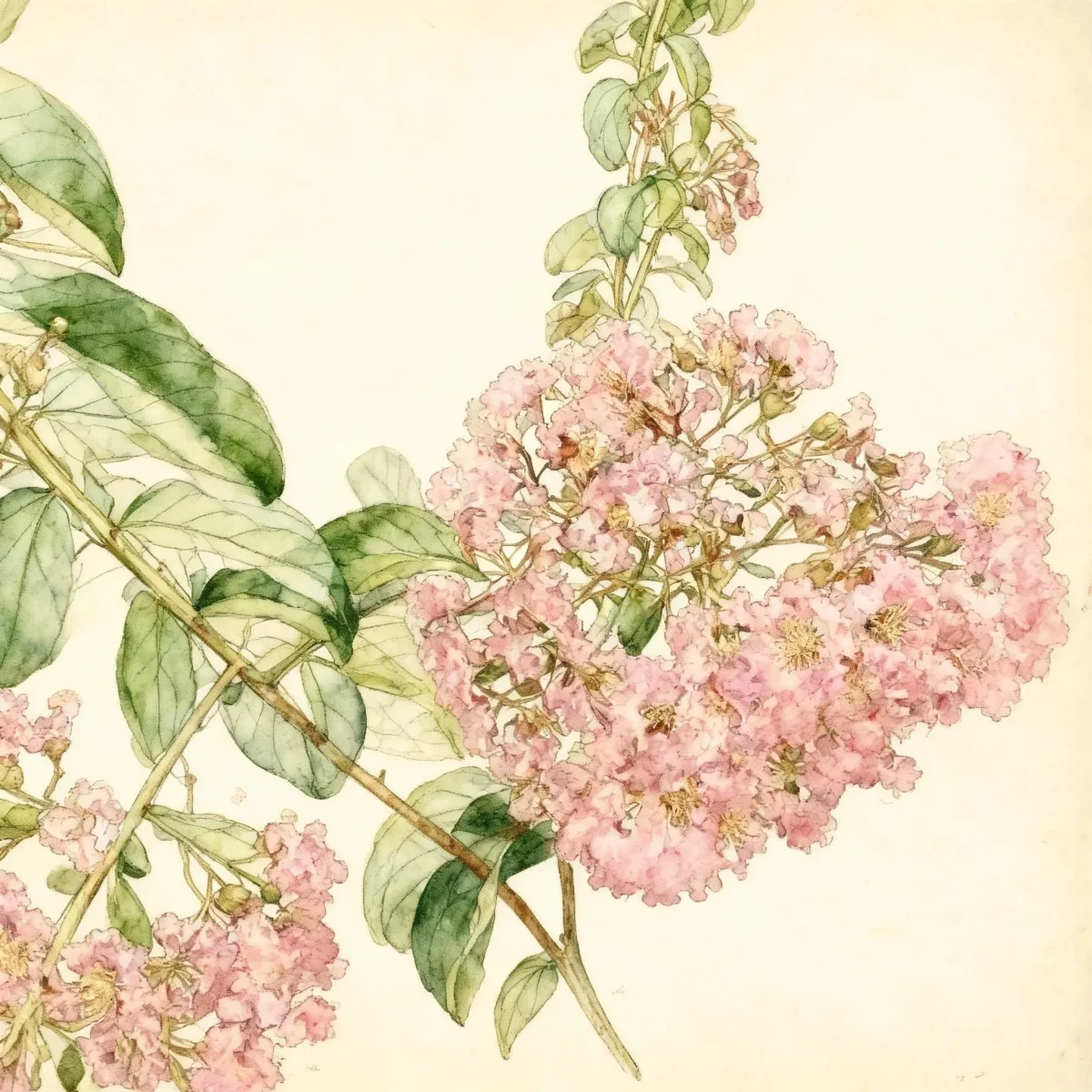
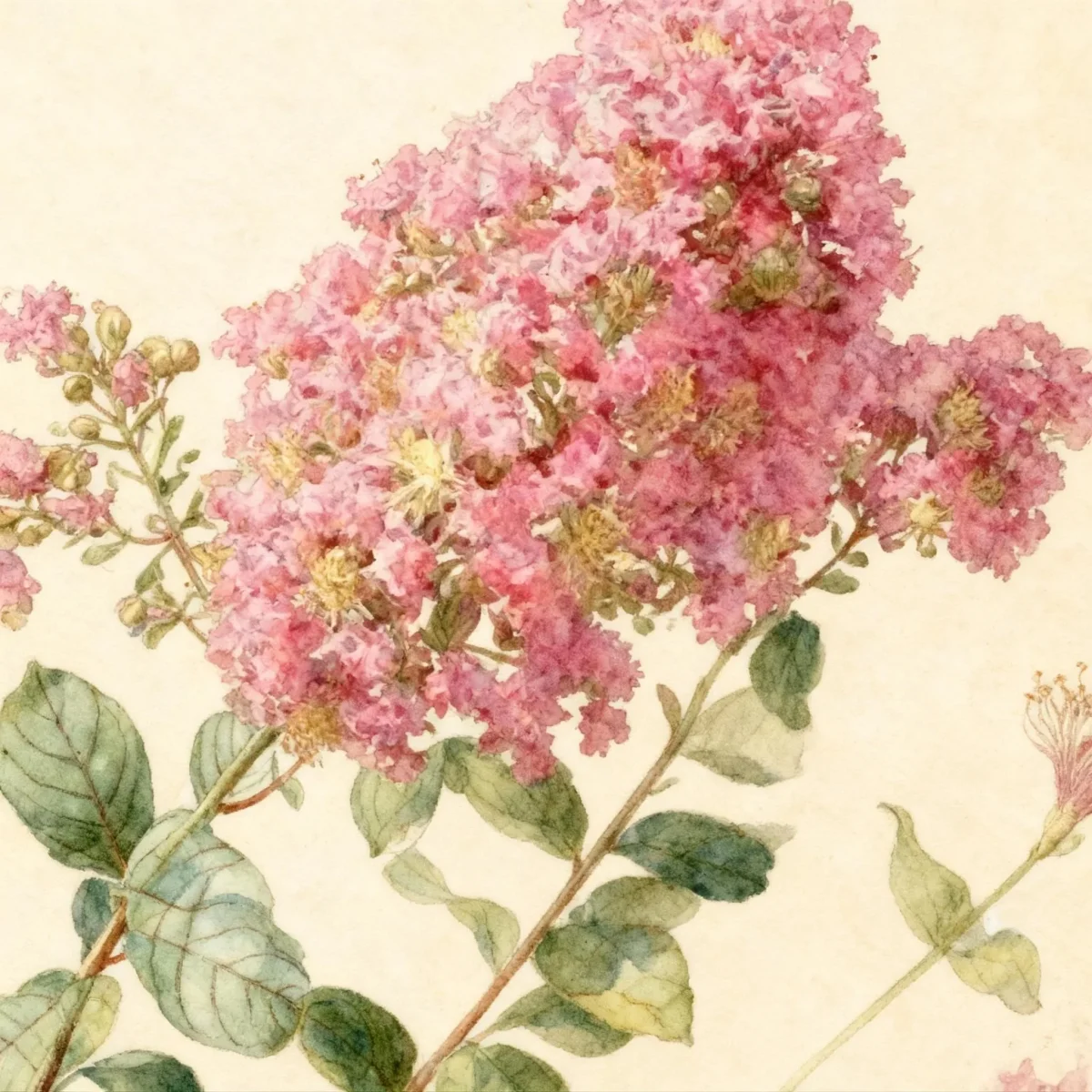
Crape myrtle (Lagerstroemia indica 'Zuni')
Lagerstroemia indica 'Zuni' Crape myrtle is a mildew-resistant shrub offering lavender blooms July-Sept in sunny, low-clay sites.
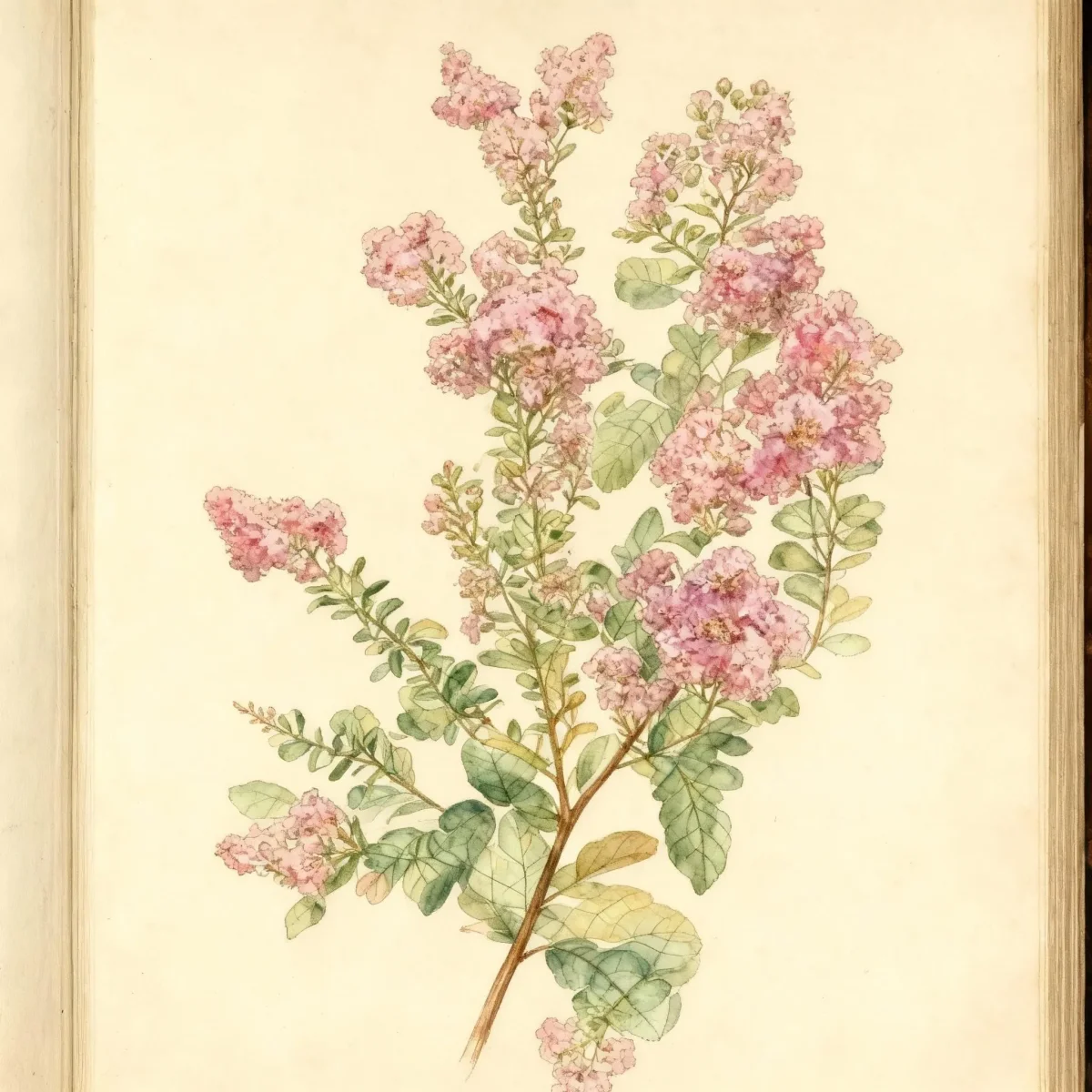

Bloom Boldly, No Matter the Season - Sweatshirt
Cozy organic cotton sweatshirt featuring our exclusive Purple Coneflower design. Perfect for gardeners who bloom year-round.
Inspired by the beautiful Crape myrtle
Limited first batch (50) — join the waitlist for early access
Waitlist closes Feb 15, 2026.
Complete Plant Information
Field Guide Continues
Ready for care notes, companion picks, and planting tips?
The map is just the start. The full guide below covers growth habits, seasonal performance, and landscape uses.
Overview
Lagerstroemia indica ‘Zuni’ is a highly valued cultivar of Crape myrtle, distinguished by its reliability and attractive lavender blooms during the peak summer heat. As a compact, multi-stemmed, deciduous shrub, it provides excellent late-season interest, making it a favorite in landscapes across warmer regions. This specific cultivar was developed for its improved disease resistance, addressing common challenges faced by traditional varieties.
This popular Crape myrtle cultivar thrives best when provided with full sun exposure, which encourages the best flowering and strongest growth habit. While it is moderately vigorous, achieving heights between 4 and 11 feet, its manageable size allows for versatile placement in borders or as a specimen. Gardeners appreciate the exfoliating bark and the rich color transformation of the foliage in autumn following the long bloom period.
The primary ornamental appeal of Lagerstroemia indica ‘Zuni’ rests on its long bloom time and its relatively compact structure compared to larger tree forms. Successfully integrating this plant into your garden means acknowledging its specific needs regarding sun and winter protection in zones near its lower hardiness limit. Its tolerance for various soil types, including clay, adds to the practical value of the Lagerstroemia indica ‘Zuni’ in diverse garden settings.
Fast Facts
- Plant Family: Lythraceae
- Plant Type: Deciduous shrub
- Hardiness Zones: USDA Zones 6-9
- Size at Maturity:
- Height: 4-11 ft
- Spread: 4-11 ft
- Bloom Time: July to September
- Bloom Description: Lavender
- Sun Exposure: Full sun
- Water Needs: Medium
- Maintenance Level: Medium
How to Grow
The ideal time to establish Lagerstroemia indica ‘Zuni’ is during the dormant season, either in late fall or early spring, ensuring the soil is well-drained. This Crape myrtle performs best in average, medium moisture soils, and happily accepts loamy or clay compositions provided drainage is adequate. Always plant Lagerstroemia indica ‘Zuni’ in a location that receives full sun throughout the day to maximize flowering potential.
Watering should be deep, especially during dry spells, focusing water directly at the root zone while conscientiously avoiding wetting the foliage, which can promote disease development. Fertilization should be cautious; use a slow-release type sparingly, as overly fertile soils lead to excessive leaf growth at the expense of blooms and may increase winter susceptibility. Protecting the plant by applying a winter mulch is recommended, especially in marginal zones.
For gardeners in Northern zones (5-6), be prepared for potential winter injury, where top growth often dies back to the ground when temperatures drop below -5°F. In these areas, it is wise to cut stems back to 8 inches in early spring, as new flowering wood will emerge from the root crown. In zones where top growth survives, maintenance involves standard pruning tailored to the desired shape, usually focusing on removing crossing or dead wood after the threat of frost has passed.
Landscape Uses
This cultivar is highly effective when integrated into shrub borders or perennial beds where its summer color can be showcased. Lagerstroemia indica ‘Zuni’ functions admirably as a specimen plant due to its multi-stemmed habit and exfoliating bark, providing year-round visual interest. In regions where winter dieback is minimal, this Crape myrtle also serves excellently as a tall screen or an informal hedge, offering dense summer coverage.
Consider pairing Lagerstroemia indica ‘Zuni’ with late-blooming perennials that thrive in full sun and tolerate similar moisture conditions, such as Coneflowers (Echinacea) or Black-eyed Susans (Rudbeckia). The mid-summer to early-fall bloom time fills a critical gap when many spring-flowering shrubs have finished their display. Using this plant near patios or walkways allows observers to fully appreciate the crepe-papery texture of the lavender flowers.
For a formal effect, multiple specimens can be planted in a row to create a visually consistent hedge, though regular pruning will be necessary to maintain a uniform height of 4 to 11 feet. Alternatively, mass planting creates a stunning sweep of color that celebrates the durability and long bloom period characteristic of the best Crape myrtle hybrids.
Standout Features
Flower Qualities
- Showy
Fruit Qualities
- Showy
Noteworthy Characteristics
The Lagerstroemia indica ‘Zuni’ cultivar is a compact hybrid known for its grayish-brown, exfoliating bark and profuse panicles of lavender flowers appearing from mid-summer until early fall. Foliage transitions beautifully to shades of dull red or reddish-purple in the autumn months. In southern climates, this variety readily develops into a woody shrub reaching up to 11 feet tall.
Tolerances
- Drought
- Clay Soil
- Air Pollution
Potential Problems
The two most common aesthetic concerns for Crape myrtles involve fungal issues: powdery mildew and leaf spot. Fortunately, Lagerstroemia indica ‘Zuni’ exhibits reportedly excellent mildew resistance, reducing one major headache for the gardener. To manage potential mildew on susceptible plants, ensure good air circulation and avoid overhead watering.
Chlorosis, characterized by yellowing foliage, can occur if the plant is situated in highly alkaline soils, as it hinders iron uptake. This can be managed by applying chelated iron or growing the plant in slightly more acidic soil amendments upon planting. Pests like aphids and scale insects occasionally target the foliage or stems; treatment usually involves horticultural oil or insecticidal soap applied according to product directions.
Winter injury remains the most significant potential problem for this plant in northernmost reaches (Zones 5 and 6). While the roots may survive Zone 5 conditions, the above-ground structure often suffers significant dieback. Consistent mulching and choosing a slightly protected microclimate can mitigate some of this cold stress.
Frequently Asked Questions
What hardiness zones is Crape myrtle suitable for?
Lagerstroemia indica ‘Zuni’ is reliably hardy in USDA Zones 6 through 9, though growers in Zone 6 should monitor for potential winter dieback of aerial stems.
How large does Lagerstroemia indica ‘Zuni’ grow?
This compact cultivar typically reaches a mature height between 4 and 11 feet, with a similar spread ranging from 4 to 11 feet wide.
What sun exposure does Crape myrtle need?
This plant requires full sun exposure to achieve optimal flowering performance and robust growth throughout the summer season.
When does Lagerstroemia indica ‘Zuni’ bloom?
The extended bloom time for this variety spans from July through September, presenting terminal panicles of soft lavender flowers.
Conclusion
The choice of Lagerstroemia indica ‘Zuni’ offers gardeners significant rewards through its extended season of lavender blooms, attractive bark texture, and mildew resistance. This versatile Crape myrtle fits well into defined borders or as a standalone feature in sunny locations. Before planting, always confirm your specific USDA hardiness zone compatibility and plan for adequate winter protection if growing near Zone 6 boundaries.
Companion Planting
When planning the understory for your Lagerstroemia indica ‘Zuni’, focus on herbaceous perennials that enjoy similar sun exposure and appreciate well-drained soil. Good companions include Russian Sage, which provides contrasting silvery foliage and complementary blue-purple blooms later in summer. Similarly, ornamental grasses offer texture and movement that contrasts nicely with the shrub’s structure without competing heavily for resources.
Avoid planting moisture-loving species directly beneath the canopy, as Crape myrtles prefer medium, consistent moisture rather than consistently wet feet. Successful companion planting emphasizes drought tolerance once established, mirroring the key resilience factor of the Crape myrtle itself, ensuring a cohesive, low-stress planting scheme.
Design Ideas for Cold Climates
In areas where winter cold is a known issue or Zone 5 penetration is attempted, utilize Lagerstroemia indica ‘Zuni’ as a container plant that can be moved into a sheltered, unheated location for the winter. Alternatively, plant it near a south-facing wall or foundation, which provides crucial radiant heat during cold snaps, potentially saving the upper growth from hard freezes. Treating it as a reliable perennial that regenerates from the root crown each spring allows you to enjoy its summer performance without the expectation of full woody structure.
When spacing multiple plants, remember that while the mature plant can reach 11 feet wide, if you anticipate dieback, spacing them closer (4 to 6 feet apart) allows the resulting smaller stems to form a dense screen or hedge quickly in the growing season. Utilize shredded bark mulch liberally around the base to help buffer soil temperature fluctuations.