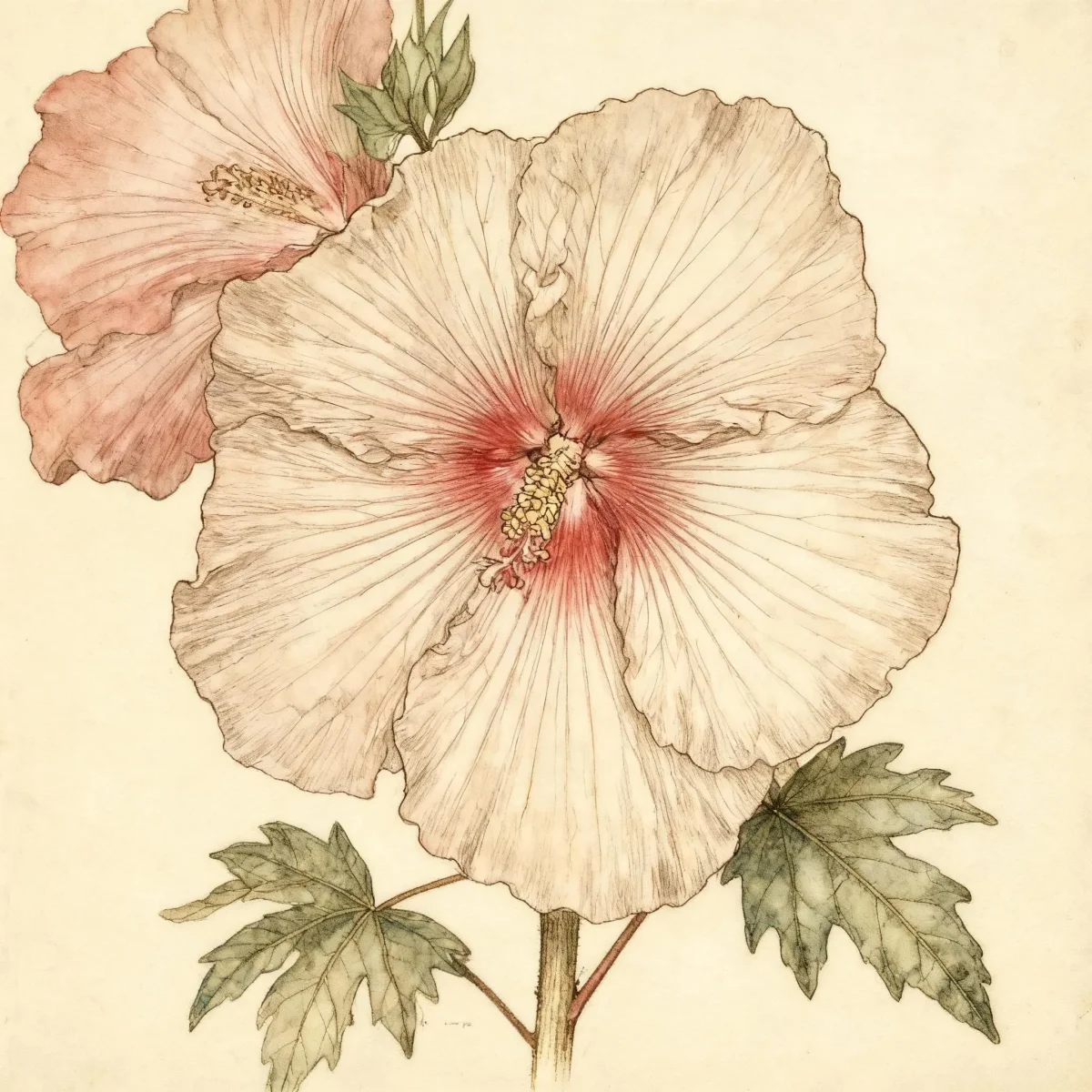
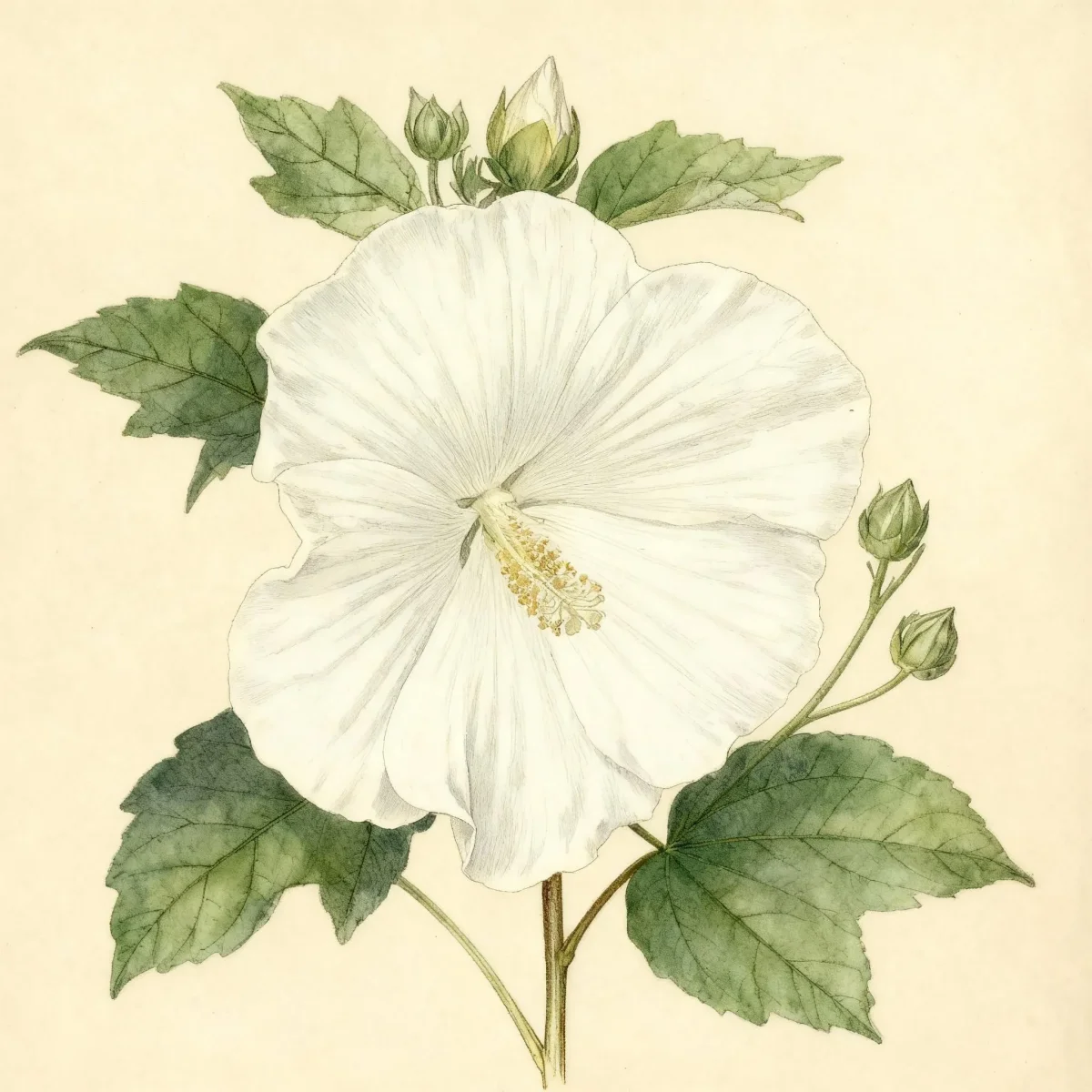
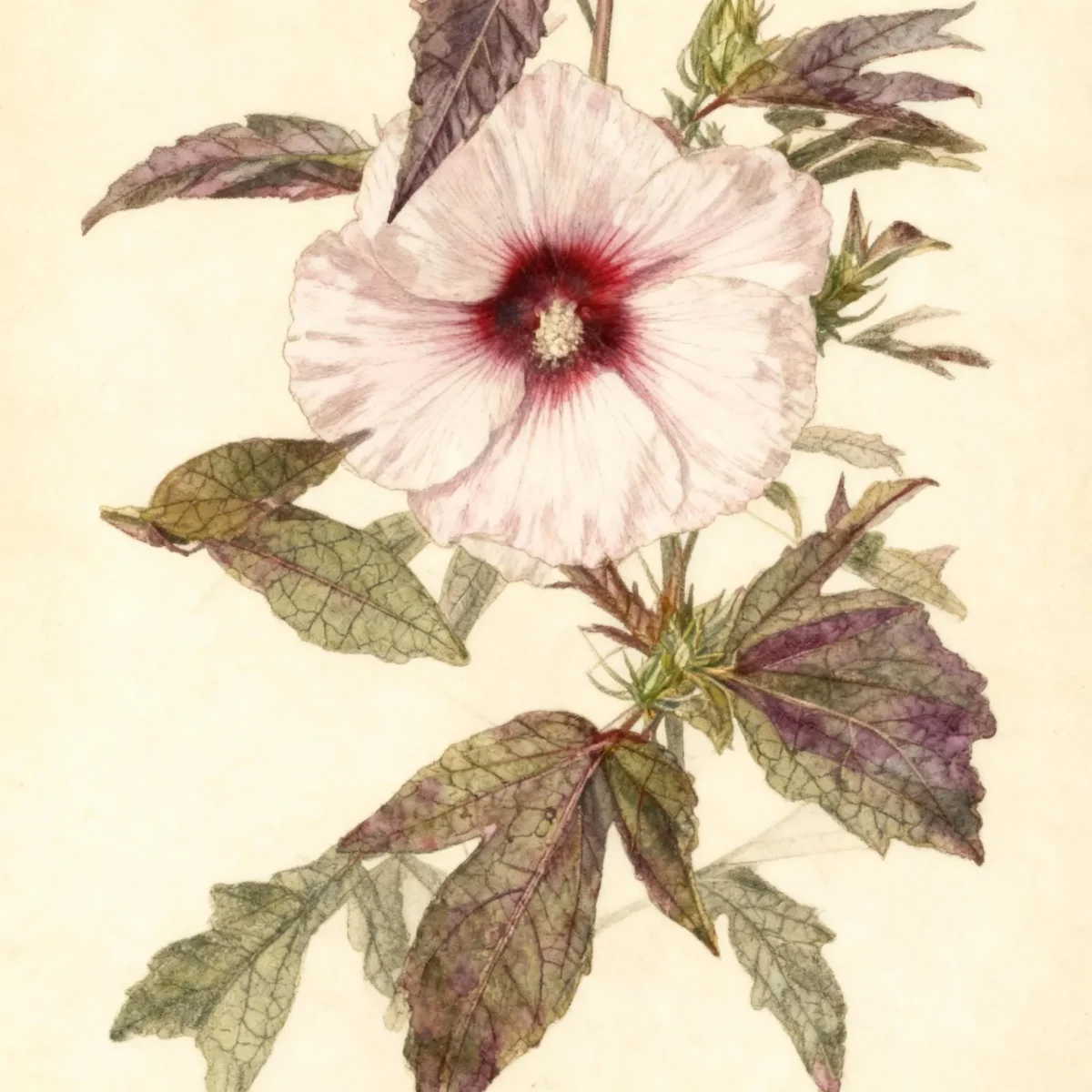
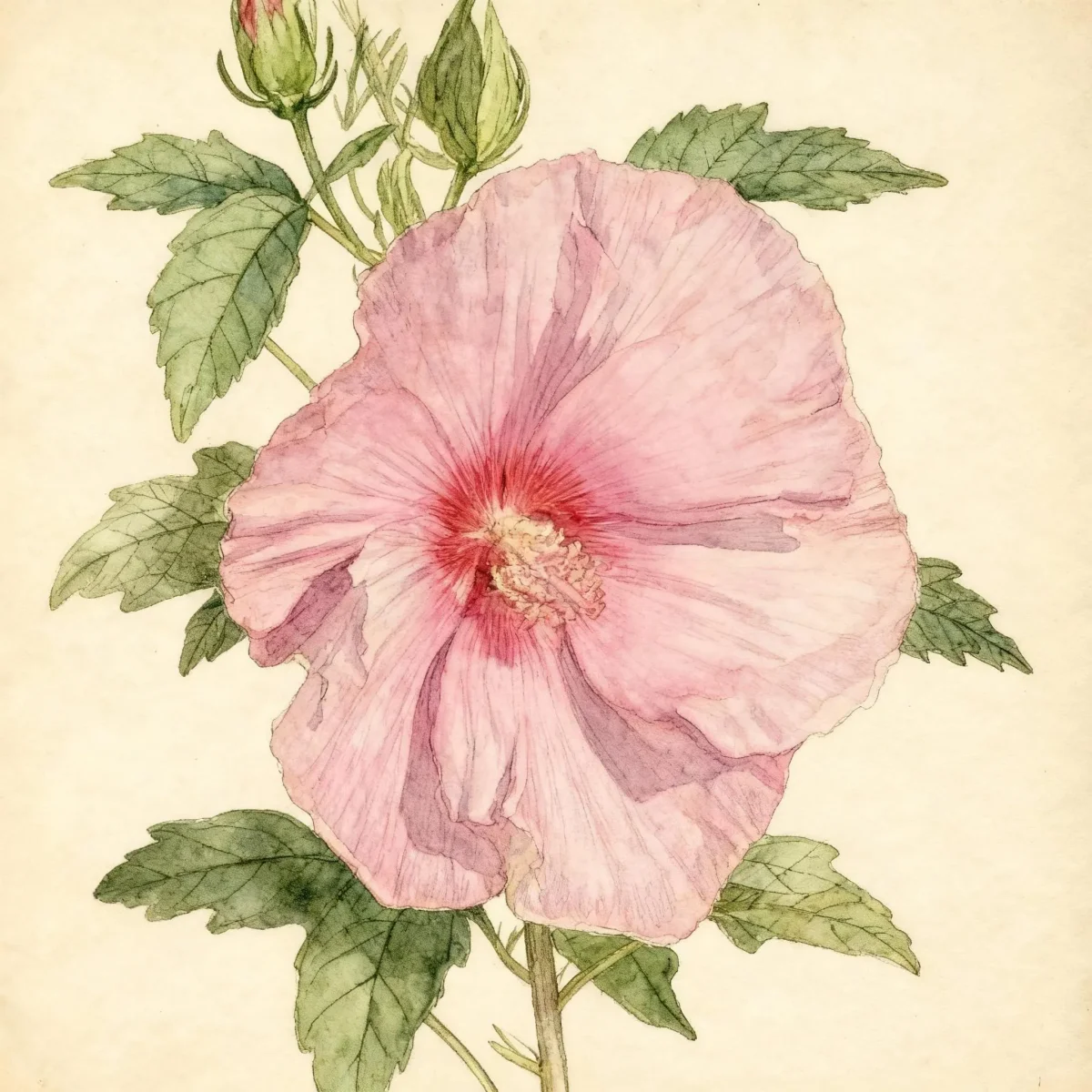
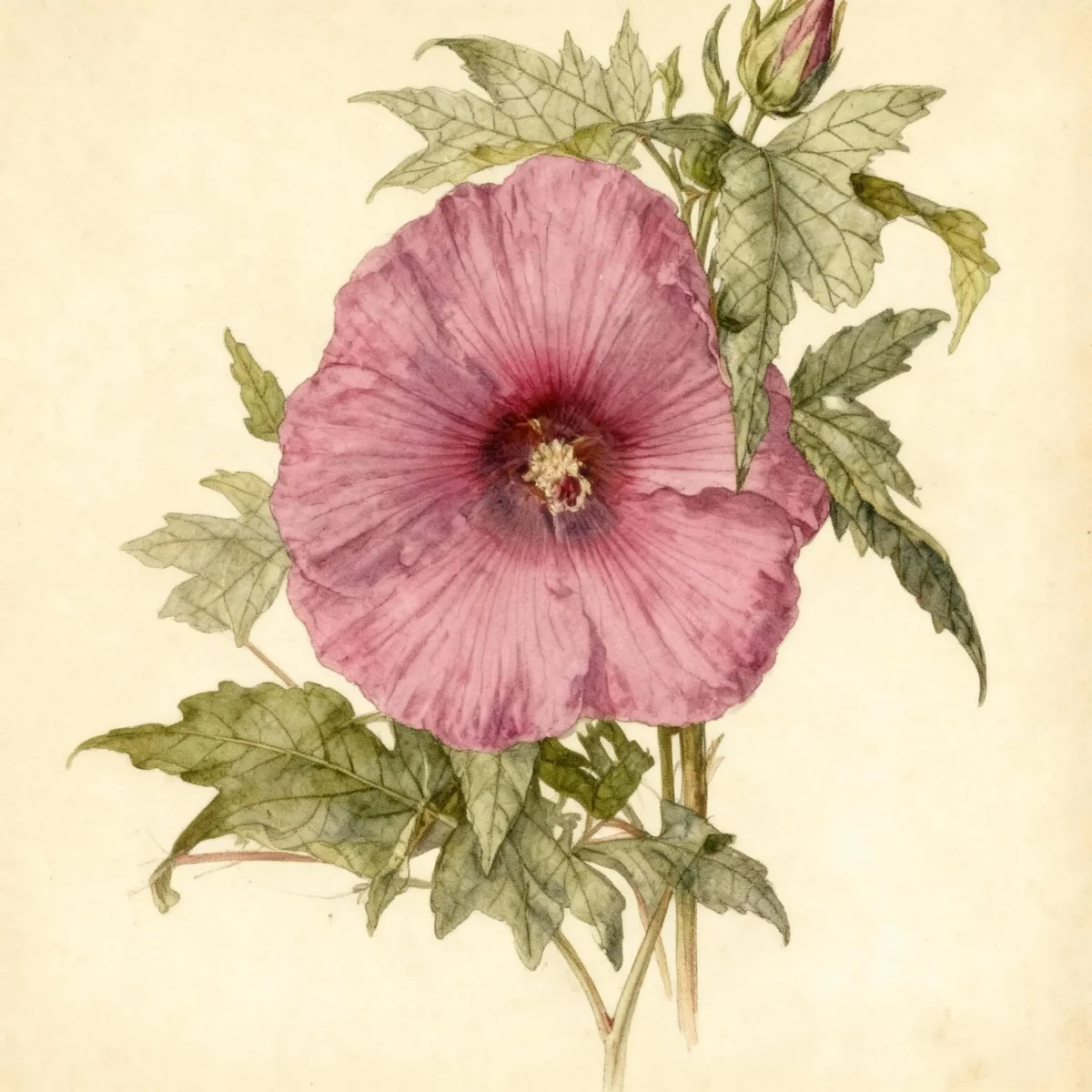
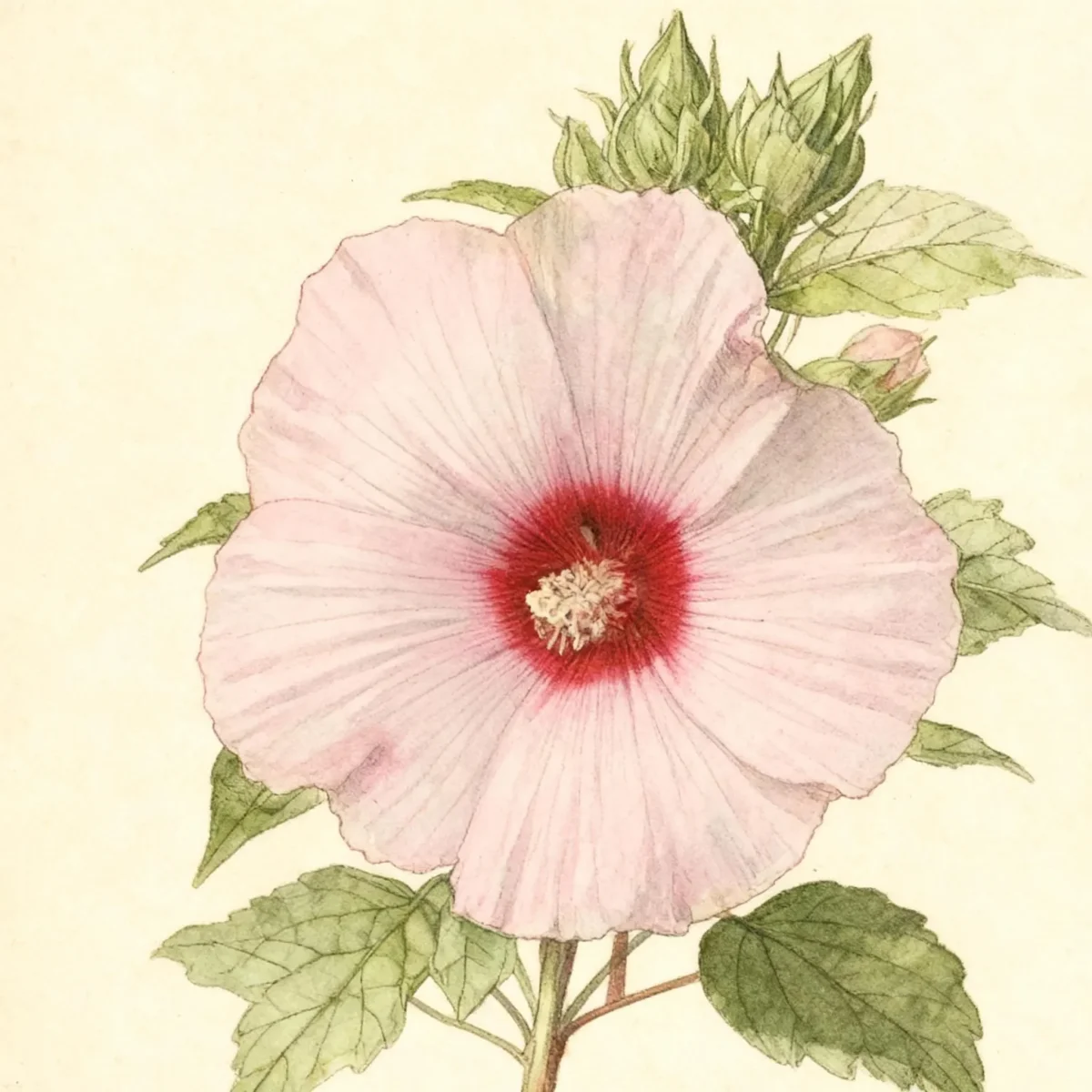
Hardy hibiscus (Hibiscus moscheutos 'Disco Belle White')
Get huge white blooms all summer with Hibiscus moscheutos 'Disco Belle White'. This low-maintenance Hardy hibiscus thrives in wet soil.
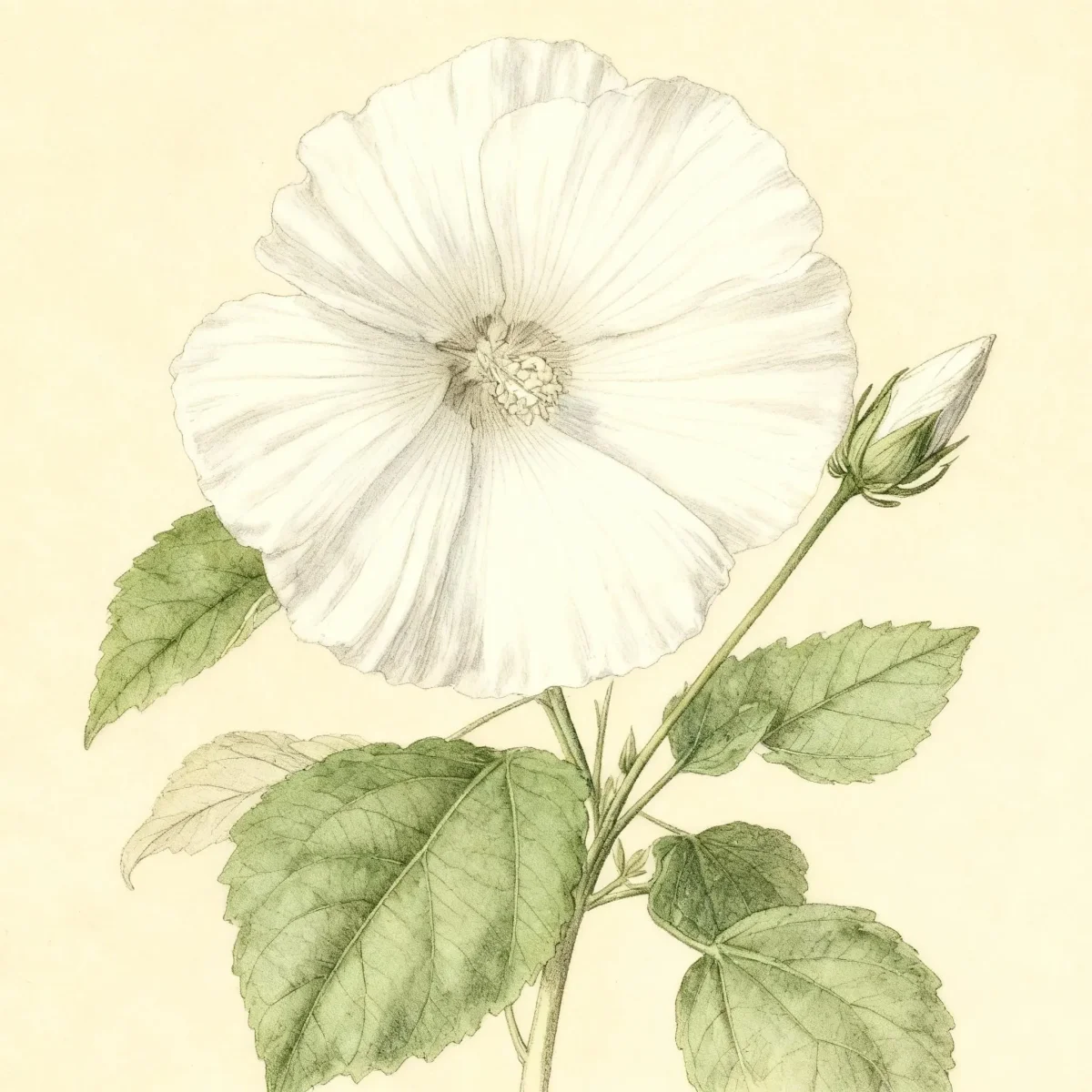

Bloom Boldly, No Matter the Season - Sweatshirt
Cozy organic cotton sweatshirt featuring our exclusive Purple Coneflower design. Perfect for gardeners who bloom year-round.
Inspired by the beautiful Hardy hibiscus
Limited first batch (50) — join the waitlist for early access
Waitlist closes Feb 15, 2026.
Complete Plant Information
Field Guide Continues
Ready for care notes, companion picks, and planting tips?
The map is just the start. The full guide below covers growth habits, seasonal performance, and landscape uses.
Overview
The Hibiscus moscheutos ‘Disco Belle White’ is a highly valued herbaceous perennial, often recognized as the Hardy hibiscus, celebrated for its dramatic floral display. This cultivar offers stunning, large white flowers accented by a deep maroon eye, providing tropical flair within temperate gardens. It performs reliably from mid-summer well into autumn, quickly becoming a focal point in the landscape.
As an F1 hybrid, the ‘Disco Belle White’ exhibits excellent vigor and a compact, easy-to-manage stature compared to some of its taller relatives. It naturally integrates well into perennial borders or specialized wet-area plantings, requiring relatively low maintenance once established. Its impressive blooms bring significant aesthetic appeal and nectar resources to the late-season garden.
Gardeners should note that while it prefers moist conditions, this Hardy hibiscus is surprisingly adaptable to average garden soils, provided they do not dry out completely. Proper siting ensures strong stems and abundant flowering from this sturdy, rounded perennial, making the Hibiscus moscheutos ‘Disco Belle White’ a dependable summer star.
Fast Facts
- Plant Family: Malvaceae
- Plant Type: Herbaceous perennial
- Hardiness Zones: USDA Zones 5-9
- Size at Maturity:
- Height: 2-2.5 ft
- Spread: 1.5-2 ft
- Bloom Time: July to September
- Bloom Description: White with maroon eye
- Sun Exposure: Full sun
- Water Needs: Medium to wet
- Maintenance Level: Low
How to Grow
Planting your Hibiscus moscheutos ‘Disco Belle White’ is best done in spring after the danger of frost has passed, allowing ample time for establishment before winter dormancy. Aim for a location receiving full sun, which encourages the strongest stems and maximizes flower production for this Hardy hibiscus. While it thrives in moist, organically rich soils typical of rain gardens or near water features, it tolerates average garden soils provided they receive consistent moisture.
Watering is key to success. Regular deep watering is highly advisable, especially during hot, dry periods, as leaf scorch can occur if the soil dries out completely. While tolerant of heat and humidity, placing it where it receives protection from strong winds helps prevent physical damage to the large leaves and stems. Fertilization during the growing season benefits overall vigor and bloom capacity.
Pruning for the ‘Disco Belle White’ involves shaping and tidying. Pinching back the growing tips when the plant reaches 8 inches and again at 12 inches will promote a bushier habit. Deadheading the individual spent flowers helps maintain a neater appearance throughout its long bloom period. Crucially, cut all stems back to about 3-4 inches above the ground in late autumn or early spring before new growth begins.
Be aware that new growth on this woody-based perennial can be slow to emerge in spring, but once it starts, the growth proceeds rapidly throughout the season. This management routine keeps the compact nature of the Hibiscus moscheutos ‘Disco Belle White’ intact.
Landscape Uses
The Hibiscus moscheutos ‘Disco Belle White’ excels in specialized garden settings due to its moderate height and preference for moisture. It is an outstanding specimen plant, drawing immediate attention with its dinner-plate sized flowers. Use it effectively along streams, ponds, or in low spots within the landscape where soil moisture tends to accumulate.
Its suitability for rain gardens makes it an eco-conscious choice for managing stormwater runoff while providing seasonal color. While it works well in mass plantings along moist borders, it is also effective as a temporary summer screen or hedge due to its vigorous summer growth. Furthermore, this variety is adaptable enough to be grown successfully in large containers, granting flexibility in patio design.
Because of its robust structure and bright white blooms, it pairs well with deep purples or blues from moisture-loving perennials like Astilbe or Joe Pye Weed (if space allows), creating a high-contrast, high-impact display during the peak heat of summer.
Standout Features
Flower Qualities
- Showy
Noteworthy Characteristics
This vigorous, sturdy perennial is famous for producing some of the largest flowers of any winter-hardy perennial, reaching up to 9 inches in diameter on the compact ‘Disco Belle White’ cultivar. Each bloom features five overlapping white petals contrasted sharply by a vivid maroon center eye surrounding a prominent staminal column. While individual flowers last only a day or two, they open daily in rapid succession from July through September, ensuring continuous visual interest and attracting butterflies.
Tolerances
- Deer
- Wet Soil
Potential Problems
While the Hardy hibiscus is generally robust, monitoring for a few common issues is wise. Susceptibility exists towards fungal diseases such as leaf spots, blights, and rust, particularly if air circulation is poor or foliage stays wet overnight. Ensure your planting site has good airflow, which is why full sun exposure is recommended even though it tolerates light shade.
Insect pests are also occasional visitors. Japanese beetles can inflict severe damage on foliage quickly if left untreated. Furthermore, look out for whiteflies, aphids, or scale insects, though these rarely cause long-term harm to healthy, vigorously growing plants. Maintaining proper watering practices prevents leaf scorch, which is a non-pest related environmental stressor.
Frequently Asked Questions
What hardiness zones is Hardy hibiscus suitable for?
Hibiscus moscheutos ‘Disco Belle White’ is reliably winter hardy in USDA Zones 5 through 9.
How large does Hardy hibiscus grow?
This specific cultivar reaches a manageable height between 2 and 2.5 feet and spreads outward approximately 1.5 to 2 feet.
What sun exposure does Hibiscus moscheutos ‘Disco Belle White’ need?
For best results, this plant requires full sun exposure to produce the strongest stems and the most abundant, largest flowers.
When does Hardy hibiscus bloom?
The spectacular bloom time for this variety is from July through September, featuring striking white flowers with a maroon eye.
Conclusion
The Hibiscus moscheutos ‘Disco Belle White’ is an indispensable addition for gardeners seeking low-maintenance drama, thriving particularly well in wet areas where other landscape plants struggle. Its massive white blooms define mid to late-summer color, making this Hardy hibiscus a top selection for impact. Ensure you select a site with adequate moisture and full sun compatibility with Zones 5-9 before planning your planting this spring.
Companion Planting
When companion planting around your Hibiscus moscheutos ‘Disco Belle White’, focus on species that share similar needs for consistent moisture without requiring bog conditions. Moisture-loving plants that don’t mind “wet feet” help create a unified, lush aesthetic. Consider pairing the white blooms with deep-toned foliage plants like dark-leaved Canna lilies or deep purple cultivars of Joe Pye Weed, which provide excellent textural contrast. Plants like Joe Pye Weed also bloom later, extending the colorful season.
Another excellent grouping involves plants that offer structural contrast. Ornamental grasses that enjoy moist sites, such as certain varieties of Switchgrass (Panicum virgatum), can sway nicely near the sturdy, upright stems of the Hardy hibiscus. These grass companions complement the broad leaves of the hibiscus and help frame the spectacular summer flowers.
Design Ideas for Wet Areas
Utilizing the ‘Disco Belle White’ in functional landscape elements like rain gardens is highly effective. Grouping several of these perennials together anchors the edges of a swale or depression designed to capture runoff. The dark green foliage of the hibiscus acts as a clean, solid background for smaller, lower-growing moisture-loving perennials near the edge of the feature.
For formal designs, plant single specimens against darker mulch or stone retaining walls to highlight the crisp white flowers. Because the plant is relatively compact (2-2.5 feet tall), it works well in the middle layer of a mixed perennial border situated near a pond or damp border, serving as a transitional element between very tall background plants and low foreground edging material.