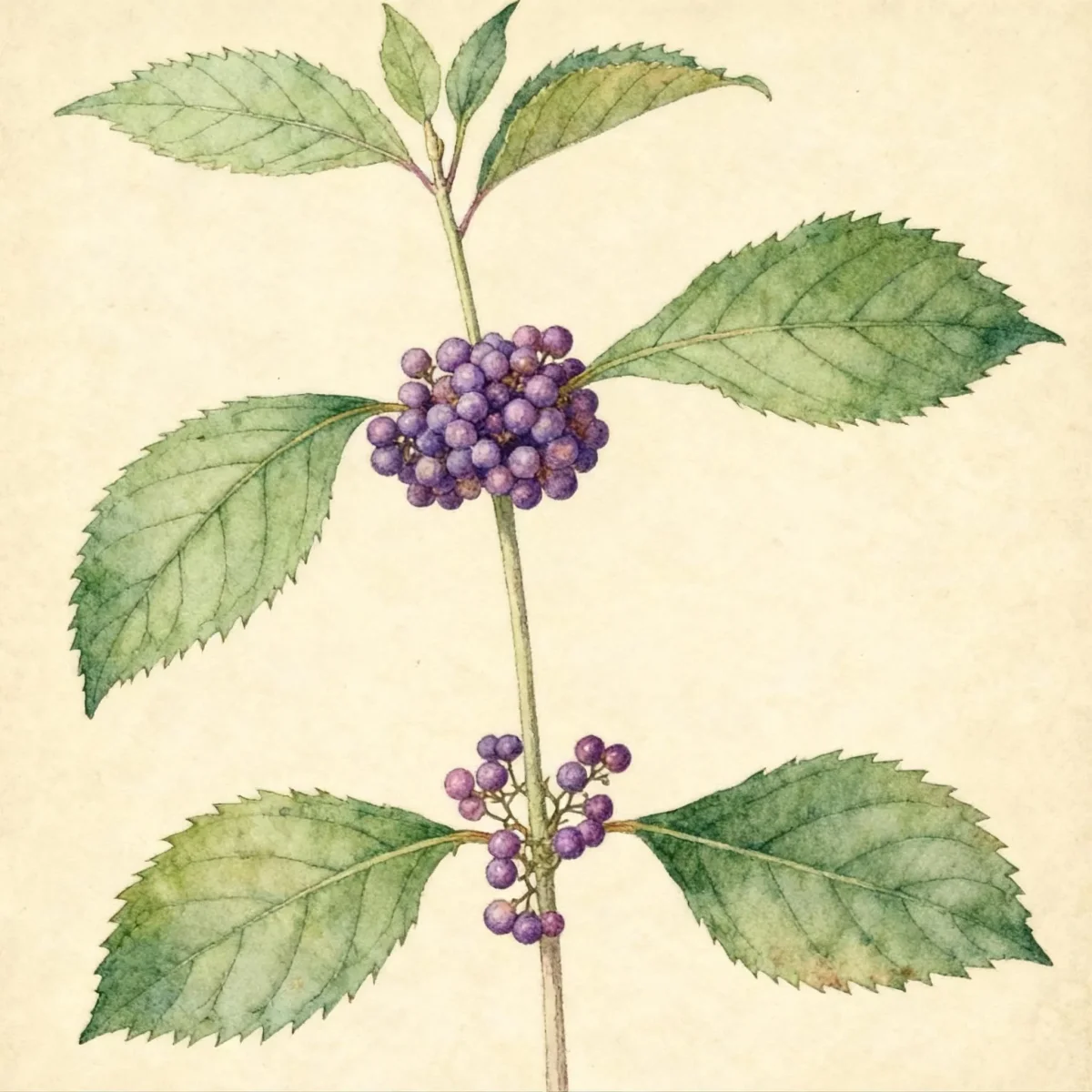
Beautyberry(Callicarpa dichotoma 'Early Amethyst')
Grow Early Amethyst purple beautyberry (Callicarpa dichotoma): weeping arching habit, metallic purple autumn berries, hard spring pruning, USDA zones 5–8.

Complete Plant Information
- Hardiness zones
- USDA 5–8
- Plant type
- Deciduous shrub
- Plant family
- Lamiaceae
- Sun exposure
- Full sun to part shade
- Water needs
- Medium
- Maintenance
- Low
- Height
- 3–4 ft (91–122 cm)
- Spread
- 4–5 ft (122–152 cm)
- Bloom time
- June to August
- Flower color
- Small pinkish-lavender flowers in cymes along arching branches, followed by metallic violet-purple berries
- Flower qualities
- Showy
- Fruit qualities
- Showy, Attracts Birds
- Tolerances
- Deer, Clay Soil, Drought
- Garden uses
- Autumn border anchor, weeping bank cover, wildlife songbird garden, massed drift
- Native range
- East Asia (cultivar selected by Tom Dilatush, New Jersey)
Field Guide Continues
Ready for care notes, companion picks, and planting tips?
The map is just the start. The full guide below covers growth habits, seasonal performance, and landscape uses.
Overview
Early Amethyst purple beautyberry (Callicarpa dichotoma ‘Early Amethyst’) is a gracefully weeping deciduous ornamental shrub hardy across USDA Zones 5 through 8. Selected in New Jersey by nurseryman Tom Dilatush, it matures into an elegant, fountain-like mound 3 to 4 feet tall and 4 to 5 feet wide with long, slender, arching branches. Famous for its dazzling autumn fruit display, it begins ripening its heavy, dangling clusters of iridescent, metallic violet-purple berries in late August—several weeks earlier than other beautyberries—holding its eye-catching jewel-toned display long after autumn leaves have dropped.
Its weeping branches and compact habit make it a refined alternative to the coarse, upright wild American beautyberry.
How to Grow
- Sunlight: Full sun (at least 6 hours daily) produces the heaviest, most saturated berry crop. Shrubs tolerate partial shade, but shaded sites produce looser branching and fewer berries.
- Soil & Moisture: Adapts to a wide range of soil textures, including loose loam, rocky soil, and heavy clay. Prefers moist, well-draining soil, but established shrubs show remarkable drought tolerance.
- The Late-Winter Hard Cutback: Flowers and sets fruit exclusively along the length of new seasonal stems produced in spring. Every late winter or early spring (March) before buds swell, cut all branches hard back to 6 to 12 inches above the soil line. Hard pruning prevents twiggy overgrowth and forces long, arching 4-foot canes laden with berry clusters.
- Grouping for Heavy Fruit Set: While self-fertile, planting a grouping of two or more beautyberries nearby significantly boosts cross-pollination, resulting in vastly superior fruit density.
Landscape Uses
- Autumn Specimen Drift: Sited on sunny slopes, berms, or shrub borders where its weeping branches showcase violet berries.
- Backyard Songbird Garden: Iridescent berries provide crucial late-autumn calories for mockingbirds, catbirds, and robins.
- Informal Flowering Hedge: Spaced 3 to 4 feet apart, it forms a relaxed, cascading barrier with autumn purple color.
Potential Problems
- Sparse Berry Set if Shaded: Full sun is needed to trigger heavy flowering and fruit set.
- Winter Stem Dieback in Zone 5: Severe subzero temperatures may freeze branches back to the ground; crowns resprout rapidly in spring with zero loss of autumn fruiting because blooms form on new wood.
- Lack of Cutback: Unpruned shrubs become sparse and twiggy at the base with smaller fruit clusters.
Frequently Asked Questions
When do the berries turn purple on ‘Early Amethyst’?
Berries begin turning their signature metallic violet-purple in late August, about 3 to 4 weeks earlier than the standard species.
How hard should I prune beautyberry?
Cut all stems back to 6 to 12 inches above the soil every late winter (March). Because beautyberries flower on new wood, hard annual cutback produces the largest, most abundant berry clusters.
Do birds eat the purple berries?
Yes. Songbirds such as robins, catbirds, and mockingbirds eat the berries in late autumn and winter after other food sources have dwindled.
Companion Plants
Pair Early Amethyst beautyberry with fall-blooming perennials and shrubs that highlight its purple berries:
- Deciduous Berry Contrast: Combine with red-berried winterberry hollies (Ilex verticillata) or snowberries (Symphoricarpos).
- Autumn Flowering Perennials: Plant alongside New England asters, goldenrod (Solidago), or yellow chrysanthemums.
- Ornamental Grasses: Pair with fountain grass (Pennisetum) or little bluestem (Schizachyrium).
Sources & Lineage
- Missouri Botanical Garden PlantFinder: Record taxon 262957 (Callicarpa dichotoma ‘Early Amethyst’) — Dilatush selection, weeping habit, and berry sequencing.
- Kew Plants of the World Online (POWO): Callicarpa dichotoma (Lour.) K.Koch (POWO: 60475856-2) — species taxonomy, family (Lamiaceae), and East Asian native range.
- University of Maryland Extension: Purple Beautyberry: Callicarpa dichotoma — new-wood pruning directives, wildlife bird forage, and border culture.
Recommended Companion Plants
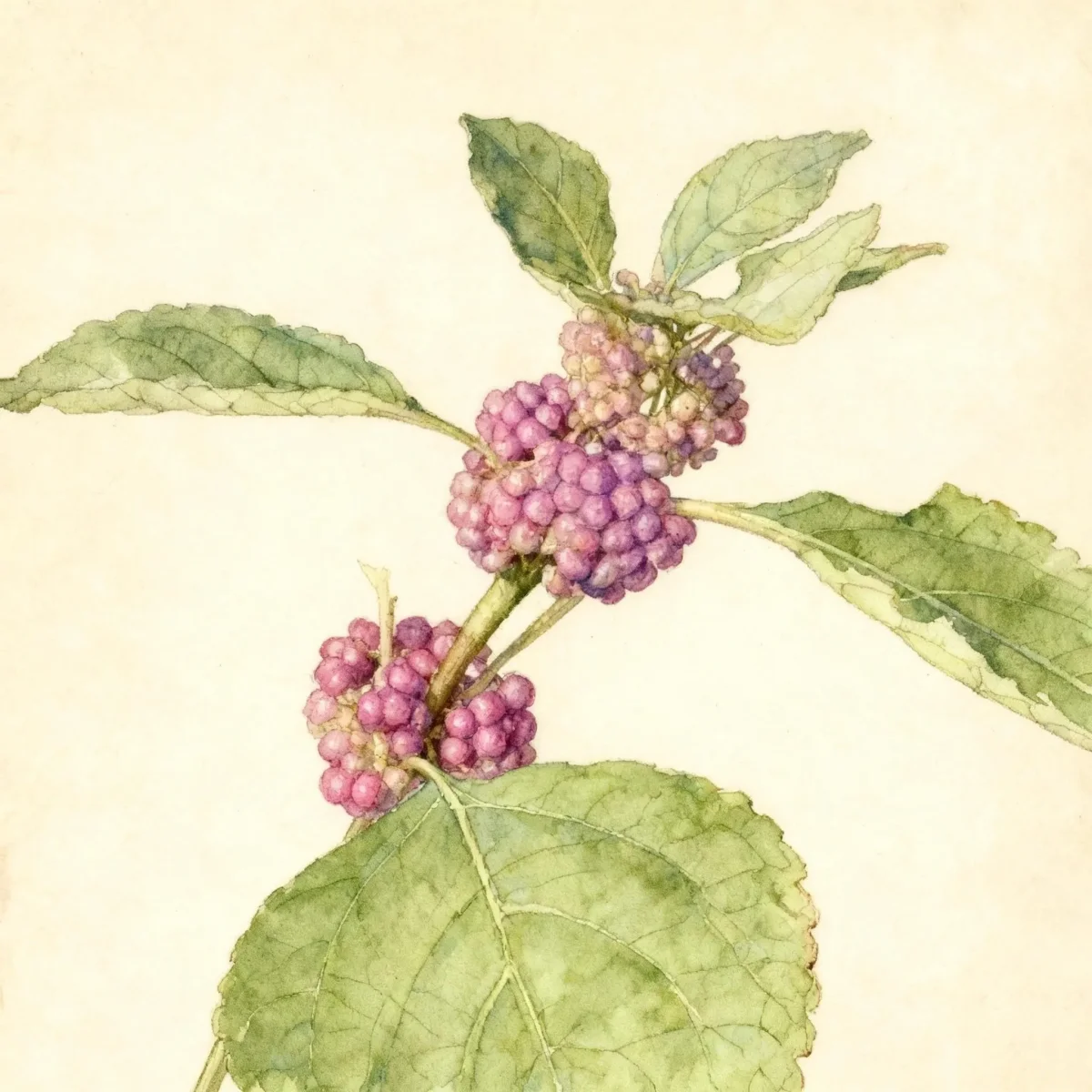
Beautyberry
Callicarpa bodinieri var. Giraldii 'Profusion'
- USDA zones
- 6–8
- Light
- Full sun to part shade
- Water
- Medium
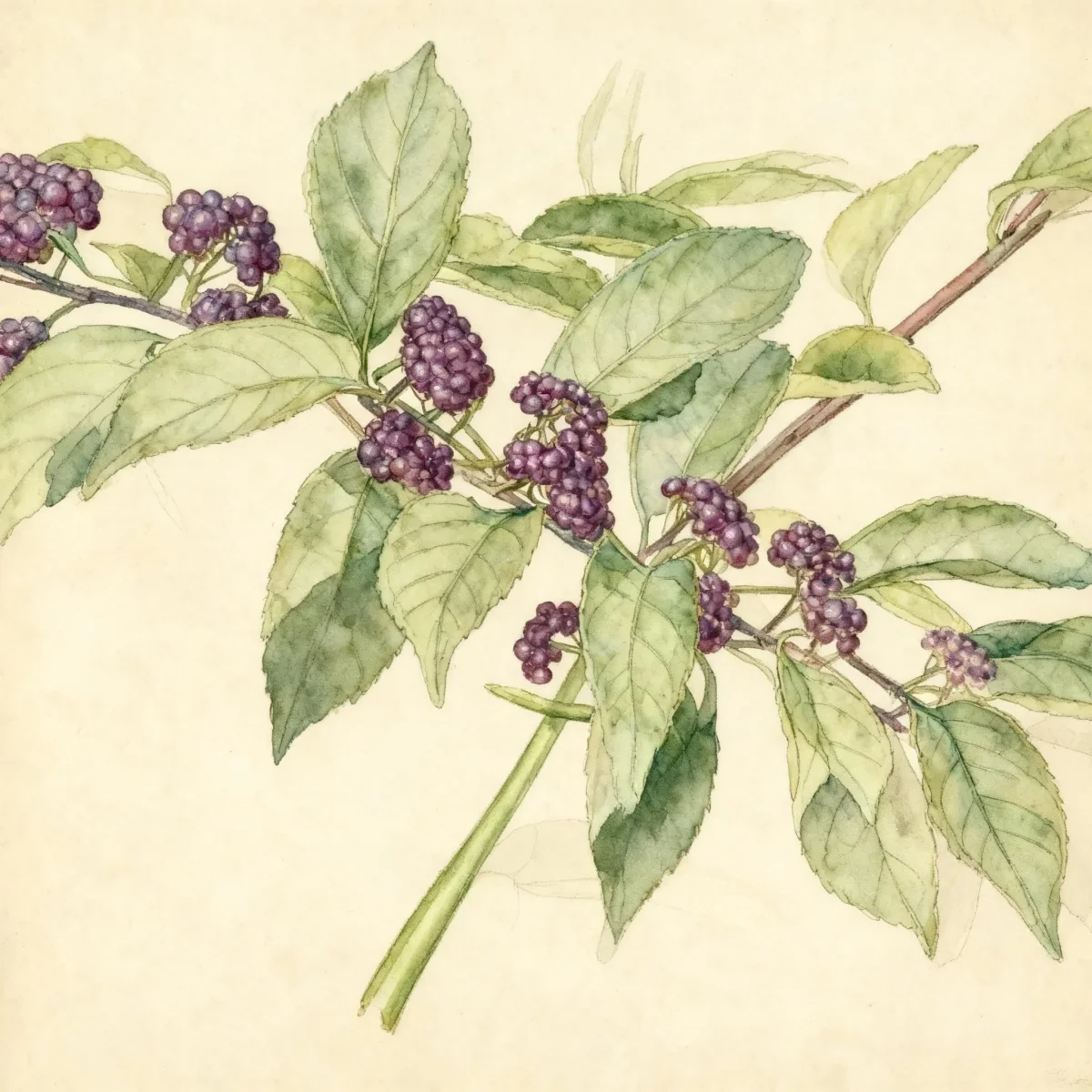
Beautyberry
Callicarpa dichotoma 'Issai'
- USDA zones
- 5–8
- Light
- Full sun to part shade
- Water
- Medium
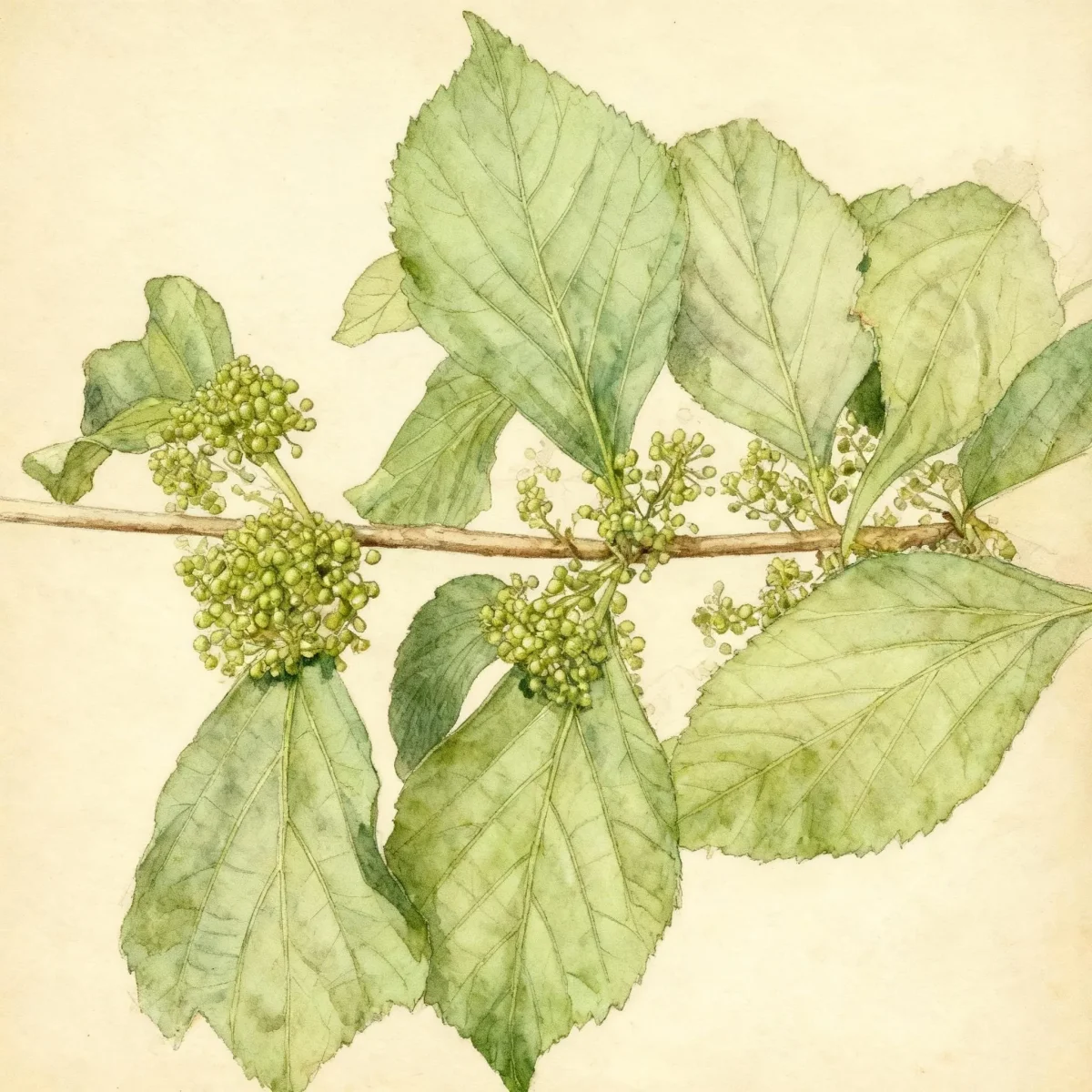
Beautyberry
Callicarpa japonica 'Heavy Berry'
- USDA zones
- 5–8
- Light
- Full sun to part shade
- Water
- Medium

Beautyberry
Callicarpa dichotoma f. Albifructa 'Duet'
- USDA zones
- 5–8
- Light
- Full sun to part shade
- Water
- Medium
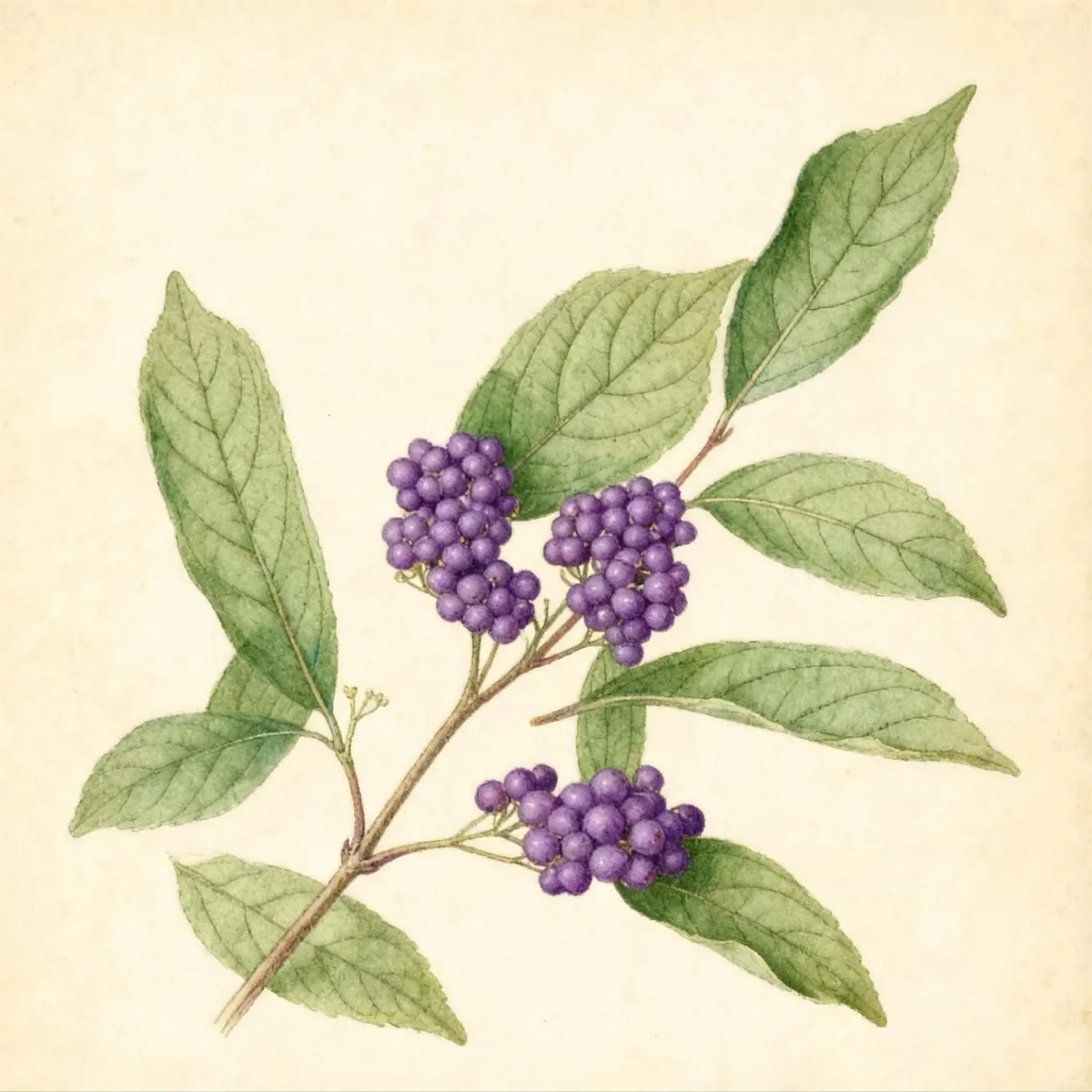
Beautyberry
Callicarpa dichotoma
- USDA zones
- 5–8
- Light
- Full sun to part shade
- Water
- Medium
Beautyberry
Callicarpa cathayana
- USDA zones
- 5–8
- Light
- Full sun to part shade
- Water
- Medium
Keep Learning
Test what you know with a garden quiz
You have the plant facts and care notes. Continue with a related challenge, or browse the complete quiz library.

Can You Identify These Common Garden Plants? Test Your Plant Knowledge
Think you know your roses from your peonies? Test your plant identification skills with our comprehensive garden plant quiz featuring 10 challenging questions.
Start quiz
USDA Garden Zone Map Quiz
Use this USDA garden zone map quiz to check whether you can read hardiness zones and choose plants with more confidence.
Start quizBrowse the full quizzes section
Explore plant identification, zone strategy, and seasonal gardening challenges.
View all quizzes