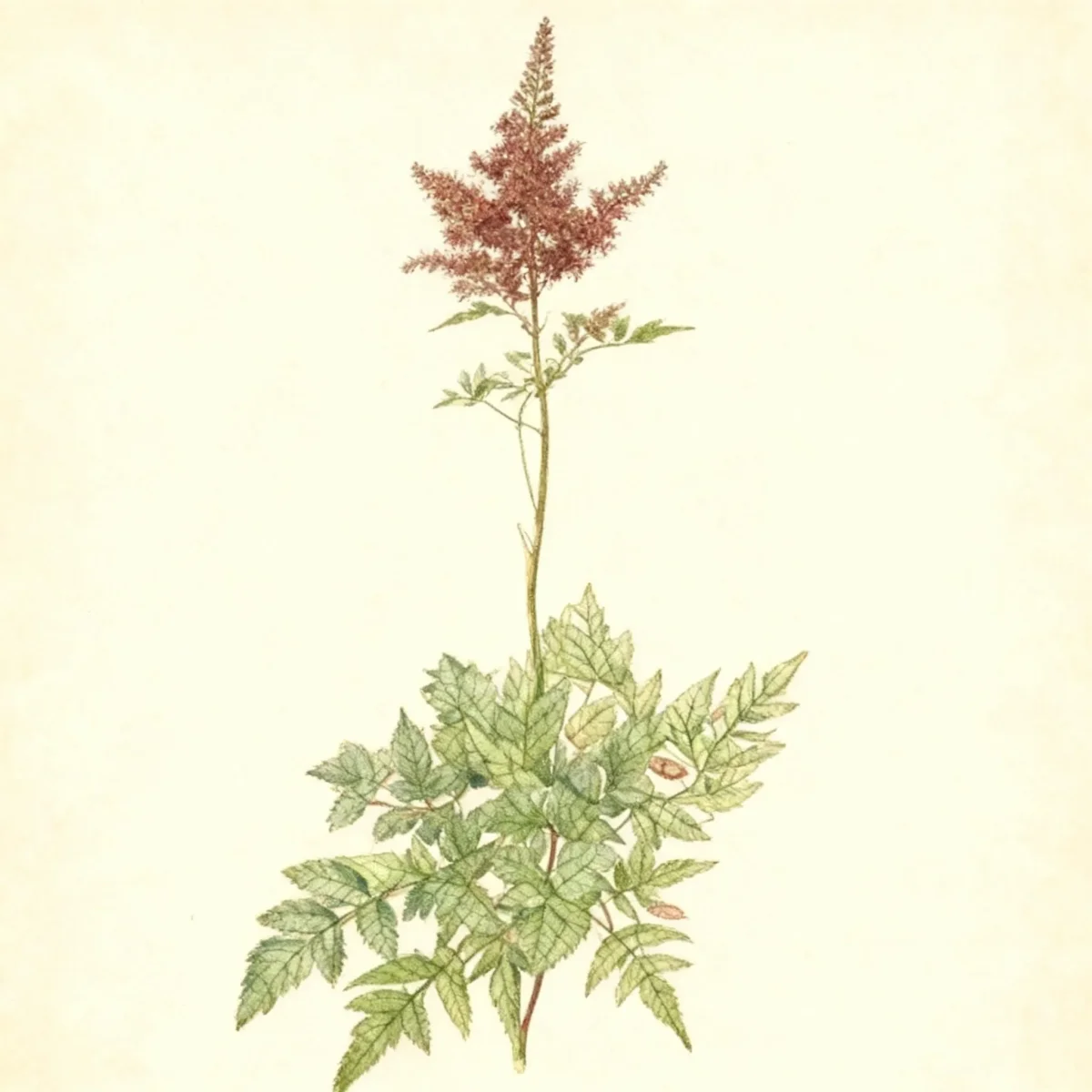
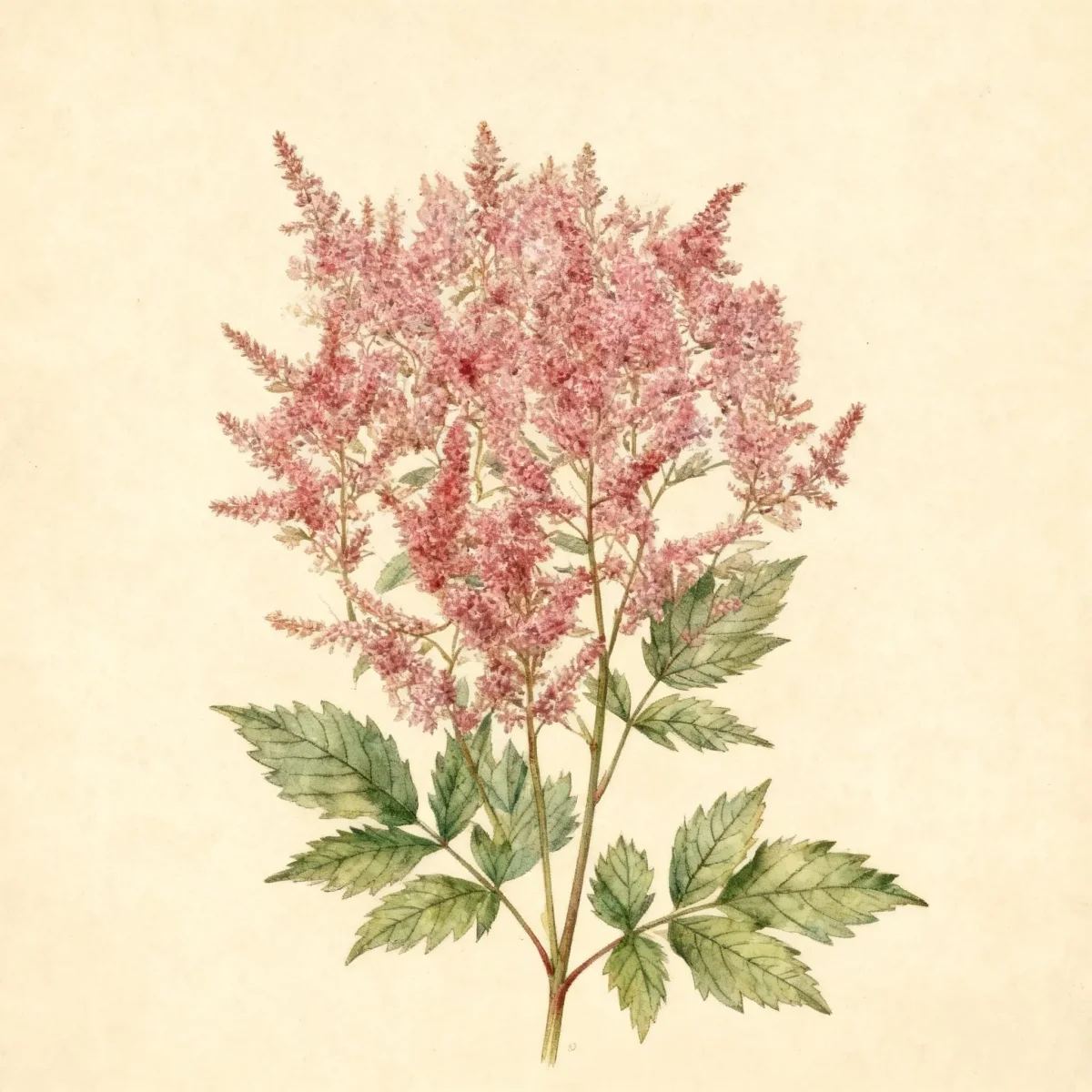
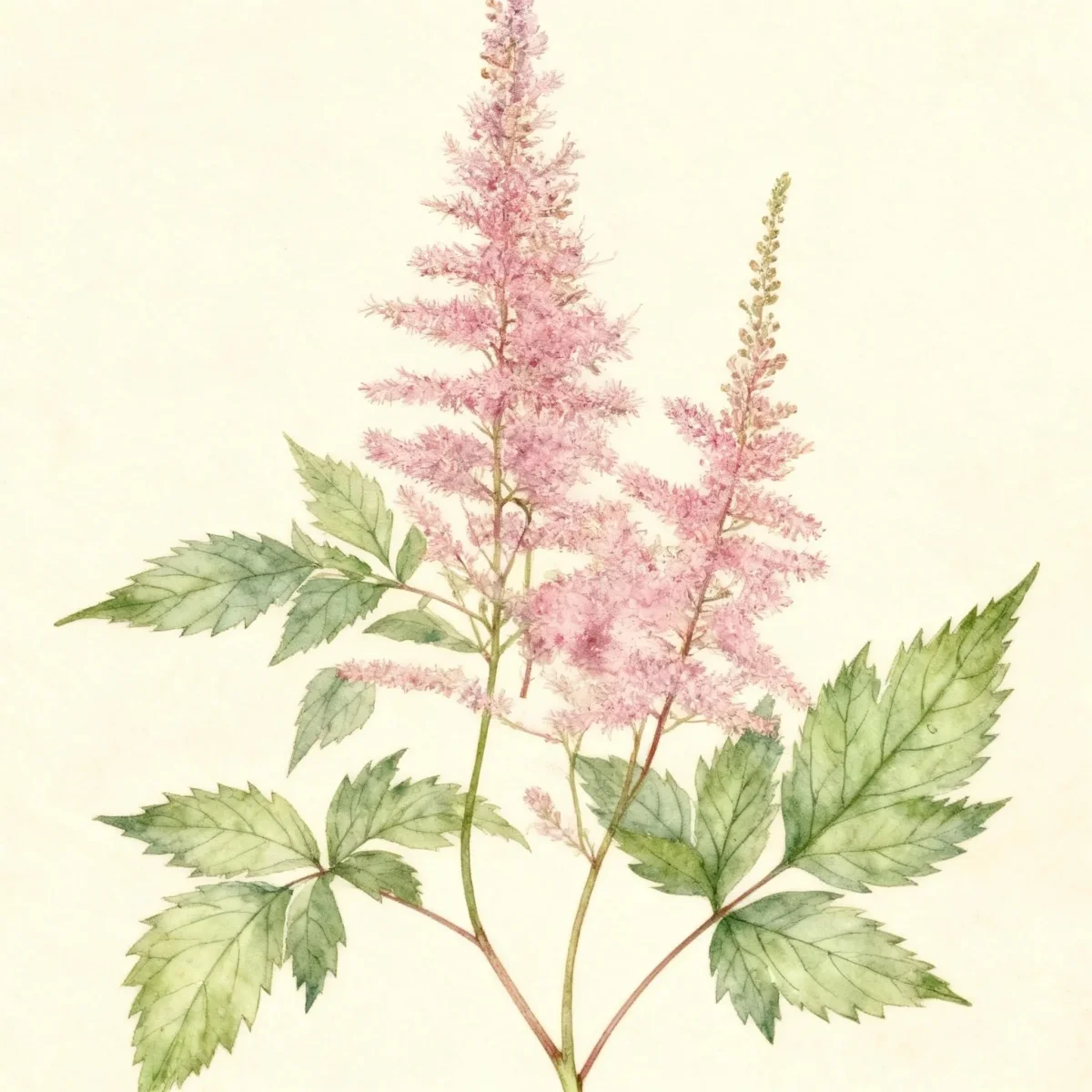
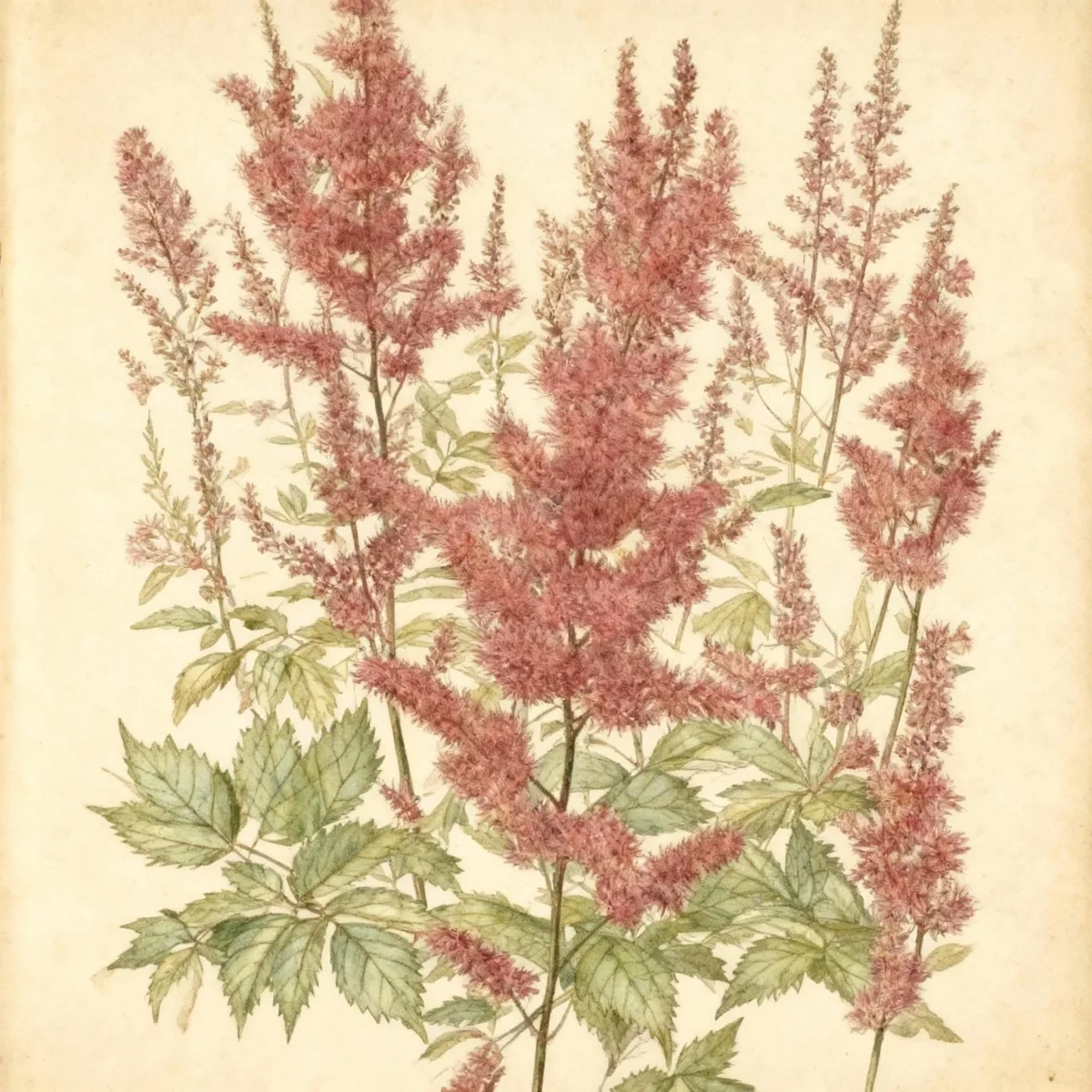
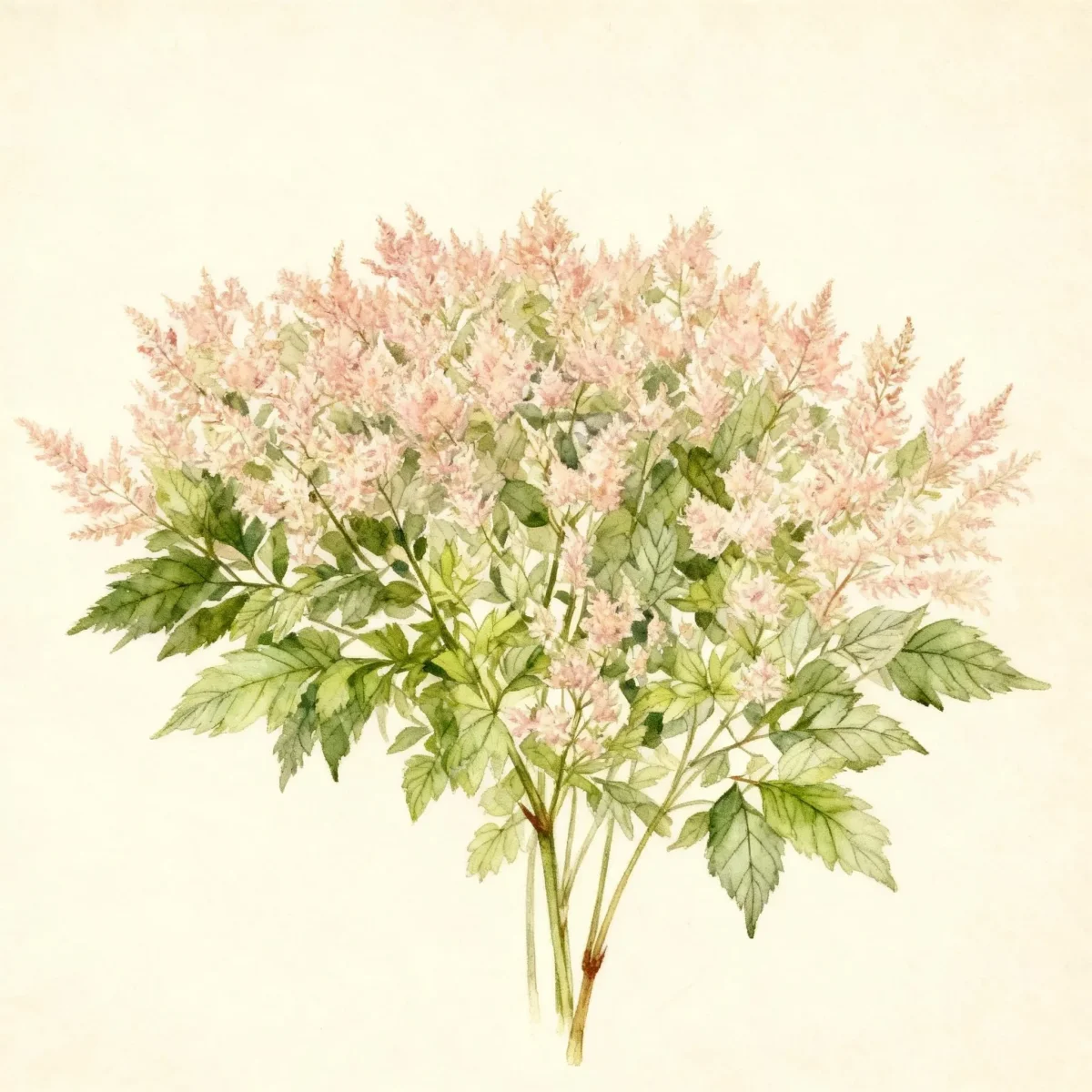
Astilbe (Astilbe 'Snowdrift')
Astilbe 'Snowdrift' offers elegant, fern-like foliage and showy white plumes in July, thriving in shady, moist gardens. Low maintenance.
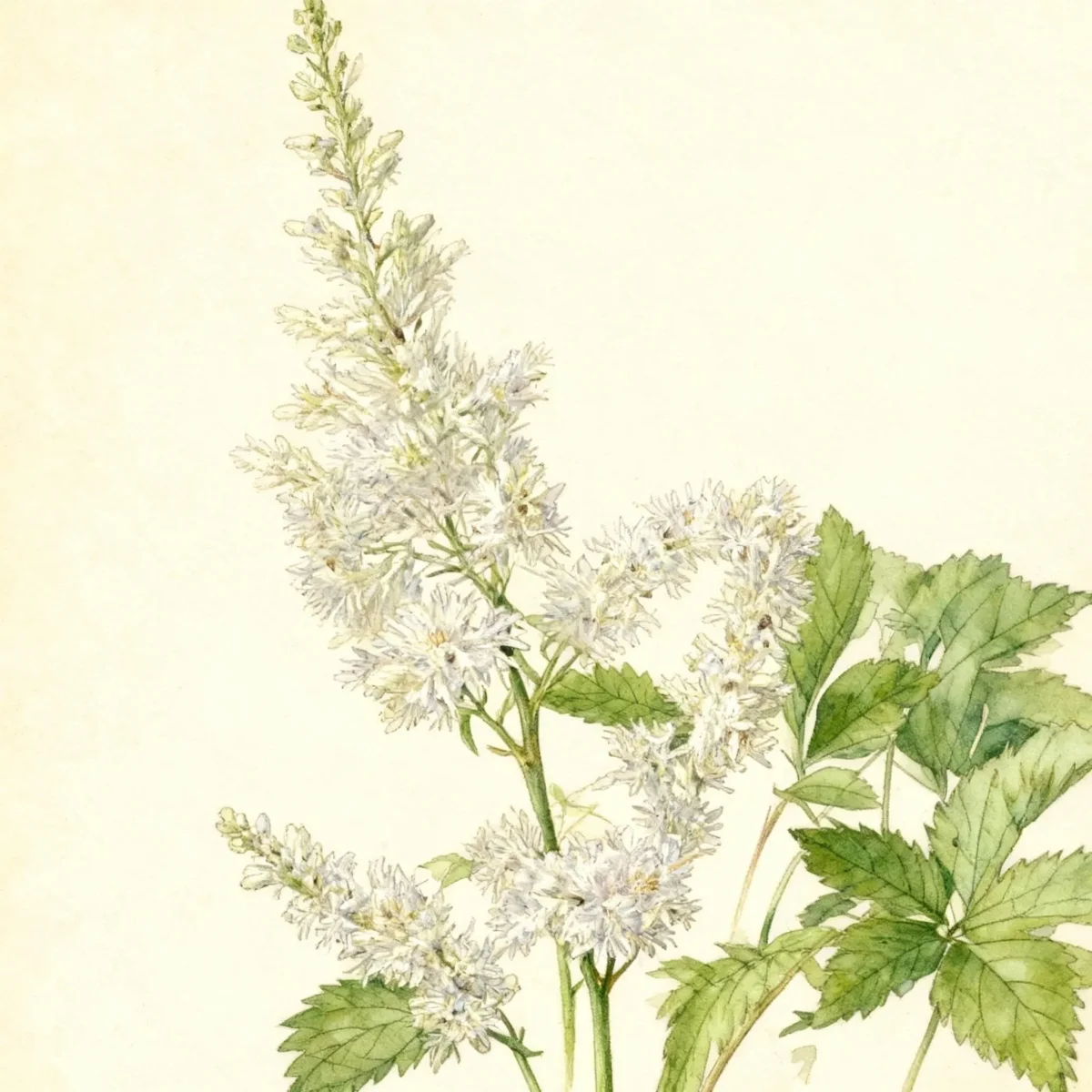

Bloom Boldly, No Matter the Season - Sweatshirt
Cozy organic cotton sweatshirt featuring our exclusive Purple Coneflower design. Perfect for gardeners who bloom year-round.
Inspired by the beautiful Astilbe
Limited first batch (50) — join the waitlist for early access
Waitlist closes Feb 15, 2026.
Complete Plant Information
Field Guide Continues
Ready for care notes, companion picks, and planting tips?
The map is just the start. The full guide below covers growth habits, seasonal performance, and landscape uses.
Overview
Astilbe ‘Snowdrift’ is a highly valued addition for gardeners seeking reliable, graceful texture and bright color for deeply shaded locations. This herbaceous perennial forms dense mounds of deeply cut, fern-like foliage that remains attractive throughout the season, punctuated by airy, plume-like white flower panicles in mid-summer. Cultivars like Astilbe ‘Snowdrift’ excel in providing vertical contrast in woodland settings where few other flowering plants thrive.
As a classic shade garden staple, Astilbe requires consistent moisture to maintain its lush appearance, preventing the foliage from scorching during hot periods. Its clump-forming habit and low maintenance requirements make it perfect for mass plantings or as structure along shaded borders. The bright white blooms of Astilbe ‘Snowdrift’ offer excellent contrast against dark green hostas and rhododendrons.
The genus Astilbe is cherished for its adaptation to challenging light conditions, and ‘Snowdrift’ specifically provides pure white spires reaching up to two feet high. These plants offer significant aesthetic value well beyond the main bloom time, as the dried heads provide winter interest. Consider incorporating several Astilbe varieties to extend the season of color in your woodland retreat.
Fast Facts
- Plant Family: Saxifragaceae
- Plant Type: Herbaceous perennial
- Hardiness Zones: USDA Zones 4-9
- Size at Maturity:
- Height: 1.5-2 ft
- Spread: 1-1.5 ft
- Bloom Time: July
- Bloom Description: White
- Sun Exposure: Part shade to full shade
- Water Needs: Medium
- Maintenance Level: Low
How to Grow
Astilbe ‘Snowdrift’ should be planted in spring or fall when conditions are cool, ensuring the soil is improved prior to planting. This variety thrives in soils that are consistently medium in moisture, humusy, organically rich, and well-drained. While it tolerates average soil, amending heavily with compost will significantly enhance performance, especially in heavy shade conditions.
Maintaining consistent moisture is the single most important aspect of Astilbe care. Soils must not be allowed to dry out, particularly during hot or dry summers, as drought will cause foliage decline characterized by browning leaf edges. Apply a summer compost mulch generously to help retain this critical soil moisture and stabilize soil temperature around the roots of your Astilbe.
Maintenance for this low-care plant is minimal. While removing faded flower stalks can neaten the appearance, many gardeners choose to leave the dried seed heads in place for ornamental value extending into winter. If clumps become crowded, typically every three to four years, divide them carefully during the early spring to maintain vigor.
Landscape Uses
Astilbe ‘Snowdrift’ is indispensable for enriching shaded landscapes where its feathery plumes light up dark corners come mid-summer. It performs exceptionally well when massed together to create drifts of pure white color under the canopy of deciduous trees or beneath large shrubs, creating a beautiful woodland garden effect. Its vertical structure also makes it effective near the front edge of shady borders or as naturalizing edging along a shaded path.
Due to its need for consistent moisture, Astilbe is highly effective when planted near water features like pond banks or stream edges, provided the roots are not fully submerged. When selecting companions, pair Astilbe with other shade-lovers that contrast in texture or bloom time, such as large-leafed Hostas, Japanese Forest Grass (Hakonechloa), or dark-leaved Heucheras. The clean white blooms also complement the pinks or purples of early-flowering Hydrangeas located nearby.
This variety is also useful for softening foundation plantings that receive limited sunlight. The dense foliage provides continuous coverage, acting effectively as a ground cover where turf struggles beneath deep shade. Successfully growing Astilbe ‘Snowdrift’ transforms difficult, low-light areas into vibrant, textural displays.
Standout Features
Flower Qualities
- Showy
- Good Cut
Noteworthy Characteristics
Astilbe is a genus celebrated for its clump-forming, herbaceous perennials originating from eastern Asia and North America, defined by graceful, fern-like foliage and dense, plume-like flower panicles rising above the leaves. The name Astilbe ironically comes from Greek words meaning ‘without brightness,’ referencing the dull leaves found on some ancestral species. ‘Snowdrift’ specifically features medium green, deeply-cut leaves forming an 18-inch mound, topped by wide, feather-like panicles of pure white flowers reaching about 24 inches in late spring/early summer.
Tolerances
- Rabbit
- Deer
- Heavy Shade
- Black Walnut
Potential Problems
The primary issue gardeners face with Astilbe varieties like ‘Snowdrift’ relates to moisture management. Foliage decline, where leaves turn brown prematurely, almost always signals insufficient water intake, occurring during hot summers or dry spells. Ensure soils remain consistently moist to avoid this cosmetic damage.
Pests and diseases are generally minor concerns for healthy Astilbe. Powdery mildew or wilt may occasionally appear, often associated with poor air circulation combined with humidity. From a wildlife perspective, deer and rabbits typically avoid chewing on the foliage, which is an added benefit for their aesthetic appeal. Japanese beetles, however, may occasionally feed on the leaves.
Frequently Asked Questions
What hardiness zones is Astilbe ‘Snowdrift’ suitable for?
Astilbe ‘Snowdrift’ is robustly hardy, thriving across USDA Zones 4 through 9.
How large does Astilbe ‘Snowdrift’ grow?
At maturity, this cultivar typically achieves a height between 1.5 and 2 feet, with a spread ranging from 1 to 1.5 feet wide, forming a dense clump.
What sun exposure does Astilbe ‘Snowdrift’ need?
This plant performs best when sited in partial shade to full shade environments, requiring protection from intense afternoon sun.
When does Astilbe ‘Snowdrift’ bloom?
Astilbe ‘Snowdrift’ produces its characteristic white, feathery blooms during the month of July.
Conclusion
Astilbe ‘Snowdrift’ remains an essential choice for adding bright, reliable summer color and elegant texture to shaded garden spaces. Its low maintenance needs and tolerance for deep shade ensure easy success even in difficult locations. Before planting, confirm your site offers the medium moisture and rich soil required to keep this beautiful Astilbe thriving year after year.
Companion Planting
When selecting partners for Astilbe ‘Snowdrift’, focus on plants that share similar moisture and shade requirements to ensure a unified planting scheme. Hostas are classic companions, providing broad texture and deep green or variegated foliage that contrasts beautifully with the fine, airy plumes of the Astilbe. Consider using ferns, such as Japanese Painted Ferns or Autumn Ferns, to enhance the woodland aesthetic your Astilbe establishes.
For varied bloom times, interplant Astilbe with early spring bulbs like Snowdrops (Galanthus) or spring ephemerals, allowing the Astilbe’s foliage to fill in as those early bloomers fade. Later in the season, Hakonechloa (Japanese Forest Grass) provides fine, flowing texture that complements the upright structure of the white Astilbe flowers, creating dynamic visual movement throughout the shaded garden bed.
Propagation Tips
The most straightforward and common method for increasing your stock of Astilbe ‘Snowdrift’ is by division. This process should ideally be performed in early spring just as the new growth begins to emerge, or sometimes in the fall after the foliage has died back. Wait until the clumps have become noticeably dense and overcrowded, which usually occurs every three to four years, to ensure the resulting divisions have ample root mass.
To divide, carefully dig up the entire clump using a sharp spade or garden fork, taking care not to sever the roots excessively. Use the spade or a sharp knife to gently pull or cut the crown into several smaller sections. Ensure each new division has several healthy, viable growing points attached to a reasonable root system. Replant the new divisions immediately into prepared, moist soil at the same depth as the original plant.