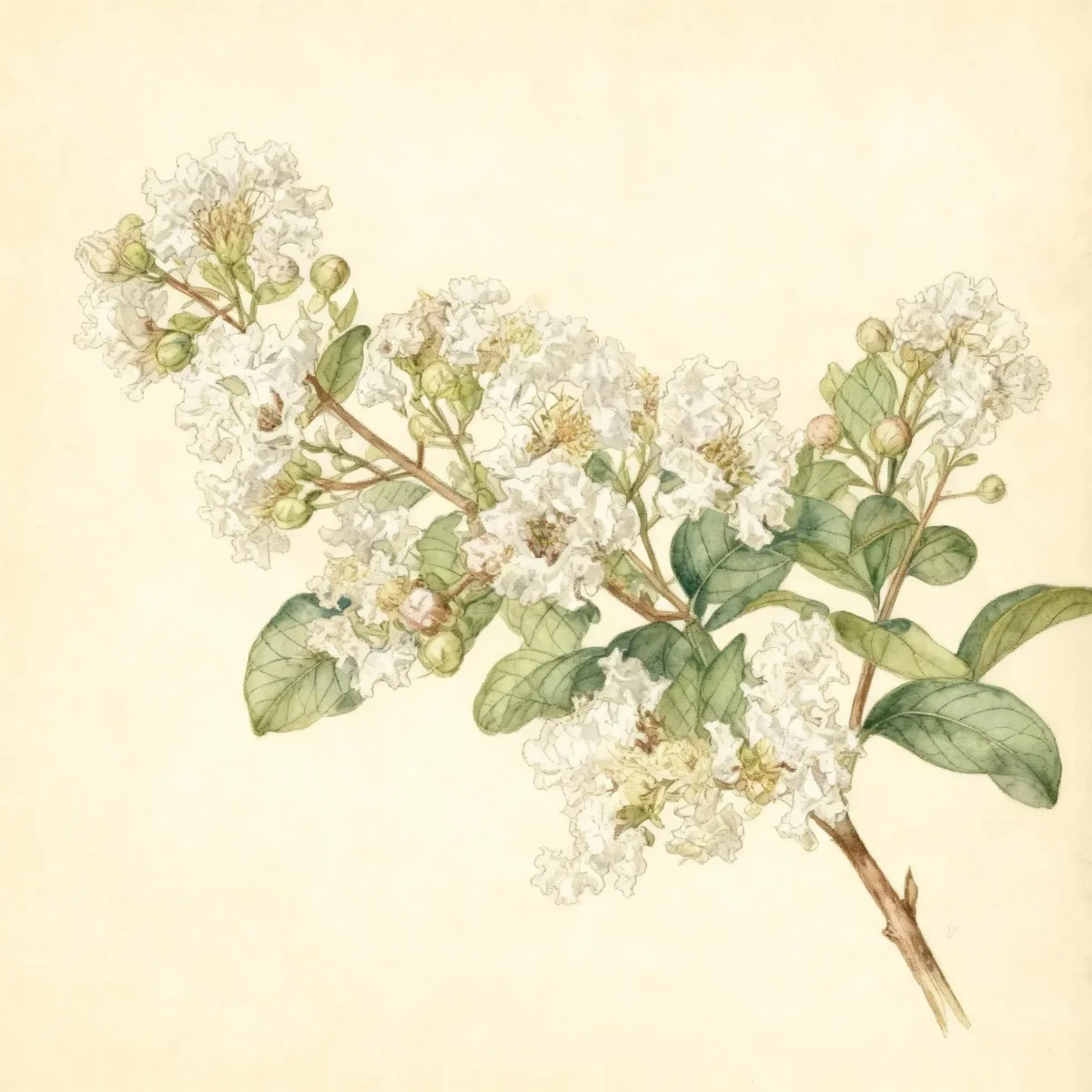
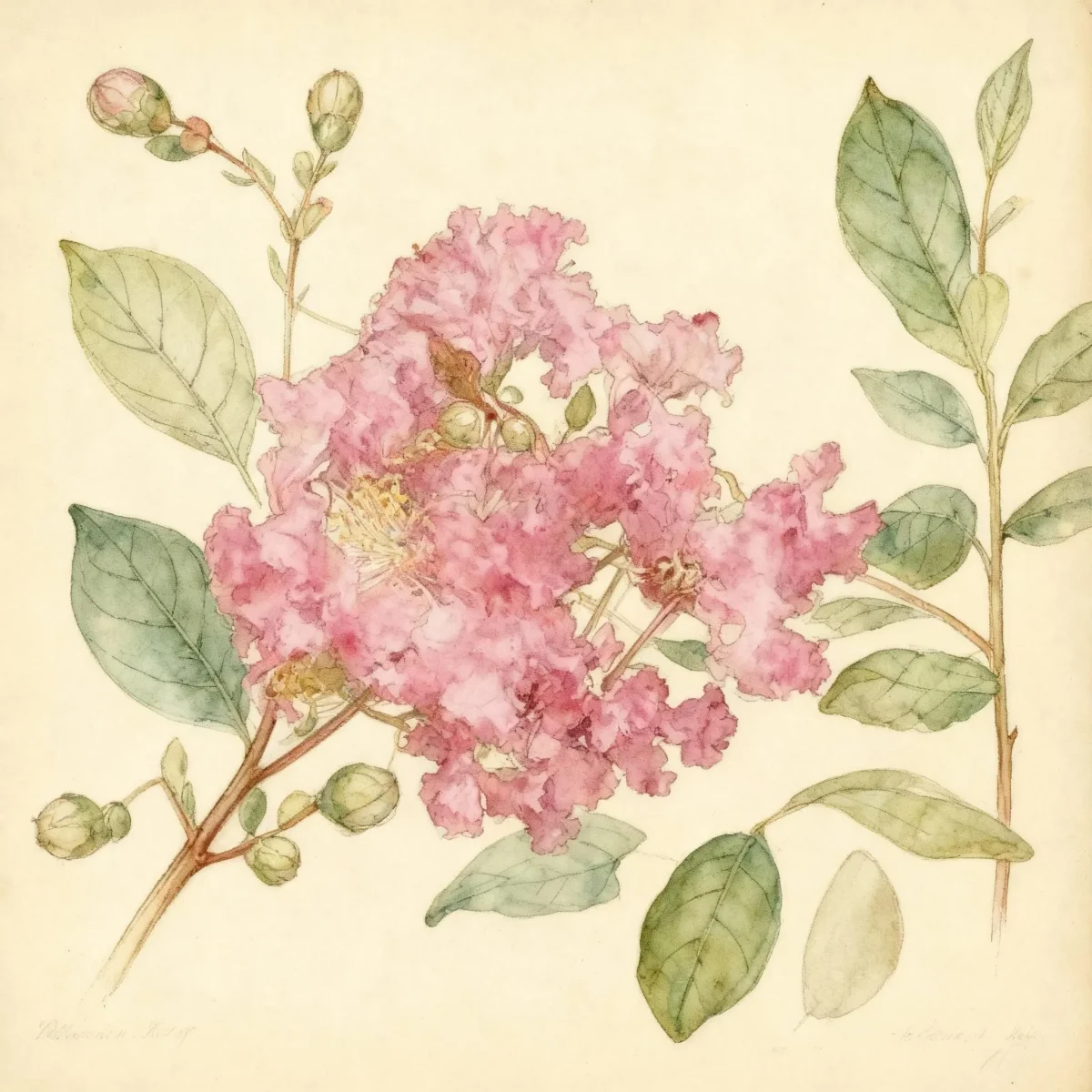
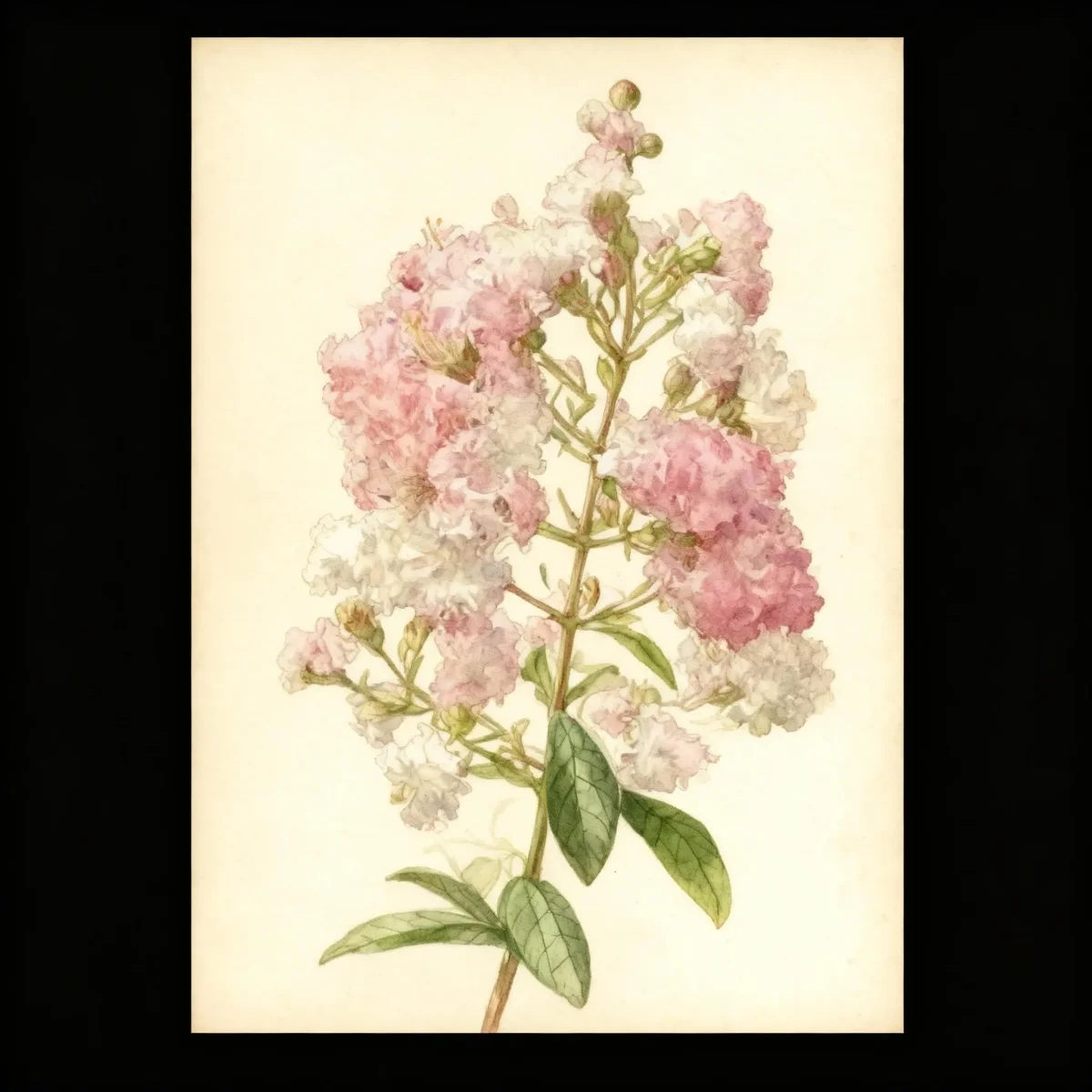
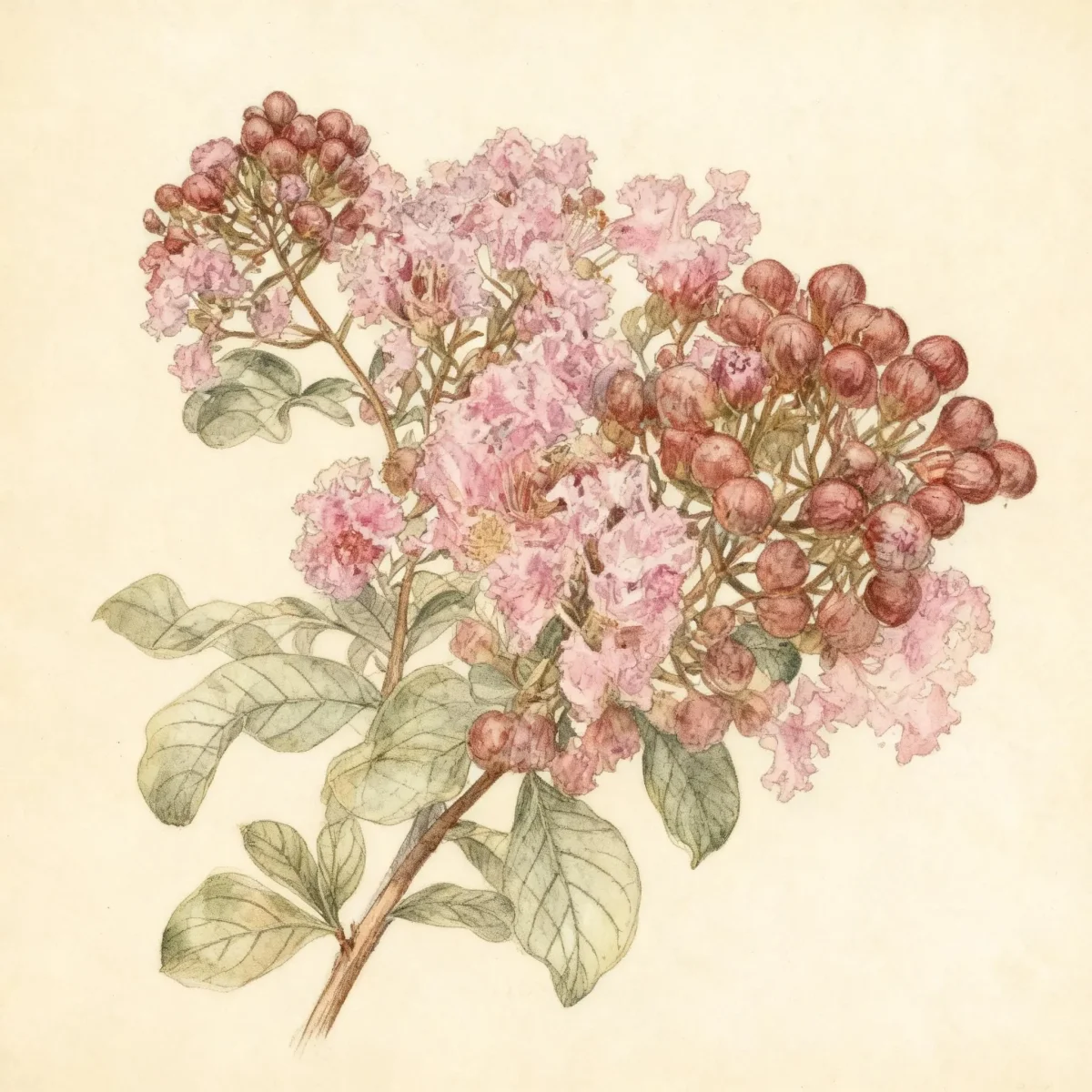
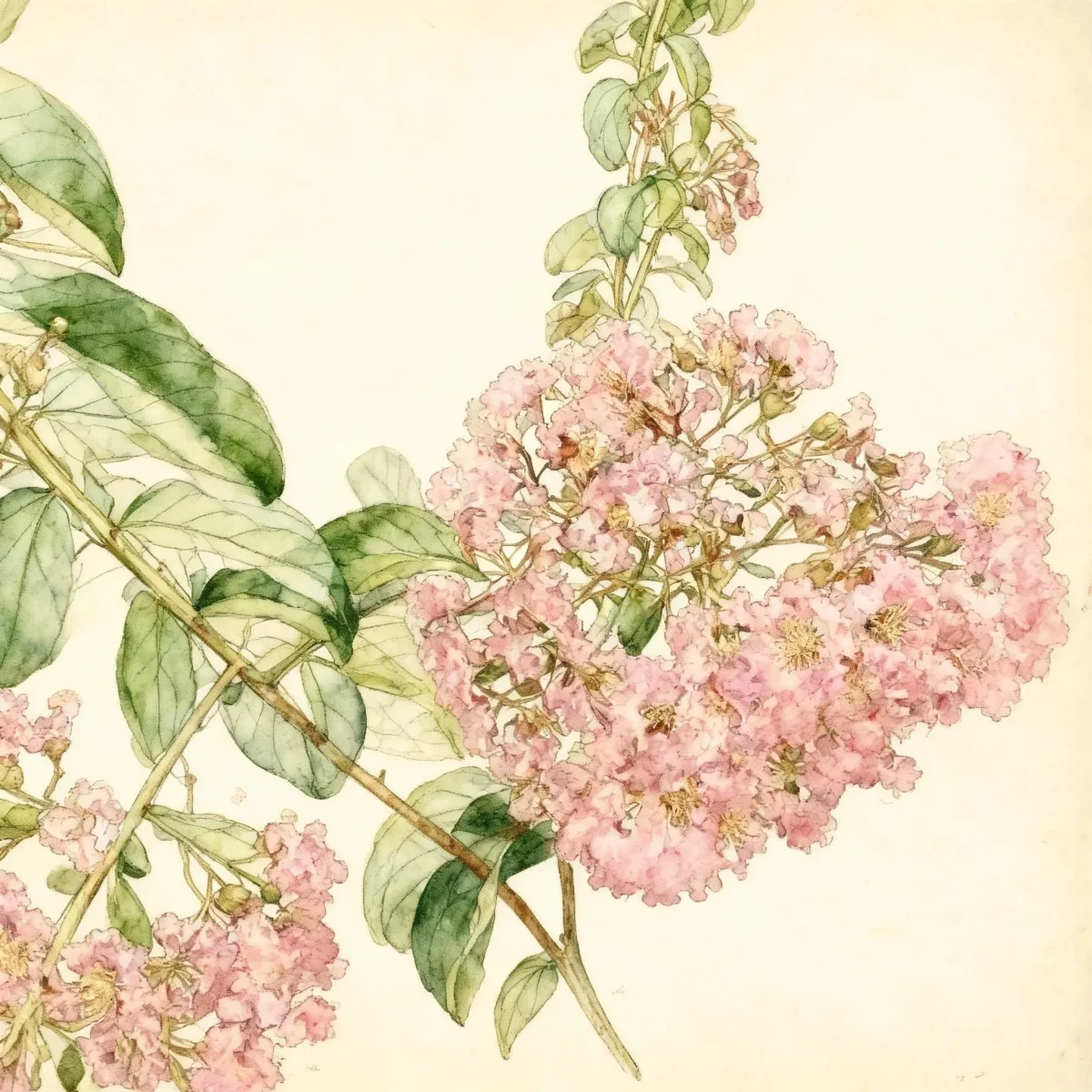
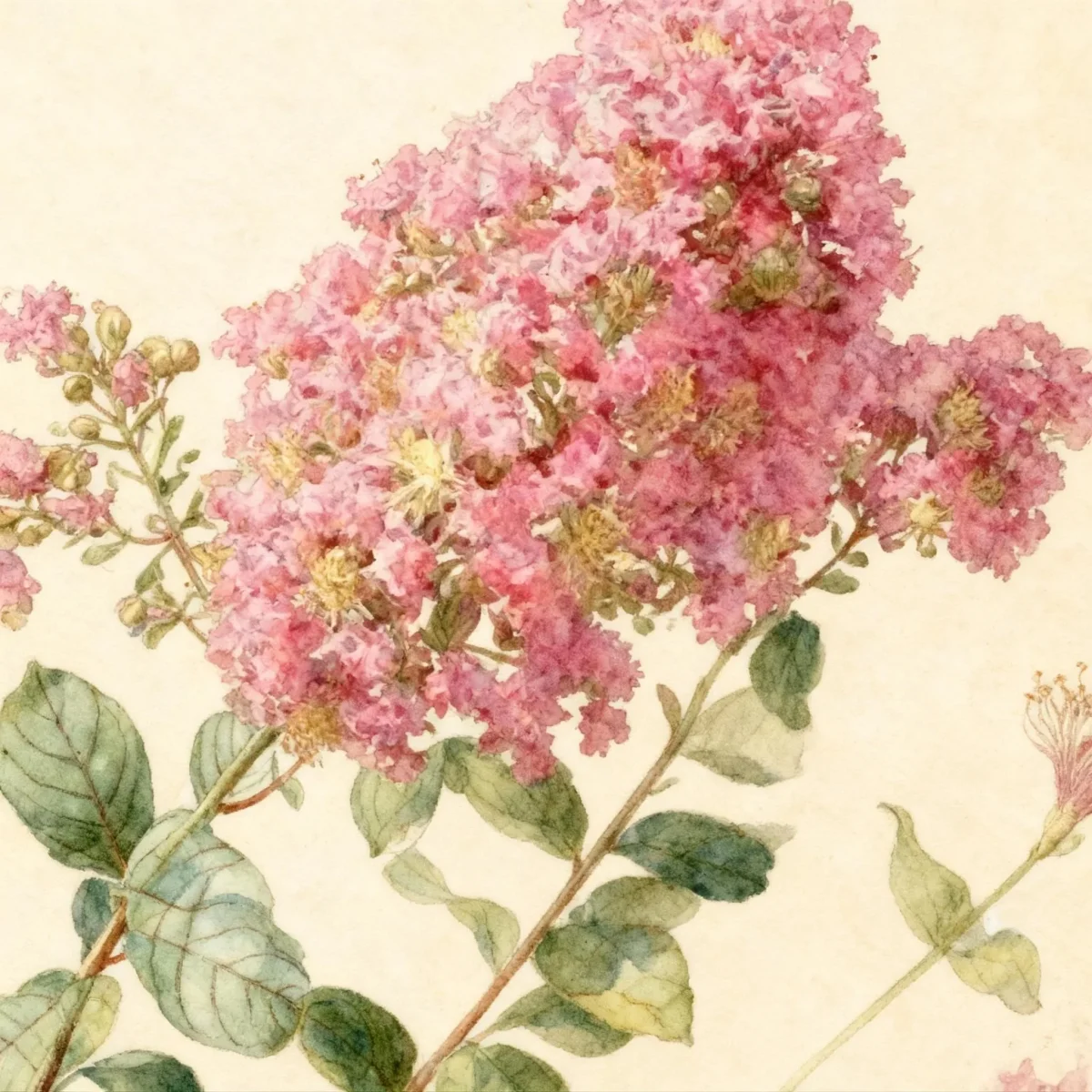
Crape myrtle (Lagerstroemia 'Country Red')
Lagerstroemia 'Country Red' Crape myrtle is a stunning deciduous shrub famed for bright red summer blooms and exfoliating bark.
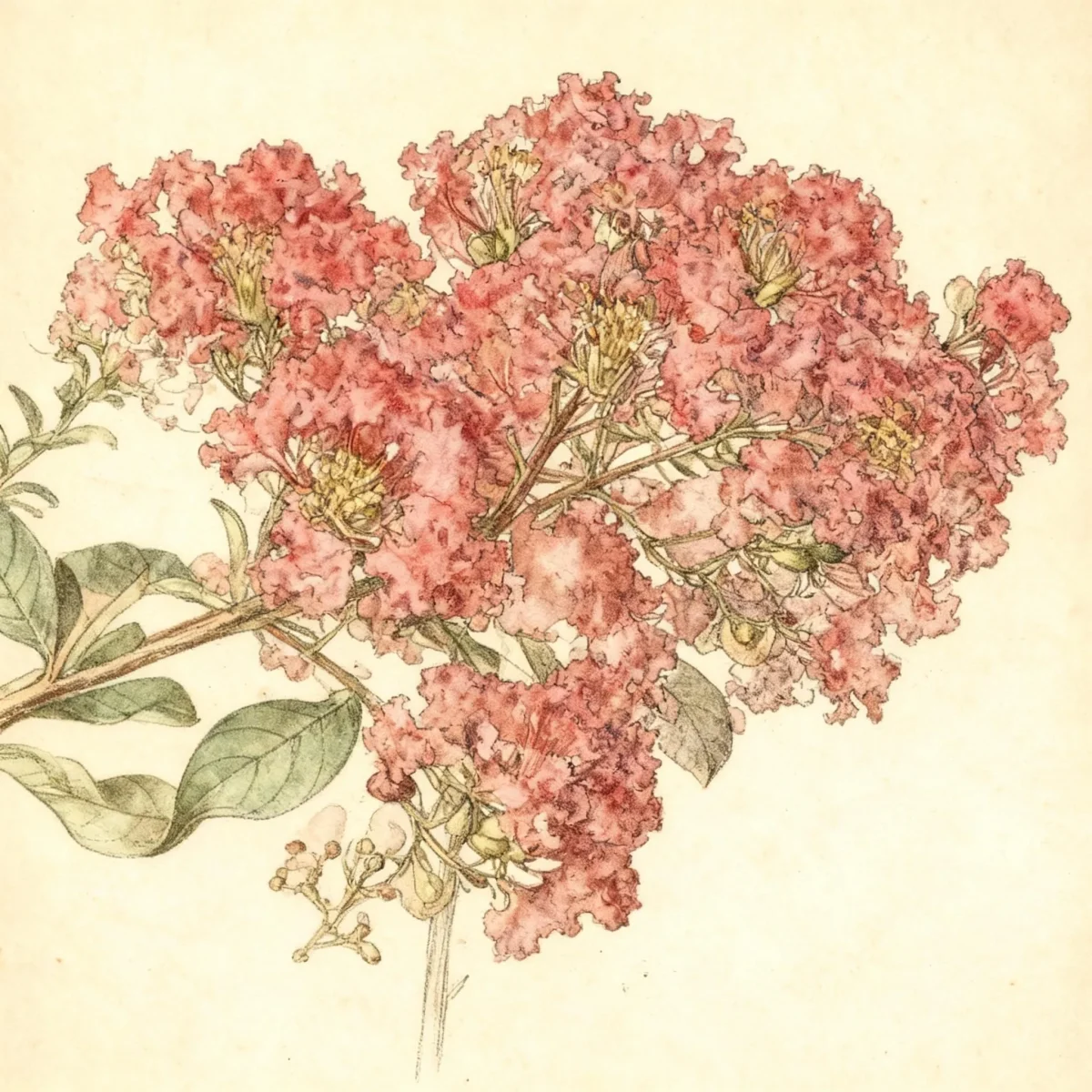

Bloom Boldly, No Matter the Season - Sweatshirt
Cozy organic cotton sweatshirt featuring our exclusive Purple Coneflower design. Perfect for gardeners who bloom year-round.
Inspired by the beautiful Crape myrtle
Limited first batch (50) — join the waitlist for early access
Waitlist closes Feb 15, 2026.
Complete Plant Information
Field Guide Continues
Ready for care notes, companion picks, and planting tips?
The map is just the start. The full guide below covers growth habits, seasonal performance, and landscape uses.
Overview
The Lagerstroemia ‘Country Red’ Crape myrtle is a celebrated ornamental, valued primarily for its vibrant, long-lasting summer color. This deciduous shrub offers terminal clusters of bright red flowers contrasted against dark green foliage that transitions to a dull yellow-orange in autumn. Its gracefully exfoliating bark adds textural interest, especially during the winter months.
As a woody shrub that can often be grown as a small tree in warmer climates, the Lagerstroemia ‘Country Red’ provides excellent vertical structure in the landscape. While established plants exhibit good drought and pollution tolerance, gardeners in colder regions must manage the expectation of potential winter dieback on top growth.
This cultivar proves itself a valuable asset for mid-to-late season color, maintaining its appeal long after many other spring bloomers have faded. Its multi-stemmed structure makes it an excellent choice for informal hedges or as a striking specimen planting where its unique bark can be admired year-round.
Fast Facts
- Plant Family: Lythraceae
- Plant Type: Deciduous shrub
- Hardiness Zones: USDA Zones 6-9
- Size at Maturity:
- Height: 4-10 ft
- Spread: 3-5 ft
- Bloom Time: July to September
- Bloom Description: Red
- Sun Exposure: Full sun
- Water Needs: Medium
- Maintenance Level: Medium
How to Grow
The best environment for establishing Lagerstroemia ‘Country Red’ involves planting in average, medium-moisture, well-drained soils, provided the location receives full, direct sun exposure. This Crape myrtle cultivar adapts well to loamy or clay soils, provided drainage is adequate to prevent root saturation. When planting, water the roots deeply, especially during dry spells, ensuring the foliage remains dry as much as possible.
For ongoing care, consider applying a slow-release fertilizer, as overly rich soils promote excessive leafy growth at the expense of flowering and can increase winter injury susceptibility. In zones 5 and 6, where winter injury is common, always plant Lagerstroemia ‘Country Red’ in the most protected microclimate available on your property and apply a winter mulch.
Gardeners in challenging cold zones, such as the St. Louis area (Zone 5b/6a), often treat this plant like a butterfly bush. This involves cutting all stems back nearly to the ground (about 8 inches) in early spring, forcing new, flowering wood to develop during the growing season. Alternatively, prune annually only to live wood in spring, a method similar to pruning shrub roses, hoping to maintain a woody structure.
Landscape Uses
This Crape myrtle cultivar is highly adaptable, serving well as a strong specimen shrub or planted in groups to create substantial seasonal impact. Its upright, spreading habit makes Lagerstroemia ‘Country Red’ an excellent component for shrub borders, providing structure through fall and winter thanks to persistent seed capsules and textured bark.
Where winters are reliably mild (southern climates), the plant functions effectively as a screen or informal hedge, offering dense coverage and brilliant red blooms for several months. Plant pairings should focus on species that thrive in full sun and tolerate similar soil conditions, ensuring the landscape maintains a cohesive profile throughout the season.
Standout Features
Flower Qualities
- Showy
Fruit Qualities
- Showy
Noteworthy Characteristics
Lagerstroemia is a genus prized for its very showy summer to fall bloom, a trait beautifully displayed by the ‘Country Red’ cultivar. Introduced in the 1950s, this multi-stemmed shrub features striking dark green foliage and grayish-brown bark that exfoliates beautifully with age. The bright red flowers offer an appealing contrast with their yellow centers, persisting as round seed capsules well into the winter months.
Tolerances
- Drought
- Clay Soil
- Air Pollution
Potential Problems
Careful observation is key to managing common issues affecting Crape myrtles. The two primary diseases noted for the genus are fungal leaf spot and powdery mildew, though Lagerstroemia ‘Country Red’ is noted for having excellent mildew resistance. Foliage may yellow if planted in highly alkaline soils due to chlorosis, requiring soil amendment if this occurs. Watch for minor infestations of aphids and scale insects. The most significant complication in cooler areas is winter injury; top growth can easily die back to the ground in Zones 5 and 6 when temperatures drop significantly.
Frequently Asked Questions
What hardiness zones is Crape myrtle suitable for?
Lagerstroemia ‘Country Red’ is reliably hardy in USDA Zones 6 through 9.
How large does Lagerstroemia ‘Country Red’ grow?
This cultivar typically reaches a height between 4 and 10 feet, with a spread ranging from 3 to 5 feet wide.
What sun exposure does Crape myrtle need?
This plant performs best and flowers most profusely when planted in full sun.
When does Lagerstroemia ‘Country Red’ bloom?
Expect spectacular blooms of red flowers from mid-summer extending through early fall, specifically July to September.
Conclusion
The Lagerstroemia ‘Country Red’ Crape myrtle offers exceptional value to the garden landscape, delivering extended summer color and attractive winter bark interest. Its tolerance for clay and drought makes it a relatively resilient choice, though gardeners in cooler regions must be prepared to manage potential winter dieback. Before planting your Lagerstroemia ‘Country Red’, always confirm your local USDA zone compatibility and site selection for maximum sun exposure.
Companion Planting
Selecting suitable companions enhances the garden space surrounding your Crape myrtle. Consider pairing Lagerstroemia ‘Country Red’ with perennials that offer contrasting foliage textures or different bloom cycles so that color interest continues through the season. Good partners include Lavender (Lavandula), which appreciates full sun and well-drained soil, or ornamental grasses that provide movement against the shrub’s dense structure. Avoid planting moisture-loving perennials too close, as the medium water needs of the Crape myrtle are best met with deep, infrequent watering.
Seasonal Care Calendar
Spring is the critical time for structure management; in colder zones, prune back dead wood or cut stems entirely back to 8 inches early in the season. As the weather warms, monitor closely for potential insect activity, treating aphids or scale early. Summer care centers on deep watering during dry spells, focusing water application directly to the root zone rather than overhead. In the fall, allow foliage to transition color naturally, and apply a protective winter mulch around the base if you are in Zone 7 or lower to help insulate the roots heading into winter dormancy for your Crape myrtle.