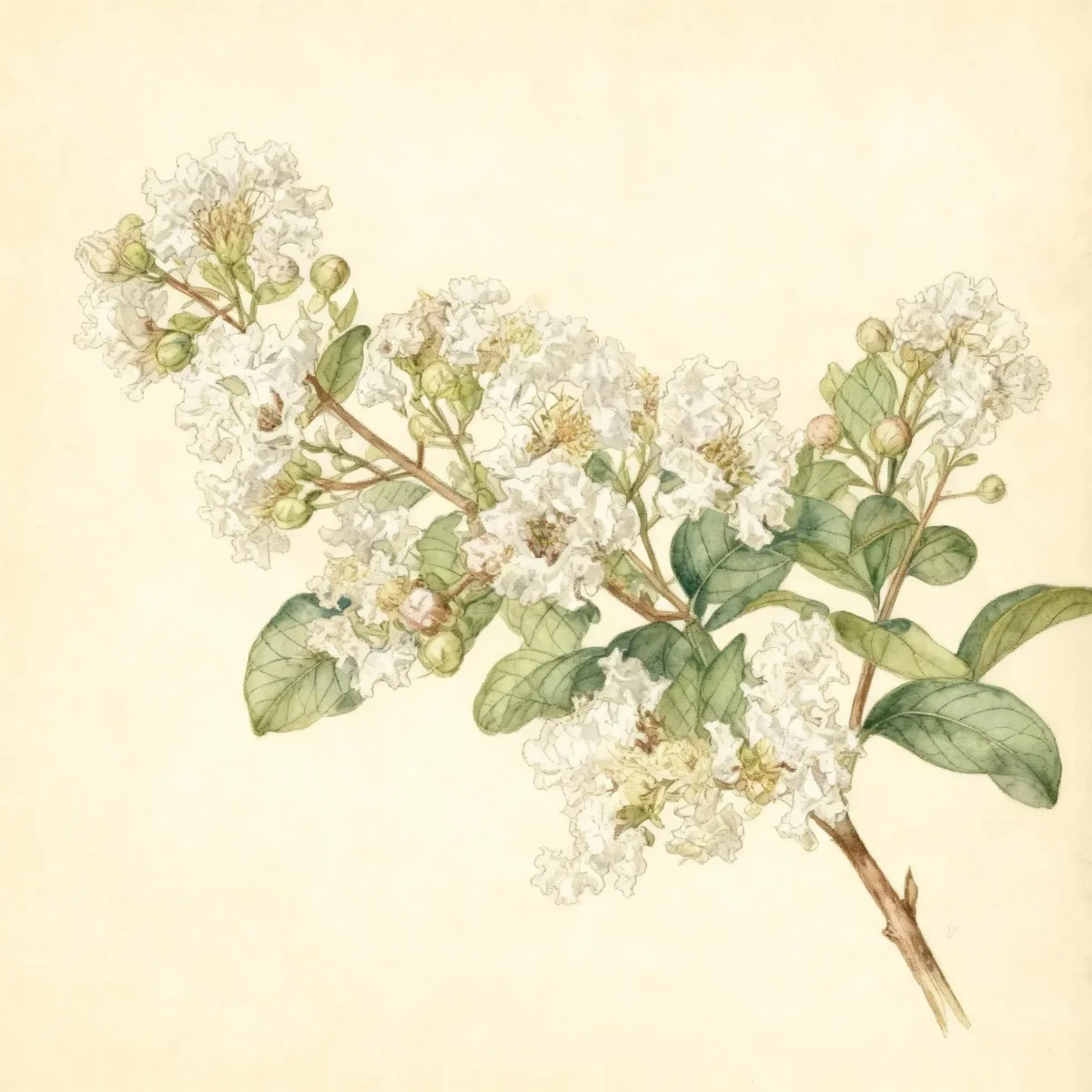
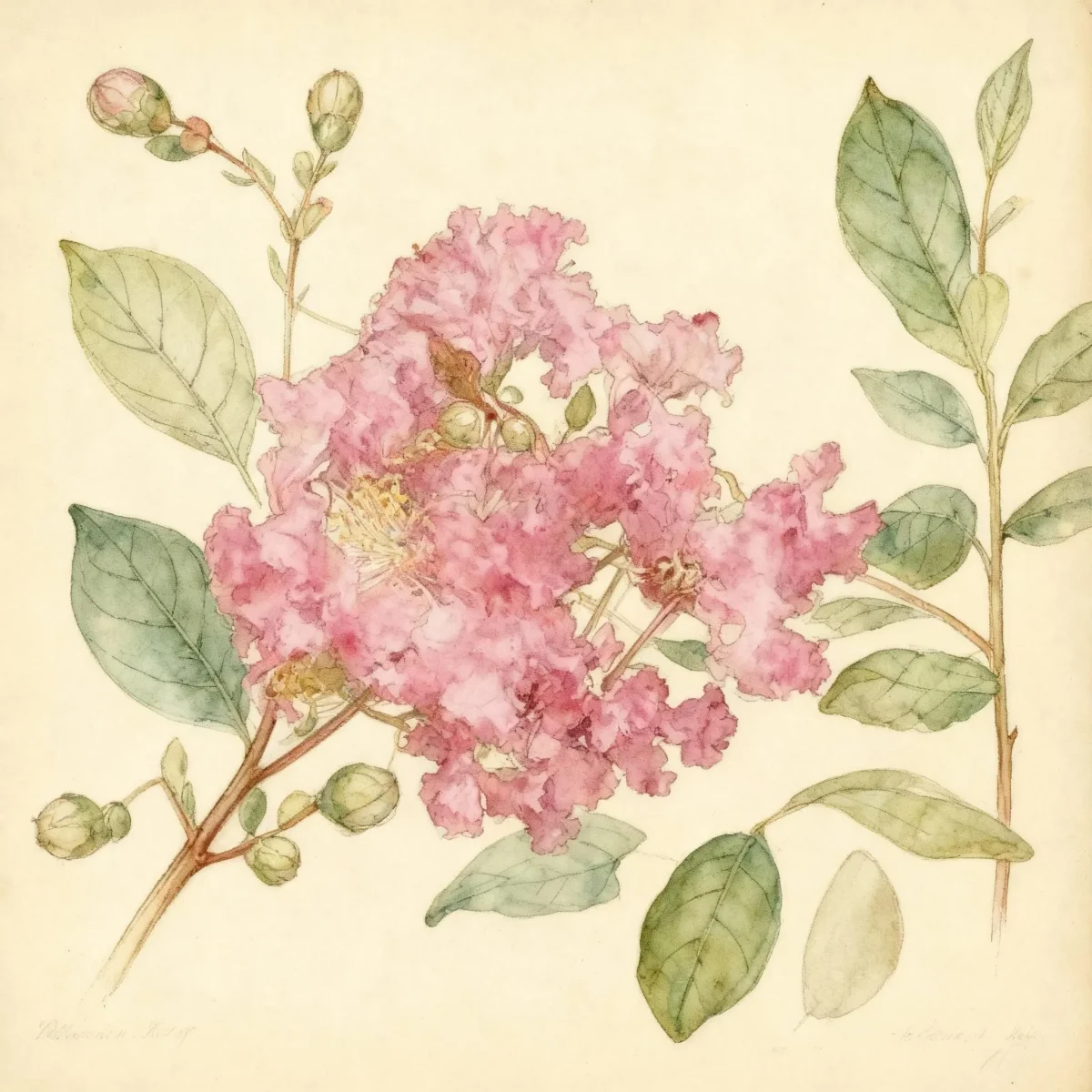
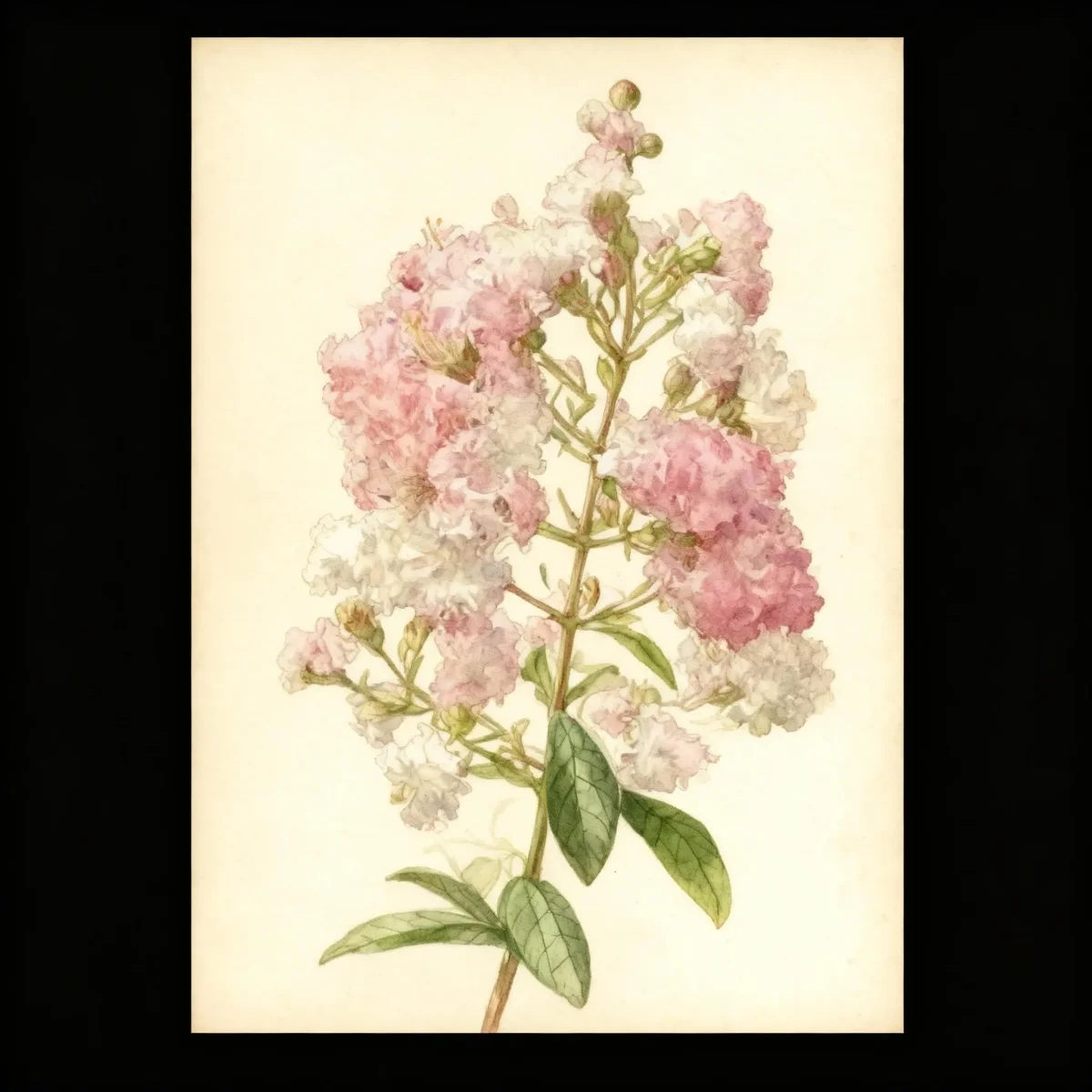
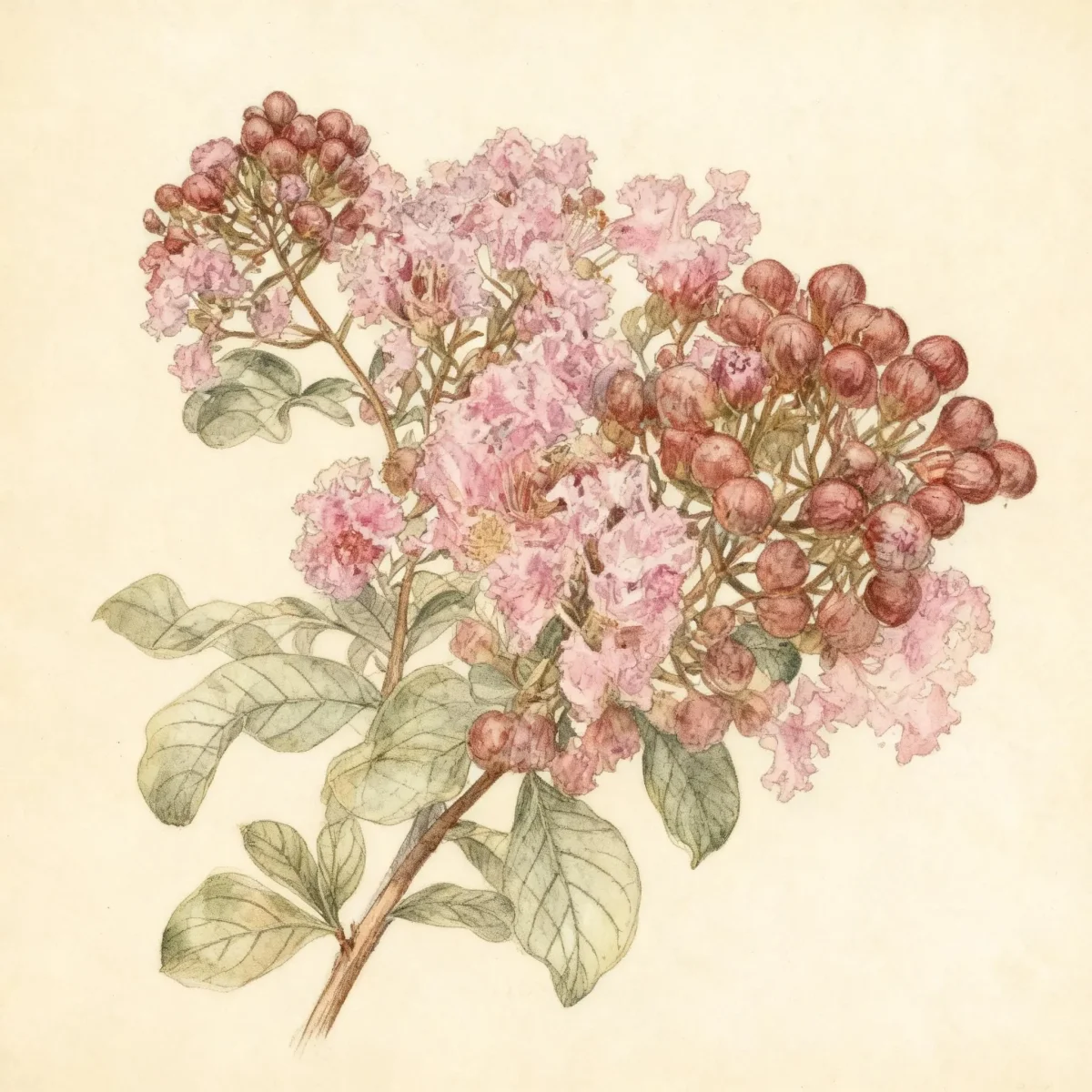
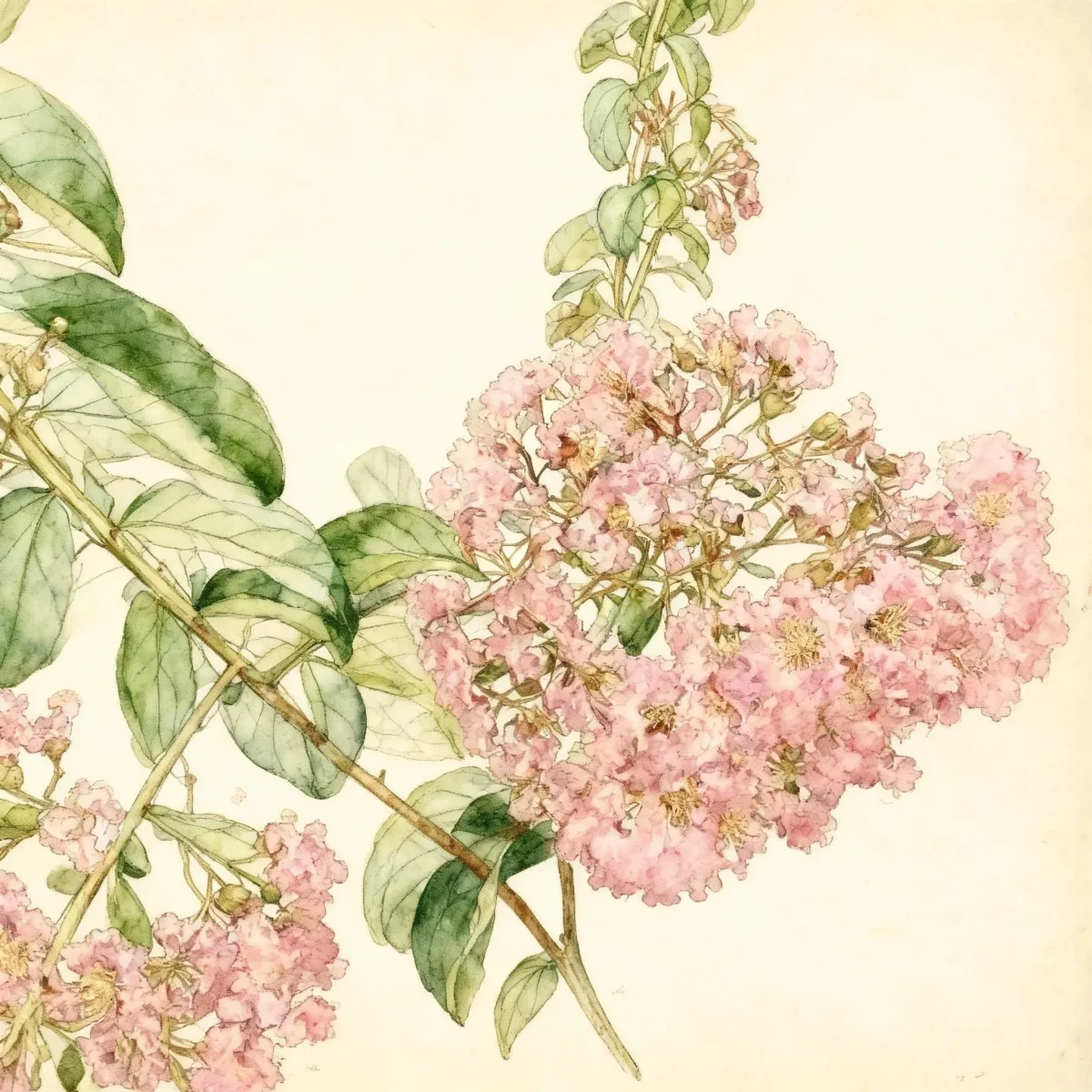
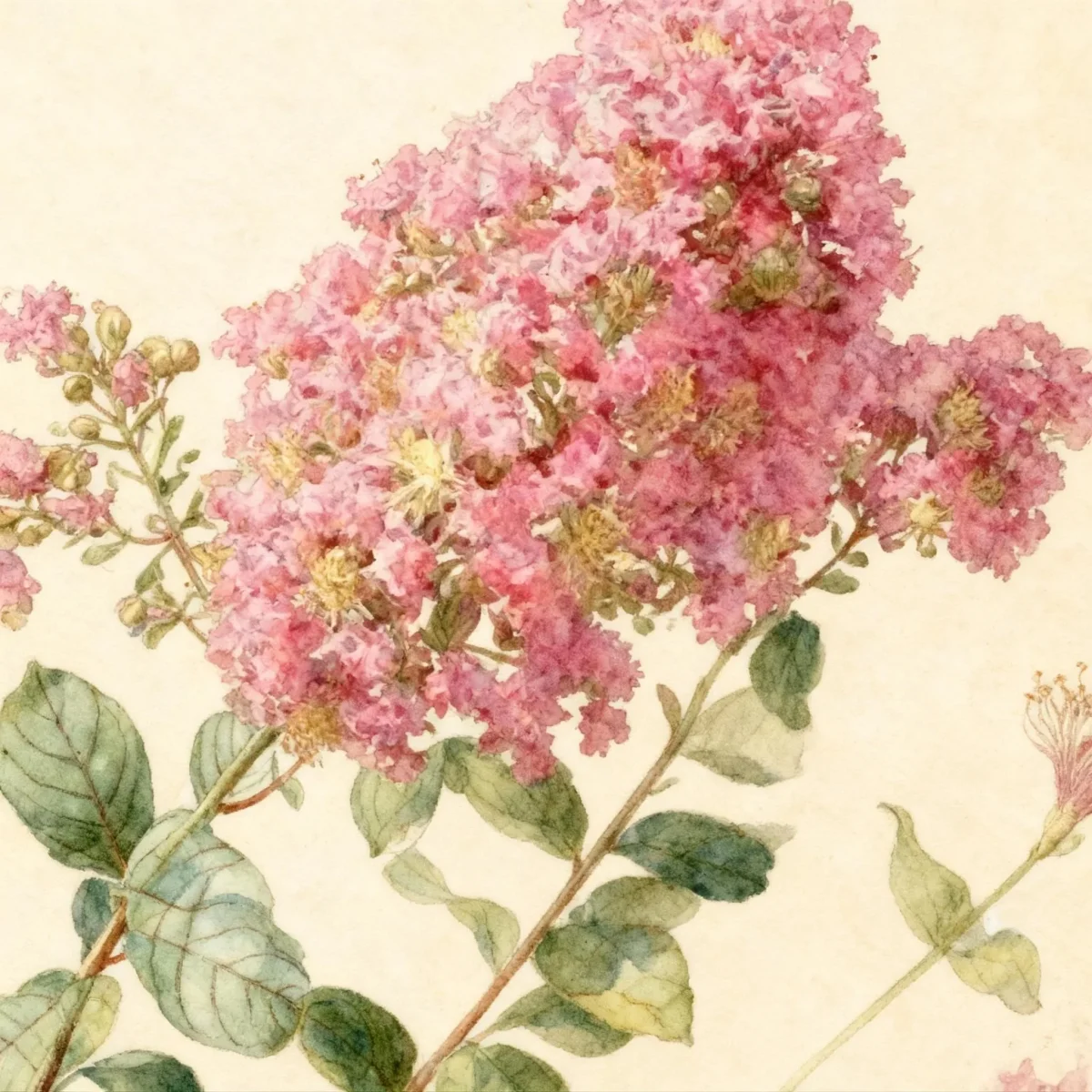
Crape myrtle (Lagerstroemia indica 'Splash of Pink')
Lagerstroemia indica 'Splash of Pink' is a versatile Crape myrtle boasting showy pink, white, and bicolor blooms from mid-summer to fall.

Bloom Boldly, No Matter the Season - Sweatshirt
Cozy organic cotton sweatshirt featuring our exclusive Purple Coneflower design. Perfect for gardeners who bloom year-round.
Inspired by the beautiful Crape myrtle
Limited first batch (50) — join the waitlist for early access
Waitlist closes Feb 15, 2026.
Complete Plant Information
Field Guide Continues
Ready for care notes, companion picks, and planting tips?
The map is just the start. The full guide below covers growth habits, seasonal performance, and landscape uses.
Overview
The Lagerstroemia indica ‘Splash of Pink’ is a highly desirable cultivar of the Crape myrtle, celebrated for its extended blooming season that brings vibrant color from mid-summer well into the early fall months. This deciduous shrub offers excellent ornamental value through its crepe-papery flowers and attractive exfoliating bark, making it a focal point in any sunny garden setting. While celebrated across warmer climates, the ‘Splash of Pink’ Crape myrtle offers reliable summer flowering even in regions where winter pruning may be necessary. Gardeners planting Lagerstroemia indica ‘Splash of Pink’ can expect a versatile mid-sized shrub that performs beautifully as a specimen or integrated into mixed borders.
Fast Facts
- Plant Family: Lythraceae
- Plant Type: Deciduous shrub
- Hardiness Zones: USDA Zones 6-9
- Size at Maturity:
- Height: 6-10 ft
- Spread: 4-7 ft
- Bloom Time: July to September
- Bloom Description: Pink, white and bicolor
- Sun Exposure: Full sun
- Water Needs: Medium
- Maintenance Level: Medium
How to Grow
Plant Lagerstroemia indica ‘Splash of Pink’ in average, medium-moisture, well-drained soils, ensuring it receives full sun exposure for the best flowering performance. This cultivar adapts reasonably well to loamy or clay soils, provided drainage is adequate. Applying a slow-release fertilizer can benefit growth, but avoid overly fertile conditions, which promote excessive foliage at the expense of blooms and may increase susceptibility to winter injury.
Water deeply, targeting the root zone, especially during dry periods, but take care to avoid wetting the foliage, which can encourage disease. In cooler zones (5-6), plant in protected locations and apply a winter mulch to help safeguard the roots. Where harsh winters cause dieback, prune stems back to about 8 inches in early spring; new stems will emerge vigorously, flowering on the current season’s growth.
For gardeners in marginally hardy areas, be prepared for this Crape myrtle to behave more like a large perennial, cutting back dead top growth in spring to encourage fresh shoots that will flower later that summer. Understanding the root hardiness (often Zone 5) versus the top growth hardiness (often Zone 7) is key to successfully managing Lagerstroemia indica ‘Splash of Pink’.
Landscape Uses
The moderate size of Lagerstroemia indica ‘Splash of Pink’, typically reaching 6 to 10 feet tall, makes it exceptionally useful where larger tree-form Crape myrtles might overwhelm a space. It excels as a specimen shrub, providing a burst of mid-to-late summer color when many other shrubs are finished blooming. Consider planting it in groups to create an informal screen or use it effectively within shrub borders where its exfoliating bark can be appreciated year-round. In the South, where winter dieback is not an issue, this plant functions perfectly as an informal hedge, adding continuous floral interest.
Standout Features
Flower Qualities
- Showy
- Good Cut
Noteworthy Characteristics
Lagerstroemia indica, commonly known as crape myrtle, is valued for its long bloom period, superb fall color, and distinctive exfoliating bark. The ‘Splash of Pink’ cultivar specifically produces terminal inflorescences of pink, white, and bicolor flowers measuring 6 to 12 inches long from mid-summer into fall. Its leaves display attractive yellow-orange-red tones before dropping, ensuring seasonal interest beyond the blooms.
Tolerances
- Drought
- Clay Soil
- Air Pollution
Potential Problems
The primary disease challenges for Crape myrtles include fungal leaf spot and powdery mildew; note that ‘Splash of Pink’ reportedly possesses only fair resistance to mildew. To manage this, ensure good air circulation around the plant and water the soil, not the leaves. Chlorosis, or yellowing foliage, can occur if the soil pH is too alkaline. Minor pest issues include scale and aphids. In USDA Zones 5 and 6, severe winter injury to above-ground stems is common, requiring annual pruning back to 8 inches in early spring.
Frequently Asked Questions
What hardiness zones is Crape myrtle suitable for?
This cultivar, Lagerstroemia indica ‘Splash of Pink’, thrives in USDA Zones 6 through 9.
How large does Lagerstroemia indica ‘Splash of Pink’ grow?
It typically matures to a height between 6 and 10 feet, with a spread ranging from 4 to 7 feet.
What sun exposure does Crape myrtle need?
This plant requires full sun exposure to achieve its best performance and most abundant flowering.
When does Crape myrtle bloom?
The blooming period for this variety is extensive, running from July through September, offering shades of pink, white, and bicolor flowers.
Conclusion
The Lagerstroemia indica ‘Splash of Pink’ provides superb, long-lasting summer color and excellent structural interest due to its unique bark, making it a valuable addition to almost any sunny landscape. By understanding its moderate maintenance needs and its sensitivity to cold in the northern reaches of its range, gardeners can ensure a successful display of this beautiful Crape myrtle. Always check your local USDA zone before planning your placement for this vibrant shrub.
Design Ideas
When incorporating Lagerstroemia indica ‘Splash of Pink’ into a formal design, use matching shrubs planted symmetrically along a walkway or entrance to create structure. Because of its stunning mid-summer bloom, pair it with spring-flowering shrubs like lilacs or early azaleas to layer seasonal interest and ensure continuous garden activity. Where space is limited, utilize its manageable 6-10 foot height near the middle or back of a mixed perennial border, allowing shorter sun-loving perennials to soften the edges.
Companion Planting
Given the full sun and medium water needs of the Crape myrtle, companion plants should share similar preferences to thrive alongside the Lagerstroemia indica ‘Splash of Pink’. Consider utilizing heat-tolerant, drought-tolerant perennials such as Coneflowers (Echinacea), Russian Sage (Perovskia atriplicifolia), or ornamental grasses like Little Bluestem for textural contrast when the myrtle is in bloom. These drought-tolerant partners will not compete aggressively for resources during dry spells, promoting the health of your Crape myrtle display.