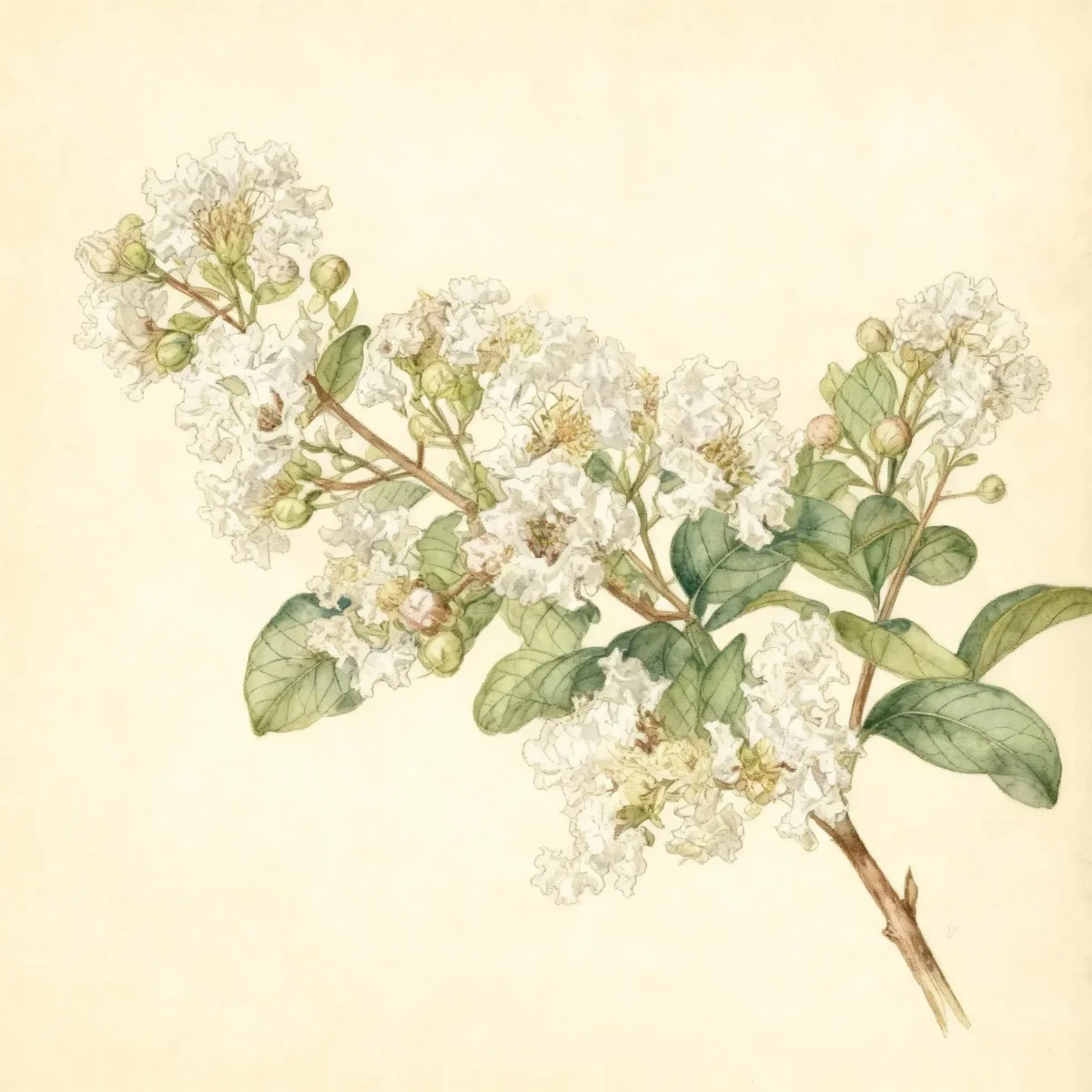
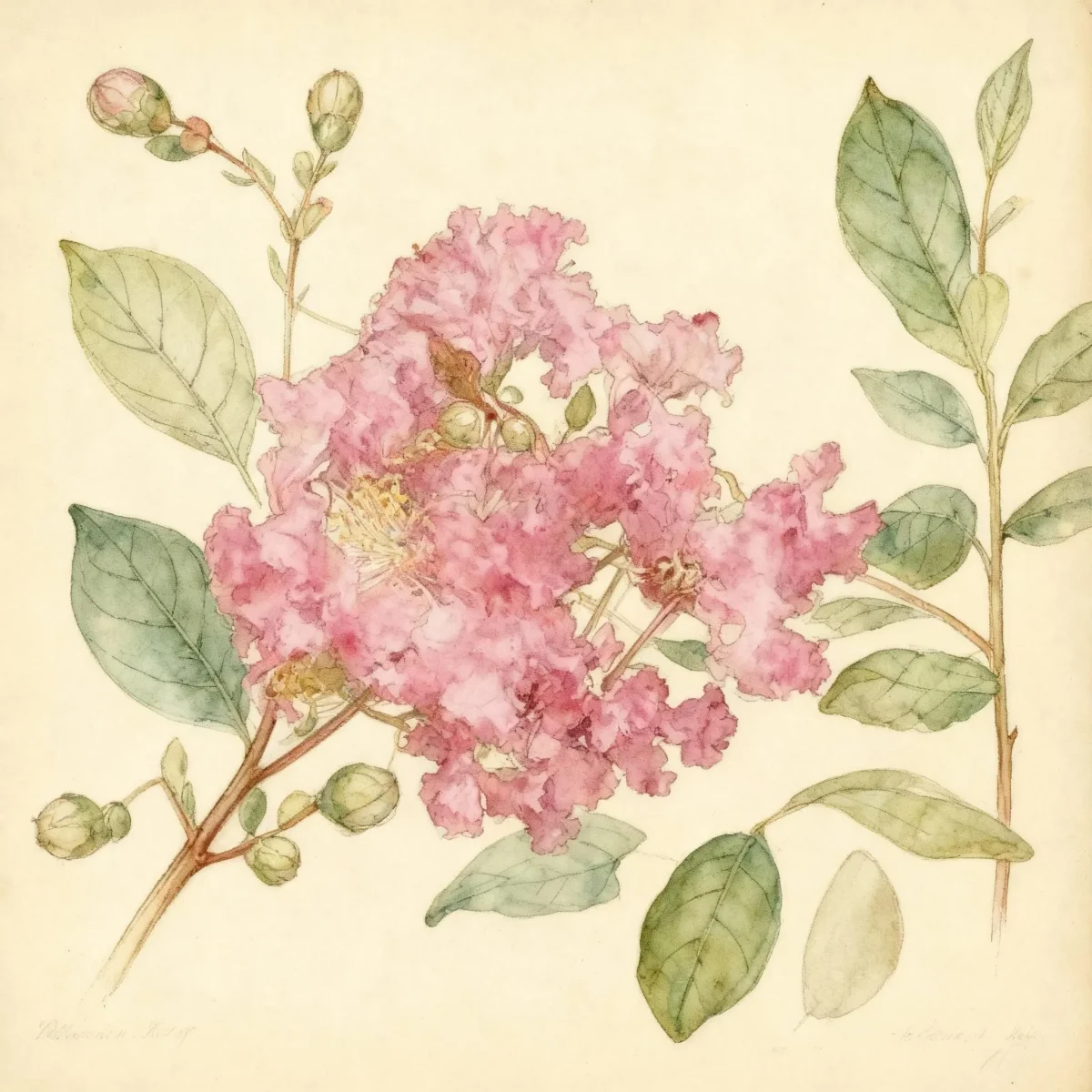
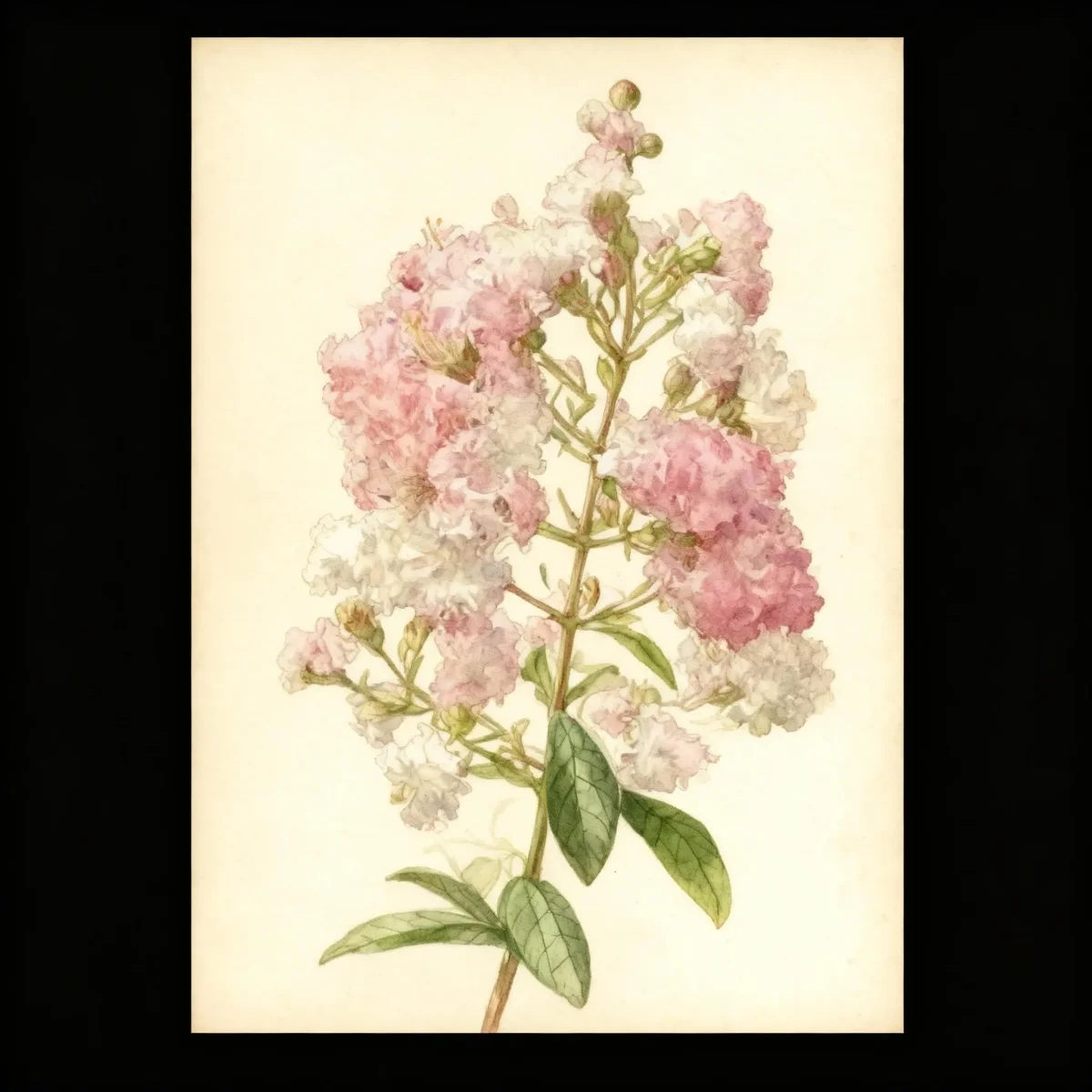
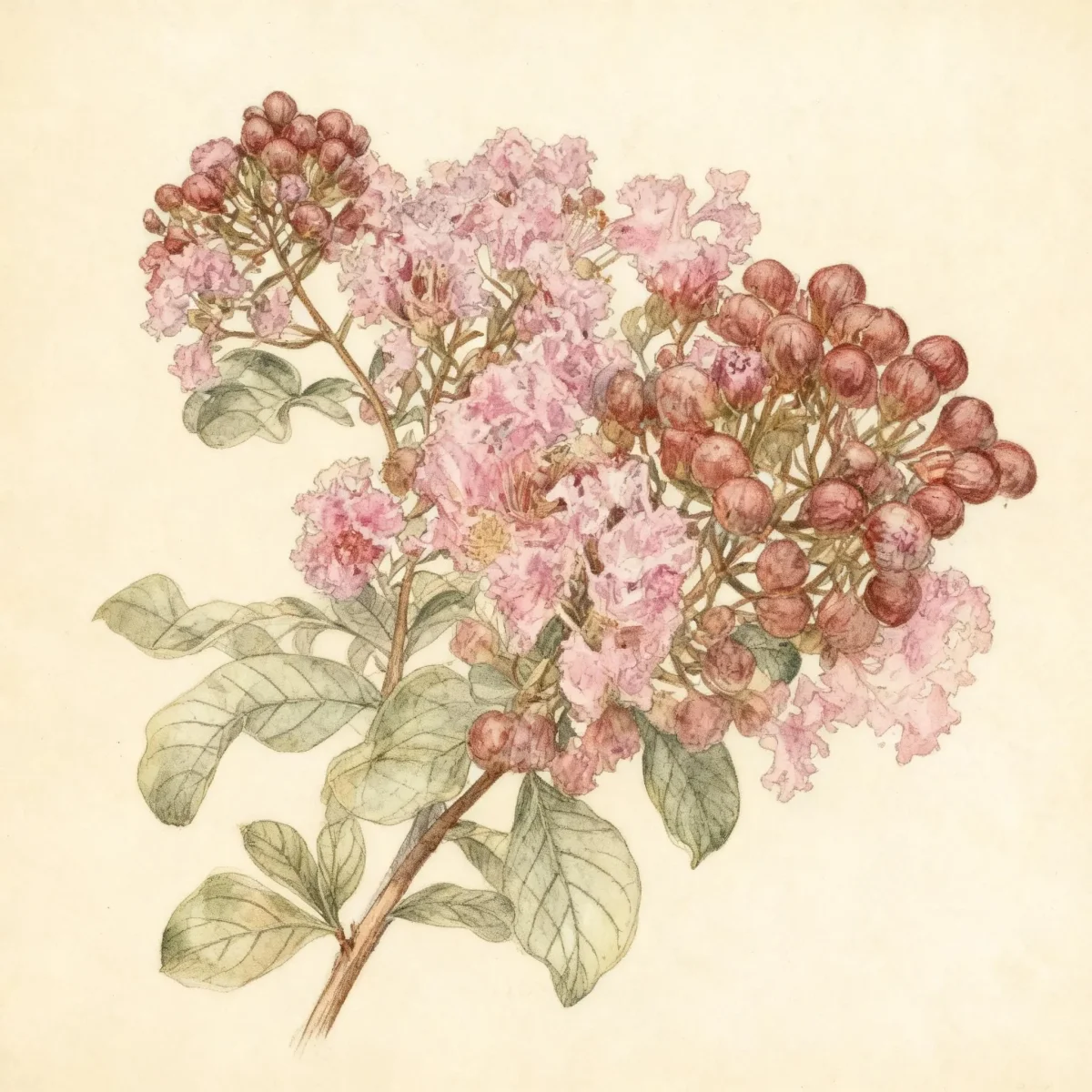
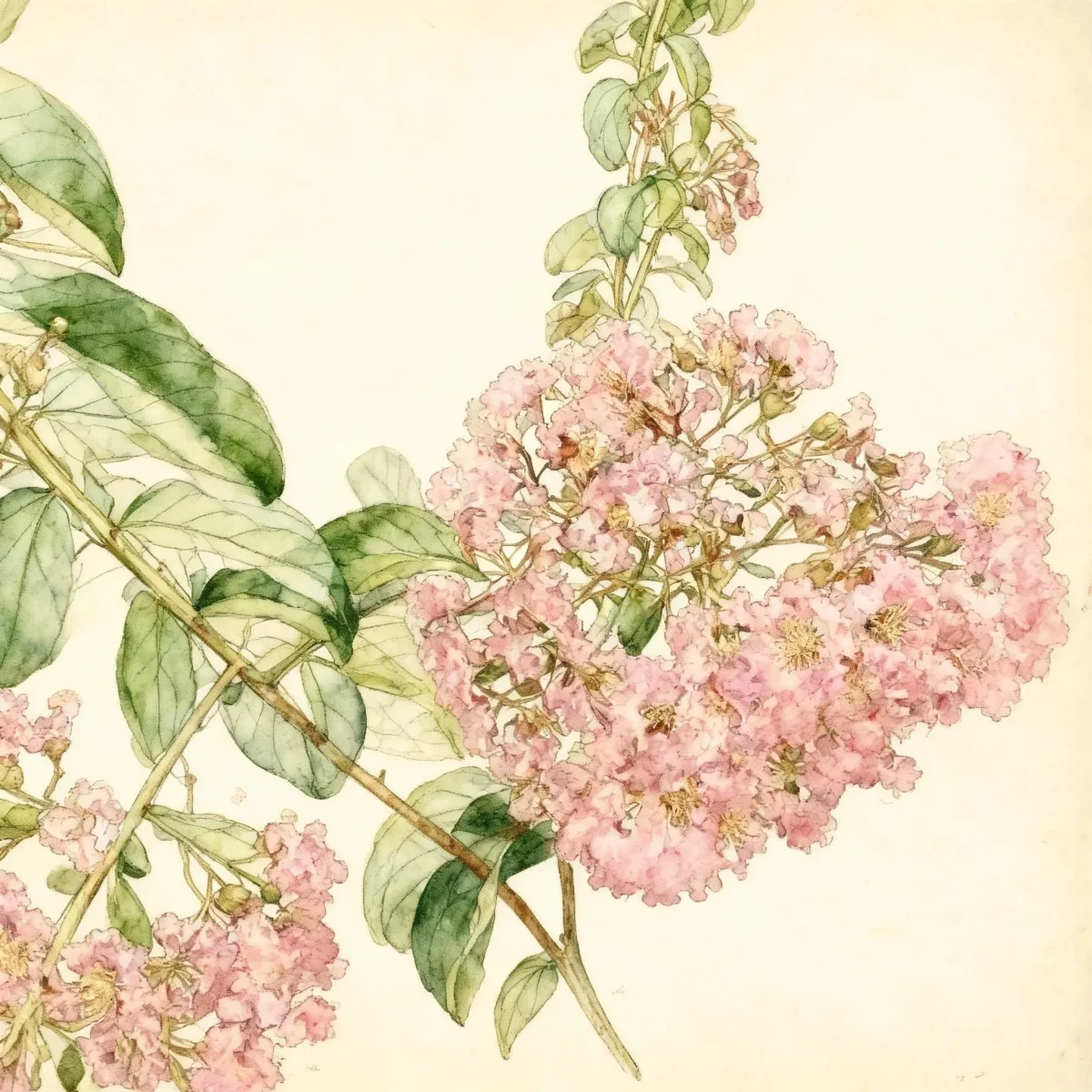
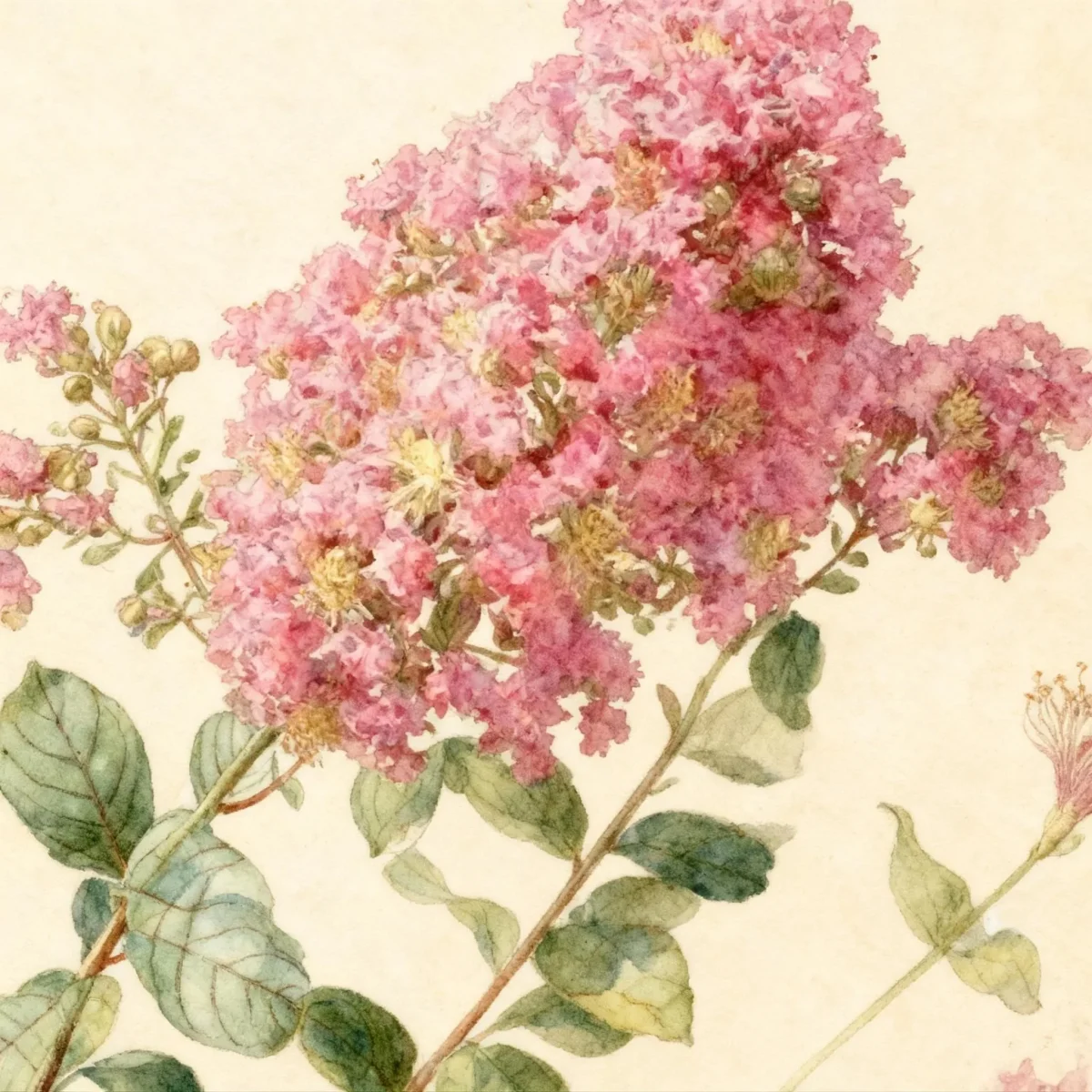
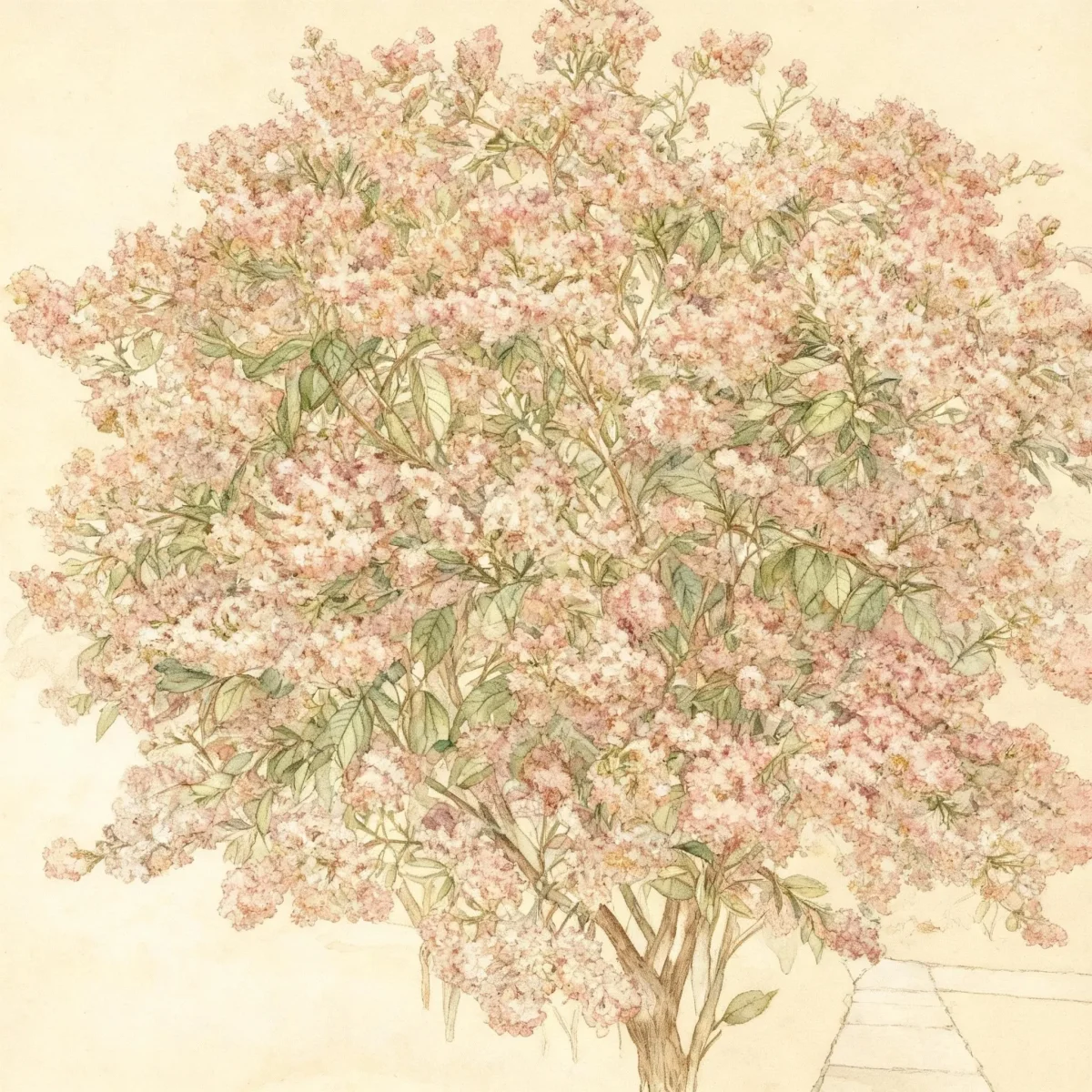
Crape myrtle (Lagerstroemia indica 'Watermelon Red')
Lagerstroemia indica 'Watermelon Red' is a striking Crape myrtle offering brilliant red summer blooms and excellent pollution tolerance.

Bloom Boldly, No Matter the Season - Sweatshirt
Cozy organic cotton sweatshirt featuring our exclusive Purple Coneflower design. Perfect for gardeners who bloom year-round.
Inspired by the beautiful Crape myrtle
Limited first batch (50) — join the waitlist for early access
Waitlist closes Feb 15, 2026.
Complete Plant Information
Field Guide Continues
Ready for care notes, companion picks, and planting tips?
The map is just the start. The full guide below covers growth habits, seasonal performance, and landscape uses.
Overview
The Lagerstroemia indica ‘Watermelon Red’ cultivar brings reliable, long-lasting color to the landscape, blooming profusely from mid-summer well into early fall. This specific Crape myrtle is valued for its vibrant red flowers with unique, crepe-papery texture, setting it apart in mixed plantings. Although it fits the general description of a multi-stemmed deciduous shrub, its mature size offers flexibility, ranging from a small shrub to a modest small tree depending on climate and pruning.
This variety exhibits good adaptability, thriving where roots can be established, even tolerating challenging urban conditions such as clay soils and air pollution. Gardeners appreciate the ornamental appeal that continues after flowering, thanks to attractive exfoliating bark and subtle fall coloration. Successfully growing Lagerstroemia indica ‘Watermelon Red’ requires full sun exposure to maximize its spectacular bloom potential.
For those gardening in transition zones, particularly USDA Zones 5 and 6, this Crape myrtle requires attentive winter care, as top growth frequently succumbs to hard freezes, though the roots often survive. Where winters are milder, the plant matures into its fuller size, serving as an excellent specimen or screen accented by its signature ‘Watermelon Red’ display.
Fast Facts
- Plant Family: Lythraceae
- Plant Type: Deciduous shrub
- Hardiness Zones: USDA Zones 6-9
- Size at Maturity:
- Height: 2-10 ft
- Spread: 2-7 ft
- Bloom Time: July to September
- Bloom Description: Red
- Sun Exposure: Full sun
- Water Needs: Medium
- Maintenance Level: Medium
How to Grow
The foundation for a healthy, prolific Lagerstroemia indica ‘Watermelon Red’ is site selection: ensure it receives full sun exposure throughout the day. Plant in average, medium moisture, well-drained soils. This shrub performs well in loamy or clay-based soils, provided drainage is adequate. Immediately after planting, water roots deeply, and continue deep watering, especially during dry spells, taking care to avoid wetting the foliage.
Maintenance involves moderate attention. To encourage abundant flowering, fertilization should be approached cautiously; overly fertile soils promote excessive leafy growth at the expense of blooms and can increase winter susceptibility. A slow-release fertilizer applied sparingly is beneficial. Pruning in the St. Louis area frequently involves cutting back any winter-damaged stems to about 8 inches in early spring, as new flowering wood will sprout from the base or remaining hardy wood before summer.
For overwintering success in marginal Zones 5 and 6, plant Lagerstroemia indica ‘Watermelon Red’ in protected locations if possible and apply a layer of winter mulch around the root zone. Remember that while roots might survive temperatures dipping to Zone 5, the showy top growth is only reliably hardy to Zone 7; expect to prune back dead tips or entire stems annually in colder microclimates.
Landscape Uses
Lagerstroemia indica ‘Watermelon Red’ excels when utilized as a vibrant focal point, making it a superb specimen shrub across the garden. Its manageable height range (2–10 ft) ensures it doesn’t overwhelm smaller beds, yet it remains substantial enough for use in shrub borders or layered perennial groupings. The intense red bloom provides critical summer color contrast against greens and blues.
In the South, where hardiness is less of a concern and the plant trends toward its larger potential, the ‘Watermelon Red’ crape myrtle is exceptionally effective when planted in groups to create an informal hedge or a striking privacy screen. This cultivar benefits from pairing with later-blooming perennials that can fill the space once the spectacular mid-summer show concludes.
Gardeners who appreciate structure can leverage the exfoliating grayish-brown bark as winter interest, ensuring the plant remains attractive even when bare. Plant Lagerstroemia indica ‘Watermelon Red’ where its strong vertical habit can anchor a sunny border without competing with taller, more aggressive shade trees.
Standout Features
Flower Qualities
- Showy
Noteworthy Characteristics
Lagerstroemia indica, commonly known as crape myrtle, is recognized for its long bloom period, attractive exfoliating bark, and superb fall color. The ‘Watermelon Red’ cultivar specifically showcases terminal inflorescences of bright red, crepe-papery flowers from mid-summer until early fall. Its leaves emerge tinged with bronze in spring, mature to dark green, and transition to yellow-orange hues before leaf drop.
Tolerances
- Drought
- Clay Soil
- Air Pollution
Potential Problems
Fungal diseases like powdery mildew and leaf spot are the two primary disease concerns for many crape myrtles, although ‘Watermelon Red’ is reported to possess excellent mildew resistance. Foliage may sometimes yellow (chlorosis) if the soil pH is too alkaline. Watch for minor pest issues like aphids or scale, though severe infestations are uncommon.
The most significant challenge gardeners face with this Crape myrtle in cooler regions (Zones 5 and 6) is winter injury to the above-ground stems. When hard freezes occur below -5°F, top growth often dies back completely. Management requires yearly pruning in early spring, cutting damaged wood back to healthy tissue or the base, allowing new, flowering wood to develop.
Frequently Asked Questions
What hardiness zones is Crape myrtle suitable for?
This Lagerstroemia indica ‘Watermelon Red’ is reliably hardy in USDA Zones 6 through 9.
How large does Crape myrtle grow?
Under ideal conditions, the height ranges from 2 to 10 feet, with a spread between 2 and 7 feet, though southern growth may lean toward the taller end if unpruned.
What sun exposure does Lagerstroemia indica ‘Watermelon Red’ need?
This plant requires full sun exposure to perform optimally, ensuring the best flowering display and overall vigor.
When does Crape myrtle bloom?
The Lagerstroemia indica ‘Watermelon Red’ displays its striking red flowers prominently from July through September.
Conclusion
The Lagerstroemia indica ‘Watermelon Red’ offers vibrant, reliable summer interest backed by noted tolerance to drought, clay, and pollution, making it a highly versatile flowering shrub. This Crape myrtle provides texture through its exfoliating bark alongside its namesake red blooms. Before planting, always verify your local USDA hardiness designation to prepare for appropriate winter maintenance routines.
Design Ideas
When integrating Lagerstroemia indica ‘Watermelon Red’ into your sunny borders, consider pairing it with shrubs that have contrasting foliage texture or color to enhance the drama of the red blooms. Lower-growing companion plants with silvery or blue foliage, such as certain Russian Sage cultivars or Blue Fescue, create a beautiful complementary palette that makes the red truly pop during peak season.
For larger foundation plantings or specimen placement, ensure adequate space is left to allow the multi-stem structure to develop naturally, showcasing the exfoliating bark in winter. In contemporary landscapes, a single, well-placed ‘Watermelon Red’ against a pale stucco or stone backdrop highlights its clean form and intense mid-summer color splash.
Companion Planting
Since this Crape myrtle thrives in full sun and medium, well-drained soil, companion plants should share these demanding light requirements. Consider pairing it with drought-tolerant perennials like Coneflowers (Echinacea) or Black-Eyed Susans (Rudbeckia) which share the July-September bloom window, extending the season of interest.
Avoid planting moisture-loving acid-lovers directly beneath the dripline, as Crape myrtles are moderately drought-tolerant once established. For groundcover beneath the shrub, select low-growing sedums or creeping thyme, especially in hotter exposures, as these selections require minimal supplemental water and won’t compete heavily with the root systems of the shrub.