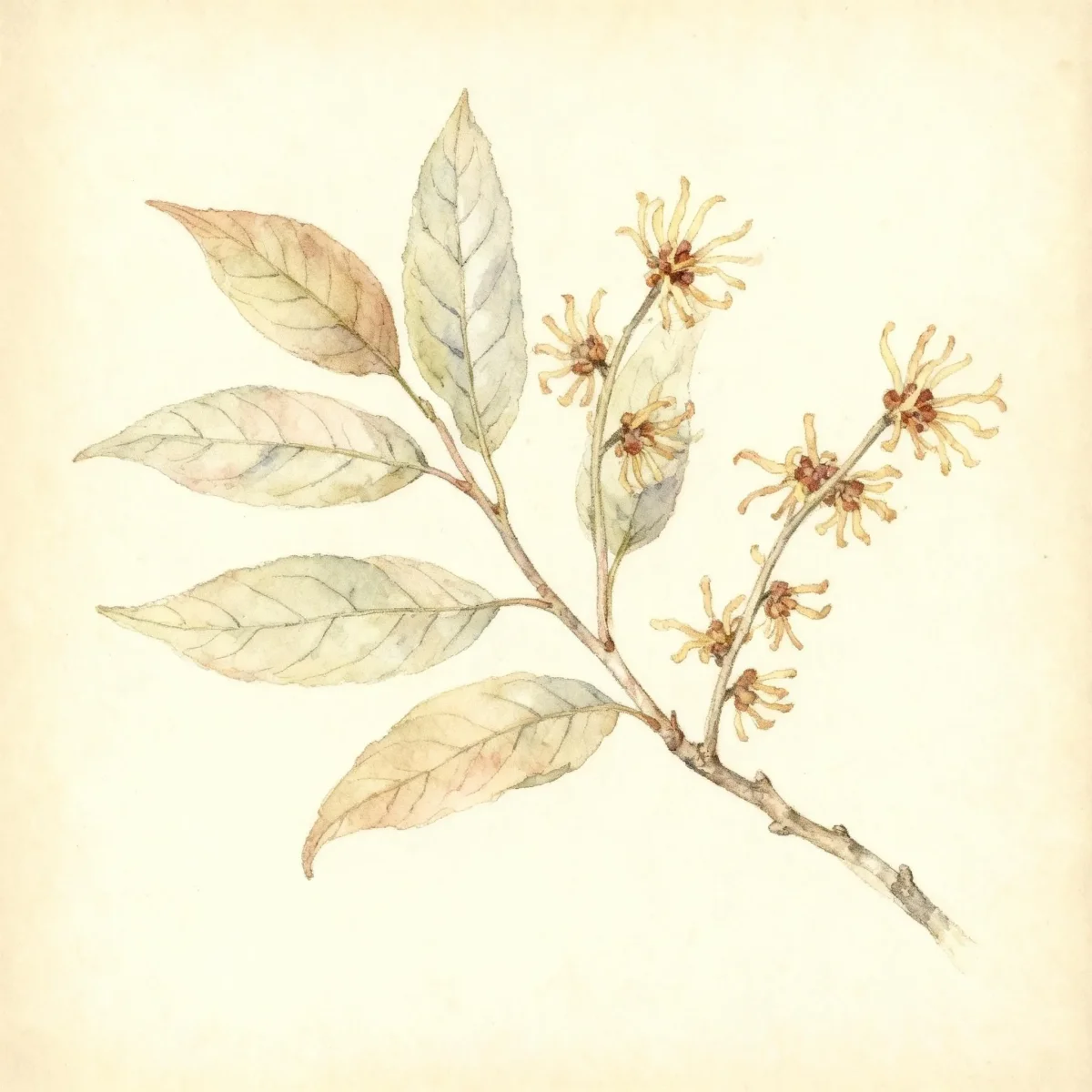
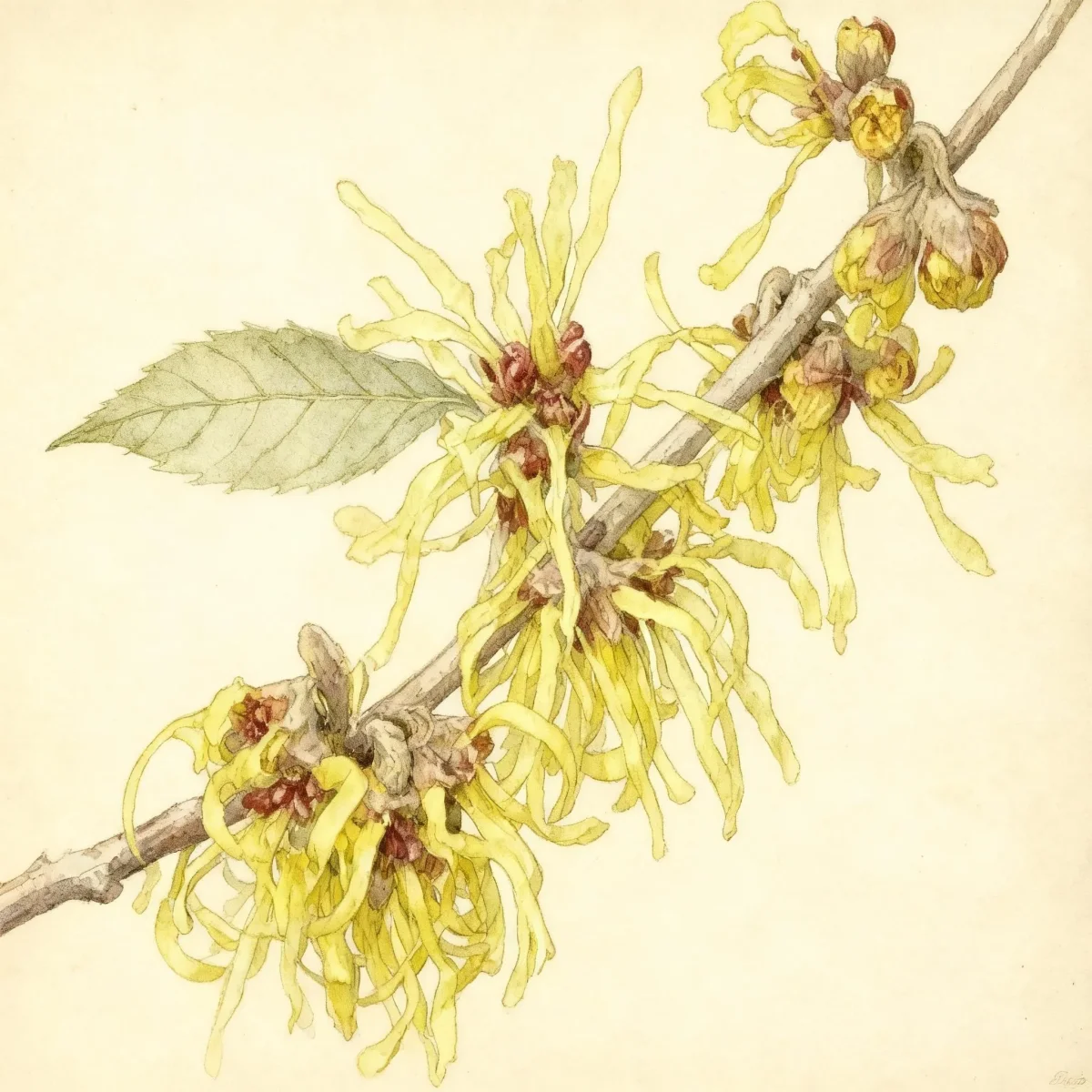
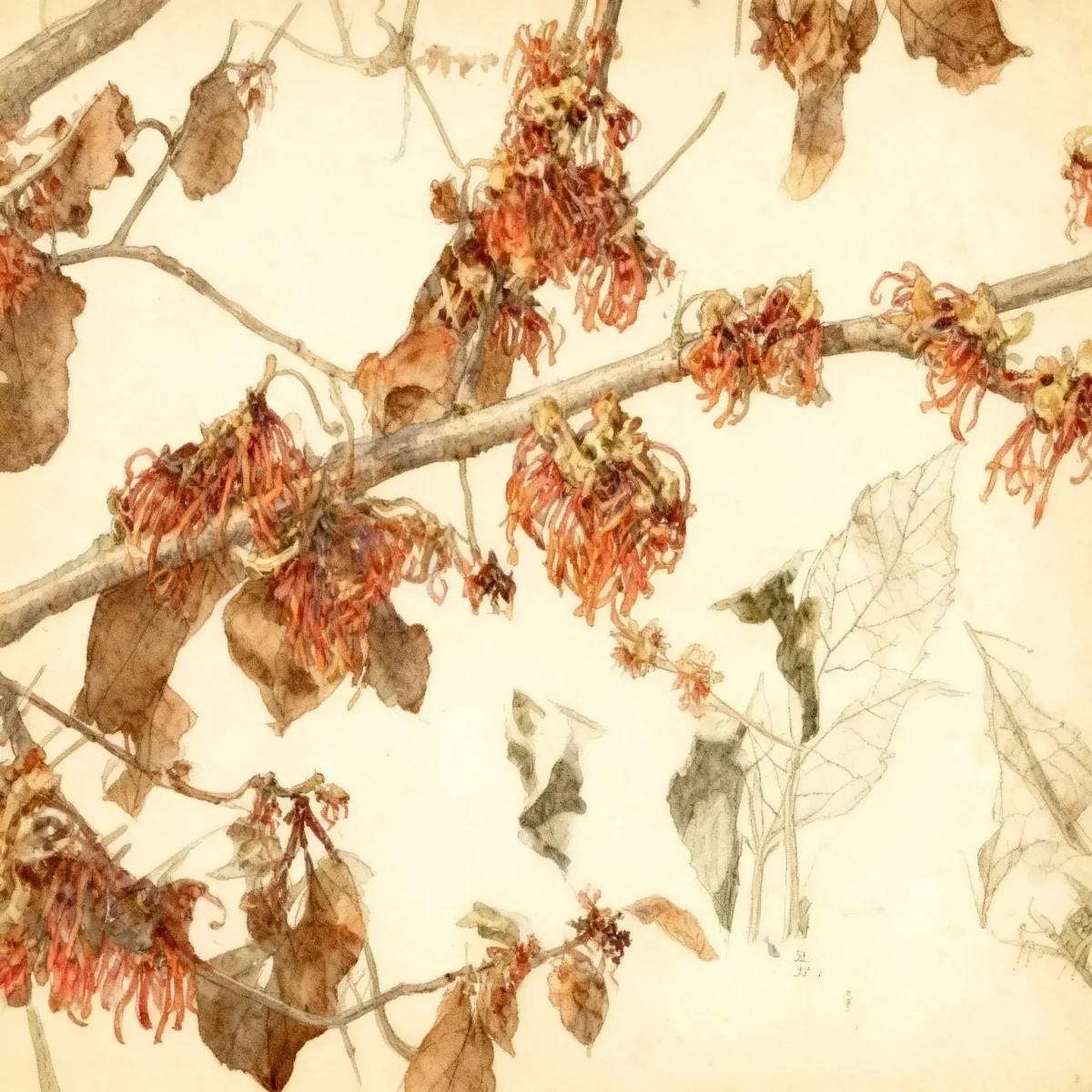
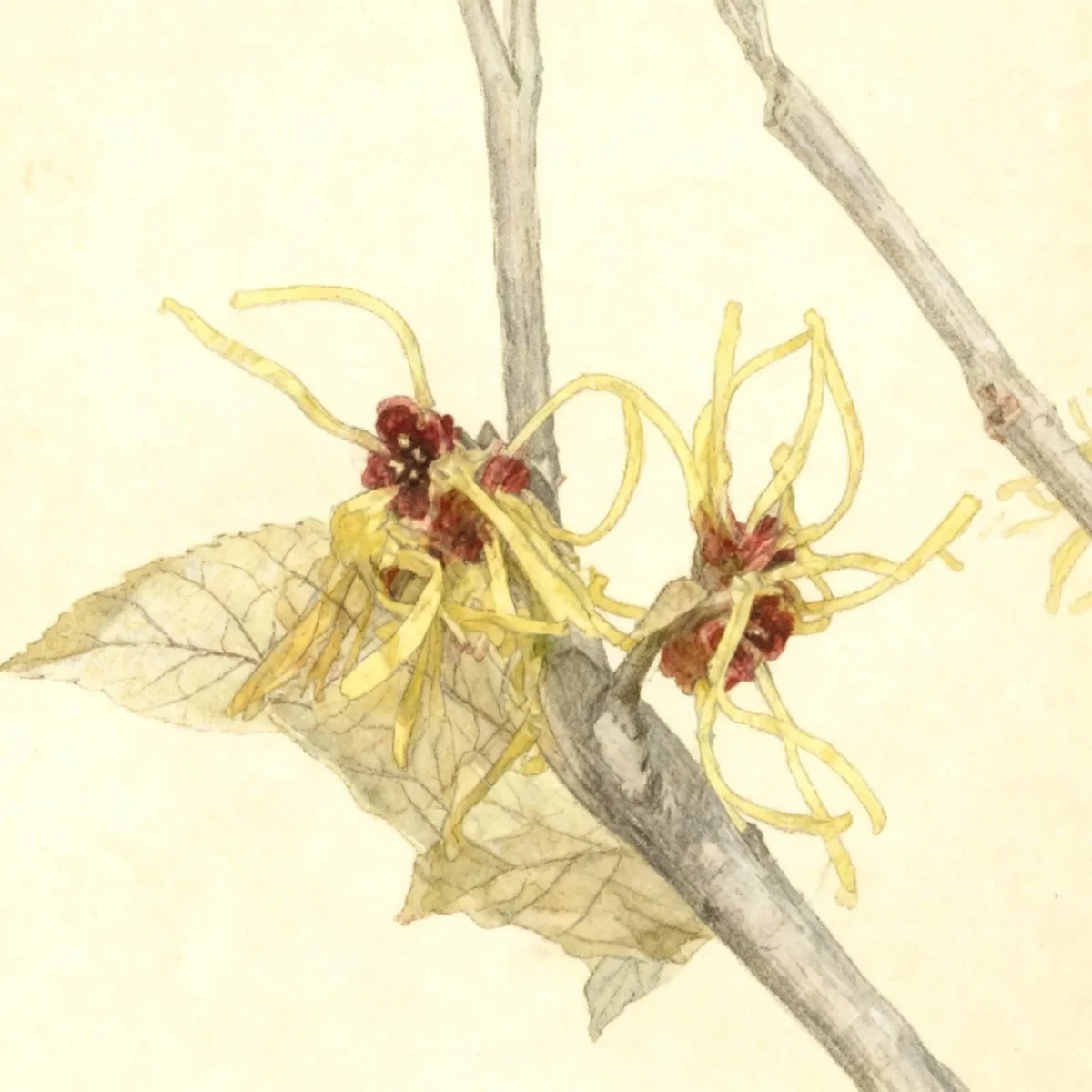
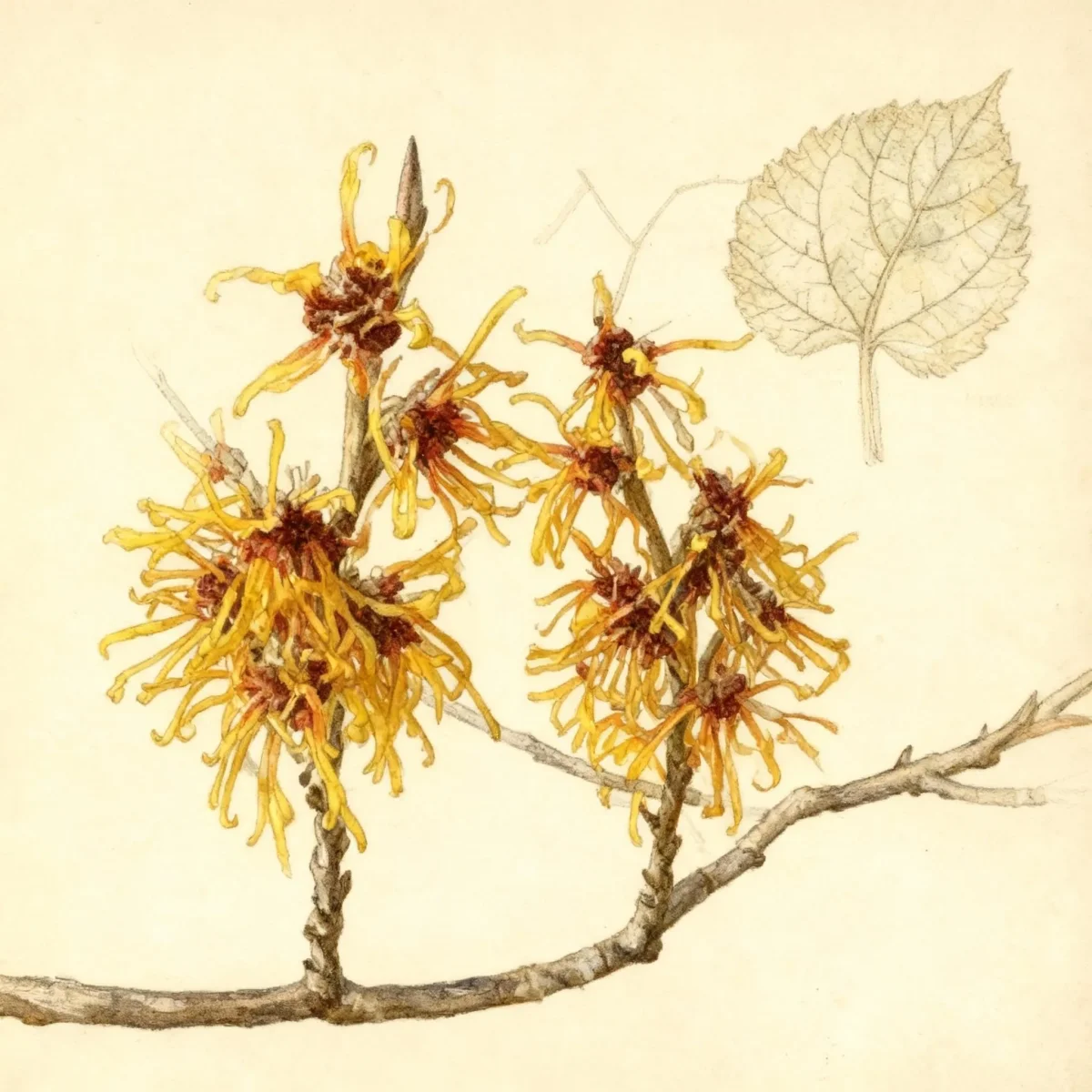
Witch hazel (Hamamelis × intermedia 'Early Bird')
Hamamelis × intermedia 'Early Bird' is an early, cold-hardy Witch hazel celebrated for mid-winter yellow blooms before foliage emerges.

Bloom Boldly, No Matter the Season - Sweatshirt
Cozy organic cotton sweatshirt featuring our exclusive Purple Coneflower design. Perfect for gardeners who bloom year-round.
Inspired by the beautiful Witch hazel
Limited first batch (50) — join the waitlist for early access
Waitlist closes Feb 15, 2026.
Complete Plant Information
Field Guide Continues
Ready for care notes, companion picks, and planting tips?
The map is just the start. The full guide below covers growth habits, seasonal performance, and landscape uses.
Overview
Hamamelis × intermedia ‘Early Bird’ offers vital winter interest, making it a highly sought-after shade-tolerant shrub. As an early blooming Witch hazel hybrid, it produces striking, ribbon-like pale yellow flowers directly on its bare stems, often signaling the very end of winter. This cultivar matures into a compact, upright shrub, providing excellent structure when most other plants are dormant.
This deciduous shrub is valued not only for its timely flowers but also for its reliable, low-maintenance nature in suitable environments. Hamamelis × intermedia ‘Early Bird’ bridges the gap between the late-flowering native witch hazels and other early spring bloomers, providing essential structure and color months ahead of schedule. It is a standout specimen for any cold-climate garden seeking multi-season appeal.
Fast Facts
- Plant Family: Hamamelidaceae
- Plant Type: Deciduous shrub
- Hardiness Zones: USDA Zones 5-8
- Size at Maturity:
- Height: 7-9 ft
- Spread: 7-9 ft
- Bloom Time: January to February
- Bloom Description: Pale yellow petals
- Sun Exposure: Full sun to part shade
- Water Needs: Medium
- Maintenance Level: Low
How to Grow
Plant Hamamelis × intermedia ‘Early Bird’ in spring or fall, allowing it time to establish before the stresses of summer drought. Choose a location providing full sun for the absolute best flowering performance, although it tolerates part shade, keep in mind moisture retention is crucial in sunny spots. These shrubs thrive in average, well-drained soils that are organically rich and slightly acidic.
Watering should be consistent, especially during dry periods, as Witch hazel is susceptible to leaf scorch if allowed to dry out completely during summer. While it has some tolerance for clay soils, ensuring excellent drainage is key to its success. Very little fertilization is usually required if the soil is organically rich to begin with.
Pruning should be handled judiciously, taking place in the spring immediately after all flowering has ceased. Focus pruning efforts on removing errant branches or suckers to maintain the desired shape and size. It is vital to promptly remove any root suckers that emerge below the graft union to maintain the cultivar’s true characteristics.
Landscape Uses
The compact size and reliable winter color make Hamamelis × intermedia ‘Early Bird’ a superior choice for winter-flowering displays. It functions excellently as a focal point or specimen plant where its unique blooms can be appreciated up close against a dark evergreen backdrop. Consider placing it near walkways or windows for maximum seasonal viewing enjoyment.
These shrubs are also effective when utilized in shrub borders, transitioning gracefully between the deep structure of evergreens and the lighter perennials of the understory. While it is an excellent screening option due to its density, remember that its beauty peaks in winter when leaves are absent. The tolerance of Hamamelis × intermedia ‘Early Bird’ for erosion control makes it useful on gently sloped areas.
Standout Features
Flower Qualities
- Showy
Noteworthy Characteristics
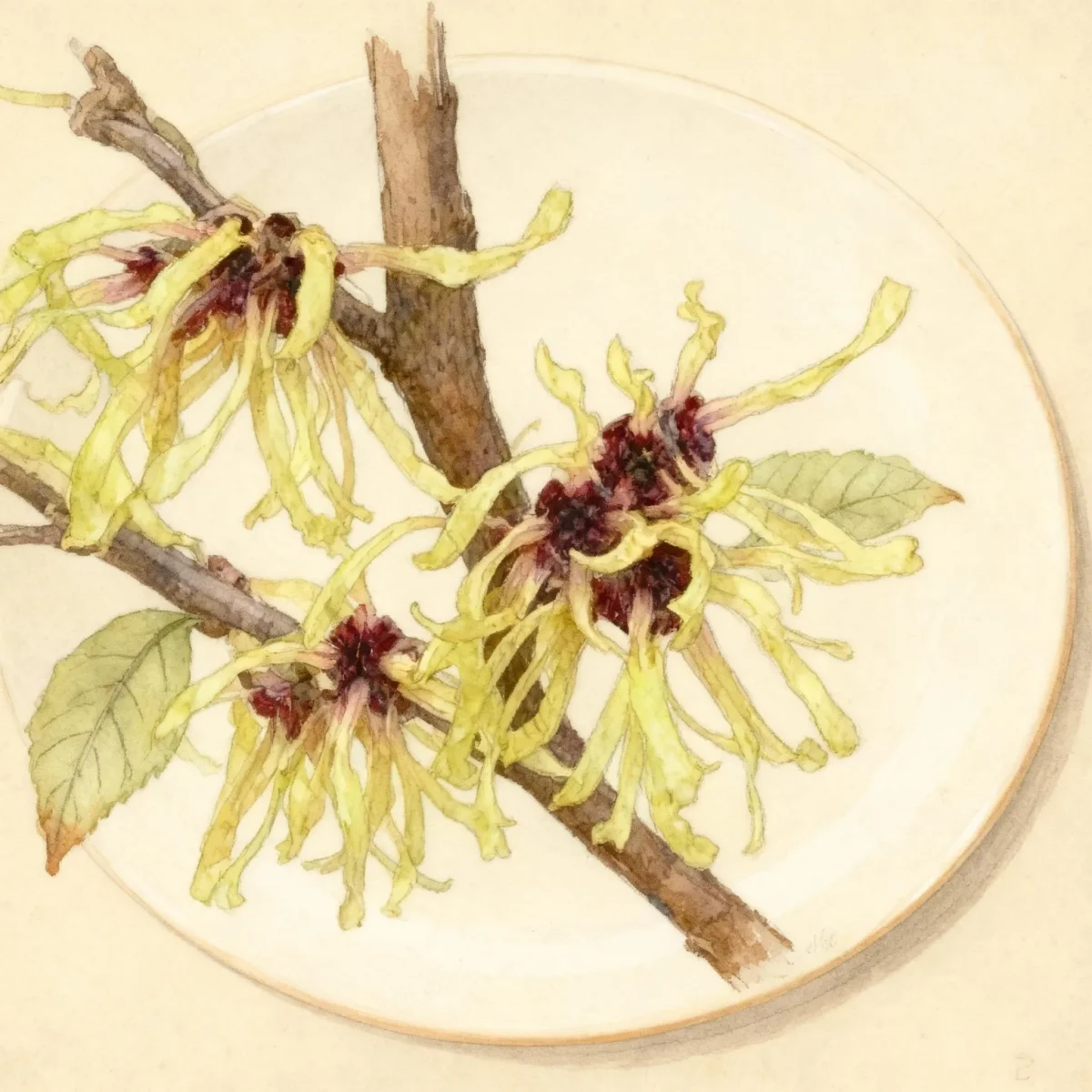
Hamamelis × intermedia hybrids are crosses between Japanese witch hazel (H. Japonica) and Chinese witch hazel (H. Mollis). They are particularly noted for their spidery, mid- to late winter flowers which appear before the spring foliage emerges. The cultivar ‘Early Bird’ matures into a compact form, typically 7-9’ tall, featuring showy flowers in axillary clusters along the bare stems throughout mid-winter. Each flower displays four narrow, ribbon-like, curled pale yellow petals contrasted by a maroon-red calyx.
Tolerances
- Deer
- Erosion
- Clay Soil
Potential Problems
Though generally low maintenance, gardeners should be watchful for a few common pests and diseases affecting Hamamelis × intermedia ‘Early Bird’. Caterpillars and Japanese beetles might chew on the leaves during the summer growing season. Watch for signs of gall aphids, scale insects, leafrollers, or leafminers, though severe infestations are rare.
Potential diseases include powdery mildew, which can appear unsightly, and occasional leaf spots or rots, primarily if air circulation is poor or the site stays too wet. If insect or disease issues arise, they are usually minor and rarely necessitate chemical intervention, fitting the low-maintenance profile of this Witch hazel variety.
Frequently Asked Questions
What hardiness zones is Witch hazel suitable for?
Hamamelis × intermedia ‘Early Bird’ is best suited for USDA Hardiness Zones 5 through 8. Ensure your planting location falls within these parameters for reliable winter survival and blooming.
How large does Hamamelis × intermedia ‘Early Bird’ grow?
This cultivar reaches a mature height and spread typically between 7 and 9 feet, maintaining a comparatively compact and upright shrub form.
When does Witch hazel bloom?
This specific Witch hazel variety is one of the earliest bloomers, showing off its distinctive flowers from January into February, appearing on bare wood before the green foliage develops.
What sun exposure does Hamamelis × intermedia ‘Early Bird’ need?
For optimal flowering, this shrub performs best in full sun, though it will tolerate partial shade. Consistent moisture is required regardless of light level to prevent leaf scorch.
Conclusion
Hamamelis × intermedia ‘Early Bird’ is an indispensable landscape asset, delivering vibrant, unique color during the coldest months when little else is growing. Its relatively compact nature and low maintenance requirements make this Witch hazel a practical and rewarding choice for winter garden interest. Before planting, confirm your site offers medium moisture and good drainage so this spectacular shrub can thrive.
Companion Planting Scenarios
To enhance the winter landscape around your Hamamelis × intermedia ‘Early Bird’, select companions that offer color or texture during its bloom window. Consider grouping it near later-blooming evergreen shrubs like Japanese Andromeda (Pieris japonica) for a textural contrast once the Witch hazel finishes flowering. In the spring, low-growing, acid-loving bulbs such as snowdrops or early daffodils provide a bright base layer under the developing foliage of the shrub.
For woodland garden settings where moisture is plentiful, ferns or Hellebores (Lenten Rose) make excellent groundcover companions. Hellebores bloom concurrently with or shortly after the Hamamelis, creating sequential interest. Since this Witch hazel prefers acidic soil conditions, ensure any accompanying plants share this preference to minimize soil amendments.
Seasonal Care Calendar
Mid-to-Late Winter (January/February): This is the prime viewing season for your Hamamelis × intermedia ‘Early Bird’. Shelter the plant from harsh, drying winds if possible to maximize the viewing quality of the blooms, although it is naturally hardy.
Early Spring (March/April): As flowers fade, assess the structure. Prune lightly after flowering concludes, focusing on shaping and removing any crossing branches. Be vigilant about removing suckers growing below the graft line immediately.
Summer (June-August): Maintain consistent deep watering, especially if planted in full sun, to prevent summer drought stress and potential leaf scorch. Mulching helps retain this crucial moisture.
Autumn (September-November): The foliage of this Witch hazel often develops attractive yellow tones with maroon highlights, adding secondary seasonal color before leaf drop. Prepare the soil by ensuring it is moist before the ground freezes hard begins.