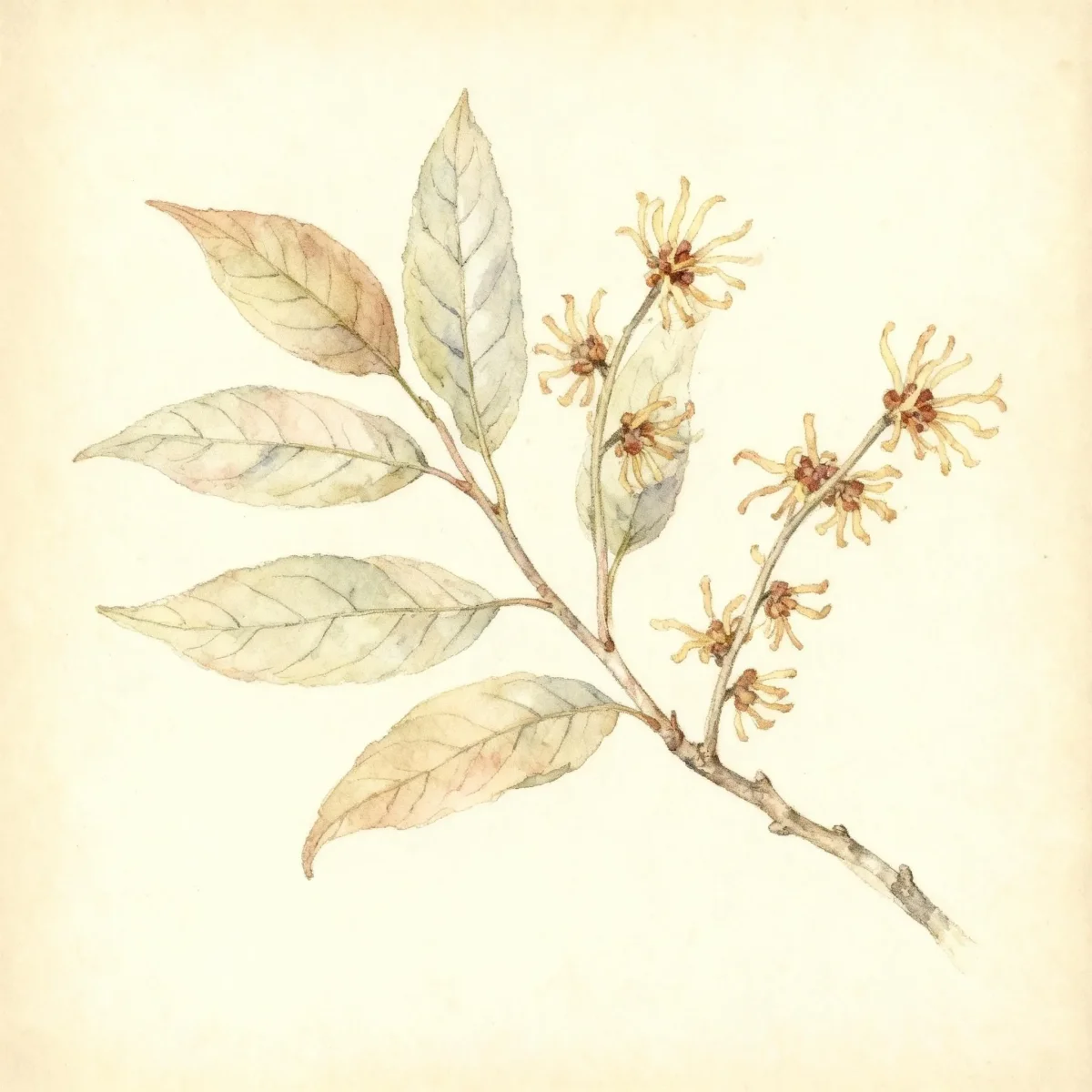
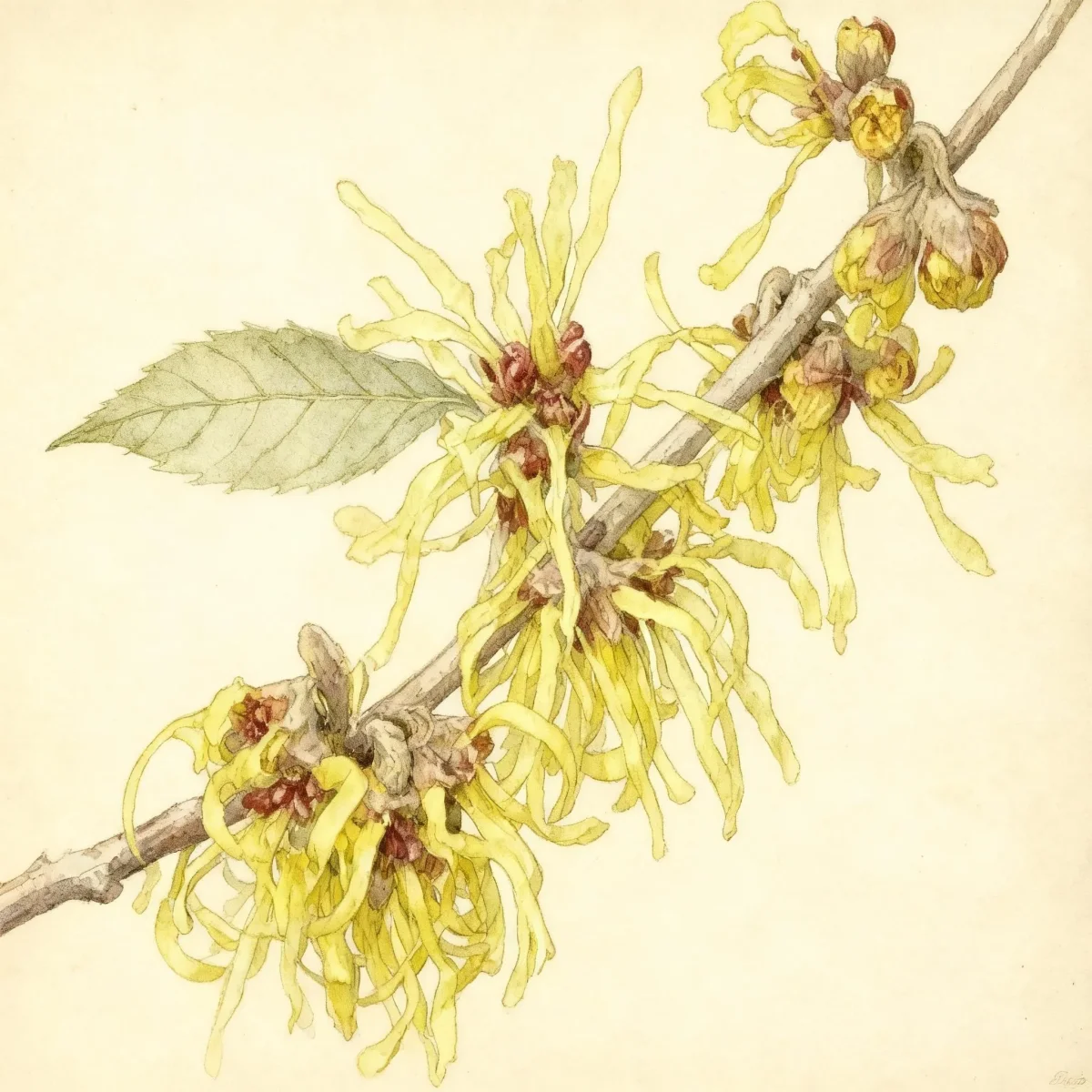
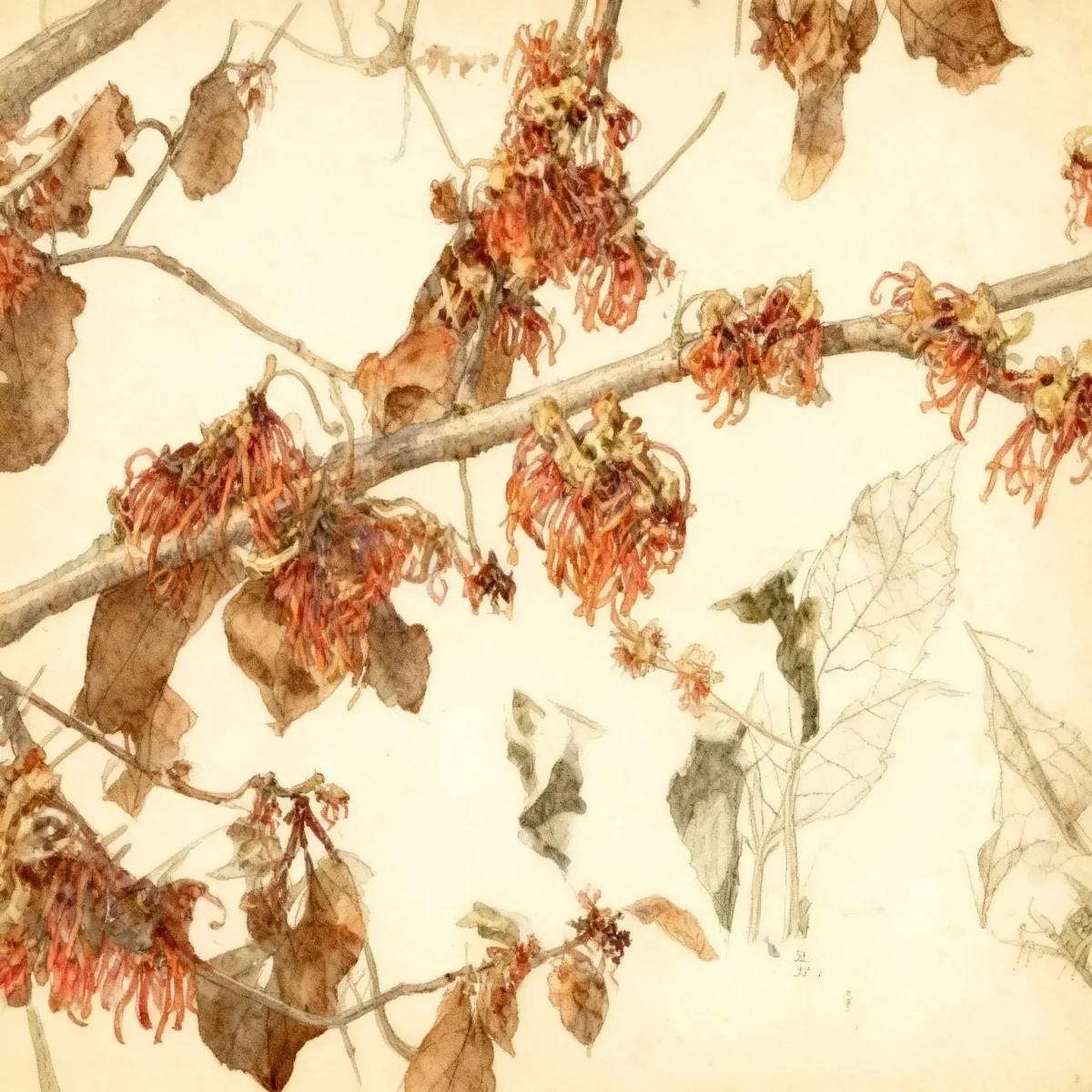
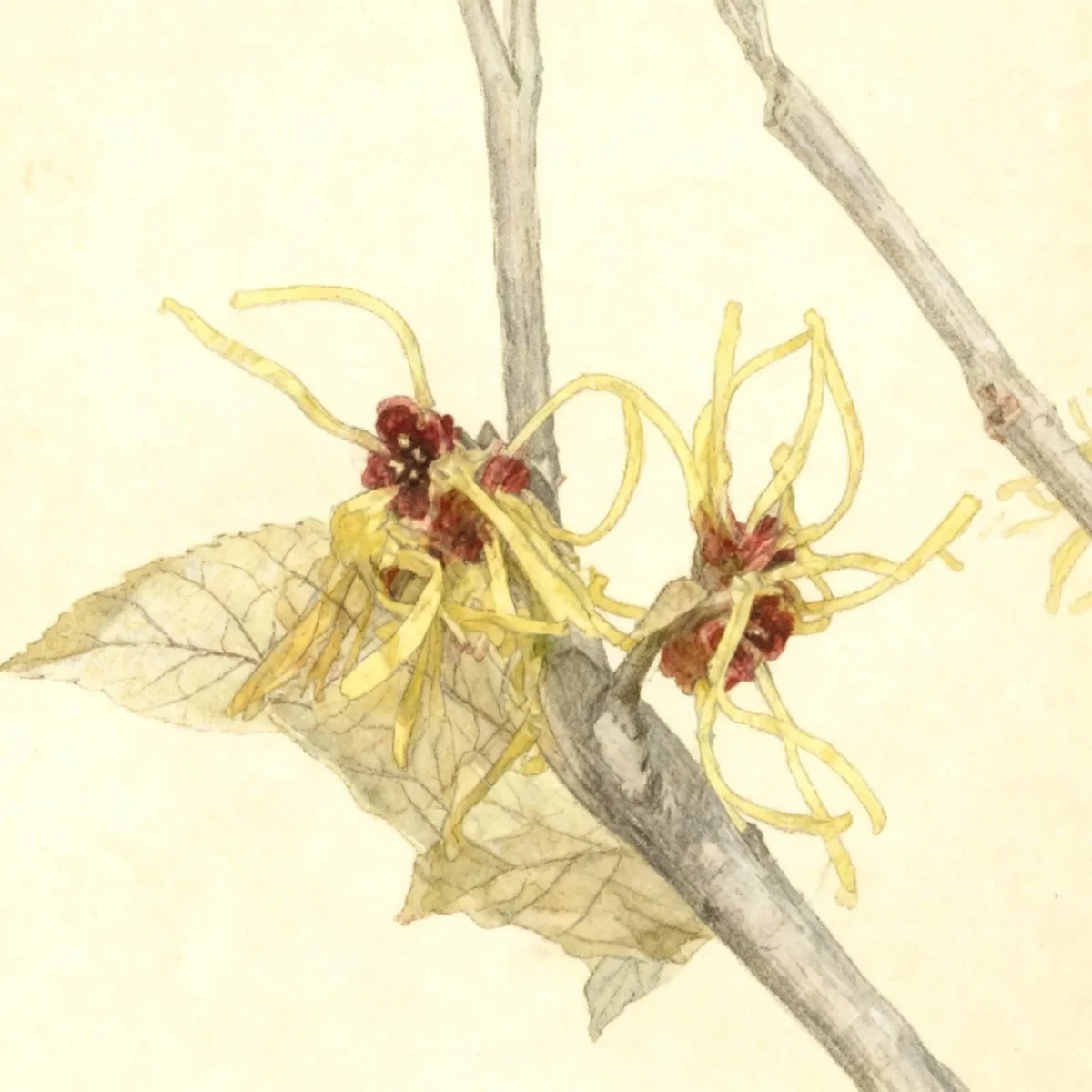
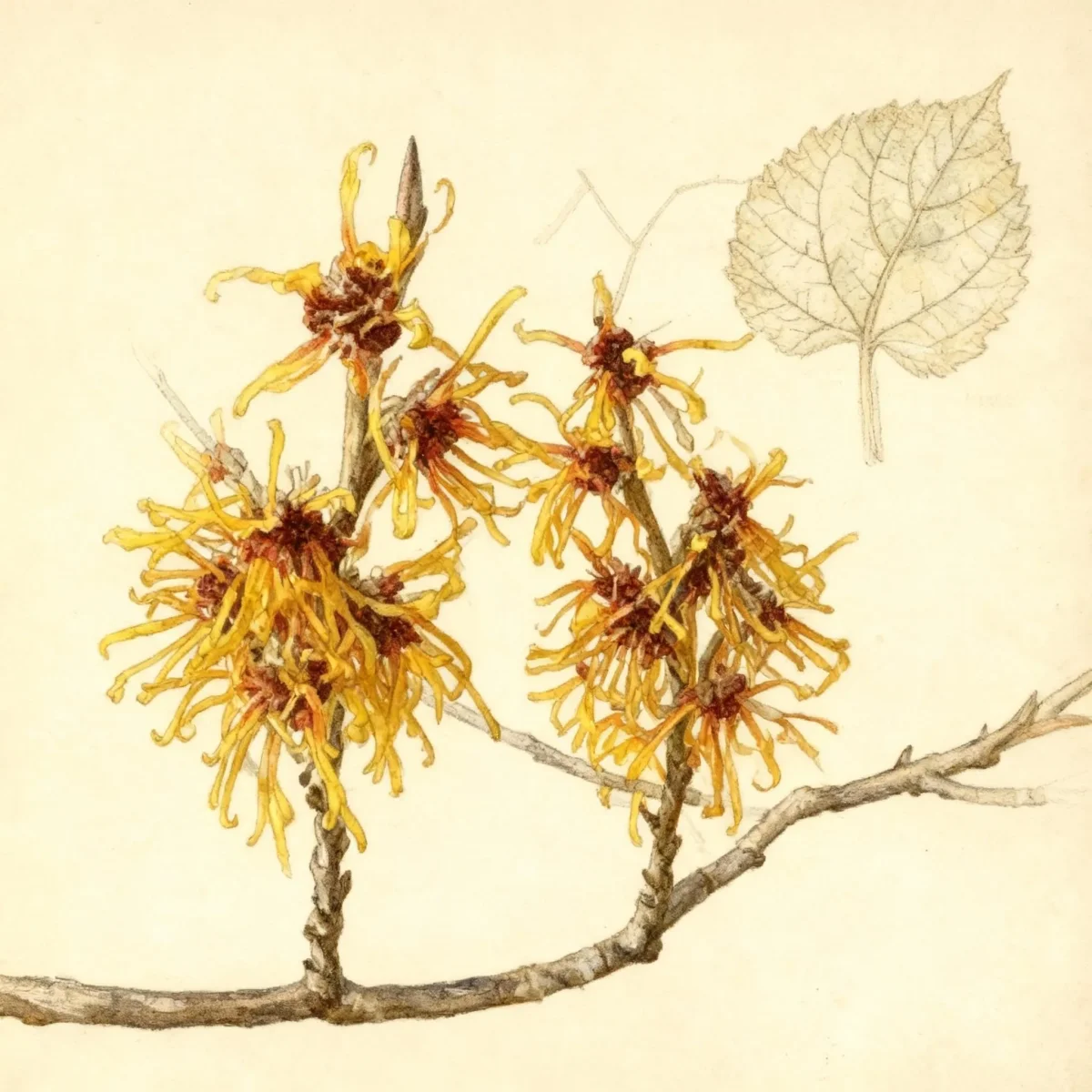
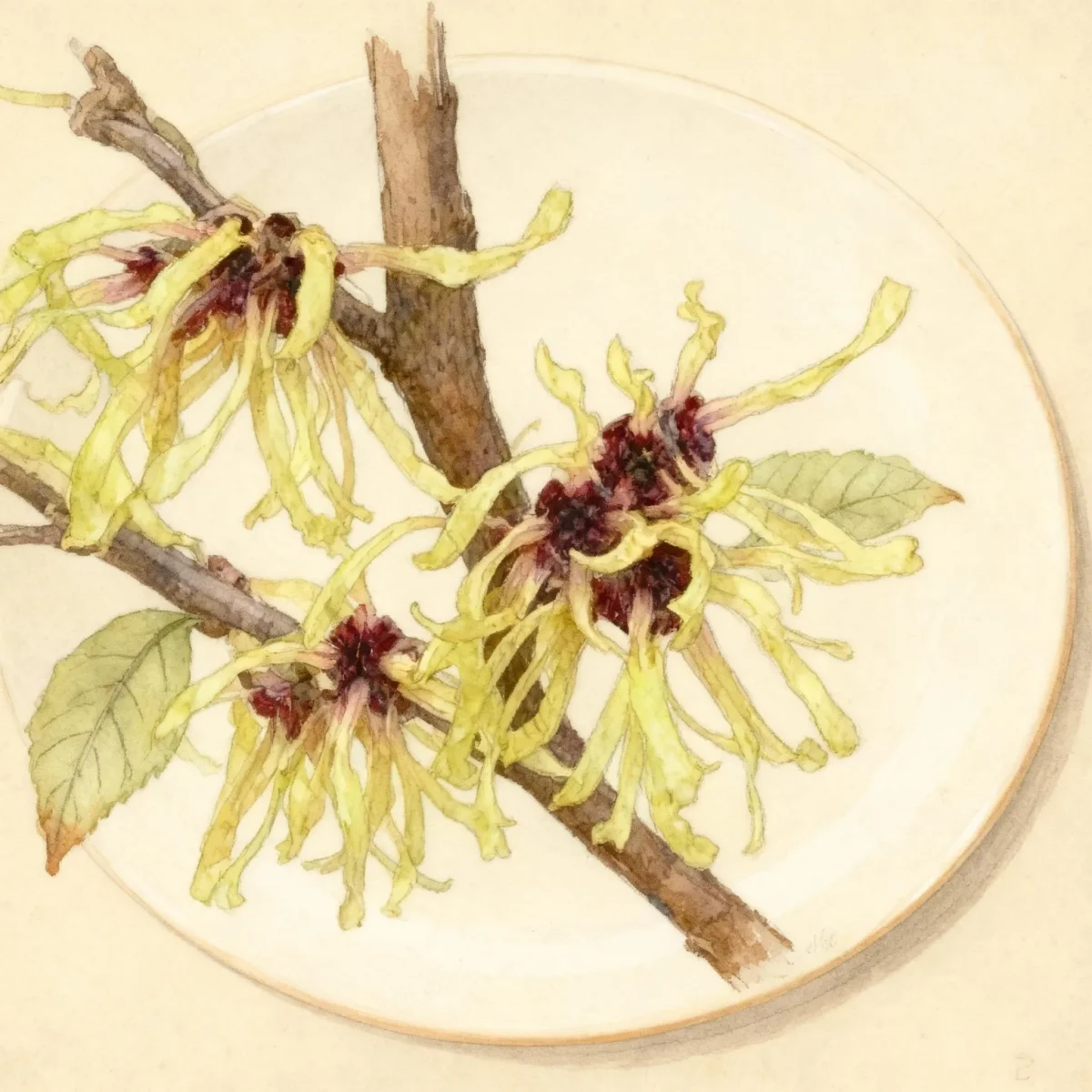
Witch hazel (Hamamelis × intermedia 'Livia')
Hamamelis × intermedia 'Livia' is a sought-after Witch hazel prized for its intense ruby-red, fragrant winter bloom.

Bloom Boldly, No Matter the Season - Sweatshirt
Cozy organic cotton sweatshirt featuring our exclusive Purple Coneflower design. Perfect for gardeners who bloom year-round.
Inspired by the beautiful Witch hazel
Limited first batch (50) — join the waitlist for early access
Waitlist closes Feb 15, 2026.
Complete Plant Information
Field Guide Continues
Ready for care notes, companion picks, and planting tips?
The map is just the start. The full guide below covers growth habits, seasonal performance, and landscape uses.
Overview
The Hamamelis × intermedia ‘Livia’, commonly known as Witch hazel, offers a spectacular display during the coldest months when most gardens are dormant. This specific hybrid is highly valued for its unexpected, brilliant bloom time from winter well into early spring. Its distinctive spidery flowers provide necessary color and fragrance when few other woody plants are active.
As a deciduous shrub, Hamamelis × intermedia ‘Livia’ transitions through seasonal interest, offering reddish-purple new foliage and superb red fall color after its main show. It typically matures into a compact, rounded form, making it manageable for various landscape applications despite being a hybrid of larger parent species. Gardeners appreciate this Witch hazel for its low maintenance requirements combined with its high visual impact during the drab winter months.
These shrubs are excellent structural elements, providing winter structure and wildlife sustenance. Growing Hamamelis × intermedia ‘Livia’ ensures a reliable source of mid-winter cheer, often appearing before the earliest bulbs emerge, establishing its status as a premier cold-weather landscape feature.
Fast Facts
- Plant Family: Hamamelidaceae
- Plant Type: Deciduous shrub
- Hardiness Zones: USDA Zones 5-8
- Size at Maturity:
- Height: 3-5 ft
- Spread: 4-6 ft
- Bloom Time: January to March
- Bloom Description: Ruby red petals
- Sun Exposure: Full sun to part shade
- Water Needs: Medium
- Maintenance Level: Low
How to Grow
Planting this Witch hazel is best done in the early spring or fall to allow root establishment before temperature extremes. Locate Hamamelis × intermedia ‘Livia’ where it receives at least partial sun; full sun exposure yields the most abundant flowers. This shrub thrives in average, medium moisture, well-drained soils. It particularly prefers soil that is moist, acidic, and rich in organic matter for optimal performance.
Consistent moisture is crucial for this plant; lack of water during the summer can lead to unsightly leaf scorch. While it exhibits some tolerance for clay soils, ensuring sharp drainage is a necessity to prevent root stress. Fertilization is usually unnecessary if the soil is organically rich, but supplemental organic matter can be incorporated at planting time.
Pruning should always occur in the spring immediately after flowering has finished to shape the plant or manage its size. A critical maintenance task for all Witch hazel varieties is promptly removing any root suckers that emerge below the graft union to preserve the desirable traits of the ‘Livia’ cultivar. This care helps maintain its compact, desired habit.
Landscape Uses
The Hamamelis × intermedia ‘Livia’ excels as a superior winter-flowering specimen plant, drawing attention precisely when garden interest wanes. Its compact size makes it highly adaptable for use in shrub borders, where its winter fire contrasts beautifully with evergreen backdrops. Consider placing one near a frequently used path or window to fully appreciate the fragrance of the ruby-red flowers.
This Witch hazel fits well into woodland garden settings, benefiting from the dappled shade provided by taller trees, although flowering may be slightly reduced compared to full sun sites. Furthermore, its natural structure suits its use as a screen or for establishing a low, informal hedge, providing necessary year-round structure in the garden layout.
Standout Features
Flower Qualities
- Showy
- Fragrant
Noteworthy Characteristics
Hamamelis × intermedia hybrids are crosses between Japanese witch hazel (H. Japonica) and Chinese witch hazel (H. Mollis). They are particularly noted for their spidery, often fragrant, mid- to late winter flowers which appear before the spring foliage emerges. The cultivar ‘Livia’ specifically displays deep ruby red petals that unfurl from purplish-red calyxes along the bare stems. Broad-elliptic leaves emerge tinted reddish-purple before maturing to dark green, often developing superb red shades again in the fall.
Tolerances
- Deer
- Erosion
- Clay Soil
Potential Problems
While generally low maintenance, two primary issues can affect the aesthetics of Hamamelis × intermedia ‘Livia’. Foliage may be subject to cosmetic chewing damage from caterpillars or Japanese beetles during the growing season. Additionally, watch for common pests like gall aphids, scale, and leafminers, although severe infestations requiring chemical control are rare for this Witch hazel. Potential diseases include powdery mildew, which is usually minor, and occasional leaf spots or rots, often linked to poor drainage or excessively wet conditions.
Frequently Asked Questions
What hardiness zones is Witch hazel suitable for?
The Hamamelis × intermedia ‘Livia’ is reliably hardy in USDA Zones 5 through 8, providing reliable winter color across these ranges.
How large does Hamamelis × intermedia ‘Livia’ grow?
This cultivar typically matures into a relatively compact, rounded shrub, reaching a height of 3 to 5 feet and spreading between 4 and 6 feet wide.
When does Witch hazel bloom?
This specific Witch hazel provides remarkable color from January through March, featuring distinct ruby red petals when dormancy is deepest.
What sun exposure does Hamamelis × intermedia ‘Livia’ need?
For the best flowering performance of the ruby red petals, the plant should be sited in a location receiving full sun, though it tolerates partial shading.
Conclusion
The Hamamelis × intermedia ‘Livia’ is an essential backbone plant for winter interest, offering unique, fragrant, ruby-red blooms against the cold landscape. Its low-maintenance needs and adaptability to certain soil types, like clay, make this Witch hazel a highly practical addition. Before planting, verify that your site falls within USDA Hardiness Zones 5-8 and ensure drainage is adequate to enjoy years of exceptional winter flowering.
Companion Planting
Selecting appropriate companions helps integrate the Hamamelis × intermedia ‘Livia’ into the garden scheme, especially considering its early bloom time. Plant early-flowering bulbs like snowdrops (Galanthus) or crocuses near the base of the Witch hazel; these bloom concurrently, creating layers of low-level color beneath the arching branches. For spring interest after the flowers fade, pair it with woodland edge plants such as Hellebores (Lenten Rose), which share a similar preference for moist, organically rich soil.
Seasonal Care Calendar
Summer care focuses primarily on moisture management; ensure consistent watering, especially during dry spells, to prevent leaf scorch on your Witch hazel. In late winter or very early spring, prune Hamamelis × intermedia ‘Livia’ immediately after flowering concludes to establish its desired shape for the coming year, cutting back only after the blooms fade. Fall cleanup involves ensuring fallen leaves are removed, though the shrub’s own autumn color display is generally desirable before leaf drop.