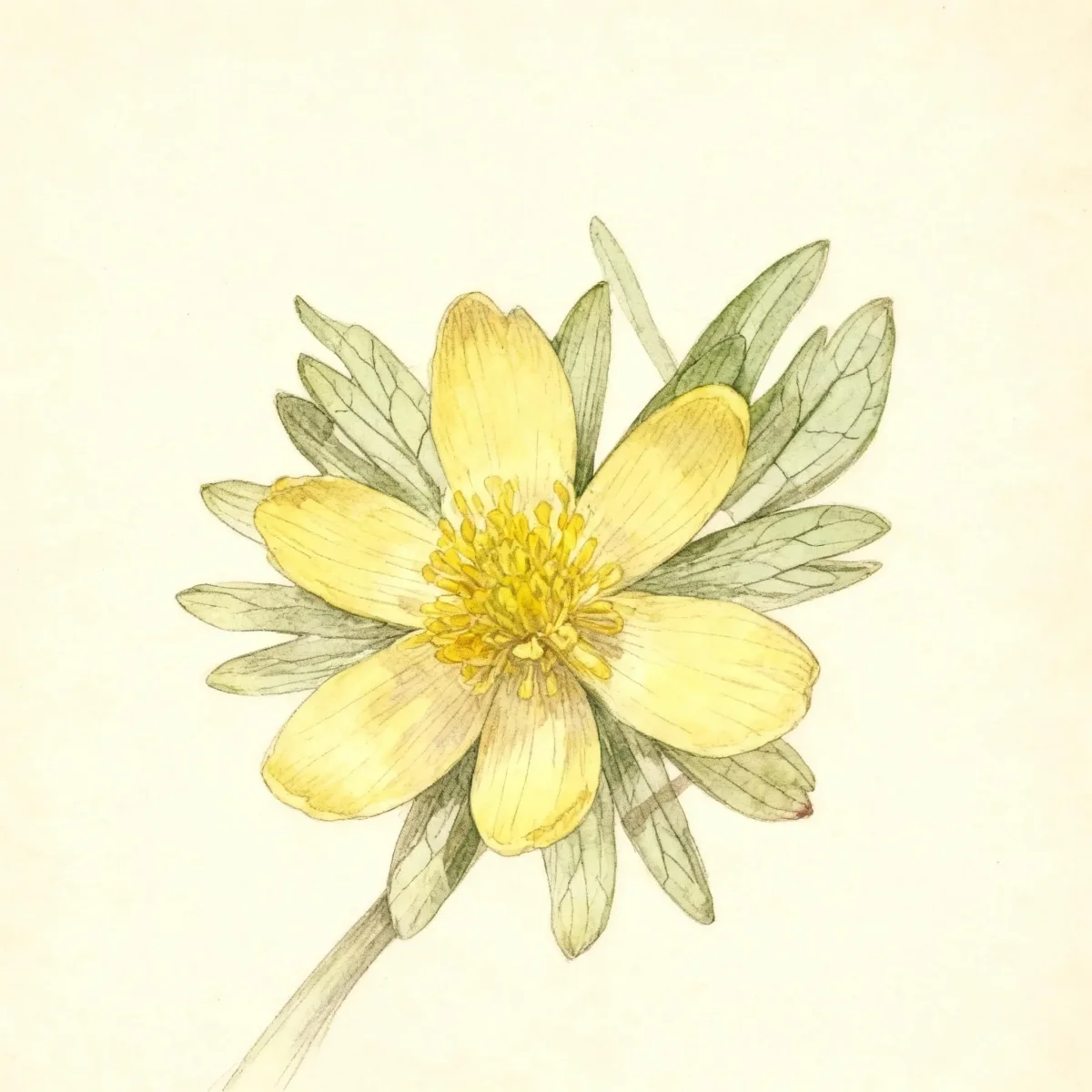
Winter aconite (Eranthis hyemalis (Cilicica Group))
Eranthis hyemalis (Cilicica Group), or Winter aconite, brings early yellow blooms, thriving in zones 4-7 with low maintenance.

Bloom Boldly, No Matter the Season - Sweatshirt
Cozy organic cotton sweatshirt featuring our exclusive Purple Coneflower design. Perfect for gardeners who bloom year-round.
Inspired by the beautiful Winter aconite
Limited first batch (50) — join the waitlist for early access
Waitlist closes Feb 15, 2026.
Complete Plant Information
Field Guide Continues
Ready for care notes, companion picks, and planting tips?
The map is just the start. The full guide below covers growth habits, seasonal performance, and landscape uses.
Overview
The sight of Winter aconite emerging before the snow fully melts is a cheerful reward for early-season gardeners. This charming Bulb, Eranthis hyemalis (Cilicica Group), is renowned for its brilliant, cup-shaped, yellow flowers that herald the arrival of spring. It provides a vital splash of color when few other plants are active in the landscape.
Native to western and central Asia, Eranthis hyemalis (Cilicica Group) performs best when planted where it receives strong sunlight while blooming, but can tolerate shade as deciduous trees leaf out overhead. These rugged plants are ideal for naturalizing, creating drifts of early yellow color across lawns or woodland edges. Expect very low maintenance once established, allowing the plants to spread naturally.
These early bloomers fit well into smaller garden spaces, such as rock gardens or border fronts, drawing the eye toward pathways during the late winter transition. The general hardiness and ease of cultivation make Winter aconite a dependable, cheerful element in any garden scheme.
Fast Facts
- Plant Family: Ranunculaceae
- Plant Type: Bulb
- Native Range: Turkey to Afghanistan
- Hardiness Zones: USDA Zones 4-7
- Size at Maturity:
- Height: 0.25-0.5 ft
- Spread: 0.25-0.5 ft
- Bloom Time: March to April
- Bloom Description: Yellow
- Sun Exposure: Full sun to part shade
- Water Needs: Medium
- Maintenance Level: Low
How to Grow
For successful establishment, plant Eranthis hyemalis (Cilicica Group) tubers in the late summer or early fall. Prepare the site by ensuring the soil is organically rich, well-drained, and consistently moist before planting. Soak the tubers overnight prior to planting to rehydrate them. Place them 2 to 3 inches deep and space them about 3 inches apart to allow room for spreading.
This plant thrives in locations that offer full sun during its short bloom time but benefit from partial shade as spring progresses and larger canopy trees begin to leaf out. Aim for medium soil moisture year-round, even though the foliage disappears by late spring indicating dormancy. Avoid letting the soil become bone dry during the summer months, as this can impact tuber health for the following year.
Maintenance is generally low. Once planted, it is best to leave the colonies undisturbed; Winter aconite may self-seed and naturally spread over time, enhancing its value for creating naturalized drifts. Do not worry about cleanup in spring; allow the foliage to die back naturally before cutting it down.
Landscape Uses
The primary design role for Winter aconite is mass planting for naturalizing effects. Because they appear so early, they are perfect positioned near frequently viewed spots like a kitchen window or along main walkways where their bright yellow flowers offer an immediate sign of spring. They perform beautifully when naturalized in open woodland settings or wildflower areas under deciduous trees.
Consider using them along border fronts to provide a transitional splash of color before later-blooming bulbs emerge. Their diminutive size also makes them excellent candidates for rock gardens or integrated into container arrangements, especially when paired with early crocus or snowdrops. Planting Eranthis hyemalis (Cilicica Group) beneath early-flowering shrubs provides a visual carpet just as the shrub prepares for its own display.
Standout Features
Noteworthy Characteristics
Eranthus hyemalis, commonly called winter aconite, is native to Europe (France to Bulgaria). It is a late winter bloomer (before crocus) that features cup-shaped, upward-facing, bright yellow, butter-cup like flowers on stalks to 3-4” tall. Each flower is subtended by a collar of leaf-like bracts. A true harbinger of spring, these rugged plants often send their shoots up through snow. The Cilicica Group, synonymous with and formerly known as Eranthis cilicica, is native to western and central Asia (Turkey to Afghanistan) and is recognized by its slightly later bloom time and more deeply dissected, sometimes bronze-tinged foliage.
Tolerances
- Deer
- Black Walnut
Potential Problems
This plant is generally robust regarding pests and diseases. You can expect Eranthis hyemalis (Cilicica Group) to show no serious insect or disease problems under normal growing conditions. Proper site selection—focusing on well-drained soil and consistent medium moisture—is the best preventative measure against fungal issues that might arise in overly wet, heavy clay.
Frequently Asked Questions
What hardiness zones is Winter aconite suitable for?
Eranthis hyemalis (Cilicica Group) is suitable for USDA Zones 4 through 7. You should monitor conditions if planting near the transition boundaries of zone 4 or 7.
How large does Winter aconite grow?
At maturity, the height ranges between 0.25 to 0.5 feet, with a similar spread range of 0.25 to 0.5 feet, making it a very low-growing accent plant.
When does Winter aconite bloom?
This reliable early bloomer exhibits bright yellow flowers typically from March to April.
What sun exposure does Eranthis hyemalis (Cilicica Group) need?
It prefers a location receiving full sun to part shade, especially favoring the full sun provided before overhead trees fully develop their summer canopy.
Conclusion
The Winter aconite offers unparalleled value as one of the earliest splashes of color in the late winter landscape, setting the stage for spring bulb displays. Ensure you situate your Eranthis hyemalis (Cilicica Group) colonies properly in well-drained soil and check your garden’s hardiness rating before planting tubers this late summer or early fall.
Companion Planting
When selecting partners for Eranthis hyemalis (Cilicica Group), focus on other early spring ephemerals that share similar cultural needs for sun when blooming and moisture retention. Snowdrops (Galanthus) bloom concurrently or slightly earlier and provide a wonderful color contrast against the bright yellow of Winter aconite. Muscari (Grape Hyacinth) or early blooming Scilla, which emerge shortly after, can take over the color display as the aconites complete their cycle and go dormant.
Seasonal Care Calendar
Late Summer/Early Fall is crucial for planting the dormant tubers of Eranthis hyemalis (Cilicica Group); remember to soak them overnight before burying them 2-3” deep. During the late winter blooming window (March–April), ensure the area remains moist—supplement watering if snow cover is absent and the weather is dry. By late spring, as the leaves yellow, stop watering and allow the plant to enter its natural summer dormancy period, leaving the foliage alone until it completely fades.