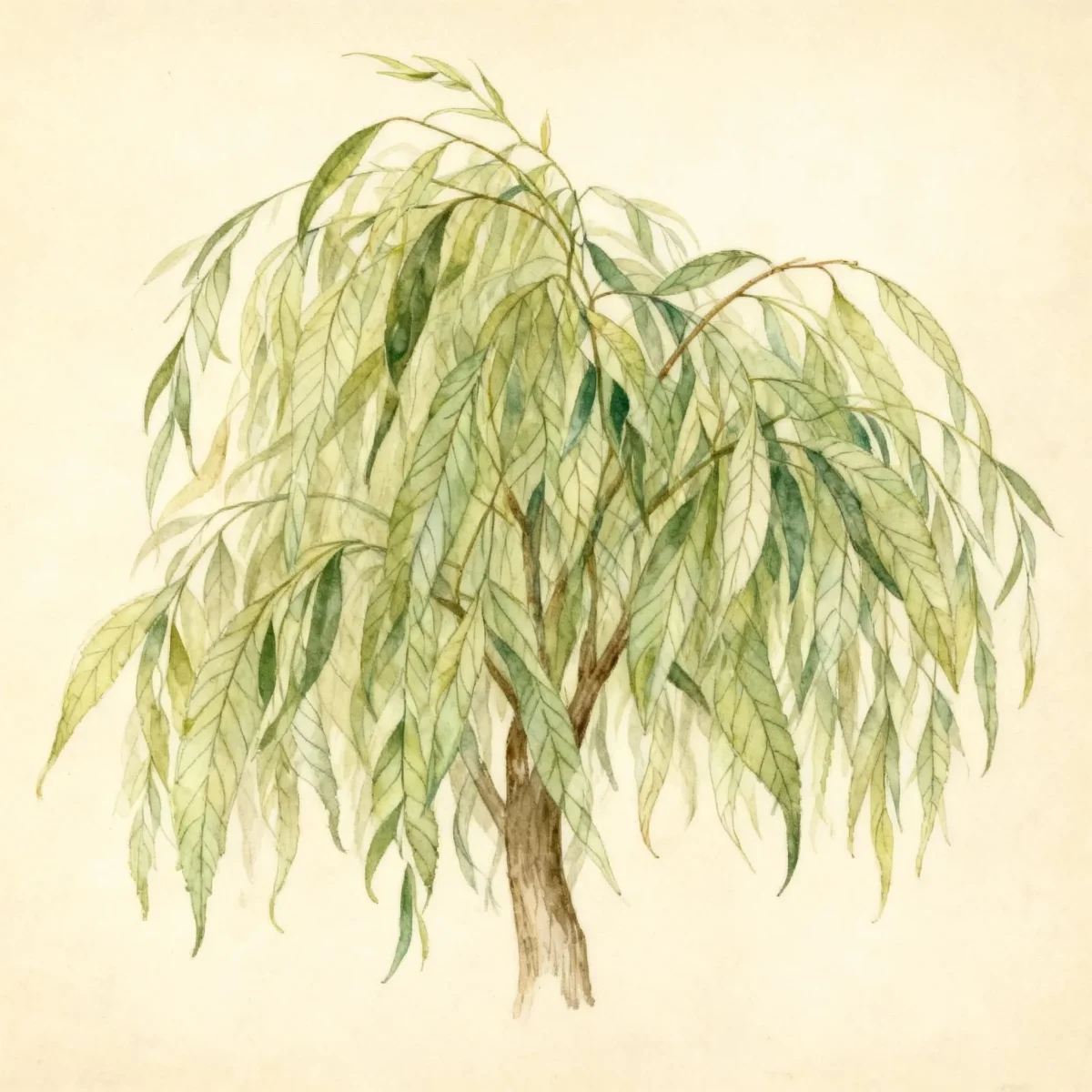
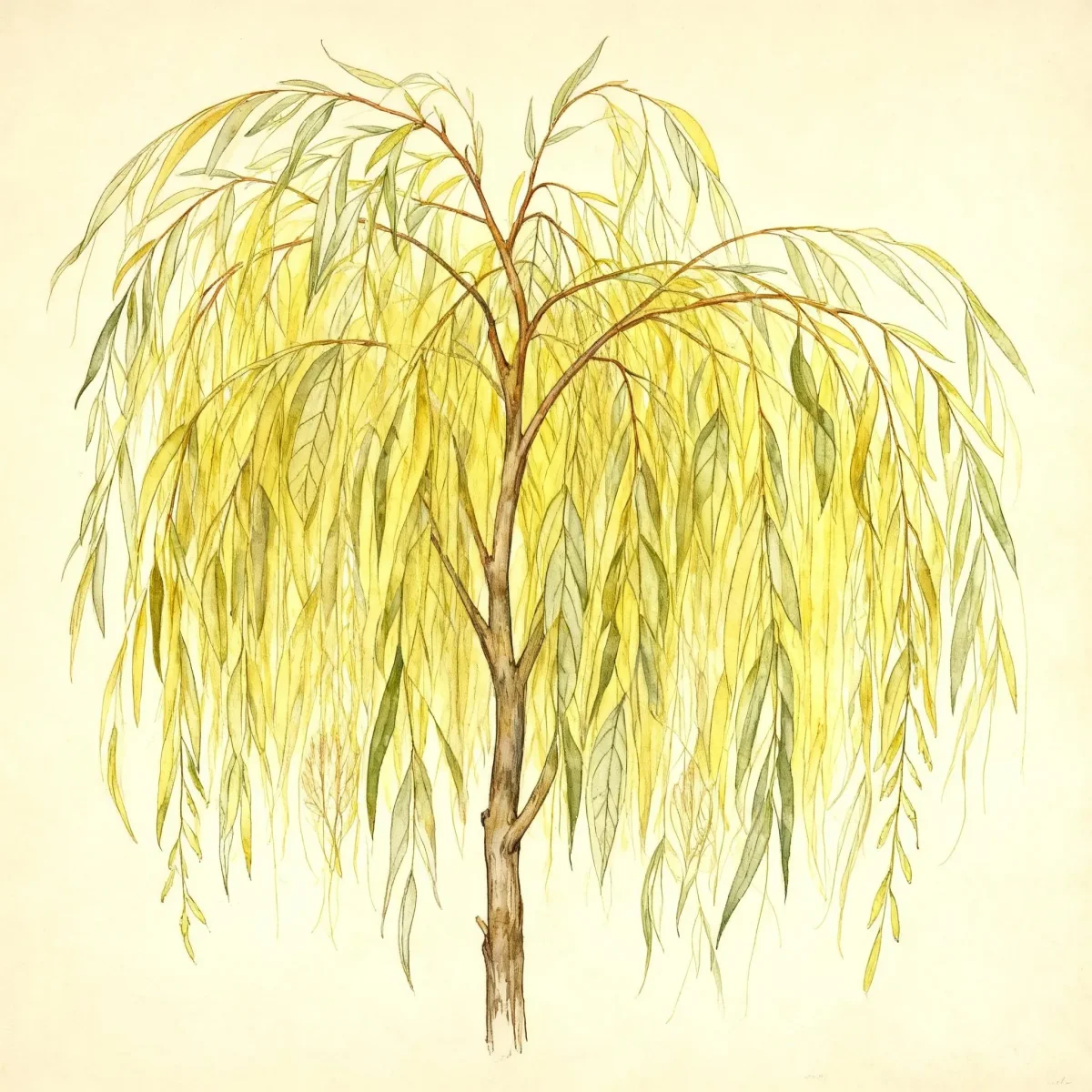
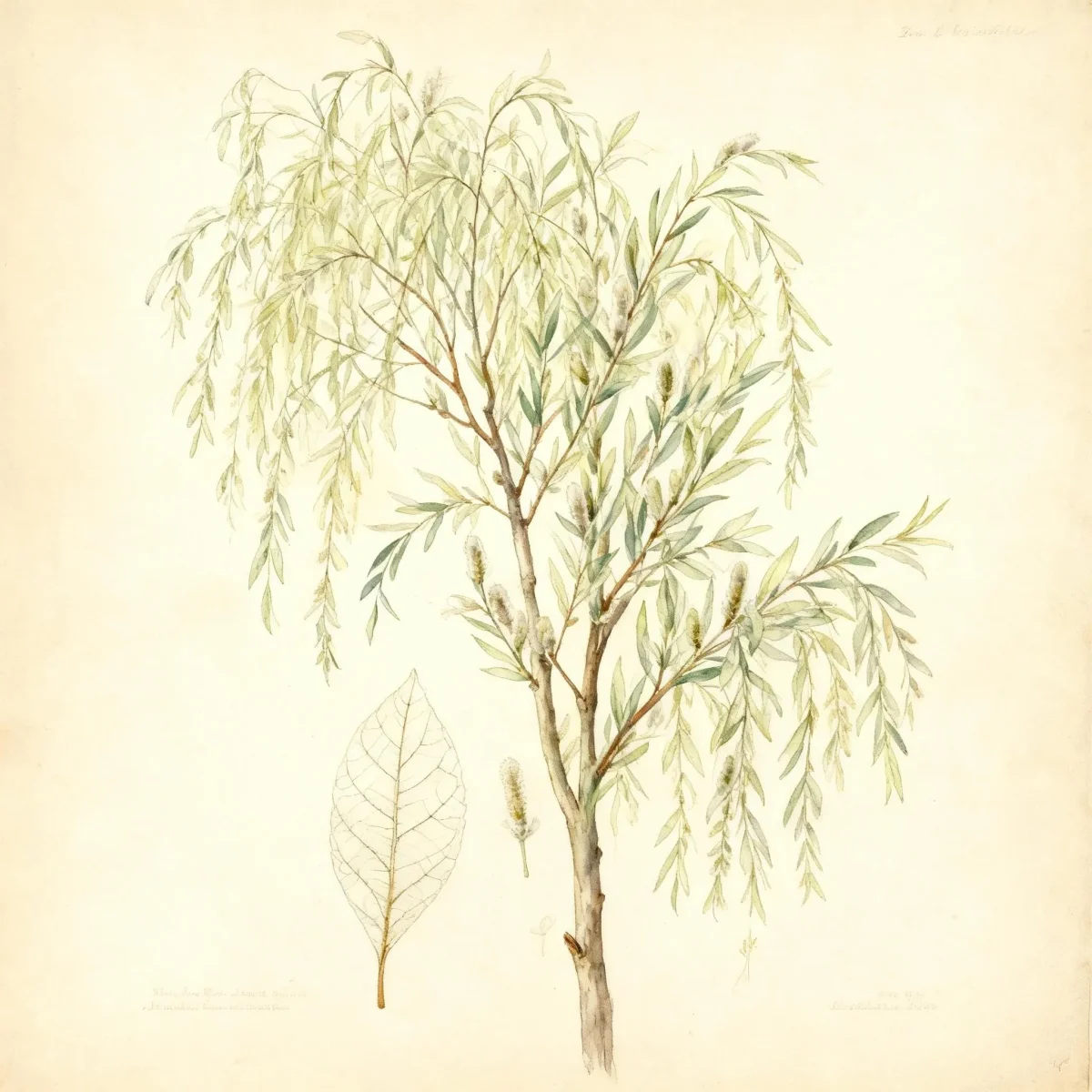
Dragon's claw willow (Salix babylonica var. Pekinensis 'Tortuosa')
Discover Salix babylonica var. pekinensis 'Tortuosa', the Dragon's claw willow, known for its stunning twisted branches. A unique specimen tree for moist soils.

Bloom Boldly, No Matter the Season - Sweatshirt
Cozy organic cotton sweatshirt featuring our exclusive Purple Coneflower design. Perfect for gardeners who bloom year-round.
Inspired by the beautiful Dragon's claw willow
Limited first batch (50) — join the waitlist for early access
Waitlist closes Feb 15, 2026.
Complete Plant Information
Field Guide Continues
Ready for care notes, companion picks, and planting tips?
The map is just the start. The full guide below covers growth habits, seasonal performance, and landscape uses.
Overview
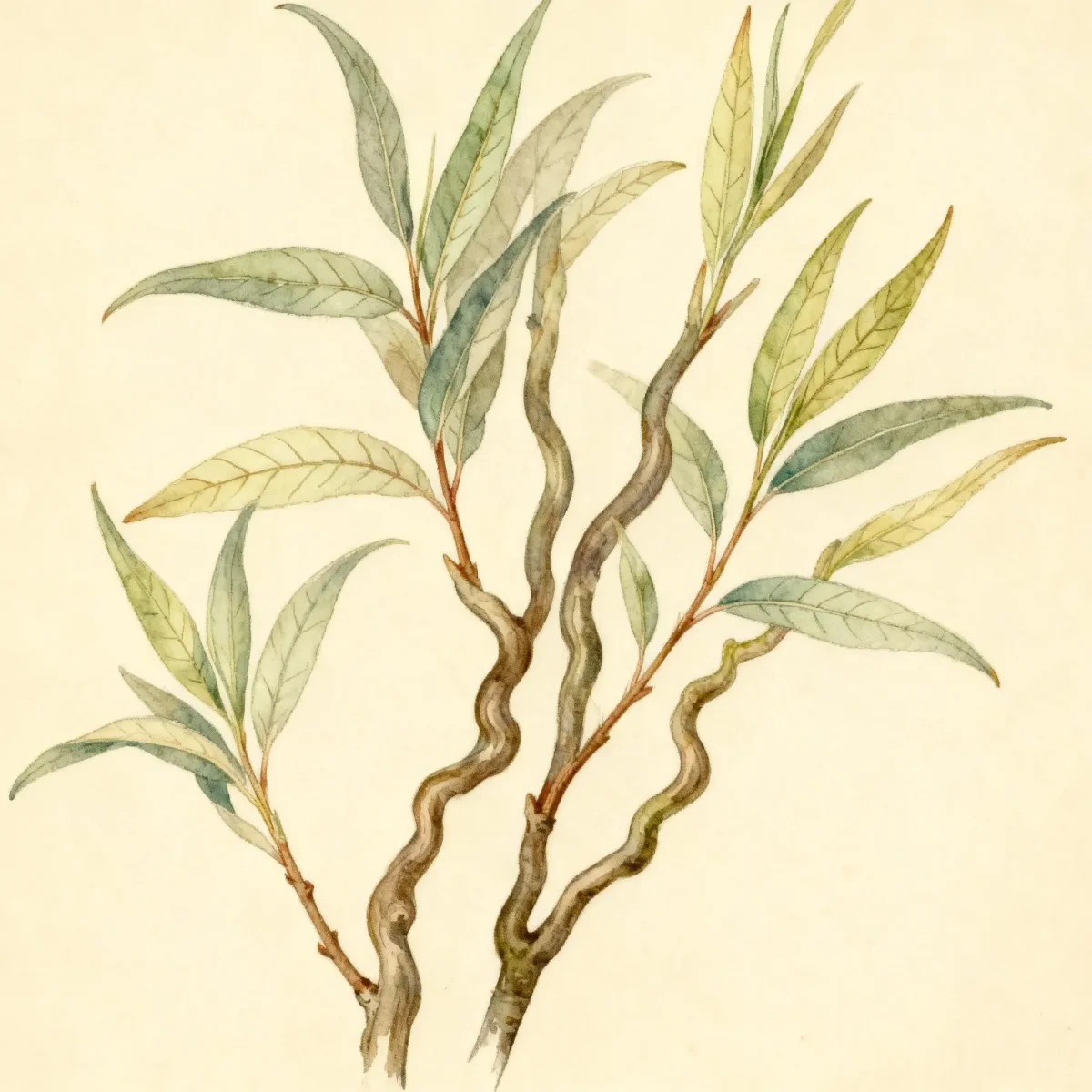
The Dragon’s claw willow, scientifically known as Salix babylonica var. pekinensis ‘Tortuosa’, offers unparalleled architectural interest in the landscape. This cultivar is highly prized specifically for its unique, dramatically contorted branches and foliage, which are most visible during the winter months without leaves. While related to the commonly known weeping willow, this variety distinguishes itself with a narrower, more upright habit.
As an ornamental specimen, Salix babylonica var. Pekinensis ‘Tortuosa’ provides year-round visual texture, transforming drab winter gardens into captivating displays. It thrives in consistently moist environments, making it an excellent choice for areas where other trees might struggle due to excessive water. Gardeners must site this tree carefully to maximize the viewing of its unusual growth habit.
This particular form, the ‘Tortuosa’ clone, is a relatively compact tree compared to standard weeping willows, reaching heights generally between 20 to 30 feet. Its dramatic structure makes the Dragon’s claw willow an essential focal point, offering structure where traditional forms might appear too overwhelming.
Fast Facts
- Plant Family: Salicaceae
- Plant Type: Tree
- Hardiness Zones: USDA Zones 5-8
- Size at Maturity:
- Height: 20-30 ft
- Spread: 10-15 ft
- Bloom Time: April to May
- Bloom Description: Pale yellow
- Sun Exposure: Full sun to part shade
- Water Needs: Medium to wet
- Maintenance Level: Medium
How to Grow
For optimal performance, plant your Salix babylonica var. pekinensis ‘Tortuosa’ in average, well-drained soils that maintain consistent moisture. This tree thrives best when provided with full sun exposure, though it tolerates light afternoon shade. Remember that this tree naturally prefers moist or wet conditions; absolutely avoid planting locations where the soil remains dry, as this stresses the tree significantly.
Pruning should be performed judiciously in late winter or early spring before new growth begins, focusing on removing any crossing or broken limbs to maintain the tree’s unique structure. Be aware that this species may not be reliably hardy across all regions and is generally best suited for the southern parts of the U.S. areas within its temperature ratings.
Due to its shallow, thirsty root system, site the Dragon’s claw willow away from underground pipes or foundations if possible. While it can handle wet soil, overly saturated, soggy conditions year-round should be avoided in favor of areas with good drainage, even if the soil remains consistently moist.
Landscape Uses
The primary suggested use for the Dragon’s claw willow is as a striking specimen plant designed to showcase its twisted branching. Because of its dramatic form, it needs room to breathe and should not be crowded by other large plantings. It performs exceptionally well used near water features, such as ponds or streams, where its silhouette can be reflected.
Its ability to tolerate wet soil makes Salix babylonica var. Pekinensis ‘Tortuosa’ an ideal candidate for rain gardens or poorly drained areas of the landscape where many other ornamental trees struggle. When sited correctly, the corkscrew willow acts as an arresting focal point, drawing the eye even in winter when its bare, contorted branches are visible.
Standout Features
Flower Qualities
- Insignificant
Noteworthy Characteristics
Salix babylonica, commonly called weeping willow or Babylon weeping willow, is a medium to large deciduous tree with a stout trunk topped by a graceful broad-rounded crown of branches that sweep downward to the ground. It grows to 30-50’ (sometimes to 60’) tall and as wide. It is native to China. Many consider this tree to have the best form of the weeping willows available in commerce. Bark is gray-black. Branchlets are typically green or brown. This weeping willow can be a spectacular specimen at the edge of a pond with its branches gracefully weeping down to touch the water, however, it is often very difficult to site this tree in a residential landscape. It is dioecious, with male and female flowers appearing in silvery green catkins (to 1” long) on separate male and female trees. Flowering catkins appear in April-May, but are not showy. Narrow, lanceolate, finely-toothed leaves (to 6” long and 3/4” wide) with long acuminate apices are light green above and gray-green beneath. Variable fall color is usually an undistinguished greenish-yellow. Var. Pekinensis, commonly called Peking willow, is synonymous with and sometimes listed as Salix matsudana. It is native to China, Manchuria, Korea and Eastern Siberia. It is very similar to S. Babylonica, except it has two nectaries in the female flower rather than one.Genus name is the Latin name for this plant.‘Tortuosa’, commonly called dragon’s claw willow, is an upright female clone that typically grows 20-30’ tall and 10-15’ wide. As the common name and cultivar name both suggest, this tree is most noted for its twisted and contorted branches, branchlets and leaves, and it is primarily grown to display this unusual growth. The contorted branching is most easily observed in winter after leaf drop. Salix matsudana ‘Tortuosa’ is synonymous with and sometimes sold as Salix babylonica var. Pekinensis ‘Tortuosa’. Additional common names for ‘Tortuosa’ include corkscrew willow, rattlesnake willow and contorted willow.
Tolerances
- Deer
- Wet Soil
- Black Walnut
Potential Problems
The Dragon’s claw willow is susceptible to numerous disease issues, including leaf spots, cankers, powdery mildew, and various blights. Insect pests frequently seen include scale, lacebugs, caterpillars, borers, and aphids, requiring vigilant monitoring. Additionally, the wood of Salix babylonica var. pekinensis ‘Tortuosa’ is inherently weak and prone to cracking, especially under the stress of heavy ice or snow accumulation.
Management involves prompt removal of diseased branches to reduce pathogen spread and addressing severe pest infestations early in the season. Be prepared for leaf litter, twigs, and small branches dropping regularly. The shallow root system necessitates careful planning, as these roots can aggressively seek water and potentially clog drains or sewer lines nearby.
Frequently Asked Questions
What hardiness zones is Dragon’s claw willow suitable for?
Salix babylonica var. pekinensis ‘Tortuosa’ is reliably hardy in USDA Zones 5 through 8, though growers should note this species may not be consistently winter hardy in the northernmost parts of this range.
How large does Dragon’s claw willow grow?
This specimen tree typically reaches a mature height between 20 and 30 feet tall, with a corresponding spread of 10 to 15 feet wide, offering a manageable size for many residential properties.
When does Dragon’s claw willow bloom?
The bloom time for Salix babylonica var. Pekinensis ‘Tortuosa’ is generally from April to May, producing pale yellow catkins that are not considered showy flowers.
What sun exposure does Dragon’s claw willow need?
This tree requires full sun for the best growth but can tolerate locations receiving part shade, though overall density and twig twisting might be slightly reduced away from full sun.
Conclusion
The Dragon’s claw willow stands out as an architectural marvel, providing essential winter interest unparalleled by many other deciduous trees, thanks to its distinctive, contorted branches. For gardeners seeking a unique specimen tree that also functions well in a rain garden setting, Salix babylonica var. pekinensis ‘Tortuosa’ is an excellent choice. Always verify local microclimates against its Zone 5-8 hardiness before planning your planting this fall or early spring.
Companion Planting
When designing around the Dragon’s claw willow, select companion plants that share its high moisture requirements but do not compete aggressively with its shallow roots. Consider low-growing native grasses or moisture-loving perennials like Siberian Iris or Marsh Marigolds (Caltha palustris) for the understory near the drip line. These companions thrive in the consistent moisture this willow demands without requiring deep soil disturbance for installation.
Since the value of Salix babylonica var. pekinensis ‘Tortuosa’ is primarily structural, use contrasting foliage textures nearby. Broad-leafed, shade-tolerant shrubs can provide a solid backdrop that accentuates the willow’s twiggy complexity during dormant seasons. Ensure any accompanying plants are tolerant of wet soil conditions to guarantee mutual success.
Design Ideas for Contorted Forms
The signature feature of the corkscrew willow is its dramatic branching pattern; therefore, utilize negative space effectively in your design plans. Place the Dragon’s claw willow where it can be viewed against a plain background, such as a plain fence or a solid wall, maximizing the visibility of the twisted growth, especially in winter. Avoid placing it directly against dense, fine-needled evergreens, as the texture contrast may become muddled.
Consider planting two specimens far enough apart to allow each to develop its own distinct silhouette, perhaps flanking an entry walk or lining the edge of a moisture-retaining swale. Because this tree can be difficult to site in standard residential yards, viewing corridors and focal points should guide placement decisions to highlight the unique aesthetic appeal of Salix babylonica var. Pekinensis ‘Tortuosa’.