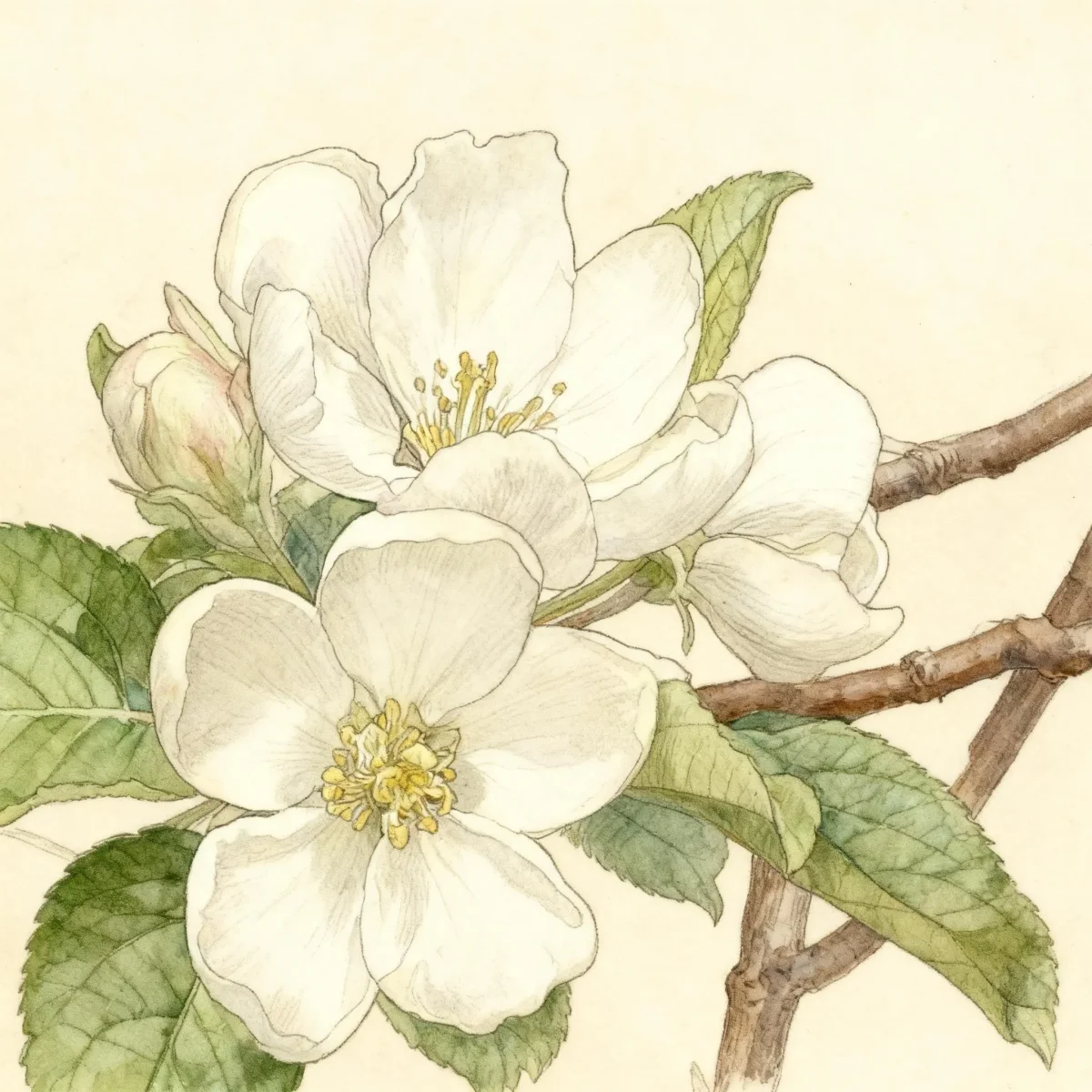
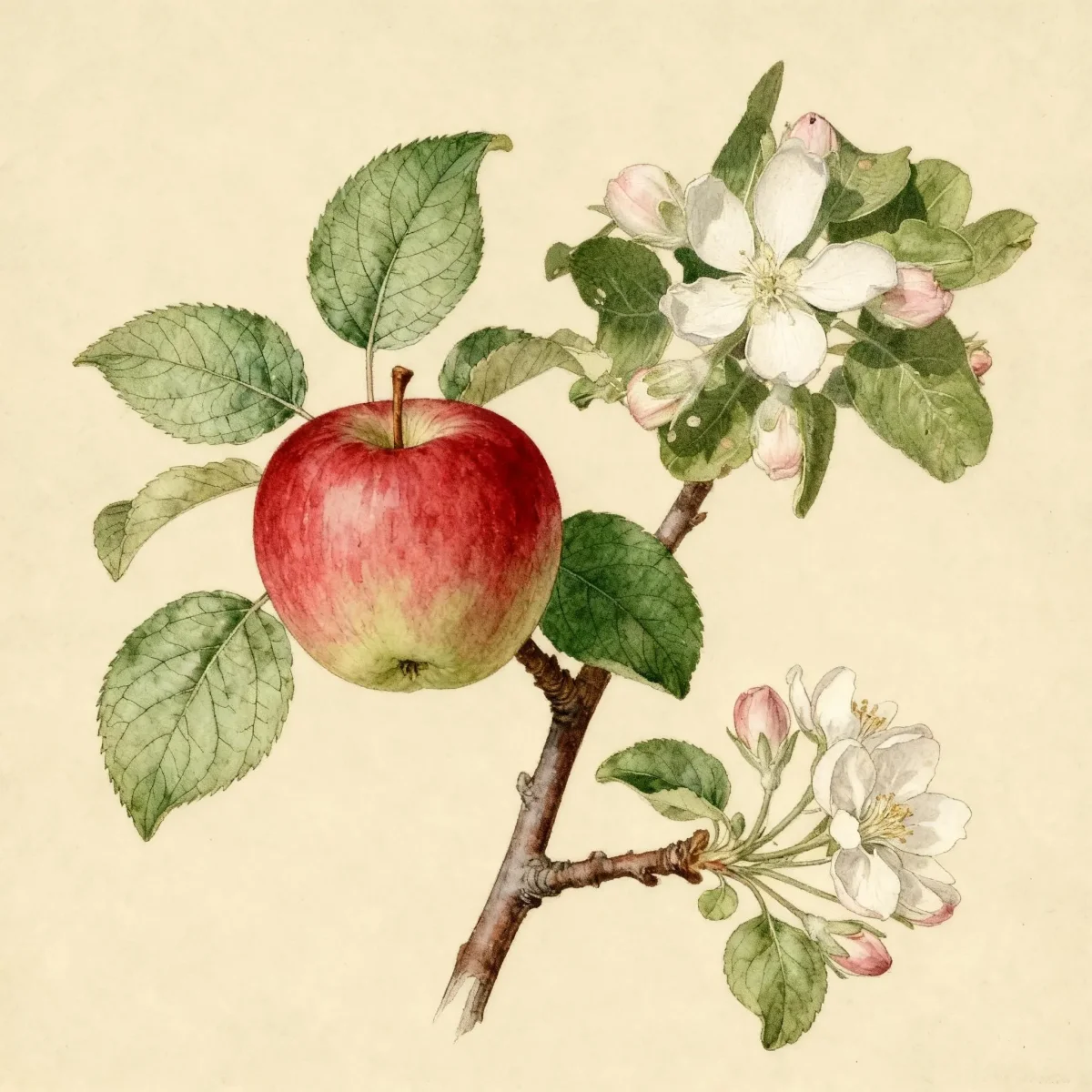
Dwarf apple (Malus pumila 'Thornton' STARKSPUR WINESAP)
The Dwarf apple Malus pumila 'Thornton' STARKSPUR WINESAP offers showy spring flowers and edible red fruit on a manageable size tree for home growers.

Bloom Boldly, No Matter the Season - Sweatshirt
Cozy organic cotton sweatshirt featuring our exclusive Purple Coneflower design. Perfect for gardeners who bloom year-round.
Inspired by the beautiful Dwarf apple
Limited first batch (50) — join the waitlist for early access
Waitlist closes Feb 15, 2026.
Complete Plant Information
Field Guide Continues
Ready for care notes, companion picks, and planting tips?
The map is just the start. The full guide below covers growth habits, seasonal performance, and landscape uses.
Overview
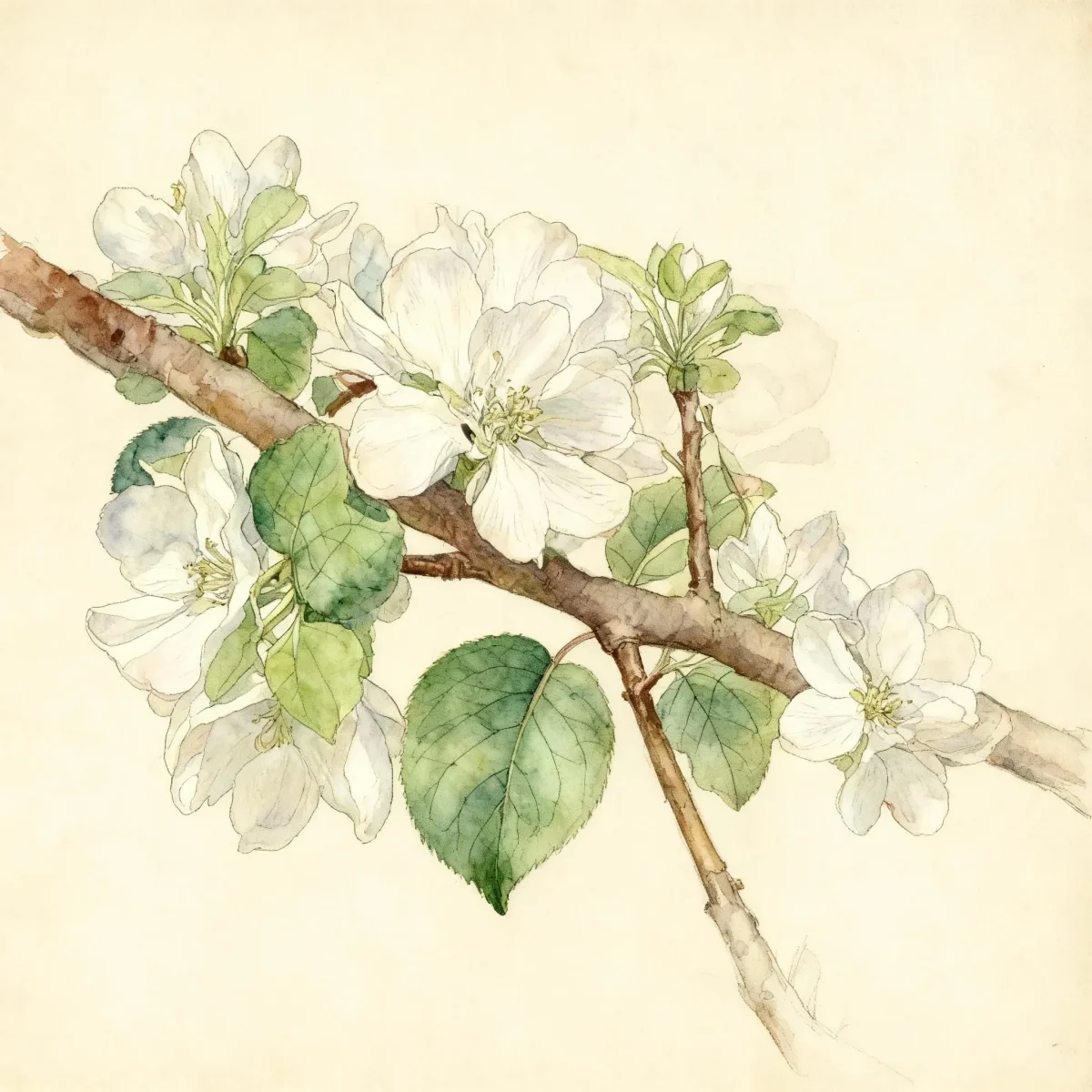
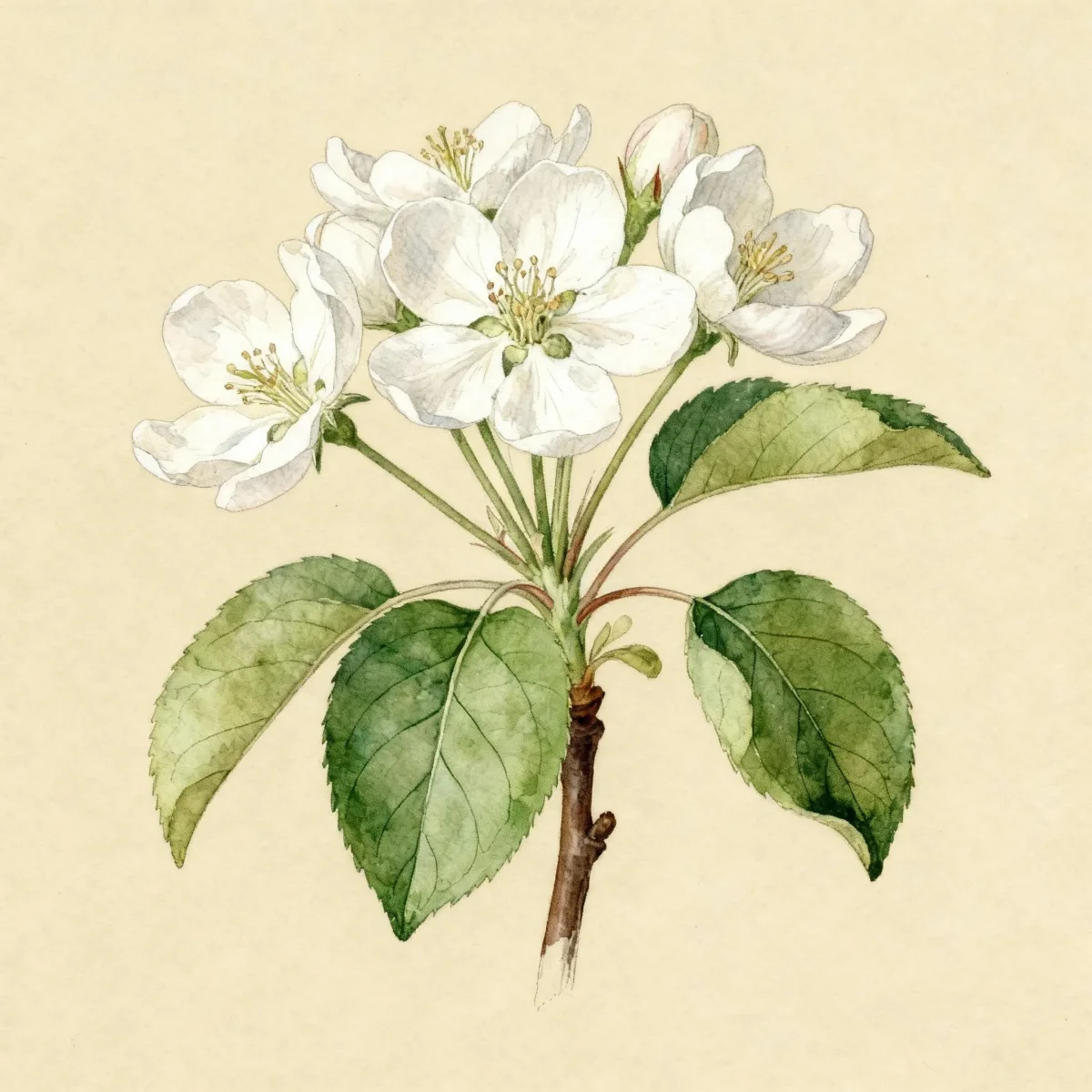
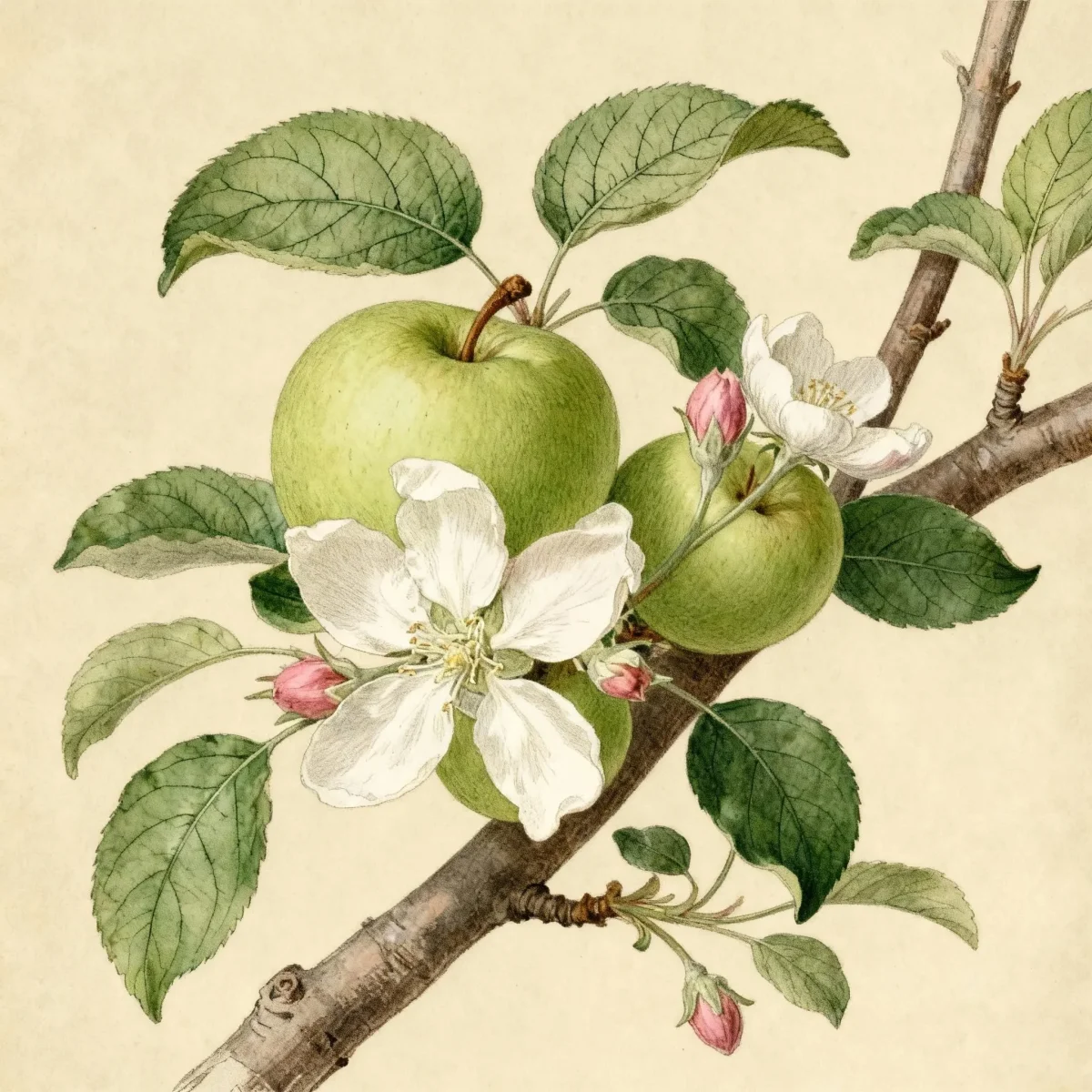
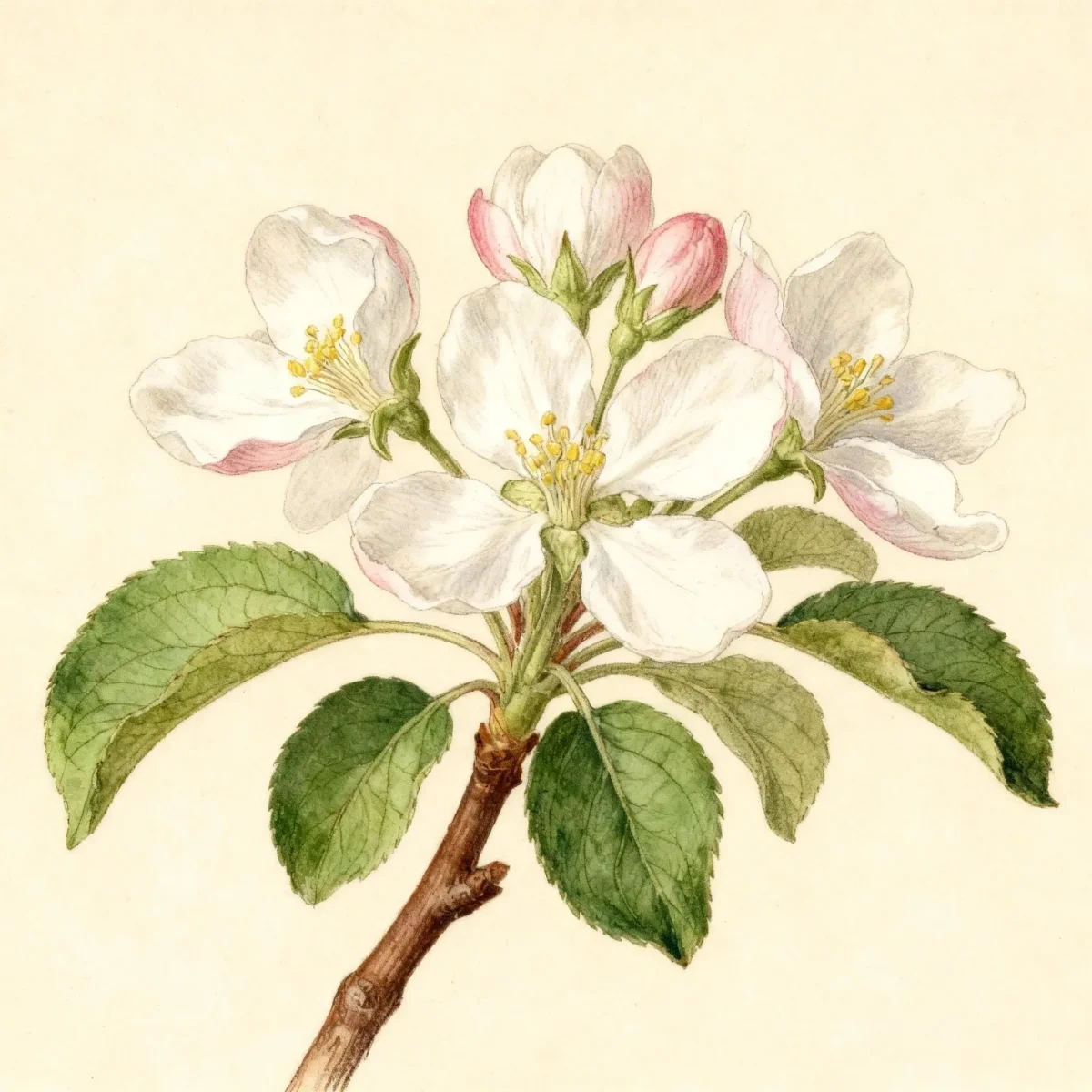
The Dwarf apple, specifically the Malus pumila ‘Thornton’ STARKSPUR WINESAP cultivar, is highly valued by home gardeners for its ability to produce full-sized, Winesap-type apples on a tree size that is significantly easier to manage, spray, and harvest than standard varieties. This variety matures into a compact tree, typically reaching 8 to 10 feet tall, thanks to its grafting onto dwarfing rootstock. Beyond its fruit production, this apple tree offers ornamental appeal with its beautiful spring blossoms, making it a multi-season asset in the landscape.
Malus pumila ‘Thornton’ STARKSPUR WINESAP thrives when situated in a location receiving full sun, which is essential for maximizing flower and fruit set. Successful cultivation hinges on proper soil conditions, favoring deep, well-drained, moderately fertile, and slightly acidic mediums. As a fruiting tree, gardeners must plan for cross-pollination, requiring the planting of at least one additional compatible apple variety nearby to ensure a good annual harvest.
For those seeking both aesthetic appeal and delicious harvests in a smaller footprint, the Dwarf apple represents an excellent choice. Understanding its basic needs regarding sun, soil, and pollination is the key to ensuring robust growth and quality yield from your Malus pumila ‘Thornton’ STARKSPUR WINESAP.
Fast Facts
- Plant Family: Rosaceae
- Plant Type: Fruit
- Hardiness Zones: USDA Zones 5-8
- Size at Maturity:
- Height: 8-10 ft
- Spread: 8-10 ft
- Bloom Time: May
- Bloom Description: White
- Sun Exposure: Full sun
- Water Needs: Medium
- Maintenance Level: High
How to Grow
Planting your Dwarf apple requires attention to soil quality. Malus pumila ‘Thornton’ STARKSPUR WINESAP performs best in deep, loamy, moderately fertile, and well-drained soils that are slightly acidic. While it tolerates average garden soils, heavy clay soils that retain too much water and drain poorly should always be avoided, especially on dwarfing rootstocks which can be more demanding of fertility. Full sun exposure is mandatory for maximizing both flower production in the spring and subsequent fruit development later in the season.
Watering should remain consistent, aiming for medium moisture levels, especially as the tree establishes. Remember that the more dwarfing the rootstock used for your Malus pumila ‘Thornton’ STARKSPUR WINESAP, the more critical soil fertility becomes. Adopt good cultural practices year-round to support this high-maintenance cultivar.
Crucially, pollination demands that you group this tree with other apple varieties. Without a suitable pollinator planted in close proximity, fruit production will be sparse or nonexistent. Pruning should focus on maintaining an open canopy structure once the tree is established to encourage air circulation and sunlight penetration, which aids in disease management.
Landscape Uses
While the primary goal of growing a Dwarf apple like the Malus pumila ‘Thornton’ STARKSPUR WINESAP is quality fruit production, its ornamental features—notably its spring blossoms and colorful fall fruit—should not be overlooked in landscape design. Position this tree where its spring floral display can be appreciated, perhaps near a patio or walkway.
Since it is pruned specifically for fruit, avoid attempting to shape it into a formal hedge or screen. Instead, group the Malus pumila ‘Thornton’ STARKSPUR WINESAP in a dedicated sunny orchard area alongside other compatible apple varieties necessary for robust pollination. The reddish Winesap-type fruit ripening in mid-October adds great visual interest as other plants finish their seasonal displays.
This smaller size makes it an excellent specimen tree for smaller yards where a standard apple would overwhelm the space. Ensure companion plants do not shade the tree, as it requires maximum sunlight for optimal fruiting potential.
Standout Features
Flower Qualities
- Showy
- Fragrant
Fruit Qualities
- Showy
- Edible
Noteworthy Characteristics
Malus species provide deciduous beauty, though eating apples are typically hybrids grafted onto rootstocks that control tree size; dwarf rootstocks, like those supporting the Malus pumila ‘Thornton’ STARKSPUR WINESAP, result in 8-10’ trees that fruit earlier and are easier to manage. This cultivar is a Stark Bro’s introduction, featuring white spring flowers followed by red, Winesap-type apples that ripen around mid-October in suitable climates.
Tolerances
- Air Pollution
Potential Problems
Apple trees in general are susceptible to a large number of pests and diseases, though this specific cultivar is reported to have much improved disease resistance. Key diseases to watch for include fire blight, powdery mildew, apple scab, and cedar apple rust. Common insect threats encompass aphids, codling moth, plum curculio, maggots, and spider mites. Vigilant inspection and the consistent application of good cultural practices are essential preventative measures, often requiring minor chemical treatments if pest populations become problematic.
Frequently Asked Questions
What hardiness zones is Dwarf apple suitable for?
The Malus pumila ‘Thornton’ STARKSPUR WINESAP is suitable for USDA Hardiness Zones 5 through 8.
How large does Malus pumila ‘Thornton’ STARKSPUR WINESAP grow?
This Dwarf apple typically achieves a mature height between 8 and 10 feet, with a spread ranging from 8 to 10 feet wide.
When does Dwarf apple bloom?
The flowering period for this cultivar is in May, producing showy white blossoms.
What sun exposure does Malus pumila ‘Thornton’ STARKSPUR WINESAP need?
This apple variety requires full sun exposure to ensure maximum flower and fruit production throughout the growing season.
Conclusion
The Malus pumila ‘Thornton’ STARKSPUR WINESAP is a superior choice for home growers seeking manageable tree size combined with high-quality, edible fruit, all while offering beautiful spring flowers. As a Dwarf apple, it requires diligent care, especially regarding soil fertility and companion planting for successful pollination. Before planting, confirm that your local climate falls within USDA Zones 5-8 and ensure you have sufficient full sun exposure.
Companion Planting
When integrating your Dwarf apple into the home landscape, choosing compatible neighbors is key for health and productivity. Since the Malus pumila ‘Thornton’ STARKSPUR WINESAP needs full sun, select neighboring plants that are also sun-lovers and do not compete aggressively for nutrients or water. Low-growing perennial flowers or herbs that thrive in well-drained, slightly acidic soil make excellent groundcovers beneath the canopy edge, provided they are kept away from the immediate root zone.
Consider beneficial companions that help manage common apple pests naturally. Plants like chives, garlic, and strong-smelling herbs can sometimes deter general insect activity through their volatile oils. Remember that companion plants must not impede air flow around the lower branches, as good circulation is vital for preventing fungal issues like apple scab.
Ultimately, the most crucial “companion” for this tree is another compatible apple cultivar situated nearby to ensure successful cross-pollination, guaranteeing a good yield of Winesap-type fruit each fall.
Pruning and Training Focus
Pruning is a critical component of the high maintenance required for this Dwarf apple. Unlike standard trees, pruning on dwarfing rootstocks is directed toward encouraging early fruiting and maintaining a manageable scaffold structure. Annually remove dead, damaged, or crossing branches first, ensuring that the center of the tree remains open to allow sunlight penetration to all parts of the canopy.
For the first few years after planting, focus on establishing a strong main leader and well-spaced scaffold limbs. Avoid heavy pruning in the summer, which can sometimes stress the tree, especially if it is already working hard to support a heavy fruit load. Light summer pruning can sometimes be used to control vigor or suppress fire blight strikes if they appear.
Because the Malus pumila ‘Thornton’ STARKSPUR WINESAP produces fruit that ripens relatively late, around mid-October, winter pruning (while the tree is dormant) is often the primary time for removing bulk wood. Always use clean, sharp tools to minimize the chance of introducing disease pathogens into the cuts.